
分类: society

  • Gradual improvements coming for utility customers, says OUR head

    Gradual improvements coming for utility customers, says OUR head

    TRELAWNY, Coral Spring — Six months after Category 5 Hurricane Melissa battered Jamaica’s critical utility infrastructure, the island’s top utilities regulator has confirmed that lingering customer service disruptions will continue through the remainder of 2025, even as gradual improvements are underway.

    Ansord Hewitt, Director General of Jamaica’s Office of Utilities Regulation (OUR), shared the update Thursday on the sidelines of the 2026 Organization of Caribbean Utility Regulators (OOCUR) Conference, hosted at the Ocean Coral Spring Resort in Trelawny. The five-day event, running from April 27 to May 1, brings together regional regulatory leaders to address shared industry challenges under the theme “Navigating Caribbean Regulatory Challenges: Opportunities, Innovations and Collaborations.”

    Since Melissa made landfall last October, the OUR has recorded a surge in consumer complaints across three regulated sectors: telecommunications, water supply, and electric power. Hewitt acknowledged that existing pre-storm quality gaps have been severely worsened by post-hurricane recovery work, with service disruptions persisting longer than many customers expected.

    “Customer service issues will almost certainly remain with us for the rest of this year, though we expect their severity to decline steadily as restoration work advances,” Hewitt explained to the Jamaica Observer. He noted that service quality has been the top complaint to the OUR since the storm, and rooted the ongoing challenges in the urgent priorities of early disaster recovery.

    In the immediate aftermath of a major hurricane, the primary mandate for utility providers is to restore critical services to as many customers as possible as quickly as possible. This rush, Hewitt explained, often means providers rely on temporary fixes and shortcuts to get power, water, and connectivity back online, rather than completing full, permanent repairs that meet pre-storm quality standards. Key core infrastructure elements for power grids and telecommunications networks require full reconstruction, a process that can take many months to complete.

    Even after nearly 100% of basic service is restored, providers face a prolonged period of post-recovery cleanup and fine-tuning to bring service quality back to pre-disaster levels. Compounding this challenge, Hewitt added, is the fact that service quality shortfalls already existed across Jamaica’s utility sectors before Melissa hit, and the chaos of restoration only amplified these existing problems.

    The OUR head also drew a parallel to recovery from 2024’s Hurricane Beryl, which struck Jamaica in July of that year. After initial service restoration was completed four to five months after Beryl, providers required an additional six months to return customer service to pre-storm levels. For Melissa, Hewitt confirmed that providers have hit major restoration milestones after six months: electric service is nearly 100% restored, while water service restoration is slightly lower.

    As regulators, Hewitt noted, the OUR has worked to strike a careful balance between pushing for faster quality improvements and understanding the constraints providers face during recovery. Immediately after a storm, the public is generally willing to accept temporary lower service standards to speed up broad restoration, but this situation cannot be allowed to continue indefinitely. The OUR is currently prioritizing pressure on utility companies to address customer service backlogs and quality gaps as quickly as possible.

  • Rodent causes islandwide electricity blackout in St Lucia

    Rodent causes islandwide electricity blackout in St Lucia

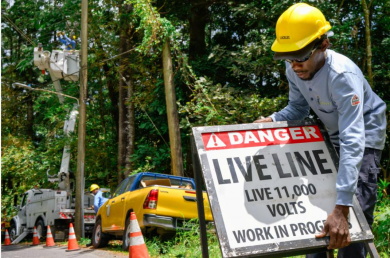
    Residents across the Caribbean island of St. Lucia faced a sudden full-system power outage over the past weekend, after a rodent triggered an unexpected equipment failure that cascaded through the national electricity network, state power utility LUCELEC (St Lucia Electricity Services Limited) has confirmed. The incident originated on May 1, when a rodent interfered with an 11 kilovolt (11kV) circuit breaker located in LUCELEC’s Cul-de-Sac power distribution network, according to preliminary investigations by the company.

    The unexpected fault immediately activated the network’s automatic protection systems, which are engineered to shut down the entire grid to prevent catastrophic, irreversible damage to major power infrastructure. Utility officials explained in an official public statement that while wildlife-related disruptions are rare events, they are classified as a well-documented inherent risk for power grids across the globe. To counter this threat, LUCELEC noted it has already implemented multiple overlapping layers of defensive safeguards designed to isolate local faults and prevent them from spreading to the broader transmission and distribution network.

    Within 60 minutes of the fault occurring, technical teams completed initial safety inspections and system diagnostics, after which they began the process of restoring power to end users across the island. Service was brought back gradually for customers across all regions of St. Lucia, with full restoration completed in subsequent hours.

    As part of the company’s standard post-outage operational protocols, LUCELEC has launched a full technical review of the entire incident. The review will systematically examine the sequence of events that led to the full shutdown, evaluate how the grid’s protection systems performed during the incident, and verify that existing risk mitigation measures functioned as intended. Findings from the assessment will be used to shape any additional upgrades or operational adjustments needed to boost the grid’s overall resilience and lower the probability of a similar full-system outage occurring in the future.

    In its statement, LUCELEC issued a formal apology to all residential and commercial customers impacted by the unplanned blackout. The company reaffirmed its long-term commitment to delivering a safe, consistent, and resilient power supply to all St. Lucians, noting it will continue allocating capital toward infrastructure upgrades, enhanced system protection, and operational improvements to better serve the island’s population.

  • 10-y-o birthday girl among dead in Colombia monster truck crash

    10-y-o birthday girl among dead in Colombia monster truck crash

    A devastating incident at a Colombian monster truck exhibition has left three people dead and more than 40 injured, after a performance vehicle veered off its designated track and crashed into a crowd of spectators on Sunday, local authorities confirmed Monday. Among the fatalities was 10-year-old Hellen Velarde, who had been attending the event in Popayan, a city in southwestern Colombia, as a special birthday treat.

    Local media reports confirm a second minor girl and a young adult woman also lost their lives in the crush. Footage shared widely across social media platforms captures the vehicle lifting into a wheelie stunt before it swerved off course, smashing through the concrete barriers that were supposed to separate spectators from the driving track.

    In the immediate aftermath of the collision, widespread chaos broke out as hundreds of attendees scrambled to escape the path of the out-of-control truck, pushing past one another to reach safer ground. The Popayan local fire department confirmed that more than 40 people were hurt in the incident, with several suffering life-threatening critical injuries. Multiple children are included among the wounded, local media has reported.

    Hellen’s grandfather, Miller Velarde, harshly criticized event organizers for the lack of basic safety protocols, saying the exhibition operated with “practically no safety measures” — a failure he described as nothing short of a “crime.” Another of Velarde’s grandchildren remains in intensive care following emergency surgery to treat a severe head injury sustained in the crash.

    Popayan Mayor Juan Carlos Munoz has launched a full official investigation into the tragedy, releasing a public statement saying the preventable disaster “should never have happened” and promising to hold any responsible parties accountable for the deaths and injuries. The incident has sparked widespread public anger across the country over inadequate event safety regulation.

  • Disruption in motor vehicle registration services islandwide, says TAJ

    Disruption in motor vehicle registration services islandwide, says TAJ

    KINGSTON, Jamaica — Tax Administration Jamaica (TAJ) has issued a public advisory confirming that all motor vehicle registration-related transactions are currently unavailable across every tax office in the country, as well as through the agency’s online eServices portal. The service suspension, which is temporary, stems from unplanned system disruptions that have knocked offline the core platform used to process these high-demand automotive transactions.

    The outage has impacted a full range of registration services, leaving Jamaican motorists unable to complete routine and new transactions alike. These include new vehicle registration applications, annual registration renewals, vehicle ownership transfers, and purchases of new official registration plates.

    Fortunately, the disruption has not spread to all TAJ services, and two key automotive-related payment services remain fully operational. Drivers can still submit payments for motor vehicle certificates of fitness and settle outstanding traffic ticket fines both through the TAJ eServices online platform and in-person at any local tax office across the island.

    TAJ confirmed in its Monday statement that its in-house technical team and third-party service partners have already mobilized to diagnose and resolve the root cause of the system outage. The agency said crews are working around the clock to full restore all affected services as quickly as possible. In closing, TAJ apologized to the public for the unplanned inconvenience, and expressed gratitude to Jamaican motorists for their patience, understanding, and cooperation while the agency works to bring all systems back online.

  • WATCH: KSAMC to fix sewage, streetlight problems on Beckford Street

    WATCH: KSAMC to fix sewage, streetlight problems on Beckford Street

    In downtown Kingston, Jamaica’s busiest commercial hub, a long-standing public infrastructure crisis on Beckford Street is finally drawing coordinated action from local authorities. Mayor Andrew Swaby, head of the Kingston and St Andrew Municipal Corporation (KSAMC), has announced a multi-phase strategy to address persistent sewage problems that have disrupted daily commerce and quality of life for vendors and visitors alike.

    On Sunday, joint teams from KSAMC launched on-site clean-up operations, with technical representatives from Jamaica’s National Water Commission (NWC) and Jamaica Public Service (JPS) joining the effort to conduct full infrastructure assessments of the affected area. In an interview following the clean-up, Swaby acknowledged the growing frustration among local street vendors, who have borne the brunt of unsanitary conditions for months.

    He emphasized that while the municipal corporation is working to deliver immediate relief to vendors within the constraints of current resources and space, the broader sewage issue affects the entire downtown Kingston district. Permanent resolution will depend on the national government’s upcoming rollout of a comprehensive downtown infrastructure master plan, which will address systemic root causes of the problem.

    Beyond sewage remediation, the initiative targets other pressing public space concerns on Beckford Street. Swaby confirmed that JPS technical crews will return to the district this week to fix long-standing broken street lighting that has left the area unsafe after dark. The municipal authority is also moving to restore public order and improve accessibility, asking vendors to strictly operate within their legally allocated vending zones to keep roadways clear.

    Swaby stressed that unobstructed access is a critical public safety issue. Emergency services including police and fire departments require unimpeded access to the area at all times in case of accidents or incidents, a need that has been repeatedly blocked by unauthorized vending structures and tarpaulins set up in the middle of the roadway. “Our core goal right now is to reestablish orderly, safe public use of Beckford Street,” he explained.

    Local vendors have largely welcomed the intervention. Keisha, a street vendor who has operated her business on Beckford Street for more than 25 years, said the clean-up campaign addresses long-held concerns among local business owners. Many vendors had worried they would be displaced during infrastructure work, but the campaign has clarified that the current effort is a pre-Labour Day clean-up rather than a permanent displacement. “We’ve wanted this area to be clean for a long time, and we’re happy to see progress happening,” she noted.

  • Mother of missing teen condemns political use of missing son’s photo

    Mother of missing teen condemns political use of missing son’s photo

    Nearly two years after her son Devin Isaacs disappeared without a trace, Tashana Thompson is confronting a new, agonizing blow: the exploitation of her missing child’s image for partisan political gain ahead of an election in the Bahamas.

    Devin, who was 16 when he vanished from his Carmichael Road home in May 2024 and turned 18 last year, has become the centerpiece of a misleading, defamatory social media post shared from an unofficial Facebook account named Bahamas Royal over the recent weekend. The post circulated an old photo of Devin wearing a shirt affiliated with the Progressive Liberal Party (PLP), and tied the image to baseless claims that a vote for PLP Prime Minister Philip “Brave” Davis endangers children. The unsubstantiated post further went so far as to accuse the party of grooming young men and falsely claimed Devin had been sexually assaulted — claims backed by no evidence whatsoever.

    Thompson, speaking to The Tribune on Monday, condemned the post in sharp terms, saying the 2022 photo was captured in an entirely innocent context: Devin had volunteered that year at a back-to-school community event hosted by Golden Gates Member of Parliament Pia Glover-Rolle, a PLP representative. The mother, who has spent nearly two years holding out hope for her son’s safe return, said she was outraged and deeply shaken when she encountered the manipulated circulating content.

    “I’m physically, mentally, emotionally drained and weary,” Thompson told the publication. “God sees and knows it all. I hate how they’re using my child.” She labeled the post inhumane and irrational, noting that she has no insight into who operates the Bahamas Royal account, and is demanding the content be immediately removed from the platform.

    Devin’s disappearance has remained an open, unresolved case for Bahamian law enforcement. Four days after he was reported missing, police issued a Marco’s Alert to mobilize public assistance in locating him. In July 2024, Police Commissioner Clayton Fernander released publicly available closed-circuit television footage collected from the area of Devin’s home. The footage, recorded shortly after midnight on the day Devin vanished, shows a car parked two properties away from the Isaacs home. It captures Devin leaving his residence, returning briefly, then walking toward Carmichael Road. Additional surveillance footage later confirmed Devin was seen alone, walking west near the Rubis Service Station on the same road.

    From the early stages of the investigation, law enforcement has floated the theory that Devin may have left home of his own free will. But Thompson has consistently rejected that conclusion, and holds the unproven belief that her son is being held against his will somewhere in the country. She has made clear she will not abandon her search, no matter how much time passes.

    The family’s suffering has only intensified since Devin turned 18 last year, granting him legal adult status under Bahamian law. Thompson now harbors a growing fear that even if clues emerge pointing to Devin’s location, authorities will treat the case with less urgency than they would for a missing minor, slowing efforts to bring him home.

  • WATCH: Swaby urges united action to protect youth, prioritise children’s mental health

    WATCH: Swaby urges united action to protect youth, prioritise children’s mental health

    On a quiet, reflective Sunday in downtown Kingston, Jamaica, community members, grieving families, and civic leaders gathered at the Secret Garden for a special candlelight vigil, a core event marking the island’s annual Child’s Month. This year’s national observance carries a urgent, targeted theme: “Prioritising Our Children’s Mental Health: Strong Minds, Safer Future”, turning public attention to a crisis that has long flown under the radar. Opening the ceremony, Kingston Mayor Andrew Swaby issued a stirring call for cross-societal unity to confront the unseen suffering plaguing thousands of Jamaican young people.

    Swaby drew sharp attention to the “silent battles” that many of the nation’s children wage every day away from public view: unaddressed trauma, persistent fear, systemic neglect, and crippling emotional pain. Too often, he emphasized, these hidden struggles do not remain hidden forever – they escalate and end in irreversible, devastating loss of young life, a cost that no community can afford to bear. For Swaby, the vigil was far more than a memorial to the children whose lives were cut short by tragic circumstances. He framed it as a “sacred pause” – a moment for the entire nation to stop, reflect, and remember that every child who died carried unique potential, unfulfilled promise, and inherent purpose that was lost to systemic inaction.

    Attendees took part in solemn, intentional rituals to honor the fallen: lighting candles that cut through the dim garden air, laying wreaths to mark grief and remembrance, and observing a minute of complete silence to hold space for the pain of grieving families. When the moment ended, Swaby challenged every segment of Jamaican society to confront an uncomfotable question: Is the nation truly doing enough to lift up and support its young people?

    Protecting children, he stressed, is not the responsibility of a single government agency or one group – it is a shared duty that binds together families, educators, community leaders, and every Jamaican citizen. The gathering’s glowing candles, he said, were not just symbols of remembrance; they represented a collective promise to the nation’s young: that the country will commit to protecting children, nurturing their mental well-being, and building a more secure future for coming generations.

    Beyond a call for individual action, Swaby pushed for systemic change, demanding stronger, more robust institutional frameworks that address the root causes of harm to children. He named pervasive community violence and crippling social pressures as two of the most damaging underlying forces, and called for a collective reimagination of Jamaican communities – spaces where every child can grow feeling safe, seen, and valued. Extending sincere condolences to all families in attendance who had lost a child, Swaby urged continued targeted support for those affected by tragedy and a renewed commitment to cross-group collaboration that puts children’s safety and well-being at the center of national priorities. The ceremony closed with a quiet, peaceful procession through the Secret Garden, as attendees carried their candles through the green space, carrying the mayor’s call back to their homes and communities.

  • Tied to my ex

    Tied to my ex

    A woman facing an agonizing romantic dilemma recently reached out to relationship counselor Rev. Christopher Brodber for guidance, opening up about the complicated secret she has carried throughout her two-year engagement.

    The woman explained that she began seeing her current fiancé as a rebound relationship after ending things with her high school sweetheart, who she left after he was unfaithful to her. Though her ex never wanted a long-term commitment after their breakup, she maintained an intimate connection with him, in large part because of the deep emotional bond she formed with his son, whom she helped raise as her own during her original relationship with her ex. Now that her fiancé has proposed and made his long-term intentions clear, she finds herself torn between the steady, serious partnership he offers and the lingering attachment she still holds to her ex.

    Unsure of how to proceed, she asked Brodber whether she should confess her ongoing affair to her fiancé immediately, or wait and end things with her ex before revealing her deception.

    In his response, published on Jamaica Observer’s “Get on The Counsellor’s Couch” advice column, Brodber emphasized that any relationship built on deception stands on an unstable, shaky foundation. Drawing a parallel to the biblical teaching of building one’s life on solid rock rather than shifting sand, he noted that hidden dishonesty will eventually erode any trust partners build, and can wash away all the time, energy and love a person has invested in a relationship.

    Brodber’s core recommendation was that the woman must confess the full truth to her fiancé, no matter how frightening that outcome may be. He acknowledged that her honesty will almost certainly cause deep pain and anger, and may even lead her fiancé to end the engagement. But he stressed that the woman owes her fiancé, who has loved her enough to propose marriage, the respect of full transparency. Even if the relationship ends, he said, doing the right thing will leave her with a clearer conscience.

    Beyond calling for full disclosure, Brodber also encouraged the woman to do deep self-reflection to unpack why she has risked a stable, committed relationship for a casual, unstable connection with an ex who betrayed her once and has no interest in a future together. He suggested that the root of her confusion likely comes from unresolved emotional baggage from past relationships or childhood experiences, such as low self-esteem, unaddressed fears, or unhealthy emotional dependency.

    To work through this uncertainty, Brodber suggested that stepping away from both relationships entirely to spend time alone would help her gain clarity, heal, and rebuild her life on a foundation of honesty. He pushed back on the common idea that she can “have the best of both worlds,” reminding her that actions always have consequences: just as the Bible teaches, you reap what you sow, and sowing deception will eventually produce a harvest of heartbreak.

    Broken down into clear, actionable steps, his final guidance centered on radical integrity and intentional choice. First, he told her to make a clear decision about her future: if she cannot give up the casual relationship with her ex, she must end things with her fiancé immediately. Maturity, he noted, requires making hard choices and accepting the consequences of your actions. Second, when she speaks to her fiancé, she should create a safe, intentional space to confess, prepare for any reaction, offer a full apology, and ask for forgiveness regardless of whether he chooses to stay in the relationship. He also recommended that she have support on hand in case the conversation becomes volatile.

    Closing his advice, Brodber framed marriage as a sacred, weighty institution that requires full commitment and honesty to thrive. “Every treasure can bring trouble if it isn’t cared for properly,” he wrote, ending with a prayer that the woman finds the wisdom and courage to choose the honest path she needs to take.

    Readers can submit their own relationship questions to Rev. Brodber’s “Get on The Counsellor’s Couch” column via e-mail at allwoman@jamaicaobserver.com.

  • Senator Isalean Phillip tables Saint Kitts and Nevis’ first-ever National Disability Policy

    Senator Isalean Phillip tables Saint Kitts and Nevis’ first-ever National Disability Policy

    Basseterre, Saint Kitts — In a landmark step toward building a more equitable, inclusive nation, the Government of Saint Kitts and Nevis has introduced its first ever national framework to advance the rights and quality of life for people living with disabilities across the federation.

    On April 30, 2026, Senator the Honourable Isalean Phillip, Minister of State with oversight for ageing and disability affairs, formally tabled the 2026–2030 National Disability Policy in the country’s Federal Parliament. The policy is a core component of the nation’s broader Sustainable Island State Agenda and aligns directly with priorities outlined in the National Development Planning Framework, rolling out a structured blueprint of guiding principles and actionable strategies to embed full inclusion for disabled people into every sector of national life.

    The new policy is anchored in 10 key imperatives that address longstanding gaps and systemic barriers facing disabled residents:
    1. **Removal of Environmental Barriers**: Mandates equal access to public spaces, transportation systems, information resources, and necessary assistive devices for all disabled people.
    2. **Education, Training and Lifelong Learning**: Guarantees equal access to educational opportunities and certification pathways for disabled students and adult learners.
    3. **Economic Inclusion and Financial Security**: Upholds the fundamental right of disabled people to secure employment, earn a living wage, and build long-term financial stability.
    4. **Public Awareness and the Attitudinal Barrier**: Integrates disability rights education into national school curricula and paves the way for a nationwide public awareness campaign to shift harmful societal attitudes.
    5. **Health and Wellness**: Builds a disability-inclusive health sector, ensuring equitable access to high-quality physical and mental healthcare services.
    6. **Inclusive Housing and Liveable Communities**: Establishes quotas for accessible public housing, introduces a home retrofit grant program, and requires accessibility upgrades for shared public spaces including emergency shelters, sports facilities, and community centers.
    7. **Social, Cultural and Public Participation**: Protects the right of disabled people to participate in cultural life, sports, civic processes including voting, and decision-making that impacts their communities and families.
    8. **Legal Capacity, Protection and Access to Justice**: Mandates a review of existing legislation and procedures to eliminate intentional and unintentional discrimination against disabled people, and creates a formal Disability Commission to receive and investigate reports of rights violations.
    9. **Disability Data and Research for Planning**: Implements structured collection and analysis of disaggregated disability data to enable ongoing monitoring and evaluation of policy outcomes.
    10. **Accountability Implementation and Governance**: Establishes a fully staffed National Disability Council with a dedicated secretariat to coordinate cross-sector policy rollout and enforce accountability for outcomes.

    In remarks following the tabling, Senator Phillip emphasized that the policy represents a clear, tangible demonstration of the federal government’s commitment to building a society that values every member, regardless of ability, and works actively to include all residents in national progress. For years, disability rights advocates in Saint Kitts and Nevis have pushed for a formal national strategy to address systemic exclusion, making this policy a long-awaited victory for inclusive governance in the small island nation.

  • The significance of the observance of Labour Day

    The significance of the observance of Labour Day

    International Workers’ Day, widely known as Labour Day or May Day, serves as more than just a public holiday—it is a global moment of reflection, recognition, and collective solidarity for working people everywhere. Rooted in the historic fight for fair working conditions, the annual observance honors the sacrifices of past generations of organizers, celebrates hard-won progress for workers, and keeps the urgent push for expanded labor rights at the center of public conversation. This year, as the world marks the occasion, the Caribbean nation of Barbados stands out for its decades of incremental, transformative progress in protecting and expanding worker protections.

    Over the past century, organized labor in Barbados has secured foundational rights that many workers now consider standard. Early 20th-century struggles delivered the 40-hour workweek and 8-hour workday, landmark gains that reshaped the balance of power between workers and employers. In the decades that followed, the labor movement expanded these wins to include guaranteed minimum wage, paid sick leave, annual vacation leave, maternity leave, and paid study leave. More recently, the nation has added new protections: paternity leave for new parents and unemployment benefits to support workers navigating job loss.

    This progress has been codified in a wave of progressive, worker-centered legislation passed over the last 13 years. Key reforms include the 2012 Safety and Health at Work Act and the 2012 Employment Rights Act, which laid out basic protections for all workers. The 2017–2021 Sexual Harassment (Prevention) Act created clear safeguards against workplace abuse, while the 2020 Employment (Prevention of Discrimination) Act banned unfair bias in hiring, promotion, and firing. Most recently, the nation passed the 2025 Family Leave Bill to further expand caregiving protections for workers.

    Complementing these legal reforms is the establishment of the Employment Rights Tribunal (ERT) in 2013, a specialized tripartite arbitration body designed to resolve employment disputes—most notably unfair dismissal claims—outside of the overburdened traditional court system. Operating under the voluntary framework that guides modern industrial relations practice, the ERT offers workers and employers a faster, more accessible path to conflict resolution, a win for all parties in the employment relationship.

    Barbados has also aligned its national labor standards with global best practices through its commitment to the International Labour Organization (ILO). As of June 2025, the Barbadian government has ratified all 10 of the ILO’s fundamental core conventions. These include the 1930 Forced Labour Convention (No. 29), the 1957 Abolition of Forced Labour Convention (No. 105), the 1948 Freedom of Association and Protection of the Right to Organise Convention (No. 87), and the 1949 Right to Organize and Collective Bargaining Convention (No. 98). Most recently, Barbados ratified the 1981 Occupational Safety and Health Convention (No. 155) on June 5, 2025, during the 113th International Labour Conference, alongside the 2006 Promotional Framework for Occupational Safety and Health Convention (No. 187).

    A groundbreaking new development for Barbadian workers came with the 2025 passage of the Caribbean Community (Free Movement of Nationals) Bill. The legislation unlocks new opportunities for labor mobility across all CARICOM member states, a fitting step forward given May Day’s deep roots in the Caribbean labor movement of the 1930s and 1940s. From its earliest days, the regional movement centered worker contributions to national development, and today’s milestone serves as a powerful reminder that every right currently enjoyed by Barbadian workers—from the 8-hour workday to anti-discrimination protections—was won through decades of organizing, protest, and collective action by early labor leaders.

    Despite these significant gains, shifting global labor market dynamics are creating new, urgent challenges that Barbados’s labor movement and trade unions must address moving forward. Experts emphasize that organizing and engaging younger generations of workers is a top priority to sustain the movement into the future. Trade unions also face growing structural pressures, including declining membership density, prolonged battles over union recognition, the rise of outsourcing and precarious contract work, and the disruptive impact of automation and artificial intelligence on traditional employment. The rapid growth of the gig economy has created a large cohort of workers without access to the basic protections won over the last century, while rising workplace mental health concerns and growing political pushback against collective bargaining have further stretched the labor movement’s capacity.

    This analysis comes from Dennis De Peiza, Labour Relations & Employment Relations Consultant at Regional Management Services Inc.