分类: society

  • Island‑wide blackout linked to rodent interference

    Island‑wide blackout linked to rodent interference

    A widespread, unplanned blackout that cut electricity access to every part of Saint Lucia for nearly two hours on Friday evening traces its root cause to rodent activity damaging a key 11-kilovolt circuit breaker, preliminary findings from local power authorities confirm.

    In an official public notice released Saturday, Saint Lucia Electricity Services Limited (LUCELEC) outlined the timeline of the disruption, noting the fault first emerged at the utility’s Cul-de-Sac power network at roughly 9:37 p.m. Once the damage to the breaker was detected, the company’s pre-programmed automatic protection mechanism triggered immediately. This safety system, engineered to isolate localized faults and stop catastrophic harm to critical grid infrastructure, initiated a full shutdown of the entire island’s power supply to contain the incident.

    LUCELEC representatives emphasized that wildlife-related grid disruptions are statistically uncommon, and noted that such risks are standard considerations for power operators across the globe. To address this hazard, the utility has implemented multiple overlapping safety protocols designed to isolate small-scale faults before they can escalate into system-wide outages, though those safeguards failed to prevent Friday’s disruption.

    Once the immediate fault was identified, crews launched a full round of inspections and system integrity checks. Power restoration work got underway at 10:31 p.m., with service brought back incrementally to communities across the island. By 11:15 p.m., full power service had been restored to all residential and commercial customers, LUCELEC confirmed.

    The utility has issued a formal apology to all Saint Lucian customers for the disruption to daily routines and business operations caused by the unplanned outage. Officials added that a full, in-depth technical review of the incident has already been launched to identify gaps in existing protection systems and prevent similar events in the future.

    While island-wide blackouts have been rare in Saint Lucia in recent years, Friday’s incident marks the second such system-wide disruption the country has experienced in 2024, following a similar outage that impacted the entire island on March 6.


  • 10-y-o birthday girl among dead in Colombia monster truck crash

    10-y-o birthday girl among dead in Colombia monster truck crash

    A devastating incident at a Colombian monster truck exhibition has left three people dead and more than 40 injured, after a performance vehicle veered off its designated track and crashed into a crowd of spectators on Sunday, local authorities confirmed Monday. Among the fatalities was 10-year-old Hellen Velarde, who had been attending the event in Popayan, a city in southwestern Colombia, as a special birthday treat.

    Local media reports confirm a second minor girl and a young adult woman also lost their lives in the crush. Footage shared widely across social media platforms captures the vehicle lifting into a wheelie stunt before it swerved off course, smashing through the concrete barriers that were supposed to separate spectators from the driving track.

    In the immediate aftermath of the collision, widespread chaos broke out as hundreds of attendees scrambled to escape the path of the out-of-control truck, pushing past one another to reach safer ground. The Popayan local fire department confirmed that more than 40 people were hurt in the incident, with several suffering life-threatening critical injuries. Multiple children are included among the wounded, local media has reported.

    Hellen’s grandfather, Miller Velarde, harshly criticized event organizers for the lack of basic safety protocols, saying the exhibition operated with “practically no safety measures” — a failure he described as nothing short of a “crime.” Another of Velarde’s grandchildren remains in intensive care following emergency surgery to treat a severe head injury sustained in the crash.

    Popayan Mayor Juan Carlos Munoz has launched a full official investigation into the tragedy, releasing a public statement saying the preventable disaster “should never have happened” and promising to hold any responsible parties accountable for the deaths and injuries. The incident has sparked widespread public anger across the country over inadequate event safety regulation.

  • Disruption in motor vehicle registration services islandwide, says TAJ

    Disruption in motor vehicle registration services islandwide, says TAJ

    KINGSTON, Jamaica — Tax Administration Jamaica (TAJ) has issued a public advisory confirming that all motor vehicle registration-related transactions are currently unavailable across every tax office in the country, as well as through the agency’s online eServices portal. The service suspension, which is temporary, stems from unplanned system disruptions that have knocked offline the core platform used to process these high-demand automotive transactions.

    The outage has impacted a full range of registration services, leaving Jamaican motorists unable to complete routine and new transactions alike. These include new vehicle registration applications, annual registration renewals, vehicle ownership transfers, and purchases of new official registration plates.

    Fortunately, the disruption has not spread to all TAJ services, and two key automotive-related payment services remain fully operational. Drivers can still submit payments for motor vehicle certificates of fitness and settle outstanding traffic ticket fines both through the TAJ eServices online platform and in-person at any local tax office across the island.

    TAJ confirmed in its Monday statement that its in-house technical team and third-party service partners have already mobilized to diagnose and resolve the root cause of the system outage. The agency said crews are working around the clock to full restore all affected services as quickly as possible. In closing, TAJ apologized to the public for the unplanned inconvenience, and expressed gratitude to Jamaican motorists for their patience, understanding, and cooperation while the agency works to bring all systems back online.

  • WATCH: KSAMC to fix sewage, streetlight problems on Beckford Street

    WATCH: KSAMC to fix sewage, streetlight problems on Beckford Street

    In downtown Kingston, Jamaica’s busiest commercial hub, a long-standing public infrastructure crisis on Beckford Street is finally drawing coordinated action from local authorities. Mayor Andrew Swaby, head of the Kingston and St Andrew Municipal Corporation (KSAMC), has announced a multi-phase strategy to address persistent sewage problems that have disrupted daily commerce and quality of life for vendors and visitors alike.

    On Sunday, joint teams from KSAMC launched on-site clean-up operations, with technical representatives from Jamaica’s National Water Commission (NWC) and Jamaica Public Service (JPS) joining the effort to conduct full infrastructure assessments of the affected area. In an interview following the clean-up, Swaby acknowledged the growing frustration among local street vendors, who have borne the brunt of unsanitary conditions for months.

    He emphasized that while the municipal corporation is working to deliver immediate relief to vendors within the constraints of current resources and space, the broader sewage issue affects the entire downtown Kingston district. Permanent resolution will depend on the national government’s upcoming rollout of a comprehensive downtown infrastructure master plan, which will address systemic root causes of the problem.

    Beyond sewage remediation, the initiative targets other pressing public space concerns on Beckford Street. Swaby confirmed that JPS technical crews will return to the district this week to fix long-standing broken street lighting that has left the area unsafe after dark. The municipal authority is also moving to restore public order and improve accessibility, asking vendors to strictly operate within their legally allocated vending zones to keep roadways clear.

    Swaby stressed that unobstructed access is a critical public safety issue. Emergency services including police and fire departments require unimpeded access to the area at all times in case of accidents or incidents, a need that has been repeatedly blocked by unauthorized vending structures and tarpaulins set up in the middle of the roadway. “Our core goal right now is to reestablish orderly, safe public use of Beckford Street,” he explained.

    Local vendors have largely welcomed the intervention. Keisha, a street vendor who has operated her business on Beckford Street for more than 25 years, said the clean-up campaign addresses long-held concerns among local business owners. Many vendors had worried they would be displaced during infrastructure work, but the campaign has clarified that the current effort is a pre-Labour Day clean-up rather than a permanent displacement. “We’ve wanted this area to be clean for a long time, and we’re happy to see progress happening,” she noted.

  • Mother of missing teen condemns political use of missing son’s photo

    Mother of missing teen condemns political use of missing son’s photo

    Nearly two years after her son Devin Isaacs disappeared without a trace, Tashana Thompson is confronting a new, agonizing blow: the exploitation of her missing child’s image for partisan political gain ahead of an election in the Bahamas.

    Devin, who was 16 when he vanished from his Carmichael Road home in May 2024 and turned 18 last year, has become the centerpiece of a misleading, defamatory social media post shared from an unofficial Facebook account named Bahamas Royal over the recent weekend. The post circulated an old photo of Devin wearing a shirt affiliated with the Progressive Liberal Party (PLP), and tied the image to baseless claims that a vote for PLP Prime Minister Philip “Brave” Davis endangers children. The unsubstantiated post further went so far as to accuse the party of grooming young men and falsely claimed Devin had been sexually assaulted — claims backed by no evidence whatsoever.

    Thompson, speaking to The Tribune on Monday, condemned the post in sharp terms, saying the 2022 photo was captured in an entirely innocent context: Devin had volunteered that year at a back-to-school community event hosted by Golden Gates Member of Parliament Pia Glover-Rolle, a PLP representative. The mother, who has spent nearly two years holding out hope for her son’s safe return, said she was outraged and deeply shaken when she encountered the manipulated circulating content.

    “I’m physically, mentally, emotionally drained and weary,” Thompson told the publication. “God sees and knows it all. I hate how they’re using my child.” She labeled the post inhumane and irrational, noting that she has no insight into who operates the Bahamas Royal account, and is demanding the content be immediately removed from the platform.

    Devin’s disappearance has remained an open, unresolved case for Bahamian law enforcement. Four days after he was reported missing, police issued a Marco’s Alert to mobilize public assistance in locating him. In July 2024, Police Commissioner Clayton Fernander released publicly available closed-circuit television footage collected from the area of Devin’s home. The footage, recorded shortly after midnight on the day Devin vanished, shows a car parked two properties away from the Isaacs home. It captures Devin leaving his residence, returning briefly, then walking toward Carmichael Road. Additional surveillance footage later confirmed Devin was seen alone, walking west near the Rubis Service Station on the same road.

    From the early stages of the investigation, law enforcement has floated the theory that Devin may have left home of his own free will. But Thompson has consistently rejected that conclusion, and holds the unproven belief that her son is being held against his will somewhere in the country. She has made clear she will not abandon her search, no matter how much time passes.

    The family’s suffering has only intensified since Devin turned 18 last year, granting him legal adult status under Bahamian law. Thompson now harbors a growing fear that even if clues emerge pointing to Devin’s location, authorities will treat the case with less urgency than they would for a missing minor, slowing efforts to bring him home.

  • WATCH: Swaby urges united action to protect youth, prioritise children’s mental health

    WATCH: Swaby urges united action to protect youth, prioritise children’s mental health

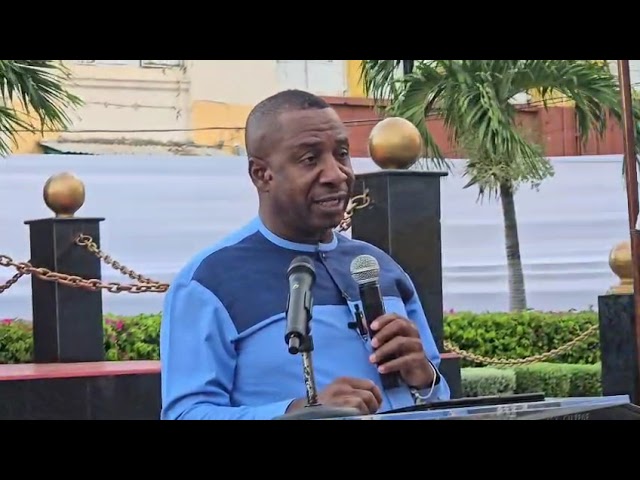
    On a quiet, reflective Sunday in downtown Kingston, Jamaica, community members, grieving families, and civic leaders gathered at the Secret Garden for a special candlelight vigil, a core event marking the island’s annual Child’s Month. This year’s national observance carries a urgent, targeted theme: “Prioritising Our Children’s Mental Health: Strong Minds, Safer Future”, turning public attention to a crisis that has long flown under the radar. Opening the ceremony, Kingston Mayor Andrew Swaby issued a stirring call for cross-societal unity to confront the unseen suffering plaguing thousands of Jamaican young people.

    Swaby drew sharp attention to the “silent battles” that many of the nation’s children wage every day away from public view: unaddressed trauma, persistent fear, systemic neglect, and crippling emotional pain. Too often, he emphasized, these hidden struggles do not remain hidden forever – they escalate and end in irreversible, devastating loss of young life, a cost that no community can afford to bear. For Swaby, the vigil was far more than a memorial to the children whose lives were cut short by tragic circumstances. He framed it as a “sacred pause” – a moment for the entire nation to stop, reflect, and remember that every child who died carried unique potential, unfulfilled promise, and inherent purpose that was lost to systemic inaction.

    Attendees took part in solemn, intentional rituals to honor the fallen: lighting candles that cut through the dim garden air, laying wreaths to mark grief and remembrance, and observing a minute of complete silence to hold space for the pain of grieving families. When the moment ended, Swaby challenged every segment of Jamaican society to confront an uncomfotable question: Is the nation truly doing enough to lift up and support its young people?

    Protecting children, he stressed, is not the responsibility of a single government agency or one group – it is a shared duty that binds together families, educators, community leaders, and every Jamaican citizen. The gathering’s glowing candles, he said, were not just symbols of remembrance; they represented a collective promise to the nation’s young: that the country will commit to protecting children, nurturing their mental well-being, and building a more secure future for coming generations.

    Beyond a call for individual action, Swaby pushed for systemic change, demanding stronger, more robust institutional frameworks that address the root causes of harm to children. He named pervasive community violence and crippling social pressures as two of the most damaging underlying forces, and called for a collective reimagination of Jamaican communities – spaces where every child can grow feeling safe, seen, and valued. Extending sincere condolences to all families in attendance who had lost a child, Swaby urged continued targeted support for those affected by tragedy and a renewed commitment to cross-group collaboration that puts children’s safety and well-being at the center of national priorities. The ceremony closed with a quiet, peaceful procession through the Secret Garden, as attendees carried their candles through the green space, carrying the mayor’s call back to their homes and communities.

  • Tied to my ex

    Tied to my ex

    A woman facing an agonizing romantic dilemma recently reached out to relationship counselor Rev. Christopher Brodber for guidance, opening up about the complicated secret she has carried throughout her two-year engagement.

    The woman explained that she began seeing her current fiancé as a rebound relationship after ending things with her high school sweetheart, who she left after he was unfaithful to her. Though her ex never wanted a long-term commitment after their breakup, she maintained an intimate connection with him, in large part because of the deep emotional bond she formed with his son, whom she helped raise as her own during her original relationship with her ex. Now that her fiancé has proposed and made his long-term intentions clear, she finds herself torn between the steady, serious partnership he offers and the lingering attachment she still holds to her ex.

    Unsure of how to proceed, she asked Brodber whether she should confess her ongoing affair to her fiancé immediately, or wait and end things with her ex before revealing her deception.

    In his response, published on Jamaica Observer’s “Get on The Counsellor’s Couch” advice column, Brodber emphasized that any relationship built on deception stands on an unstable, shaky foundation. Drawing a parallel to the biblical teaching of building one’s life on solid rock rather than shifting sand, he noted that hidden dishonesty will eventually erode any trust partners build, and can wash away all the time, energy and love a person has invested in a relationship.

    Brodber’s core recommendation was that the woman must confess the full truth to her fiancé, no matter how frightening that outcome may be. He acknowledged that her honesty will almost certainly cause deep pain and anger, and may even lead her fiancé to end the engagement. But he stressed that the woman owes her fiancé, who has loved her enough to propose marriage, the respect of full transparency. Even if the relationship ends, he said, doing the right thing will leave her with a clearer conscience.

    Beyond calling for full disclosure, Brodber also encouraged the woman to do deep self-reflection to unpack why she has risked a stable, committed relationship for a casual, unstable connection with an ex who betrayed her once and has no interest in a future together. He suggested that the root of her confusion likely comes from unresolved emotional baggage from past relationships or childhood experiences, such as low self-esteem, unaddressed fears, or unhealthy emotional dependency.

    To work through this uncertainty, Brodber suggested that stepping away from both relationships entirely to spend time alone would help her gain clarity, heal, and rebuild her life on a foundation of honesty. He pushed back on the common idea that she can “have the best of both worlds,” reminding her that actions always have consequences: just as the Bible teaches, you reap what you sow, and sowing deception will eventually produce a harvest of heartbreak.

    Broken down into clear, actionable steps, his final guidance centered on radical integrity and intentional choice. First, he told her to make a clear decision about her future: if she cannot give up the casual relationship with her ex, she must end things with her fiancé immediately. Maturity, he noted, requires making hard choices and accepting the consequences of your actions. Second, when she speaks to her fiancé, she should create a safe, intentional space to confess, prepare for any reaction, offer a full apology, and ask for forgiveness regardless of whether he chooses to stay in the relationship. He also recommended that she have support on hand in case the conversation becomes volatile.

    Closing his advice, Brodber framed marriage as a sacred, weighty institution that requires full commitment and honesty to thrive. “Every treasure can bring trouble if it isn’t cared for properly,” he wrote, ending with a prayer that the woman finds the wisdom and courage to choose the honest path she needs to take.

    Readers can submit their own relationship questions to Rev. Brodber’s “Get on The Counsellor’s Couch” column via e-mail at allwoman@jamaicaobserver.com.

  • The law relating to changing a woman’s name

    The law relating to changing a woman’s name

    A soon-to-be-married woman in Jamaica recently reached out to prominent Jamaican women’s rights advocate and senior attorney Margarette May Macaulay with a pressing legal question, sparked by conflicting guidance from her wedding officiant and her married boss. The woman explained that her boss, who recently wed, had chosen to combine her maiden name with her husband’s surname without using a hyphen – a choice that let her avoid the hassle of reissuing all her official identity documents, from driver’s licenses and passports to tax registration numbers. Eager to follow this same path ahead of her own wedding, the woman hit an unexpected roadblock when her counsellor, who also serves as the pastor officiating her marriage, insisted that combining two last names without a hyphen is not legally recognized in Jamaica, and refused to accommodate her stated wish.

    In a clear, authoritative response published for the public, Macaulay immediately debunked the pastor’s claim as entirely incorrect. Under Jamaican law, which follows common law principles that remain unchanged by national legislation on this issue, Macaulay confirmed that every woman marrying in Jamaica holds full, exclusive legal right to choose how she structures her surname after marriage. This includes four fully valid options: retaining only her original maiden name, adopting solely her husband’s surname, adding her husband’s surname to her own with a hyphen, or adding the husband’s surname without a hyphen. All of these choices are equally legally binding, the attorney emphasized.

    Macaulay further clarified that the long-standing social tradition of women automatically adopting their husband’s full surname was never a legal requirement. Instead, it was a cultural norm rooted in historical systems that suppressed the rights of married women, a practice that has been rendered obsolete as fundamental human rights principles have become the global and national standard. Nowhere in Jamaica’s Marriage Act is there any mandate requiring a married woman to change her surname at all, nor any rule that forces women to hyphenate combined surnames. The question of what name a woman uses for her legal identity after marriage is solely her decision, Macaulay stressed, and all public and private institutions – from government agencies to schools, hospitals, and commercial entities – are legally required to honor that choice. Any person or organization that denies a woman this right is acting unlawfully, violating her fundamental legal autonomy.

    For women who have already been forced into an unwanted surname arrangement due to similar misinformation, Macaulay outlined a clear remedy: the woman can legally adjust her name through a deed poll process. If the pastor’s incorrect legal guidance led to this unnecessary extra step, Macaulay noted, the pastor who spread the wrong information is responsible for covering all associated costs, including the deed poll fee and any charges for updating identity documents.

    Macaulay closed by emphasizing that this legal right extends to all women, whether they are about to marry or have been married for years. No individual, regardless of their social standing or professional authority, has the right to dictate a woman’s choice of surname. Once a woman begins using the combined or single surname she selected immediately after her wedding, that becomes her legal identity for life, unless she chooses to make a further change down the line. She also urged the woman to share this clarification with her pastor, to prevent him from spreading misinformation and violating the rights of other future brides in the future.

    This response was published via the All Woman advice column of the Jamaica Observer, where Macaulay answers public legal questions focused on women’s rights. Macaulay, a veteran attorney, is also a Supreme Court mediator, notary public, and longstanding advocate for women’s and children’s rights in Jamaica.

  • Wild duck hunting is illegal, NEPA warns

    Wild duck hunting is illegal, NEPA warns

    KINGSTON, Jamaica — In a public advisory issued this Monday, Jamaica’s National Environment and Planning Agency (NEPA) has reinforced longstanding legal protections for all wild duck populations across the island, reminding residents and visitors that harming, hunting, or trapping these birds is a criminal offense under national law. The official warning comes in response to verified, credible accounts of unregulated hunting and trapping activities documented across multiple Jamaican parishes, actions that NEPA confirms directly violate the island’s Wild Life Protection Act.

    This piece of legislation extends full legal protection to every native bird species in Jamaica, encompassing not only all year-round resident duck populations but also migratory duck varieties that travel to the island on a seasonal basis. To clarify the scope of protections, NEPA outlines key differences between the two groups: resident species such as the vulnerable West Indian Whistling Duck (*Dendrocygna arborea*) live and breed within Jamaica’s borders year-round, while migratory species including the Blue-winged Teal (*Spatula discors*) and Ring-necked Duck (*Aythya collaris*) rely on Jamaica’s warm, resource-rich landscapes as a critical stopover and wintering habitat each year.

    Jamaica’s expansive network of wetlands and inland waterways does more than support local waterfowl: these ecosystems serve as globally important conservation sites that underpin biodiversity across the Caribbean region and the broader Western Hemisphere. Illegal hunting of wild ducks, NEPA emphasizes, does not just threaten targeted waterfowl populations—it disrupts the delicate ecological balance of these critical habitats, putting the entire range of wildlife that depends on wetland ecosystems at risk.

    In response to the recently reported incidents, the agency confirmed that it has already launched formal investigations to identify and prosecute individuals involved in the illegal activity. NEPA also issued a clear reminder of the steep penalties for violations of the Wild Life Protection Act: anyone convicted of hunting, trapping, or illegally possessing protected wild species including wild ducks can face fines as high as JMD $3 million.

    To strengthen enforcement of these protections, NEPA is calling on the Jamaican public to become active partners in conservation. The agency is urging anyone with information about unreported illegal hunting activity to come forward and share details through multiple accessible channels. Tipsters can contact NEPA directly at 876-754-7540, reach the agency toll-free at 888-991-5005, or report incidents to local law enforcement via the national 119 emergency line or the nearest police station.

  • Bartlett excited by launch of UWI’s Research Support Fund

    Bartlett excited by launch of UWI’s Research Support Fund

    Jamaica has launched a landmark JMD 100 million Research Support Fund for the Faculty of Medical Sciences (FMS) at The University of the West Indies (UWI) Mona Campus, with government officials framing the initiative as a critical intersection of medical progress, public confidence and national economic growth.

    Speaking as the keynote speaker at the launch event held last Tuesday in St. Andrew, Tourism Minister Edmund Bartlett argued that the fund is far more than a simple injection of capital into academic research. For Jamaica, whose economy relies heavily on tourism as a primary engine of growth, the initiative opens new pathways for aligned development across health science and the travel sector, he said.

    “This represents a launch of possibility, signaling a deeper bond between scientific advancement, societal well-being and the country’s long-term economic future — especially through the lens of tourism,” Bartlett emphasized during his address.

    The minister positioned the new fund within a broader national “tourism, health and resilience” strategy, noting that the sustainability of Jamaica’s $3 billion-plus tourism industry hinges entirely on public trust. Unlike common perceptions that frame tourism as only driven by scenic beauty and cultural attractions, Bartlett pointed out that modern travelers prioritize assurance of safety, stability and proactive health preparedness when choosing destinations.

    “Tourism is not merely about movement of people across borders — it is about confidence,” Bartlett said. “Trust is the decisive factor that drives travel decisions, attracts foreign investment and encourages visitors to return year after year.”

    That foundational trust, he explained, can only be built on a robust public health system, cutting-edge local research capacity and a proven ability to respond rapidly to emerging public health crises. Bartlett defined tourism health resilience as a nation’s ability to anticipate, detect and mitigate health threats without derailing economic stability, a mandate that extends beyond clinical care to protecting tourism workers, supporting resort-dependent communities, and upholding strict standards for food safety, water quality and public sanitation.

    To turn this vision into reality, Bartlett called on FMS and the affiliated University Hospital of the West Indies to take a leading role in strengthening Jamaica’s national destination assurance framework. Medical researchers and clinical professionals, he noted, are the unsung guardians of Jamaica’s global reputation as a safe, welcoming travel destination.

    Demonstrating the Jamaican government’s commitment to the initiative, the Tourism Enhancement Fund (TEF) has contributed JMD 10 million to the overall research fund. The National Health Fund (NHF) has added JMD 35.4 million to the pot, earmarked specifically for advancing research into mental health and maternal health outcomes. Additional funding is expected to come from private sector and institutional partners in the coming months.

    Looking ahead, Bartlett laid out an ambitious vision for UWI Mona to grow into a central pillar of Jamaica’s national health security architecture. His vision includes expanded access to telemedicine for rural and underserved communities, more coordinated emergency response systems, and greater integration of artificial intelligence into clinical care and public health monitoring. He also called for the fund to be used to support ground-breaking interdisciplinary research that connects medical science, tourism policy, data governance and AI ethics, creating a model that can be replicated across small island developing states.

    Through all these efforts, Bartlett stressed, protecting the health of both international visitors and Jamaican citizens remains the core mission — one that is inseparable from sustaining the country’s tourism industry and delivering inclusive long-term national development.