分类: society

  • Trap Laid After Jaguar Attacks Pets in Hattieville

    Trap Laid After Jaguar Attacks Pets in Hattieville

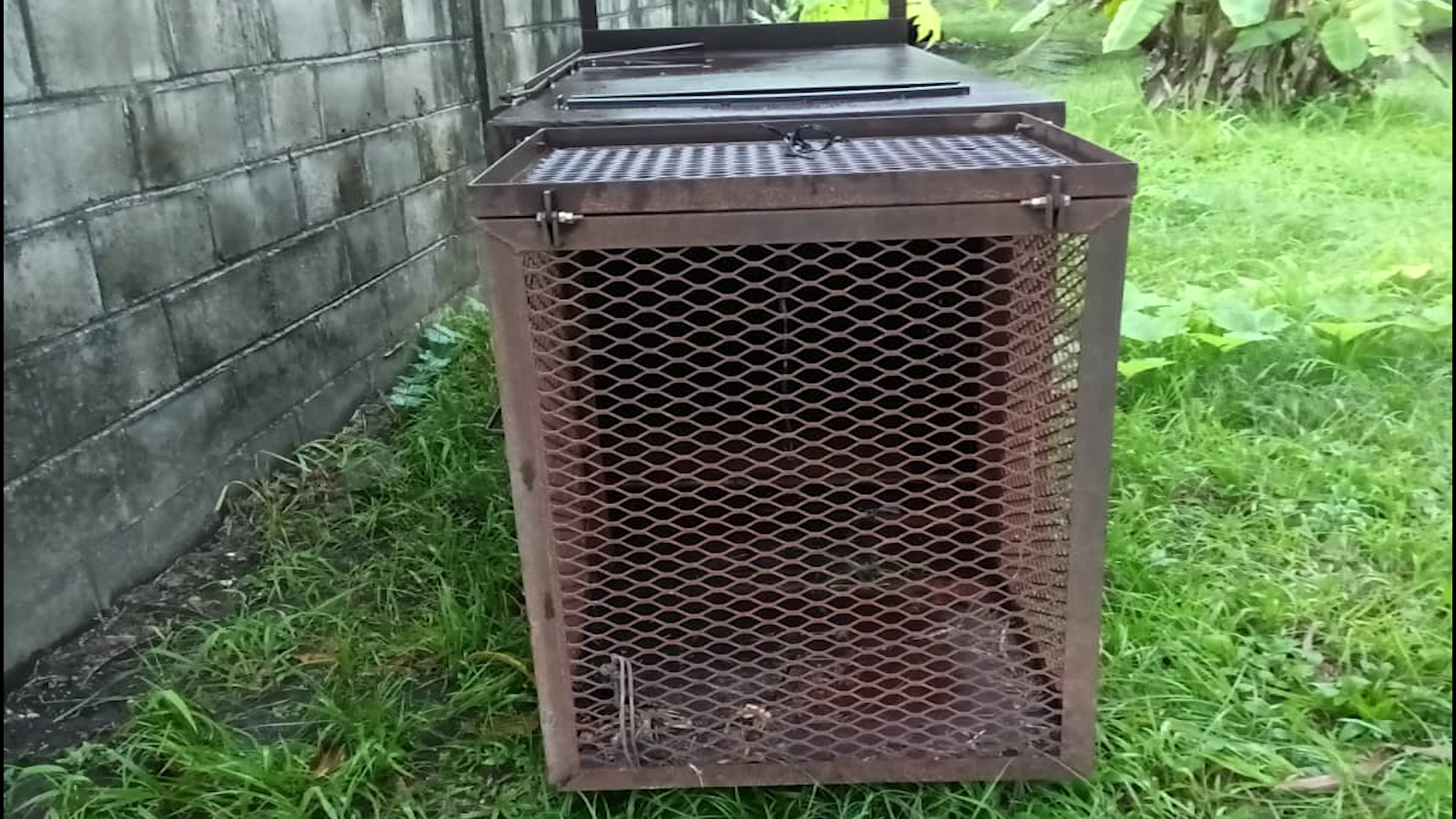
    Residents of the small Belizean community of Hattieville are now on high alert after a wild jaguar ventured deep into the heart of the village, launching a series of fatal attacks on local domestic dogs near the George Price Highway. Wildlife authorities have responded quickly to the public safety threat by placing a specialized capture trap in a central residential area, aiming to safely catch and relocate the elusive predator before it poses greater risk to people or more pets.

    The large feline was first documented by local residents in the early hours of last Friday. Since that initial sighting, multiple independent reports have placed the jaguar in close proximity to occupied homes, the village police station, and the local community park. For locals accustomed to a quiet rural lifestyle, these repeated close encounters with one of the Western Hemisphere’s largest big cats have been deeply unnerving.

    Stephen Coleman, chairman of the Hattieville community leadership, noted that this incursion marks the first time in recent local history that a jaguar has wandered so far into the center of the settled village. The unusual event has sparked dual concerns: not just for the safety of local residents and their animals, but also for the well-being of the jaguar itself, which appears to have strayed far from its natural forest habitat.

    In an interview, Coleman detailed the chain of response that followed the first confirmed sighting: “Around 1:30 to 2 a.m., a resident contacted me to report she had spotted the jaguar inside the village limits. She told me the animal had already killed one of her neighbor’s dogs. She had already reached out to local police, the Ministry of Forestry, and the national zoo, and the Forestry Department dispatched a capture trap to be deployed that same night. She reached out to our local leadership to help set the trap and bait it, so we can safely remove the jaguar from the village. Our priority is getting it out before it harms more domestic animals, or hurts any residents.”

    Coleman added that while jaguar sightings near the village’s outlying farmlands have been reported by locals in past years, an incursion this deep into residential areas is unprecedented for the community. News outlets will continue to provide updates on the operation as wildlife officials work to capture and relocate the animal.


  • Saint Lucia tops region in CPEA, records improvement across all subjects

    Saint Lucia tops region in CPEA, records improvement across all subjects

    The small Caribbean nation of Saint Lucia has solidified its position as the regional leader in primary-level education after securing first place in the 2026 Caribbean Primary Exit Assessment (CPEA), outperforming all other participating jurisdictions across every tested subject area, and claiming the top two individual rankings in the entire region.

    According to official data released by Saint Lucia’s Chief Education Officer Beverley Dieudonne, the island nation’s national average score climbed steadily from 77.24% in 2025 to 79.26% in this year’s assessment, marking measurable improvements across all four core subject areas tested. Breaking down the results, Language Arts saw the most notable average increase, rising from 79.95% to 81.63%. Science posted an average score of 80.09%, Social Studies hit 80.07%, and Mathematics also recorded a modest uptick from 72.45% to 74.69% — though the subject still remains the lowest-performing area for test-takers across the country.

    Dieudonne attributed the consistent across-the-board gains to the education system’s targeted intervention strategies, which are shaped and refined by ongoing assessment data. “This tells us that the targeted interventions we introduced, guided by assessment data, are producing positive results,” she noted.

    Standing out among institutional performers once again this year is Saint Lucia’s Montessori Centre, which counted four students among the region’s top 10 highest scorers. Leading all test-takers across both the nation and the wider Caribbean is Emerald Alfred of the Montessori Centre, who earned a near-perfect score of 99.2%. Close behind in second place regionally is Alexander Charles of the Augier Combined School, scoring 99.0% — just 0.2 percentage points behind the top mark.

    Danny Butcher, Minister in the Ministry of Education, extended congratulations to all 1,890 Saint Lucian students who sat for this year’s assessment, emphasizing the importance of celebrating young academic achievement. “We must celebrate our students,” he said.

    Geographically, District One posted the highest district-level average score at 84.66%, followed by District Seven with 81.18% and District Two with 80.73%. A long-running performance gap between genders persists across the nation, as female students outperformed their male peers in every subject area. The average score for girls reached 80.47%, while the average for boys came in at 77.93%.

    Education Minister Kenson Casimir confirmed that the ministry takes this performance gap seriously, and is moving forward with expanded, targeted support to boost male students’ outcomes starting in early primary education. “This ministry continues to take that gap seriously rather than treating it as a footnote, and we will be expanding literacy engagements and other interventions specifically targeted at boys in the early primary grades,” Casimir stated.

    The full list of Saint Lucia’s top-performing CPEA students is as follows: 1st place (99.2%): Emerald Alfred (The Montessori Centre); 2nd place (99.0%): Alexander Charles (Augier Combined School); 3rd place (98.8%): Angelina Chreiki (The Montessori Centre); 4th place (98.6%): Ahil Auguste (Camille Henry Memorial School); 5th place (98.2%): Aria Gustave (Balata Combined School) and Iouanola Finisterre (Dame Pearlette Louisy Primary School); 7th place (98.0%): Grace Herman (Augier Combined School) and Nathan Laurencin (Carmen Renee Memorial School); tied for 9th place (97.8%): Camiya Fame Donaie (River Doree Combined School), Caitlyn Lenya Montoute (Anse La Raye Primary School), Anton D’Auvergne (St. Aloysius R.C. Boys’ Primary School), Ervell Beaubrun (Soufrière Primary School), Liam Freeman (Camille Henry Memorial School), Brielle Mayers (Carmen Renee Memorial School), Danielle Farida (The Montessori Centre), and Newt Leonce (The Montessori Centre).

  • Minister rejects view that youth uninterested in farming

    Minister rejects view that youth uninterested in farming

    For years, conventional wisdom has held that young people across Barbados have turned their backs on agriculture, writing off the sector as an unappealing career path. But the island nation’s top agricultural official is pushing back against that long-held narrative, revealing that months of on-the-ground engagement with producers and educators have uncovered a hidden truth: a growing cohort of young Barbadians are eager to build sustainable careers in farming, if only given clear pathways and structured support to thrive.

    Delivering remarks at the “Looking Forward: Agriculture 2030” colloquium hosted by Barbados’ Ministry of Agriculture and Food and Nutritional Security on Monday, Agriculture Minister Dr. Shantal Munro-Knight called the idea of widespread youth apathy toward agriculture an outright myth. “We have young people every single year who are doing courses at BCC, SJPI and the University of the West Indies. You want to tell me that young people are not interested? Those courses are there,” she told attendees, pointing to consistent enrollment in agricultural training programs across the country’s post-secondary institutions as tangible proof of unmet demand.

    During her months of one-on-one and group meetings with working farmers across the country, the minister said she encountered numerous examples of young producers already building successful operations, naming onion farmer Shimon Agard as a standout example of the untapped potential waiting to be unlocked across the sector. “Young people are interested in agriculture. What is lacking is the strategic pathway for how we provide opportunities for them,” she emphasized.

    To address that gap, Dr. Munro-Knight announced that expanding access to opportunity for young entrants will be a core pillar of the ministry’s ongoing agricultural transformation agenda. A suite of new and expanded initiatives is already in development, starting with a scaled-up national internship program designed to give agricultural students from Barbados Community College, Samuel Jackman Prescod Institute of Technology, and the University of the West Indies hands-on professional experience across all ministry departments and regulatory agencies. The minister has personally committed to opening the program to every eligible student who wishes to participate, guaranteeing a placement for all interested candidates.

    Additional planned programs include a nationwide summer camp focused on introducing teenage youth to farming, agribusiness management, agricultural science, and modern agritech, alongside deeper partnerships with primary and secondary schools to build a culture of agricultural entrepreneurship from an early age. Existing school greenhouses will be redeveloped into hands-on learning hubs, where students will not only grow crops but also manage the full commercial lifecycle of their produce, retaining all revenue from sales to embed practical agribusiness skills within a working student-led model.

    Beyond structural support for new farmers, the minister argued that reconnecting young Barbadians to agriculture requires a national shift in public attitudes toward the sector. “I don’t believe that the average Barbadian has really connected with the value of agriculture,” she said, noting that a public outreach campaign focused on winning “hearts and minds” will be a key component of the strategy to reframe agriculture as a valuable, dynamic career path for young people.

    James Paul, chief executive of the Barbados Agricultural Society and the leading spokesperson for the country’s farming community, threw his support behind the minister’s agenda, but called for deeper, long-term commitment beyond preliminary outreach. Paul warned that efforts to attract young people to agriculture have too often been treated as a symbolic showpiece rather than a core policy priority, arguing that sustained systemic support is required to help new farmers build lasting, profitable operations. “We need to [ensure]… that we have systems in place to support them so that those do not fail and sometimes send a negative message to persons who want to invest in the sector too,” he explained.

    For Dr. Munro-Knight, the work of nurturing the next generation of Barbadian farmers is about far more than expanding career opportunities: it is a critical investment in the country’s long-term food security and agricultural resilience. By shifting public perceptions, opening clear pathways to entry, and building robust support systems, the ministry aims to turn growing youth interest into a stronger, more sustainable agricultural sector for all Barbadians.

  • State to transfer 224 more homes to long-term tenants

    State to transfer 224 more homes to long-term tenants

    Barbados’ House of Assembly has approved a landmark piece of legislation that will transfer ownership of 224 state-constructed residential properties directly to long-term tenant families, marking the second major phase of a national initiative to turn decades of rental occupancy into full outright home ownership. This latest approval pushes the total number of properties transferred under the programme to 428 within just three months, dramatically accelerating a policy push designed to deliver tangible wealth to ordinary households across the country.

    Officially titled the State Acquisition and Vesting of Property Number 2 Bill, the legislation paves the way for title transfers for homes spread across seven residential estates: Eden Lodge, Haynesville, Silver Hill, Deacons Farm, Bonnetts, Grazettes and Wotton. According to Housing Minister Chris Gibbs, this round of transfers will mark the first time residents in areas including Eden Lodge have received formal legal titles to the homes they have occupied for generations.

    The first round of the current accelerated programme, concluded three months prior, transferred ownership of 204 state homes. Combined with this latest batch of 224, the government has moved more than 400 properties into private hands in a single quarter – a pace that Minister Gibbs says outstrips the slow progress of earlier policy efforts.

    Minister Gibbs framed the new legislation as a cornerstone of the government’s commitment to advancing social equity and building lasting intergenerational wealth for Barbadian families. Unlike prior efforts that relied on slow, convoluted administrative processes, the current programme leverages existing constitutional powers to acquire the properties for public benefit and transfer titles directly to eligible residents, cutting through the bureaucratic red tape that delayed past initiatives.

    “This reaffirms the government’s unwavering commitment to place property ownership into the hands of ordinary Barbadians,” Gibbs told the legislative chamber during debate. “Because of this government, housing policy does not end when we build a house. Housing policy is complete when a family owns its home.”

    Gibbs drew a clear contrast between the current administration’s progress and the 2013 Tenanties Transfer of Terraced Units Act, which saw only 597 home transfers completed over the course of 12 years between 2013 and 2025. The current programme has nearly matched that 12-year total in just three months, a shift Gibbs calls a testament to the government’s innovative, people-centered approach to policy.

    “In three months, we’ve reduced that backlog,” Gibbs said. “This administration, this government is about innovative ways to further our agenda to help people, to empower people in this country. We’ve found ways to empower people, and this is but another way to do so, simple but transformational.”

    To address ongoing concerns raised by residents and community stakeholders about public infrastructure and neighboring property rights, the legislation includes explicit protections for community interests. It preserves public access rights to common areas, protects utility corridors and legal easements, and upholds the residential zoning of the affected areas while safeguarding the property rights of adjacent landowners.

    The National Housing Corporation will also provide transitional support to new homeowners as they make the shift from renting to owning, including guidance on routine property maintenance and navigating residential insurance requirements, Gibbs confirmed. He extended recognition to public servants across the Land Registry, the Land and Surveys Department, and the National Housing Corporation for their work verifying resident eligibility and processing the hundreds of new title documents.

    Minister Gibbs added that the government stands ready to introduce a third phase of the programme if needed, to ensure that every eligible resident across the country has the opportunity to gain ownership of their long-term occupied home.

    “Every title we transfer is another Barbadian family moving from tenancy to ownership, from uncertainty to security, from shelter to wealth,” Gibbs said. “Governments are remembered for the buildings that they construct, but the truly transformative governments are remembered for the assets that they place in the hands of their people.”

  • Jaguar Attacks Dogs in Hattieville

    Jaguar Attacks Dogs in Hattieville

    A rogue jaguar has sparked fear among residents of the small Belizean village of Hattieville after carrying out two unprovoked attacks on domestic dogs over a single weekend, leaving one canine dead and prompting wildlife authorities to launch a capture operation. Local residents reported the back-to-back incidents to regional law enforcement and wildlife management officials earlier this week, after the large predator ventured into populated residential areas twice in two days.

    The first encounter unfolded early Friday morning, when the jaguar slipped into a residential yard and targeted a local pet dog. One resident, who asked to remain unnamed, shared that the animal initiated an immediate attack, triggering a vicious struggle that stretched on for between 35 and 45 minutes. By the time the confrontation ended, the dog had succumbed to its injuries. In the chaos of the attack, the jaguar also caused significant damage to a parked vehicle on the property. Initially, the dog’s owners dismissed the commotion as nothing more than a routine scuffle between their pets and a stray neighborhood cat, never expecting a wild big cat had entered their yard.

    Surprisingly, the jaguar returned to the same residential area at roughly the same time on Saturday morning, launching a second attack on a group of domestic dogs. This time, however, the five dogs present banded together to fend off the predator, successfully confronting the jaguar and chasing it off into the surrounding vegetation before it could cause any fatal harm.

    It was not until Monday that villagers formally submitted reports of both incidents to Hattieville Police Department and the Belize Forest Department, the government agency tasked with managing native wildlife and human-wildlife conflict. Officials from the department quickly traveled to the village to assess the situation, and by Tuesday morning, a large cage trap had been deployed at the site of the attacks in a bid to capture the roaming jaguar and resolve the ongoing threat to village residents and their pets. Local authorities have not yet announced any updates on whether the animal has been captured, and residents have been advised to remain vigilant when outdoors, especially during early morning hours when the jaguar has previously struck.

  • Two Persons Charged with Teen’s Murder

    Two Persons Charged with Teen’s Murder

    In a developing criminal investigation out of southern Belize, law enforcement officials have lodged formal murder charges against two people accused in the fatal early morning shooting of 16-year-old Isaiah Norales, who was gunned down while cycling through a neighborhood in Dangriga this past Sunday.

    The two accused are 25-year-old Naheem Bonilla, a local welder and resident of Dangriga Town, and a 17-year-old juvenile male, also from the same community. Belizean law prevents public identification of minor defendants in most criminal cases.

    According to Assistant Commissioner of Police Hilberto Romero, who leads the country’s National Crime Investigation Branch, the deadly violence unfolded just after 5:00 a.m. on Penn Road in the Benguche area of Dangriga. As Norales rode his bicycle through the residential zone, two men traveling on a motorcycle pulled alongside him, and one of the pair fired multiple shots at the teen before fleeing the scene.

    First responders rushed Norales to a local medical facility for emergency care, but his wounds proved fatal, and he was pronounced dead shortly after arrival. Romero told reporters that lead investigators have traced the killing back to a pre-existing personal conflict between Norales and the two accused parties.

    Family members of the victim shared new details about Norales’ short life in an interview with local outlet News Five, explaining that the teen had been orphaned at a young age and had been living with extended family members who worked hard to shield him from dangerous community influences. In a critical break for the investigation, relatives also confirmed that Norales was able to identify his attacker to authorities before succumbing to his injuries.

    The charges mark a major milestone in the early investigation, with legal proceedings expected to move forward in the coming weeks as the court system processes the case against the two defendants.

  • Whose Job Is It to Protect a Child? This is Belize’s Child Protection Plan

    Whose Job Is It to Protect a Child? This is Belize’s Child Protection Plan

    In a landmark shift toward prioritizing youth welfare over punitive justice, Belize’s National Committee for Families and Children (NCFC), in partnership with UNICEF, launched a transformative five-year national Child Protection and Child Justice initiative on June 30, 2026. The new strategy replaces fragmented, reactive approaches to handling children who interact with the justice system — whether as victims, witnesses, or alleged offenders — with a unified, nationwide coordinated framework.

    The rollout of the initiative coincided with a Child Justice Guidelines Validation Session held in Belize City, where stakeholders gathered to review and approve core operating rules that center privacy, rehabilitation, and diversionary programming. The overarching goal of these guidelines is to steer young people away from cycles of crime and support their successful reintegration into community life, rather than exposing them to the harms of traditional punitive justice processing.

    NCFC Director Shakira Sutherland emphasized that the entire framework is built around centering children’s fundamental rights in every decision-making process. “No matter what role a child has in a legal interaction, their right to protection comes first,” Sutherland explained during the session. “At the end of the day, they are still children, and their rights deserve to be prioritized above all else.”

    A key core protection outlined in the new guidelines is the mandatory withholding of personal identifying information for any child involved in legal proceedings. Sutherland noted that this policy protects both the mental and physical well-being of young people, reflecting the country’s new, serious commitment to holistic child safety. Additionally, the framework places significant emphasis on diversion programmes, currently being finalized by Belize’s Department of Human Services and Community Rehabilitation Department. These programmes are designed to give children in conflict with the law an alternative path to traditional court processing and punishment, focusing on rehabilitation rather than penalty.

    The validation session included input from a broad range of stakeholders, including parents, children, and youth representatives serving as child parliamentarians. Joselynn Campos, one of the participating child parliamentarians, highlighted that the new guidelines fill a longstanding gap in Belize’s youth protection system. For years, Campos noted, children who came into contact with the law were routinely left in more vulnerable positions due to inadequate, improper handling of their cases. “These guidelines help us truly center the experiences and emotions of these young people, and understand the context behind their actions,” she explained. “That’s a critical change that has been needed for a long time.”

    Looking ahead, the next phase of the initiative is full nationwide implementation, a step that Sutherland stressed will require collective buy-in across all levels of Belizean society. Child protection is not the responsibility of a single government agency, she noted: it requires active engagement from parents, local communities, multiple government ministries and departments, and the general public. “This is everybody’s concern,” Sutherland said, framing the new strategy as a shared national commitment to protecting Belize’s most vulnerable young people.

  • Sandals National Learn to Swim Week. We Ready!

    Sandals National Learn to Swim Week. We Ready!

    Grenada is gearing up to host its annual Sandals National Learn to Swim Week between July 6 and 10, capping off a foundational instructor upskilling program that aims to raise the bar for swimming education across the island nation, including its smaller sister islands Carriacou and Petite Martinique. This year’s event brings a major upgrade to local swim instruction: for the first time, Grenadian instructors have completed the internationally accredited Discover Water Swim Instructor Course developed by global governing body World Aquatics.

    The rollout of the program traces back to earlier this year, when the Grenada Amateur Swimming Association (GASA) sponsored Tara Baksh, Grenada’s newly appointed national Discover Water lead, to attend a specialized training conference in Aruba. Baksh returned with full certification to deliver the World Aquatics-endorsed curriculum to local instructors, marking the first time the standardized program has been brought to the country.

    Unlike traditional training that focuses heavily on stroke technique, the Discover Water program takes a holistic approach to building capable, confident swimmers. Beyond core swimming skills, the curriculum trains instructors to embed water safety, survival protocols, critical decision-making in aquatic environments, and confidence-building into every lesson. All participating instructors also completed full CPR certification as part of the training. The program emphasizes modern, child-centered teaching methods designed to make lessons more engaging, fun, and effective for young learners.

    Reflecting on the recent training sessions for local instructors, Baksh highlighted the high level of engagement among participants. “The instructors were engaged, eager to learn, and willing to participate both verbally and practically. I felt I was able to demonstrate how to incorporate fun into every lesson while still teaching children the core swimming skills they need,” Baksh said. She noted that while local instructors already had foundational teaching experience, the program added critical new tools to their practice: “This course has provided them with valuable tools for communicating more effectively with younger swimmers, so they understand what they are doing, why they are doing it, and how to think critically and solve problems in the water.”

    Looking forward, Baksh and local swimming advocates have ambitious plans to embed this global training standard into Grenada’s national swimming ecosystem. She aims to make the Discover Water certification a permanent core requirement for all new swim instructors in the country, through ongoing collaboration with GASA and local non-profit Get Grenada Swimming. Longer-term goals include expanding the child-centered teaching methods to primary schools and after-school programs across all three islands.

    This year’s Sandals National Learn to Swim Week will run from 9 a.m. to 12 p.m. daily across 15 different locations spanning Grenada, Carriacou and Petite Martinique. The event is coordinated by Get Grenada Swimming in partnership with Sandals Grenada, aligned with the organization’s long-running mission to ensure every child in Grenada has access to free swimming training, an essential life-saving skill. For families unable to join during the official event week, additional follow-up lessons will be offered between July 13 and 24 at six participating locations: Grand Anse, Grand Mal, Gouyave, St Mark, Sauteurs, and Grenada Marine in Corinth. These extended sessions are run in partnership with the Ministry of Sports’ Holiday Recreation Programme.

    With a cohort of newly certified instructors, evidence-based global teaching methods, and expanded access across the country, 2025’s Learn to Swim Week is positioned to be the most impactful iteration of the event to date. All lessons offered during the initiative are completely free for participants. Families interested in registering their children can sign up through the official Get Grenada Swimming website at www.getgrenadaswimming.com, or direct questions to the event hotline at 404-5237.

  • International Day of Co-operatives, 4 July 2026

    International Day of Co-operatives, 4 July 2026

    The 2026 International Day of Cooperatives will be marked across the globe on Saturday, July 4, with this year’s campaign centered on the powerful theme “Cooperatives for a Peaceful World.”

    This annual global observance has a deep-rooted history stretching back more than 100 years, earning official United Nations recognition in 1995. It was established to shine a spotlight on the unique and far-reaching contributions cooperative enterprises make to global peacebuilding, social cohesion, and inclusive sustainable development. Beyond celebration, the day functions as a critical global platform to boost public understanding of how cooperative models strengthen local communities and drive equitable economic growth that benefits all members of society, rather than just a select few.

    The 2026 theme is intentionally aligned with United Nations Sustainable Development Goal 16, which calls for Peace, Justice, and Strong Institutions. The framework underscores a core truth: lasting peace can only take root where fairness, equal access to opportunity, and widespread social trust are prioritized. Cooperatives are uniquely positioned to cultivate these foundational conditions, through their structure that ensures broad sharing of economic gains, builds community resilience in the face of crisis, and encourages cross-group collaboration that bridges divides along ethnic, economic, and social lines.

    Across sectors, cooperative models have delivered tangible, life-changing impact around the world. Agricultural cooperatives have boosted food security by connecting smallholder farmers to resources and markets, lifting rural livelihoods out of poverty. Community-focused credit unions have expanded affordable access to financial services for groups historically excluded from traditional banking systems. Worker-owned cooperative enterprises have created stable, dignified employment that gives working people direct agency over their labor and working conditions.

    In Grenada, local organizers are preparing a full slate of community-focused events to mark the occasion. The Grenada Co-operative League Ltd (GCLL) has partnered with the country’s Department of the Co-operatives to roll out a series of public engagement activities. The centerpiece of the local calendar is Co-operative Fair 2.0, set to take place on Friday, July 3 – one day ahead of the official global observance – at the Esplanade Mall Courtyard in St George’s, running from 10 a.m. to 4:30 p.m. At the fair, dozens of local cooperatives will set up displays to demonstrate how core cooperative values – including voluntary open membership, democratic member control, and a prioritization of community well-being – translate into tangible, positive impact for Grenada’s residents.

    This report was published by NOW Grenada, which notes that it is not responsible for the opinions, statements, or third-party media content shared by contributors to the outlet. Readers are invited to flag any abusive content via the outlet’s official reporting channel.

  • Police searching for missing 13-year-old Kemera Murray

    Police searching for missing 13-year-old Kemera Murray

    Law enforcement authorities in Barbados are turning to the community for help in tracing a missing teenager who has not been seen for nearly a week. Kemera Murray, a 13-year-old resident of Blackman Field in The Pine, St Michael, was last reported seen on Monday, June 29, and has not made contact with family or friends since that date.

    Authorities have released a detailed description of the missing teen to help members of the public identify her. Standing approximately 5 feet 7 inches tall with a slim build and dark complexion, Kemera was last spotted wearing a distinctive blue crew-neck T-shirt printed with a bear graphic on the front, paired with dark blue cargo shorts and brown-and-gold slide sandals. Police also confirmed that the teenager is known to regularly visit two areas in the neighboring parish of Christ Church: the coastal district of Oistins and the residential neighborhood of Sayers Court.

    In their official public appeal, law enforcement officials are urging any resident or visitor who may have seen Kemera since June 29, or who holds any information that could lead to her safe location, to contact authorities immediately. Multiple tip lines have been opened to accept information: the main District ‘A’ Police Station can be reached at 430-7242 or 430-7246, the 24/7 national police emergency line is available at 211, anonymous tips can be submitted to Crime Stoppers at 1-800-8477, and information can also be provided in person at any local police station across the island.