分类: society

  • Diving into Opportunity: Students benefit from swimming development classes

    Diving into Opportunity: Students benefit from swimming development classes

    In Kingston, Jamaica, a community-focused swimming initiative is transforming opportunities for dozens of young students across four local primary and basic schools, blending water safety education with long-term career preparation to empower youth from diverse backgrounds.

    Last Thursday, the Progress Learn to Swim Classes (PLSC) held its fourth annual development swim meet at the University of the West Indies Mona Swimming Pool, a showcase designed to highlight the growth and skills built by participants from New Hope Preparatory, St Jude’s Primary, Panton’s Home School, and Bethel Basic School.

    The atmosphere across the venue was electric throughout the day. Young competitors splashed through the pool lanes, laughed between events, and bounded around the pool deck, drawing loud cheers from crowds of parents, teachers, and supporters gathered along the sidelines. Unlike traditional competitive swim events, the meet centered inclusive, age-appropriate activities, ranging from fun object-find challenges and paddle boat races to structured freestyle races that let students of all skill levels test their abilities.

    For PLSC programme coordinator Ainsworth Reid, the annual showcase is far more than a chance for children to show off their new skills—it is a key milestone in the initiative’s core mission: building life-changing skills from early childhood that open long-term economic opportunities.

    “The intention is really to create life skill from early,” Reid explained, outlining the programme’s pipeline model: it introduces swimming to children starting at the basic school level, supports their development through primary and secondary school, and ultimately equips advanced participants with the training to work as swimming instructors or certified lifeguards, even supporting pathways to self-employment. “The sport of swimming carries within itself the opportunity for jobs so we want to kind of bring it from the basic school level all the way through to the high school and beyond,” he added, noting his upcoming goal to expand the programme into five Jamaican high schools.

    Reid framed this fourth staging as clear proof of the programme’s steady growth. While lower full-capacity turnout due to conflicting community events created a small setback, he emphasized that participation levels still marked a noticeable increase from previous years.

    For parents and educators, the impact of the initiative has already been deeply meaningful. Laytoya Rowe, a parent whose daughter Amia Bell of New Hope Preparatory competed, shared that watching her child participate was one of her most joyful recent moments. Though Rowe herself never learned to swim, she has prioritized making sure her child gains the critical skill, echoing the programme’s focus on long-term safety and empowerment.

    Justina Woodstock, a teacher at New Hope Preparatory, echoed that excitement, noting that students have committed to weekly practice sessions at the National Stadium for months ahead of the meet. “They have worked hard. Every Friday they are at the National Stadium practicing and to see them now in action is just a joy,” she said.

    St Jude’s Primary turned out one of the largest groups for the event, with 25 students and six parents in attendance. Teacher Tishana Downer shared that she entered the meet full confidence in her students’ preparation.

    The event also drew interest from secondary education leaders looking to replicate the programme’s success. Rohan Gray, Acting Vice Principal of Edith Dalton High School, attended the meet to observe the initiative’s model, noting that it could fill a critical need for his students, many of whom come from low socio-economic backgrounds. “What I have seen so far is very encouraging and I see where at my school this could actually help our boys to be disciplined and rounded,” Gray said, adding that swimming training would not only build personal discipline but also create accessible career pathways for his students after graduation.

    When the day’s events wrapped up, St Jude’s Primary claimed the overall championship title with 245 total points, followed by Panton’s Home School in second place with 180 points, and New Hope Preparatory in third with 160 points. Even Bethel Basic School students, who participated unofficially in the event, were recognized for their participation alongside all other competitors. Every student took home a certificate of participation to mark their achievement, while each competing school received a trophy for their overall placement, capping a day of growth, community, and celebration for the growing initiative.


  • Fathers who cook for mothers a huge success

    Fathers who cook for mothers a huge success

    On Mother’s Day Sunday, the 10th iteration of Lodge Portmore’s beloved annual ‘Fathers Who Cook for Mothers’ charity gathering unfolded at Ham Stables in St Catherine, drawing widespread acclaim as a resounding community success.

    This decade-old Mother’s Day tradition doubles as a fundraising initiative, and this year’s event directed all proceeds toward covering operational costs for Clifton Basic School, a local primary education institution serving the St Catherine region. Roughly 700 community members turned out to support the cause, and they left fully satisfied after sampling an extensive spread of flavorful, expertly prepared dishes crafted by the participating fathers. Attendees also enjoyed lively entertainment throughout the day from performer Dwight Richards.

    Several standout moments marked the celebration, including a gift presentation where Leighton McKnight awarded a set of custom pillows to Phyllis Scott, with Courts Brand Ambassador Suthania Henry on hand to share in the joyful occasion. In a highlight of the culinary portion of the day, McKnight also took charge of preparing a large, hearty pot of soup for the gathered crowd, showcasing the hands-on spirit that defines the annual gathering.

  • South Florida- based FOGS marks 30 years of service to Jamaica

    South Florida- based FOGS marks 30 years of service to Jamaica

    MIRAMAR, Florida — Against the backdrop of South Florida’s vibrant community, Friends of Good Shepherd International (FOGS) gathered recently to mark a major milestone: its 30th annual fundraising gala. The event was far more than a celebration; it was a reflection of three decades of unwavering commitment to lifting up communities across Jamaica, carrying with it the quiet gravity of 30 years of impactful, mission-driven service.

    The evening’s most anticipated guest was Archbishop Emeritus Charles Dufour of Kingston, the founding visionary behind both FOGS and its parent organization, The Good Shepherd Foundation (GSF). Traveling from his home in Jamaica to attend the anniversary gathering, Dufour brought a legacy rooted in decades of leadership across Jamaica’s Catholic community. A uniquely prominent figure in the country’s church landscape, he holds the distinction of being the only clergy member to have served in all three of Jamaica’s dioceses: the Archdiocese of Kingston, and the Dioceses of Montego Bay and Mandeville. His presence alone anchored the gala in a spirit of deep gratitude and renewed purpose, setting a heartfelt tone for the entire event.

    In one of the evening’s most moving moments, FOGS leadership reaffirmed its annual funding commitment to the Archbishop Dufour Education Scholarship, a program launched one year prior to honor Dufour’s lifetime of achievement. The $1,000 annual award is designed to support high-achieving, deserving Jamaican students pursuing secondary education. The inaugural 2023 scholarship was awarded to Kelliesha Davis, a student at Mount Alvernia High School in Montego Bay, a reminder of the tangible, life-changing impact FOGS’ work creates for young people across the island.

    The keynote address was delivered by Phillip Rose, Jamaica’s Deputy Director of Tourism, who centered his remarks on the island’s ongoing recovery from Hurricane Melissa, the devastating storm that made landfall on Jamaica on October 28, 2023. Rose offered a grounded, deeply personal account of the storm’s destruction and the slow, steady work of rebuilding, emphasizing the irreplaceable role that diaspora organizations like FOGS play in disaster response. Unlike large-scale formal aid efforts, Rose noted, FOGS and similar groups deliver consistent, compassionate support directly to local communities, meeting needs that often go unaddressed by institutional relief.

    Rose’s narrative was amplified by a short, powerful documentary presented by Edward Raine, CEO of Food for the Poor, the gala’s headline sponsor. The video captured raw, on-the-ground footage of the hurricane’s aftermath, paired with stories of local resilience as communities worked to rebuild their homes, schools, and livelihoods.

    The gala also included an awards segment to honor outstanding partners and volunteers whose contributions have advanced FOGS’ mission. Longtime FOGS volunteer Michelle Buteau, whose years of dedicated service have left an indelible mark on the organization, was awarded the 2024 FOGS Humanitarian Award. Buteau was unable to attend the event in person, so her mother Marie accepted the honor on her behalf. The FOGS Corporate Award went to The Yogi Foundation, recognized for its transformative $75,000 donation that will support seven separate community initiatives across Jamaica. Judy James accepted the award on behalf of the foundation.

    Importantly, every dollar raised at the 30th anniversary gala will go directly to expanding Hurricane Melissa relief and recovery efforts across Jamaica, providing critical support to communities still rebuilding months after the storm.

    FOGS operates as the international outreach arm of The Good Shepherd Foundation, a pair of volunteer-led nonprofit organizations with bases in Miramar, Florida and Montego Bay, Jamaica. For 30 years, the organizations have centered their work on improving quality of life for Jamaican communities across three core focus areas: education access, improved healthcare services, and emergency disaster relief.

  • Crumbling roads, flooding push Oakland Crescent residents to breaking point

    Crumbling roads, flooding push Oakland Crescent residents to breaking point

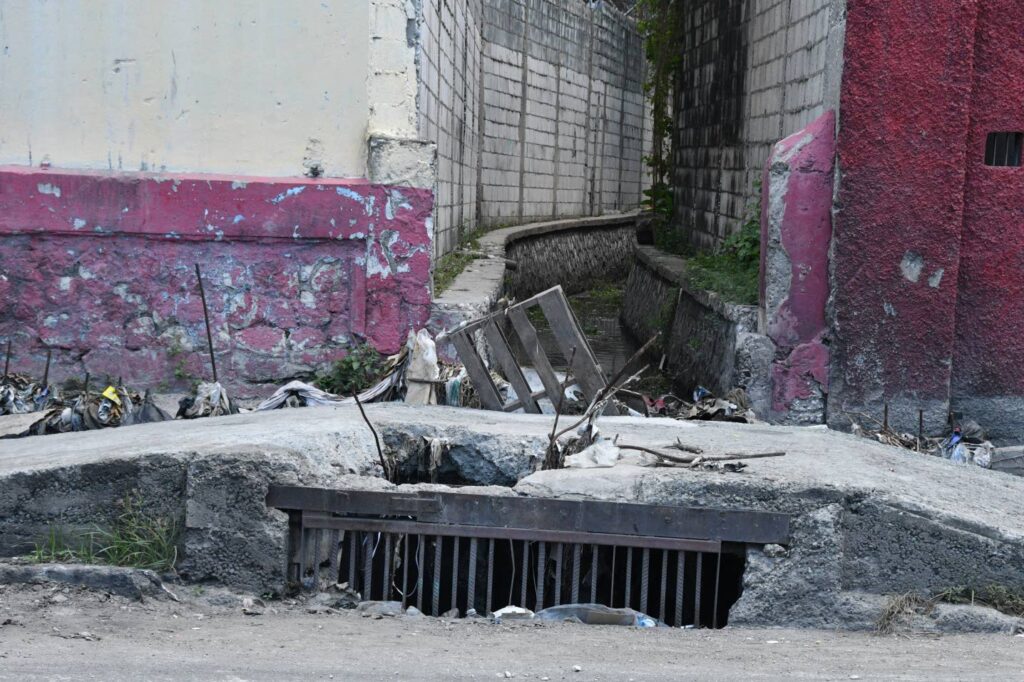
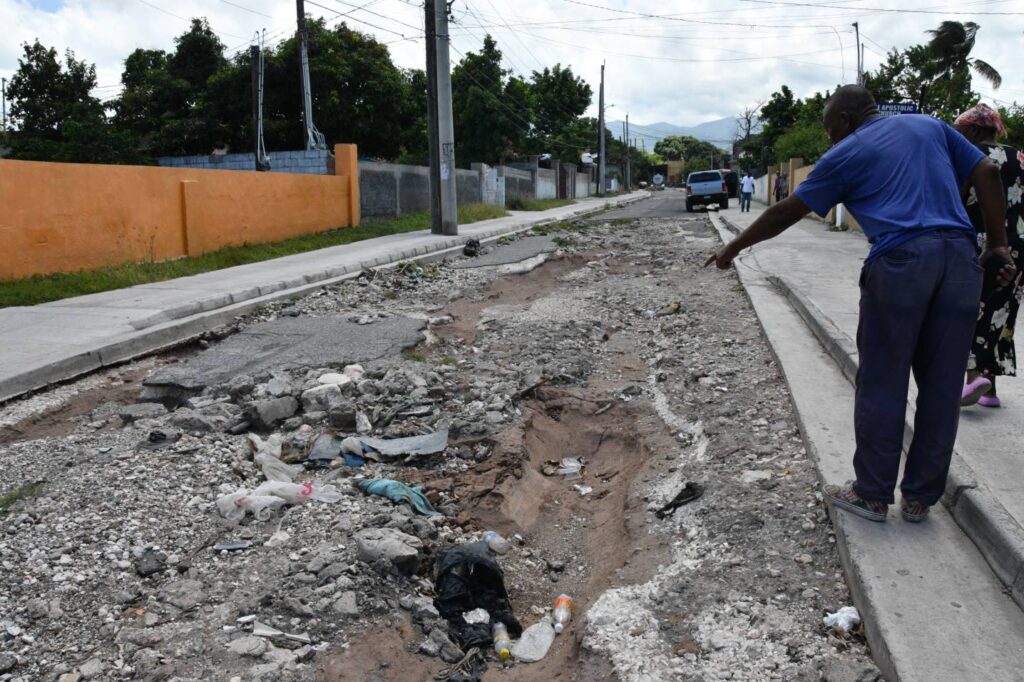
    For nearly two decades, residents of Oakland Crescent and surrounding neighborhoods in St Andrew South Western have navigated crumbling, flood-prone roads — and their patience has finally run out. The community is issuing an urgent, desperate plea to Jamaica’s National Works Agency (NWA) to intervene immediately, after years of stalled repairs under a national infrastructure initiative have left daily life all but unmanageable for locals.

    What makes the current crisis particularly acute, residents explain, is that even light rainfall turns the community’s main thoroughfare into a rushing makeshift river, thanks to an undersized, chronically clogged drain upstream that overflows with every storm. When floodwaters surge, they carry discarded household appliances, rotting dead animal carcasses and old mattresses downstream along the damaged road, leaving behind debris, foul odors and even more potholes that worsen the street’s decay.

    One long-term resident, who spoke on condition of anonymity, recalled that the road’s decline dates back at least to 2004, when Category 4 Hurricane Ivan tore through Jamaica, destroying the original road surface. While state crews have carried out patchwork repairs over the years, those temporary fixes never last, he said, and the road always reverts to its dangerous, impassable state within a short time.

    Beyond the flooding, the deeply pockmarked, uneven road has disrupted nearly every part of daily life for residents. Vehicle owners struggle to navigate the craters, taxi drivers refuse to enter the neighborhood, and essential service vehicles including garbage trucks and emergency vehicles are blocked from accessing most streets. Locals are forced to haul their household trash half a mile uphill to the main road for collection, visitors have no choice but to park on overcrowded sidewalks, and even construction supply trucks can’t reach properties to carry out home repairs. For the Bible Apostolic Church based in the community, the crisis has kept worshippers away: many congregants now refuse to travel to the church, instead parking at distant neighboring churches or skipping services entirely.

    Resident Kerry-Ann, who joked that the persistent flood pools on the road are big enough to turn into a fish pond, said locals held out real hope for change earlier this year when workers from China Harbour Engineering Company (CHEC) arrived to repair neighborhood sidewalks. CHEC is the primary contractor for the Jamaican government’s $45-billion SPARK (Shared Prosperity through Accelerated Improvement to our Road Network) programme, a national initiative managed by the NWA designed to rehabilitate Jamaica’s crumbling road network, upgrading both local community streets and major national highways to improve safety and accessibility across the island.

    But that hope quickly faded. Months after sidewalk work wrapped up, full road repairs have not started, and the road’s condition has only deteriorated. “When you take taxi, they don’t want to come on this road. When people are coming to you, they cannot access you. You have to drive on the sidewalk,” Kerry-Ann explained. “And then the main issue is the gully, when rain falls, all the water comes right down on this road. Everything floods out. It’s terrible.”

    Fellow resident Harrison said that while he understands the project is part of a larger infrastructure programme, the community can no longer wait for work to resume. “We want the road now, we really want it. Vehicles can barely enter my yard. I see my neighbour doing construction and the truck that’s carrying the material cannot make it inside the yard. It’s almost like the tyre was about to burst. We‘re asking the authorities to start the work now,” he said.

    Area Member of Parliament Dr. Angela Brown Burke, of the People’s National Party, told the Jamaica Observer she has repeatedly pushed the NWA for answers after the project stalled. After residents began raising alarms about worsening flooding and road conditions once preliminary work began, Brown Burke said she sent multiple formal inquiries to the NWA but has never received a formal response.

    “I was glad to see the road started because I know just how much persons in that area were looking forward to the work being completed,” Brown Burke said. “Several months later, they are nowhere because they basically abandoned the work as far as I am concerned; totally stopped the work and we cannot get a proper update.”

    Brown Burke criticized the government’s approach to the stalled project, saying officials appear to treat public infrastructure work as an arbitrary backyard project rather than a core responsibility to impacting residents’ daily lives and livelihoods. “It’s totally unacceptable,” she stressed. As of press time, repeated attempts by the Jamaica Observer to reach the NWA for comment on the stalled project and residents’ complaints have been unsuccessful.

  • Gov’t moves to tackle period poverty

    Gov’t moves to tackle period poverty

    KINGSTON, Jamaica — In a landmark move to address a long-overlooked systemic barrier to gender equity, the Jamaican government has announced a landmark national program to combat period poverty — a public health and social crisis that health officials confirm forces thousands of girls to skip school and women to miss work each year.

    Health and Wellness Minister Dr. Christopher Tufton unveiled the plan Tuesday during his address to Parliament as part of the annual Sectoral Debate, outlining the new National Menstrual Health Equity Initiative, set to launch later this year. Developed through cross-sector partnerships between the Ministry of Health and Wellness, the Ministry of Education, local civic organization HerFlow, and the United Nations Children’s Fund (UNICEF), the program targets period poverty among school-aged adolescent girls across the island.

    The initiative will kick off with an 18-month pilot program centered on eight public schools with large populations of girls registered under Jamaica’s Programme of Advancement Through Health and Education (PATH), the country’s primary social safety net for low-income households. Taking an integrated approach to adolescent wellness, the pilot will combine free distribution of menstrual hygiene kits with targeted public education, paired with school-wide upgrades to water, sanitation, and hygiene (WASH) infrastructure, integration of menstrual health into existing HPV vaccination drives, HIV/STI prevention programs, and general personal health education curricula.

    Tufton confirmed the pilot carries an estimated price tag of 50 million Jamaican dollars and is projected to directly benefit 2,000 girls, while extending education and outreach to boys, teaching staff, parents, and school health workers through community engagement activities to challenge the cultural stigma surrounding menstruation. To coordinate implementation and measure outcomes, a multi-sectoral technical working group co-chaired by the health and education ministries will oversee the pilot and produce a comprehensive evaluation report to guide future national policy and full-scale program rollout.

    In his address, Tufton framed period poverty as more than a simple hygiene issue: it is defined as the inability to access affordable menstrual products, accurate health education, and adequate sanitation infrastructure, a crisis that carries severe physical health risks, forces many people to use unsafe alternative absorbent materials, and entrenches social shame and stigma that discourages people from seeking help. The root causes of the crisis, he noted, extend beyond product cost to include inadequate public infrastructure and deep-rooted systemic gender inequality.

    Global data underscores the scale of the issue: Tufton shared that more than 500 million people worldwide lack access to basic functional menstrual hygiene facilities. Global public health research also finds that roughly 35 percent of girls globally view menstruation as a private or taboo topic, a cultural norm that limits help-seeking and blocks access to evidence-based reproductive health information. The crisis is not unique to low-income nations: Tufton highlighted that in the United States, nearly one in four student menstruators struggle to afford period products, and almost half wear products longer than the recommended usage window to cut costs.

    Local Jamaican data paints a stark picture of the crisis at home. Official statistics shared during the address show that 44 percent of all Jamaican girls experience period poverty, while in low-income communities, one in four girls miss school during their period simply because they cannot afford sanitary products. Only 30 percent of Jamaican public schools currently provide free menstrual products for students. Research confirms that repeated period-related absenteeism directly correlates with lower academic performance, exacerbating existing gender gaps in educational attainment and economic opportunity.

    For low-income families covered by the PATH program — where households survive on less than 1,300 Jamaican dollars per day — the financial burden of menstrual products is untenable. A single pack of sanitary napkins costs between 250 and 600 Jamaican dollars, forcing families to make an impossible choice between purchasing hygiene products and putting food on the table.

    “We all must be concerned about period poverty among our young girls in schools,” Tufton told Parliament. “It’s not just a hygiene issue, but a systemic barrier that keeps girls out of classrooms, undermines their academic potential and reinforces cycles of inequality and poverty.”

  • American Friends of Jamaica donates US$20,000 to Grade 7 Academy

    American Friends of Jamaica donates US$20,000 to Grade 7 Academy

    KINGSTON, Jamaica — A transformative investment in inclusive education is taking root in Jamaica, thanks to a US$20,000 grant from the American Friends of Jamaica (AFJ). The funding is earmarked specifically to build customized teaching facilities for neurodivergent learners enrolled in the island’s Grade 7 Academy initiative.

    St Michael’s College, which shared the announcement via an official media statement issued Wednesday, confirmed that the grant has been allocated to the Roman Catholic Archdiocese of Kingston, the governing body that oversees the Grade 7 Academy program. The funding will go toward converting a shipping container into a suite of small, specialized classrooms at Holy Trinity High School, where the academy is hosted.

    These compact learning spaces are purpose-designed to accommodate neurodivergent students, including those living with a range of learning differences that require tailored support. The project directly addresses a critical gap that program leaders identified during the Grade 7 Academy’s inaugural year at the school. During that first term, data collected from the cohort showed that roughly 20 students — equivalent to 13% of all incoming seventh graders enrolled in the program — displayed learning challenges that could not be adequately addressed in standard, full-size classrooms. Unlike their peers with typical learning abilities, these students require smaller group settings and one-on-one attention to thrive academically.

    Program organizers emphasized that the grant will expand the initiative’s capacity to deliver targeted, appropriate instruction to every student, ensuring that neurodivergent learners do not fall behind their peers as they progress through their secondary education journey. The project marks a key step forward for inclusive education practices in Jamaica, prioritizing equitable access to learning support for students of all abilities.

  • $92 million road works to resume on Oakland Crescent

    $92 million road works to resume on Oakland Crescent

    Residents and commuters in St Andrew, Jamaica can look forward to the resumption of critical infrastructure work on Oakland Crescent and Oakland Road this Thursday, after a months-long suspension earlier this year. The upgrades are part of the government’s flagship Shared Prosperity through Accelerated Improvement to our Road Network (SPARK) programme, a public works initiative focused on upgrading critical transportation and utility infrastructure across the island.

    In an official statement released to the public on Wednesday, Stephen Shaw, the National Works Agency (NWA)’s Manager of Communication and Customer Services, confirmed that all lingering technical hurdles that forced the work stoppage have been fully addressed. The $92 million joint infrastructure upgrade faced unforeseen delays when lead contractor China Harbour Engineering Company (CHEC) Limited struggled to source the specialized pipe fittings required for the project’s new waterline installation work.

    To keep progress moving while the supply issue was resolved, the project team reorganized the work schedule. Instead of pausing all activity, crews shifted focus to completing non-utility segments of the project, including pouring concrete sidewalks, constructing V-shaped drainage ditches, and installing curbs and channel systems along both roadways. That parallel work is now complete, and the required pipe fittings have finally arrived, clearing the last bureaucratic and logistical barrier to wrapping up the full project.

    When finished, both Oakland Road and Oakland Crescent will deliver long-overdue improvements to the local community. Upgrades include brand-new potable waterlines, a reinforced road base, a smooth new asphaltic concrete driving surface, and enhanced drainage infrastructure designed to reduce flooding during Jamaica’s heavy rainy seasons. The project is split between the two roadways: $52 million has been allocated to the upgrades on Oakland Road, while the work on Oakland Crescent carries a $40 million price tag.

    All construction work is being carried out simultaneously on both corridors, with on-site oversight provided by NO Whyte and Associates Limited. Shaw noted that contractors are now positioned to accelerate work to meet revised project timelines, bringing the upgraded roadways online for local use as quickly as possible.

  • Cops escape with minor injuries after service vehicle overturns in Trelawny

    Cops escape with minor injuries after service vehicle overturns in Trelawny

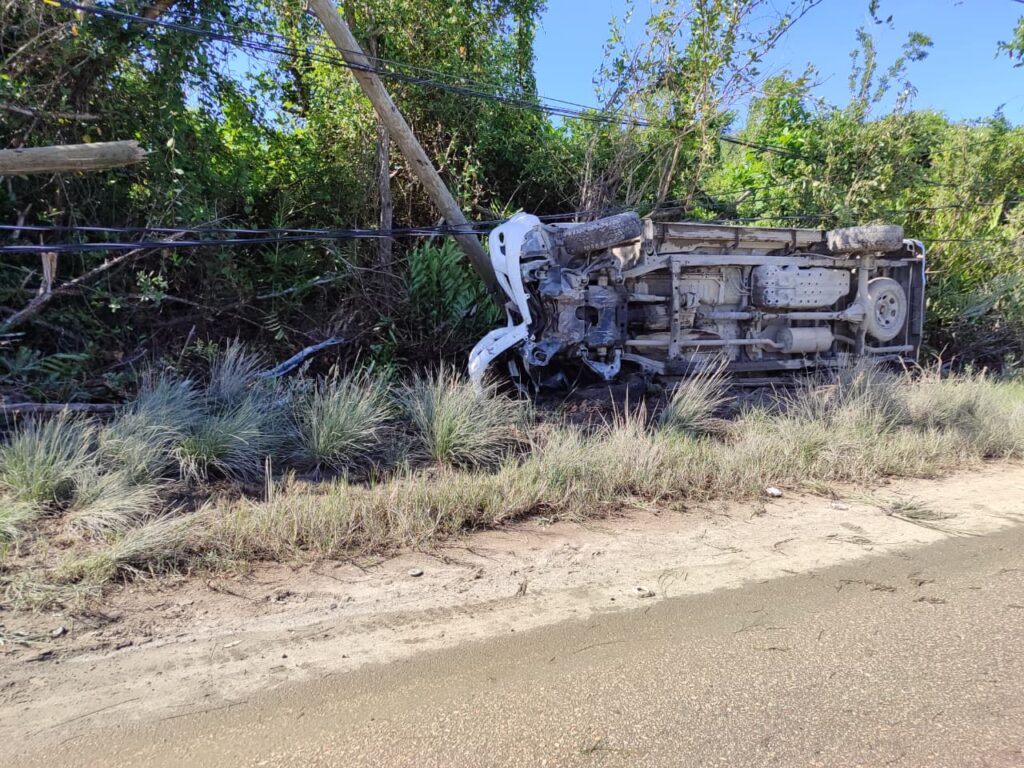
    On a Wednesday morning in Trelawny, Jamaica, a routine work trip took an unexpected turn for five members of the Jamaica Constabulary Force’s Trelawny Division, when their official service vehicle overturned on Foreshore Road, leaving all five with only minor injuries.

    According to details shared by an anonymous police source, the collision unfolded shortly after 7:15 a.m. as the group traveled west toward Montego Bay. While navigating a stretch of Foreshore Road in the town of Falmouth, the driver lost control of the vehicle, resulting in the rollover.

    At the time of the incident, the three male and two female officers were heading to a scheduled shooting range training exercise, a standard part of law enforcement preparedness in the region.

    Following the crash, first responders coordinated to extract the officers from the overturned vehicle and transported them to Falmouth Public General Hospital to receive prompt medical evaluation and care for their minor injuries. No other vehicles or bystanders were involved in the incident, per initial reports.

  • Jamaica revving up helmet safety through stakeholder training

    Jamaica revving up helmet safety through stakeholder training

    Motorcycle safety across Jamaica has taken a major step forward, with a targeted stakeholder training session focused on blocking low-quality uncertified helmets from entering the country and equipping both industry workers and riders with the knowledge to identify safe protective gear.

    Hosted by the National Helmet Wearing Coalition (NHWC) at Kingston’s Police Officers’ Club, the session brought together 41 key actors across the helmet supply chain and regulatory ecosystem, including government regulators, law enforcement personnel, border control officials at ports, and helmet suppliers and distributors. All attendees hold critical roles in turning Jamaica’s new national helmet safety standards from written policy into tangible public protection.

    Sydoney Preddie, lead for youth and education at the JN Foundation – a core partner of the coalition – explained that capacity building across every level of the market is non-negotiable for successful implementation. Preddie emphasized that Jamaica’s ports of entry serve as the very first line of defense against substandard helmets, making training for port officials particularly urgent. “Our core goal is simple: guarantee that only quality, certified helmets pass through Jamaican ports and reach consumers,” she said.

    Per an official release from the JN Foundation, the training was structured to build hands-on technical capacity, walking attendees through what regulatory compliance looks like in real-world practice. The curriculum covered every key detail required for accurate safety assessments, from helmet construction and recognized certification markings to mandatory labelling standards and retention system design. These skills enable stakeholders to reject unsafe helmets before they are cleared for domestic sale or distribution.

    Leading expert presentations were delivered by three seasoned specialists: Dr. Terry Smith, lead scientist at safety firm Galeatus and a helmet expert consultant to the FIA Foundation; Dr. Wendell Richards, a member of the National Compliance and Regulatory Authority (NCRA) Helmet Technical Committee; and Victor Anderson, Programmes Coordinator at the National Road Safety Council (NRSC).

    Dr. Smith, who supported the development of Jamaica’s new national helmet standard, used his session to underline the life-saving impact of certified helmets and the severe risks posed by untested, low-quality alternatives. “A certified helmet is not just an extra piece of gear for riders – it is a rigorously scientifically tested safety device engineered to absorb crash impact and shield the brain from catastrophic injury,” he noted. He added that peer-reviewed data consistently confirms that riders who wear helmets meeting international safety standards see a dramatic drop in their risk of death and severe head injury if involved in a collision. Dr. Smith’s participation in the initiative is supported by the global NHWC project, which assists countries around the world in strengthening their domestic helmet standards and increasing safe helmet use.

    Dr. Richards next outlined the NCRA’s enforcement strategy that will take effect once the national standard is fully implemented, with a sharp focus on monitoring imported helmets at border entry points. “Our port enforcement model is both risk-based and standards-driven,” Dr. Richards explained. “We will conduct mandatory pre-shipment inspections to ensure all imported helmets meet national standard requirements, including assessments of certification paperwork, product labeling and third-party test results. This system ensures non-compliant, unsafe helmets are stopped before they ever enter the domestic market.” Post-clearance surveillance of retail markets will complement these pre-shipment checks to catch any unsafe products that slip through, he added. Dr. Richards also noted that close ongoing coordination with the Jamaica Customs Agency and other border control agencies will be critical, particularly during the initial rollout phase of the new rules.

    Helmet suppliers and distributors were active participants in the training, using the forum to ask questions and seek clarification on inspection protocols, documentation requirements, certification criteria and compliance timelines. Multiple suppliers raised concerns about the potential financial impact of the new standard, specifically noting they face potential losses on inventory of uncertified helmets already held in stock once the regulation goes into full effect.

    Training organizers confirmed they have heard these concerns, noting that including suppliers in early stakeholder engagement was a deliberate choice. The process allows suppliers to clearly understand their regulatory responsibilities, while also creating transparency around enforcement plans and transition arrangements to minimize unnecessary disruption.

    For Preddie, regulating imported products is only half of the work: educating retailers and riders is equally important to driving long-term safety improvements. “We want every motorcyclist and their passenger to walk into a retail shop confident that they can tell the difference between a certified safe helmet and a substandard unsafe one,” she said. “Most importantly, we want them to understand that choosing a certified helmet drastically increases their chance of surviving a crash and walking away without life-altering head trauma.”

    To support consistent, long-term implementation of the new standard, the NHWC and its partner organizations have announced plans to roll out a broader structured training program. Additional sessions will be held in coming months to reach more stakeholders across every segment of the import, distribution, retail and enforcement chains, ensuring nationwide alignment on the new safety rules.

  • Community newspaper executive Marva Brodie is dead

    Community newspaper executive Marva Brodie is dead

    KINGSTON, Jamaica — Jamaica’s local media community is mourning the loss of a pioneering community journalism figure this week, after Marva Brodie, co-founder and long-serving director of beloved local outlet The News, passed away from a heart attack at her Havendale residence on Thursday, May 7. She was 82 years old at the time of her death.

    Ben Brodie, Marva’s husband and a veteran Jamaican journalist who co-founded The News alongside his wife and serves as the publication’s managing editor, confirmed the news to local outlet Jamaica Observer Online. According to Ben Brodie, his wife experienced a sudden seizure shortly after waking on the morning of her passing. Emergency responders transported her quickly to a nearby hospital for urgent care, but medical staff pronounced her dead on arrival.

    Originally launched under the name Boulevard News before being rebranded as The News, the community newspaper has served local Jamaican audiences for decades, shaped in large part by Marva Brodie’s commitment to elevating hyperlocal stories and connecting neighborhood residents. A public funeral service to honor Brodie’s life and legacy has been scheduled for 10:00 a.m. this Saturday at St Richard of Chichester Roman Catholic Church, located at 126 Red Hills Road in Kingston.