分类: society

  • Para-social workers being trained in hinterland communities

    Para-social workers being trained in hinterland communities

    On Friday, Guyana’s Ministry of Human Services and Social Security officially launched a groundbreaking free training initiative to cultivate paraprofessional social workers, a response to the decades-long shortage of fully qualified social work professionals in the country’s remote interior, or hinterland, communities.

    The Certificate in Paraprofessional Social Services (CPSS) program, launched in Mahdia, Region Eight (Potaro-Siparuni), aims to close a critical service gap that has left marginalized interior communities underserved for years. Speaking at the launch, Human Services and Social Security Minister Dr. Vindhya Persaud framed the program’s first cohort of trainees as pioneers trailblazing a new model of accessible social care for Guyana’s most remote regions.

    For generations, key hinterland regions including Barima-Waini (Region One), Cuyuni-Mazaruni (Region Seven), Potaro-Siparuni (Region Eight) and Upper Takutu-Upper Essequibo (Region Nine) have lacked consistent access to specialized social services, a gap that has harmed outcomes for vulnerable groups across these areas. The new initiative directly advances the Guyanese government’s public commitment to expanding qualified social care coverage across the entire country, where demand for these critical services remains highest in remote interior zones.

    Developed as a collaborative effort between the Ministry of Human Services and Social Security, the Guyana Association of Professional Social Workers (GAPSW), and the accredited University of Guyana, the program delivers no-cost foundational social work training that carries formal academic accreditation. Unlike ad-hoc community outreach, the initiative is designed to create long-term, meaningful career pathways for local hinterland residents, while simultaneously strengthening the country’s overall social services infrastructure. Upon successful completion of the course, graduates will be prioritized for open social services roles across government agencies, including the Childcare and Protection Agency, the central Social Services Department, and the Survivor Advocate Programme.

    Minister Persaud emphasized that the program is far more than a short-term training course: it serves as a permanent launchpad for a lifelong career in social work, empowering local trainees to drive tangible, lasting change within their own communities. “This is more than free training. It is a launchpad into a career in Social Work. So, think about this as a lifelong path, where you will make a tangible impact on the future of the people of your community, your region, and your country,” she told participating trainees.

    The minister also outlined the critical, multifaceted role that social workers play in advancing community well-being, from addressing child protection and family welfare to supporting survivors of gender-based and domestic violence and expanding access to mental health support. Strengthening these frontline services, she noted, is a non-negotiable foundation for building safer, healthier, more cohesive communities across Guyana.

    She further stressed the importance of rigorous professional standards for the new cohort of paraprofessional social workers, including accurate case documentation, adherence to national standard operating procedures, and unwavering ethical conduct. Because social workers often serve as key stakeholders in the national justice system, contributing evidence and support during court proceedings and ongoing case management, upholding principles of integrity, transparency, and accountability is central to the role. “Justice must always be served, and as a social worker, you become part of that wheel of justice. So when you get into this profession, integrity, transparency and accountability is what will drive you further,” Persaud said.

    Framed as a aligned investment paired with Guyana’s ongoing rapid economic expansion, the program reflects the government’s strategy to grow human capital in lockstep with national development. As Guyana experiences unprecedented economic growth driven largely by new offshore oil discoveries, the administration has prioritized ensuring that all communities — including remote interior regions left behind in past development cycles — gain access to the professional services and opportunities they deserve. “This programme is an investment in the education of the people of Guyana. As our country develops, we must ensure our human capacity develops alongside it, so that every community has access to the support and professional services it deserves,” the minister added.


  • Woman charged with  businessman’s murder

    Woman charged with businessman’s murder

    A fatal violent incident in Trinidad’s Woodford Gardens neighborhood has led to a formal murder charge for a 25-year-old local woman, following weeks of investigative work and legal review. Aaliyah Naipal, a resident of the Woodford Gardens area at the intersection of Oak Avenue and Coconut Drive, has been accused of killing Gregory Reece, a local Chaguanas businessman who died from multiple stab wounds on the night of June 28.

    Naipal made her first court appearance on Monday before a High Court Master, after Director of Public Prosecutions officials reviewed the case file and provided formal legal advice authorizing the murder charge. Following the brief hearing, the accused was remanded into state prison custody to await further legal proceedings in the capital case.

    Law enforcement investigators have outlined the timeline of the fatal incident: Reece traveled to the Woodford Gardens apartment the evening of June 28, and shortly after his arrival, he became involved in a verbal altercation with an individual at the property. During the confrontation, Reece was stabbed multiple times.

    Emergency Health Services first responders were dispatched immediately to the scene after emergency calls were placed. When they arrived, medics found Reece already unresponsive, and he was officially pronounced dead at the apartment by medical personnel. Naipal was taken into police custody at the scene directly after the stabbing, and has remained in detention throughout the ongoing investigation.

    Reece, a 50-something-year-old local businessman, was laid to rest in a public funeral service held this past Sunday. Court records also show Reece had a prior interaction with the Trinidad and Tobago justice system: in 2017, he was arrested and charged with two criminal offences – uttering forged valuable securities and obtaining funds by false pretences. Those charges stemmed from allegations that more than TT$1.4 million in fraudulent cheques, issued from an official account controlled by the Arima Borough Corporation, were illegally deposited into a commercial bank account linked to Reece. At the time of his death, that earlier 2017 case was still pending in the court system.

  • Noodherstel Van ’t Hogerhuysstraat bijna afgerond

    Noodherstel Van ’t Hogerhuysstraat bijna afgerond

    Paramaribo, Suriname – July 11, 2026 – Emergency rehabilitation work on one of Suriname’s busy urban corridors, Van ’t Hogerhuysstraat, is progressing strictly according to schedule and is on track to wrap up several days ahead of the official July 16 completion deadline, project officials confirmed this week.

    Rodney Wongsosoeparto, project manager for the rehabilitation initiative, announced that nearly the entire stretch of the roadway has already been resurfaced with a fresh layer of asphalt. The final segment of the road’s eastbound lane, stretching from the existing roundabout toward the Surmac district, is scheduled to be paved on Friday evening. Once that work is complete, only the short section between the roundabout and the Slangenhoutstraat intersection will remain to be finished.

    According to an official press statement from the Communication Service of Suriname, the scope of the emergency repairs covers three core phases: removal of the crumbling old asphalt surface, leveling and stabilization of the underlying road base, and application of a new five-centimeter thick asphalt layer. Workers are also upgrading connecting road surfaces at the Slangenhoutstraat junction to boost overall traffic flow through the high-traffic area.

    Project leadership noted that unseasonable rain showers and adjustments to temporary traffic diversion routes have presented minor logistical challenges during the repair process, but these disruptions have not altered the project’s timeline. To minimize impacts on daily commuters and maximize work efficiency, the majority of resurfacing operations are carried out during evening and overnight hours, when traffic volumes in the area are at their lowest.

    While emergency repairs near completion, planning work is already well underway for a far more extensive full reconstruction of the entire Van ’t Hogerhuysstraat corridor. The planned overhaul will widen the key section between Surmac, Slangenhoutstraat and Willem Campagnestraat from four lanes to six lanes, split evenly into three lanes in each direction. Slangenhoutstraat itself will also gain an additional travel lane to accommodate increased traffic, and the current roundabout will be reconfigured into a larger, more efficient traffic square. The section of roadway running from Willem Campagnestraat toward Molenpad will remain largely unchanged under the current plans.

    Right now, technical pre-construction preparations for the full reconstruction are in full swing. Work teams are mapping out the position of all underground utilities and cables, holding coordination meetings with local utility providers, and getting ready for planned sewer system upgrades tied to the project. Wongsosoeparto reported that collaboration with participating utility companies has been smooth so far, emphasizing that close, proactive coordination is a non-negotiable requirement to deliver the large-scale project successfully and on schedule.

    Even though the current emergency repairs are only a temporary fix to address immediate safety and usability issues, Wongsosoeparto stressed that quality control remains a top priority for the work. Both the application process and the material quality of the new asphalt are subject to continuous inspection to ensure the repair work delivers a durable, long-lasting result until full reconstruction can begin.

    In the coming week, crews will focus on wrapping up the final resurfacing work at the Slangenhoutstraat junction, while pre-construction activities for the full corridor reconstruction will continue at full pace with no interruptions.

  • SVG records 3 killings in 10 days as man gunned down in Glen

    SVG records 3 killings in 10 days as man gunned down in Glen

    The Caribbean nation of St. Vincent and the Grenadines is grappling with a fresh wave of violent crime after a third fatal shooting this month pushed the country’s 2025 homicide count to 23. The most recent victim, 31-year-old Sandre Matthias, was gunned down late Friday near a local minimart in the Glen community of East St. George.

    First responders were alerted to the scene by witnesses just after 8 p.m. local time, but arriving officers found Matthias, an adult male resident of the area, already unresponsive. He was pronounced dead at the scene, and official identification was released by authorities over the weekend.

    The killing marks the third violent death recorded in the country in the first week of July, putting St. Vincent and the Grenadines on track to remain far below last year’s total homicide count of 40 – which itself was a 14-victim drop from 2023’s full-year total. Even with the downward trend in overall annual violence, the recent string of back-to-back killings has put renewed pressure on local law enforcement, who are already working to solve two other recent high-profile murders.

    Earlier the same day Matthias was killed, police issued a public appeal for information to help track down the person or people responsible for the strangulation death of Lida Lewis, an 84-year-old local farmer. Lewis was killed at her property in Peruvian Vale on July 2, just two days after another fatal shooting that claimed the life of 49-year-old Gayron Jackson. Jackson was shot multiple times on July 1 while traveling through Mt. Young, outside Georgetown, on his way to the mountain interior to purchase coconuts, and died at the scene before emergency services could arrive.

    Authorities have not yet released any information about potential motives or persons of interest in Matthias’s killing, and are urging any members of the public who were in the Glen area near the minimart Friday night with relevant information to contact the Major Investigation Taskforce anonymously through the country’s independent crime tipline.

  • Robbers attack Venezuelans in Sparendaam

    Robbers attack Venezuelans in Sparendaam

    A violent pre-dawn robbery left two Venezuelan travelers without their motorcycle in Sparendaam, a community along Guyana’s East Coast Demerara, local law enforcement confirmed. The assault took place around 4:00 a.m. on Friday, according to an official statement released by the Guyana Police Force, and no suspects have been taken into custody as of the latest update.

    Investigative records show the stolen two-wheeler is registered to a 22-year-old Venezuelan man who is a current resident of the Sparendaam area. Witness accounts passed along to police outline that the two victims were en route to the younger victim’s home when two unknown men riding a second motorcycle intercepted them.

    Law enforcement officials detailed the sequence of the attack in their statement: One of the two assailants, who was openly carrying a cutlass, got off their motorcycle and stepped forward to confront the pair. One of the victims attempted to fight back against the blade-wielding attacker, engaging in a brief physical scuffle. Despite the victim’s resistance, the armed suspect ultimately managed to seize the victims’ motorcycle, while his accomplice remained with the pair’s original getway vehicle.

    After stealing the victims’ bike, both suspects fled the scene, traveling eastward on both the stolen motorcycle and their own. As of the latest police update on 10 July 2026, the manhunt for the two attackers is ongoing, with investigators working to recover the stolen vehicle and identify the perpetrators.

  • Farm theft ‘organised crime’ as minister goes on patrol

    Farm theft ‘organised crime’ as minister goes on patrol

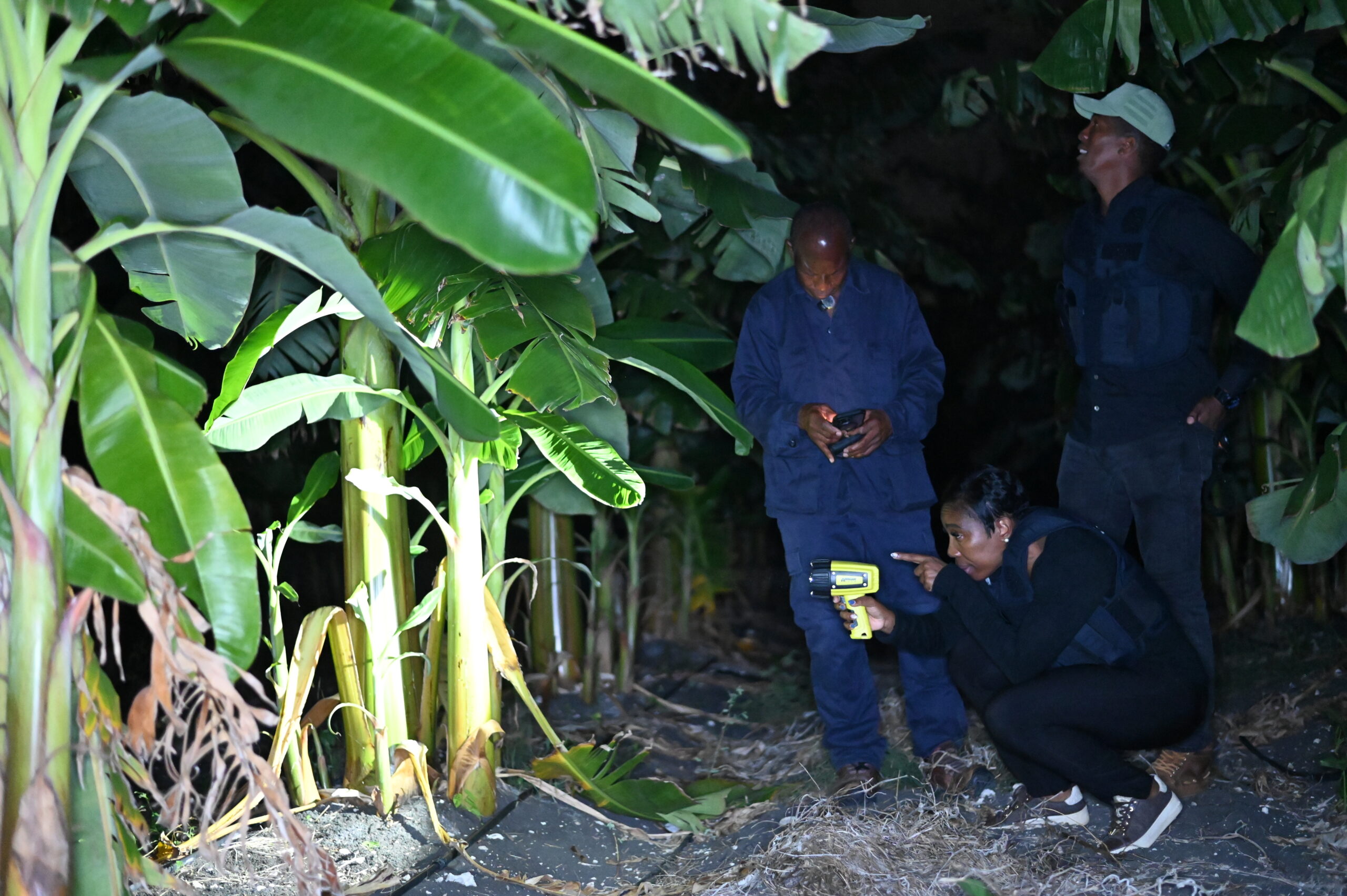
    After joining an overnight patrol with law enforcement and agricultural producers to see the sophistication of farm and livestock theft firsthand, Barbados’ Minister of Agriculture Dr. Shantal Munro-Knight has announced sweeping new measures targeting thieves, vendors who handle stolen produce, and consumers who unknowingly purchase it. The patrol, part of a pilot program launched in March by the Barbados Police Service’s new crop protection unit, took the minister to multiple active farm sites across the country, and left her convinced that decisive, cross-sector action is needed to dismantle the well-organized criminal networks that have plagued the island’s agricultural industry for decades.

  • Belize Strengthens Child-Centered Justice System

    Belize Strengthens Child-Centered Justice System

    BELIZE CITY, July 10, 2026 — When minors become involved with the country’s legal system, every decision carries outsized consequences for their long-term development and well-being. Now, the Central American nation of Belize is taking targeted steps to transform its justice framework to be more responsive, empathetic, and centered on the unique needs of children.

    A two-day specialized training program for judicial professionals wrapped up recently in Belize City, drawing together sitting judges and leading stakeholders from across the country’s justice sector. The curriculum focused on four core priority areas: child-centered justice frameworks, combatting human trafficking, restorative justice practices, and diversion programs that keep children out of traditional punitive court systems when appropriate.

    The initiative was spearheaded by three leading national bodies: Belize’s Ministry of Human Development, the national Anti-Trafficking in Persons Council, and the Child Justice Committee. The Judicial Education Institute provided logistical and technical support to make the training possible.

    Per program organizers, the core objective of the training is to equip judicial officers with the tools and knowledge to more effectively protect vulnerable children and victims of trafficking. The training emphasizes trauma-informed, victim-centered legal practices that prioritize a child’s physical safety, mental health, and overall well-being as the central consideration in every case involving minors.

    This training marks a key milestone in Belize’s ongoing efforts to reform its justice system to align with international standards for child protection, addressing widespread recognition that traditional legal approaches often fail to account for the developmental needs and trauma experienced by children who come into contact with the law.

  • Aunty Cavelle’s Restaurant Burglarized Overnight

    Aunty Cavelle’s Restaurant Burglarized Overnight

    A local eating establishment has become the newest addition to an expanding roster of commercial properties hit by a recent wave of break-ins, according to a public post from the business. In the statement, the restaurant’s management has issued an urgent appeal to ordinary community members to step forward with any details that could help law enforcement pinpoint the individual responsible for the break-in.

    The call for public assistance outlines two clear pathways for people to share what they know: anyone holding relevant information is encouraged to reach out directly to local law enforcement authorities, or they can choose to submit their tips privately through an alternative channel to support the ongoing investigative process.

    As of the latest update, police departments have not published any formal, verified statements regarding the details of this reported break-in, leaving key questions about the value of stolen property, the timing of the incident, and potential leads still unanswered while the probe remains in its early stages.

  • Sod turns on Vineyard Meadows in mill’s shadow

    Sod turns on Vineyard Meadows in mill’s shadow

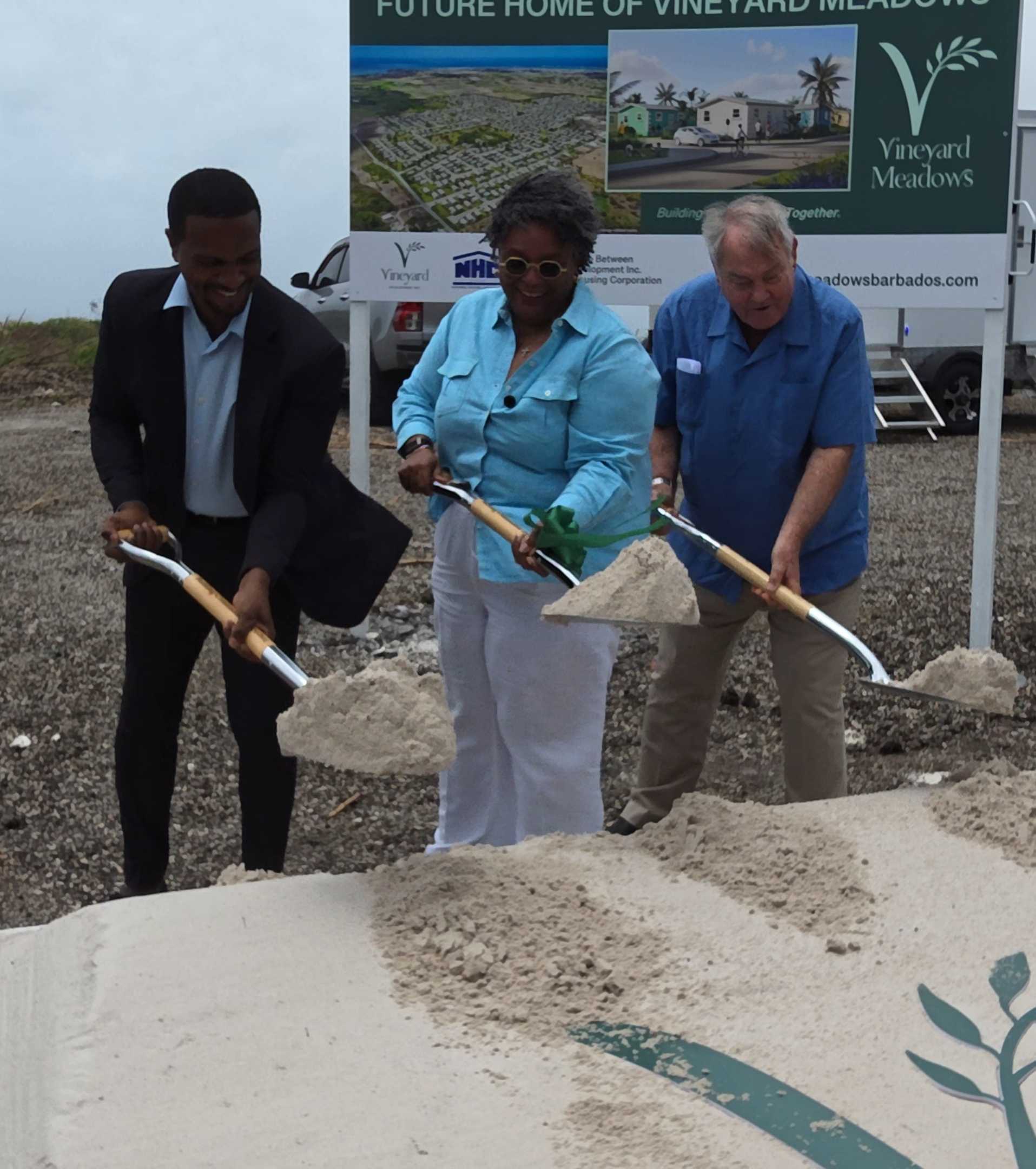
    On a sunny Friday in Barbados, construction officially kicked off on what will stand as one of the largest affordable housing developments in the nation’s modern history. The 300-year-old former Vineyard agricultural plantation in St. Philip, once dedicated exclusively to growing commercial crops, will now be reborn as Vineyard Meadows, a planned 1,100-home community forged through a groundbreaking public-private joint venture.

    The partnership pairs Barbados’ state-run National Housing Corporation with Vineyard Development Inc., a subsidiary of BJ Investments Ltd. led by Bjorn Bjerkhamn, a construction industry leader with five decades of experience delivering residential developments across the island, including the successful Ridge Meadows and Whitehall Meadows projects.

    Spread across six construction phases that will unfold over five to six years, the development is centered on the last surviving landmark of the original plantation: the 300-year-old Pollards Mill, which will be preserved as a historic touchstone for the new community. Initial pricing for complete house-and-land packages will start at $170,000, a rate structured to meet the needs of middle- and low-income Barbadian families.

    Speaking at the official groundbreaking ceremony, Prime Minister Mia Mottley framed the initiative as far more than a standard construction project, positioning it as a core driver of national transformation and long-term macroeconomic growth. She emphasized that the project marks a fundamental shift away from outdated, piecemeal housing strategies toward a model that builds complete, inclusive, and sustainable communities.

    “This housing project is not just a housing project – it is the building of a community,” Mottley told the gathered crowd of government officials, private sector leaders, and parliamentary colleagues. “It is the ambition of this government to create opportunities for every Barbadian to be homeowners rather than renters and tenants in their own land. I have said too often that rent is dead money. When it leaves your pocket, it’s gone and you get back nothing from it. But that same sum of money when it leaves your pocket as a mortgage payment gives you equity that builds long-term wealth.”

    Mottley also highlighted the unique financial structure of the joint venture that directly benefits homebuyers. Under the agreement, the Barbadian government contributes the land itself as its equity stake in the project, eliminating the need for private developers to take on costly land acquisition loans. This arrangement cuts out an estimated $10,000 to $15,000 in additional legal and financing fees that would otherwise be passed on to individual homeowners, making the properties far more accessible for first-time buyers.

    Staying true to the government’s vision of an inclusive society, the development rejects the model of segregated gated communities, a stance Mottley reaffirmed during the ceremony. “Barbados is best when everybody lives together as a community, and that is why I have never supported gated communities,” she said. “We have had poor people and rich people live next to each other and work with each other for generations. That interconnection is the foundation of a strong, cohesive nation.”

    Bjerkhamn, chairman of Vineyard Development Inc., noted that the project sets a historic precedent for Barbados as the first large-scale housing development delivered through a government-private sector collaboration. “Together with the National Housing Corporation, we share a common vision to make a meaningful contribution to the housing market by increasing the supply of affordable, quality homes for Barbadian families,” he said. “Beyond providing homes, Vineyard Meadows will create meaningful opportunities across the local economy.”

    During the construction phase alone, the project is projected to employ roughly 500 Barbadian workers, with developers prioritizing locally sourced building materials to support domestic businesses and stimulate broader economic activity across the island. When complete, the formerly underutilized plantation land will become a vibrant, connected residential neighborhood.

    To meet the diverse needs of residents from single young professionals to growing families, the development offers five distinct flexible architectural layouts ranging from 396-square-foot one-bedroom units (the Fern model) up to 936-square-foot three-bedroom, two-bathroom flagship units (the Laurel model). Unlike many entry-level affordable housing developments that force residents to relocate as their families or incomes grow, all Vineyard Meadows units are designed to be expandable. Owners can add space and upgrade finishes incrementally over time as their budgets allow, meaning homeowners can put down roots and stay in the community long-term as they move up economically.

    Derek Edwards, chief operations officer of Vineyard Development Inc., emphasized the community-centered design philosophy that guides the entire project. “Today, on the lands of the Vineyard plantation, surrounding the historic property of Pollard’s Mill, we do more than turn soil; we turn a page,” Edwards said. “For generations, this land grew crops. From today, it will grow something far more valuable: homes, families, and community. Affordability should never mean one size fits all, and our one-bedroom homes are deliberately designed to grow with you. As your family grows, and as your means grow, that one-bedroom can expand to a three-bedroom. You will not have to leave Vineyard Meadows to move up in life.”

    Neighborhood infrastructure is purpose-built to foster connection and active living, rather than the isolation common to many modern residential developments. Shared public amenities include road tennis courts, netball courts, a mini football pitch, children’s playgrounds, and an expansive walking track lined with outdoor fitness stations. A future on-site commercial village will add local dining, retail shops, and daily convenience services, cutting down on the need for residents to travel long distances for everyday needs. To address concerns from nearby communities in St. Philip, developers have adjusted road layouts and added green buffer zones to reduce the impact of construction and long-term traffic on existing residents.

    Vineyard Meadows is the flagship project in Barbados’ broader national strategy to overhaul the country’s housing infrastructure, with additional planned developments including multi-storey condominium projects in urban Greenfields and Exmouth. The government is also pairing housing renewal with climate-smart vertical agricultural initiatives across the country to preserve national food security.

    For stakeholders across both the public and private sectors, the project represents more than just a solution to the island’s affordable housing shortage: it is a proof of concept for how cross-sector collaboration can deliver inclusive, sustainable growth that benefits all Barbadians.

  • Stevedores’ Warning to Belize: “We Do Not Want to Pull the Plug

    Stevedores’ Warning to Belize: “We Do Not Want to Pull the Plug

    It has been four full months since arbitration talks between the Port of Belize and its stevedore workforce collapsed, and efforts to finalize a new collective bargaining agreement (CBA) are still stuck in gridlock, despite public pledges from Belize’s government to restart productive negotiations. The breakdown traces back to March, when the Essential Services Arbitration Tribunal proceedings were brought to a sudden, premature end after more than a year of deliberations. The Christian Workers Union, which represents the stevedores, rejected a modified confidentiality agreement, walking away from the tribunal and leaving the CBA process in limbo.

    In the months following the arbitration collapse, the Port of Belize has transitioned to government oversight. But union leaders say that even with this shift in control, workers have not received any formal invitation to resume negotiations on a new CBA.

    Bruce Diaz, the chief union representative for the stevedores, noted that workers have held off on taking drastic industrial action to keep the port operational, but warned that prolonged inaction from the government and port leadership could trigger cascading disruptions across Belize’s entire economy. Diaz highlighted the grueling, unsung work that stevedores perform to keep supply chains moving: “We need to get this CBA signed. The stevedores work night and day in the rain while the big executives and all the directors are sleeping comfortably in their beds. We are the ones out in bad weather keeping operations moving. We keep Belize’s economy flowing.”

    Diaz spelled out the direct risks that a port shutdown would create for ordinary Belizean residents: “If the Port of Belize is not functioning, basic goods like noodles, chicken sausage, and all the everyday items communities rely on will not arrive. That will immediately push prices up for everyone across the country.”

    Despite the mounting frustration, Diaz emphasized that workers are committed to waiting for good-faith negotiations before taking disruptive action. “When the stevedores pull the plug, the entire Belizean people feel the impact. We do not want to pull the plug. That is why we are continuing to bear this patience,” he said. Now, four months after the government promised workers a seat at the negotiating table, stevedores are still waiting for officials to follow through on their commitment – before workers’ patience runs out entirely.