分类: society

  • Tampering at fire scene

    Tampering at fire scene

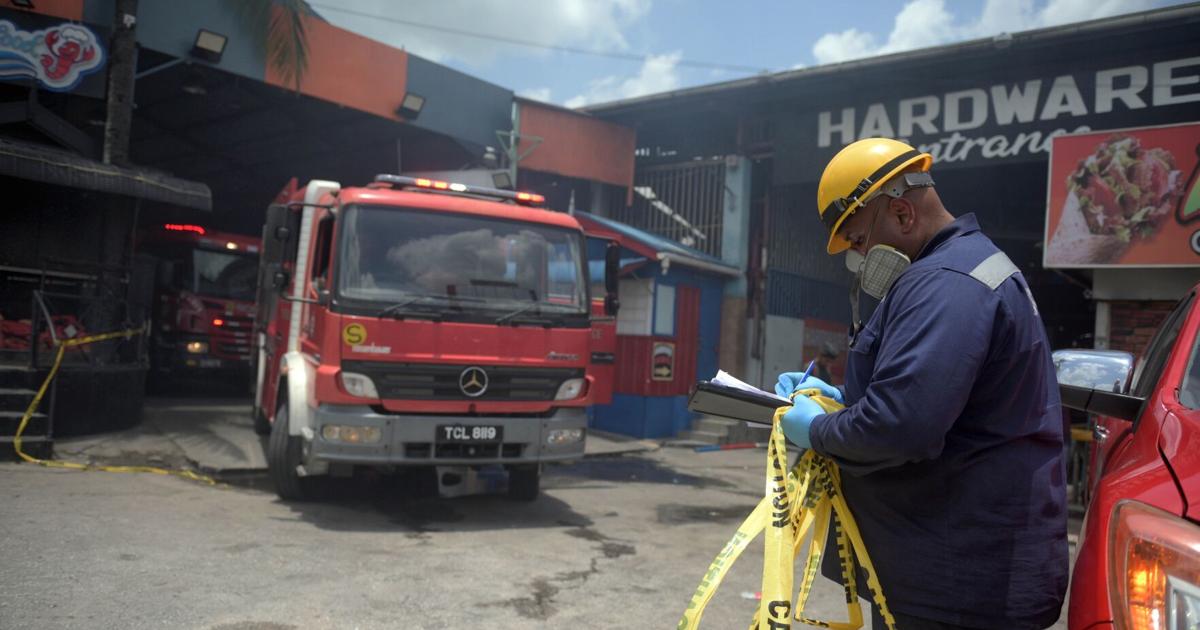
    A months-long probe into a devastating commercial blaze at Trinidad and Tobago’s Globe City Plaza has been forced to an early end after unauthorized intruders compromised the fire’s origin site, law enforcement officials confirmed this week. The case has officially been classified as undetermined, with final procedural reports currently being compiled by the Central Division’s Fire Prevention Investigation team.

    Acting Deputy Chief Fire Officer Ansar Ali shared details of the botched investigation in a phone interview with local outlet *Express*, explaining that tampering with the secured crime scene left investigators unable to pinpoint what sparked the fire that destroyed a third of the Chase Village commercial complex two weeks prior. The probe had been advancing through a coordinated multi-agency cleanup effort, with the Trinidad and Tobago Fire Service (TTFS) partnering with the country’s Defence Force and Ministry of Works to remove thousands of tons of fallen rubble in a search for critical evidence of the fire’s cause. Given the scale of the blaze and the volume of debris to be moved, the site-clearing process stretched over several days, Ali noted.

    During the final stages of evidence gathering, however, investigators made a troubling discovery: intruders had breached the eastern perimeter wall of the burned section, gaining unauthorized access to the zone that had been formally identified as the fire’s point of origin. Once inside, the intruders removed critical evidence, including scorched wiring and building components to strip out sellable copper. “They pulled out all the wires and all the things that were burnt and they compromised the scene. All the electrical wires that were left, the copper wires, all of it was removed from the site,” Ali said.

    With the TTFS investigation formally closed, the case has now been transferred to the Trinidad and Tobago Police Service for further review. The massive fire broke out two Tuesdays ago at the multi-tenant complex, which hosts at least 15 separate small and medium businesses ranging from retail shops and food outlets to medical clinics and professional service providers. Founded by local businessman RS Jaglal, who also leads several connected firms including RS Jaglal Hardware Ltd and Globe Manufacturing and Marketing Ltd, the plaza is a key commercial hub for the Chase Village area.

    When the fire first broke out, the TTFS launched a rapid joint response from its Central and South Divisions, which lasted for nine consecutive hours. Firefighters’ efforts successfully protected more than 50 percent of the building, saving three major components of the complex: the front-facing hardware store, the western wing mall space, and an on-site foam factory. Ultimately, only three businesses suffered direct damage from the blaze, but the disruption extended far beyond the plaza’s walls: thick plumes of smoke blanketed the surrounding neighborhood, authorities were forced to close the nearby Chase Village overpass, and traffic backed up on both northbound and southbound lanes of the adjacent highway, leaving motorists stuck in multi-hour delays as emergency vehicles and onlookers crowded the area.

    An initial damage assessment pegs structural losses to the complex at roughly $4 million, Ali said, though a full accounting of total losses—including the value of destroyed inventory and business assets—will not be available until investigators can fully assess the contents of the burned section. Local elected official Jearlean John, Member of Parliament for Couva North, visited the fire site on the day of the blaze and expressed deep sorrow for the business owners who lost their livelihoods. “It is extremely sad when people sacrifice for their families, for their dreams to lose it all in this terrible and unfortunate event. I will visit the families,” John told *Express* via WhatsApp the day of the fire.

  • Mayor calls police for roaming cattle

    Mayor calls police for roaming cattle

    A growing public safety and health crisis has emerged in two Trinidad and Tobago communities, where dozens of unregulated stray cattle have overrun residential neighborhoods, prompting the local mayor to issue an urgent plea for intervention from national law enforcement.

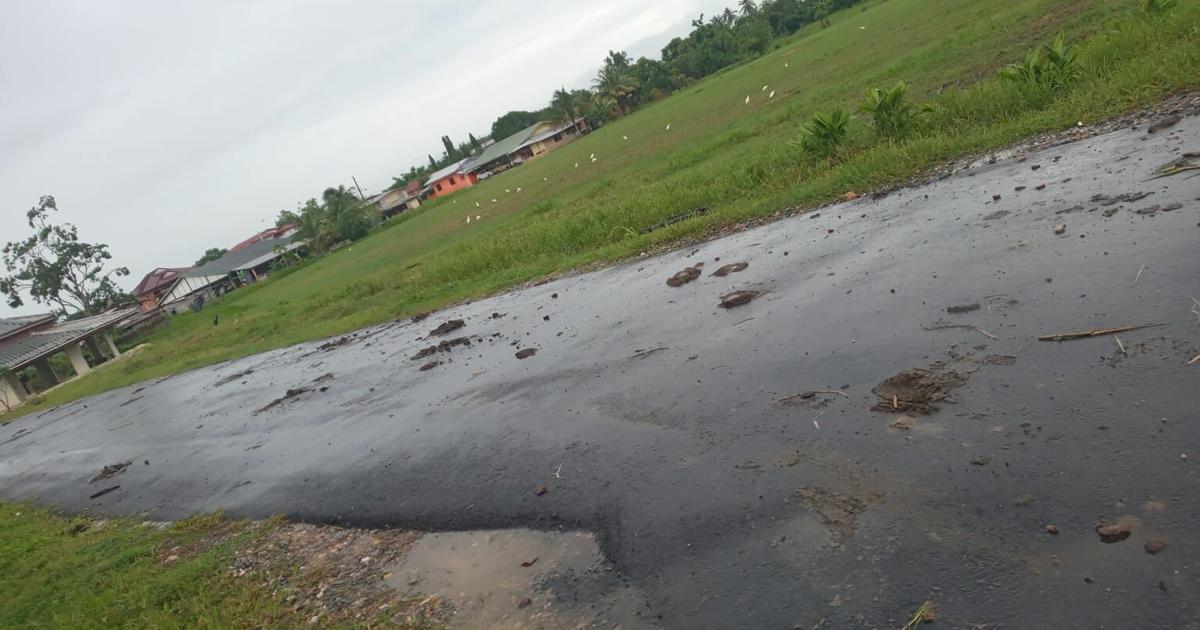
    Doodnath Mayrhoo, Mayor of Siparia and a long-time resident of one of the affected areas, confirmed this week that uncontrolled roaming cattle have completely disrupted daily life for residents of Ackbar Trace and St John’s Village in Fyzabad. The mayor, who has personally experienced the negative impacts of the stray animal problem, told local media that the Siparia Borough Corporation has received dozens of resident complaints about the issue—but the local government body lacks any legal mandate to remove stray animals from public and private land.

    Mayrhoo explained that while community leaders have repeatedly raised the crisis with the Trinidad and Tobago Police Service (TTPS) over the past year, little to no tangible action has been taken to resolve it. Last year, TTPS officers visited the affected neighborhoods and pledged to implement targeted measures to address the stray cattle, but months later, no changes have materialized. “It is not one, two, or three cows. It is about 40 of them walking the road and walking into people’s properties,” Mayrhoo stressed in an interview. “As I said, the Borough Corporation does not have the responsibility to deal with that matter.”

    Local leaders were previously instructed by police to capture the cattle and transport them to the Oropouche Police Station for impounding, but the station lacks any dedicated holding facility for stray animals, leaving municipal officials with no path to act on their own. “We were told that we have to hold the animal and carry it to the Oropouche Police Station for it to be impounded, but there is no pound in the Oropouche station to impound any animal. So, there’s nothing I can do. My hands are tied,” the mayor added. Municipal enforcement officers have on multiple occasions attempted to negotiate with the cattle’s owner, but those conversations have failed to produce any change.

    Mayrhoo is now calling for TTPS leadership to treat the issue as the public emergency it is, noting that the roaming cattle pose significant threats to resident safety and community health. “The police have to take the issue seriously. I don’t know if there is something in the law where they can enforce the law and force the owner to remove the cows from using the roads and from entering people’s properties and so on,” he said. He added that residents do have legal recourse to file damage claims against the cattle’s owner for any destruction to private property, but that does not resolve the ongoing risk to the community.

    A community spokesperson for the affected neighborhoods confirmed to the *Express* that the roaming cattle have already caused widespread damage to private residential land, home kitchen gardens, municipal drainage systems, and public green spaces. Piles of cattle waste now line many local roadways, in some cases blocking vehicle access to streets and forcing residents to navigate hazardous, unsanitary conditions when walking through the area. What began as a rare, minor nuisance has escalated into a constant threat that has upended normal daily life for local residents, leaving many deeply frustrated with the lack of action from authorities.

  • Fundraiser Launched to Assist Family of Christopher “Young Luiy” Howell With Burial Costs

    Fundraiser Launched to Assist Family of Christopher “Young Luiy” Howell With Burial Costs

    The tight-knit circle of friends and supporters of Christopher “Young Luiy” Howell has opened a public appeal for financial help, stepping forward to cover end-of-life burial expenses after Howell’s recent passing.

    Shared across local community networks, a promotional flyer for the fundraiser honors Howell’s memory with the warm tribute “forever in our hearts”, and outlines the core goal of the initiative: to grant Howell the dignified, loving farewell he deserves after his unexpected departure.

    As grieving family members and close loved ones navigate the heavy emotional weight of their loss, the community-driven fundraising effort has emerged as a collective act of support, bringing together acquaintances and strangers alike to honor Howell’s legacy and ease the unexpected financial burden that accompanies a loved one’s death.

  • Health Minister Michael Joseph Personally Funds Gift Baskets for Nurses During Nurses Week Visits

    Health Minister Michael Joseph Personally Funds Gift Baskets for Nurses During Nurses Week Visits

    As 2026 Nurses Week gets underway, Antigua and Barbuda’s top health official has launched a cross-island initiative to shine a well-deserved spotlight on the nursing professionals who form the backbone of the nation’s public healthcare system. Michael Joseph, Minister of Health, Wellness, Environment and Civil Service Affairs, has personally funded and spearheaded a tour of public health clinics across Antigua, with the sole mission of delivering hand-delivered gift baskets to every practicing nurse across the country’s network of public care facilities.

    The heartfelt gesture comes as a tangible token of gratitude for the steady commitment, compassionate care, and daily sacrifices that nurses make to serve the communities of Antigua and Barbuda. Unlike many government-sponsored recognition events, this effort is funded entirely out of Minister Joseph’s own pocket, underscoring the personal respect he holds for the nursing workforce.

    On the first day of the tour, Joseph and his team completed deliveries to 12 major clinics across the island, including high-traffic facilities such as Grays Farm Clinic, Villa Polyclinic, Cedar Grove Clinic, Judges Hill Clinic, Clare Hall Clinic, Pigotts Clinic, Parham Clinic, All Saints Clinic, Glanvilles Clinic, Potters Clinic, Bendals Clinic, and Brownes Avenue Clinic. Nurses at each location received their individual gift baskets as a direct recognition of their daily work caring for patients from across Antigua.

    During the visits, Minister Joseph took time to speak with nursing staff, emphasizing that their role is irreplaceable to the function of Antigua and Barbuda’s entire healthcare system. He noted that consistent, compassionate, professional care from nurses is the foundation of delivering high-quality healthcare services to every citizen and resident across the two-island nation, regardless of where they live.

    Joseph confirmed that the recognition tour will continue on the second day of Nurses Week, with deliveries scheduled to reach all remaining clinics until every one of the nation’s 22 operating public health clinics has received the gifts. Before wrapping up his first day of visits, the minister extended warm holiday wishes to all nurses across Antigua and Barbuda, praising their extraordinary contributions to national public health and the thousands of individual lives they touch and improve through their work every single day.

  • Education Ministry to Hold 6th Research Symposium

    Education Ministry to Hold 6th Research Symposium

    The 6th iteration of the Ministry of Education, Science and Technology’s signature Research Symposium is set to get underway this Tuesday, with an in-person opening ceremony scheduled to kick off at 10 a.m. local time at the John E. St. Luce Building. For attendees unable to join the event in person, the Ministry’s Education Broadcasting Unit will stream the entire opening ceremony live, expanding access to the discussions and presentations for remote participants across the country.

    Organized around the core theme “Plan it! Execute it! Share it! Use it!”, the symposium is crafted to advance a clear strategic goal: cultivating high-quality research that directly shapes evidence-based education policy, enhances instructional practices in K-12 and higher education classrooms, and fosters systemic innovation across the national education sector. Beyond academic output, the event is designed to create open spaces for cross-sector dialogue between researchers, educators, policymakers, and student innovators, encouraging collaboration that turns research findings into tangible on-the-ground impact.

    The opening day’s program centers on two key research themes: mathematics education achievement and family-focused education research. Leading the presentations at the opening ceremony are researcher Shoya Hurst and student researcher Kelsey Cochrane, with Allison Ledeatte stepping in to moderate discussions following the talks.

    Following the launch, the symposium’s first full formal session for 2026 will be held virtually on Wednesday evening, running from 6 p.m. to 8 p.m. Atlantic Standard Time. This cross-disciplinary session showcases research projects beyond the education sector, reflecting the symposium’s commitment to supporting innovative inquiry across all fields. Featured topics include sustainable conversion processing for sargassum seaweed, advances in cancer diagnosis and disease staging, best practices for community-centered unused medication disposal, and a review of the Caribbean Secondary Education Certificate (CSEC) music education curriculum.

    Presenters for the virtual session lead with established researchers Resa Nelson, Dr. Andre Bovell, and Ellisa Zakers, alongside three rising student researchers: Nivron Browne, Sheneela Deane, and Jedidiah Christian. Sharifa George will moderate the virtual session, guiding audience questions and cross-presenter discussion throughout the two-hour program.

  • Column: Pompen of verzuipen

    Column: Pompen of verzuipen

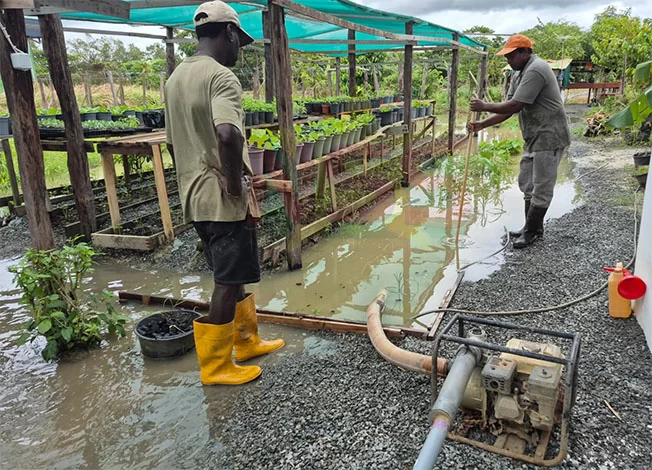
    Across the agricultural districts of Wanica and Saramacca in Suriname, smallholder farmers are watching their livelihoods rot underwater as government bureaucracy drags its feet on life-saving flood mitigation. For these producers, endless seminars, crisis committee meetings, and press conferences full of empty buzzwords like “assessment”, “coordination” and “integrated strategy” mean nothing when their crops are literally submerged in standing water. What they need is dry farmland — and they need it now.

    The crisis unfolding across hundreds of hectares of cultivated land stems from long-standing neglect of the region’s drainage infrastructure. At the Uitkijk sluice in Creola, the structure designed to redirect excess water from the Saramaccakanaal to the Saramaccarivier cannot function properly: river water levels remain equal to canal levels even at low tide. What makes this failure even more bitter is that a $35 million rehabilitation project for the 25-kilometer canal connecting the Saramacca and Suriname rivers was already completed, yet farmers have seen no relief from chronic flooding.

    Agriculture Minister Mike Noersalim has openly acknowledged that most local vegetable crops cannot survive more than 24 hours of submersion without total loss. Even with this knowledge, government officials continue to focus on slow, bureaucratic damage assessments, while losses mount by the hour. This mismatch between urgent need and glacial government action has left farmers furious. What is the point of counting damaged crops, they ask, when their entire income is already drowning?

    When local farmers gathered for an emergency press conference to demand action, their expectations were straightforward: they wanted to hear that additional excavators would be deployed to clear clogged drainage canals the same day, that blocked trenches and outfalls would be opened immediately, that emergency pumps would be brought in to drain floodwater, that a dedicated registration point would be set up for impacted producers, and that emergency aid would be prepared for small independent farmers who have no steady salary, no formal employment, and no social safety net to fall back on.

    None of these commitments were delivered. Instead, farmers left with the same vague promises: crisis plans still in development, future seminars to discuss the issue, and new committees to review the problem. For context, of the more than 40 main drainage canals marked A and B in the Saramaccapolder and Kwarasan districts, fewer than three have been cleared in recent years. This is the outcome of decades of deferred maintenance, overgrown canals clogged with weeds, and successive governments kicking the problem down the road. Billions have been borrowed, countless plans have been drafted, endless meetings have been held, but no lasting, structural solutions have ever been implemented.

    The glaring contradiction between the current administration’s rhetoric and on-the-ground reality is impossible to ignore. President Jennifer Simons identified agriculture as a top national priority during her New Year’s address to the Suriname Association of Economists, framing the agrarian sector as the core of her government’s economic policy, and the key to achieving national food security, price stability, job creation, and broad-based prosperity.

    But as local farmers know well, agriculture cannot be protected with speeches alone. It requires functional drainage infrastructure, operational pumps, consistent routine maintenance, clear long-term vision, and rapid action when crisis hits — none of which have been forthcoming amid bureaucratic gridlock. Already, vegetable prices across Suriname have spiked in response to the crisis, and the situation is set to worsen. When entire harvests are lost to flooding, widespread scarcity follows, driving up market prices for all consumers. In the end, it is not just farmers who will pay the price for government inaction: every citizen in Suriname will feel the impact at grocery stores.

    This failure also raises larger questions about Suriname’s ambitions for the agricultural sector. How can the nation seriously market itself as the “breadbasket of the region” when entire farmlands turn into stagnant reservoirs after every heavy rainfall? How can the government attract foreign and domestic investment to agriculture when a single day of heavy rain can wipe out a farmer’s entire annual investment? How can policymakers persuade young people to pursue careers in farming when they see smallholders lose everything with no insurance, no protection, and no compensation from the state?

    The reality for Suriname’s smallholder farmers today is brutally simple: it is pump or drown. Right now, there is no pumping. The Suriname government must recognize that this is no longer a theoretical water management problem. It is a full-blown social and economic crisis that directly threatens the livelihood security of thousands of people. A farmer survives off what the land produces. And right now, that land is completely underwater.

  • Regering kondigt crisisaanpak aan voor wateroverlast

    Regering kondigt crisisaanpak aan voor wateroverlast

    Suriname’s government has moved quickly to confront escalating flood emergencies that have submerged residential and agricultural areas across Paramaribo, Wanica, Saramacca and multiple other districts, announcing the formation of a special interdepartmental crisis commission during an urgent press briefing held Monday.

    Public Works and Spatial Planning Minister Stephen Tsang outlined the multiple overlapping causes of the deepening crisis during the briefing, explaining that while unprecedented extreme rainfall triggered the current disaster, years of systemic neglect and decay of critical water management infrastructure created the conditions for widespread flooding. “We are not just fighting against extreme weather,” Tsang told reporters. “We are also fighting against illegal filling of drainage canals, unauthorized discharge networks and widespread dumping of solid waste that clogs our water systems.”

    Tsang painted a grim picture of the state of the country’s flood management infrastructure, noting that government inspection teams found dozens of non-functional pumping stations, locks dating back to the colonial era that have been stuck shut for years, and roads that were constructed without any comprehensive drainage planning. The minister said he began touring key infrastructure sites as early as 5:00 a.m. Monday, and found that pumping stations along the Sommelsdijckkreek and Boomskreek had gone offline due to power outages operated by the national utility EBS. Other sites were facing outages caused by failed transformers and pump intakes blocked by accumulated debris. If all pumping infrastructure had been fully operational, Tsang confirmed, floodwaters in the northern districts would have already receded by Monday.

    In addition to long-deferred maintenance, Tsang pointed to actions by private citizens that have directly exacerbated flooding risks. He cited a recent incident at the Clevia lock, where local residents forcibly opened a lock gate because they were unwilling to wait five minutes for the official operation, causing permanent damage to the structure. Illegal dumping, unauthorized filling of drainage trenches and unapproved construction along water channels all restrict water flow, turning routine rainfall into major flood events, he added.

    The newly formed crisis commission brings together representatives from multiple government agencies including the Ministry of Public Works, Ministry of Agriculture, the National Coordination Center for Disaster Management (NCCR) and district-level commissioners. The body has been given an urgent mandate to address immediate flood threats and prepare formal policy recommendations for the Council of Ministers by Wednesday.

    To ramp up immediate response efforts, all operational pumping stations are now running at full capacity. The government is also partnering with the private sector to source additional mobile pumps and excavation equipment, with local businesses already donating machinery and resources to the effort. Even prison inmates have been deployed to manually clear debris from clogged drains and drainage trenches. Tsang warned that the outlook for the coming days remains poor, with forecasters predicting another round of heavy rainfall on Thursday, May 14, driven by a strong El Niño pattern that is amplifying precipitation across the region.

    The agricultural sector has already borne the brunt of the disaster, with Agriculture, Livestock and Fisheries Minister Mike Noersalim confirming that farmland across nearly every district has been inundated. Hard-hit areas include major agricultural regions in Saramacca, Nickerie, Commewijne and parts of the interior. Agricultural extension officers are currently conducting on-the-ground assessments to calculate the full scale of crop damage. Noersalim noted that many staple crops cannot survive more than 24 hours of continuous submersion, making rapid drainage improvements critical to preventing catastrophic, irreversible losses.

    For rural communities in Suriname’s interior, the disaster risks escalating into a full food security crisis, according to NCCR. Flooding has already submerged subsistence farm plots in multiple southern Suriname villages, and officials warn that if flood waters do not recede soon, the country could face widespread food shortages within four to six weeks.

    Beyond immediate emergency response, the government has announced plans to move beyond temporary fixes and implement long-term structural reforms to address repeated flooding. Tsang emphasized that the administration is developing a multi-year plan for a full overhaul of the coastal plain’s drainage system, which will consolidate existing fragmented plans into a single national master plan after a full review of current infrastructure gaps.

    The government is also considering stricter enforcement measures and new legislation to crack down on pollution and unauthorized construction along drainage channels and canals. The proposed new rules will allow authorities to impose harsher penalties on individuals who block critical flood infrastructure or build without permits in designated drainage areas. Moving forward, all new land development projects will only receive government approval if they include modern, code-compliant drainage infrastructure, Tsang confirmed. The administration is also working to source affordable pumping stations for low-lying neighborhoods such as Sophia’s Lust, where flooding is a chronic recurring problem that cannot be solved by just clearing existing trenches.

    To help residents access emergency support, the government has launched a dedicated hotline for acute flood emergencies at the number 844-2646. Residents can report severe flooding or situations requiring immediate intervention through the line. At the same time, the government is calling on residents to take personal responsibility by avoiding dumping waste in canals and drainage ditches, and taking proactive steps to limit damage to homes and personal property.

  • Two arrested following fatal Picard shooting

    Two arrested following fatal Picard shooting

    A fatal shooting that claimed the life of a St. Kitts national in Dominica’s Picard region has led to the arrest of two suspects, one man and one woman, local law enforcement announced Monday. Police Chief Lincoln Corbette shared details of the ongoing investigation during an official press briefing, confirming the developments that unfolded over 24 hours prior.

    The incident was first reported to Portsmouth district police at approximately 9:20 p.m. Sunday, when residents alerted authorities to sounds of gunfire in the Picard vicinity. Promptly responding to the emergency call, officers arrived at the scene to find a young Black man with braided hair lying unresponsive, Corbette said. First responders immediately requested emergency medical support, and a physician attending the scene officially pronounced the victim dead at the location.

    In the hours following the discovery of the body, law enforcement launched a rapid manhunt, which culminated in the arrest of the two unidentified suspects. No further details about the suspects’ identities, potential motives for the shooting or connections to the victim have been released to the public as of Monday’s briefing, as investigators work to piece together the sequence of events leading up to the fatal shooting.

    Corbette emphasized that the investigation remains active and ongoing, and appealed for public assistance to move the case forward. Any residents or visitors with information related to the shooting — whether they witnessed the incident, noticed suspicious activity in the area Sunday evening, or have details that could aid investigators — are asked to contact the official police tip line at 1-800 TIPS. All tips can be submitted anonymously, and law enforcement has encouraged anyone with relevant information to come forward, even if they believe the details they have are minor.

  • Government Imposes Sweeping Crackdown After Bloody Violence

    Government Imposes Sweeping Crackdown After Bloody Violence

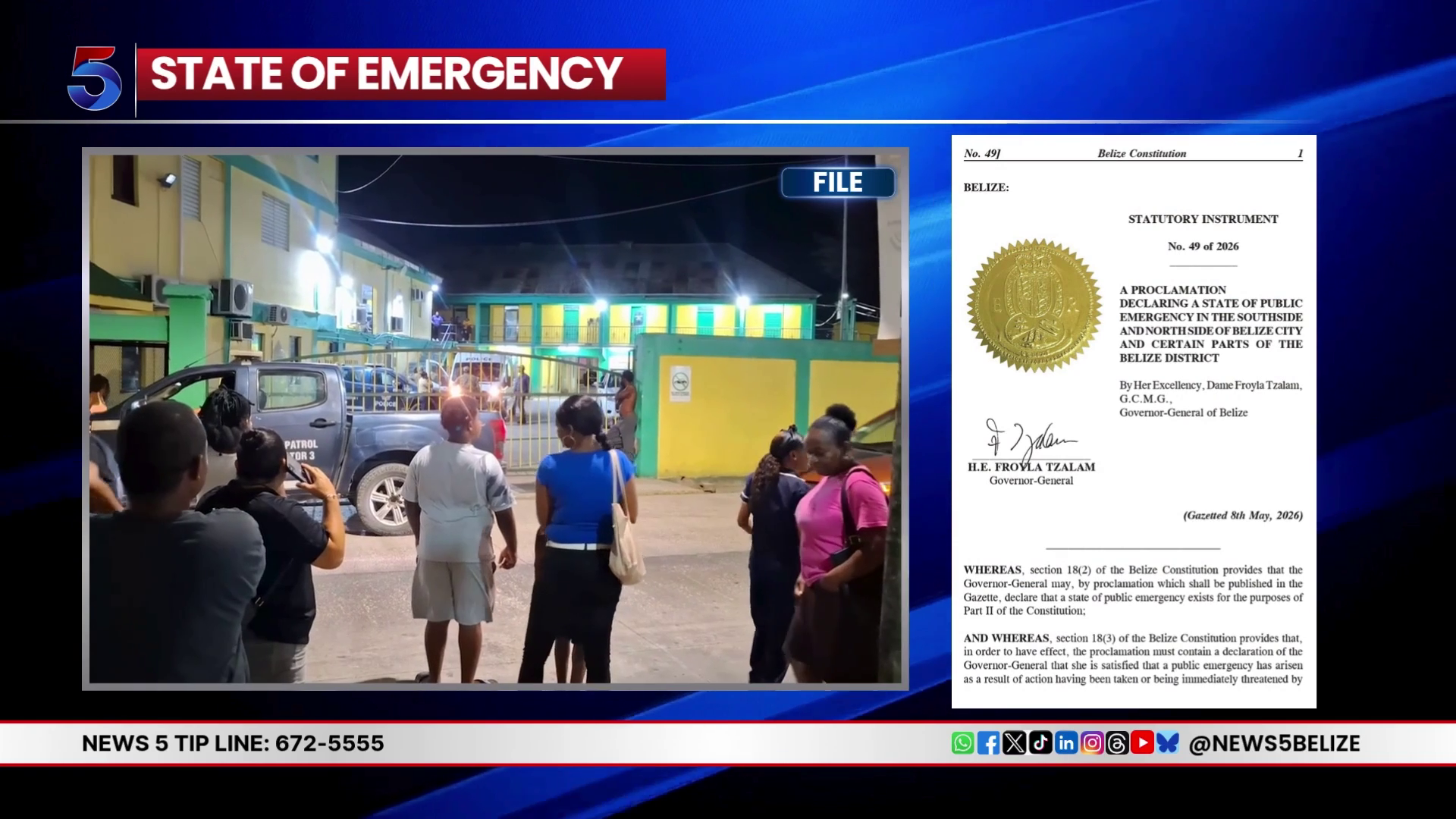
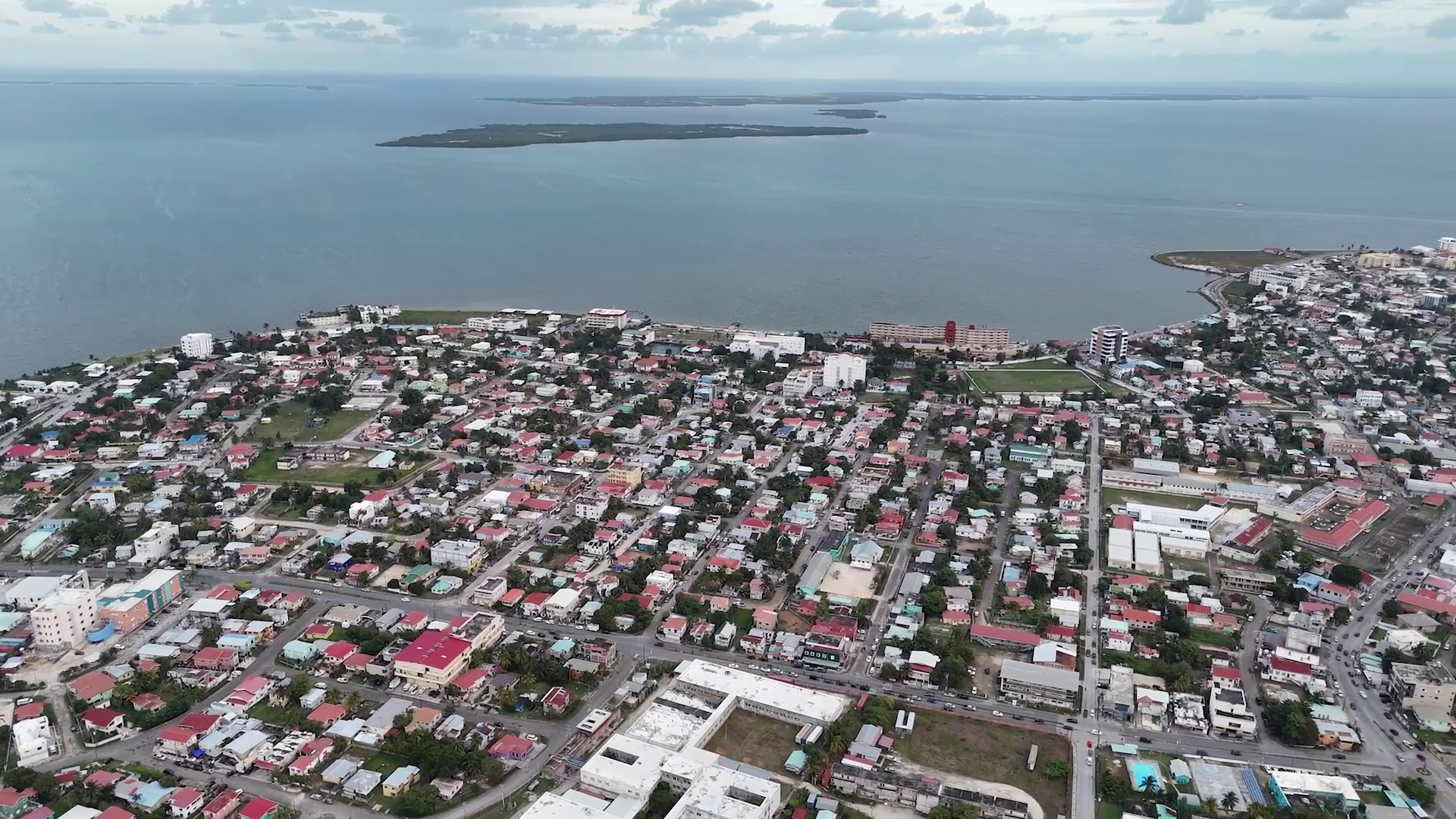
    Residents of Belize City entered an altered way of life on Saturday, May 11, 2026, after the Belizean government implemented a sweeping State of Emergency across high-violence zones on the city’s north and south sides, as well as select areas of the broader Belize District. The drastic public safety measure comes after weeks of steadily escalating gun violence that has left multiple people dead and terrified local communities, even drawing minors into deadly crossfire.

    The crisis did not erupt spontaneously. A rapid chain of targeted attacks and retaliatory bloodshed over the first week of May pushed authorities to take immediate action. On May 5, two prominent local figures, Hubert Baptist and Eric Frazer, survived a brutal ambush shooting along the busy Philip Goldson Highway. Within days, 29-year-old Jamal Samuels was gunned down in what investigators confirm was a retaliatory killing. That same evening, a 16-year-old opened fire inside a bar along the same highway, killing a 34-year-old mother of three. These high-profile incidents are only the most severe in a months-long pattern of rising shootings and homicides that has destabilized Belize City, prompting officials to conclude that incremental law enforcement changes were no longer sufficient.

    Enshrined in Statutory Instrument 50 of 2026, the State of Emergency grants dramatically expanded authority to local police and officers from the Belize Defence Force (BDF) to restore order. The new rules ban a series of common public activities within the emergency zones: loitering, public alcohol consumption, and any public gathering of three or more people are all prohibited. Minors living in affected areas are required to be indoors at their residences by 8 p.m. and may not leave before 6 a.m. All members of the public are legally required to respond fully to any questions posed by law enforcement during stops in the zone.

    Beyond these new behavioral restrictions, the legislation removes longstanding search and arrest protections for people within the emergency zones. Police are now authorized to search any private home, property, vehicle, boat, or individual without a judicially issued warrant if they reasonably suspect criminal activity is present. Officers may seize any item they deem a threat to public order, and can arrest any person without a warrant if they suspect the individual has violated emergency rules, committed a crime, or plans to commit a criminal act. Even non-residents who regularly visit the emergency zones face the same no-warrant arrest authority, and anyone taken into custody can be held for up to 30 days without formal charges. Law enforcement also has the power to close any business or public location deemed a risk to public safety, and the Minister of Home Affairs holds additional authority to order individual home confinement, restrict a person’s social contacts, and require regular movement reporting to local police. If any individual interferes with an officer’s duties or uses threatening or abusive language toward law enforcement during the State of Emergency, that action constitutes a separate criminal offense. Officials have also confirmed that protocol requires any search of a female resident to be conducted by a female officer to protect personal dignity.

    As security forces deploy checkpoints, increased patrols, and begin enforcing the new rules, local residents are adjusting to major disruptions to daily life. Uncertainty remains two key questions hanging over the affected communities: how long the State of Emergency will remain in effect, and whether the drastic measure will successfully curb the cycle of violence that has plagued Belize City for months. Authorities are urging all residents to comply with the new restrictions to help restore safety to the embattled regions.

  • Nine Behind Bars Under SOE; ComPol Rosado Signals More to Come

    Nine Behind Bars Under SOE; ComPol Rosado Signals More to Come

    In a major law enforcement operation launched earlier this month, authorities in Belize have taken nine suspected crime figures into custody under a newly declared State of Emergency (SOE), with top police officials warning that additional detentions may follow as the crackdown on violent organized crime intensifies.

    The declaration of the SOE, which went into effect on May 8, 2026, followed weeks of intelligence gathering and on-the-ground security assessments that pointed to an imminent threat to public safety across targeted zones in Belize City and the rural Belize District. During a formal press briefing on May 11, Commissioner of Police Dr. Richard Rosado emphasized that the extraordinary measure was not implemented lightly, but was deemed unavoidable after analysts confirmed that rising violence had reached a level that traditional policing tactics could not address.

    “The decision was not made lightly for the state of emergency, but we believe it was absolutely necessary based on the intelligence we have gathered and on the ground assessment that indicated an imminent danger to life and property,” Rosado told reporters. He added that the operation has been crafted to avoid disruption for ordinary residents: law-abiding citizens have nothing to fear, he stressed, because the entire initiative is targeted exclusively at high-risk individuals tied to criminal activity.

    Under the framework of Statutory Instrument 50, the legal document that governs enforcement of the SOE, police are following a structured playbook that prioritizes intelligence-led targeting rather than widespread, random detentions. Deputy Commissioner of Police Bart Jones explained that all current detainees are not swept up in broad sweeps, but are specifically linked to ongoing investigations into recent shootings, murders and gang-related offenses. Unlike broad, unrestricted detainment policies that have been associated with some past SOEs, this iteration relies on pre-existing intelligence, active case work and structured interviews to guide detentions. Even the provision banning groups of three or more people from gathering in declared zones will be enforced sparingly, only when intelligence justifies action, Jones noted.

    Jones also addressed public questions over why parts of rural Belize District were included in the SOE declaration despite recent high-profile shootings being concentrated in Belize City. He confirmed that the expansion aligns with intelligence showing that criminal operatives based in the city frequently travel to and operate from these rural areas, making their inclusion critical to the success of the operation.

    The move has reignited longstanding debate over the legality and appropriateness of SOEs as a crime-fighting tool in Belize, with critics arguing that the measures overstep constitutional boundaries on government authority. Police leadership has pushed back against these claims, pointing to recent court rulings that affirm the constitutionality of properly justified SOE declarations.

    Assistant Superintendent Stacy Smith, a staff officer with the department, noted that three recent court judgments have clarified the parameters of SOE use. The most recent ruling confirmed that when a situation rises to the level of immediate threat to public safety, declaring a state of emergency is fully consistent with Belize’s constitution. “The SOE is a creature of the constitution so the constitution cannot be inconsistent within itself,” Smith explained. “I wish to disabuse persons minds that SOEs in itself is unconstitutional.”

    For Rosado, the decision to activate the SOE is not a sign of overreach, but of proactive, strategic policing. “The State of Emergency activation is an extraordinary legal tool to combat extraordinary circumstances that traditional policing alone cannot neutralize, and I believe that it is an indication of strategic strength, proactive leadership, rather than sitting down and having business as usual,” he said. “It shows that as a department we are committed to doing whatever it takes to return normalcy to the streets.”

    The current SOE is scheduled to remain in effect for 30 days, with provision for extension by a vote of the National Assembly if law enforcement determines that additional time is needed to complete the operation and neutralize the ongoing threat to public safety.