分类: society

  • WATCH: Overturned trailer truck causing traffic delays in Central Village

    WATCH: Overturned trailer truck causing traffic delays in Central Village

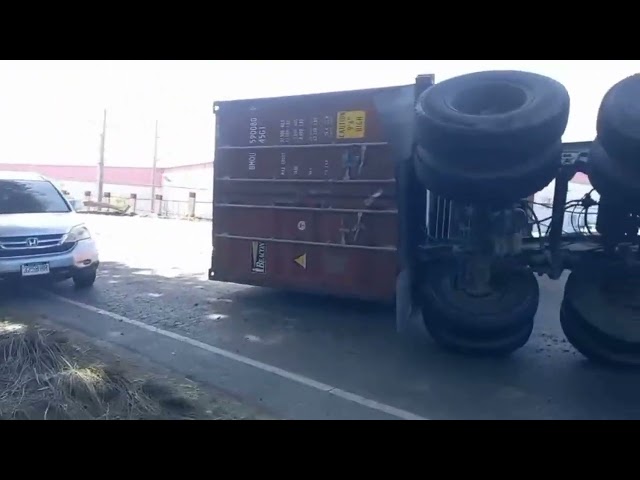
    A heavy goods trailer has flipped onto its side on a main roadway close to the corporate headquarters of Lasco in Central Village, St Catherine, bringing significant traffic disruption to morning commuters and local travelers on Thursday.

    Local law enforcement officers have deployed to the accident site to assist with crowd and traffic control, as passing motorists are forced to navigate around the obstructed vehicle through narrow alternate paths. The presence of police has helped prevent total gridlock in the area, but lengthy wait times remain unavoidable for drivers passing through the corridor.

    As of initial reports, the root cause of the rollover accident remains undetermined. Early witness accounts confirm the incident took place at approximately 9 a.m. local time on Thursday. The truck had only one person on board at the time of the crash, the driver, and emergency officials have confirmed no injuries were sustained in the incident.

  • Abinader and Collado Inaugurate Second Phase of Santo Domingo East Boardwalk

    Abinader and Collado Inaugurate Second Phase of Santo Domingo East Boardwalk

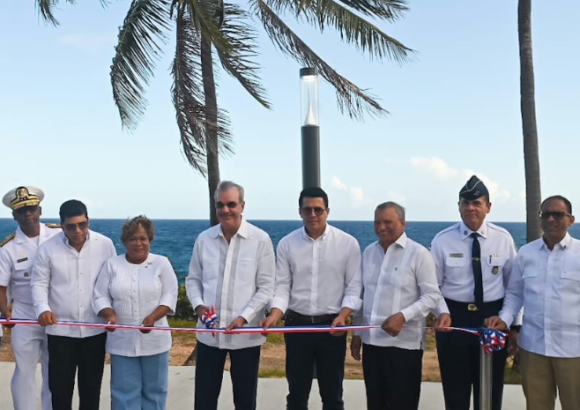
    Senior government leaders in the Dominican Republic have formally opened the final phase of a sweeping waterfront redevelopment project along the capital’s eastern coast, capping off a public investment initiative designed to boost local quality of life and national tourism. On Wednesday, President Luis Abinader joined Tourism Minister David Collado in Santo Domingo to inaugurate the second phase of the Santo Domingo East Boardwalk reconstruction, bringing the multi-stage transformation to an official close.

    The full revitalization effort has carried a total public investment price tag of more than 685 million Dominican pesos, with the second and final phase alone accounting for 314.4 million pesos in spending. The completed project stretches 4.1 continuous kilometers along the Avenida España coastal corridor, running from the Dominican Naval Base in the north to the Las Américas Highway in the south. In total, the redevelopment has delivered more than 237,000 square meters of new public recreational and green space for local communities and visitors.

    Speaking to attendees at the inauguration ceremony, President Abinader underlined the far-reaching benefits the project will deliver for three key local sectors: tourism, public recreation, and urban development across Santo Domingo East. He framed the newly renovated boardwalk as a world-class, accessible public gathering space that will serve both long-term residents of the area and the thousands of domestic and international tourists who visit the Dominican capital each year.

    For his part, Tourism Minister David Collado noted that the boardwalk project is not an isolated initiative, but a core component of the Ministry of Tourism’s national strategy to restore and modernize waterfront and coastal public spaces across every region of the Dominican Republic. Collado emphasized that integrated coastal development serves dual purposes: it strengthens community connection to public natural spaces, while also expanding the country’s tourism infrastructure to attract more visitors and drive long-term economic growth.

    The comprehensive infrastructure intervention included a wide range of public works beyond new green and recreational space. Construction crews built new pedestrian sidewalks, dedicated bicycle lanes, internal access roads, and landscaped central medians along the corridor. The project also added 11 new public parking areas, multiple open recreational plazas, new public urban furniture, upgraded stormwater drainage systems, and modernized electrical infrastructure to support public operations and safety along the boardwalk.

    The inauguration ceremony drew a broad cross-section of public and community stakeholders, including municipal and provincial government leaders from the Santo Domingo East region, senior national government officials, and representatives from local business, community, and tourism sectors. Attendees framed the completed project as a landmark public investment that will deliver tangible benefits to the region for decades to come.

  • Six people sentenced to life in prison for gun-related charges in first quarter of 2026

    Six people sentenced to life in prison for gun-related charges in first quarter of 2026

    KINGSTON, Jamaica — Jamaica’s national law enforcement body, the Jamaica Constabulary Force (JCF), has published a comprehensive breakdown of its crackdown on illegal firearms activity across the island for the first quarter of 2026, revealing stiff penalties for dozens of offenders and large-scale seizures of unregistered weapons.

    Between January 1 and March 31 of this year, the agency recovered a total of 175 illegal firearms distributed across a range of enforcement operations. Thirty-two of these weapons were intercepted at Jamaican ports by the specialized Firearms and Narcotics Investigation Division (FNID), stopping untracked weapons from entering the country before they could reach communities. Another 99 firearms were seized during 93 separate active incidents that involved 140 identified suspects, while the remaining 44 weapons were recovered in circumstances that did not result in any criminal charges being filed.

    In total, authorities brought 595 formal charges against suspects under Jamaica’s Firearms (Prohibition, Restriction and Regulation) Act over the three-month period. Charges covered a broad spectrum of firearm-related violations, including stockpiling banned weapons, unauthorised possession of ammunition, and the use of prohibited weapons to commit serious felonies. A total of 80 individuals faced criminal prosecution for firearm possession offences: the defendant pool was overwhelmingly male, with 63 men between the ages of 17 and 75 charged, compared to 17 women aged 19 to 58.

    Geographically, St Andrew South logged the highest volume of firearm-related arrests and charges, with 60 open cases recorded in the district. It was followed by St James with 54 cases and Hanover with 45 cases, marking the three regions with the most intense illegal weapons activity in the first quarter.

    Six of the most high-risk offenders received life sentences for their violations, with several other defendants receiving decades-long prison terms. Among the key convictions highlighted by JCF was that of 23-year-old Romani Lugg, who was arrested in Spanish Town, St Catherine, in January 2025 while carrying an unregistered firearm. Convicted of stockpiling prohibited weapons, Lugg was sentenced to life imprisonment and will not be eligible for parole until he has served 21 years of his sentence.

    A second defendant from St Catherine North, 27-year-old Ronaldo Forbes, also received a life sentence for unauthorised ammunition possession, alongside a concurrent 13-year-11-month term for possession of a prohibited weapon, after police found an unregistered gun during a community operation in March 2025. Fifty-four-year-old Nigel Bailey received a life sentence for stockpiling prohibited weapons with parole eligibility after 20 years, plus an additional 15 years of hard labour for a separate weapons possession charge.

    Andre Jennings of St Andrew South was handed a life sentence for prohibited weapon possession with 20 years before parole eligibility, plus an extra 22 years and 11 months for unauthorised ammunition possession. In Manchester, 48-year-old Matthew Smith was sentenced to a cumulative 40 years in prison after pleading guilty to a string of violent offences including illegal firearm possession, burglary, aggravated robbery, and rape, all committed across a 21-day period in 2023. Ricardo Downer and Timoy Bingham each received life sentences for unauthorised ammunition possession, with additional 14-year terms for prohibited weapon possession. Three other convicted offenders, Nickrane Mighty, Ricardo Kerr and Jamoy Chusney, received fixed sentences ranging from 14 to 15 years for their respective firearm-related convictions.

    JCF officials confirmed that the aggressive enforcement against illegal firearms has continued into the second quarter of 2026, with two additional high-profile convictions secured in April alone. Prosecuted by St Catherine South police, Jerome Wilson received a life sentence for prohibited weapon possession plus 16 years for unauthorised ammunition possession, while co-defendant Marvin Bailey was sentenced to more than 30 years for wounding with intent and over 25 years for illegal firearm possession. Overall, the 17 sentenced offenders from the first quarter received a combined total of more than 250 years in prison, marking one of the toughest three-month periods for weapons-related convictions in recent Jamaican history.

  • UNICEF and Dominican authorities address growing risks of online sexual violence

    UNICEF and Dominican authorities address growing risks of online sexual violence

    In the wake of troubling new research showing less than 40 percent of Dominican teenagers feel secure navigating digital spaces, the country’s top justice official has called for urgent, systemic upgrades to how the nation prevents, investigates and prosecutes online sexual violence against children and adolescents.

    Justice Minister Antoliano Peralta outlined the government’s priority during a landmark national consultation hosted by UNICEF, in partnership with global child protection bodies ECPAT International, Interpol, Safe Online and the Dominican Ministry of Justice. The cross-sector gathering brought together key stakeholders from across the Dominican government, including the National Council for Children and Adolescents (CONANI), the Attorney General’s Office, the national judiciary, the Ministry of Interior and Police, the Dominican Institute of Telecommunications (INDOTEL), and the Government Office of Information and Communication Technologies, to assess the growing harm of online violence and sexual abuse against minors.

    Peralta emphasized that the Dominican state bears a fundamental legal and ethical obligation to both prevent and penalize all forms of digital sexual violence targeting young people. To meet this obligation, he said authorities are advancing three core priorities: improving inter-agency coordination to eliminate response gaps, strengthening support and protection frameworks for survivors of abuse, and updating national legal frameworks to keep pace with rapidly evolving digital threats.

    New data presented at the consultation laid bare the stark disparities in online safety facing different groups of young Dominicans. While just 37 percent of all teenagers report feeling safe online, the share drops sharply for adolescent girls, with only one in four saying they feel secure in digital environments.

    Two major studies — the Kids Online survey and Adolescents and Internet Use report — were presented during the event, highlighting deep structural inequalities that exacerbate risk for vulnerable youth. The research found that internet access for Dominican teenagers remains shaped by gaps in connectivity, device access and digital literacy, with half of all adolescents relying solely on mobile phones to go online. This overreliance on mobile-only access is most pronounced in low-income households, putting already marginalized young people at greater risk of exploitation.

    Even for adolescents who have grown up immersed in digital culture, the research revealed a widespread lack of skills to identify and avoid online risks, leaving many exposed to grooming, abuse and exploitation.

    Carlos Carrera, a participating child protection leader, warned that online sexual violence is a fast-growing threat that demands unified action from both public sector institutions and specialized global and local agencies. Attendees also raised particular alarm about emerging technologies, specifically generative artificial intelligence, noting that new tools lower barriers for bad actors to create non-consensual explicit content and facilitate the online exploitation of minors.

    Despite the pressing challenges highlighted, the consultation also noted ongoing progress on both national and international fronts. The Dominican Republic is an active participant in the global Disrupting Harm initiative, a multinational effort designed to crack down on online child sexual exploitation. UNICEF also reported that it is working alongside the Dominican Ministry of Education to roll out targeted safety resources, including the E-mentors and E-pana platforms, to help adolescents and their families build skills for safer, more responsible internet use.

  • 924 containerised housing units in Jamaica

    924 containerised housing units in Jamaica

    KINGSTON, Jamaica — In the wake of Hurricane Melissa, which left hundreds of Jamaican families homeless, the Jamaican government is moving forward with an ambitious temporary housing relief initiative, with 924 prefabricated containerised housing units already delivered to the island. According to Robert Montague, Minister without Portfolio in the Ministry of Economic Growth and Infrastructure Development, all delivered units are currently stored at multiple secure sites across the country — including Spanish Town in St Catherine, Luana in St Elizabeth, and Montpelier in St James — with the Jamaica Defence Force (JDF) overseeing their management and security.

    Montague shared the latest update during a formal inspection of model container homes at the Office of Disaster Preparedness and Emergency Management (ODPEM) storage facility in Twickenham Park, St Catherine, on Tuesday, May 19. He confirmed that another 500 units are scheduled to arrive within the next three weeks, as part of a broader total order of 2,500 temporary housing units earmarked for disaster response.

    The core goal of this relief programme, Montague explained, is to deliver a measurable improvement in living conditions and provide much-needed stability for Jamaican households that lost their homes to the hurricane’s destructive impact. The government is leveraging multiple sources to expand the housing stock available for survivors: in addition to the containerised units purchased by the Ministry of Economic Growth and Infrastructure Development, a donation of additional units has been received from the Government of China, and the International Red Cross has committed to delivering 300 wooden temporary housing units in the coming weeks.

    Initial damage assessments following Hurricane Melissa estimated that as many as 12,000 families had suffered severe housing damage or complete destruction. However, after a rigorous cross-review conducted by the Ministry of Labour and Social Security and local municipal authorities, that figure has been revised significantly downward. Montague told reporters that the updated count puts the number of households left in severe housing need at approximately 2,500, all of which lost their homes or were originally located in high-risk, unsafe zones unsuitable for rebuilding.

    The sharp reduction in the official need count reflects two key developments, Montague noted. First, hundreds of displaced families have already managed to rebuild their homes on their own, using funds from insurance claims, financial support from extended family members, community mutual aid, and funding from existing government roofing improvement programmes. Second, municipal teams uncovered a large number of duplicate damage reports, which the minister emphasized were almost never cases of intentional fraud, but rather the result of multiple adult members of the same household submitting separate reports to request support.

    All relocation efforts are being carried out under strict guidance from Prime Minister Andrew Holness, who has mandated that no displaced residents can be relocated to areas that are environmentally vulnerable or at high risk of future natural disasters. To make the temporary container units as liveable as possible, the government is outfitting all state-purchased units with standalone water tanks and solar power generators, eliminating reliance on potentially damaged local utility grids in post-hurricane communities.

    Beneficiaries of the programme will receive government grants to build concrete foundations for their container units, with volunteer support from local community members to keep construction costs low. Before units are installed, municipal inspection teams will visit each site to verify that the foundation meets safety standards and issue official certification.

    To streamline logistics for the project, the National Housing Trust (NHT) has agreed to provide two heavy-duty tractor heads fitted with specialized lift arms, which will be used to unload and install the collapsible container units. The units were specifically designed with a collapsible structure to cut down on shipping costs when being transported to Jamaica from overseas manufacturers.

    Looking beyond the immediate Hurricane Melissa response, Montague said the Jamaican government plans to retain a portion of the unused temporary units for deployment in future natural disaster events. Any excess units that are not needed for current disaster survivors will be reallocated to other public housing initiatives, including the government’s New Social Housing Programme (NSHP), or used to accommodate vulnerable social cases currently occupying hospital beds that are needed for acute medical patients.

    In closing, Montague extended formal gratitude to all partners that have supported the relief effort, including the Government and people of China for their donation of housing units, the Red Cross for their commitment of wooden housing, the JDF for their logistical and security support, and ordinary Jamaicans who have stepped up to help displaced neighbours and family members in the aftermath of the storm.
  • Report it!

    Report it!

    Amidst deeply concerning statistics showing persistent high levels of violence against children across Jamaica, the nation’s Child Protection and Family Services Agency (CPFSA) is reiterating a critical legal obligation: every member of the public is required by law to report suspected child abuse, neglect, or harm to state authorities.

    The reminder came from CPFSA legal officer Kimberly Blackwood-Martin during a Wednesday Zoom convening focused on evaluating the country’s existing child protection framework. In her remarks, Blackwood-Martin cited the Child Care and Protection Act, which explicitly states that anyone with reasonable suspicion that a child has been, is being, or will face abandonment, neglect, physical or sexual maltreatment, or requires alternative care and protection must submit a formal report to the National Children’s Registry (NCR). She emphasized that this mandate is not a discretionary choice, but a binding legal requirement for all Jamaican citizens.

    Blackwood-Martin lamented a marked shift from cultural traditions of collective care for children, noting that the historic “it takes a village” mindset that once encouraged community intervention to protect at-risk youth has eroded in modern times. She pointed to widespread inaction even when community members witness clear signs of harm, from children begging publicly to unexplained, frequent injuries on children in their own families.

    Data shared during the meeting underscores the scale of the crisis. Between 2024 and 2025, the NCR received more than 14,183 reports involving children, covering allegations of physical abuse, sexual abuse, emotional and verbal mistreatment, and neglect. Complementary data from Jamaica’s Multiple Indicator Cluster Survey shows that as of 202[corrected per original typo], nearly 76 percent of children between the ages of one and 14 have experienced either psychological aggression or physical punishment at the hands of caregivers. More than 57 percent of all children face physical punishment, with four percent enduring severe abuse including repeated beatings to the head or face. Most strikingly, the survey found that more than three out of every four Jamaican children will experience at least one form of violence before they reach adulthood.

    Even these alarming figures are likely an undercount, Blackwood-Martin warned. Many abuse cases remain unreported, leaving countless children to endure harm in silence. She called out widespread public apathy: too often, when people encounter children begging on the street or spot suspicious signs of abuse within family networks, they choose to look away rather than intervene. A common response to a child begging is to give a small cash donation instead of questioning why the child is unsupervised and in public distress, and failing to alert authorities to investigate the situation.

    Blackwood-Martin also criticized the pervasive cultural normalization of excessive corporal punishment, a widespread practice that continues to put children at unnecessary risk of severe harm. She argued that the combined efforts of policymakers, child protection advocates, and existing legislation cannot solve the crisis on their own—communities and individual citizens must step up to fulfill their legal and ethical roles. She specifically referenced Section 8, Part 2 of the Child Care and Protection Act, which outlines mandatory reporting requirements specifically for children found to be destitute or begging.

    In closing, Blackwood-Martin urged the public to use the NCR’s 211 hotline any time they have concerns about a vulnerable child’s safety. Rejecting efforts to downplay the severity of the crisis, she stressed that current rates of child violence in Jamaica are unacceptably and alarmingly high, and that policy debates, cabinet discussions and committee meetings are no longer sufficient to drive meaningful change. Collective action from every member of Jamaican society is required to turn the tide, she said.

  • Police suspect domestic dispute in Westmoreland murder

    Police suspect domestic dispute in Westmoreland murder

    A shocking homicide has rocked the quiet community of Retreat in Westmoreland, Jamaica, after the body of a local middle-aged worker was found with his head partially severed, in what law enforcement officials now suggest stemmed from a private, interpersonal dispute. The victim, identified as 40-something Vinroy Holness – a employed laborer and skilled backhoe operator – was attacked inside his own residence in the early hours of Wednesday, according to initial police accounts of the incident.

    Shockingly, Holness’ two young children were inside the home at the time of the fatal assault. Instead of harming the minors, the attackers concealed them by covering their bodies and hiding them under a bed. When dawn broke on Wednesday morning, one of the children managed to escape and raise the alarm with local residents, who alerted authorities to the gruesome scene.

    Speaking to reporters on Wednesday afternoon shortly after concluding a Negril Destination Assurance Council meeting at Negril’s James Hunter Event Centre, Deputy Superintendent Charlene Gray-Morris – commander of the Negril and Little London police zones – shared preliminary insights into the ongoing investigation. The probe remains in its very early stages, she emphasized, and official details are still being collected and verified. Early investigative work, however, points to the killing being rooted in a domestic disagreement rather than gang-related violence or other common criminal motives. “That particular murder is in its early stage of investigation. We are not yet in receipt of any information that we can give an update as it relates to that,” Gray-Morris said, adding, “It seems as if it is more domestic than any other crime.”

    Local residents who spoke to Jamaica Observer Online on condition of anonymity pushed back against any suggestion that Holness had conflict with community members, describing him as a quiet, agreeable man who kept to himself. “He and nobody in the community have anything,” one resident said of the victim. Multiple requests for additional comment and updated investigative details from senior law enforcement went unanswered as of Thursday.

    Despite the brutality of this latest killing, official data shows that violent crime has dropped sharply across the police zone that covers Retreat this year. While Gray-Morris did not share granular, area-specific crime stats, she confirmed that the Little London policing district – where the homicide occurred – has recorded only two murders so far this year, a major drop from the six murders recorded across the same area in 2014. Parish-wide data mirrors this downward trend: Last week, Deputy Superintendent Jordaine Allen, operations head for the Westmoreland Police Division of the Jamaica Constabulary Force (JCF), told the monthly general meeting of the Westmoreland Municipal Corporation that the entire parish has logged 10 murders since January, compared to 16 murders over the same period last year. All major felony offenses, including non-fatal shootings and armed robberies, have also fallen across the zone in 2024, Gray-Morris added.

  • Kiwanians urged to transform hearts at prayer breakfast

    Kiwanians urged to transform hearts at prayer breakfast

    At its annual prayer breakfast held Saturday at the Stella Maris Pastoral Centre, the Kiwanis Club of New Kingston centered its annual gathering on a powerful core truth: meaningful national service does not start with formal programs or policy blueprints—it begins with inwardly transformed hearts and minds, united by a shared commitment to lifting up others.

    The event, convened under the theme “Transforming Hearts and Minds through Partnerships,” featured keynote remarks from Reverend Stephenson Samuels, who challenged attendees to reframe what true transformation truly means. Samuels told the assembled Kiwanians and invited guests that transformation is far more than a superficial shift in outward behavior; it is a fundamental, complete inward overhaul that has the power to reshape local communities and, over time, the entire Jamaican nation.

    “If we are going to serve, then there has to be some level of transformation in our lives,” Samuels told the crowd. “And that transformation must be in hearts and minds. It cannot happen at the individual level only; it has to be collective.”

    Drawing on scripture from the Book of Romans 12, Samuels drew a clear distinction between transformation and passive conformity. He warned against the common trap of simply adjusting to harmful, negative social norms instead of working to drive lasting, meaningful change for the better. “You are either being transformed or you are being conformed,” he emphasized.

    Turning to one of Jamaica’s most pressing social challenges, Samuels called attention to rising rates of violent behavior among young people, especially within school communities. He noted that many children fall into harmful patterns due to overwhelming peer pressure and a widespread lack of consistent, caring adult guidance. “A lot of those boys just need somebody,” he said, sharing a personal reflection from his own teenage years. Samuels recalled that a caring teacher intervened at a critical turning point in his life, redirecting his path and setting him on the course he follows today.

    Samuels went on to offer high praise for the decades-long work of the global Kiwanis movement, highlighting its consistent investment in youth across Jamaica through mentorship programs, school feeding initiatives, youth leadership development, and ongoing community outreach. “And in the midst of all of this, Kiwanis clubs are still serving their mission and giving themselves away for the betterment of others,” he said.

    Beyond the keynote address, the breakfast program included a special honor ceremony recognizing three trailblazing Jamaican women for their exceptional work advancing child welfare and national development.

    The first honoree, Dr. Elizabeth Ward, is a respected physician and researcher who chairs the Violence Prevention Alliance Jamaica. For decades, she has led efforts to reduce community violence and strengthen national citizen security through evidence-based public health strategies and targeted policy reform.

    Second to be recognized was Professor Maureen Samms-Vaughan, a prominent child and adolescent psychiatrist and lifelong child advocacy leader. Her decades of research and clinical work have reshaped Jamaica’s national policies around child development and child protection, leaving a lasting impact on youth outcomes across the country.

    The third honoree, Pauline Bowla, a long-serving distinguished Kiwanian, was recognized for her decades of unwavering commitment to volunteerism, grassroots community development, and public service through the Kiwanis movement.

    Saturday’s gathering is part of the New Kingston Kiwanis Club’s ongoing organizational priority to expand cross-sector partnerships, strengthen local leadership, and drive inclusive community transformation through intentional, people-centered service.

  • Dominican government, KOICA and UNICEF present results of program to prevent early unions

    Dominican government, KOICA and UNICEF present results of program to prevent early unions

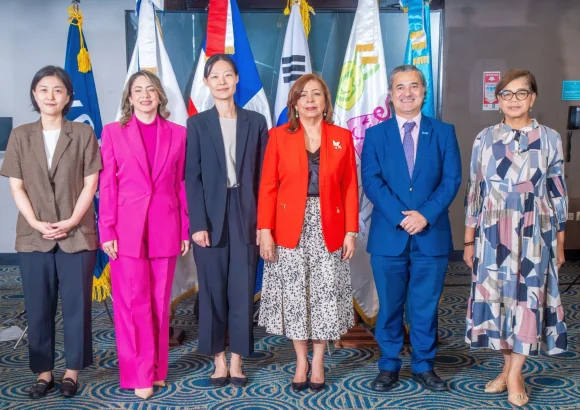
    In Santo Domingo, the Dominican government has partnered with two leading global organizations – the Korea International Cooperation Agency (KOICA) and the United Nations Children’s Fund (UNICEF) – to unveil the preliminary outcomes of an ambitious nationwide social initiative focused on combating entrenched gender inequality. The four-year project, titled “Changing Gender Norms for the Prevention of Violence and Early Unions,” launched in 2022 and runs through 2025, with a core mission to cut rates of child marriage, adolescent pregnancy, and gender-based violence across the country.

    Backed by a total investment exceeding $4.5 million USD, the initiative was built through coordinated action across multiple Dominican public bodies falling under the national Cabinet for Children and Adolescents (known locally as GANA). Key implementing partners include the nation’s Ministries of Education and Women, the National Council for Childhood and Adolescence (CONANI), and the Supérate social welfare program, with overall oversight managed by the Ministry of the Presidency.

    Intervention activities were concentrated in five high-need regions across the Dominican Republic: Santo Domingo, Santiago, San Cristóbal, Higüey, and Barahona. The project centered on four core strategic pillars: building personal and economic autonomy for girls and young adolescents, expanding evidence-based prevention programming within local school systems, driving widespread cultural and behavioral change around gender roles, and strengthening national institutional protection systems for survivors of violence.

    Project leaders noted that one of the initiative’s most significant achievements has been its successful institutional transition. What began as a time-bound external intervention has since been fully integrated into the operations of existing Dominican public institutions, creating a sustainable framework that will outlast the original project timeline and open pathways for full nationwide expansion in the coming years.

    The preliminary results released at the presentation show the initiative has already reached millions of Dominicans across all segments of society. More than 10,000 girls and adolescents have completed empowerment and life skills training through dedicated Girls’ Clubs established under the program. Over 190,000 teenage students have participated in school-based workshops addressing the harms of early marriage and gender-based violence. More than 5,000 primary and secondary school teachers have received specialized training to identify at-risk youth and support adolescents navigating gender-related challenges, while national awareness campaigns and community outreach efforts have reached more than one million parents and local community leaders.

    A unique and key component of the project has been its intentional focus on engaging men and boys as partners in cultural change: to date, more than 51,000 men and boys have taken part in workshops focused on promoting positive masculinity and equitable gender norms. Additionally, over 1,300 public sector officials have completed training in child protection protocols, cross-agency coordination, and evidence-based prevention strategies.

    Project officials emphasized that the initiative directly advances existing national policy goals. It supports the implementation of the Dominican Republic’s national Policy for the Prevention and Care of Early Unions and Adolescent Pregnancy, and aligns with ongoing enforcement efforts following the 2021 passage of Law 1-21, which formally banned child marriage across the country.

    Speaking at the official results presentation, Sook Jin Byun, Country Director for KOICA, stressed that meaningful shifts in harmful social norms cannot be achieved through short-term projects, requiring consistent, long-term investment and engagement. Carlos Carrera, UNICEF’s Representative in the Dominican Republic, framed the initiative as a powerful proof of concept, demonstrating that coordinated collaboration between national governments, local communities, and global development partners can meaningfully expand life opportunities for marginalized girls and adolescents.

    Dominican authorities closed the presentation by noting that the project lays critical institutional and social groundwork to accelerate progress toward the United Nations’ Sustainable Development Goals, particularly the target to eliminate all harmful practices including early child marriage by 2030. They reiterated that sustained investment and continued expansion of prevention and protection programs across the country remains a critical priority to lock in long-term change.

  • Implementation phase of using donated funds to provide houses to Jamaicans underway, says Fitz-Henley

    Implementation phase of using donated funds to provide houses to Jamaicans underway, says Fitz-Henley

    KINGSTON, Jamaica — Months after Hurricane Melissa tore through western Jamaica, the island’s government has entered the active implementation phase of a critical housing initiative that will put donated disaster relief funds toward permanent shelter for hundreds of displaced families, a senior government official has confirmed. State Minister Abka Fitz-Henley, speaking to reporters this week following an official event at Jamaica House, confirmed the rollout of prefabricated modular housing units is now well underway, fulfilling a pledge Prime Minister Andrew Holness made to disaster survivors last December. Category Hurricane Melissa made landfall in October 2025, leaving widespread wreckage across Jamaica’s western parishes, destroying or rendering uninhabitable hundreds of private homes and leaving many families homeless. For months following the storm, international and local donors contributed millions in relief funding through the official Support Jamaica donation portal, with the prime minister committing early in the recovery process that these contributed funds would be dedicated exclusively to addressing the urgent housing needs left in the storm’s wake. Minister Fitz-Henley, who serves in the Office of the Prime Minister, acknowledged that pre-implementation steps, including the competitive selection of appropriate modular housing designs, completion of public procurement protocols, and international shipping of the prefabricated structures, extended the project’s timeline longer than many survivors hoped. But he stressed that the process is now moving forward at an accelerated pace, with groundwork already beginning across affected communities. To speed up construction, the government is issuing direct grants to recipients to cover the cost of building permanent foundations for their new modular homes, Fitz-Henley explained. All foundation designs must receive formal approval from local municipal corporations before construction can be finalized, to ensure compliance with local building and safety standards. “When we made the promise after Hurricane Melissa that every dollar of donated funds would be used to meaningfully improve the lives of families impacted by the storm, that commitment stands unshaken — and we are delivering on it now,” Fitz-Henley told reporters. “There is no more meaningful use of these donations than putting a safe roof over the heads of families who were left homeless by the storm’s devastating destruction.” The Jamaica-based Office of Disaster Preparedness and Emergency Management (ODPEM), which is leading the recovery effort, has allocated JMD 600 million of the total donated relief funds specifically for foundation construction, to speed up the process of getting displaced families into permanent new housing. Responding to questions from the parliamentary opposition in recent weeks, Fitz-Henley confirmed that 924 completed modular housing units have already arrived in Jamaica and are being held in government storage. An additional 700 units are currently en route to the island, with a third shipment of 700 more units scheduled to follow in the coming months. Just two days ahead of Fitz-Henley’s announcement, Robert Montague, the minister responsible for Land Titling and Settlements, conducted an on-site inspection of the ODPEM storage facility in Twickenham Park, St Catherine, where the first wave of units is currently stored. Following his tour, Montague emphasized that the government is prioritizing long-term safety over speed, noting that all new housing developments will only be sited in areas verified to be geologically stable, climate-resilient, and environmentally secure to protect new residents from future natural hazard risks. Local disaster recovery advocates have welcomed the start of implementation, though many continue to push for faster deployment to get families out of temporary emergency shelters and into permanent housing as quickly as possible.