分类: society

  • Ministry of Culture announces first Cibao Regional Book and Culture Fair

    Ministry of Culture announces first Cibao Regional Book and Culture Fair

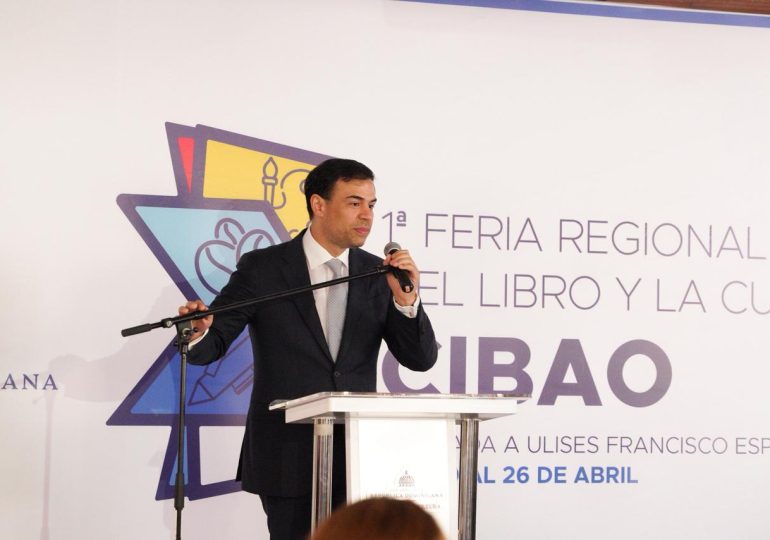
    SANTIAGO DE LOS CABALLEROS, DOMINICAN REPUBLIC – In a significant cultural development, the Dominican Ministry of Culture has unveiled comprehensive plans for the inaugural Cibao Regional Book and Culture Fair, scheduled to take place in April 2026. The landmark event was formally announced at the Gran Teatro del Cibao this Wednesday, marking a coordinated effort to promote literary engagement and showcase the diverse cultural tapestry of the nation’s northern region.

    Culture Minister Roberto Ángel Salcedo spearheaded the announcement alongside provincial governors, municipal leaders, legislators, and prominent cultural figures from across the participating provinces. Minister Salcedo characterized the fair as a profoundly democratic initiative designed to ensure equal participation from all 14 provinces comprising the Cibao region. The programming will emphasize regional traditions, cultural heritage, and intellectual discourse, with operational support provided by Vice President Raquel Peña’s office.

    The festival’s official inauguration is set for April 19, 2026, with extensive activities unfolding from April 20-26 across multiple cultural venues in Santiago. Key locations include the Gran Teatro del Cibao, Centro León, Banreservas Cultural Center, and Ercilia Pepín Cultural Center. The ambitious program will feature over 100 distinct events, a central exhibition pavilion representing all participating provinces, and daily dedications honoring two provinces in rotation.

    The 2026 edition will pay special tribute to Ulises Francisco Espaillat, commemorating the bicentennial of his birth. This historic fair represents the first centralized effort to celebrate Cibao’s unique cultural identity through coordinated programming that combines literary promotion with heritage preservation. Organizers anticipate substantial regional participation and international attention for this unprecedented cultural initiative.


  • RD Vial expands solar road lighting on key highways in the South

    RD Vial expands solar road lighting on key highways in the South

    Santo Domingo – In a significant infrastructure upgrade, the Dominican Republic is deploying state-of-the-art solar LED technology to illuminate critical highways in its southern region. This initiative, a core component of the National Road Lighting Plan administered by the RD Vial Trust, targets high-risk corridors historically plagued by poor visibility. The primary objectives are to drastically reduce nighttime traffic accidents and create safer, more efficient driving conditions on these vital national routes.

    Crews are currently executing the ambitious project across multiple segments of Highway 6 de Noviembre, a principal southern access route. The first phase (Section I) encompasses a 12-kilometer stretch from the Abanico de Herrera Bridge to Najayo, with lighting installed for both travel directions. The subsequent phase (Section II) adds another 14 kilometers of fully illuminated roadway. Upon completion, this effort will have outfitted 26 kilometers of highway with an estimated 680 solar-powered LED lamps, marking a transformative improvement in visibility and safety.

    Furthermore, the lighting plan extends to the recently inaugurated Baní Ring Road, a corridor of strategic importance. Here, approximately 360 solar LED lamps will be installed along 13 kilometers. Combined, these interventions in the southern region will illuminate more than 39 kilometers of road infrastructure with over 1,000 sustainable light units. This large-scale project underscores RD Vial’s dedication to implementing eco-friendly, energy-efficient solutions that bolster public safety and promote efficient nationwide mobility.

  • The “everyone” Martí spoke of

    The “everyone” Martí spoke of

    On the 173rd anniversary of José Martí’s birth, Cuban scholar Cintio Vitier’s profound reflections on the national hero’s legacy resonate with renewed urgency. Rather than claiming fulfillment of Martí’s vision, Vitier argues that revolutionary Cuba’s greatest achievement lies in recognizing the immense work still ahead in realizing social justice under persistently challenging circumstances.

    The horizon of Martí’s principles—encompassing social equity, national sovereignty, and human dignity—remains the guiding star for Cuba’s historical development. This progression depends not only on domestic will but also on international relations, particularly U.S. policy toward the island nation.

    Martí’s concept of freedom, as analyzed by Vitier, represents a sophisticated balance between individual integrity and collective responsibility. This vision rejects both the manipulation of freedom for selfish purposes and its suppression under ideological dogma. The authentic freedom Martí advocated requires “the habit of working with one’s hands and thinking for oneself” while maintaining “respect, as family honor, for the integrity of others.”

    Vitier examines Martí’s seminal speech “With Everyone, and for the Good of Everyone,” noting how the independence leader specifically criticized seven groups of compatriots whose doubts and fears undermined Cuba’s self-determination capabilities. This critical embrace—welcoming those who genuinely contribute to the common good while rejecting those who obstruct progress—remains relevant to contemporary revolutionary efforts.

    The relationship between economic challenges and moral education emerges as crucial in Vitier’s analysis. He advocates for economists and educators to work collaboratively, recognizing that material solutions alone cannot fulfill Martí’s vision without corresponding ethical development. This educational project must draw from Cuba’s unique historical continuity, from Father Félix Varela through José de la Luz to Martí himself—a pedagogical tradition that informed even early Cuban Marxists.

    Contemporary Cuba already possesses foundational elements of Martí’s vision: national sovereignty, alignment with “the poor of the earth,” and the transformative achievement of universal literacy. The current challenge involves internalizing these objective ethical accomplishments within individual lives, particularly among younger generations who experienced institutionalization and the Special Period rather than the revolution’s initial epic phase.

    This process requires developing new spaces for individual expression within the collective framework, allowing participatory democratization to unfold organically. Improvement should be conceived not as top-down adjustments but as organic growth through challenge and differentiation.

    Martí’s enduring relevance lies in his recognition that republics aren’t built in a day—that justice and freedom must be continually conquered according to historical circumstances. His epic vision, reborn through each free consciousness, remains Cuba’s perpetual horizon rather than a destination reached.

  • Why Martí?

    Why Martí?

    In the complex tapestry of Cuban identity and national consciousness, the philosophical and ethical teachings of José Martí continue to provide essential guidance during periods of profound challenge. The revolutionary poet and philosopher, who lived through turbulent times himself, established moral frameworks and envisioned achievable dreams that continue to offer solutions to contemporary dilemmas.

    Martí’s presence remains vital not as doctrinal scripture but as conversational partner—his works should occupy spaces in homes and minds not as reference texts to be consulted for predetermined answers, but as living dialogue between equals. His insights prove particularly valuable when confronting specific modern challenges: when communicating authentically with younger generations, when navigating ethical dilemmas about compromise and purpose, and when determining one’s relationship to community amid adversity.

    The article emphasizes Martí’s relevance when ideological extremism emerges, when distrust becomes normalized, or when harmful dichotomies like ‘civilization versus barbarism’ resurface. His perspectives offer crucial counterpoints to resurgent annexationist movements and provide alternative visions of greatness that contrast with exclusionary nationalist narratives.

    Beyond political philosophy, Martí’s wisdom extends to personal realms: understanding love’s transformative power, confronting fear with limited resources, and maintaining poetic expression amid practical demands. His approach to creativity as conscious choice rather than accident, and his distinction between authentic growth and superficial imitation remain strikingly contemporary.

    Finally, the piece positions Martí as essential when distinguishing genuine virtue from performative morality, when recognizing betrayal in its modern manifestations, and most importantly, when defending fundamental dignities—protecting friends, preserving children’s peace, honoring ancestors, and safeguarding both physical homeland and cultural memory.

  • Abinader swears in oversight commission for sports works funded with recovered assets

    Abinader swears in oversight commission for sports works funded with recovered assets

    SANTO DOMINGO – In a significant move against corruption, Dominican President Luis Abinader officially inaugurated an oversight commission on Monday. This high-profile body will supervise sports infrastructure projects funded by more than RD$2 billion recovered from corrupt activities. The establishment of the commission represents a cornerstone of the administration’s pledge to enhance governmental transparency, ensure accountability, and improve the stewardship of public funds.

    The newly formed commission comprises a distinguished panel of national leaders. Its members include Dr. José Joaquín Puello, former head of the Dominican Olympic Committee; Dr. Milton Ray Guevara, ex-president of the Constitutional Court; Monsignor Héctor Rafael Rodríguez Rodríguez, Archbishop of Santiago and president of the Dominican Episcopal Conference; alongside communications experts Luisin Mejía, president of Centro Caribe Sport and an International Olympic Committee member, and Percio Maldonado. President Abinader emphasized the critical role of civilian oversight, asserting that the commissioners’ collective integrity and expertise will ensure transparent management throughout all project phases.

    Concurrent with the swearing-in ceremony, the government initiated the official bidding process for the construction projects. This step follows extensive technical evaluations conducted over several months by the Planning Directorate and the Ministry of Sports. The ambitious development plan encompasses a complete overhaul of the Olympic Center in San Pedro de Macorís, the reconstruction of the sports complex in San Juan de la Maguana, the erection of 23 multipurpose sports roofs in various municipalities, and a comprehensive rehabilitation of the Olympic Center in La Vega. Sports Minister Kelvin Cruz highlighted that these strategic investments are designed to address persistent infrastructure deficits and deliver profound social, cultural, and communal benefits, with a particular focus on empowering the nation’s youth and children.

  • Students injured in minibus crash in St Thomas

    Students injured in minibus crash in St Thomas

    A significant traffic incident involving student transportation has ignited urgent discussions about road safety enforcement in Barbados. On Tuesday morning at approximately 8:30 a.m., emergency services responded to a collision between a private automobile and a public service minibus in the Ayshford area of St. Thomas, resulting in multiple injuries among young passengers.

    According to official reports from the Barbados Fire Service, the accident involved seven individuals, including four students who sustained various injuries. Station Officer Elridge Straker confirmed the deployment of two fire tenders and seven fire officers to manage the situation. Sub Officer Henderson Nichols provided critical details regarding the victims, noting the involvement of a 16-year-old driver and a 13-year-old passenger in one vehicle, along with two additional children in the minibus who suffered facial injuries. Medical authorities confirmed that while several occupants required hospital transport for further assessment, none sustained life-threatening injuries.

    The Ministry of Educational Transformation implemented immediate support measures following the incident. Chief Education Officer Dr. Ramona Archer-Bradshaw dispatched secondary school division officers to provide assistance to affected students, with the ministry maintaining ongoing communication with law enforcement agencies regarding the investigation.

    This incident has prompted strong reactions from public officials regarding transportation safety protocols. Former Minister of Educational Transformation Chad Blackman emphasized the legal obligations of entities responsible for student transportation, stating that existing regulations require stricter enforcement. “The law books are clear with respect to how we treat deviance on the road and bad driving,” Blackman asserted during his nomination filing for the St. James North constituency. He advocated for demonstrating consequences through enforcement actions against those violating transportation laws.

    Roy Raphael, Chairman of the Alliance Owners of Public Transport, visited the accident scene and appealed for increased vigilance among PSV operators, particularly when transporting children. This appeal comes against the backdrop of recent fatal road accidents in the region, highlighting growing concerns about passenger safety standards. The Ministry of Education has committed to continued collaboration with the Ministry of Transport and Works and the Barbados Police Service to ensure proper adherence to student transportation regulations.

  • Environment Ministry intervenes illegal Aremax mine after worker’s death

    Environment Ministry intervenes illegal Aremax mine after worker’s death

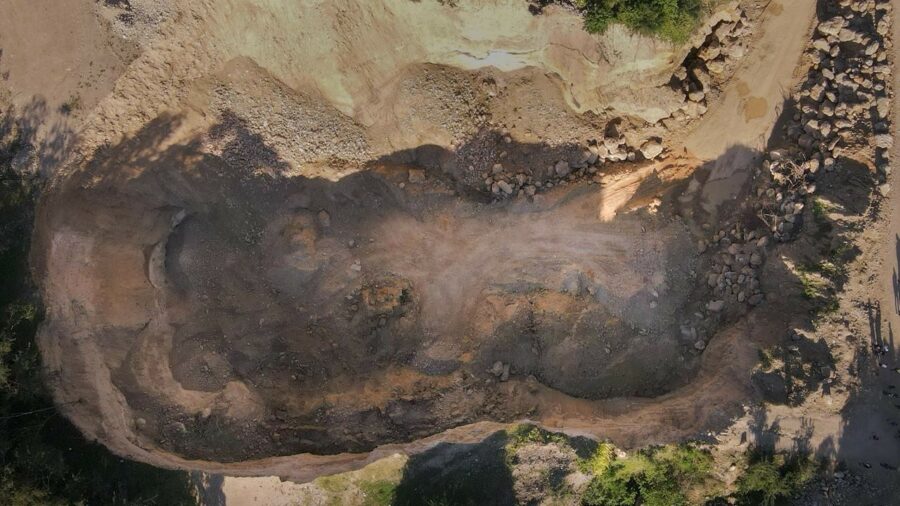
    SAN CRISTOBAL — In a decisive enforcement action, the Ministry of Environment and Natural Resources has intervened at the Aremax aggregate mine, which was found to be operating illegally after having been permanently shut down. This move comes in direct response to the tragic death of a worker last week during ongoing extraction activities at the prohibited site.

    Official records confirm that the mining company had previously been sanctioned and definitively closed in September of last year for two major violations: exceeding its legally authorized exploitation area and breaching the technical conditions stipulated in its environmental permit. Davis Aracena, Acting Deputy Minister of Soils and Water, characterized the company as a repeat offender under the nation’s environmental statutes. The operation now faces formal legal proceedings initiated by the Specialized Prosecutor’s Office for the Protection of the Environment and Natural Resources.

    Aracena emphasized that the National Environmental Protection Service (SENPA) must implement permanent surveillance mechanisms to prevent any resumption of illegal activities. Furthermore, the mine’s proprietors will be held fully accountable for comprehensive environmental remediation, including mandatory land restoration and large-scale reforestation of the damaged area, in strict compliance with existing regulations.

    During the intervention operation, Prosecutor Francisco Contreras confirmed that substantial evidence was secured to pursue criminal charges against those responsible. He noted that the case’s severity is significantly heightened by the worker’s fatality occurring at a facility that was officially non-operational. The enforcement operation received high-level support from SENPA Director Brigadier General Ángel Alfredo Camacho Ubiera and prominent environmentalist Luis Carvajal, both advocating for stringent penalties against environmental crimes.

    The Ministry has reiterated its unwavering commitment to safeguarding natural resources and human life, issuing a stern warning that it will continue to intensify oversight and enforcement measures against all illegal extractive ventures.

  • Chaos Erupts at BTL as Protestors Storm Compound Over Speednet Buyout

    Chaos Erupts at BTL as Protestors Storm Compound Over Speednet Buyout

    BELIZE CITY, BELIZE – January 27, 2026 – Tensions erupted into outright chaos today at the Belize Telemedia Limited (BTL) compound as protesters breached security barriers in vehement opposition to a proposed $80 million corporate acquisition. The demonstration, initially organized by United Democratic Party (UDP) supporters and the National Trade Union Congress of Belize (NTUCB), rapidly escalated beyond control.

    What began as a structured protest degenerated into pandemonium when UDP adherents, spearheaded by prominent member Brian ‘Yellow Man’ Audinett, forcefully bypassed the main entrance and overwhelmed police barricades. Law enforcement personnel deployed pepper spray in a largely unsuccessful attempt to stem the surging crowd, resulting in a tense, ten-minute standoff at the building’s entrance.

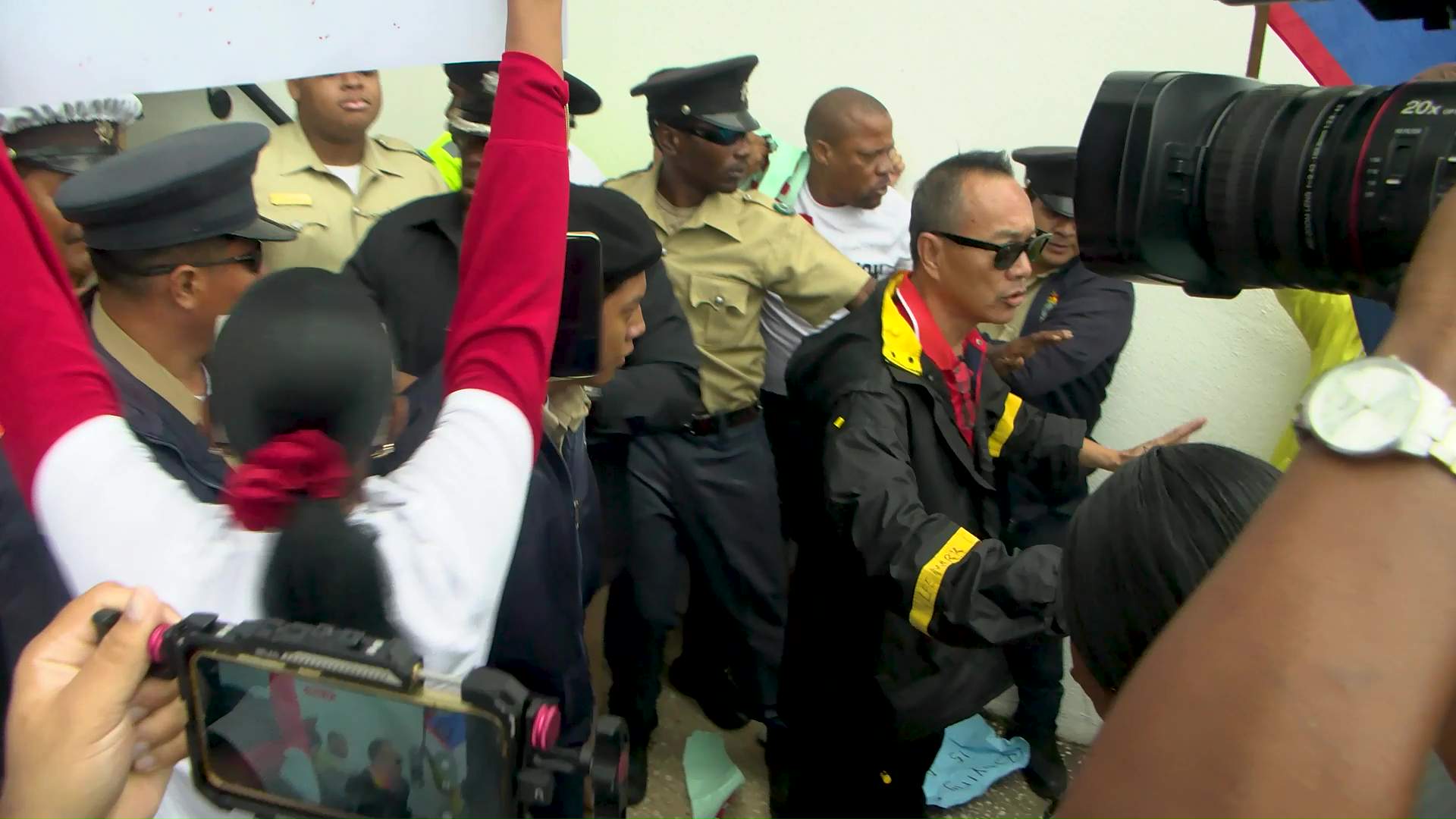
    Amid the turmoil, Mesopotamia Area Representative Lee Mark Chang positioned himself between the advancing protesters and police lines, vocally advocating for calm and order. The situation only de-escalated when UDP Leader Tracy Panton intervened directly, urging her supporters to withdraw and declaring their protest objectives successfully achieved.

    The core grievance driving today’s events centers on BTL’s impending provisional approval to acquire telecommunications competitor Speednet. As a publicly-owned entity, this proposed merger has sparked significant public outcry and allegations of governmental corruption.

    In statements to the press, Leader Panton asserted that the demonstration successfully postponed the BTL board’s decision-making meeting, while simultaneously vowing continued resistance against the administration, which she labeled ‘the most corrupt.’ When questioned about potential legal consequences for her supporters’ actions, Panton unequivocally stated, ‘We got their back.’

    The incident underscores deepening political and social fractures regarding corporate governance and public asset management in Belize, setting the stage for further confrontations.

  • Lee Mark Chang Halts Protesters at BTL Door

    Lee Mark Chang Halts Protesters at BTL Door

    In a tense confrontation at the BTL headquarters on January 27, 2026, Area Representative Lee Mark Chang became an unexpected peacemaker by physically positioning himself between agitated protesters and the building’s entrance. The demonstration, organized to oppose a controversial deal between the government and BTL members, had escalated to the brink of violence as protesters attempted to push inside the facility.

    Chang, representing the Mesopotamia constituency, articulated his rationale for intervention during an exchange with journalist Paul Lopez. ‘We must ensure we do not transform our legitimate rights into wrongful actions,’ Chang emphasized. ‘Our purpose is to demonstrate and communicate our demands to the government and BTL leadership—specifically, we demand greater transparency and access to information regarding this deal.’

    The representative underscored his commitment to non-violence despite the charged atmosphere. ‘While we possess the right to demonstrate, we do not have the right to destroy property or storm buildings,’ he stated. His intervention occurred precisely as protesters breached the compound perimeter, potentially escalating the situation further.

    When questioned about his specific messaging to the frontline demonstrators, Chang reiterated his philosophical approach: ‘Do not make your right a wrong.’ This principle guided his successful de-escalation efforts, preventing what could have developed into a destructive confrontation. The protest highlights growing public demand for governmental and corporate transparency in business dealings affecting community interests.

  • While Chang Confronts Crowd, Unions Stand Firm

    While Chang Confronts Crowd, Unions Stand Firm

    BELIZE CITY – In a tense standoff on January 27, 2026, a clear strategic divergence emerged between labor unions and a more militant protest faction outside the BTL compound on Saint Thomas Street. While demonstrators clashed with police, the nation’s leading union bodies, the National Trade Union Congress of Belize (NTUCB) and the Public Service Union (PSU), deliberately held their ground, opting for a calculated display of restraint rather than escalation.

    NTUCB President Ella Waight articulated a philosophy of measured pressure, framing the day’s action as a serious but preliminary warning to the government. ‘We are very responsible people out here and we can send that message loudly without storming the building,’ Waight stated, emphasizing a commitment to safety and a distinct methodology from other protesters. She characterized the peaceful demonstration as ‘just the beginning,’ intended to compel authorities to halt their current process and avoid provoking a more severe response.

    The rhetoric intensified with PSU President Dean Flowers, who delivered a stark, personal ultimatum to Prime Minister John Briceño. While explicitly stating his union is not currently advocating violence, Flowers issued a grave reminder of Briceño’s own past opposition rhetoric. ‘I want to remind you of that sir, one of you will get hurt if you continue to exploit Belizeans and this country in the manner you are doing,’ Flowers declared, signaling that the unions’ patience has a defined limit. This statement underscores a building crisis of confidence between organized labor and the administration, positioning the peaceful protest not as an endpoint but as a critical juncture in a potentially escalating conflict.