分类: society

  • They are trying to cover their tails

    They are trying to cover their tails

    The father of a man killed in a January police confrontation in St Augustine has launched a blistering attack on the Trinidad and Tobago Police Service (TTPS), calling the upcoming charges against his daughter-in-law a manufactured lie designed to shift blame and cover up police misconduct.

    Christopher Samaroo, father of the deceased Joshua Samaroo, spoke out publicly one day after authorities announced Kaia Sealy would face two serious criminal charges: shooting with intent to inflict grievous bodily harm on police officers, and manslaughter for Joshua Samaroo’s death during the January 20 incident.

    Rejecting the official narrative outright, Samaroo accuses the TTPS of framing Sealy to distract from their own role in the fatal encounter. In a phone interview with local outlet Express, Samaroo made clear he will not accept the police’s version of events. “Joshua is dead and my daughter-in-law is still alive, and I have to do everything to help her with his child and her,” he said, adding that law enforcement is deliberately spreading falsehoods to protect themselves from scrutiny.

    Samaroo pointed out gaping logical inconsistencies in the official account, questioning how Sealy could simultaneously be the shooter and the person shot by officers. He also challenged the claim that she fired at police, noting that Joshua Samaroo had his hands extended outside of his vehicle when officers confronted him, making the police narrative impossible. “That does not make any sense. Another easy way they are trying to get out of the quicksand they are in,” Samaroo said, arguing the TTPS is facing mounting public backlash over this case and a string of other controversial police-involved shootings.

    The grieving father called on Trinidad and Tobago society to confront what he described as systemic “insanity” in law enforcement. While he expressed faith that divine guidance will ultimately lead to justice, he also dropped a hint that he holds key evidence that will be revealed at the appropriate time. “I have a trump card that I will release when the time is right. The last say will be with me because I talk to my God every night, and he is going to direct me as to what is going to take place,” Samaroo said. He reiterated his unflinching accusation of institutional corruption, stating “The TTPS is corrupted, and I say that without fear or favour.”

    Criston Williams, the attorney representing the Samaroo family, declined to elaborate beyond noting that the family is eager to understand how prosecutors have built the case against Sealy. “The family is very curious to see how the charge is constructed, but beyond that I have no further comment,” Williams said.

  • Interpol Red Notice issued

    Interpol Red Notice issued

    Trinidad and Tobago’s top law enforcement official has announced that Interpol has issued a global Red Notice to locate a fourth suspect wanted in connection with the brutal murder of acting municipal police corporal Anuska Eversley and the mass theft of firearms and ammunition from a regional police station.

    Police Commissioner Allister Guevarro confirmed the development during a recent press briefing held at the Police Administration Building in Port of Spain, noting that investigators believe the fugitive suspect fled the country in the wake of the April 19 attack at the San Fernando Municipal Police Station, located at King’s Wharf in San Fernando.

    As defined by Interpol, a Red Notice functions as a formal request to law enforcement agencies across the world to locate and temporarily detain an individual ahead of extradition, legal surrender, or other comparable legal processes. Contrary to common misconception, it is not an international arrest warrant. The individual is named by the requesting member country or international tribunal, and each member nation retains the authority to apply its own domestic laws when deciding whether to take an individual into custody. Most Red Notices are only shared within global law enforcement networks, and public details are only released when the requesting member country requests public assistance to locate the suspect, or when the individual is deemed to pose a public safety threat.

    Guevarro also provided an update on the comprehensive audit of stolen firearms from the station, a large-scale investigative effort that remains incomplete as of the briefing. He noted that the audit, which is being carried out by a large team of specialized officers, is currently between 50% and 55% complete. Prior police leaks to media have placed the estimated number of stolen weapons at 123, but Guevarro confirmed that so far, investigators have recovered 38 pistols, four shotguns, one MPX sub-machine gun, one revolver, and more than 900 rounds of ammunition. All recovered weapons and ammunition were found in and around the Claxton Bay region, but Guevarro stressed that a substantial number of stolen arms and rounds remain unaccounted for, and search operations continue on a daily basis.

    To date, three suspects have already been arrested and formally charged in connection with the case: 28-year-old Municipal Police Constable Jivan “Biggs” Cooper from La Sophie Trace, Claxton Bay; 20-year-old Kwame Arnold from Lodge Road, Claxton Bay; and 24-year-old Nicholas “Nico” Ramdass, also from Lodge Road, Claxton Bay. The ongoing investigation is a coordinated, intelligence-led multi-agency effort, drawing resources from the Homicide Bureau of Investigations, the Trinidad and Tobago Defence Force, Special Branch, the Strategic Services Agency, the Special Investigations Unit, the Cyber Crime Unit, and local divisional police personnel.

    During the briefing, Guevarro also addressed widespread misinformation about the case that has circulated on social media, calling out unfounded claims that have threatened to derail the investigation. He specifically called attention to a viral social media post featuring a photograph taken outside the San Fernando Police Station, which showed a suspect vehicle parked next to an official municipal police vehicle. The post’s accompanying narrative falsely claimed the municipal vehicle had been used to transport stolen firearms during the heist.

    Guevarro clarified that the municipal police vehicle in the photograph had been parked in that location for more than two weeks before the post was shared. The false narrative led to hundreds of unnecessary tips from the public, who reported sightings of the vehicle across the country, wasting valuable investigative time. “When you are chasing clicks and likes on social media, please do not do it at the expense of an active murder investigation,” Guevarro said.

    He also warned that irresponsible social media speculation and unconfirmed reporting amounts to prejudicial pre-trial publicity that can irreparably harm future criminal proceedings. “There is something called pre-trial publicity which in some cases is fatal to investigations, because if you take those matters to court…those brilliant attorneys come out and say, ‘My client cannot get a proper and fair trial in this jurisdiction because of what was printed and shared in the media’,” he explained.

    Eversley, a 38-year-old mother of three, was found dead inside the station shortly after 4:40 a.m. on April 19. An official autopsy confirmed she suffered a brutal attack, dying from blunt force trauma, strangulation, and multiple stab wounds. Senior investigative sources told local outlet the Trinidad Express that preliminary probes point to a ring of corrupt municipal officers who had allegedly been diverting and selling seized firearms and ammunition to criminal networks for six to eight months before the murder, exposing serious gaps in oversight within the municipal police service.

    In the wake of the incident, Trinidad and Tobago officials made major leadership changes to the Trinidad and Tobago Municipal Police Service (TTMPS). Assistant Commissioner of Police Wayne Mystar was appointed to replace long-serving TTMPS head Surrendra Sagramsingh, who was immediately placed on administrative leave. In an official letter dated April 21, 2026, acting permanent secretary Peter Mitchell confirmed the decision was made to protect the integrity of the ongoing investigation. The letter stressed that the administrative leave is a precautionary measure only and does not constitute a finding of misconduct or liability on Sagramsingh’s part. He has been ordered not to report for duty or exercise any official authority pending the conclusion of the investigation, and instructed to remain available to the Ministry of National Security and fully cooperate with investigative teams.

  • Alexander: It would take a  miracle to recover Angelo

    Alexander: It would take a miracle to recover Angelo

    Nearly two months after two-year-old Angelo Tobias Plaza was first reported missing in Tobago, senior Trinidad and Tobago government official has cast doubt on the likelihood of recovering the toddler alive, calling any successful retrieval little short of a miracle.

    Homeland Security Minister Roger Alexander shared the grim assessment in comments to local outlet Express on Thursday, explaining that a critical missed opportunity last week has severely complicated search efforts. Last Tuesday, first responders from the local Fire Service spotted an object matching the description of a small body in the heavily seaweed-choked waters of Goodwood Bay, the area where Angelo was last seen. By the time retrieval teams could navigate the dense vegetation to reach the location, the object had vanished, swept away by coastal currents.

    “That’s why at this point, finding the child is effectively impossible. If we do recover him, it will have to be considered nothing less than a miracle,” Alexander stated.

    Despite the low odds of a successful recovery, Alexander indicated that the investigation into the toddler’s disappearance is approaching a key milestone that will bring long-awaited closure to the community and Angelo’s family. “Law enforcement has already made enormous, valuable progress on this case. Everyone affected has been desperate for answers, and we have now reached a stage where closure is coming into view,” he said.

    Calling the case devastating for the entire island, Alexander extended official condolences to Angelo’s family and the wider Tobago community. He also offered high praise for the multi-agency response that has been mounted over the 10 weeks since the toddler went missing on May 11.

    “I cannot speak highly enough of the work done by Assistant Commissioner of Police Rishi Singh, his team of Tobago-based investigators, and every agency that has lent support. This has been a fully coordinated collaborative effort between the police service, Fire Service, Defence Force, Coast Guard, the Tobago Emergency Management Agency (TEMA), and the volunteer Hunters Search and Rescue Team. Their tireless work has gotten us to this point, and it has been excellent work across the board,” Alexander noted.

    The minister stressed that the tragic case has exposed critical gaps that must be addressed to prevent similar incidents involving young children from ever occurring in the nation again.

    As the investigation continues, search teams returned to Goodwood Bay on Thursday, with TEMA deploying unmanned drone aircraft to scan the bay’s coastline for any signs of the toddler. To date, investigators have taken seven people into custody for questioning in connection with Angelo’s disappearance: three women and four men.

    The update comes just days after PNM Tobago Council Political Leader Shamfa Cudjoe-Lewis joined community members for a candlelight vigil held at Goodwood Bay Tuesday to honor the missing toddler.

  • A student’s plea — not to be ignored

    A student’s plea — not to be ignored

    This commentary is not a debate over the presence or absence of school police officers. Instead, it is an urgent appeal to policymakers, educators, and community leaders to center student voices when addressing the growing crisis of school violence. After all, it is students who live with this threat every single day — they understand its costs better than any outside expert. Just a few days ago, I had the privilege of sitting on the judging panel for a public speaking competition hosted by the dedicated English department at St. Vincent Grammar School. Six ambitious young finalists competed in front of their classmates and teachers, all vying for the chance to represent their campus at the national competition scheduled for the next academic year. What struck me most was the depth of their preparation and the raw passion they brought to the core topic of school violence. Every competitor delivered thoughtful, well-researched arguments that held the entire audience’s attention. Collectively, they made one critical point clear: school violence is no longer a rare, distant danger that only affects other communities. It is a frightening daily reality here, one that reveals deep, long-standing erosion in our society’s social, family, and educational structures — and it demands immediate, decisive intervention. The students outlined the many shapes school violence takes, from in-person bullying and physical assaults to verbal intimidation and the growing harm of cyberbullying. Rejecting surface-level solutions that only treat symptoms, they pushed for a root-cause approach, calling on stakeholders to examine the shared responsibility of key institutions: the family unit, schools, faith organizations like the church, and the broader community. It was 18-year-old student Mowani Latham’s address that moved the entire room to tears, striking a chord that no politician, psychologist, or veteran social commentator could match. When a student who lives with this reality speaks, the message hits differently than any expert analysis ever could. Latham walked listeners through the underlying causes of youth violence in schools, starting with the foundational role of family life. “To understand why violence happens, we have to go back to where children learn their first lessons,” Latham said. “How can we ignore the impact of family environment? The home is a child’s first classroom, and psychologists have long reminded us that children absorb what they live every day. If a child grows up in a home where anger is the only common language, where neglect is the standard, and where conflict never ends, they will grow up believing violence is an acceptable way to communicate. When they walk through the school gates, they don’t just bring their backpacks — they bring intergenerational trauma and harmful behavioral patterns they learned at home.” Latham also detailed how mainstream society and social media platforms glorify violent behavior, gradually desensitizing young minds to its harm. Turning to the responsibility of schools and faith communities, he pushed back against the narrative that all blame falls solely on families and street culture. “We can’t pin all the fault on the home and the streets,” he argued. “We have to look critically at our own educational institutions. Why are so many students disconnected from school life? We have to address the gap between what many of our current curricula teach and the actual needs of young people today. When a student leaves class every day convinced that what they’re learning has nothing to do with their survival or their future career, frustration builds. Boredom and a lack of sense of purpose become the perfect breeding ground for destructive mischief and violence.” The passionate speaker closed with a series of clear, pragmatic solutions, starting with a call to dramatically increase the number of trained, empathetic mental health counselors in every school. “Right now, we are starved for counselors who actually care about our well-being,” Latham said. “We have dozens of teachers who can walk us through solving for x in an algebra equation, but far too few professionals trained to help us understand our own self-worth. A student who is hurting internally doesn’t need a detention slip — they need someone willing to sit and listen.” He also called on local churches to step into a greater role, providing consistent moral guidance and positive adult role models, while partnering with schools to launch mentorship programs and create safe, supportive spaces where young people can learn core values like humility, forgiveness, and patience. Latham did not shy away from holding his own peers accountable, urging them to reject the dangerous myth that violence equals power and strength. “Let me speak directly to my fellow students,” he said. “We have to change the mindset that violence means you’re powerful. Violence isn’t strength. Noise isn’t power. Making people fear you isn’t respect. Real strength is having the courage to walk away from a conflict. Real power is being able to control your own emotions. As Nelson Mandela once said, ‘Education is the most powerful weapon which you can use to change the world.’ But if our schools remain battlegrounds, that weapon becomes dull and useless. Let us turn our schools back into what they were meant to be: places of growth and opportunity. We aren’t here to fight each other — we are here to fight for our futures. Every single student deserves to walk into school every morning feeling safe, not scared.” The question now is whether education stakeholders across the country will choose to listen to Latham’s appeal. He didn’t just speak for himself — he gave voice to the quiet, unheard plea of thousands of young people across St. Vincent who navigate this crisis daily. Unlike many commentators who only point out problems, Latham offered clear, actionable solutions that come from lived experience. It’s time to lend him and his fellow students your ear. This is an opinion piece written by Ann-Marie Ballantyne. The views expressed are the author’s own and do not necessarily reflect the editorial stance of iWitness News.

  • ABWU and International Transport Workers’ Federation Host Mental Health Workshop for Workers

    ABWU and International Transport Workers’ Federation Host Mental Health Workshop for Workers

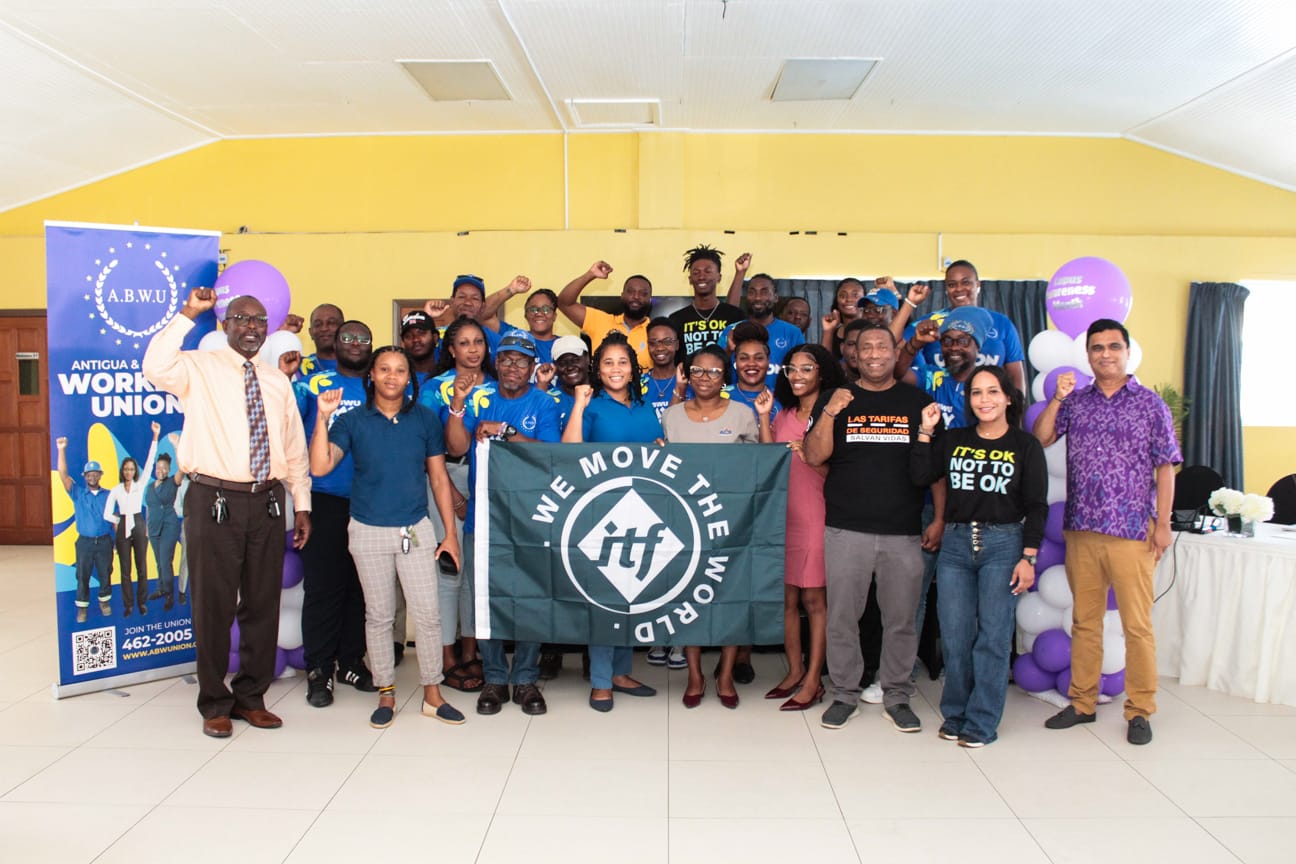
    Workers’ mental health has taken center stage in Antigua and Barbuda, as two major labor organizations have launched a targeted capacity-building initiative to equip workplace representatives with the tools to tackle rising stress and end stigma around mental health discussions.

    The Antigua and Barbuda Workers’ Union (ABWU), in partnership with the International Transport Workers’ Federation (ITF), recently convened a two-day immersive workshop focused on stress management and mental health advocacy. The program, structured as a “train-the-trainer” initiative, brought together frontline workers and union leaders to build a network of wellness champions that can spread awareness across local workplaces.

    Leading the workshop sessions was Dr. Syed Asif Altaf, the ITF’s Global Well-being Programme Coordinator. Over the two days, participants explored a wide range of practical, actionable topics: from foundational understanding of how stress impacts physical and emotional health, to evidence-based coping strategies, to the specific roles and responsibilities of peer mental health first responders. The curriculum also centered underaddressed needs, with dedicated modules focused on stress vulnerability among young workers and women, two groups disproportionately impacted by unaddressed workplace mental health challenges.

    The workshop is just one part of a long-term collaborative commitment between ABWU and ITF to prioritize worker well-being and build more inclusive, supportive workplace cultures across the region. In opening remarks to attendees, ABWU General Secretary David Massiah emphasized that workplace stress is a universal issue that touches every sector and every community, calling on workers to lead demands for systemic change.
    “Stress does not discriminate – it affects every workplace and every family across our country,” Massiah said. “We cannot stop at individual coping strategies. We must keep pushing for policies and workplace cultures that put mental health at the top of the agenda, and ensure every worker has the support systems they need to not just work, but thrive.”
    For Dr. Altaf, the core mission of the training extends far beyond teaching stress management techniques. A central goal of the initiative is to dismantle the deep-seated stigma and cultural silence that have long prevented workers from seeking support for mental health challenges.
    “Across every region, there remains so much taboo and stigma around talking about mental health,” Dr. Altaf explained. “Most people struggle with stress or mental health challenges at some point, but too many suffer in silence because they fear judgment. We are here to change that narrative – break the stigma, break the silence, and build a community of open advocates for mental wellness.”
    ITF Regional Secretary Edgar Diaz echoed that commitment, outlining the multiplying impact the organizations hope to achieve through the train-the-trainer model. Rather than limiting learning to the small group of in-person attendees, the program is designed to turn participants into trainers who can bring this knowledge back to their own workplaces and peer groups.
    “Our goal over these two days was not just to share what the ITF has been doing to advance worker well-being globally, but to give shop stewards and local union representatives the expertise to lead this work themselves,” Diaz explained. “Participants leave here ready to train their coworkers, to pass on what they’ve learned, and expand this movement across every workplace in Antigua and Barbuda.”
    Diaz added that organizers were encouraged by the high level of engagement and enthusiasm from attendees throughout the workshop, a sign of the unmet demand for open conversation about mental health in the region. One participant, who attended the sessions, shared that the workshop filled a critical gap in local worker support, noting that public awareness of mental health remains low across Antigua.
    “This workshop is such an important step forward,” the attendee said. “People here just don’t have enough information about mental health, and workplaces have almost no support systems in place. It’s amazing that the union is taking this step to help us build that support for workers.”
    At the close of the two-day program, participants completed reflective evaluations to share feedback on the sessions and help organizers refine future trainings. All attendees received certificates recognizing their completion of the program, formalizing their new role as community mental health advocates ready to bring their skills and knowledge back to their workplaces.

  • Authorities Plan Remote Medical Booking System for Barbuda Residents

    Authorities Plan Remote Medical Booking System for Barbuda Residents

    Residents of Barbuda who have long endured the logistical and financial burden of repeated cross-island travel to schedule medical care in neighboring Antigua are set to receive long-awaited relief, following a cabinet-approved plan to roll out a remote digital appointment booking platform tailored to local healthcare needs.

    This digital initiative is just one core component of a sweeping overhaul of healthcare services across Barbuda, centered on upgrades to the island’s primary care facility, Hannah Thomas Hospital, and expanding the scope of local on-island medical offerings. Officials confirmed the details of the multi-part improvement plan during a post-Cabinet media briefing held this Thursday, shared by Director General of Communications Maurice Merchant.

    Per Merchant’s official announcement, the new platform will be developed through a cross-ministerial partnership between Antigua and Barbuda’s Ministry of Health and Ministry of Information Technology, combining healthcare expertise and digital innovation to solve a longstanding access gap.

    For decades, Barbudans seeking specialized diagnostic care available only in Antigua—including advanced imaging services such as MRIs and X-rays—have faced a grueling multi-trip routine. Under the current system, patients must first make the crossing to Antigua to secure an appointment slot in person, return to Barbuda to wait for their scheduled date, then travel back to Antigua a second time to attend their appointment. This cycle not only adds unnecessary travel costs but also creates dangerous delays for patients with urgent health concerns.

    The new remote booking system will eliminate this redundant travel, Merchant explained. Barbudan residents will be able to complete all required paperwork and reserve their preferred appointment slot entirely online from their homes on Barbuda, only making the single trip to Antigua once their scheduled appointment date arrives.

    Alongside the digital booking reform, the broader healthcare upgrade package brings two other impactful changes to Barbuda’s local care ecosystem: the restoration of on-site childbirth delivery services at Hannah Thomas Hospital, which were previously unavailable locally, and the launch of new in-island laboratory testing services. Both additions are designed to cut down on the need for routine, non-specialized medical travel to Antigua entirely, bringing essential care closer to home for Barbudan communities.

  • The Man Who Designed the Central Bank Logo in 1984 Dies

    The Man Who Designed the Central Bank Logo in 1984 Dies

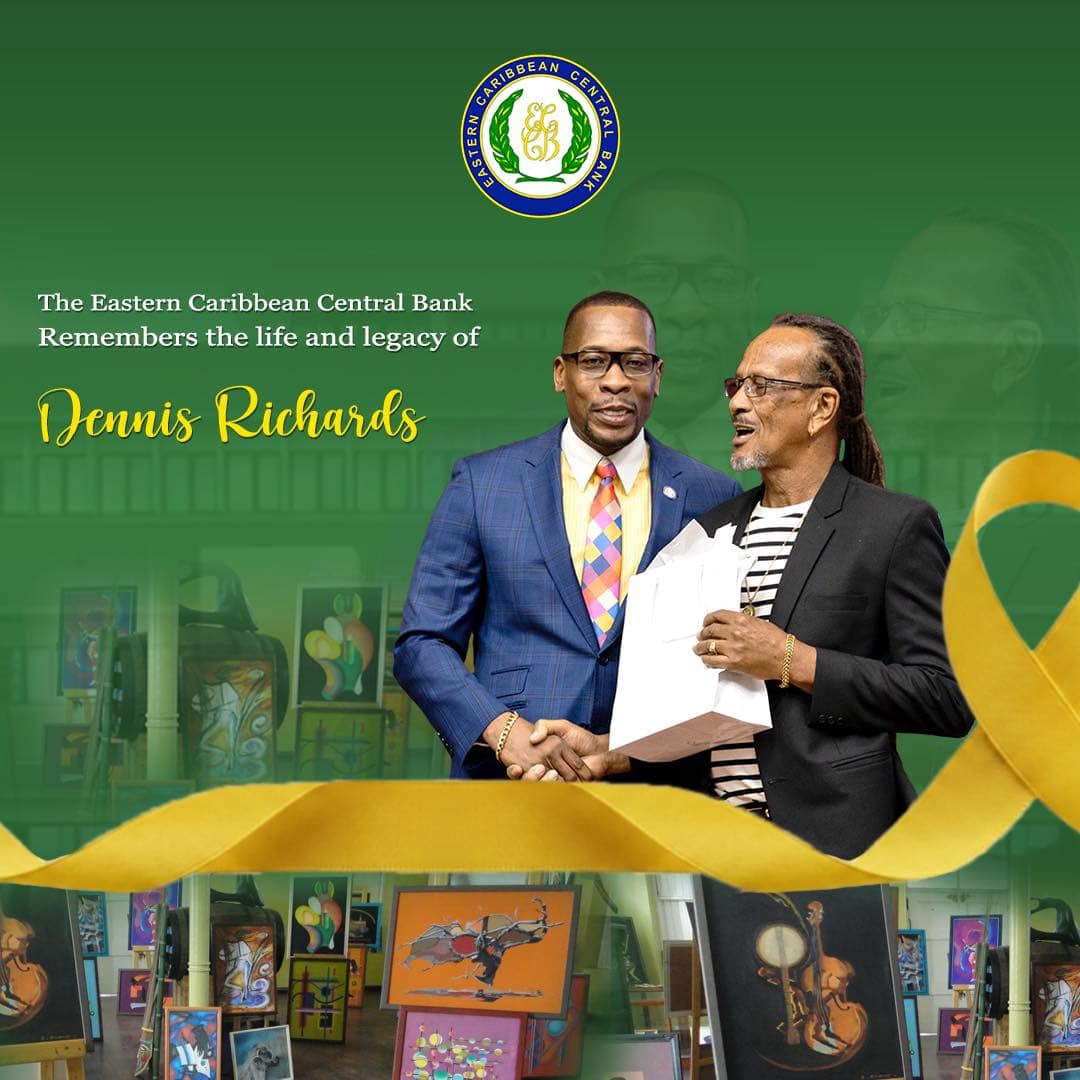
    The Eastern Caribbean Central Bank (ECCB) is grieving the loss of Dennis Richards, the acclaimed regional artist who crafted the institution’s iconic logo nearly four decades ago. In an official statement released following Richards’ death, the ECCB paid tribute to the creative mind behind one of the Eastern Caribbean’s most recognizable institutional symbols, highlighting his far-reaching impact on both the bank and the broader regional community.

    Richards completed his original design for the ECCB logo on June 27, 1984, a work that has remained unchanged and deeply resonant through the decades. According to bank officials, the design is far more than a simple organizational marker: it distills the core aspirations of the Eastern Caribbean people, captures the unparalleled natural beauty of the island chain, and embodies the collective unity that defines the Eastern Caribbean Currency Union (ECCU). For 40 years, the logo has stood as a visual representation of regional collaboration and shared ambition, a legacy rooted entirely in Richards’ artistic vision.

    In 2023, as the ECCB kicked off a year of events marking its 40th anniversary, organizers made a point to honor Richards for his foundational contribution to the institution’s identity. The recognition cemented his status as a key figure in the bank’s history, shining a light on the artistic work that has shaped how the ECCB is perceived across the region and beyond.

    Beyond his commission for the ECCB, Richards was a beloved pillar of his local community. Those who knew him remember him as a committed public figure who consistently leveraged his artistic skills to lift up local cultural initiatives and strengthen civic engagement across the area. He dedicated much of his time and talent to nurturing regional arts, supporting emerging creators, and embedding creative expression into the daily life of Eastern Caribbean communities.

    In the statement, ECCB leadership offered its deepest sympathies to Richards’ family, close friends, and everyone who was influenced by his work and character. The bank emphasized that even as Richards is mourned across the region, his artistic legacy will live on through the logo that bears his creative mark, and his contribution to regional identity will continue to be acknowledged for generations to come.

  • COMMENTARY: Featuring growth and inclusion, sustaining tea, and supporting communities

    COMMENTARY: Featuring growth and inclusion, sustaining tea, and supporting communities

    As a beverage embedded in the daily routines of billions across the globe, tea is far more than a simple hot drink—its 5,000-year history has woven it into the cultural, economic and social fabric of nearly every region on Earth. Every year on May 21, the United Nations observes International Tea Day to honor tea’s far-reaching contributions, and the 2026 observation centers on two official themes: “Fostering Growth and Inclusion” and “Sustaining Tea, Supporting Communities”, which shine a spotlight on empowering smallholder producers, advancing inclusive economic development, and scaling eco-friendly production practices. Today, tea holds the title of one of the world’s most widely consumed beverages, with cultivation taking place across diverse climates and geographies worldwide. More than 13 million people—most of them small-scale farmers and their household members in low- and middle-income nations—depend entirely on the tea sector for their income and food security. For the global economy, tea drives export earnings, rural development, and job creation, aligning the entire industry with the United Nations 2030 Agenda for Sustainable Development, which aims to cut extreme poverty, end hunger, and protect natural resources. Beyond its socioeconomic impact, tea carries deep cultural meaning that varies sharply from region to region. In India, a steaming cup of spiced chai is the universal starting point for nearly every morning, whether enjoyed at home, at street-side stalls, or in office canteens. Invitations to share tea act as a core social ritual, opening conversations and building communal bonds before the workday even begins. In the Caribbean, a distinct local tea culture has evolved around what locals call “bush teas”, herbal infusions harvested from native plants rather than the traditional Camellia sinensis plant that forms the base of conventional black, green and oolong teas. While imported Camellia sinensis tea remains popular, often served with condensed milk or warm spices, the Caribbean’s herbal tea sector has grown into a profitable, export-focused industry. For generations, Caribbean communities have relied on these local infusions for wellness: ginger tea eases upset stomachs, chamomile tea soothes insomnia, and cinnamon tea is traditionally used to support healthy blood glucose levels. Modern scientific research has backed up many of tea’s long-touted health benefits, regardless of variety. All true teas from Camellia sinensis are packed with naturally occurring polyphenols and antioxidants such as catechins, which fight oxidative stress and reduce chronic inflammation in the body. When consumed without excessive added sugar, tea has been linked to improved digestion, better metabolic regulation, and reduced stress levels, though researchers note that impacts on iron absorption and digestion can vary based on tea type, strength, serving size and the timing of consumption. Sustainable production is at the core of 2026’s International Tea Day agenda. Sustainable tea cultivation encompasses a range of practices: organic farming that cuts synthetic pesticide use, water conservation to protect critical freshwater resources in growing regions, fair and ethical labor standards for farm and processing workers, and eco-friendly packaging that reduces plastic waste. The rising global demand for specialty and ready-to-drink (RTD) tea has also shifted market dynamics, particularly in tourism-dependent regions like the Caribbean, where resorts and local supermarkets report surging demand for portable, premium tea products to meet the needs of visitors. From the terraced tea gardens of China and Sri Lanka to the street chai stalls of India and the backyard herbal plots of the Caribbean, tea acts as a universal thread connecting generations, traditions and communities across borders. It is a moment of quiet comfort amid busy days, a centerpiece of social gathering, and a lifeline for millions of families that rely on its production for survival. This International Tea Day, the global tea community invites people everywhere to explore new tea varieties, celebrate the cultural heritage behind every cup, and recognize the critical role the sector plays in building a more sustainable and inclusive global economy.

  • Thousands back petition to reinstate death penalty In Saint Lucia

    Thousands back petition to reinstate death penalty In Saint Lucia

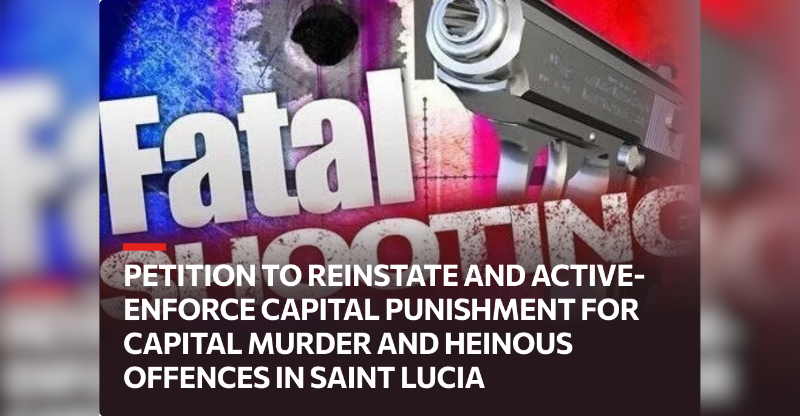
    A grassroots push to revive active use of capital punishment in Saint Lucia has rapidly gathered massive public support, just hours after a high-profile killing that has shaken the small Caribbean nation. The campaign, launched just one day after 24-year-old community leader and young mother Joy St Omer was fatally shot, has already drawn nearly 4,500 signatures as of late Thursday, tapping into a groundswell of public anger over a sustained surge in violent crime.

    St Omer, a resident of Anse La Raye and serving Treasurer of the Anse La Raye Youth and Sports Council, was found dead in the driver’s seat of her vehicle Wednesday evening, with multiple gunshot wounds to her body. Police confirmed that St Omer’s estranged husband has since surrendered to authorities to face questioning over the killing. The brutal slaying of a well-regarded young community figure has amplified long-simmering public frustration over soaring rates of gun violence and homicide across the island.

    Hosted on the Change.org platform and addressed to Saint Lucia’s Prime Minister, Attorney General, and all sitting members of parliament, the petition calls on national authorities to actively enforce existing death penalty statutes for convicted individuals charged with capital murder and other extraordinarily violent offenses. Its authors argue that the country’s worsening public safety crisis demands far harsher legal consequences to deter further bloodshed.

    “Our nation is currently gripped by an unprecedented wave of violent crime, gun violence, and cold-blooded homicide,” the petition text reads. “We, the citizens, residents, and diaspora of Saint Lucia, submit this formal petition out of a profound sense of urgency, grief, and duty to our country.”

    Though capital punishment remains codified as a legal sentence under Saint Lucia’s Criminal Code, the country has observed an unofficial de facto moratorium on executions for nearly four decades. The petition attributes this longstanding pause to external judicial rulings and sustained pressure from international bodies, which has left the existing death penalty law unenforced and effectively powerless as a deterrent.

    Supporters of the petition argue that active enforcement of capital punishment is a critical tool to combat rising violent crime, particularly gang-related homicides and repeat offenses. They contend that the absence of actual executions has eroded any fear of legal consequences among would-be offenders, and that formally ending the moratorium would send an unambiguous message that perpetrators who take innocent lives in Saint Lucia put their own lives at risk.

    Beyond deterrence, the petition argues that carrying out death sentences for the most serious crimes would deliver long-awaited justice and emotional closure for families of murder victims, while permanently removing the most dangerous violent offenders from community spaces to protect the public. The document also draws a connection between skyrocketing homicide rates and potential long-term economic harm, warning that persistent violent crime could damage the island’s vital tourism sector and discourage new business investment.

    In addition to reinstating active executions, the petition calls for a comprehensive government review of existing national laws and constitutional provisions that currently block the implementation of death sentences. It also urges lawmakers to formally abolish the decades-long unofficial moratorium, update judicial protocols to speed up the processing of capital cases, and allocate new, increased funding for the national judiciary and forensic services to ensure faster trials and more reliable convictions.

    “We do not make this request lightly. We make it out of love for Saint Lucia and a desire to see our communities thrive in peace once again,” the petition concludes. “By signing this petition, we declare that enough is enough.”

    As of late Thursday, the petition had accumulated just under 4,500 signatures from supporters both in Saint Lucia and across the global Saint Lucian diaspora, reflecting the deep public discontent over the country’s ongoing public safety emergency.

  • Teen Boys Conference promotes healthy life choices

    Teen Boys Conference promotes healthy life choices

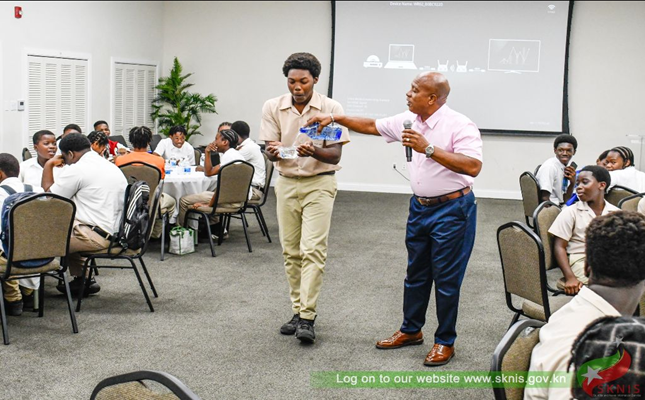
    BASSETERRE, Saint Kitts – One day ahead of its official public announcement, adolescent boys from across the Caribbean island nation gathered at the Cuna Conference Room on May 21, 2026, for a landmark youth-focused event: the Teen Boys Conference, organized by the country’s Department of Gender Affairs. Built around the ambitious, youth-centered theme “Promoting Healthy Choices, Responsible Relationships, Educational Success and Consent,” the day-long event was designed to directly address the unique developmental gaps that often leave adolescent boys without targeted guidance on critical life issues.

    Unlike traditional lecture-style youth workshops, the conference leaned into interactive, approachable programming, opening with a light, engaging practical exercise led by probation officer Lauston Percival to help participants feel comfortable sharing. Over the course of the day, a lineup of experienced speakers led dynamic discussions on high-stakes topics rarely covered comprehensively in standard school curricula: boys’ sexual and reproductive health, boundaries in healthy dating relationships, legal literacy surrounding the island’s Romeo and Juliet Clause, and the long-term impact of staying engaged in secondary education.

    Organizers intentionally structured the event to create a judgment-free, safe space, a deliberate choice that encouraged attendees to speak openly about their personal challenges and questions without fear of stigma. In his opening welcome address, Tchaikouski York, a Gender Field Officer with the Department of Gender Affairs, framed the conference as more than a one-off workshop: it is a direct fulfillment of commitments laid out in the country’s 2021 National Gender Policy and Action Plan.

    That national policy framework explicitly recognizes that adolescent boys in Saint Kitts face a unique set of gender-specific developmental barriers, particularly in the realms of educational retention and health access. It calls for expanded targeted programming that builds life skills, increases awareness of critical health and legal issues, and strengthens support systems to keep boys connected to school and empower them to make well-informed decisions for their futures. Thursday’s conference marked a key milestone in turning that policy commitment into tangible, on-the-ground support for the nation’s youth.