分类: society

  • Jamaicans see unequal society, corruption becoming normalised — survey

    Jamaicans see unequal society, corruption becoming normalised — survey

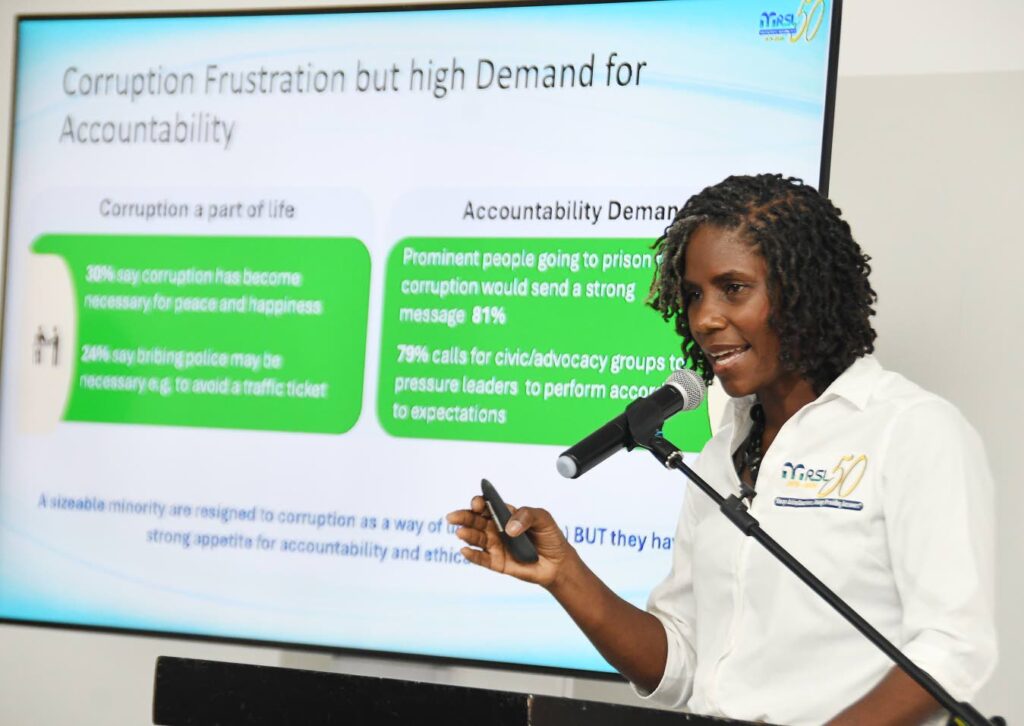
    A newly released nationwide survey mapping public opinion across Jamaica has uncovered profound public discontent with systemic inequality, the growing normalization of corruption, and widespread desire for migration among a large share of the population, even as core traditional values remain deeply rooted in Jamaican society. Carried out by Market Research Services Limited (MRSL), the poll gathered responses from 1,102 residents across all 14 of Jamaica’s parishes to capture the current “hearts and minds” of the Jamaican people.

    The data paints a nuanced portrait of a society grappling with clashing forces: deep frustration over unequal access to opportunity and distrust in public institutions on one hand, and persistent commitment to foundational values of family, education and mutual respect on the other. Kisha-Kaye Anderson, MRSL CEO and the study’s presenter, noted that many Jamaicans are navigating rising fear, social divisions, and an expanding moral “grey area” shaped by daily life pressures.

    Key findings from the survey underscore the scale of public discontent: 81 percent of respondents agreed that Jamaican society is fundamentally unequal, while 42 percent stated they would leave the country immediately if given the chance to relocate abroad. When asked about corruption, 30 percent of those surveyed said corrupt behavior has become “necessary for peace and happiness” in Jamaica, and nearly one in three admitted that breaking the law is sometimes acceptable to get ahead economically.

    Unveiling the results at a St Andrew forum held at S Hotel on Monday, MRSL Executive Chairman Don Anderson emphasized that the data reflects a nation caught between enduring traditional values and mounting socio-economic pressure. “It’s heartening to know that we reject wrongdoing, but pressure — life pressure — sometimes makes the area grey,” he explained, noting that only small minorities of Jamaicans view theft, violence or lawbreaking as broadly acceptable under most circumstances.

    Across all demographic groups, the survey confirmed that family remains the highest-priority value for Jamaicans, followed closely by education, personal independence, and religious and spiritual faith. But discussion of the findings quickly expanded into a broader debate over systemic failures in Jamaica’s social structures, with prominent attorney and businessman Howard Mitchell arguing that decades of political and economic progress have not been matched by needed social reform.

    “I strongly believe that Jamaica needs social reform,” Mitchell said during the post-presentation panel discussion. He referenced the words of former Jamaican leader Norman Manley, who called on post-independence generations to reform and reconstruct both the nation’s economic and social systems. “I think we’ve made progress in the economic reconstruction. We have failed in our social reform and reconstruction,” Mitchell added. He argued that the widespread frustration and shifting moral attitudes captured in the survey stem from unresolved, longstanding issues around national identity, systemic inequality and collective self-worth, noting that “no society can be successful without the deliberate shaping of the values and the attitudes of the members of that society” around a shared vision for the future. For Mitchell, the greatest value of the survey is that it opens a critical national conversation about how Jamaicans see themselves and their country.

    Historian Verene Shepherd connected many of the survey’s key findings to Jamaica’s colonial and post-emancipation history, particularly the ongoing national quest for dignity, stable family structures and mutual respect. She explained that under chattel slavery, enslaved African families were systematically destroyed through capture, human trafficking, and forced separation on plantations across the Americas. In the wake of emancipation, rebuilding the Black family became a central national priority, a legacy that explains why family remains the most valued institution in Jamaica today, she argued.

    The study’s finding around respect also sparked significant discussion: researchers found Jamaicans are far more likely to prioritize receiving respect than giving it, with lower-income respondents identifying this as a particularly pressing concern. Shepherd traced this dynamic to deep-rooted classism and systemic inequality, echoing the survey’s finding that 81 percent of Jamaicans see systemic inequality as a core national problem. “If 81 per cent of people indicate a strong belief in the systematic inequality in the systems of Jamaica, then we have a problem,” she said, “We have to find a way to fix that.”

    The survey also highlighted growing public anxiety over personal safety and eroding social trust. Nearly half of respondents said they would stay silent if they knew someone was at risk of harm, rather than speak up and put their own safety at risk. While a large majority of Jamaicans reject vigilante justice, bribery and violence, the poll found that sizeable minorities view these actions as acceptable in specific circumstances.

    One of the most striking findings centered on public attitudes toward corruption and accountability: while large numbers of Jamaicans expressed frustration that corruption has become normalized in daily life, 81 percent agreed that high-profile public figures being sent to prison for corruption would send a powerful, positive message to the nation about accountability.

    Panel participants also focused heavily on the role of education in reproducing inequality, with both Mitchell and Shepherd arguing that Jamaica’s school system continues to widen social gaps and disconnect many young people from their cultural and national history. Shepherd noted that while access to education has expanded across the country, deep inequities in school infrastructure and resourcing persist, with some schools enjoying state-of-the-art facilities while others are severely under-resourced. She also questioned whether current curricula adequately teach Jamaican children about their African heritage and national identity, noting “Our children are disconnected from the kind of past to which they should be connected.”

    Migration desires also emerged as a key trend, particularly among young Jamaicans and women. Despite nearly 70 percent of respondents reporting they feel proud to be Jamaican, many still confirmed they would leave the island for better economic and social opportunities elsewhere. Don Anderson summed up the conflicting mood captured across the survey, reiterating that while Jamaicans broadly hold fast to traditional rejection of harmful behavior, daily life pressure continues to push more people into that expanding moral grey area.

  • Strong winds and rough seas expected into the weekend

    Strong winds and rough seas expected into the weekend

    KINGSTON, Jamaica — A persistent low-level jetstream positioned across the central Caribbean has been whipping up dangerously powerful winds across the island nation of Jamaica since Tuesday, with local meteorological authorities issuing urgent warnings that unsafe conditions will hold through the entire weekend.

    Official data from the Meteorological Service of Jamaica confirms that the most severe impacts will be concentrated across the country’s southern parishes and adjacent offshore marine zones. Gusty, high-velocity winds and churning, rough seas have already transformed everyday conditions in these regions, creating visible disruptions to routine activity.

    The national weather agency extended its formal advisory Thursday, confirming that the wind event will continue impacting Jamaica’s landmass and surrounding territorial waters until at least Saturday. Local residents have been strongly encouraged to remain vigilant and avoid unnecessary outdoor exposure, as forecasters project the conditions could trigger mild to moderate damage to public and private infrastructure. Potential hazards include falling tree branches, downed power lines, and service disruptions in communities that are more vulnerable to extreme weather events.

    For commercial fishers and other maritime operators, especially those who work along the island’s southern inshore and offshore corridors, officials have issued an even stricter warning to exercise extreme caution. Persistent high winds will keep sea conditions exceptionally dangerous for days to come, rendering all small craft operations completely unsafe and unadvisable.

    In a closing statement, the Meteorological Service confirmed that it will maintain constant, close monitoring of the jetstream and evolving weather patterns, with timely public updates to be issued whenever new developments require adjustments to existing advisories.

  • UWI FIC Now Boasts Of Over 2000 Students, $300M expansion set to begin

    UWI FIC Now Boasts Of Over 2000 Students, $300M expansion set to begin

    Four years ago, when the government of Antigua and Barbuda first announced its plan to establish a local campus of the University of the West Indies (UWI), critics across the region and at home lined up to dismiss the ambitious project as a foolhardy gamble for a small island nation.

    Skeptics raised a litany of objections to derail the initiative: some argued a tiny country like Antigua and Barbuda had no business pursuing a full-fledged UWI campus, writing off the plan as overly presumptuous. Others claimed the decades-old unpaid arrears the government was expected to settle would be too heavy a financial burden to overcome, forcing the administration to abandon the project. Detractors also spread claims that the UWI risked compromising its institutional reputation by bowing to political pressure to approve the campus, warning that any approval would irreparably damage the century-old university’s global brand. Even the repurposing of existing buildings originally designed for a secondary school was called out as inadequate for the standards of a tertiary education institution.

    Today, that once-mocked initiative stands as a resounding success, silencing every one of the project’s critics. The UWI Five Islands Campus welcomed its first cohort of fewer than 350 students when it opened its doors. Four years on, total enrollment across its academic programs has surged to nearly 2,000. The campus has already expanded its offerings beyond undergraduate degrees to launch master’s programs, with long-term plans to roll out doctoral programs in the coming years.

    To support this rapid growth and meet rising student demand, the Antigua and Barbuda government is moving forward with an EC$300 million expansion project for the campus. As part of the development, the Five Islands local community will also receive new standalone primary and secondary school facilities, benefiting residents of all age groups beyond university students.

    The Five Islands Campus sits at the center of the government’s broader education renaissance, which includes a landmark policy of tuition-free tertiary education for all Antigua and Barbuda citizens. This investment in public education is designed to unlock the potential of the nation’s human resource base, laying the foundation for a renewed, more prosperous future for the entire country.

    Government officials credit Education Minister Daryll Matthew for delivering the successful project to the nation’s young people, noting his consistent leadership, unwavering determination, and commitment to shared principles that aligned the government’s goals with the UWI’s institutional benchmarks. “He deserves our continuing applause,” said a government statement.

    Beyond university education, the government is also expanding vocational skills training to create more economic opportunity for youth. Antigua Barbuda Institute of Continuing Education (ABICE), now integrated into the new Antigua and Barbuda College of Advanced Studies (ABCAS), will provide accredited trade training for young people, equipping them with industry-recognized certification that will help them secure higher-wage employment across the country.

  • SIV biedt alternatieven voor Offerfeest door hoge prijzen

    SIV biedt alternatieven voor Offerfeest door hoge prijzen

    As Eid-ul-Adha approaches 2026, thousands of Muslim families across Suriname are facing an unprecedented barrier to a core religious tradition: the soaring cost of sacrificial animals, which has become unaffordable for many low- and middle-income households. In response to growing financial strain, the leadership and Religious Affairs Council of the Surinamese Islamic Association (SIV) have developed and published a new guidance document outlining flexible, alternative ways for believers to fulfill the spiritual meaning of Qurbani, or ritual sacrifice, when purchasing an animal locally is out of reach.

    Riaz Ahmadali, chair of the SIV Religious Affairs Council, explained to local outlet Starnieuws that while Qurbani has long been framed as an annual religious obligation, the tradition’s core tenets frame it as a strongly recommended sunnah (practice of the Prophet) only for those with the financial means to do so. Contrary to common misunderstanding, the SIV emphasizes that Qurbani is not limited solely to the ritual slaughter of an animal, but centers on a deeper spiritual commitment.

    Drawing directly from Quran 22:37, the guidance notes: “It is not their meat nor their blood that reaches Allah; it is your piety that reaches Him.” This verse underpins the SIV’s interpretation that the symbolic act of sacrifice matters more than the physical slaughter itself. Ahmadali explained that the ritual calls on believers to sacrifice their own negative traits — including ego, jealousy, corruption, and resentment toward others — by setting these harmful impulses aside, regardless of whether an animal is slaughtered.

    The steep price hike for sacrificial animals stems from ongoing economic instability in Suriname. This year, a single sacrificial animal costs roughly 20,000 Surinamese dollars (SRD), nearly double the price recorded in 2025. Large livestock such as bulls, which are often split between multiple families, now cost between 140,000 and 160,000 SRD, putting them completely out of reach for most local households. SIV officials also noted that middlemen exploit pre-Eid demand by purchasing animals months in advance at low prices, then marking up costs dramatically ahead of the holiday to inflate their profits.

    To address this gap, the SIV has laid out multiple accessible alternatives for believers facing financial hardship. For those unable to sacrifice annually, the guidance permits performing Qurbani once every several years instead of every year. Believers who share a household and economic resources — for example, extended family groups including parents, adult children, and cohabiting grandparents — can also split the cost and share a single sacrifice, a long-standing practice that the SIV has reaffirmed as valid. A third option allows believers to arrange Qurbani through international Islamic organizations in lower-income countries, where animal costs are far lower than in Suriname; common destinations for this practice include India, Nigeria, and Gaza, and Ahmadali confirmed that a small share of SIV members have already used this alternative this year.

    The guidance also prioritizes immediate humanitarian needs over ritual sacrifice. The SIV states that for families on tight budgets, covering essential costs such as medical care for an ailing family member takes clear precedence over purchasing a sacrificial animal. This precedent was widely established during the COVID-19 pandemic, when leading international Islamic scholars universally recommended directing available funds to support unemployed and vulnerable households rather than spending on Qurbani.

    In addition to practical guidance, the SIV document also outlines the historical origins of Qurbani, tracing it back to the Prophet Abraham’s dream, in which he was commanded to sacrifice his son Ismail. At the time, human sacrifice of firstborn children was a common cultural practice. When Abraham prepared to follow the command, Allah revealed that the sacrifice was not required, and that a sacrificial animal could be offered in his son’s place — abolishing the tradition of human sacrifice forever. From this origin, the SIV draws the core lesson that Qurbani calls on believers to give up a portion of their own wealth, time, and resources to support poor and vulnerable community members.

    As of late May, the central SIV mosque on Keizerstraat in Paramaribo has only received registrations for two full bulls, which are split into seven shares each, meaning just 14 people have signed up for a local sacrifice. Registration numbers are higher in regions outside the capital, but still far below pre-price-hike levels.

    Despite the broader financial strain, the SIV will continue its long-standing tradition of distributing packages of sacrificial meat to low-income and unhoused people across Paramaribo this year. SIV board member Raoul Bechoe confirmed that the number of people in need requesting meat assistance grows annually, and even included Cuban migrants seeking support at the Keizerstraat mosque last year. This year’s distribution is made possible by a generous donor who has gifted a bull to support two local SIV branches and unhoused community members.

    Concerns over the skyrocketing cost of Qurbani were recently raised during a meeting between SIV representatives and Suriname’s President Jennifer Simons.

  • Governor General Appeals for Patience as Government Replaces Ageing Pipes

    Governor General Appeals for Patience as Government Replaces Ageing Pipes

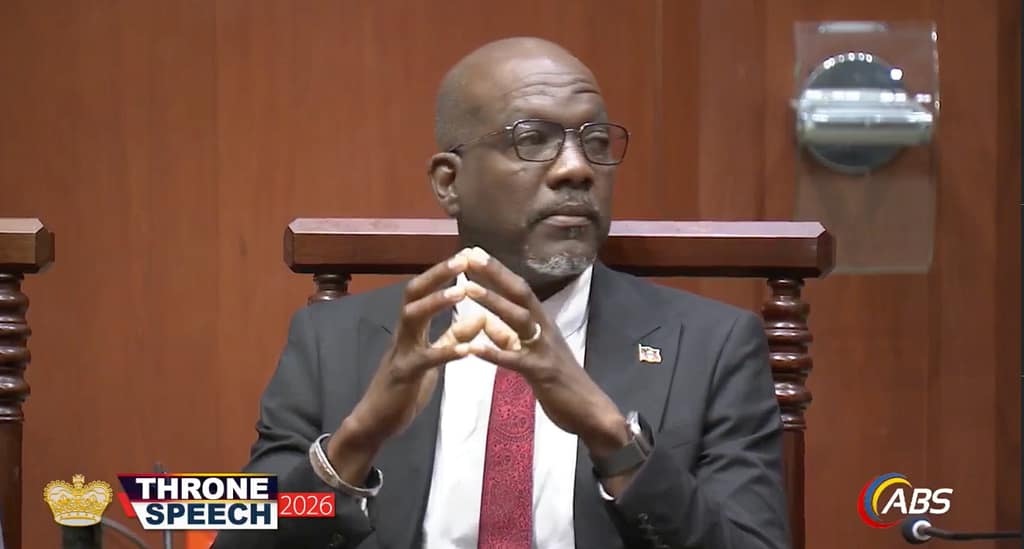
    As Antigua and Barbuda undertakes a sweeping nationwide upgrade of its critical water infrastructure, Governor General Sir Rodney Williams is calling for public understanding amid temporary disruptions to road access and utility service, noting that construction disruptions cannot be avoided during the replacement of decades-old corroded underground pipes. Speaking during Tuesday’s traditional Speech from the Throne, Sir Rodney outlined the multiple overlapping crises that have made this infrastructure modernization an urgent national priority: prolonged drought conditions amplified by human-caused climate change, and steadily rising demand for potable water from residential households, commercial enterprises, and the country’s key tourism sector. Acknowledging public frustration over construction-related inconveniences, Sir Rodney defended the ongoing replacement project led by the Antigua Public Utilities Authority (APUA), emphasizing that the long-term benefits of improved water security far outweigh short-term disruptions. “Government can only request your patience while the minister and his experts do their job,” he stated. For small island developing states like Antigua and Barbuda, delivering a reliable supply of safe drinking water stands as one of the most significant policy challenges, Sir Rodney explained, a challenge that has grown far more pressing amid repeated dry spells and the accelerating impacts of global climate change. He went on to express confidence in the leadership of Utilities Minister Melford Nicholas, highlighting Nicholas’ extensive experience and proven ability to manage this complex, high-stakes government portfolio. The Governor General also highlighted the substantial progress the current administration has made over the past 10 years to expand national water production capacity. From just 3.5 million gallons per day in 2013, APUA has more than tripled daily output to 11 million gallons, he confirmed, with additional expansion projects scheduled to come online before the end of the calendar year that will push production even higher. Even with this major increase in water output, however, reliable distribution across many communities remains a persistent problem. The root cause, Sir Rodney explained, is the condition of the country’s aging underground pipe network: when higher water pressure is applied to deliver increased volumes to end users, many older pipes crack, leak, or burst entirely. “Ageing pipes that easily split, leak and then break when pressure is increased in them must be replaced,” he said. Replacing these failing subterranean pipes requires excavating road surfaces in the capital city of St. John’s as well as smaller rural villages across the islands, a process that inevitably causes temporary traffic holdups and brief service interruptions for local residents and businesses. “To replace the old pipes translates into destroying the roadways above them,” Sir Rodney added. The massive overhaul project is part of the government’s long-term strategy to build climate resilience and meet the growing water needs of Antigua and Barbuda’s expanding economy and population.

  • Creole Heartbeat to host youth development forum for more than 100 young men in DA

    Creole Heartbeat to host youth development forum for more than 100 young men in DA

    A landmark youth development initiative is set to make its debut in the Caribbean island nation of Dominica next year, bringing more than 100 young men together around the interconnected goals of sports development, mentorship and personal growth. Local organization Creole HeartBeat, in collaboration with tourism body Visit Nature DA, has announced plans to host the 100+ Young Men’s Development Forum across June 17 and 18, 2026, hosted at the scenic Atlantique View Retreat Resort.

    Unlike traditional youth gatherings that center on single topics, this two-day event is designed as a holistic platform to empower young men from every corner of Dominica. It weaves together activities spanning leadership training, educational workshops, organized sports engagement, professional networking and intentional personal development, creating a multi-faceted experience tailored to the diverse needs of today’s youth.

    Per an official press statement from Creole HeartBeat, the forum is structured to give attendees access to guided exploration of high-priority topics ranging from competitive athletics advancement and entrepreneurship to career progression, physical wellness and lifelong self-development. For organizers, the gathering is far more than a one-off event: it forms a core part of a broader, long-running movement to leverage sports and mentorship as powerful tools to drive youth empowerment and inclusive national progress across Dominica.

    Organizers emphasized that the forum was crafted to foster open, meaningful conversation about the unique challenges and opportunities facing young men in Dominica today, while equipping participants with the skills and resources to build sustained success, both in their athletic pursuits and their personal lives off the field. “This is about preparing young men for life and leadership,” event organizers shared in their statement. “Sports can open life-changing doors, but discipline, education, mental strength, wellness, and clear purpose are what help young people sustain that success over time. We want this forum to inspire young men to dream bigger, think differently, and position themselves to access greater opportunities than ever before.”

    Throughout the event, participants will have direct opportunities to engage with a diverse cohort of experienced leaders, including industry speakers, professional mentors, retired elite athletes, seasoned educators, successful business leaders, certified wellness professionals and veteran sports coaches. These interactions will take place across a curated schedule of interactive panel discussions and hands-on skills development sessions.

    The full lineup of scheduled topics reflects the event’s holistic approach, covering foundational areas such as leadership development and personal discipline, competitive athlete training, educational access and career pathways, small business entrepreneurship, personal branding and public image, physical health and injury recovery, mental wellness, the growing field of sports tourism, motivational coaching, professional networking, and career planning for athletes transitioning out of competitive sports.

    Beyond its direct impact on participating young men, the forum also aligns with larger national efforts to position Dominica as a leading regional hub for sports tourism, high-performance athlete training, youth empowerment and wellness-focused travel experiences.

    For Creole HeartBeat, this initiative is a natural extension of the organization’s ongoing core mission: blending media, cultural preservation, sports development and community outreach to create life-changing positive opportunities and build stronger regional and international networks for young people across Dominica.
    Organizers are now encouraging all interested young men, including aspiring and current young male athletes, to complete their registration early through the event’s official online portal or by scanning the QR code included on all official promotional materials to secure their spot.

  • Airport Authority Launches ‘Legacy Wall’ Project to Preserve Antigua and Barbuda’s Aviation History

    Airport Authority Launches ‘Legacy Wall’ Project to Preserve Antigua and Barbuda’s Aviation History

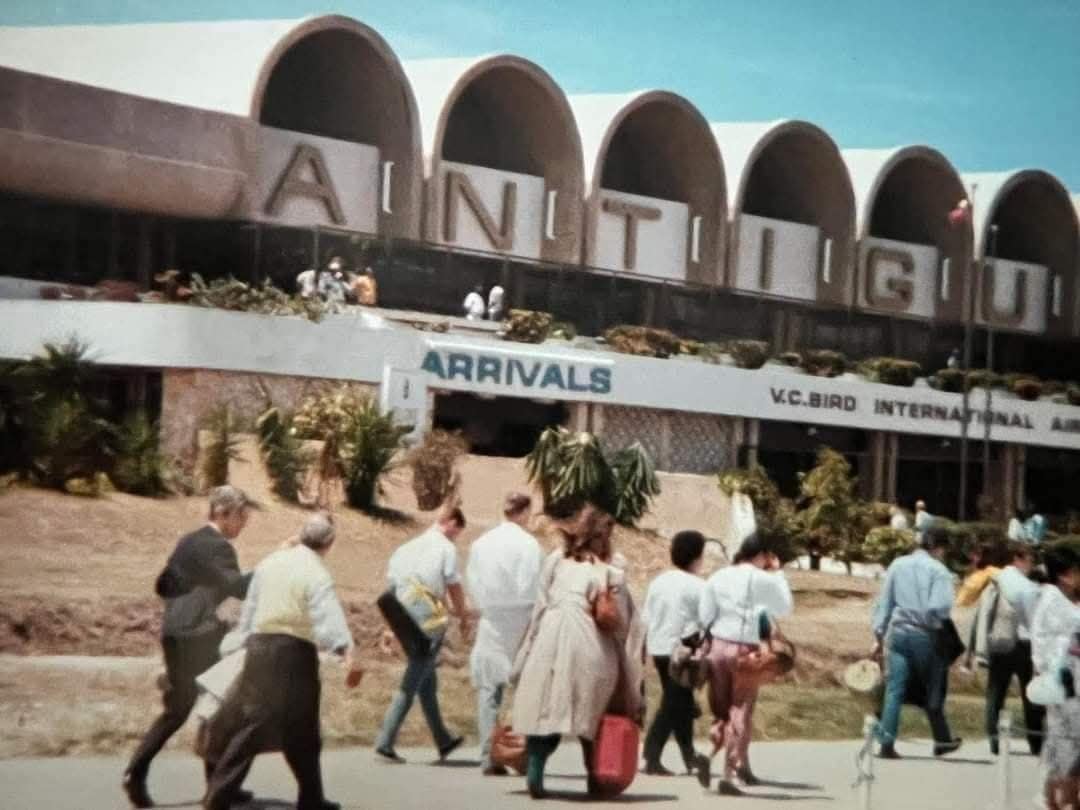
    Antigua and Barbuda’s stewardship of its own aviation history is getting a community-centered boost, as the Antigua and Barbuda Airport Authority (ABAA) has issued a public call for contributions to a new heritage initiative hosted at V.C. Bird International Airport.

    Titled “Legacy Wall – Honouring Our Past, Inspiring the Future,” the project is designed to capture and celebrate the layered evolution of air travel across the twin-island nation, bringing together personal memories, historic milestones and creative interpretation of local aviation identity. When complete, the permanent wall installation will feature a curated collection of public-submitted photographs and original artwork, ranging from shots of mid-20th century airport operations to personal travel moments that hold meaning for local residents and visitors alike.

    The call for submissions is open to all members of the community, from professional photographers and aviation archivists to hobbyists, enthusiasts and casual observers who hold images tied to Antigua and Barbuda’s aviation story. Even decades-old snapshots hold deep cultural value for the project: one widely beloved example shared by ABAA is an iconic shot of two local men relaxing on a bench near the Big Banana observation area at the airport’s old terminal, a photo that still stirs warm nostalgia for generations who remember the space.

    “It’s these deeply personal moments, woven into our nation’s aviation story, that the Legacy Wall initiative seeks to preserve and share with future generations,” explained Jan Walker-Brown, ABAA Customer Experience Manager, in a statement outlining the project’s core mission.

    Submission guidelines are structured to accommodate both digital and physical contributions: digital image files can be sent to the dedicated project email, while physical printed photographs can be mailed directly to ABAA headquarters, care of Walker-Brown. Beyond the photographic collection, the initiative also includes a dedicated youth art component, created to uplift emerging local creative talent. Young artists and creatives across Antigua and Barbuda are invited to submit original artwork for consideration, with selected pieces gaining the high-profile opportunity to be displayed permanently at one of the nation’s busiest public hubs.

    The Legacy Wall project is not an isolated effort, but part of ABAA’s ongoing, broader commitment to protecting and elevating Antigua and Barbuda’s unique aviation heritage. By centering public contributions, the authority aims to connect the island nation’s early days of air travel to its modern industry, fostering a shared sense of history that will inspire younger generations to engage with the sector’s future.

  • SMA-voorzitter Soebhan: Offerfeest draait om offers van meer dan alleen dieren

    SMA-voorzitter Soebhan: Offerfeest draait om offers van meer dan alleen dieren

    As Suriname prepares to mark Ied-al-Adha, the Islamic Feast of Sacrifice, on Wednesday, severe economic pressure driven by skyrocketing livestock prices has forced the Muslim community to rethink traditional ritual practices, according to a top local Muslim association leader.

    Michel Soebhan, chairman of the Surinaamse Moeslim Associatie (SMA), the Surinamese Muslim Association, says the 2026 celebration offers a literal lesson in the core meaning of the holiday: that communities must sacrifice personal wants, desires and appetites to build a stable, prosperous future for coming generations.

    The sharp uptick in prices for sacrificial livestock — including cattle, sheep and goats — has triggered a dramatic drop in the number of ritual animal sacrifices this year. But Soebhan emphasized in an interview with local outlet Starnieuws that this shift does not erase the core spiritual meaning of the holiday. Instead, he says, it highlights the values the feast was designed to teach.

    “If you do not have the financial means to offer an animal sacrifice, the ritual is not obligatory,” Soebhan explained. “In that case, the celebration only requires prayer.” He noted that the Feast of Sacrifice is ultimately centered on two core values: communal solidarity and personal self-discipline. “The holiday does not only teach us to sacrifice animals. It teaches us to sacrifice our own excessive desires and adjust our unsustainable lifestyles,” he added.

    Current economic conditions in Suriname have forced households across the country to make major changes to their spending, and Soebhan says the holiday’s rituals naturally align with this new reality. “We must adjust our lifestyles to match our actual financial capacity, and stop demanding things we cannot afford,” he said.

    Touching on Suriname’s long-standing macroeconomic challenges, including years of high national debt, expansive subsidies and strained social services, Soebhan argued that the public must come to terms with the fact that many luxurious habits the population has grown accustomed to are no longer affordable. “We have to embrace sacrifice,” he said. “The Feast of Sacrifice teaches us that we can overcome any crisis by making thoughtful sacrifices for the common good.”

    The scale of the price increase is staggering when compared to just a few years ago. Where the SMA once facilitated 50 to 60 cattle sacrifices annually, only around five cattle will be sacrificed this Wednesday. A 150-kilogram slaughter bull that cost between 600 and 700 euros just a few years ago rose to 1,400 to 1,500 euros last year, and has now jumped to 2,500 euros in 2026.

    Sheep and goats have seen similarly dramatic price hikes that put them out of reach for most ordinary families. A small sheep yielding approximately 10 kilograms of meat now costs 12,500 Surinamese dollars, while larger sheep can cost between 15,000 and 20,000 SRD. “Most people simply cannot afford that anymore,” Soebhan said.

    The decline in sacrifices has also ended a long-standing community tradition of distributing meat to vulnerable groups. For a decade, the SMA delivered donated sacrificial meat door-to-door to community members and local social institutions, with around 10 local social services receiving 10 kilograms of meat each annually from the association’s stock of donated offerings.

    Soebhan repeatedly reiterated that animal sacrifice — known as Qurbani in Islamic tradition — is never an obligatory practice for those facing financial hardship. “Religious teaching is clear: if you have the means, you can share meat and offer sacrifice to support the poor. If you do not have the means, you are not required to participate in the animal sacrifice, and the celebration through prayer alone is still complete,” he said. He added that he still expects a small number of last-minute sacrifices to be arranged on the day of the holiday itself by community members who have the means to participate.

    As in previous years, the official celebration will open with the Ied-namaaz holiday prayer at the National Iedgah Suriname, the SMA Center located at 91 Livorno Road. The day’s program will kick off at 8:00 a.m. local time, with the prayer service scheduled to begin promptly at 8:30 a.m.

  • Farley tears into cops

    Farley tears into cops

    The high-stakes investigation into the disappearance of two-year-old Angelo Tobias Plaza has sparked public and official friction in Tobago, after the Tobago House of Assembly’s top leader publicly condemned the Trinidad and Tobago Police Service (TTPS) for critical missteps in handling the case. Chief Secretary Farley Augustine made his scathing criticism clear in an interview at Scarborough’s Shaw Park Complex this week, stating he has deep dissatisfaction with the investigative response that falls far short of public expectations.

    Augustine argued that mishandling of the case began from the moment the toddler was reported missing, with the critical first 48 hours — a window widely recognized as make-or-break for missing person investigations — marked by unforced errors. While he stopped short of releasing detailed public criticism that could erode public trust in the TTPS, Augustine left no doubt that the response has been unacceptable. “I am not satisfied with how the TTPS managed this case. I feel as though justice is not being served, I feel as though justice is still delayed,” he told local outlet the Express.

    Speaking from the perspective of a parent, Augustine questioned the extensive delay in questioning the child’s family, a gap that he described as unfathomable. He questioned why investigators did not move sooner to question the toddler’s parents, noting that a two-year-old child is incapable of surviving independently or evading search efforts. “How do you lose a two-year-old in such an awfully spectacular manner is beyond me,” Augustine said, adding that the extended wait to question the toddler’s guardians does not align with basic investigative urgency.

    He amplified the public’s growing anger over the botched response, emphasizing that the disappearance of a young child is far from a minor inconvenience that can be brushed aside. “This is a whole human being that cannot give account for [himself], and Tobago and Tobagonians have every right to be dissatisfied, to be incensed, in how this entire case was managed,” he said. Augustine added that the case should stand as a critical learning lesson for the TTPS, highlighting major gaps in protocol for high-stakes missing person cases involving young children.

    For context, Angelo was reported missing from his Goodwood, Tobago home on May 11. To date, the toddler has not been found, though law enforcement has secured one major charge: Angelo’s 24-year-old stepfather, Shannon Miller, is currently facing a murder charge in connection with the toddler’s death. The child’s mother, Kalifah Tobias, and five other people previously detained as part of the investigation have all been released without charge.

    In response to Augustine’s criticism, Assistant Commissioner of Police Rishi Singh pushed back on claims of mismanagement while extending an open hand for dialogue. Singh confirmed that he remains open to meeting with Augustine to discuss the chief secretary’s concerns, noting that he welcomes input from all public stakeholders to improve police service delivery. “I am open for engagement with the Chief Secretary as I am with any citizen for the improvements to our service delivery. I am sure we will engage to foster mutually beneficial development of the professional output our offices are responsible for,” Singh said.

    Singh defended the investigative team’s work, arguing that officers acted consistent with professional standards and constitutional legal requirements. He noted that when children are harmed or go missing, the tragedy impacts every member of the community, but police must balance public urgency with legal obligations. Specifically, he pointed to the requirement of building solid evidence before making moves, the constitutional presumption of innocence, and the right to privacy for all involved. He added that releasing full investigative details to the public before the case goes through court proceedings would risk undermining the integrity of the final outcome.

    Singh also closed by acknowledging Augustine’s role, noting that the chief secretary has supported search efforts for Angelo from the moment the missing person report was filed, and that the TTPS respects his perspective on the case.

  • Rising tension between public, police

    Rising tension between public, police

    A former top law enforcement oversight leader in Trinidad and Tobago is sounding the alarm over growing rifts between citizens and the national police force, as public outrage mounts over recent legal action against a paralyzed woman linked to a controversial 2026 police shooting. Nizam Mohammed, who previously chaired the Police Service Commission (PolSC), is calling for immediate intervention from state authorities to head off deepening tensions that he says have already pushed public confidence in the justice system to a breaking point.

    The controversy centers on the January 20, 2026 shooting of Kaia Sealy and her common-law husband Joshua Samaroo, following a police chase in St Augustine. The encounter left Samaroo dead and Sealy paralyzed from her injuries. Last week, nearly a year after the incident, police announced multiple arrest warrants for Sealy – who is currently receiving medical treatment abroad – including a charge of manslaughter for Samaroo’s death. Law enforcement alleges Sealy opened fire on responding officers during the chase.

    The unexpected charges have sparked widespread public demonstrations in support of Sealy, with the most recent rally held Sunday drawing roughly 200 attendees. At that protest, organizer Allyssa Phillip accused authorities of making Sealy a scapegoat for the incident and repeated calls for the resignation of Police Commissioner Allister Guevarro.

    Speaking during an interview with TV6’s Morning Edition on Monday, Mohammed argued that the mishandling of the high-profile case has widened an already dangerous gap between the Trinidad and Tobago public and state institutions, including the Trinidad and Tobago Police Service (TTPS). He noted that grassroots citizen groups across the country have now mobilized around the case, demanding transparent answers from law enforcement that have yet to be provided.

    One of the core public grievances Mohammed highlighted is the mixed messaging around Sealy’s status in the months immediately after the shooting. When Sealy was hospitalized under police guard following the incident, authorities framed the presence of officers as a protective measure, not as surveillance of a suspect. Only recently has the state moved to formalize charges, leaving many members of the public confused and distrustful of the investigation’s timeline.

    Mohammed criticized the investigation into the shooting for taking what he called an “inordinately long time” to reach the current stage, saying authorities failed to act with the urgency and diligence required to prevent public anger from escalating. From the earliest days of the incident, members of the public have had access to video footage of the encounter, allowing them to form their own conclusions about what unfolded. Mohammed said widespread public opinion already views the manslaughter charge against Sealy as shocking, and he remains unconvinced that senior law enforcement and administrative leaders understand the depth of public concern.

    Sunday’s spontaneous, well-attended demonstration, he argued, is proof that the public is demanding answers – and that authorities have a non-negotiable duty to respond. He pointed out that Sealy is not just a suspect: she is a mother, permanently disabled by the shooting, now facing a life-altering criminal trial that could end in a conviction for manslaughter. Mohammed questioned whether any jury in Trinidad and Tobago, having seen the widely circulated footage of the shooting that shaped public perception, could ultimately find Sealy guilty. He warned that failure to address public concerns will only lead to more civil unrest and deeper polarization in the coming months.

    Mohammed acknowledged that the Director of Public Prosecutions is legally required to make charging decisions based on the evidence submitted by investigators, but stressed that state leaders have a responsibility to eliminate widespread public doubt around the case. The administration of justice impacts every segment of society, he said, and this issue requires a coordinated, collective response from all relevant state institutions. He warned that governance cannot simply ignore the widespread frustration of the public, noting that the disconnect between citizens and leaders is growing at an accelerating pace.

    Both the PolSC and the Police Complaints Authority have so far had no formal role in reviewing the case, Mohammed confirmed, adding that the unexplained delays in the investigation have left the general public increasingly restless. To repair the fractured relationship between the TTPS and the community, Mohammed said, meaningful institutional change is needed. He recalled that under former Police Commissioner Dwayne Gibbs, who led the force from 2010 to 2012, the service launched a successful initiative to build community-focused “model police stations” designed to improve access and relations between officers and residents. Today, those facilities are shuttered and unused, and many existing police stations still lack the basic infrastructure needed to serve the public effectively.

    Beyond infrastructure, Mohammed called for cultural reform within law enforcement, saying all ranks of the service – from junior officers to senior leadership – need to be trained to engage respectfully with the public. He criticized the detached, “high and mighty” approach adopted by too many current law enforcement leaders, which he says has directly contributed to the erosion of public trust that the Sealy case has now brought to a head.

    “Time has run out,” Mohammed said, reiterating his urgent call for authorities to intervene immediately to address the crisis. He stressed that for Trinidad and Tobago to remain a free, functional society, all state institutions must adhere to the rule of law, ethical governance and accountability to the public. Failure to do so, he warned, will leave the divide between citizens and the state unbridgeable.