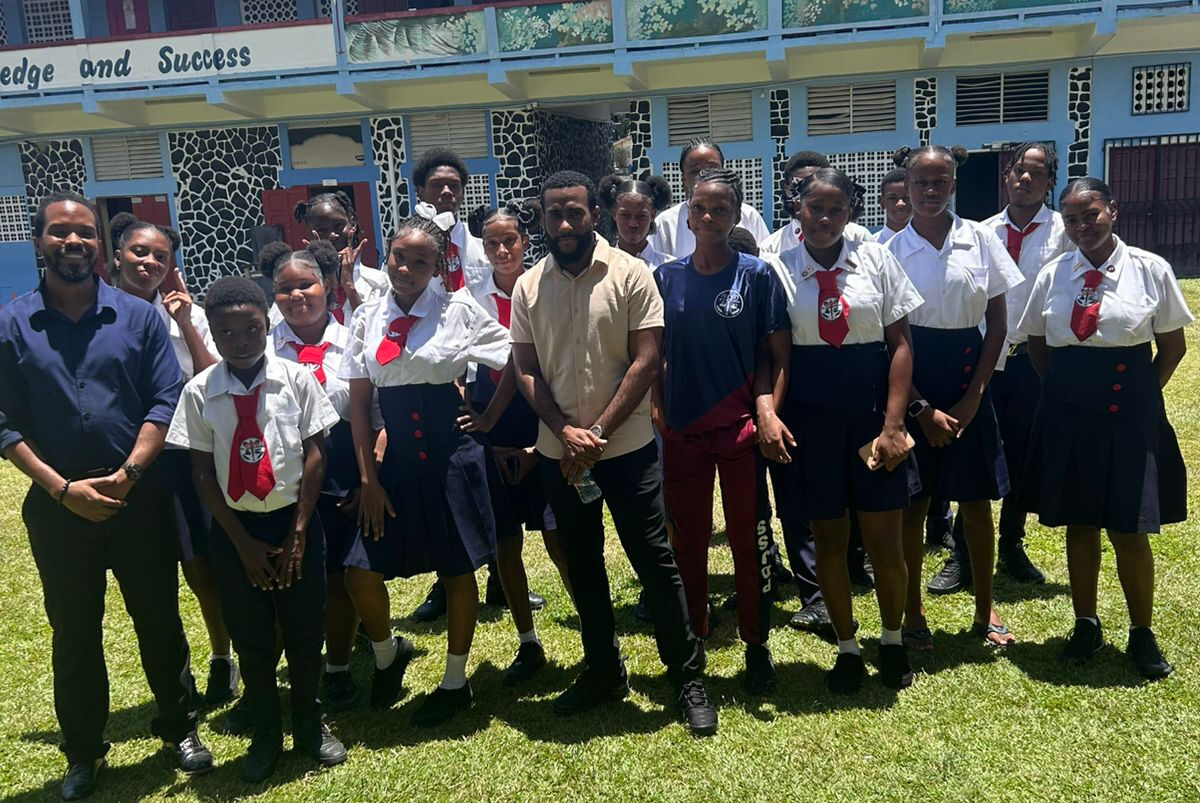
A public dispute over child protection obligations has erupted between the head of Jamaica’s largest teachers’ union and the nation’s education minister, centered on unconfirmed allegations of inappropriate sexual activity by disaster shelter residents that was allegedly visible to students on school grounds.
分类: society
-

Bartender shot dead in St Elizabeth robbery
On a Thursday night in the quiet community of Red Bank, St Elizabeth, Jamaica, a violent crime has left local residents shaken, after a 39-year-old working professional was shot and killed during what investigators believe was a botched robbery.
Law enforcement officials have identified the deceased as Nicola Facey, a woman who worked both as a bartender and a nail technician to support herself. According to official police records, the fatal incident unfolded just after 10:50 pm, as Facey was traveling on foot along a public road in the Red Bank area.
Witness and initial investigative accounts confirm that a vehicle carrying multiple male suspects pulled alongside the victim. The men exited the car and immediately demanded that Facey hand over all her personal valuables. When Facey chose to resist the attackers’ demands, a physical struggle broke out between the victim and the suspects. In the chaos of the altercation, one of the assailants fired a gun, striking Facey fatally. After the shooting, the attackers stole Facey’s purse before fleeing the scene, police confirmed.
In a separate development that detectives are now examining for potential links to the fatal shooting, a second violent incident was reported just a short distance away on the same night. In the nearby community of Rose Hall, an unidentified woman was forcibly taken at gunpoint by a group of suspects who forced her into their vehicle. Law enforcement sources confirm that the abducted woman was later released unharmed by her captors. Police have not yet confirmed whether the same group of suspects is responsible for both the murder and the abduction, and investigations into both incidents remain ongoing.
Local law enforcement has not yet announced any arrests in connection with either case, and is appealing to members of the public with any information about either incident to come forward to assist with the investigation.
-

Sleepy seal diverts traffic in Australian seaside town
Residents and motorists in the small coastal Australian town of Dromana, Victoria faced an unexpected, whimsical disruption to their Friday commute when a well-known local seal decided that the warm sunbaked pavement was the perfect spot for a midday nap.
The sleepy marine mammal, affectionately known to many local residents as Sammy, was found stretched out across the town’s road, completely unbothered by the sounds and presence of passing vehicles and onlookers. Responding quickly to the unusual public safety incident, local law enforcement officers cordoned off the area around the napping pinniped with traffic cones, diverting vehicles away from the stretch of road to avoid any accidental harm to the animal.
Laura Ellen, a Dromana local who was one of the first people to spot the slumbering seal, shared her amusement with AFP. “You never can guess where he will pop up next,” she said of the local celebrity animal, adding that Sammy is known for spending most of his days resting. “It made me laugh when I saw him on the road. I’ve never seen him do that before.”
After several hours of unhurried rest, wildlife rescue teams stepped in to safely guide Sammy back to his natural habitat on the nearby Dromana beach. Once the seal had returned to the shore, the closed lane was reopened to traffic, and normal commuter flow resumed.
Victoria’s state government has long noted that seals are a regular, protected native species along the state’s southern coastline. Local regulations make it illegal for people to touch or feed wild seals, a rule put in place to protect both the animals and humans that share the coastal environment.
-

Security guard shot during attempted ATM robbery at St Ann gas station
In the early hours of Friday, a violent confrontation unfolded at a roadside gas station near Draxhall in Jamaica’s St Ann parish, leaving a working security guard with gunshot wounds. According to local law enforcement and initial incident reports, the attack unfolded shortly after 4 a.m., when the guard, who was on patrol at the time, discovered a group of perpetrators attempting to break into and steal the station’s automated teller machine. Quick to act, the guard intervened to block the thieves’ plan, disrupting the criminal operation before it could be completed. Outnumbered and caught off guard, the defender was struck by gunfire fired by the fleeing suspects during the chaotic encounter. Emergency response teams were dispatched to the scene immediately after witnesses alerted authorities, and the injured guard was rushed to a nearby public hospital for urgent medical care. As of the latest update from local correspondent Akera Davis, the guard remains in treatment for his injuries, and law enforcement teams have launched an ongoing manhunt to track down and apprehend the perpetrators responsible for the shooting. No additional details about the guard’s condition or the number of suspects involved have been released to the public at this stage of the investigation.
-

WATCH: JDF soldier charged with girlfriend’s murder appears in court
A member of the Jamaica Defence Force made his first formal court appearance on Friday in the central Jamaican town of Mandeville, charged with the fatal murder of his partner, in a case that has drawn sharp public attention and renewed long-simmering conversations about systemic domestic violence across the island nation.
Twenty-seven-year-old Damanice Tyrone Williamson, the accused service member, raised his right hand during the court hearing as proceedings got underway. He stands accused of killing 29-year-old Tanzanya Dunkley, his girlfriend, at a property in the Three Chains area of Manchester parish, where the town of Mandeville serves as the parish capital.
Investigative sources within the Jamaica Constabulary Force confirmed that Williamson has given a formal confession to the killing, which took place amid a heated argument between the couple last weekend. According to details of the confession shared with local media, the accused claimed that an unknown voice instructed him to commit the fatal act.
The confrontation that preceded the killing unfolded after Dunkley made the decision to end the romantic relationship and prepared to leave Williamson. In a confrontation over her decision, Williamson seized her mobile phone, and when Dunkley clung to him to retrieve the device, he reportedly acted on the voice’s command. He picked up a knife and cut her throat, killing her at the scene, the police source explained to Observer Online in an interview following the arrest.
In the wake of the fatal incident, Jamaican communities and anti-violence advocates have reignited long-running public debates about the prevalence of domestic violence in the country. The case, which involves a serving member of the country’s national defense force and a fatal domestic dispute, has added new urgency to calls for expanded interventions, public education, and support systems for people at risk of intimate partner violence.
-

Over 140 rounds of ammo seized in Kingston
On Friday, April 10, law enforcement and military partners in Kingston, Jamaica uncovered a substantial cache of 144 rounds of ammunition during a targeted search operation in the Gold Smith Villa community, according to official updates from the Jamaica Constabulary Force (JCF).
The operational activity, led by members of the Half-Way-Tree Police Division, unfolded over four hours, starting at 5:00 a.m. and wrapping up by 9:00 a.m. that same day, with personnel focusing their search on a specific residential property within the area.
As officers methodically combed through the premises, they made a key discovery: a brown shopping bag that had been deliberately concealed in the cavity of a concrete building block on the property. Upon retrieving the hidden container, investigators confirmed the bag held 114 9mm cartridges along with 30 additional .38 caliber rounds, bringing the total seizure to 144 assorted ammunition rounds.
In an update released following the operation, law enforcement officials confirmed that no individuals have been taken into custody in connection with the seized cache as of the initial report. The JCF has not yet announced any further developments related to ongoing investigations into the ownership or intended use of the ammunition.
-

Sixteen RSS officers complete three-week international management training geared to strengthening regional community impact
Sixteen senior law enforcement officers from across member states of the Caribbean Regional Security System (RSS) have crossed the graduation stage this week, capping off a three-week intensive advanced leadership training program designed to elevate regional policing capabilities.
Developed through a longstanding collaborative partnership between the RSS Training Institute and the United Kingdom’s Durham Constabulary, the International Leadership and Management (Gold) Course was specifically crafted for top-tier law enforcement personnel, including Senior Superintendents, Division Commanders, and Assistant Commissioners. The program’s core mission is to strengthen strategic leadership capacity across the region’s law enforcement agencies, equipping senior leaders to tackle evolving public safety challenges more effectively.
The graduation ceremony, held Thursday, April 2 at RSS Headquarters, marked the formal completion of the training, with certificates awarded to all participating officers in recognition of their work throughout the program. In his address to the graduating cohort, RSS Deputy Executive Director Atlee Rodney emphasized the critical weight of the leaders’ responsibilities to communities across the region. He urged graduates to remain unwavering in their public service commitments, noting that strong leadership at the senior level is foundational to enabling both individual agencies and the RSS collective to address pressing social challenges and improve overall quality of life for regional citizens.
Rodney also reaffirmed the RSS Training Institute’s ongoing commitment to developing practical, forward-thinking training programs and sustaining key international partnerships such as the one with Durham Constabulary, all in service of boosting regional policing capacity.
Royal Grenada Police Force Commissioner Randy Connaught, delivering the event’s keynote address, centered his remarks on the unique complexities senior law enforcement leaders face navigating modern strategic and political landscapes. He laid out a clear framework for ethical, effective senior leadership, defined by three core pillars designed to guide officers in balancing their operational duties, constitutional obligations, and relationships with elected governments.
“My charge to you is to master what is perhaps the most delicate and critical skill of executive leadership – managing the expectations of the political directorate… This is not about being political. It is not about partisanship. It is about managing a relationship that is constitutionally vital, operationally impactful and perpetually challenging,” Connaught told graduates. “As Gold leaders, you are no longer just guardians of public safety; you are also stewards of public trust and key advisors to the government of the day.”
Connaught’s first pillar of effective leadership is “Educate, Don’t Just Execute.” He explained that senior officers bear a professional and constitutional responsibility to act as expert advisors, rather than just implementing politically driven policies without context. When elected officials push for quick, reactive crackdowns on complex issues such as gang violence or youth offending, Connaught said leaders should draw on the problem-solving ethos of the Durham training to provide full, transparent context. This includes walking policymakers through threat assessments, community impact considerations, and the ethical implications of policy choices, to ensure decisions deliver legitimate, long-term public safety outcomes rather than short-term political gains.
“ You are not there to decide national policy that belongs to the government, but you are constitutionally bound to ensure that any such decision is made with the full understanding of the policing consequences. Your advice may be the difference between a politically expedient decision and a sustainable safe outcome,” he said.
The second foundational pillar focuses on preserving institutional integrity and continuity, urging leaders to prioritize organizational memory and institutional loyalty over temporary political interests. “Integrity is your shield. Politicians come and go. Elections are cyclical. But the police service is an enduring institution. Your loyalty is not to the individual in the ministerial office, but to the office itself, to the law, and to the people you serve,” Connaught stressed.
Connaught’s third pillar addresses one of the most persistent tensions in modern policing: bridging the gap between public and political expectations and on-the-ground operational capacity. Political campaign promises often create the public perception that police can solve complex social problems overnight, he noted, and it falls to senior leaders to act as transparent, honest brokers about what policing can deliver. “You must be able to demonstrate, with data and candor, the direct link between resources, funding, personnel, technology, wellbeing support and outcomes,” he explained.
Concluding his address, Connaught encouraged graduates to bring the innovative, problem-focused “Durham Difference” approach back to their home agencies, particularly when engaging with political leadership.
The ceremony also included formal recognition of the partnership between RSS and Durham Constabulary, with Deputy Executive Director Rodney presenting a token of appreciation to Chief Superintendent Ian Leech, course facilitator from Durham Constabulary.
-

Man fatally shot in Laborie
A quiet pre-dawn break in Laborie was violently ruptured early this Wednesday, when a 40-year-old local man was shot and killed, leaving close relatives and neighborhood residents reeling from shock and fear.
Family members have publicly named the deceased as Shakai Laurent, according to local accounts. Multiple sources confirm the fatal shooting unfolded at a location close to the intersection of Kennedy Highway and the Laborie Bypass.
Multiple residents who spoke with local publication *St. Lucia Times* confirmed they were jolted awake from their sleep by the rapid crackle of repeated gunshots, a sound that quickly spread unease across the still-sleeping neighborhood.
As of the latest updates, authorities have not released clear, verified information about what led to the shooting, leaving key questions about motives, the identity of any suspects, and the sequence of events unanswered. Community members have been left to speculate amid the information vacuum, amplifying the tension gripping the area.
Unverified video footage circulated widely across various social media platforms captures uniformed police officers working at the crime scene, marking the official launch of a homicide investigation into Laurent’s death.
-

Dr Valda Henry to teachers: You implement reform, drive transformation
On Wednesday, the 18th Biennial Convention of the Dominica Association of Teachers (DAT) opened its doors at the St. Alphonsus Parish Hall, drawing education professionals from across the island to discuss the critical intersection of teaching and national progress. This year’s conference theme, “Teachers: The Foundation For National Development-Value Us,” set the stage for a keynote address from Dr. Valda Henry, Deputy Governor of the Eastern Caribbean Central Bank (ECCB), who delivered a powerful call to recognize and empower educators as the engine of societal change.
In her featured address, Dr. Henry centered her remarks on the understated but indispensable role teachers play in driving systemic transformation. She told gathered attendees that teachers are far more than passive implementers of education policy – they are the active architects of a nation’s future. “At the center of all of this transformation lies who? Teachers, you,” she stated. “You are the ones who must translate curriculum into meaningful learning experiences. You bridge the gap between policy and practice. You are not just implementers of reform, you are the drivers of transformation.”
Dr. Henry expanded on her definition of transformation, explaining that it encompasses both small, incremental progress and bold, large-scale change. She urged educators to embrace a mindset of resilience, noting that the courage to overcome challenges is a core part of being the transformation they want to see in their students and communities.
A key point of Dr. Henry’s address focused on the urgent need for adequate investment in modern education infrastructure and teacher training. She argued that it is unfair and unrealistic to expect educators to prepare students for 21st-century careers and challenges using outdated tools, outdated training models, and obsolete curricula. If societies expect teachers to cultivate high-demand skills like digital literacy, critical thinking, and creative problem-solving in their students, they must first provide teachers with the resources, training, and support they need to build those skills themselves.
Even as she called for systemic investment in the teaching profession, Dr. Henry also emphasized that responsibility for growth is shared between institutions and individual educators. “It is a two-way street,” she emphasized. “It is not just people investing in you, you too must invest in yourself.” She encouraged teachers to take proactive steps to update their skills and adapt to changing educational needs, reinforcing that their own professional growth directly translates to stronger national development.
The convention comes as small island nations across the Eastern Caribbean work to adapt their education systems to shifting economic and technological trends, making discussions around teacher empowerment and investment particularly timely for the region.
-

Bepalen onderwijsagenda is een Surinaams voorrecht
For decades, Suriname’s education system has grappled with the same persistent set of challenges: burned-out, underpaid teachers, unmotivated students, stagnant literacy and numeracy skills, and slow adaptation to the demands of modern society. When compared to how little core work has changed for professions like auto mechanics and technicians, it becomes clear that systemic transformation in education has lagged far behind where it needs to be. Even as the public widely recognizes that education is the single most future-defining investment a nation can make, there remains a widespread, long-held sense that Suriname is not unlocking the full potential of its young people.
In an era marked by cultural pessimism, widespread distrust of governance, and a tendency to frame public frustration as unconstructive outrage, one core fact stands out: Suriname currently lacks a sufficient pool of qualified education experts to drive the urgently needed systemic overhaul the sector requires. As the nation prepares for a wave of new development in coming years, this transformation could not be more critical. Drawing on decades of firsthand experience in education reform in Suriname since returning to the country in 2000, the author argues that lifting the education system to new heights requires targeted, structured policy, a clear policy framework with actionable tools, institutional strengthening, sustainable financing, ongoing dialogue with frontline education workers, and most importantly, broad buy-in from teachers, parents, and other key stakeholders. Successful reform, he emphasizes, must follow a bottom-up approach rooted in local needs.
Innovating education is a specialized craft, not a problem that can be solved with a quick fix or silver bullet. Even the most promising policy ideas can fail without careful, thoughtful implementation. Despite these challenges, the author remains optimistic about the future of Suriname’s education sector. Having seen both the tangible successes and unintended setbacks of reform efforts over more than two decades, he argues that moving forward with a clear, locally defined, Suriname-owned reform agenda is non-negotiable.
A core priority of this agenda is raising public education investment to at least 20% of the national budget and 10% of the country’s gross domestic product. The author acknowledges that increased funding alone is not a panacea for all systemic ills, and recognizes the extraordinary economic pressures the current cabinet faces amid an ongoing national crisis, which has created widespread financial uncertainty. Even so, he argues that strategic investment in education and a knowledge-based economy is a foundational requirement for long-term economic recovery, making a structural increase in education and research spending unavoidable.
Currently, per-student education spending in neighboring countries is growing far faster than in Suriname, even as the challenges facing Suriname’s education system continue to grow. To address this gap, reform leaders are developing evidence-based calculations for the structural and additional investment the sector will need for future growth. Only through sustained, broad-based investment can Suriname enable earlier education access, extend learning opportunities, remove unnecessary barriers to participation, keep teaching careers attractive, unlock the full potential of every student, and support world-class research and innovation. Clear direction and intentional future-focused policy choices are essential to achieving these goals.
The 13-pillar roadmap laid out for Suriname’s publicly funded education and research sector aims to bring the system to regional top-tier status, with undisputed quality and up-to-date curricular content anchored by evidence-based policy that draws on ongoing research into the impact of implemented reforms. The core pillars of this plan are: 1. Universal access to education and equal opportunity for all students to maximize their unique talents through intentional talent management; 2. Investment in institutional strengthening for a National Curriculum Institute to lead curriculum development, testing, and assessment; 3. Reorienting education to motivate students to reach their potential, with a balanced focus on motivation, student well-being, and academic performance by strengthening mental skill development in curricula; 4. Ensuring students at all levels receive proper recognition for both practical and theoretical skills, aligned with labor market needs and national capacity building; 5. Normalizing lifelong learning, allowing adults to access retraining and upskilling opportunities through public education providers; 6. Making education careers attractive through competitive working conditions and dedicated opportunities for professional growth for education professionals; 7. Developing knowledge networks to position Suriname as an attractive partner for international and domestic research and innovation collaboration; 8. Expanding early childhood education and care for children aged 0–4, as a strong foundational base for lifelong learning; 9. Evaluating and updating learning outcomes with continuous learning pathways across primary, secondary, vocational, and special education; 10. Building a broad, strong culture of lifelong learning across all sectors of society; 11. Driving cultural change among education professionals to build a more collaborative sector with more attractive working conditions; 12. Developing a national science policy to support world-standard research and innovation; 13. Launching a national school renovation and construction program to bring all school facilities up to top functional condition.
This opinion piece is written by Prof. dr. Henry R. Ori.