分类: society

  • Youth voices drive engaging discussions at IICA Grenada’s 2026 Accountability Seminar

    Youth voices drive engaging discussions at IICA Grenada’s 2026 Accountability Seminar

    On May 20, the Grenada Cricket Stadium played host to the 2026 IICA Grenada Accountability Seminar, a landmark gathering centered on the critical theme of advancing youth development in agriculture. Bringing together young aspiring producers, government leaders, agricultural industry stakeholders, and global and regional development partners, the event carved out dedicated space to unpack actionable strategies for expanding and deepening youth engagement across Grenada’s agricultural sector, while also giving the Inter-American Institute for Cooperation on Agriculture (IICA) a platform to share its progress on ongoing support for the island’s national agricultural development goals.

    Opening the proceedings, Gregg Rawlins, IICA’s representative for the Organization of Eastern Caribbean States (OECS), laid out the institution’s comprehensive eight-pillar regional strategy designed to empower and engage young people in agriculture across the Eastern Caribbean. The framework prioritizes four core priorities: strengthening interconnected youth agricultural networks, expanding equitable access to cutting-edge training and digital agricultural technology, backing youth-led agri-entrepreneurship, and shaping enabling policy environments that remove barriers to youth participation. Looking ahead to next steps in Grenada, Rawlins confirmed IICA’s commitment to partnering with the national government and other local stakeholders to launch a dedicated national youth in agriculture network, building on recent OECS regional youth-focused initiatives to drive the strategy’s implementation on the ground.

    Hon. Lennox Andrews, Grenada’s Minister for Agriculture, Lands and Forestry, reinforced the national government’s unwavering commitment to positioning young people as the central driving force of the country’s agricultural transformation. This transformation, Andrews emphasized, will be rooted in agricultural modernization, climate-smart production practices, youth entrepreneurship, and value-added processing that boosts profit margins for young producers. To deliver on this commitment, the minister outlined a suite of targeted interventions aimed at removing the most common barriers young people face: expanded access to affordable land, tailored financing options, hands-on skills development, and support for innovative production practices. He detailed ongoing skills training offerings already available through the government’s extension services and dedicated youth desk, including short courses covering crop and livestock production, protected agriculture, and industry-standard good agricultural practices. The Fisheries Division, he added, offers specialized training for young fishers in safe product handling and value-added processing, while partnerships with regional institutions including IICA and the Caribbean Agricultural Research and Development Institute (CARDI) have already delivered training in climate-smart agriculture, sustainable water management, drought and pest-resilient crop varieties, and effective use of climate data for farm planning. In a major policy announcement, Andrews revealed the government’s plan to acquire 102 acres of agricultural land, which will be subdivided into plots and made exclusively available to young people seeking to enter or expand their operations in the sector.

    Senator Seville Francis, Parliamentary Secretary in the Ministry of Youth and Sport, further outlined the range of government-backed support programs designed to help young people access critical agricultural resources, skills training, and business development support. Francis noted that young farmers registered with national extension services or included on the official national farmers registry are eligible for a range of in-kind support, including free seeds, planting materials, fertilizer, irrigation equipment, one-on-one technical advice, and connections to formal regional and international markets. For young entrepreneurs with viable business plans, she added, financing and tailored entrepreneurial support for agricultural ventures is available through the Grenada Development Bank and broader national micro, small, and medium enterprise (MSME) support initiatives.

    A core highlight of the seminar was its open, interactive format, which gave young farmers and agri-entrepreneurs direct access to policymakers and development partners to raise the specific challenges they face and collaborate on solutions. A youth-led dialogue facilitated by young farmer Bevon Charles centered on the most pressing barriers to entry and growth — particularly limited access to affordable land and affordable financing — while also highlighting untapped opportunities in technology-driven innovation and value-added processing. Attendees explored a range of emerging high-growth sub-sectors that hold particular appeal for young producers, including digital agriculture, hydroponics, climate-smart production technologies, drone applications for farm management, protected agriculture, and local value-added processing, all of which can boost profitability and make agriculture a more attractive career path for young Grenadians.

    Additional program contributions included a presentation from Cindy Lewis, project manager for the Grenada Young Entrepreneurs in Agriculture and Agribusiness Project, who outlined ongoing efforts to boost national agricultural output through targeted financial grants for small-scale producers and professional certification opportunities for young agricultural workers. One of the most significant outcomes of the seminar was renewed collective momentum to establish the long-discussed national Youth in Agriculture Network, a dedicated platform for advocacy, knowledge sharing, and collaboration among young people working across the agricultural sector. Work on the network is already underway under the CDF Young Entrepreneurs in Agriculture Project, with ongoing technical and strategic support from IICA.

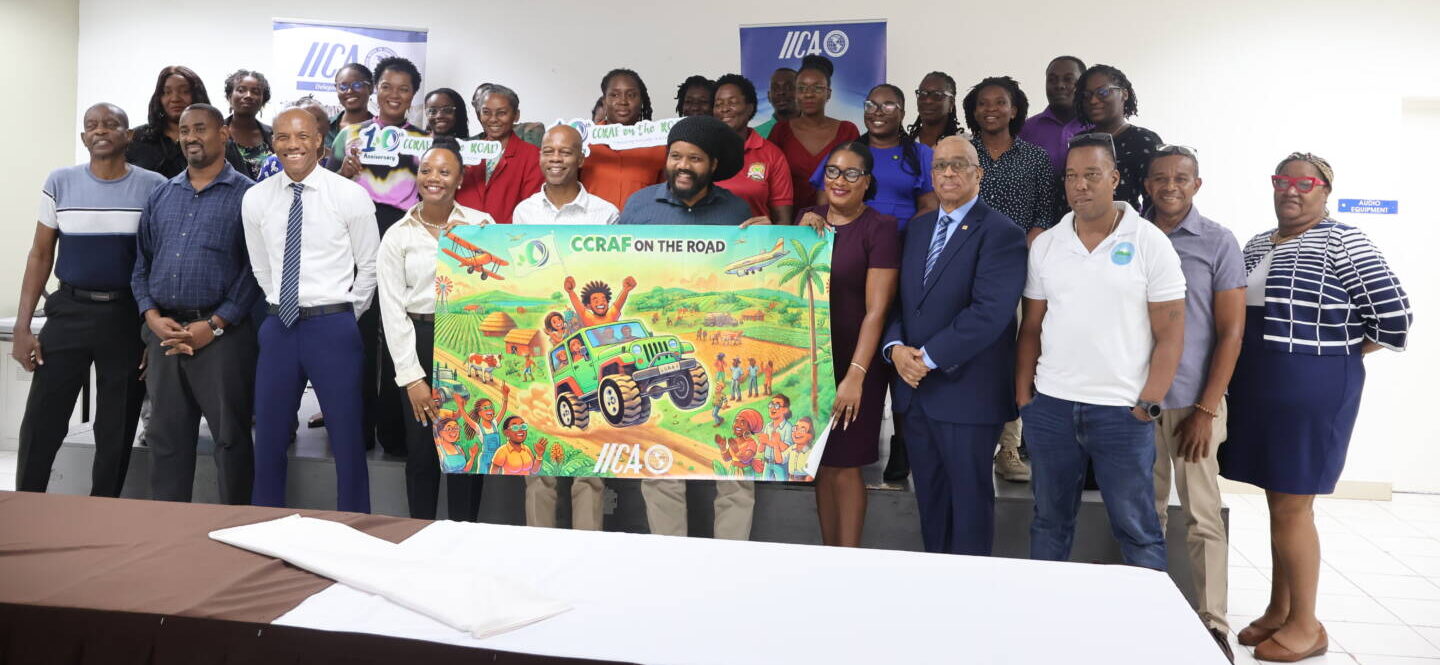
    Gregory Delsol, IICA Grenada’s technical specialist, also updated attendees on the progress of two key ongoing IICA initiatives on the island: the construction of a climate-friendly solar-powered sea moss drying facility, and the Global Water Partnership-Caribbean (GWP-C) Alliance Water Conservation and Improved Irrigation Project, which aims to boost water security for Grenadian farmers amid growing climate volatility. Coordinators from the Caribbean Climate Responsive Agriculture Forum (CCRAF), who were on island for the forum’s “CCRAF on the ROAD” outreach series, also used the occasion to recognize participants who successfully completed the Beginner to Business (B2B) three-part entrepreneurship webinar series for young producers.

    By the close of the seminar, all participating stakeholders reached a shared conclusion: sustained cross-sector collaboration between the national government, regional institutions, youth-led groups, development partners, and the private sector is essential to building a more inclusive, resilient, and innovative agricultural sector that can attract and retain the next generation of agricultural leaders in Grenada. Attendees unanimously emphasized that investing in youth empowerment in agriculture is not just a priority for young people — it is a critical foundation for long-term food security, ongoing innovation, and climate resilience across Grenada’s entire agri-food system.

  • $25M Spent, Still No “Rightful Magic Recipe” Against Sargassum

    $25M Spent, Still No “Rightful Magic Recipe” Against Sargassum

    For years, Belize has poured millions of dollars into countering an escalating threat to its coastline: massive, unchecked invasions of sargassum seaweed that smother popular beaches, cripple local tourism, and upend life in coastal communities. Yet despite the steady flow of funding and dozens of proposed solutions, government officials confirm no viable, scalable fix has emerged to turn the tide against the growing crisis.

    Andre Perez, Belize’s Minister of Blue Economy and representative for the rural southern region, recently shared the grim reality of the country’s anti-sargassum efforts in an interview with local outlet News 5. While dozens of entrepreneurs and innovators have pitched a wide range of strategies for repurposing and removing the invasive seaweed, none have delivered a permanent, workable resolution.

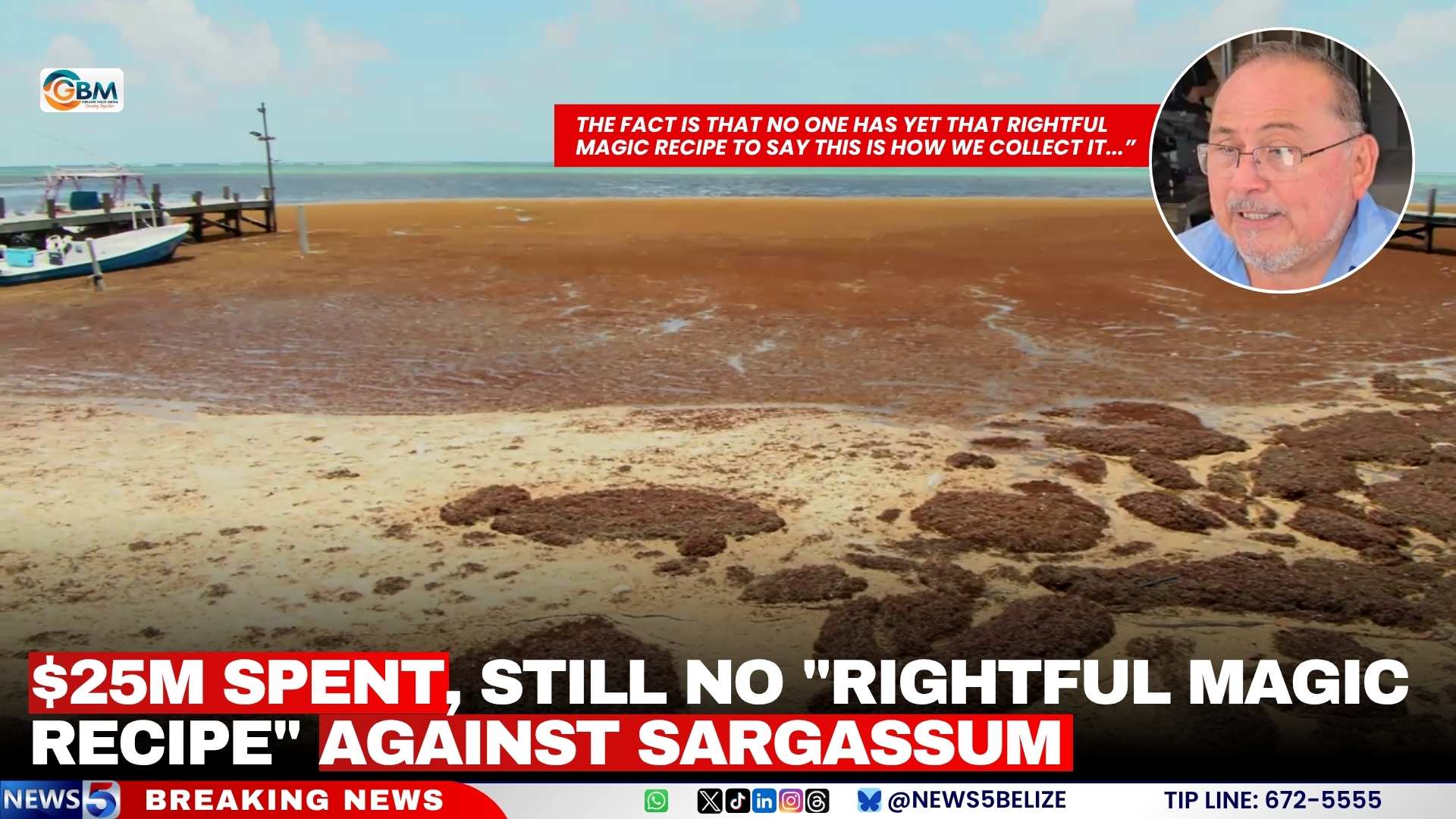
    “The truth is, nobody has cracked that perfect magic recipe that tells us exactly how to eliminate this problem,” Perez explained. He emphasized that the only truly effective approach to stopping sargassum damage requires intercepting and removing the dense floating mats of seaweed out on the open ocean, before they can drift ashore. Once sargassum washes up onto beaches, it quickly begins to rot, creating foul odors, driving away tourists, and disrupting coastal ecosystems. Without a reliable at-sea collection system, the damage continues unabated.

    To date, the financial toll of the crisis has already been steep. Perez confirmed that the island town of San Pedro alone has spent $25 million on ongoing beach cleanup efforts to clear rotting sargassum from its shorelines. For other hard-hit coastal communities including Hopkins, Caye Caulker, Seine Bight, and Placencia, the Belize Tourism Board (BTB) provides up to $10,000 per month to support local cleanup work. Even with this consistent funding and effort, however, the sargassum invasions keep intensifying.

    The U.S. National Oceanic and Atmospheric Administration (NOAA) currently rates large stretches of Belize’s coastline as facing “High Coastal Risk Levels” for sargassum wash-ups, and long-term forecasts indicate the 2026 season will bring even worse conditions than previous years.

    In response to the crisis, a handful of pilot programs in southern Belize are testing experimental strategies to turn the invasive seaweed into usable products, including agricultural fertilizer, decorative art, construction bricks labeled “sarga-blocks”, and sand supplement for public works projects. These initiatives prioritize ecological at-sea collection to prevent sargassum from reaching shore in the first place. While Perez praised these exploratory efforts as welcome steps forward, he acknowledged that none of the programs have yet demonstrated they can work at scale to solve the crisis. “We have yet to see it working,” he stated of the ongoing trials.

  • IN PICTURES & VIDEO: Fibreglass-reinforced plastic fishing boats for fishermen at Layou

    IN PICTURES & VIDEO: Fibreglass-reinforced plastic fishing boats for fishermen at Layou

    A long-awaited development for small-scale fishing communities in Layou is coming to fruition this afternoon, with a formal handover ceremony scheduled to deliver modern fibreglass-reinforced plastic fishing boats to local beneficiary fishermen at the Layou Fish Landing Site, kicking off at 3 p.m.

    For generations, many fishermen operating out of Layou have relied on aging, less durable vessels that struggle with rough coastal conditions and require frequent, costly repairs. The introduction of fibreglass-reinforced plastic (FRP) boats marks a significant upgrade over traditional wooden craft, offering superior corrosion resistance, longer service lifespans, lighter hull designs that improve fuel efficiency, and better structural stability on open water.

    The initiative, which targets local fishing households that depend on the industry for their primary livelihood, is designed to boost the productivity and safety of small-scale fishermen working in the region. Local community leaders and fisheries development stakeholders are expected to be in attendance at the handover, marking a key milestone in efforts to support the sustainability of Layou’s coastal fishing sector.

  • Sir Hilary Beckles joins colleagues in mourning death of Sir Aziz Hadeed

    Sir Hilary Beckles joins colleagues in mourning death of Sir Aziz Hadeed

    The wider community of the University of the West Indies (UWI) is mourning the loss of Sir Aziz Hadeed, KCMG, CBE — a prominent Antigua and Barbuda-based businessman, public servant, and lifelong education advocate — with top regional leaders and university colleagues sharing tributes to his decades of service and transformative impact.

    In separate official statements released by UWI Five Islands Campus and the central Office of the UWI Vice-Chancellor, leaders outlined the profound legacy Sir Aziz leaves behind, particularly through his unwavering commitment to expanding educational access across the Caribbean region and driving national and regional development.

    A well-respected figure across public and private spheres, Sir Aziz held multiple senior public roles throughout his career: he served as a former Independent Senator, a former Cabinet Minister, and Dean of the Diplomatic Corps for Antigua and Barbuda. When UWI Five Islands Campus was formally established in August 2019, Sir Aziz was selected as the campus’ very first Council Chairman. He won reappointment for a second term in 2024 and held the leadership position up until his passing.

    Throughout his tenure, Sir Aziz steered the young campus through some of its most critical formative moments. His leadership guided the institution through its 2019 official launch, the unprecedented operational disruptions brought on by the global COVID-19 pandemic, and the negotiation of a landmark $80 million development partnership with the Saudi Fund for Development, secured in 2023.

    Under his strategic governance, the campus achieved explosive growth: student enrollment has surged from just 173 students in its inaugural academic year to more than 1,400 enrolled students today. Sir Aziz remained actively engaged in campus leadership up to his final days, chairing the March 2026 Council meeting themed “Building Beyond Borders.”

    UWI Vice-Chancellor Hilary Beckles highlighted that even in the relatively short time Sir Aziz led the campus council, he emerged as one of the university system’s most passionate and effective advocates across the Caribbean. “Within the short time span of graduation cycles, Sir Aziz Hadeed secured a reputation as a solid and passionate champion of The UWI’s mandate in Antigua and Barbuda, and beyond,” Beckles said in his statement.

    Beckles added that Sir Aziz moved quickly to lay strong, sustainable operational foundations for the Five Islands Campus Council, bringing clear strategic direction to all governance decisions and actions for the growing institution. Beyond his professional contributions, Beckles emphasized that university leadership held deep personal respect for Sir Aziz’s values and character.

    “Pro Vice-Chancellor and Campus Principal, Professor C. Justin Robinson, and I came to respect and celebrate him as a lover of education who relished in the academic development of the youth. We admired his commitment to social justice and his passion for philanthropy. His impact on the University culture was considerable. We all benefited from his wisdom and friendship. We shall miss his mind and his calming manner,” Beckles noted.

    On behalf of the entire UWI system, Beckles extended sincere condolences to Sir Aziz’s family, friends, and colleagues, noting that the Caribbean region will continue to honor his transformative contributions and enduring legacy. “Together we shall celebrate the outstanding contributions of his life. May his soul rest in peace,” he said.

  • San Pedro Hospital Delayed but “No Failure Here”

    San Pedro Hospital Delayed but “No Failure Here”

    A major public healthcare infrastructure project in Belize’s San Pedro Town is grappling with unforeseen setbacks, pushing completion back more than a year and stretching costs far past the original budget, according to local authorities. But despite the challenges, the project is moving forward, with officials emphasizing the long-term value of the facility for the island community.

    Slated to become the second-largest hospital in Belize—only trailing the national Karl Heusner Memorial Hospital in size—the 37,000-square-foot facility is funded by a development grant from Taiwan (Republic of China) and built by Taiwan-based contractor Overseas Engineering Construction Company (OECC), a firm that has previously delivered public works projects including road upgrades in the Sarteneja region of Belize.

    Local area representative Andre Perez told reporters that the project has deviated sharply from its initial timeline, which originally targeted completion between December 2025 and January 2026. Today, due to widespread labor shortages across San Pedro’s booming construction sector, the projected opening has been pushed back to early 2027.

    “The labour force has been hard to get, and we all know that the construction industry here in San Pedro is booming,” Perez explained, noting that competition for skilled and unskilled construction workers has driven daily wages for the project’s crew far above $100, a expense that was not included in the original budget projections.

    Labor shortages are not the only strain on the project’s finances. Global market volatility tied to ongoing conflicts in Ukraine and the Middle East has sent prices for core construction inputs—including cement, steel, aggregate materials and fuel—soaring far higher than forecasts made when the project was first planned. These combined pressures have already pushed total costs past the original $33 million grant allocation.

    Perez pushed back against circulating claims that the project has accumulated a $15 million overrun, calling that estimate exaggerated, and noted that officials have not yet settled on a final updated total cost. Negotiations over additional funding are currently ongoing between the government of Belize and the Taiwanese grant partners, he added.

    Rejecting claims that the delays and cost increases represent a failure of project management or contracting, Perez stressed that nearly all headwinds facing the project stem from global and local economic factors outside the control of any involved party. “There’s no failure here,” he said.

    Perez reaffirmed that construction never halted and will continue through to full completion, with no plans to scale back the scope of the facility. A visit from Taiwan’s ambassador to Belize to inspect the construction site is scheduled for June 2026, to review progress and discuss ongoing funding arrangements.

  • World Food Programme donates technology equipment to strengthen social services systems in Dominica

    World Food Programme donates technology equipment to strengthen social services systems in Dominica

    In a marked step forward for digital transformation of social services on the Caribbean island, the United Nations World Food Programme (WFP) has officially handed over a critical shipment of technological equipment to Dominica’s Ministry of Health, Wellness and Social Services. The donation, delivered during a formal ceremony held at the ministry’s conference room and attended by representatives from the government, WFP, and local beneficiary agencies, is designed to upgrade the country’s social protection infrastructure and data management capabilities.

    The core allocation of devices, earmarked to support the government’s newly launched Social Welfare Information Management System (SWIMS), includes 12 desktop computers, one laptop, and three tablets. Beyond the national ministry’s allocation, an additional 22 tablets and two desktop computers have been distributed to village councils across the island through a coordinated effort between the Information System Support Unit (ISSU) and the Office of Disaster Management (ODM).

    Ayisha Richards, WFP Programme Assistant at the organization’s Caribbean Multi-Country Office Dominica Satellite Office, framed the donation as part of a sustained commitment to boosting Dominica’s capacity to serve vulnerable communities and respond to crises. “Together, these contributions support a broader goal: building stronger, more responsive, and shock-ready systems to better serve communities across Dominica,” Richards said. “WFP is proud to stand with the Government in this effort, and we look forward to continuing our collaboration to strengthen resilience and improve lives. This handover reflects our continued commitment to supporting Dominica in strengthening digital social protection systems and empowering institutions both on the national and community levels.”

    Local technology officials echoed that sentiment, emphasizing how digital upgrades will improve transparency and operational speed at the local level. Austin Lazarus, a computer analyst with the ISSU, noted that the new devices will complement existing digital tools already rolling out across village governance, including the Payment Conversion and Accounting System (PCAS), a platform that digitizes payment receipt tracking for local councils. “We have been supporting the councils through the PCAS primarily, which is basically a system that allows digital conversion of receipt of payment, which has been very impactful to the councils as well as the ministry and auditing,” Lazarus explained. “So with the use of the tablets, the councils will definitely be more enhanced and more efficient in their reporting, et cetera. So we’re very much grateful for this donation and ISSU is very much in partnership and in support of this movement.”

    Permanent Secretary Kyra Paul explained that the new equipment fills a critical gap as the ministry works to modernize its social services administration through the SWIMS platform. “Most recently, we have developed what we call the SWIMS, which is the Social Welfare Information Management System, a tool that will help with improvements and enhancements to our service delivery, introducing innovation and digital technology into the management and administration of our programs under the Social Services Department,” Paul noted. “Obviously, these pieces of equipment will help us in expanding our digital infrastructure. And of course, it’s an opportune time to demonstrate the kind of partnership that we’ve established with the ISSU Computer Center, under the Ministry of Finance, and with the ODM.”

    Paul also highlighted the joint development of another critical digital tool, the DECHA form, a consolidated multi-stakeholder data collection instrument created to capture accurate information on households and individuals affected by natural disasters and other emergencies. The tool was successfully piloted during a recent weather event, Paul confirmed, proving that coordinated data collection improves targeted service delivery for communities in crisis. “Fortunately, with the support of WFP as well, we were able to develop the DECHA form, which is a consolidated multi-stakeholder data collection tool to collect information on households and affected individuals post shock,” Paul said. “We were able to pilot the DECHA during the recent trough and it demonstrates that when we pull resources together for data collection, the targeting of services can improve and it can be more effective because it actually meets the specific needs of our clients.”

    Honourable Dr. Cassandra Williams, Minister of State in the Ministry of Health, Wellness and Social Services, formally thanked WFP for its longstanding partnership with Dominica’s social sector. “We thank you so much on behalf of the Ministry of Health, Wellness and Social Services for your partnership. You’ve been a partner to the Government of Dominica. You’ve helped us in so many ways and you have stuck with us and we are very grateful for that,” Williams said. She emphasized that upgrading tools for frontline social workers and welfare officers directly translates to better outcomes for vulnerable families: “When we strengthen the tools and systems used by our social workers and welfare officers, we strengthen our ability to reach families faster, respond more efficiently, and provide care with greater dignity and effectiveness.”

    The ministry reaffirmed its commitment to continuing collaborative work with WFP and other international development partners to expand and refine Dominica’s social protection systems and public services for all residents.

  • Antiguan Janice Nix found guilty of Killing 5-year-old girl in London back in 1978

    Antiguan Janice Nix found guilty of Killing 5-year-old girl in London back in 1978

    Almost half a century after a 5-year-old girl’s death was officially recorded as an accident, a London jury has delivered a landmark guilty verdict against her stepmother, who forced the child into a scalding hot bath as punishment in 1978.

    Sixty-seven-year-old Janice Nix was found guilty of manslaughter on Tuesday, closing a cold case that stretched across 48 years. The killing took place in the family’s home in Thornton Heath, south London, where Andrea Bernard suffered third-degree burns covering 50% of her small body and ultimately died in hospital weeks after the brutal attack.

    The breakthrough that cracked this decades-old mystery came in 2022, when Andrea’s older brother, Desmond Bernard, reached out to investigators to share a new, unredacted account of what unfolded inside their family home. Desmond told the court that he had previously corroborated the false story of a tragic accident because he lived in constant fear of further abuse at the hands of Nix, who had terrorized him for years.

    During his testimony, Desmond recounted the sequence of events that led to his sister’s death. He told jurors that Nix flew into a violent rage after Andrea defied her order to stay home and assist with cleaning the house. Not long after the confrontation, he heard the sound of running water, followed by Andrea’s terrified sobs as she cried that the bath water was far too hot. Moments later, screams echoed through the entire house.

    When Desmond rushed into the bathroom, he told the court he found Andrea limp and unresponsive in Nix’s arms, her skin already peeling away from her burned body. He also detailed the years of abuse he endured himself at Nix’s hands, including regular beatings, burns, and repeated cruel punishments that he was forced to hide from the outside world.

    Medical experts who testified during the trial confirmed that the pattern of Andrea’s injuries matched the claim that she had been forcibly held in extremely hot water. They noted that a child would instinctively fight to escape scalding water, resulting in the specific pattern of burns Andrea suffered, contradicting the original claim that the injury was accidental.

    Throughout the trial, Nix consistently denied the charges against her, which included both manslaughter and child cruelty. She did, however, admit that she lied under oath during the original 1978 inquest, when she claimed Andrea had bathed alone and collapsed after accidentally running the water too hot. Nix claimed during the trial that she had panicked after the incident and lied because she had failed to properly supervise Andrea, but the jury rejected this explanation.

    Nix was ultimately taken into custody in February 2025, when she was arrested at London’s Heathrow Airport after disembarking a flight from Antigua, where she had been living in recent years. Prosecutors emphasized after the verdict that this conviction would never have been possible without Desmond Bernard’s decision to finally come forward and tell the truth more than four decades after his sister’s death, ending a long wait for justice for Andrea.

  • Teen with pregnant girlfriend crushed while collecting garbage

    Teen with pregnant girlfriend crushed while collecting garbage

    A devastating and unusual workplace accident has cut short the life of a 19-year-old aspiring new parent in Kelly Village, Caroni, leaving a tight-knit community reeling from shock and grief. On Tuesday night, Dishun Joseph, a sanitation worker and resident of Claxton Bay, lost his life after being crushed under the wheels of a working garbage truck he had been assigned to. Joseph’s death leaves behind not only heartbroken relatives and friends, but also his four-month-pregnant girlfriend, who is now preparing to welcome their child without him.

    Authorities have confirmed the fatal incident unfolded at approximately 9:15 p.m. on May 26, as Joseph carried out his routine collection duties alongside the truck operated by his employing sanitation company. Crucial CCTV footage from the scene has helped investigators piece together the sequence of events that led to the tragedy. The recording shows the truck moving in reverse along the local roadway when Joseph leaped from the still-moving vehicle, running a short distance to collect a stray garbage bag left at the curb. Within seconds, the truck made contact with the teenager, pulling him under its chassis and inflicting fatal injuries.

    In the immediate aftermath of the accident, Joseph’s family reported receiving inconsistent, conflicting accounts of how their loved one died, prompting them to publicly push for full transparency from the company and local authorities. That call for clarity was answered when investigators shared the CCTV footage with family members, resolving confusion around the circumstances of the tragedy.

    News of Joseph’s sudden passing has triggered a wave of shared sorrow across the region, with those closest to him remembering the young man as a hard worker committed to building a stable life for his expanding family. Investigations into the accident remain ongoing, led by officers from the Caroni Police Station under the Trinidad and Tobago Police Service. Law enforcement sources have confirmed that the truck’s driver could ultimately face criminal charges connected to the fatal workplace incident.

  • Wanted man now in police custody

    Wanted man now in police custody

    A man who had been flagged by police as a wanted suspect connected to severe criminal allegations is no longer at large, after turning himself in to authorities over the weekend. Shane Anthony Greene became the target of an official police wanted notice distributed to the public on Saturday, as law enforcement launched a push to locate and question him in relation to a series of serious criminal matters. The situation took a swift turn the very next day, when Greene presented himself at the Oistins Police Station. He was not alone during the surrender: a practicing attorney-at-law accompanied him to the station to support his voluntary handover to police. As of the latest updates, the suspect remains in police custody and is actively cooperating with investigators, who are continuing their work to untangle the details of the criminal case he is linked to.

  • Statement from the Vice-Chancellor of The UWI Professor Sir Hilary Beckles on the passing of Sir Aziz Hadeed

    Statement from the Vice-Chancellor of The UWI Professor Sir Hilary Beckles on the passing of Sir Aziz Hadeed

    KINGSTON, Jamaica – May 27, 2026 – The University of the West Indies (The UWI) has announced the passing of one of its most dedicated regional leaders, Sir Aziz Hadeed, KCMG, CBE, who served as Chairman of The UWI Five Islands Campus Council. In an official statement released from The UWI Regional Headquarters on Wednesday, Vice-Chancellor Professor Sir Hilary Beckles paid tribute to the legacy of the late campus governance leader.

    Though Sir Aziz’s tenure at the helm of the Five Islands Campus Council covered only a few graduation cycles, his imprint on the institution’s presence in Antigua and Barbuda and across the wider Caribbean region will endure for decades. From the moment he assumed the chairmanship, he prioritized building robust operational frameworks that have allowed the campus’s governing body to carry out its core responsibilities with consistency and efficiency.

    As the campus’s senior governance leader, Sir Aziz brought sharp, strategic focus to every decision and initiative the council undertook. Beyond his structural contributions, he leaves behind a legacy of dignified leadership that has shaped how the council approaches its work today.

    Professor Beckles, alongside Pro Vice-Chancellor and Campus Principal Professor C. Justin Robinson, developed deep respect for Sir Aziz over the course of their collaboration, remembering him first as a devoted advocate for education who took immense joy from nurturing the academic growth of young Caribbean people. Beyond academia, those who worked with him admired his unwavering commitment to advancing social justice and his lifelong dedication to philanthropic work that lifted up vulnerable communities across the region.

    Sir Aziz’s influence extended far beyond formal council meetings, leaving a profound mark on the broader institutional culture of The UWI. Every member of the university community had the opportunity to benefit from his sharp wisdom and warm friendship. His thoughtful perspective and calm, steadying presence will be deeply missed by all who knew him.

    On behalf of the entire global UWI family, Vice-Chancellor Beckles extended heartfelt condolences to Sir Aziz’s loved ones, friends, and colleagues. The university community will come together in the coming days to honor his extraordinary life and the lasting contributions he made to higher education in the Caribbean. May his soul rest in eternal peace.