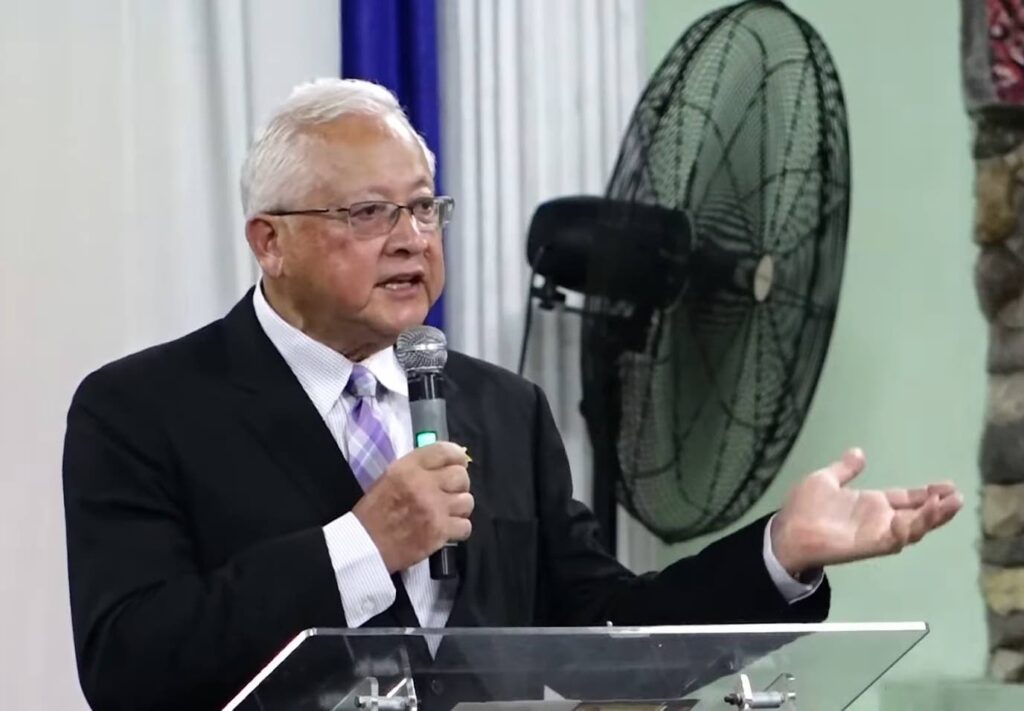
Addressing a landmark anniversary gathering for local justices of the peace (JPs) in Jamaica’s St Catherine parish, Justice Minister Delroy Chuck has issued a urgent call for volunteer judicial officials to abandon superficial community engagement and lead grassroots efforts to dismantle violent gang networks that have turned large swathes of the country into what he describes as a long-standing “killing field”.
Speaking Sunday at the 4th anniversary service of the St Catherine Justices of the Peace Association, hosted at New Life Community Church International Worship Centre, Chuck pushed back against a pervasive culture he says has corrupted part of the JP system: a tendency for many volunteers to treat their role as nothing more than a symbolic title for resume-padding, or what he dubs the harmful misinterpretation of the JP acronym as “Just Profiling”. He stressed that the mandate of justices of the peace extends far beyond routine administrative tasks, requiring active, on-the-ground work to reduce violence, support marginalized community members and repair fractured social cohesion.
Chuck used the occasion to urge all JPs to redefine their roles as frontline agents of social change, particularly amid a rare positive shift in national crime data. Official statistics show that Jamaica has recorded 143 murders so far in 2024, a notable drop from the 203 murders reported during the same period last year. While welcoming this downward trend as a small victory, Chuck warned that deep-rooted systemic challenges remain, from rampant gang activity and widespread extortion to quiet community complicity that allows criminal networks to retain power.
To counter these threats, the minister called for coordinated collective action across all segments of Jamaican society, highlighting an underutilized leverage point: women with family or romantic ties to gang members. Chuck argued that while reaching hardened gang members directly is often difficult, mothers, sisters and girlfriends of offenders can cut off a key source of criminal power by refusing to accept profits from illicit activities including extortion, armed robbery and transnational scam operations.
“Tell the mothers, the sisters and girlfriends to tell them that you don’t want anything from them, because when they rob, they will tell you they have to look after the girlfriend, [and] that is how they exercise their power in the community,” Chuck explained.
He also issued a stark warning about the long-term risks of failing to confront organized crime decisively, drawing a parallel to the ongoing crisis in neighboring Haiti, where armed gangs now control large portions of national territory and effectively override state authority. “We want to get rid of all the gangs in Jamaica, because if we don’t do it, every single one, they could flourish like in Haiti, where in Haiti it is the gangs who run the country, and we must never allow any gang to run any community in St Catherine or Jamaica,” he said.
Chuck added that law enforcement remains committed to rooting out extortion that preys on low-income working Jamaicans, from bus drivers and conductors to small informal vendors selling goods at roadside markets in Linstead and Bog Walk. Closing his address, he reinforced that JPs, as trusted community leaders, bear a unique responsibility to drive local change, emphasizing that their standing comes from tangible good works rather than empty titles.
“You, the justice of the peace, are the best of the best in the parish and you must see yourself as the best, but not by profiling, but by doing good works and assisting your fellow human being,” he added.