分类: society

  • Indian Creek on Edge After First Alcalde Disappears

    Indian Creek on Edge After First Alcalde Disappears

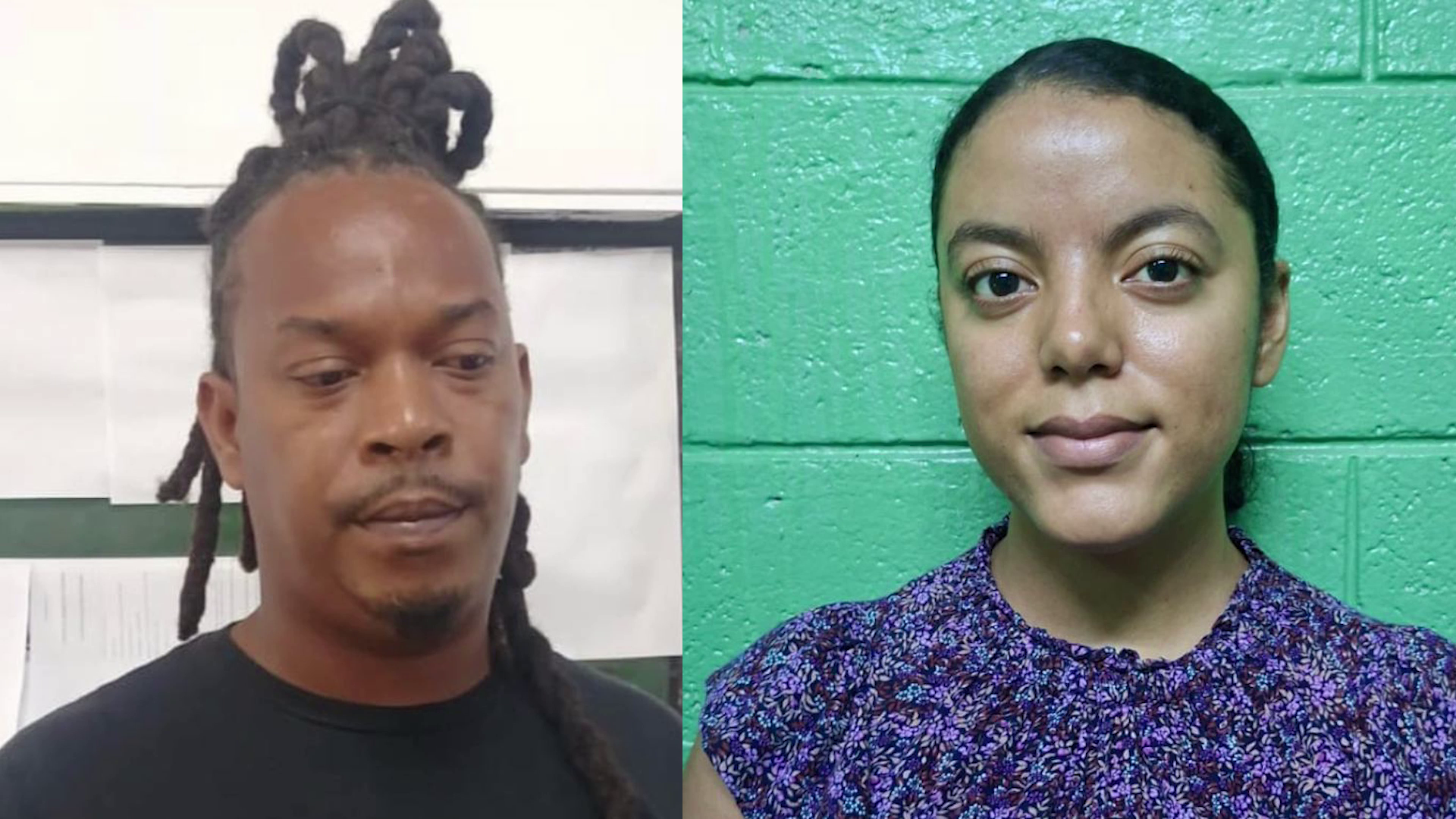
    On the cusp of a years-long internal crisis, the small Maya community of Indian Creek has been thrown into further chaos by the unexplained disappearance of its top traditional leader, First Alcalde Marcus Canti. Last seen on his farm this Monday, Canti’s sudden absence has escalated long-simmering tensions between two rival governance factions in the village, leaving residents on edge and authorities scrambling to de-escalate growing violence.

    Canti’s disappearance has laid bare a bitter rift that has split the once close-knit community for generations: a power struggle between backers of the centuries-old traditional alcalde system, which Canti led, and supporters of the state-recognized elected village council, headed by Chairman Domingo Choc. Choc has been taken into police custody for questioning in connection with Canti’s disappearance, though no formal charges have been filed.

    Local residents report that only two items were found at the site where Canti was last seen: his bicycle and a traditional Maya bag. One anonymous resident, who spoke to local outlet News Five on condition of anonymity, stated that many supporters of Choc maintain his innocence, saying there is no evidence linking the village council chairman to Canti’s disappearance. News Five has also obtained an audio recording, recorded before Canti went missing, that captures the alcalde pleading for assistance in his native Mayan language, though full details of the recording have not been released publicly.

    The conflict that preceded Canti’s disappearance centers on unauthorized land distribution. Canti began issuing what he called communal land certificates to village residents, claiming consent orders gave him the authority to redistribute unassigned land. Among the parcels included in the redistribution were roughly 300 acres of privately held conservation land managed by the Ya’axché Conservation Trust, a regional environmental organization.

    Dr. Louis Zabaneh, Belize’s Minister of Indigenous Peoples’ Affairs, told reporters that the Ministry of Natural Resources is the only governing body with legal authority to issue formal land titles. Prior to Canti’s disappearance, the ministry sent a formal cease-and-desist letter ordering the alcalde to stop issuing the unapproved documents. Zabaneh noted that Canti’s land grab already infuriated private landowners, community members who recognize the ministry’s formal authority, and conservation groups, deepening the village’s divisions long before he went missing.

    Christina Garcia, executive director of Ya’axché Conservation Trust, confirmed that initial reports claimed Canti issued 200 land certificates, but updated information from the community puts the number closer to 280. While Garcia emphasized that the organization recognizes the pressing need for affordable residential land among Indian Creek residents, she stressed that all land transactions must follow formal legal processes to avoid conflicts like the one currently roiling the village.

    Since Canti’s disappearance, the situation has grown increasingly volatile. According to village residents, supporters of the missing alcalde have issued violent threats against Choc and his family, vowing to kidnap one of Choc’s children if Canti is not found quickly. Zabaneh also confirmed that supporters of Canti have targeted property linked to Choc, and that the Ya’axché Conservation Trust’s local field station was damaged during a recent community unrest.

    To date, Belizean police have not confirmed that foul play was involved in Canti’s disappearance, and no suspects have been named publicly beyond Choc’s detainment for questioning. As law enforcement continues the search for the missing traditional leader, Minister Zabaneh has issued an urgent call for calm, urging all factions in the community to stand down and allow authorities to complete their investigation. The village now remains at a tense tipping point, with the land dispute that divided the community for years now transformed into an urgent search for a missing leader and a fight to prevent further violent conflict.

  • Haiti : Spring 2026 agricultural campaign, the Ministry strengthens support for producers

    Haiti : Spring 2026 agricultural campaign, the Ministry strengthens support for producers

    In Haiti, the 2026 spring agricultural campaign is kicking off with a major government-backed support initiative designed to lift small-scale producers and strengthen the country’s long-term food sovereignty. Led by the Ministry of Agriculture, Natural Resources and Rural Development (MARNDR) and delivered through the Resilient Agriculture for Food Security Project (PARSA), the campaign is rolling out a sweeping distribution of critical agricultural inputs across five key departments: South, Nippes, West, Grand’Anse, and Central.

    A defining priority of this intervention is closing the gender gap in agricultural access: planners have set a target that 55% of all beneficiaries will be women producers, who make up a large share of Haiti’s agricultural workforce but have historically faced disproportionate barriers to resources. To drive production growth and diversify the country’s agricultural output, the initiative will distribute more than 500 metric tons of seeds covering both staple food crops and non-food commercial crops. Core staple seeds include rice, beans, peanuts, maize, and pigeon peas, which form the backbone of Haitian household food consumption.

    Beyond basic seeds, the campaign is delivering millions of units of specialized planting material to boost perennial and root crop production. In total, farmers will receive over 2.5 million yam seedlings, 1.3 million banana suckers, 3.5 million cassava cuttings, 78,000 dwarf coconut seedlings, and 890,000 combined fruit and forest tree seedlings. Complementing these inputs, the MARNDR is expanding support for small-scale livestock production, which provides critical supplementary income and nutrition for rural households. The program will establish 400 new rabbit production units and 1,815 dedicated meat production units, complete with all necessary feed and veterinary supplies to help operations get off to a successful start.

    To address longstanding soil fertility challenges and boost per-acre productivity, the campaign is also rolling out a large supply of soil amendments: 4,700 bags of chemical fertilizer and 57,848 bags of locally produced compost will be distributed to participating producers across target regions.

    Overall, the program is designed to reach tens of thousands of small-scale and family farmers, with a core focus on building long-term productive capacity rather than just short-term relief. By investing across multiple agricultural subsectors, MARNDR aims to lift national agricultural output, make sustainable improvements to Haiti’s food and nutritional security, and help producers better withstand the growing frequency of climate shocks and volatile economic conditions that have disrupted rural livelihoods in recent years.

  • Zabaneh Rejects Immediate Relief for Bus Operators

    Zabaneh Rejects Immediate Relief for Bus Operators

    In a development set to impact public transportation across Belize, Transport Minister Dr. Louis Zabaneh has formally upheld the Briceño administration’s stance against urgent financial relief for private bus operators, days after the Belize Bus Association warned that most members would be forced to cease operations by the end of the current week without government support.

    The crisis stems from skyrocketing global fuel prices that have sent operating costs for private bus providers soaring. The association submitted a formal request for financial relief to the government, which was temporarily tabled by the Cabinet earlier this month. After the shelving of their request, the association has now formally requested a direct meeting with Prime Minister John Briceño to push for a reversal of the decision.

    Addressing reporters on April 14, 2026, Zabaneh acknowledged that the association holds every right to request an audience with the Prime Minister, noting that his ministry has already fulfilled its procedural obligations by forwarding the request appropriately. He clarified that the Ministry of Transport lacks the authority to approve the key measures the association has sought, including GST exemptions and direct operating subsidies.

    Zabaneh also highlighted a previous government outreach to private bus operators: an invitation to join the state-owned National Bus Company, which would have given operators access to a complimentary independent financial audit, with auditors selected by the operators themselves. Of the 21 operators originally invited, 17 agreed to join the initiative, with two additional independent operators approaching the government to join after the initial round. The remaining operators chose to maintain their independent status, a decision Zabaneh said the government respects. “This is not a forced nationalization,” Zabaneh emphasized. “If you say you can stand on your own, we respect that very position.”

    Beyond the ongoing dispute over relief, the ministry is now facing an additional incident of unapproved fare hiking. A commuter has reported that a BBOC bus route from Belmopan to Benque Viejo raised its standard $4 fare by $1 without prior government authorization, in direct violation of the Ministry of Transport’s regulation that bars fare adjustments without official approval. Local outlet News Five is currently investigating the unapproved increase and will release further details as more information becomes available.

  • Are Some Bus Operators Charging Higher Fares Without Approval?

    Are Some Bus Operators Charging Higher Fares Without Approval?

    In Belize, growing anger and uncertainty have gripped the country’s public bus sector as multiple reports emerge of unapproved fare increases being imposed on daily commuters, while independent operators warn they could cease operations within days without urgent government financial support.

    The controversy first came to light when a Belize-based commuter shared their experience with local outlet News Five, confirming they were charged $5 for a standard route between Belmopan and their origin point — a trip that is officially regulated to cost just $4. Under current government pricing rules, only premium express services on the same route are permitted to charge the $5 rate. The passenger provided an official receipt as evidence of the overcharge, and is now joining a growing chorus of riders questioning how some operators are able to charge above the legal price cap despite explicit public statements from transport officials confirming no fare adjustments have been authorized.

    Beyond the immediate frustration of commuters over rising travel costs, the unapproved fare hikes are tied to a deeper, ongoing restructuring of Belize’s bus industry. On Monday, representatives of independent bus operators told News Five they are drafting an open letter to the Office of the Prime Minister, after growing frustrated that the Ministry of Transport has failed to address their mounting financial pressures. Operators say that without either a government-approved fare increase or targeted financial relief, many small independent companies will be forced to give up their independent status and join the newly launched National Bus Company (NBC), a state-aligned entity established to restructure the sector.

    Transport Minister Dr. Louis Zabaneh has publicly responded to the operators’ demands, clarifying that while independent operators retain full constitutional right to request a meeting with the Prime Minister and raise their concerns, his ministry does not have the authority to grant exemptions from goods and services tax or issue emergency subsidies to struggling independent operators. He also pushed back against claims that the NBC is a tool for forced nationalization of the bus sector, noting that when the new entity was established, all independent operators were extended an invitation to join and access perks including free operational audits. To date, 19 operators have accepted the invitation, while dozens more chose to retain their independent status. “This is not a forced nationalization,” Zabaneh emphasized in his statement. “If operators say they can stand on their own, we respect that position entirely.”

    Despite the minister’s reassurance, the Independent Bus Operators Association has issued an urgent warning that many of its member companies do not have the working capital to continue operating beyond the end of this week if no government support is forthcoming. The crisis has left both commuters and small operators in limbo: riders face unplanned cost increases for essential travel, while independent operators face an impossible choice between breaking government fare rules or shutting down their businesses entirely.

  • Trans Guyana Airways plane badly damaged after hitting a ‘watrash’ rodent on landing at Ogle

    Trans Guyana Airways plane badly damaged after hitting a ‘watrash’ rodent on landing at Ogle

    On the evening of Tuesday, 14 April 2026, a commercial passenger plane operated by Trans Guyana Airways (TGA) sustained significant damage after colliding with a herd of capybaras while landing at Eugene F. Correia ‘Ogle’ International Airport near Georgetown, Guyana. Remarkably, all 12 passengers and two crew members on board escaped the incident without injury, airline representatives confirmed.

    The aircraft, a Beechcraft model registered as 8R-GAQ, was completing a scheduled inbound flight from Suriname when the collision occurred at approximately 6:00 p.m. local time, TGA spokesperson Christopher “Kit” Nascimento told local media outlet Demerara Waves Online News.

    “Immediately after touchdown, the plane collided with a herd of capybaras that had strayed onto the active runway,” Nascimento explained in an official statement. The aircraft’s propeller struck one of the large rodents, which are native to South America and known locally in Guyana as watrash. While the spokesperson could not confirm whether the propeller suffered catastrophic failure, he confirmed the plane’s landing gear (undercarriage) sustained severe damage in the impact.

    Following the collision, the aircraft’s engines were shut down and the plane was moved off the active runway to clear air traffic operations. An anonymous source familiar with the incident added that the pilot took quick evasive action immediately after spotting the herd, a maneuver that likely prevented a far more catastrophic accident that could have resulted in fatalities.

    Nascimento highlighted that the incident stems from a growing wildlife hazard problem that has plagued the airport in recent months, linked to ongoing major road construction works surrounding the airfield. He noted that large wild species including capybaras and caimans have been driven out of their native habitats by the construction activity, and have become a persistent “plague” that regularly crosses the airport’s runway.

    “Airline and airport teams work continuously to ensure wild animals are cleared from the runway before aircraft receive clearance to land,” Nascimento said. “In this case, the collision occurred after the plane had already touched down, when the capybaras ran into the aircraft’s landing gear.”

    Officials have not yet released details on the cost of repairs to the damaged aircraft, or what long-term measures will be implemented to mitigate the ongoing wildlife hazard at the airport.

  • News 5 Named Semi‑Finalists for UB Investigative Journalism Prize

    News 5 Named Semi‑Finalists for UB Investigative Journalism Prize

    As the fourth iteration of its prestigious annual Investigative Journalism Prize approaches, the University of Belize has unveiled the three shortlisted teams competing for this year’s award, an honor created to highlight impactful reporting that confronts Belize’s most urgent unaddressed public issues.

    Among the semi-finalists is a flagship investigation from News Five, *Stella Maris Child Drowning*, reported by a team of seven journalists led by Paul Lopez. The piece centers on the tragic 2026 drowning death of six-year-old Gabriel Orellano, an autistic student at Belize’s Stella Maris School. Unlike standard accident reporting, the News Five team went far beyond surface-level facts to expose deep-rooted systemic failures and long-overlooked accountability gaps at the institution.

    Through months of on-the-ground reporting, the team uncovered that Gabriel’s death was not the unforeseeable tragedy it was initially framed as. Drawing from exclusive interviews with a sanitation worker who was the last person to see Gabriel before his death, as well as a parent who reported their own child had slipped off campus unnoticed just weeks prior, the investigation revealed repeated prior security breaches, chronic underfunding of campus safety infrastructure, broken perimeter fencing, insufficient on-campus supervision, and unaddressed internal safety concerns that never triggered urgent corrective action. Lopez also cross-referenced witness accounts with surveillance footage to map the full timeline of Gabriel’s final hours, bringing irrefutable clarity to the series of institutional missteps that led to the child’s death.

    The reporting triggered immediate national outrage and sparked urgent public debate across Belize around school safety standards, emergency response protocols, and the collective responsibility to protect vulnerable children with special educational needs. Within weeks of the investigation’s publication, Belize’s Ministry of Education launched a full independent inquiry into the incident, committed public funds to rebuild and secure the Stella Maris campus with updated safety fencing, and announced nationwide structural education reforms designed to improve protections for neurodivergent students.

    The two other shortlisted investigations include *Marine Protected Areas Are Everybody’s Business*, a climate-focused report by Andre Habet and Marco Lopez of *Climate Spotlight*, and *Taken: The Budna Abduction and the Police Cover-Up*, an investigative series from Jules Vasquez, Brian Castillo, and Denver Fairweather of Tropical Vision Ltd.

    All entries were evaluated by an independent panel of regional and international media professionals, drawn from news outlets and institutions across the Caribbean and the United States, to ensure impartial judging.

    The winning team will walk away with a BZ$10,000 cash prize, while the two remaining semi-finalists will each receive BZ$5,000 in recognition of their work. The final results will be revealed during a public awards ceremony hosted on May 2 at the House of Culture in Belize City.

  • DPP orders inquest into Adriana Younge’s death

    DPP orders inquest into Adriana Younge’s death

    More than a year after 11-year-old Adrianna Younge’s body was recovered from a Tuschen, East Bank Essequibo hotel pool, Guyana’s Director of Public Prosecutions has greenlit a formal inquest to fully examine the circumstances of her April 2025 death, law enforcement officials confirmed Tuesday. The inquest will specifically probe the root cause and contextual details surrounding the child’s death, which occurred between April 23 and 24, 2025 at the Double Day Hotel property.

    The Guyana Police Force announced Tuesday that it has received the DPP’s formal direction and is moving forward with all required procedural steps aligned with local law. In a statement accompanying the announcement, the agency emphasized its commitment to maintaining public trust in sensitive death investigations, noting it will uphold strict standards of professionalism, accountability and integrity throughout the inquest process.

    Younge’s body was first discovered in the Double Day Hotel swimming pool on April 24, 2025. By May 26 of that same year, police had announced that a final postmortem examination conducted by three internationally recognized forensic pathologists had officially ruled the child’s death a drowning, with no evidence of foul play.

    To address public and family concerns surrounding the death, the autopsy was a collaborative effort involving multiple independent experts. Two pathologists—Dr. Glenn A. Rudner and Dr. Shubhakar Karra Paul—were commissioned by the Guyana government to conduct the initial examination on May 3, 2025. Younge’s family and their legal representative, Darren Wade, arranged for an additional independent expert: Dr. Gary L. Collins, the Trinidad and Tobago-born Chief Medical Examiner for the U.S. state of Delaware, who also joined the examination.

    The full forensic report released by police outlined a series of consistent findings all aligned with a drowning ruling. The examination confirmed no evidence of sexual assault: an external examination found the child’s hymen intact and no abnormal changes to genital tissue. No traumatic injuries were detected across soft tissue or skeletal structures, and all injuries observed on the skin were confirmed to have occurred after death, caused by prolonged submersion in water.

    Key forensic markers consistent with drowning were documented during the examination: a residual foam cone was found in Younge’s nostrils and oral cavity—dispelling widespread online rumors that cotton wool had been placed in the child’s nose. Characteristic “washerwoman” wrinkling of the skin on both hands and the soles of the feet, a common change caused by prolonged immersion in water and consistent with drowning, was also noted. Forensic experts found approximately 1 milliliter of fluid in the sphenoid sinus, an air-filled cavity at the base of the brain that is a common marker of drowning, and additional fluid was detected in the lungs, another consistent indicator of death by drowning.

    Comprehensive supplementary testing, including toxicology screening and DNA analysis, further supported the ruling of drowning with no foul play. Toxicology results found low levels of ethanol that were consistent with natural postmortem decomposition, not pre-death consumption. Testing conducted as part of a sexual assault investigation and DNA analysis for potential suspects returned negative results. There was also no evidence of restraint, a struggle, or that the child’s body had been moved and returned to the pool after death.

    The new inquest ordered by the DPP will open a formal public inquiry into the death, marking the next step in the legal process following the initial postmortem findings.

  • Five Detained in Suspected Kidnapping of Indian Creek Alcalde

    Five Detained in Suspected Kidnapping of Indian Creek Alcalde

    A high-profile missing person case has sent shockwaves through the small community of Indian Creek Village in Toledo District, with local authorities confirming five detentions connected to the suspected abduction of 41-year-old Marcos Canti, the community’s First Alcalde. The incident unfolded on a Monday afternoon in 2026, when Canti left his family residence shortly after 2 p.m. to carry out routine work on his agricultural plot located near neighboring Pine Hill Village.

    When Canti failed to return home by early evening, concerned family members and a close friend launched an immediate search. Their search effort uncovered a troubling scene: Canti’s bicycle, working machete, and a basket he had filled with freshly harvested tomatoes were all left abandoned on the ground. Investigators also documented clear evidence pointing to a potential struggle at the site, but there was no sign of Canti himself.

    In statements to law enforcement, Elfina Canti, the missing alcalde’s wife, emphasized that her husband’s unexplained disappearance was completely out of character. She revealed that Canti had received explicit threats just one day before he went missing, and she told investigators she is convinced the incident is directly tied to long-simmering land conflicts that have divided the Indian Creek Village community for months.

    As news of Canti’s disappearance spread, already high tensions within the village boiled over into public unrest, culminating in a riot that forced authorities to intervene to restore order. In the wake of the unrest, police confirmed that five individuals have been taken into custody as part of the ongoing investigation into Canti’s suspected kidnapping. Local law enforcement has not yet released further details about the detainees or any potential charges they may face, and the search for Marcos Canti remains an active priority for investigating officers.

  • Mental health experts call for united front as youth calls dominate national hotline

    Mental health experts call for united front as youth calls dominate national hotline

    Following an alarming disclosure from the Barbados Union of Teachers (BUT) that children and adolescents make up 40 percent of all incoming contacts to the country’s national mental health helpline, leading local mental health practitioners and academics are pushing for immediate systemic change, urging a shift from remote digital support to dedicated in-person “safe spaces” for vulnerable young people.

    Shawn Clarke, chief executive officer of Supreme Counselling for Personal Development, and Dwayne Devonish, a behavioral scientist and lecturer at the University of the West Indies Cave Hill Campus, have both drawn attention to a critical tension at the heart of the current mental health landscape: while the surge in youth calls signals a promising generational shift toward greater openness about mental distress, existing support infrastructure is at severe risk of being overwhelmed by unmet demand.

    Clarke framed the 40 percent statistic as a clear double warning. On one hand, it reveals that a large share of Barbados’s young population is grappling with unaddressed mental distress; on the other, it demonstrates that today’s youth are far more self-aware and willing to seek support than previous generations. He explained that many young people first turn to anonymous hotlines because of the comfort that anonymity offers, but that this accessibility comes with significant tradeoffs.

    “It tells me that we have a cohort of young people who know something is wrong, who know they are not functioning the way they should, and who are ready to reach out for help,” Clarke said. “The nature of a hotline means you talk to someone you never meet, which tells me that while they want help, many are not yet ready for face-to-face one-on-one support from an in-person professional.”

    Clarke emphasized that while the national hotline serves as an invaluable first point of contact for at-risk youth, the long-term goal of Barbados’s mental health system must be to build trusted physical environments where young people feel secure enough to pursue in-person therapeutic intervention. “I am glad young people are reaching out, but as a society we have to go a step further,” he added. “We need dedicated physical safe spaces staffed by trusted adults who can hold these face-to-face conversations and deliver the ongoing in-person support young people need to work through their struggles.”

    When asked about the root causes driving the surge in youth mental health distress, Clarke pointed to a wide range of interconnected challenges, from intense academic pressure to pervasive community violence that creates a constant backdrop of stress across the island. He noted that the still-developing brains of children and adolescents are far more susceptible to chronic societal stress than those of adults. “Many young people face bullying that they cannot cope with, and many live in constant fear of the violence unfolding around them,” he explained. “Every day brings news of another shooting, another killing. These events weigh on adults, so imagine how they impact young, developing impressionable minds.”

    These stressors, Clarke added, create measurable disruptions in academic performance, with mental health struggles often showing up in the classroom as difficulty concentrating, disengagement, or sudden angry outbursts. “If a child is dealing with crisis at home – whether that’s food insecurity, a sick parent, or chronic stress at home – they will zone out in class. When things go wrong, anger is the easiest, fastest emotion people reach for, so it is common for struggling young people to lash out. A depressed child cannot focus on schoolwork, full stop,” he noted.

    Devonish offered a complementary perspective, framing the 40 percent statistic not just as a sign of deep crisis, but also as evidence of a positive cultural shift around mental health awareness in Barbados. He explained that younger generations have actively broken down the social taboos that stopped previous generations from speaking openly about mental distress and seeking help. “Young people today are far more willing to seek support than older generations were in decades past,” he said. “Higher call volumes don’t just mean more young people are struggling – it also means there is far more openness around mental health, and young people are comfortable reaching out instead of turning to maladaptive or destructive coping mechanisms. That’s a positive change we should recognize.”

    Devonish credited national public wellness policies and widespread social media campaigns with normalizing help-seeking behavior, making it far more accessible and acceptable for young people to reach out for support. He added that the hotline’s popularity itself proves its value, as it delivers the immediate, psychologically safe support that modern students want.

    Despite this positive shift, both experts agree that the unprecedented volume of youth demand has exposed critical gaps in Barbados’s current mental health system. Devonish warned that existing professional resources will eventually be outstripped by demand if action is not taken immediately, calling for a rapid expansion of the number of licensed mental health professionals embedded in the national education system. He also issued a strong warning against using unqualified laypeople or artificial intelligence tools as a substitute for trained professional counseling.

    “We have to be careful not to direct young people to unqualified providers, because bad advice can have devastating, even fatal consequences,” Devonish said. “We have seen this in other countries, where young people have died by suicide after receiving harmful guidance from unqualified people. We have also seen harm from AI tools – there have already been cases where young people turned to tools like ChatGPT for mental health support, and the outcomes were severely damaging.”

    For his part, Clarke called for a cross-sector, collective approach, bringing together professional organizations across the island to support overstretched schools and families. “This is no longer just a school problem, just a problem for the Ministry of Education, or just a family problem – this is everyone’s problem,” Clarke said. “Fixing this requires collective action; we all have to work together. The Ministry of Education cannot solve this crisis alone. We have to come together as one united team to protect and support our young people.”

  • Community centre needed to service Haynesville community

    Community centre needed to service Haynesville community

    Even as youth programs in the Haynesville St James community of Barbados rack up impressive wins across cultural, sporting and academic spaces, one critical gap continues to hold back further progress: a permanent, fully operational community centre. That is the clear message from Peter Skeete, founder and president of the Haynesville Youth Club, who made the appeal during an ongoing cultural exchange trip to Suriname with 18 members of the organization.

    Skeete began by welcoming recent upgrades to the local Barbados Police Service outpost, a facility that has been the backbone of community organizing for two decades. Calling the renovation a positive step forward, he highlighted the decades-long collaborative partnership between local law enforcement and the Haynesville community. For 20 years, the community police outpost has been integral to the growth of local youth initiatives—including the youth club’s signature drumming programs, which got their start within the outpost’s walls.

    Skeete also paid public tribute to the late Constable Mark Wood, whom he remembered as one of the most forward-thinking community policing officers Barbados has ever had. Wood left a lasting mark on the community through his unwavering support for youth development and his deep investment in local cultural initiatives. Beyond the space the outpost provided, Skeete added, the Barbados Police Force has also donated more than 90 percent of the drums the youth club uses for its programs, underscoring just how central the facility has been to the club’s ability to operate.

    “Without the usage of that post, I do not know where we would be, because we do not have a community centre,” Skeete explained. Currently, the only public gathering spaces available to the community are the Melbourne Cricket Club pavilion and the Desmond Haynes Sports Complex at Holder’s Hill. Both were built primarily for cricket activities, Skeete noted, and are not available for regular, broad community use by groups like the youth club.

    While the return of a consistent police presence to the renovated outpost has been widely celebrated, Skeete pushed back against the assumption that the renewed deployment is a response to growing crime in the area. On the contrary, he emphasized, the community’s consistent youth programming has driven down delinquent and antisocial behavior among local young people, a trend that law enforcement has formally acknowledged. “For a number of years we were able to provide meaningful opportunities for our young people that actually limited their participation in deviant and antisocial behaviour,” he said.

    Skeete stressed that the role of police in the community extends far beyond crime response and arrests. A proactive, consistent police presence that collaborates with local organizers, he argued, is key to keeping the community stable and supporting the positive changes that have already taken root. He called for continued cross-sector collaboration between the youth club and local law enforcement to build on the area’s recent gains.

    Despite these significant wins for the community, the lack of a dedicated community centre remains a major barrier to long-term growth. The Haynesville Youth Club has already compiled an impressive track record of success: it produced the most recent winner of the prestigious Richard Stoute Teen Talent competition, and claimed four consecutive championship titles in the Ministry of Youth’s national block draughts tournament. Local athletes from the community have excelled across nearly every major sporting discipline, Skeete noted—yet there is no permanent facility to nurture emerging young talent.

    Skeete suggested that the club’s outsize success despite severe space limitations may have led local decision-makers to underestimate the urgency of the community’s request for a centre. “Because of the success there probably is the belief that we don’t need one… if you can be so successful with a small space, then why should we need a facility?” he questioned.

    The youth club has already stepped up to invest in shared public space, Skeete noted: the organization contributed financially to the recent repainting of the police outpost, and collaborated with the National Cultural Foundation to create custom artwork for the facility during the recent CARIFESTA regional cultural festival.

    Reiterating his call for targeted infrastructure investment, Skeete emphasized that Haynesville’s track record of excellence in sports, culture and education proves the community is ready for a larger, dedicated facility. “Haynesville is an outstanding community… we really need a much larger space,” he said.