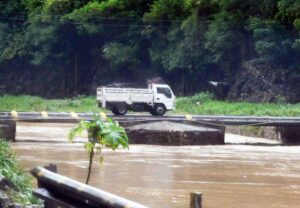
Residents and commuters in St Catherine, Jamaica, are facing unexpected travel disruptions after a large-scale shooting incident shut down the key Bog Walk Gorge corridor on Tuesday afternoon. Senior law enforcement official Hopeton Nicholson, head of the local police division as Senior Superintendent, has publicly confirmed the shooting took place, but could not share additional specific information about the event in his initial statement. Uncorroborated accounts obtained by Observer Online suggest the violence unfolded as an exchange of gunfire between serving police officers and unidentified armed gunmen, with multiple people sustaining injuries in the crossfire. Local authorities have not yet verified these claims, and public outlets continue to wait for official confirmation of the shootout details, casualty count, and potential motives behind the incident. The Bog Walk Gorge will remain closed to all traffic until further notice as law enforcement personnel secure the area and begin their investigation into the shooting. More updates are expected to be released to the public as new information becomes available.
分类: society
-

TAJ urges customers to remain vigilant against online scams
KINGSTON, Jamaica — In the wake of two coordinated recent scam attempts targeting residents conducting public financial transactions online, Tax Administration Jamaica (TAJ) has issued an urgent public advisory urging heightened vigilance against fraudsters seeking to steal sensitive personal data and illicitly collect payments through fake digital channels.
The official warning comes after TAJ investigators uncovered two distinct malicious schemes in recent weeks: one centered on a fraudulent website that falsely advertised itself as a platform for processing traffic ticket fine payments, and a second effort to deceive Jamaican taxpayers during the annual income tax filing season, a period when residents are already active in submitting personal information and payments online.
To help the public avoid falling victim to these scams, TAJ has stressed that the only verified official domain for all of its online services is https://www.jamaicatax.gov.jm. The agency reminded users that they should always navigate directly to this address rather than clicking unsolicited links from unknown senders when completing any transaction or submitting information to the tax authority.
In an effort to reassure users of the safety of its official digital infrastructure, TAJ confirmed that all its online services are hosted on a heavily secured platform built with multiple overlapping security layers. These safeguards are specifically engineered to shield taxpayer data and financial transactions from unauthorized access when users access services through the official portal.
“These protective measures work continuously to keep sensitive personal data and financial transactions secure when customers access our services through the official TAJ website,” a TAJ spokesperson said in the official advisory. “Customers are strongly encouraged to double-check website addresses before clicking any links or entering private information online. We also want to remind the public that TAJ never sends links via email or text messages that direct users to make payments, submit sensitive personal data, or access our online services.”
All legitimate online transactions with the agency must be completed by navigating directly to the official TAJ website and locating the required service through the portal’s built-in navigation, the organization added.
TAJ is urging any member of the public who encounters suspicious messages, fake websites, or unsolicited communications claiming to represent the agency to avoid interacting with the content and report the incident to authorities immediately. For users who are unsure about the legitimacy of any communication claiming to come from TAJ, the agency advises contacting its official Customer Care Centre directly at 888-TAX-HELP (888-829-4357) to verify information before sharing any personal data or completing any payment.
-

Grants Pen family fun day promotes peace, unity and healthy living
KINGSTON, Jamaica – On a recent bright day at Kingston’s Grants Pen Peace Park, hundreds of children, caregivers, educators, community leaders and local residents came together for a one-of-a-kind community gathering. This was no ordinary picnic: the family fun day was deliberately designed to embed a culture of peace, encourage active healthy lifestyles, and deepen connections across all segments of the long-troubled Grants Pen neighborhood.
Organized by the Jamaica-based Violence Prevention Alliance (VPA) in partnership with the Grants Pen Community Policing Management Committee, the day blended recreation, education and wellness outreach tailored to the whole community. The lineup of activities kicked off with a friendly inter-school football tournament drawing five local basic schools, where young players competed with spirit and good sportsmanship. For younger participants, a dedicated arts and crafts corner offered space for creative expression, while a on-site health station provided free screenings, wellness resources and educational materials for attending families.
In opening remarks to the assembled crowd, VPA member Busy Campbell emphasized that peace is far more than just the absence of open conflict. Calling on children to make peace a core part of their daily lives and reject the harmful negative influences that surround many young Jamaicans, he framed peace as a set of small, intentional acts: “Peace is kindness. Peace is respect. Peace is helping one another instead of hurting one another.” Campbell reminded the gathered children that every one of them carries unique talents and gifts, and that they hold the power to build a positive future for themselves, even when facing systemic or personal challenges. “When you choose peace, you become a leader. A peaceful child grows into a strong adult. A peaceful classroom builds a peaceful school,” he added.
Local political leaders joined community organizers in praising the initiative. Delroy Chuck, Member of Parliament for the St Andrew North East constituency, commended event organizers and local stakeholders for their unwavering commitment to building a safer, more cohesive Grants Pen. He described the gathering as a powerful tangible symbol of what unified community action can achieve, thanking community leaders, local educators, church representatives, and law enforcement for turning the vision of a peace-focused community event into reality. “The police have been doing an outstanding job, and we have enjoyed a relatively peaceful period across many communities,” Chuck noted. “If Grants Pen can be peaceful, all of Jamaica can be peaceful.” He urged participating children to carry the message of peace forward, becoming peace ambassadors whose actions can inspire change across communities nationwide.
Stacey Knight, People’s National Party caretaker for the constituency, echoed that support, saying she was heartened to see hundreds of children and teachers joining activities centered on peace and positive youth development. She highlighted that accessible community programming like this family fun day creates critical positive experiences for children, helping to build safe, supportive environments where young people can grow and thrive, even amid the economic and social challenges many face in the area.
VPA Chair Dr. Elizabeth Ward doubled down on the long-term importance of building peace from early childhood, noting that intentional intergenerational community gathering spaces are foundational to lasting non-violence. “Peace is built through relationships, trust and a shared sense of belonging,” she explained. “When children, parents, schools and community partners come together in a positive environment, we create opportunities to strengthen social bonds, and promote respect. This reinforces the values that contribute to safer, more peaceful communities. Initiatives such as this family fun day demonstrate that violence prevention begins with investing in our children and fostering strong, supportive communities.”
Throughout the day, engagement stayed high: children threw themselves into football matches and art projects, while parents and other residents took advantage of free health screenings including blood pressure and glucose testing, and networked with local community support organizations. Anette McNeish, principal of Little Angel’s Early Childhood Centre, one of the participating schools, called the event a transformative experience for her students. “It helped to foster community spirit because it brought everyone together in a positive and meaningful way,” she said. “Activities like these encourage greater support from residents and partners while creating excitement for the children. Learning extends beyond the classroom, and events such as this give them valuable opportunities to socialise, collaborate and build confidence.”
The event drew cross-sector support from a range of local institutions, including Island Diaries, CARIMED, the R& D Stewart Foundation, Recycle Partners of Jamaica, the National Health Fund, the Social Development Commission and the Jamaica Constabulary Force, marking a broad collaborative effort to advance community-led peacebuilding in Kingston.
-

Downtown business manager pleads for help over human waste
For nearly 12 months, a downtown Nassau retail business has grappled with a revolting, recurring problem: repeated discoveries of suspected human waste dumped on its property, pushing staff to clean up the hazardous mess again and again. The operation’s leader is now speaking out, demanding a stronger law enforcement presence in an overlooked section of the city’s central district.
Michelle Palamino, general manager of local sporting goods outlet Hoffer Sport, told reporters the unsanitary issue has persisted through months of her team’s attempts to block trespassers from accessing vulnerable parts of the property. Both Palamino and police investigators suspect a homeless individual is responsible for the ongoing incidents, though no person has been identified or caught in the act to date.
The problem first emerged in a secluded side corner of the business’ lot. Palamino explained that the spot became a gathering point after an adjacent property installed fencing to push vagrants off its own land. To resolve the issue, Hoffer Sport’s owner paid to erect a new barrier blocking off the corner — but the trespassing and waste dumping simply shifted to the store’s front entrance, leaving the business no better off.
So far, the impact on customers has been minimal: employees arrive early each day to clean the site before the store opens to the public. But that routine has taken a significant toll on staff morale, with workers growing increasingly fed up after months of cleaning up offensive, unsanitary messes that never stop coming.
This is not the first trouble the business has faced with trespassing and vandalism connected to vagrancy in the area. Palamino recalled past incidents including a shattered store window, and an altercation where a person threw drinks at the shop’s glass facade after being told they could not sort through the business’ trash bins. That individual was later arrested on separate charges, and Palamino emphasized she does not believe he is linked to the current waste dumping problem.
When Palamino brought the issue to police, officers told her the department is already stretched thin addressing widespread vagrancy-related concerns across downtown Nassau. The general manager stressed she is not anti-homeless, noting that unhoused people have frequented Bay Street for decades, and most who enter her store are completely non-disruptive. Most homeless visitors interact politely with staff and leave without incident, she said, and she does not take issue with their presence as long as they do not damage or soil her business’ property.
Palamino acknowledged that city officials have carried out notable beautification projects in downtown Nassau in recent months, including adding public murals and renovating derelict, fire-damaged buildings. But she questioned whether local leaders have properly assessed sanitation and public order issues outside of the busy main tourism corridors that draw most visitor attention. For her, the clear solution is more regular police patrols in her corner of the city center — an area she says has been seemingly forgotten by local authorities.
-

Fraudsters posing as financial investigators, says FIUTT
Trinidad and Tobago’s top financial oversight body has sounded an urgent alarm over a growing scam involving counterfeit identification cards that fraudulently claim affiliation with three of the nation’s leading financial and law enforcement agencies. The Financial Intelligence Unit of Trinidad and Tobago (FIUTT) confirmed that scammers are now circulating fake ID cards that bear the official logos of the FIUTT itself, the Central Bank of Trinidad and Tobago (CBTT), and the Financial Investigations Branch (FIB) of the Trinidad and Tobago Police Service.
According to the official public notice released by the FIUTT, these forged credentials falsely label their bearers as “Financial Analyst Supervisors” and legitimate representatives of the three mentioned agencies. The FIUTT has emphasized in clear terms that these identification documents are entirely fraudulent, created without any official authorization, and hold no legal validity whatsoever.
In an official statement, the agency clarified: “Neither the FIUTT, the CBTT nor the FIB issues identification cards of this nature. This so-called identification card is 100% fake, unapproved and invalid for any official purpose.” The unit further stressed that any person presenting these counterfeit credentials has no legal authority to carry out official business, launch formal enquiries, or act on behalf of any of the three agencies named on the cards.
As an additional critical reminder to the public, the FIUTT noted that the agency itself never charges service fees or requests any form of payment from individual members of the public or private businesses as part of its regular regulatory and investigative operations. Any demand for payment coming from an individual claiming to represent the unit is an immediate red flag for fraudulent activity.
To protect residents from falling victim to this scam, the FIUTT is urging all members of the public to exercise extreme caution and avoid sharing any money, sensitive personal information, or confidential financial details with anyone who presents these counterfeit identification cards.
For anyone who encounters individuals using these fake IDs or spots the counterfeit cards themselves, the FIUTT has advised that an immediate report should be filed to any of the three relevant official bodies: the Trinidad and Tobago Police Service, the FIUTT headquarters, or the Central Bank of Trinidad and Tobago. The agency has also encouraged all citizens to proactively verify the legitimacy of any person or program that claims connection to the FIUTT, CBTT, or FIB by reaching out directly through verified official communication channels, rather than trusting credentials presented by unknown individuals.
-

Rastafarian Group Calls for End to Jail Time for Minor Cannabis Offences
On a recent Saturday, a wave of demands for cannabis policy change swept through the capital of Antigua and Barbuda, as dozens of members of the nation’s Rastafarian community gathered in peaceful demonstration outside St. John’s Police Station. The protest targeted the ongoing practice of jailing individuals convicted of non-violent, minor marijuana-related offenses, a policy that community leaders say has long violated both civil liberties and their group’s core religious and cultural traditions.
Dressed uniformly in white and bearing the distinctive red, gold, and green flags of the Rastafarian faith, demonstrators made their case to government and law enforcement officials, calling for an urgent shift in how authorities approach low-level cannabis violations. They emphasized that the current punitive legal framework is increasingly out of touch with the growing regional momentum toward decriminalization that has been building across the Caribbean in recent years.
According to statements from protest organizers, dozens of people remain behind bars in Antigua and Barbuda on cannabis charges, even as neighboring nations have relaxed their drug laws and moved away from mass incarceration for minor marijuana offenses. Beyond broader drug policy reform, the Rastafarian community is also pushing for formal legal recognition of cannabis’ central role in their religious practices, a status that has already been granted in several other Caribbean countries.
The core demand of the demonstration was a full legislative review of the nation’s existing cannabis laws, with protesters arguing that custodial sentences should never be the default response to minor marijuana-related incidents. Organizers made clear that Saturday’s gathering is just one step in a sustained, nationwide campaign to overhaul outdated drug legislation and secure full equal rights for Rastafarian residents across Antigua and Barbuda.
-
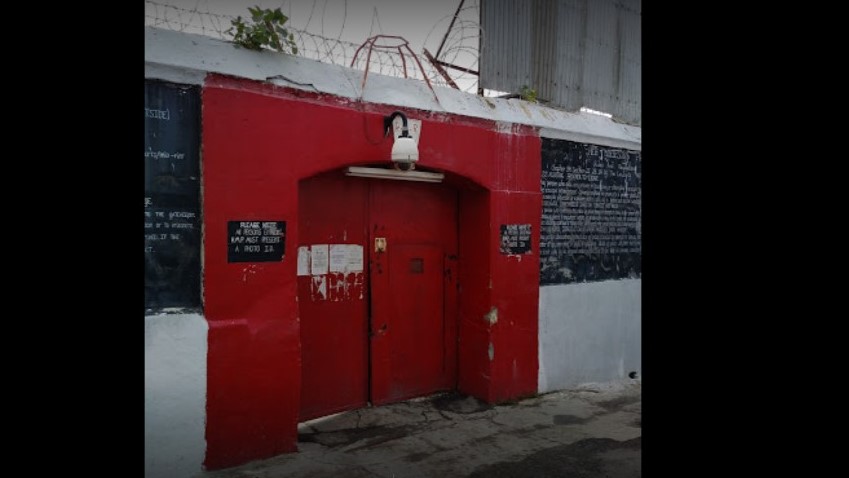
Damar Stapleton Sentenced Over $246,000 Cannabis Seizure
A resident of Bendals Village has received a 30-month prison sentence following a guilty plea to drug trafficking charges connected to a major cannabis seizure at Deep Water Harbour. Damar Stapleton’s sentencing was handed down Friday in the High Court by Justice John Spencer, after the defendant entered his guilty plea to cannabis trafficking charges on May 12.
The conviction traces back to a coordinated law enforcement operation conducted jointly by local police and Customs officials on March 8, 2024. During the targeted operation at the port, authorities discovered 41 pounds of cannabis hidden inside two unmarked shipping boxes. Investigators estimate the seized narcotics have a street value of roughly $246,000.
Stapleton remains before the courts on a separate set of drug charges tied to an alleged second smuggling attempt at Deep Water Harbour just five days after the first seizure. The March 13, 2024 incident sees the defendant accused of importing an additional 20 pounds of cannabis, with pending charges including possession of cannabis, possession with intent to transfer the controlled substance, and taking part in the illegal supply of the drug. A trial or further hearings for these outstanding charges are expected to be scheduled in coming months.
-

Prime Minister Salutes Centenarians as Living Treasures of Antigua and Barbuda
As Antigua and Barbuda prepares to mark its 2026 Centenarian Week, Prime Minister Gaston Browne has issued a heartfelt tribute to the nation’s residents who have reached 100 years of age or more, describing them as irreplaceable “living treasures” whose decades of sacrifice, quiet resilience and steady contribution laid the foundation for the modern country the population enjoys today. In his official message for the national observance, Browne pointed out that the collective life experience of the country’s centenarians adds up to more than 800 years of shared history. These individuals have borne witness to every major challenge, milestone and turning point that has defined Antigua and Barbuda’s journey of national development, from early struggles to key achievements that moved the country forward. “Today, we come together to celebrate remarkable people who have demonstrated extraordinary resilience over an entire century of life,” Browne stated. Beyond their long lifespans, the prime minister emphasized that centenarians personify core values that hold the nation together: hard-won wisdom, unshakable faith, steadfast perseverance, and an unwavering dedication to their families and local communities. Browne extended his sincere gratitude to these elders for their ongoing role in nation-building, noting that for generations, their efforts have strengthened both their own family units and the broader communities across the twin islands. In addition to his tribute, the prime minister made a formal pledge that the government will maintain and expand targeted support for the country’s older population. He stressed that it is a core national obligation to ensure all of Antigua and Barbuda’s centenarians can spend their later years in dignity, surrounded by respect, comfort and the love of their families and fellow citizens. Browne also used the occasion to call on all younger Antigua and Barbudans to set aside time during Centenarian Week to listen to the life stories and insights that centenarians have to share. He noted that the annual observance is far more than a celebration of long life: it is a chance to honor lives that have left a permanent, positive impact on every generation that followed. Closing his message, Browne conveyed congratulations and deep appreciation to every centenarian across the country on behalf of both the government and the people of Antigua and Barbuda, closing with a wish for continued good health, lasting happiness and peaceful days ahead.
-

Governor General Welcomes $10,000 Grant for Centenarians
As Antigua and Barbuda prepares to mark its annual Centenarians Week in 2026, the nation’s highest-ranking ceremonial representative has thrown his full support behind a groundbreaking new government program that delivers direct financial recognition to the country’s citizens who have lived for 100 years or more.
Governor General Sir Rodney Williams used a national address opening the celebratory week to praise the administration’s decision to allocate a one-time $10,000 grant to every qualifying centenarian, an unprecedented step in the island nation’s history of honoring its eldest residents. In his remarks, Sir Rodney framed centenarians as irreplaceable national treasures, arguing that their century-long lives hold profound, actionable lessons for younger Antiguans and Barbudans across core values including steadfast perseverance, unshakable faith, selfless sacrifice, and committed community service.
Over their lifetimes, Sir Rodney noted, these long-lived citizens have stood at the center of the country’s most transformative historical chapters. They weathered crippling economic downturns, survived devastating natural disasters that have repeatedly tested the island nation, adapted to rapid, world-altering shifts in technology, and witnessed the country’s slow, meaningful journey from centuries of colonial rule to full sovereign independence. Beyond historical context, he emphasized that the collective wisdom, hard-won experience, and relentless resilience of these elders remain a powerful source of inspiration for younger generations navigating their own social and economic challenges.
The Governor General stressed that he held particular enthusiasm for the new grant program, marking the first time the national government has put forward direct financial support to honor centenarians during the annual observance. He extended public commendation to the Ministry of Social and Urban Transformation, as well as all other government and community stakeholders that helped bring the initiative from proposal to implementation. Sir Rodney described the program as far more than a financial gift: it is a tangible, public demonstration of the entire nation’s gratitude and deep respect for the contributions its eldest citizens have made across their lifetimes.
Beyond the new grant initiative, Sir Rodney also highlighted one of the country’s long-standing traditions of honoring centenarians: the delivery of official congratulatory messages from the British Sovereign to all citizens who reach their 100th birthday, and to those who mark subsequent birthdays beyond that milestone. He shared that he and his wife, Lady Williams, have had the distinct honor of personally delivering these royal greetings to dozens of centenarians across Antigua and Barbuda over his tenure in office, including those celebrating 101st, 102nd, and even more advanced birthdays.
Sir Rodney emphasized that Centenarians Week extends far beyond a simple celebration of long life. Instead, the annual observance serves as a moment to celebrate the enduring legacies that centenarians have built across the country, and to reaffirm the inherent value of the contributions that older generations have made to shape modern Antigua and Barbuda. He closed his address by issuing a call to action to all citizens and institutions across the nation, urging continued commitment to honoring, respecting, and caring for the elders who laid the foundation for the country’s current prosperity.
He concluded his national remarks by extending warm personal congratulations and sincere best wishes to every centenarian celebrating their place in the 2026 observance.
-

Mystery over Aquilah’s death
A death investigation is currently underway following the passing of a 26-year-old female employee assigned to Trinidad’s Police Administration Building, law enforcement officials have confirmed. The victim has been formally identified as Aquilah Rebekah Henry, a resident of Manraj Drive on Oudan Road in El Socorro. Henry held the position of Clerk II at the Port of Spain-based Police Administration Building, according to official police records.
First reports of the incident originated from Henry’s home, where uniformed officers were dispatched to respond just after 6:30 p.m. local time on Friday. Acting Inspector Murray and Acting Corporal Legendre were the lead investigating officers to arrive at the residential property, where they encountered already on-scene first responders including Police Constables Jaggernath and Meade, alongside a team from Emergency Health Services.
Upon entering the home, investigators located Henry unresponsive in an interior bedroom. In a statement to law enforcement, Henry’s 57-year-old father, who works as a professional chauffeur, shared that he last saw his daughter alive at roughly 8 a.m. the same day. When he returned to check on her at approximately 6 p.m., he found her in an unresponsive state and immediately placed a call to emergency authorities to request assistance.
A district medical officer attended the scene shortly after first responders arrived, and officially pronounced Henry dead at the residence. To advance the ongoing investigation, a court-ordered post-mortem examination has been scheduled to determine the exact cause of Henry’s death, a standard step in suspicious or unexplained death cases in the jurisdiction.