分类: society

  • Four Hope Estate residents arrested for rifle, ammo

    Four Hope Estate residents arrested for rifle, ammo

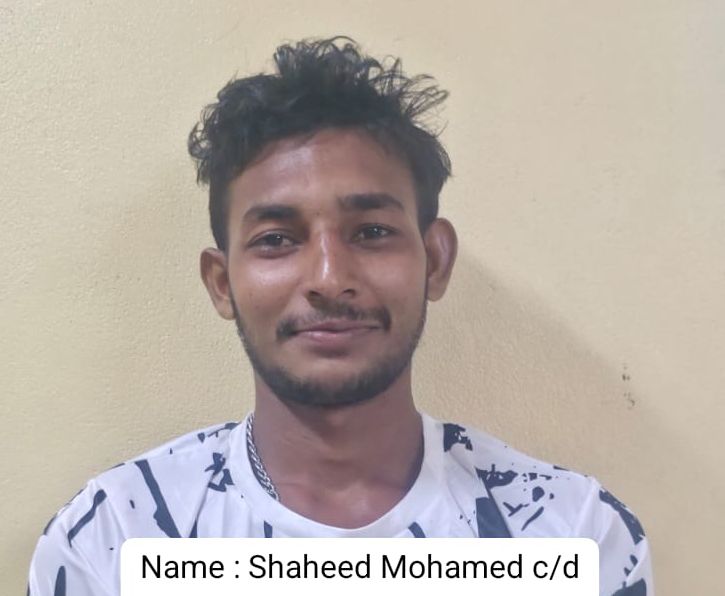
    On Monday, April 20, 2026, Guyana’s police service announced that four residents of Hope Estate, a small agriculture-focused community on the East Coast of Demerara, were taken into custody late Sunday night on allegations of unlawful possession of ammunition and an unregistered air rifle. The arrests and seizure of prohibited items unfolded during a targeted law enforcement operation conducted between 10:30 PM and 11:00 PM, according to official police statements.

    Among the four individuals detained are a 55-year-old local farmer, a 51-year-old woman, the farmer’s 26-year-old son, and a 23-year-old woman. During the search of the property, law enforcement officers discovered six live 12-gauge cartridges, 40 live 9mm rounds of ammunition, and the suspected unregistered air rifle stashed inside a black bag located in a bedroom that the 26-year-old suspect occupies. As search operations continued at the site, both the 26-year-old man and the 23-year-old woman arrived at the property, and were subsequently taken into police custody alongside the other two residents.

    Official police reports confirm that all four suspects were formally notified of the alleged weapons offenses before being arrested. The group was then transported to the Cove and John Police Station, where the seized ammunition and air rifle have been held as evidence pending the launch of a full official investigation. As of Monday morning, no additional details about possible prior criminal records or the suspects’ alleged links to other illegal activities have been released to the public.

  • Six detained, 22 stolen guns recovered in San Fernando Police Station attack

    Six detained, 22 stolen guns recovered in San Fernando Police Station attack

    A major joint law enforcement operation in Trinidad and Tobago has resulted in six people being taken into custody, with two serving municipal police officers among the detainees, in connection with two linked criminal cases: the fatal killing of local resident Anuska Eversley and a daring theft of firearms from a police compound in the city of San Fernando.

    Trinidad and Tobago Police Service (TTPS) officials confirmed the breakdown of the suspects: two female civilians, two male civilians, and the two uniformed officers who are currently suspended pending investigation. The arrests were carried out in a series of coordinated overnight raids, developed through actionable intelligence and carried out by multiple specialized TTPS units. Participating teams included the San Fernando Criminal Investigations Department, the Special Branch national security unit, and the TTPS Special Investigations Unit, which handles high-profile and complex cases.

    In a major breakthrough for the investigation, law enforcement has recovered the vast majority of the stolen weapon cache. Recovered items include 10 M&P pistols, 10 Glock 19 pistols, one Browning pistol, one Smith & Wesson pistol, and 612 rounds of 9mm ammunition, all described by police as a substantial portion of the total stolen arsenal.

    TTPS Commissioner Allister Guevarro personally joined operational teams on the ground in the early hours of the operation, as the investigation reached a critical turning point. In an official statement released to the public, the TTPS noted that the probe remains active and is currently at a sensitive investigative stage. The service has given a public assurance that every available resource is being deployed to hold all responsible parties accountable for the linked crimes, and to see the investigation through to a successful conclusion.

  • Venezuelan man caught with illegal gun, ammo- police

    Venezuelan man caught with illegal gun, ammo- police

    Guyana law enforcement authorities have announced the arrest of a 19-year-old Venezuelan man on Sunday, following an encounter that uncovered an unlicensed 9mm pistol and eight rounds of ammunition along the Lusignan railway embankment. The Guyana Police Force shared details of the arrest in an official statement released to the public on Monday, April 20, 2026.

    According to the police account, officers on patrol noticed the suspect, a resident of Sophia in Greater Georgetown, at approximately 6:30 PM local time. The man drew attention after officers observed a suspicious bulky item concealed at his waistband. As uniformed ranks moved in to approach the suspect, witnesses and officers confirmed he quickly pulled a black, handgun-shaped object from his waistband and discarded it onto the ground beside his position.

    Law enforcement personnel immediately recovered the discarded item, which was confirmed to be the loaded 9mm weapon and matching ammunition. When investigators questioned the suspect about whether he held a valid government-issued firearms license, the young man reportedly admitted he did not have any license authorizing him to carry or possess the weapon.

    Following the seizure of the contraband, the suspect was taken into custody and transported to the Vigilance Police Station for processing. Both the suspected firearm and the recovered ammunition have been formally lodged as evidence in the case, as investigators continue their procedural work ahead of upcoming court proceedings.

  • Saleh nieuwe voorzitter Surinaamse Libanese Vereniging; inzet op vernieuwing en groei

    Saleh nieuwe voorzitter Surinaamse Libanese Vereniging; inzet op vernieuwing en groei

    PARAMARIBO, Suriname – April 20, 2026 – The Suriname Lebanese Association (SLV), one of the country’s longest-standing community cultural organizations, has ushered in a new governing board during its recent leadership election held Saturday, with longtime community member George Saleh selected to serve as the group’s new chairman.
    Joining Saleh on the seven-member new board are Daniel Nouh Chaia, George Frangie, Aegina Brahim, Giselle Helou, Munira Issa and Emely Issa, who will collectively guide the association’s activities and strategic direction through their upcoming term.
    Founded in 1996, the SLV is marking its 30th year of serving the Lebanese community in Suriname this year, a milestone that frames the new leadership’s priorities. In his inaugural address after the vote, Saleh described his appointment as both a profound honor and a weighty responsibility, extending sincere gratitude to association members for the trust they placed in his leadership team.
    Saleh emphasized that while the SLV has built a powerful legacy rooted in long-held tradition and a tightly connected community, the organization must continue to adapt and innovate to remain relevant and resilient for future generations of members.
    Among the core policy priorities of the new board is a comprehensive modernization of the SLV’s bylaws, a change designed to make the organization’s operations more transparent and efficient for both members and stakeholders. Beyond governance reform, the board plans to expand the association’s programming, adding new cultural and social events that cater to community members of all age groups, from youth to older residents.
    Existing popular annual events that have become staples of the SLV’s calendar – including Family Day, the community men’s cookout, Maria Day, and the traditional hafli celebration – will remain on the schedule, with new initiatives rolled out to complement these beloved gatherings.
    Another central pillar of the new board’s agenda is preserving and passing down Lebanese cultural heritage to younger community members. This work centers on protecting core traditions, celebrating Lebanese culinary identity, and reinforcing shared cultural values including radical hospitality and strong intergenerational family bonds. The board also plans to upgrade the association’s internal administrative systems and expand its community network, most notably through the launch of a new “Friends of the SLV” membership initiative open to broader community supporters.
    Closing his address, Saleh called on all SLV members to deepen their engagement and collaborate closely with the new leadership to strengthen the association and build a sustainable, future-ready organization that can serve the Suriname Lebanese community for decades to come.

  • Alexander: Full confidence  in TTPS to probe WPC killing

    Alexander: Full confidence in TTPS to probe WPC killing

    A shocking brazen attack inside a Trinidad and Tobago police station has left one veteran officer dead and triggered a major national security manhunt after dozens of firearms and thousands of rounds of ammunition were stolen from the facility’s secured armory. The incident unfolded Sunday, April 19, 2026, at the San Fernando Municipal Police Station on Lady Hailes Avenue, where a colleague discovered the body of 42-year-old Corporal Anuska Eversley, a mother of three, who suffered a fatal gunshot wound to the neck. An initial inventory by law enforcement confirmed that 62 firearms and more than 4,000 rounds of ammunition were missing from the station’s stored cache, prompting the highest level of response from the country’s national security agencies.

    Hours after the grim discovery, Minister of Homeland Security Roger Alexander addressed reporters at the Southern Division Headquarters in San Fernando, where he publicly reaffirmed his unwavering confidence in the Trinidad and Tobago Police Service (TTPS) to lead a thorough investigation and bring the perpetrators to justice. When pressed on whether the government had discussed implementing a nationwide curfew to curb escalating violence following the attack, Alexander confirmed no such proposal had been put forward for consideration, noting that Attorney General of Trinidad and Tobago had already received a preliminary briefing on the incident and would receive updates as the investigation progresses.

    Alexander pushed back against growing public criticism that the current administration is failing to get a handle on rising violent crime, arguing that years of unaddressed criminal activity cannot be reversed overnight. “Criminality is something that grows from strength to strength. So we must now intercept it, treat with it, dismantle it, and then you will see the benefits of it. It is not a ‘now process’—it is an ongoing process,” he told reporters. When asked about a social media post from Wendell Eversley, a relative of the slain officer, calling for his dismissal, Alexander said he had not yet seen the post and would not comment until he could review the content directly.

    In a separate statement released to media Sunday, Minister of Defence Wayne Sturge announced the Trinidad and Tobago Defence Force (TTDF) had immediately moved to an elevated operational posture to support the TTPS and Municipal Police Service in the ongoing investigation and manhunt. Sturge urged the public to remain calm and avoid unsubstantiated rumors, noting that intelligence assets have been deployed across the country and continuous monitoring is underway to respond to any emerging threats. “All necessary resources are being applied to secure the environment and advance the investigation,” Sturge said, adding that the defence ministry is coordinating closely with police leadership and the broader national security network to deliver a unified, disciplined response.

    Local Government Minister Khadijah Ameen echoed calls for patience, urging members of the public and media to refrain from speculation that could undermine the ongoing investigation. In an official statement, Ameen said she is awaiting a full briefing from the Assistant Commissioner responsible for Municipal Police before offering further comment, and extended deep condolences to Eversley’s family, loved ones, and fellow officers. The Ministry of Local Government confirmed the tragedy in an official release, noting that Eversley was killed while on active duty, and that investigators are working systematically to map out the full sequence of events. “This tragic incident serves as a solemn reminder of the risks undertaken daily by members of the Municipal Police Service in their commitment to public safety and national service,” the release read. The ministry pledged to release additional details to the public as soon as they are cleared by investigators.

    The high-profile attack has reignited long-simmering public debate over government efforts to combat organized crime and improve security at law enforcement facilities across the twin-island nation, with investigators now working against the clock to recover the stolen cache of weapons before they can be trafficked into illegal street networks.

  • Slain WPC was dedicated mother, efficient worker

    Slain WPC was dedicated mother, efficient worker

    A 10-year veteran of Trinidad and Tobago’s municipal police force and a devoted mother of three has been lost to a fatal on-duty shooting that has shaken the southern city of San Fernando and sparked urgent calls for political accountability over rising violent crime.

    Forty-two-year-old Anuska Eversley, an acting corporal based at the San Fernando Municipal Police Station, died early Sunday after being shot in the neck while on duty. A resident of Edinburgh 500, she leaves behind three children aged 18, 15 and 7. The shooting was also followed by the theft of multiple firearms and rounds of ammunition from the station’s secure strong room.

    Eversley’s death carries an extra layer of tragedy: it came exactly three years after her brother was gunned down in a separate violent attack. On the same date in 2021, Daniel Eversley, known by the nickname “Ghost”, was killed in a shooting at a car wash in Forres Park, Claxton Bay.

    San Fernando Mayor Robert Parris, who has known Eversley professionally for years, shared intimate memories that painted a portrait of a woman fully committed to both her career and her family. Two years ago, Parris said, Eversley reached out to him to calm her daughter’s pre-exam anxiety ahead of the national Secondary Entrance Assessment (SEA). That small interaction forged a parental bond between them.

    “After that incident, whenever we met, we talked as parents, about our children,” Parris recalled in an interview with the Express. “That’s how I knew she was such a dedicated mother.”

    Across his 16 years working with the San Fernando City Corporation, Parris added, Eversley earned a reputation as an exceptionally efficient, reliable member of the municipal police force. In an official statement of condolence released Monday, Parris framed her death as an incalculable loss for the entire community.

    “This is a devastating loss for our city. I have known acting Corporal Eversley for many years, and I remember her as a dedicated and committed officer who served with quiet strength, professionalism, and pride. Her passing has left a profound void within the Municipal Police and the wider San Fernando community,” the statement read.

    Parris has called on Minister of Homeland Security Roger Alexander and Commissioner of Police Allister Guevarro to launch a prompt, full investigation into what he described as a “tragic and disturbing event.” Senior law enforcement colleagues echoed Parris’ praise, with one senior officer noting Eversley consistently performed her duties to the best of her ability and was widely respected across the force.

    Wendell Eversley, the victim’s uncle and a prominent local activist who survived being held hostage during the 1990 coup attempt in Port of Spain, has publicly called for the immediate dismissal of both the Minister of Homeland Security and the Minister of Defence over the killing. He called the attack on a police station “an indictment on the State,” noting it is the most severe incident targeting a police facility in the country since the 1990 coup bombing of the Port of Spain Police Headquarters.

    Pointing to the stolen cache of guns and ammunition removed from the station’s strong room after the attack, Wendell Eversley raised alarming questions about national security. “Are we going to see another 1990? Look around and see. Are we all safe in this country?” he asked. He also questioned the government’s repeated promises to curb violent crime, noting that criminals appear to be gaining ground amid the current wave of violence.

    With the ruling United National Congress approaching its first anniversary in power, Wendell Eversley questioned what the party could possibly celebrate after a sustained period of rising murder rates. “Inviting the public to come out. To come out and celebrate what? Celebrate blood flowing on the streets? Celebrating murders upon murders?” he said. In a social media video posted Monday, he added that the nation could no longer accept a daily reality of bloodshed. “It is time for the minister of Homeland Security and the minister of Defence to be fired. It is a sad day for Trinidad and Tobago, and mainly the State,” he said.

    The Trinidad and Tobago Municipal Police Service (TTMPS) also released an official statement confirming Eversley first enlisted in the municipal police force on July 1, 2008, and had been assigned to the San Fernando unit in her most recent posting.

    “The TTMPS and its partner agencies extend sincere condolences to her relatives, friends and colleagues,” the release said.

  • Emergency at Sea

    Emergency at Sea

    A life-threatening medical emergency at sea ended with a successful rescue last Thursday, after a team of off-duty medical providers and Trinidad and Tobago Defence Force members stepped in to save an elderly female passenger on the fast ferry MV Buccoo Reef. The incident unfolded around 7:30 a.m., roughly one hour into the vessel’s scheduled voyage from Port of Spain to Scarborough, when the woman suddenly began experiencing severe chest pain before losing consciousness. What followed was a coordinated, race-against-time effort that has since sparked calls for mandatory first aid training for all ferry crew members.

    When the emergency was first announced over the ferry’s public address system, no crew members immediately stepped forward to assist. Akiela Chance, a Defence Force officer traveling on the ferry, was the first to respond to the passenger’s side. As she recounted to the *Express* on Saturday, “I was the female soldier present, and I was the first person to step in and assist the elderly lady while others stood by. I approached her and asked what the issue was and whether she had any known medical conditions. I was told she was experiencing chest pain.”

    Chance worked with another passenger to carefully move the seated woman to the floor, adjusted her clothing to ease her breathing while preserving her privacy, and immediately started cardiopulmonary resuscitation (CPR). She then instructed other bystanders to repeat the call for any medical professionals on board. A medical kit was retrieved, and 15 minutes later, Dr. Emillie Alpheus, an accident and emergency registrar at Scarborough General Hospital, arrived at the scene. Coast Guard Petty Officer Noko Baird soon joined to assist with continuing compressions before Alpheus took over lead resuscitation efforts.

    Upon reaching the patient, Alpheus found the woman already unresponsive with no detectable pulse, and immediately requested an Automated External Defibrillator (AED) — a piece of life-saving equipment she was surprised to find the ferry actually carried. As Alpheus waited for the device and began chest compressions alone, a second physician, an American vacationing on the ferry who was certified in Basic Life Support, offered to take turns performing compressions, which are physically draining to administer continuously.

    The team split roles: the visiting physician led chest compressions while Alpheus managed the patient’s airway, following the standard 30 compressions to two rescue breaths protocol. When the AED arrived, they delivered a defibrillation shock to the patient’s heart, then immediately resumed CPR. Mid-cycle, Alpheus detected the patient pushing against the airway device, and after completing the compression cycle, confirmed the woman had achieved Return of Spontaneous Circulation (ROSC) — meaning her heart had restarted. The elderly woman soon regained consciousness.

    Following the successful revival, the captain turned the ferry back to Port of Spain, with Coast Guard vessels escorting the vessel to port. Ambulance crews were already on standby at the terminal, and immediately transferred the patient to a nearby hospital for ongoing care. As of the latest update, the woman remains hospitalized but is recovering steadily.

    Alpheus, who shared that this was the second life-saving CPR effort she has led in two years, expressed gratitude for the positive outcome in an interview with the *Express*. “I just glad it was a good outcome. I am thankful for all who was around that was able to help and lend a holding hand — the other physician who was on vacation, the patient care assistant and the other members of staff from the Buccoo Reef. I am grateful that we were able to help this family. I got word from her relatives that she is doing well and from the doctors over there that she is doing better. So thankful for that and praises to God,” she said.

    In an official statement issued the day of the incident, the Port Authority of Trinidad and Tobago (PATT) confirmed the medical emergency, activated emergency protocols, and confirmed that ambulance crews met the vessel on its return to port. The authority declined to comment on the patient’s specific medical condition per privacy guidelines.

    A video of the rescue circulating on social media originally misstated the details of the incident, but the woman who recorded the video corrected the account in a public comment, clarifying that the woman suffered a potential cardiac event rather than a simple fainting spell, and that two off-duty doctors led the rescue rather than crew. She also noted that untrained crew members appeared disoriented during the emergency, writing, “They need to train boat crew in first aid. Everyone was moving like headless chicken. But God is good.”

    Chance echoed that call for reform, telling the *Express* that all ferry crew members should receive formal, up-to-date first aid and emergency response training to be prepared for similar incidents at sea. Members of the public have also shared widespread wishes for the patient’s full recovery following the viral spread of the rescue video.

  • 7 charged in fatal attack on garbage truck driver in Santiago

    7 charged in fatal attack on garbage truck driver in Santiago

    In the Dominican Republic’s second-largest city of Santiago, a brutal coordinated fatal attack has left one man dead and seven motorcycle taxi drivers facing serious murder charges, with state prosecutors now pushing to hold the accused behind bars ahead of their trial. The victim, identified as Deivy Carlos Abreu Quezada, worked as a garbage truck driver when he was ambushed by the group following a multi-kilometer chase that ended in the immediate grounds of the city’s Palace of Justice.

    Prosecutors have formally named the seven defendants as Adony Antonio Ureña Ventura, Andrés Monclú González, Carlos Andrés Roa Morán, Miguel García Balbuena, Joanfry Joel Núñez, Juan Carlos Soto Ortiz, and Kevin Francisco Metz Cruz. Court documents allege the men acted in concert to pursue, block, and carry out the deadly assault on Abreu Quezada. After the attack, the injured driver was rushed to Santiago’s Presidente Estrella Ureña Hospital, where medical teams were unable to save his life.

    Top law enforcement officials have moved swiftly to formalize charges in the high-profile case. Dominican Attorney General Yeni Berenice Reynoso directly ordered local prosecutors to file preliminary murder charges against all seven suspects. Quirsa Abreu Peña, chief prosecutor for the Santiago region, has characterized the killing as a pre-planned, coordinated attack rather than a spontaneous outbreak of violence stemming from a road dispute.

    Early investigative findings outline how the deadly confrontation unfolded. The conflict erupted from a minor traffic accident between Abreu Quezada’s garbage truck and the motorcyclists, investigators confirmed. What began as a small roadway dispute quickly escalated, with the group of mototaxi drivers launching a pursuit that stretched for several kilometers as they repeatedly tried to force the garbage truck to stop. Desperate to escape the pursuing group, Abreu Quezada drove to the Palace of Justice seeking safety — but the mob followed him to the courthouse steps, where they carried out the fatal stabbing attack, according to official allegations.

  • Backlash, debate follow viral photo of woman posing on V.C. Bird monument

    Backlash, debate follow viral photo of woman posing on V.C. Bird monument

    A photograph showing a female tourist reclining in a suggestive pose on a national monument honoring Antigua and Barbuda’s founding father has exploded across social media platforms, igniting a fierce, divided public conversation over cultural respect, public reaction, and the protection of heritage sites. The monument stands as a tribute to Sir Vere Cornwall Bird, a towering figure in the Caribbean nation’s modern history who guided Antigua and Barbuda to full independence from colonial rule in 1981. Widely celebrated as the country’s “Father of the Nation,” Bird’s legacy is a core source of national collective pride, imbuing the site with profound historical and cultural meaning that makes the viral photo all the more controversial.

    In the wake of the image’s widespread circulation, thousands of online commenters have voiced sharp condemnation of the tourist’s actions, labeling them disrespectful, offensive, and deeply inappropriate for a site of such national significance. Many argue that sacred national landmarks demand universal reverence from all visitors, regardless of their origin. Some have gone further, demanding formal consequences for the woman, ranging from financial fines to deportation, while others have raised pointed questions about site management, asking how such a photo could be taken without intervention from on-site staff.

    A consistent thread among critical voices emphasizes the responsibility of international travelers: all guests should take the time to research local cultural norms and sensitivities before visiting important heritage sites, especially those honoring revered national figures. This perspective argues that ignorance of local customs is not an excuse for behavior that insults a nation’s shared history.

    However, a growing contingent of online users has pushed back against the widespread outrage, arguing that the response to the incident has been disproportionate. Supporters of this view note that the tourist herself has already taken accountability: she voluntarily removed the original image from her social media and issued a public expression of regret after seeing the scale of the negative reaction. Many argue that the woman’s willingness to correct her mistake should de-escalate the situation, and that the continued mass sharing of the photograph is actually what amplifies the disrespect to Bird’s legacy, rather than addressing it.

    One social media user summed up this position, writing, “She’s a tourist taking a picture by a statue… she was respectful enough to remove the picture after she saw comments.” Multiple commenters have also criticized users who continue to repost the viral image, arguing that the ongoing circulation unnecessarily drags out the controversy and amplifies division for clout. Others have called for a more measured, constructive approach, framing the incident as a learning opportunity to educate travelers on cultural sensitivity rather than a moment for blanket condemnation.

    Some members of the public have even downplayed the entire incident, describing it as either a harmless misstep or a lighthearted mistake that has been blown far out of proportion. This group also points to far more pressing systemic issues facing Antigua and Barbuda that deserve far more public attention and resources than a tourist’s bad photo op.

    Beyond the immediate debate over the tourist’s actions, the incident has prompted broader institutional questions: it has forced policymakers and heritage site managers to reexamine how public monuments are protected, and whether clearer on-site signage, formal visitor guidelines, or enhanced staff training are needed to prevent similar missteps from happening in the future.

  • Column: Onderwijs, de onmisbare bouwsteen voor mens en natie

    Column: Onderwijs, de onmisbare bouwsteen voor mens en natie

    Education is far more than the simple acquisition of literacy, numeracy, and rote facts. It is the foundational catalyst for individual self-development, collective societal advancement and long-term national growth. Through education, people uncover their innate talents, cultivate critical thinking capabilities, and learn to engage meaningfully and actively with their communities. For nations, investing in robust education systems is synonymous with investing in long-term prosperity: a skilled, knowledgeable population drives continuous innovation, fuels sustainable economic expansion, and preserves social cohesion.

    This inherent value of education is deeply understood by millions of parents and children across communities, who hold tight to the belief that education can break down systemic barriers and transform their life trajectories. Indra Toelsie, the author of this commentary, shares a personal reflection on this truth: her own parents, neither of whom completed primary education, sacrificed relentlessly to ensure their children could access secondary and higher education. Rain or shine, her father traveled with her across the region on his old Zundapp motorcycle to the education library, collecting reference materials for school assignments. He helped cut and paste materials for school projects, reached out to colleagues for hard-to-find information, and offered constant guidance. For Toelsie’s parents, education was the most valuable gift they could give their children, and no effort to support their schooling was too great.

    Yet, this clear understanding of education’s importance is alarmingly missing from many current policy making circles, Toelsie argues. Instead of committing to long-term, structural investments in school infrastructure, educator development, and accessible learning resources, a deeply concerning trend has emerged: policy making is increasingly driven by short-term populism. Politicians prioritize flashy, superficial policy measures that win quick public support over the durable, systematic reforms that would actually strengthen education systems from the ground up. As critics have repeatedly highlighted, modern education policy is trapped in a constant cycle of unplanned, half-baked experiments that leave the system adrift. This constant upheaval breeds widespread frustration among both educators and students, leaving the sector with no clear long-term vision or roadmap for where it aims to be decades from now.

    This populist-driven approach to education policy is not just unproductive—it is dangerous and short-sighted, Toelsie warns. By failing to give education the top policy priority it deserves, leaders are eroding the future prospects not only of today’s youth, but of the entire nation. Populist education measures may deliver quick electoral gains for politicians, but they fail to address the root structural challenges holding the sector back. In fact, they exacerbate existing gaps, leading to wider skills deficits and growing social inequality over time.

    The shifting priorities facing the education workforce also demand urgent attention. While countless educators remain deeply committed to their students and their craft, growing financial pressures are increasingly pushing passion for teaching and student development to the background. Many teachers report feeling demoralized and undervalued, leading them to invest less time and energy in their own professional growth and their students’ development than the system requires. The core mission of nurturing young people is increasingly being sidelined by competing priorities.

    Toelsie emphasizes that no child is inherently incapable; every person carries a unique set of talents and skills waiting to be nurtured. Unlocking that potential requires well-designed, functional systemic structures, and that responsibility falls squarely on policy makers. They must craft policies that make learning accessible, enjoyable, and motivating for all students. Meaningful innovation in education is also non-negotiable: learning should not be limited to theoretical instruction, but should expand opportunities for hands-on, practical experience, from structured company site visits to educational trips to cultural institutions like museums.

    Every parent wants the best possible opportunities for their children, greater or equal to what they themselves received. Not every student can afford to study abroad or secure a competitive scholarship; the vast majority of young people must rely on their domestic public education system to build their futures. When that system fails to deliver, leaving both students and teachers discouraged and disempowered, the long-term stability and prosperity of entire societies is put at risk.

    It is long past time for policy makers to step up and accept their core responsibility, Toelsie concludes. Education must be restored to its rightful place at the very top of the national policy agenda, recognized as the irreplaceable building block of both individual flourishing and national strength.