分类: society

  • Three Dead, Two Injured in Separate Collisions

    Three Dead, Two Injured in Separate Collisions

    Two devastating road traffic accidents that occurred within hours of each other in northern Belize on Sunday night have left three people dead and two others hospitalized with serious injuries, local authorities confirmed.

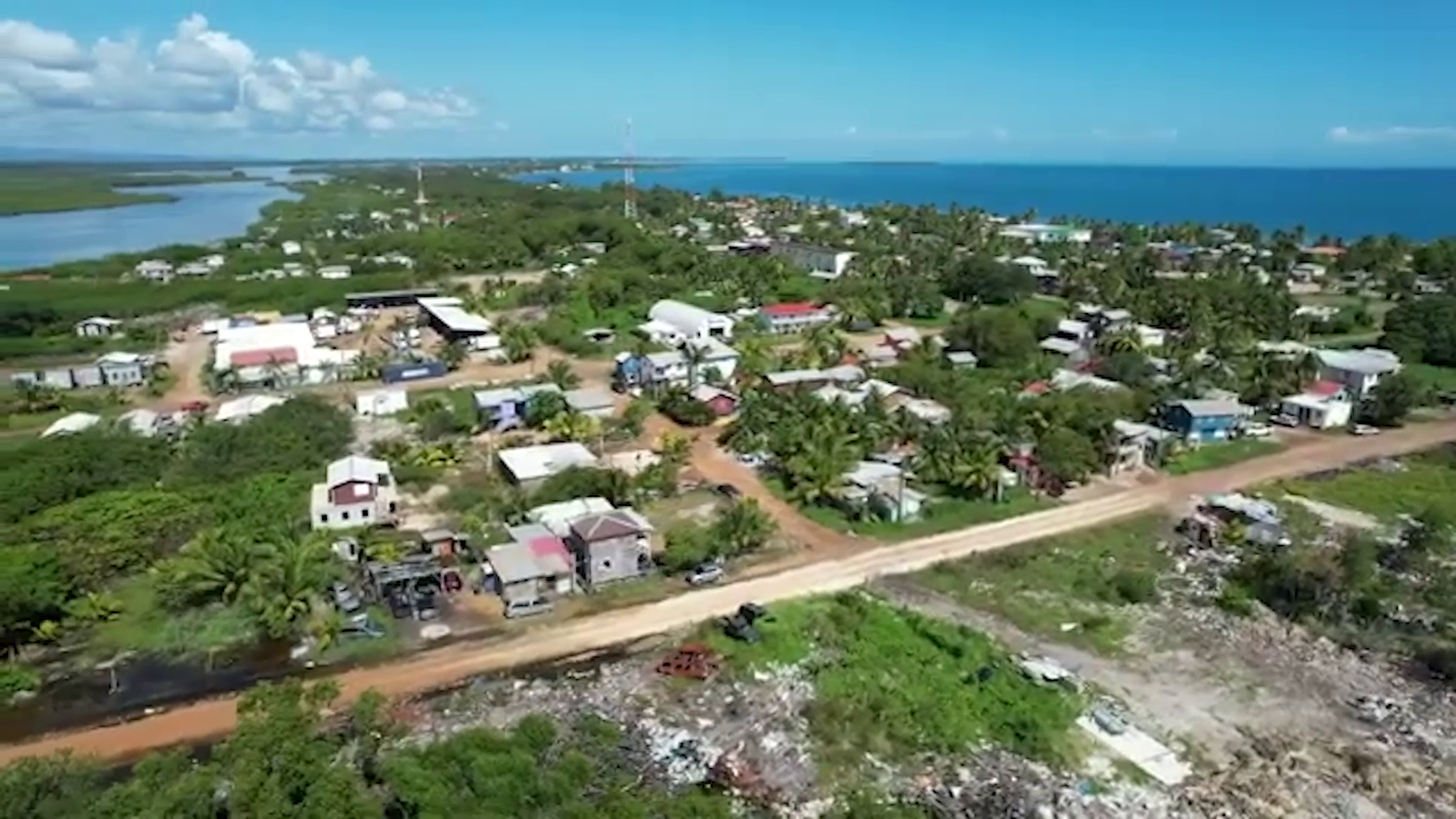
    The first incident unfolded just after 10 p.m. along the Thomas Vincent Ramos Highway in the Punta Gorda area, when a northbound motorcycle carrying two people lost control near the roadside and crashed into a standing tree. Emergency responders were dispatched to the scene immediately, and transported passengers Brenton Cofius and Carl Manger to a nearby medical facility for urgent care. Following the crash, law enforcement officers impounded the damaged motorcycle as part of their ongoing investigation into what caused the collision.

    A far deadlier crash unfolded hours later in the Orange Walk District, along the road connecting Trinidad and August Pine Ridge. The violent impact of the head-on collision left three people dead at the scene, leaving local communities in shock. Visual footage captured from the crash site shows a red Ford F-150 pickup truck pushed off the pavement, alongside a fully loaded sugar cane trailer attached to a Freightliner semi-truck that was also involved in the incident.

    Authorities have publicly identified the three victims of the second crash: Selvin Cortez, Bryon Magaña, and Magaña’s partner Sherlyn Henriquez. News of the deaths has already prompted mourning from loved ones across social media. One of Henriquez’s relatives shared a tribute online writing, “Rest in peace, my beautiful niece. Thank you for the beautiful moments we spent together; you will always live in my heart.”

    The Belize Police Department announced that it is continuing to process evidence from both crash sites and is expected to release a full update on the circumstances of each incident, including potential contributing factors such as speeding, weather conditions, or driver impairment, to the public this coming afternoon.

  • UNICEF appoints new Children and Youth Council

    UNICEF appoints new Children and Youth Council

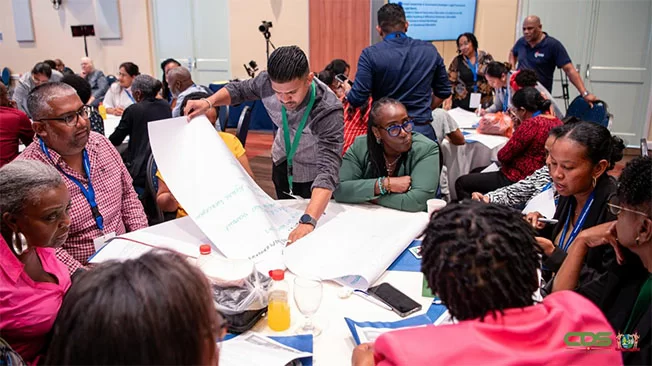
    KINGSTON, Jamaica — In a landmark move to embed youth leadership in child rights advocacy across the country, UNICEF Jamaica has inaugurated a fresh cohort of 17 members to its Children and Youth Council (CYC), an initiative designed to guarantee that young Jamaicans from all walks of life gain a tangible, influential seat at the table when decisions impacting their futures are made.

    Unlike many youth engagement bodies that draw representation primarily from densely populated urban hubs, this new council boasts geographic inclusivity spanning 10 of Jamaica’s parishes, ensuring that the diverse lived experiences of young people from rural, coastal, and suburban communities are all reflected in the council’s work. UNICEF Jamaica emphasized that this broad geographic spread is no accident—it is a deliberate priority to extend youth advocacy and leadership beyond capital city centers and reach marginalized young communities across the island.

    The selection of the 17 final members followed a rigorous, multi-stage screening process that drew more than 250 applications from young people across Jamaica. After initial vetting, roughly 50 candidates advanced to the final interview round. The overwhelming majority of applicants fell between the ages of 16 and 20, with most clustered between 17 and 19—an age group marked by the emergence of civic identity and early leadership, making it an ideal pool to cultivate the next generation of advocates. Final selections were based on three core criteria: proven leadership potential, existing track records of community involvement, and alignment with UNICEF’s global mission of advancing child rights.

    In an official statement released Tuesday welcoming the incoming cohort, Olga Isaza, UNICEF’s representative to Jamaica, framed the council as a critical shift in how child-focused work is designed. “Young people are powerful agents of change,” Isaza said. “The UNICEF Children and Youth Council was created to place them at the centre of advocacy, programme design and policy dialogue, strengthening their role as key partners in advancing child rights and ensuring that their ideas, experiences and leadership help shape the programmes and policies designed to support them.”

    Beyond their core advocacy work, the new CYC members will also take on the role of steering committee for U-Report Jamaica, UNICEF’s youth-focused digital engagement platform that amplifies young Jamaicans’ perspectives on pressing social issues. This dual role will allow the council to connect directly with thousands of peer youth across the island, ensuring their input feeds into CYC priorities.

    The CYC has three core overarching objectives. First, it will ensure that the lived experiences and unique perspectives of children and youth directly shape UNICEF Jamaica’s programming and national-level advocacy work. Second, it will provide a formal channel for young people to represent the needs of their peers, while building their own leadership and advocacy skills through hands-on work. Third, it will create structured mechanisms for youth participation in strategic planning, public awareness campaigns, and evidence-based policy recommendations to national policymakers.

    To organize its work, the council will be divided into specialized sub-groups aligned with UNICEF Jamaica’s core program priorities, including child protection, climate action and community resilience, education, social policy, and public health. All sub-groups operate under the guiding framework of the UN Convention on the Rights of the Child, with the goal of ensuring youth perspectives inform solutions at the local, national, and even global levels.

    As the new council begins its term, UNICEF Jamaica expressed enthusiasm for the collaboration ahead, noting that the initiative represents a long-term investment in empowering the next generation of Jamaican leaders and advocates, while advancing the core mission of child rights across every region of the country.

  • ‘Slow down and love one another’urges nation’s newest centenarian

    ‘Slow down and love one another’urges nation’s newest centenarian

    As Dorothea Louise Strachan marked her 100th birthday this week, the newly-minted centenarian offered a simple but profound piece of advice for the Bahamas’ younger generations: slow down, and choose love over haste. Surrounded by loved ones at the couple’s modest two-story home on Soldier Road, the milestone celebration drew official recognition from the country’s highest ceremonial office, as well as a personal message from the British royal family.

    Hosting the day at her family home alongside Errol “Duke” Strachan, her 93-year-old husband and one of the Bahamas’ most legendary musicians, Strachan welcomed Governor General Dame Cynthia A. Pratt for an official visit marking her achievement. Along with Dame Cynthia’s congratulations, a note of warm wishes was delivered from His Majesty King Charles III and Queen Camilla, adding a touch of global recognition to the intimate local celebration. This year also brings another remarkable milestone for the couple: they will mark 71 years of marriage on June 21, a testament to their decades-long partnership rooted in community and shared purpose.

    Strachan, who never imagined she would live to see her 100th year, credits her long and fulfilling life to unwavering faith and a consistent practice of gratitude. In a heartfelt address to younger Bahamians, she urged them to reject the culture of rush that defines modern life, and to center human connection in all they do.

    “Don’t be too fast,” she emphasized. “Don’t be too in a hurry for everything you see, everything you want. Good things take time. Don’t rush into anything because you might fall down, but if you take your time, you get what you’re looking for when the moment is right.”

    Strachan’s 50-plus year career in the Bahamas’ vital tourism and hospitality industry shaped her commitment to service, a value she carried from her first job at 16 as a waitress on Bay Street through to her retirement. After working her way up into management roles, she eventually launched and operated her own restaurant, and also spent years serving guests at the iconic Holiday Inn on Paradise Island, where she became beloved for her warm, personalized approach to hospitality. Her decades of contributions to the nation’s tourism sector were formally honored in 2006, when she was awarded the prestigious Cacique Minister’s Award in recognition of her outstanding service.

    Even after retiring from full-time work in 1991, Strachan never stepped back from her commitment to community. For years, she spent several days a week preparing and delivering homemade lunches to local offices, keeping her tradition of service alive and staying connected to the neighborhood she called home.

    Walls throughout the Strachan home are lined with decades of personal and cultural history, a visual timeline of the couple’s deep ties to Bahamian public life. Framed photographs mingle snapshots of family gatherings and community events with portraits of prominent figures who have visited the home over the years: legendary Bahamian-American actor Sidney Poitier, American soul musician Isaac Hayes, and NBA greats Patrick Ewing and Julius Erving are all counted among the guests who have passed through their doors. A back room holds the couple’s collection of awards and commemorative plaques, alongside Errol Strachan’s musical instruments. For years, the home hosted regular community concerts and social gatherings, cementing the couple’s reputation as core pillars of local cultural life.

    During her official visit, Dame Cynthia praised Strachan for her sharp intellect and enduring independence, noting that the centenarian remains fully clear-minded and engaged with the world around her. “To reach the age of 100, if that’s not a blessing, tell me what is,” the Governor General said. “Because you came from good stock, and you have good stock following you right now.” She extended the “heartiest congratulations” on behalf of the Bahamian people, and expressed “the profound gratitude of a proud nation” for Strachan’s decades of contributions to national development.

    The celebration comes one month after a controversial incident that made headlines nationwide involving Errol Strachan. During a funeral procession passing the couple’s Soldier Road home, a correctional officer fatally shot one of the couple’s pet dogs. Video of the incident circulated widely on social media, sparking widespread public outrage and condemnation from animal welfare advocates across the country.

    Following an internal review, authorities announced that no breach of departmental policy was found, and the officer would not face any disciplinary action. The Department of Correctional Services issued a formal apology to Strachan, and agreed to provide a replacement dog as a gesture of goodwill. Strachan stated at the time that he accepted the department’s apology and offer, but still grieved the loss of his dog, calling the shooting “totally unnecessary.” As of the 100th birthday celebration, it remains unclear whether the replacement dog has been delivered to the couple.

  • Seiveright urges college students to adapt in rapidly evolving world

    Seiveright urges college students to adapt in rapidly evolving world

    KINGSTON, Jamaica — At a youth-focused forum held last Thursday on the Mona campus of the University of the West Indies (UWI), organized by the Mona Campus Youth League in partnership with the UWI Guild of Students, Delano Seiveright, State Minister for Jamaica’s Ministry of Industry, Investment and Commerce, delivered a rousing call to action for the island’s emerging workforce. Seiveright challenged attending students to abandon rigid, outdated career planning and pivot toward agile, forward-thinking strategies, stressing that the accelerating pace of global transformation has rendered traditional, slow-moving approaches obsolete.

    Seiveright opened his address by emphasizing that the world is evolving faster than at any other moment in recorded human history. Where major paradigm shifts once took centuries or decades to reshape global society, he noted, meaningful change now unfolds over mere months, meaning missed moments of opportunity rarely come around again. Tracing the arc of technological progress from the 15th-century invention of the printing press through the breakthroughs of electricity, automobile manufacturing, broadcast radio and television, cellular communications, and the modern internet and social media era, Seiveright argued that today’s young people face a unique requirement for constant adaptation that previous generations never needed.

    “Static skills and a fixed 40-year career plan can no longer carry you to success,” Seiveright told the crowd of students. “The leaders and achievers of this era are those who act quickly, commit to lifelong learning, and adjust their paths at the first sign of shifting tides.”

    Beyond adaptability, Seiveright pressed students to expand their professional horizons far beyond Jamaica’s national borders. With Jamaica’s population sitting at roughly 2.8 million, he noted, the island is embedded in a far larger regional and global marketplace: the broader Caribbean counts 45 million consumers, North America adds more than 390 million, and Latin America contributes an additional 660 million. Voluntarily limiting one’s ambitions to the local market, he argued, is an unnecessary restriction on personal and professional potential.

    Crucially, Seiveright pointed out that digital innovation and the rise of remote work have removed historic barriers to international economic participation. Jamaican workers and creators no longer need to relocate abroad to access global markets and earn foreign currency, opening new pathways to prosperity that were unavailable to previous generations.

    A core highlight of the minister’s presentation centered on the under-tapped economic potential of Jamaica’s creative industries, a sector he identified as one of the country’s most promising untapped growth areas. From globally renowned music to large-scale entertainment events and digital content creation, Seiveright noted that the global creative economy generates massive revenue, pointing to Jamaica’s own world-famous events including Reggae Sumfest, Dream Weekend, Best Weekend Ever, Sandz and Zimi as proof of the sector’s local capacity.

    He held up three prominent Jamaican creative entrepreneurs — Andrew Bellamy, Romeich Major and Kamal Bankay — as models for young people to follow. Notably, both Bellamy and Bankay are UWI Mona graduates who built their successful companies from humble beginnings, proving that creative culture is far more than artistic expression: it is a viable, high-growth business. Seiveright also pushed back against the cultural default of relying solely on traditional 9-to-5 employment, noting that in an era of rising living costs, global competition, and rapid technological change, a single full-time job is often no longer enough to sustain financial security. Instead, he encouraged students to pursue multiple streams of income, building side projects and independent ventures alongside traditional careers.

    Seiveright also emphasized two underrated skills that drive long-term success: intentional professional networking and emotional intelligence, noting that the vast majority of valuable career opportunities emerge through informal professional connections rather than formal job application channels.

    Turning to one of the most transformative modern technologies, artificial intelligence, Seiveright framed the AI boom as one of the most significant economic shifts of the 21st century, not a passing fad. Global corporate and venture investment in AI is projected to hit $2.5 trillion by 2026 — a sum more than 100 times the size of Jamaica’s entire annual gross domestic product. “Those who learn to leverage these AI tools will expand their opportunities and reach exponentially,” he said. “Those who ignore them will be left behind.”

    Closing his address, Seiveright urged students to take decisive action immediately, rather than overplanning or waiting for the “perfect moment” to pursue new opportunities. Opportunities already exist across every core sector of Jamaica’s economy, from agriculture and culture to professional services and technology, he said. The only question is whether young people are prepared to seize them. “No one is going to build your future for you,” Seiveright concluded. “Start where you are, use what you have, think globally, and move.”

  • WATCH: Man dies in Manchester crash, five injured

    WATCH: Man dies in Manchester crash, five injured

    MANDEVILLE, JAMAICA – A devastating late-evening collision on the Winston Jones Highway in Mandeville has claimed one life and left five other people hospitalized, according to official law enforcement updates. The victim, identified by police and family members as Dave Ebanks Jr, widely known by his nickname “DJ”, worked at Holsum Bakery located in the Manchester community of Williamsfield. He died after succumbing to critical trauma suffered in the head-on crash that unfolded on Monday.

    Preliminary law enforcement accounts place the time of the incident at approximately 9:00 p.m. Reports outline that Ebanks was operating a Honda Integra heading uphill along the highway when he lost control of his vehicle. The car then collided head-on with a downhill-bound Toyota Wish, a vehicle registered as a public passenger taxi that was carrying five passengers at the time of the crash.

    First responders including local firefighters and police officers arrived at the crash site promptly, where they extricated Ebanks from his heavily damaged vehicle and coordinated emergency transport for all injured parties to a nearby medical facility. Ebanks was pronounced dead by medical staff shortly after arriving at the hospital, while the five occupants of the taxi were admitted for overnight care for their injuries.

    Investigating officers at the scene noted that the crash occurred in an area with solid unbroken white lane markings, an indicator that passing is prohibited. Based on initial site assessments, law enforcement says speeding and illegal improper overtaking are the most likely contributing factors to the fatal collision. The case is currently being handled jointly by the Manchester Traffic Department and the Area Three Accident Investigation and Reconstruction Unit, which are conducting a full probe to confirm the exact cause of the incident.

    Local authorities have reminded motorists to obey all traffic markings and speed limits, particularly on winding or hilly highways, to prevent similar tragic incidents.

  • Treacherous!

    Treacherous!

    In the quiet community of Hopeton, south St James, what was once a little-used local thoroughfare has become a flashpoint for public frustration, forcing residents to take extreme action to demand long-overdue infrastructure repairs. For decades, the narrow, steeply winding Charlie Mount road was known locally for its hairpin turns, deadly gullies along one edge and jagged boulders protruding into the lane on the other. Local resident Marsha Thomas summed up the route in one word: treacherous.

    The situation shifted dramatically last October, when Hurricane Melissa carved a large chasm into the nearby Spring Mount road, cutting off that primary route between Montego Bay, St Elizabeth and surrounding regions. Left with no viable alternative, most drivers diverted onto Charlie Mount, turning the quiet local road into a major throughfare. The sudden surge in traffic has accelerated the road’s already rapid deterioration, and inexperienced drivers unfamiliar with the route’s dangerous twists pose a constant threat to themselves and other users.

    By early Monday morning, fed up with months of unfulfilled promises of repair, dozens of Hopeton residents gathered to block the road, mobilizing felled trees, large boulders and even a discarded concrete light pole to close off access to through traffic. Protesting with hand-held placards starting just after 5 a.m., the group made clear their message: urgent government action is needed to fix the crumbling route before a deadly accident occurs.

    Speaking to the Jamaica Observer at the protest, Thomas pointed out that the road’s edges are already eroding, and continued overuse will leave the route completely unusable for local residents. The damage at Spring Mount, she noted, has left that route only passable for single-file foot traffic, despite repeated official warnings to residents against using the dangerous broken section. Officials have proposed an alternate route through Anchovy to reduce pressure on Charlie Mount, but drivers have rejected the option, as it adds significant time and fuel costs to every trip.

    With traffic backed up along the narrow strip of usable road, conflicts between drivers have become a daily occurrence, with tempers often flaring into heated arguments over right of way and driving ability. Thomas told reporters she has witnessed three separate incidents of buses veering off the road and into the gullies that line parts of Charlie Mount. While no fatalities have been recorded to date, one driver was trapped in his wrecked vehicle overnight before residents found him the next morning, calling for help. Thomas added that all recent patching work on the road has been completed by local residents, with no support from elected officials, who have failed to follow through on promises of intervention.

    Elderly resident Monica Willoughby, a lifelong Hopeton resident who joined the protest after seeing neighbors gathering, said poor road conditions have plagued the community for years, but the crisis has reached unbearable levels since Hurricane Melissa. Her son, a taxi operator who uses the route daily, is forced to replace damaged bus parts on a weekly basis due to the poor road surface, she explained.

    The road blockade left thousands of local students and school staff unable to reach their campuses Monday, but protestors refused to end their action, arguing that dramatic steps were the only way to cut through government bureaucracy and draw attention to their urgent needs.

    Local councillor Uvel Graham, representing the Spring Mount Division for the Jamaica Labour Party, arrived at the protest and argued that residents had acted prematurely, claiming repair plans were already in motion. Graham explained that a contractor was scheduled to arrive Monday to lay marl on the Camrose leg of the local road network, which would allow traffic to be diverted away from Charlie Mount while permanent repairs are carried out. He added that unseasonable rainfall earlier in April had delayed the start of work, as officials opted to wait for dry conditions to avoid wasting limited resources on asphalt that would be ruined by rain. Graham acknowledged that residents face daily hardship from the poor road conditions, and committed funds allocated to him through the St James Municipal Corporation to fill potholes across the entire parochial route.

    For the damaged Spring Mount road, which falls under the jurisdiction of the National Works Agency (NWA), Graham said preliminary work including soil testing and cost assessments has already been completed, though no official starting date for reconstruction has been announced. When contacted by the Observer Monday, NWA western region communications manager Janel Ricketts confirmed that repair plans for Spring Mount are still in the design stage, with no timeline for construction released to date.

  • BULLYING CRISIS

    BULLYING CRISIS

    Over the past several years, Jamaica has faced a steady, alarming upward trend in reported bullying incidents among its youth population, according to new official data that has put renewed pressure on education authorities to address the growing crisis.

    Figures compiled by the National Children’s Registry, an arm of Jamaica’s Child Protection and Family Services Agency (CPFSA), and obtained by the Jamaica Observer, show that between January 1 and March 26 of 2026 alone, 49 bullying cases have already been logged to authorities. A monthly breakdown of the first quarter data reveals 22 incidents were reported in January, 11 in February, and 16 in March. A long-term trend analysis covering the past three full calendar years confirms this consistent growth: 130 reported cases in 2022, 140 in 2023, 151 in 2024, and a further jump to 167 recorded incidents in 2025.

    The disturbing trend moved from statistical data to public outrage over the weekend, when a video showing a violent bullying incident circulated widely across Jamaican social media platforms. The footage captured uniformed students from Jamaica College, an all-boys secondary school located in St Andrew, brutally attacking a fellow student. In an official statement released Monday evening, school leadership condemned the behavior shown in the video as “reprehensible and unacceptable”, confirming that all individuals involved in the assault had been identified. The students will soon appear before the school’s Disciplinary Committee to face formal disciplinary action aligned with the institution’s internal policies.

    Senator Dana Morris Dixon, Jamaica’s Minister for Education, Skills, Youth and Information, publicly condemned the viral incident, calling the recorded assault deeply disturbing. She confirmed that a full official investigation into the event has been launched to guide next steps. To ensure all affected parties receive appropriate support, Parliamentary Secretary in the education ministry Senator Marlon Morgan, Director for Safety and Security in Schools Richard Troupe, and regional school safety teams are scheduled to work directly with Jamaica College to provide therapeutic support and any other assistance required by the victim, witnesses, and the broader school community.

    Speaking in response to the overall rising trend in bullying reports, Morgan acknowledged that the increasing numbers are a major cause for concern for the government. Despite the challenges, he emphasized that the ministry remains committed to ongoing work to reduce and eliminate all forms of bullying across the country’s education system.

    “We will remain undaunted and redouble our efforts, including our resources, human and otherwise, to eradicate the scourge,” Morgan told the Jamaica Observer. He went on to frame bullying in schools as a reflection of broader societal challenges: “We know that schools are basically a microcosm of our society, and therefore some of the challenges that manifest at the level of households and indeed communities may spill over into our schools on account of the behaviour of some of the persons who may be predisposed to violence in and around them.”

    Morgan explained that the government’s core goal is to build a national culture of peaceful conflict resolution. “As a Government, we are particularly keen on fostering a culture of peace in the country, and we continue to note that peace doesn’t mean the absence of conflict or dispute. What we mean by peace is that even where disputes and conflicts arise, people utilise appropriate, mature, and responsible ways of dealing with them rather than resorting to violence or engaging in vigilante justice or reprisals, because those things are counter-productive and it just fosters a cyclical culture of violence in the society.”

    The education ministry upholds a strict zero-tolerance policy for all bullying incidents, and Morgan encouraged students, teachers, parents and other education stakeholders to use official, non-violent channels to resolve conflicts. To back this policy, the ministry has deployed a multi-disciplinary support network including national school safety coordination teams, police school resource officers, and full-time employed clinical psychologists and trained mental health professionals. These experts are available across the education system to provide targeted support and intervention to drive positive behavior change among young people.

    As a signatory to the United Nations Convention on the Rights of the Child, Jamaica is legally bound to protect children from all forms of violence, including bullying, physical harm, and psychological abuse. The convention notes that bullying violates children’s fundamental rights to education, health, and personal dignity, requiring signatory nations to implement binding legislative and social measures to prevent bullying, support victims, and maintain safe, inclusive learning environments.

    In a step to strengthen national action against bullying, the education ministry launched BullyProofJA last October, a national public awareness campaign with a digital focus designed to address the widespread harm of bullying in Jamaican schools and communities. The campaign was paired with the official proclamation of October 7 as National Anti-Bullying Day, an initiative developed in partnership with the CPFSA. The proclamation, signed by Jamaica’s Governor General Sir Patrick Allen, reaffirms the country’s shared commitment to confronting bullying in all its forms and protecting the well-being and dignity of all children and young people across Jamaica.

  • Designing the Perfect Wedding Floor Plan

    Designing the Perfect Wedding Floor Plan

    For most engaged couples, wedding planning revolves around dreaming up picture-perfect details: lush floral arrangements, the perfect wedding gown, and that memorable first dance. But according to wedding industry expert Shikima Hinds, managing director of Shikima Hinds Events Concierge, there is one unsung element that makes or break a reception’s atmosphere: a carefully crafted floor plan.

    Far from just a simple arrangement of tables in a venue space, a wedding floor plan acts as the foundational blueprint for the entire celebration’s flow. It shapes how guests move, socialize, dance, dine, and interact with their surroundings throughout the event. When executed successfully, guests won’t even consciously notice the intentional layout — they will simply feel at ease, engaged, and connected to the celebration from start to finish.

    ### Start with the reception’s core: the dance floor
    Hinds recommends beginning the layout design process by locking in the dance floor first. As the typical focal point of any wedding reception, the dance floor dictates where all other key elements should be positioned around it. Centering the layout on this hub of energy allows couples to arrange seating, lounge areas, and bars to give guests easy access to views of speeches, access to music, and the ability to jump onto the dance floor the second they feel inspired to dance.

    ### Map the full guest journey from start to finish
    A strong floor plan accounts for every critical element of the event, not just guest seating. Couples need to map the full guest experience, marking clear locations for entrances, the DJ or live band space, bars, buffet stations, dessert displays, and the natural movement patterns guests will follow through the night. When the layout makes navigation intuitive for guests, the entire event automatically feels more relaxed and enjoyable for everyone in attendance.

    ### Mix table shapes for dynamic, functional design
    Uniform tables do nothing to elevate a reception space, Hinds notes. Mixing different table shapes and sizes creates a far more dynamic and functional layout. Rectangular tables work well to anchor distinct sections of the venue, while round tables foster a softer, more conversational atmosphere for guest groups. The key is striking the right balance: too many identical tables create a stiff, rigid feel, but a thoughtful mix adds visual interest while comfortably accommodating different party sizes.

    ### Prioritize breathing room for comfort and service
    Just because a table is manufactured to seat 10 guests does not mean couples need to squeeze 10 people around it. Hinds suggests seating eight guests at a 10-person table to create extra elbow room, keeping guests comfortable throughout the wedding dinner. Extra space also streamlines service: servers need clear pathways between tables to navigate with food trays, and guests should be able to stand from their seats without bumping into neighboring chairs or large centerpieces.

    ### Tailor seating to your guests’ personalities and needs
    Where guests are seated matters just as much as how the space is arranged. Close family members or friends who love dancing will appreciate being seated close to the dance floor, while older guests or guests who prefer quiet conversation will enjoy seating further from loud speakers and high-traffic areas. A great layout accounts for individual comfort, existing relationships, and the unique personalities of everyone on the guest list.

    ### Build clear, natural pathways to avoid congestion
    Well-designed floor plans let guests move freely around the venue. Wide walkways between table groupings, clear routes to the bar, and extra open space around the dance floor all prevent frustrating crowding. Constantly bumping into chairs or squeezing past packed tables disrupts the evening’s flow, but a intentional layout makes movement feel completely seamless.

    At the end of the day, the best wedding floor plans feel natural. Guests should move smoothly from cocktail hour to dinner to open dancing without confusion or delay. When the bar is easy to locate, the dance floor feels welcoming, and seating arrangements encourage meaningful conversation, the entire celebration unfolds effortlessly. A great floor plan is about far more than placing tables — it is about curating a full experience where every guest feels included in the celebration, from the opening toast all the way to the final dance.

    This expert insight comes from Shikima Hinds, Managing Director of Shikima Hinds Events Concierge. Hinds can be reached at 876-925-4285, 876-361-0910, via email at shikima@shikimahinds.com, or through her website www.shikimahinds.com.

  • ‘Reprehensible and unacceptable’

    ‘Reprehensible and unacceptable’

    One of Jamaica’s most well-known secondary institutions, Jamaica College (JC), is once again at the center of public controversy after a graphic video showing multiple uniformed JC students violently assaulting a fellow student spread widely across social media platforms. In an official statement released late Monday afternoon, signed by JC Board Chairman Lance Hylton, school administrators confirmed that every student identified in the viral footage will be summoned before the school’s disciplinary committee to face action aligned with the institution’s established internal procedures.

    Hylton outlined that school leadership first learned of the disturbing incident around 8:00 pm on Saturday, April 18. “The behaviour depicted in the video is reprehensible and completely unacceptable, and we condemn it in the strongest possible terms,” the statement read. Immediately after becoming aware of the footage, administrators launched an internal investigation following official school protocols. By midday Sunday, April 19, investigators had identified all students appearing in the video and built an initial working understanding of the events that led to the altercation.

    On Monday, all primary parties involved in the incident were interviewed alongside their legal guardians, and formal signed statements were collected from each participant. Based on these statements, the assault was triggered by an unresolved dispute over stolen personal property. The student targeted in the attack admitted in writing that approximately two weeks prior to the altercation, he took a jacket, a pair of glasses, and an undisclosed sum of money from a group of fellow students he was socializing with. After initially denying any involvement when the items went missing, he later acknowledged taking the belongings and agreed to return all items and the missing money. However, he only returned a portion of what he took and missed multiple agreed deadlines to complete restitution.

    On the day of the attack, the students who lost their property confronted the victim on school grounds to demand the outstanding restitution, and the violent altercation captured in the video broke out during that confrontation. The viral footage shows one assailant grabbing the victim by the shirt, landing repeated open-handed slaps to the face and a blow to the chest, while a second attacker struck the victim with a belt.

    Early reports shared with the Jamaica Observer claimed that one of the students involved in the assault had been taken into police custody during a Monday morning police visit to the school campus. But law enforcement officials later clarified that as of Monday evening, when the press was preparing its final coverage, no students had been arrested in connection with the incident.

    This latest incident comes as Jamaica College has been in the public eye for mixed reasons in recent weeks. Just weeks ago, the school celebrated two major, historic victories: it claimed the Mortimer Geddes Trophy as the top boys’ school at the 2026 ISSA/GraceKennedy Boys’ and Girls’ Athletics Championships, and just days later, broke a 39-year championship drought by winning the 2026 TVJ Schools’ Challenge Quiz title.

    But even amid those celebrations, the school was already facing public scrutiny over a separate violent assault that took place on March 24. In that earlier incident, one student was injured and another was arrested on assault charges. The injured student’s mother publicly spoke out on social media, expressing her anger and revealing that her child’s medical costs had already climbed to a quarter million Jamaican dollars, with treatment still ongoing. JC responded to that incident by refuting claims that the injured student had been attacked by a school gang, explaining that the violence stemmed from a dispute over a $2,000 Jamaican dollar note that both students claimed belonged to them.

    The school’s Parent-Teacher Association (PTA) has also pushed back against widespread speculation that Jamaica College has an underlying culture of gang violence and bullying, calling those claims entirely false. “The PTA takes its responsibility to safeguard the welfare of its children very seriously, and would be among the first to raise concern and demand accountability if such conditions existed,” the PTA said in a previous statement. “Where isolated incidents may arise, as they can in any school environment, the PTA is satisfied that the institution has in place a structured, responsive, and effective system in place to address them.”

    Following the release of the new viral assault video, Jamaica’s Ministry of Education and Youth announced Monday that it had launched its own independent investigation into the incident. The ministry described the footage as “disturbing”, issued a strong condemnation of the violence shown, and reaffirmed its official zero-tolerance policy for all forms of bullying and school violence. As part of the ongoing probe, the ministry will deploy specialized support and investigation teams to the campus to meet with school leadership and students. Officials added that they are working closely with JC administration to identify all parties involved and ensure that appropriate disciplinary and corrective measures are implemented.

  • YACJ calls for greater parental responsibility amid rising school violence

    YACJ calls for greater parental responsibility amid rising school violence

    KINGSTON, Jamaica — Amid a wave of violent incidents spreading through Jamaica’s national education system and rising public anxiety over shifting student conduct and campus culture, the Youth Advisory Council of Jamaica (YACJ) has publicly highlighted the urgent need for systemic intervention to address the growing crisis.

    In an official press statement, YACJ Chair Rodain Richardson emphasized that problematic student behavior does not emerge spontaneously. Instead, negative conduct patterns develop gradually, shaped by the lessons taught to young people, the norms that communities choose to reinforce, and the behaviors that institutions and families allow to go unaddressed. “If we are truly committed to rooting out school violence, we must dedicate equal effort to rebuilding the foundational value systems that guide young Jamaicans, both in domestic settings and within school walls,” Richardson noted.

    The youth-led advisory body has already developed a set of targeted policy proposals designed to improve student performance and foster healthy long-term behavioral growth. One of its flagship proposals is the Boys’ in Education Policy, which was crafted to tackle the unique structural and social barriers that disproportionately impact male students across the country. At the same time, the YACJ stressed that its approach remains intentionally inclusive and balanced, with built-in support for female students who navigate their own specific societal pressures and unbalanced behavioral expectations.

    Council leaders argue that any long-term, sustainable solution to school violence must center on deeper, more structured parental involvement in student development. The values and social norms children absorb at home directly shape the attitudes they bring to classroom settings, they explained, and ultimately contribute to the challenging conduct that education systems are currently grappling with.

    To address this gap, the YACJ will submit a national Parenting Engagement and Support Framework for government and stakeholder consideration. The framework is designed to strengthen parental accountability, promote evidence-based positive discipline practices, and support the early formation of pro-social values in children from a young age.

    Additionally, the organization backs comprehensive reforms to school-level support systems, calling for expanded investment in structured initiatives that intentionally build character, boost emotional intelligence, and encourage personal accountability for behavior through targeted guidance, long-term mentorship programs, and early intervention frameworks. Richardson clarified that the push for systemic change is not about assigning blame to parents, educators, or students themselves, but rather about ensuring consistent, supportive norms across all the environments that shape young people’s development.

    Moving forward, the YACJ reaffirmed its commitment to collaborating with Jamaica’s Ministry of Education, frontline educators, family groups, and all relevant stakeholders to advance a more proactive, coordinated national approach. The organization’s ultimate goal is to embed stronger values, healthier attitudes, and more positive behavioral norms across the entire education system.