分类: society

  • GOB Rolls Out Protection Policy Amid PSU Concerns

    GOB Rolls Out Protection Policy Amid PSU Concerns

    The Government of Belize has initiated a comprehensive Anti-Sexual Harassment Policy designed to establish safer public workplaces and provide enhanced protections for employees. Announced on February 17, 2026, this policy framework explicitly defines prohibited behaviors, outlines formal reporting mechanisms, and specifies disciplinary consequences for violations.

    Despite widespread acknowledgment of the policy’s necessity, the Public Service Union (PSU) has raised significant concerns regarding its development process. Anissa Perdomo, First Vice President of the PSU, emphasized the union’s full support for the policy’s objectives while criticizing the government’s failure to engage the recognized bargaining agent during its formulation.

    Perdomo referenced constitutional provisions and the Trade Unions Act, which mandate consultation with worker representatives on matters affecting employment conditions and disciplinary procedures. The union contends that without meaningful participation from those representing government workers, the policy’s effectiveness remains questionable.

    Key concerns highlighted by the PSU include the policy’s enforcement mechanisms, alignment with international standards, and responsiveness to contemporary women’s rights movements. The union maintains that genuine worker protection requires inclusive decision-making processes that incorporate frontline perspectives through their elected representatives.

    The development underscores the ongoing tension between policy implementation and stakeholder engagement in public sector reforms, with the PSU advocating for revised consultation protocols before full implementation.

  • Year of the Horse Celebrated with Belizean Flair

    Year of the Horse Celebrated with Belizean Flair

    BELIZE CITY – While Chinese New Year celebrations typically bring to mind images of East Asia, the vibrant festivities have found a distinctive Caribbean expression in Belize. The commencement of the Year of the Horse has transformed local communities through explosive firecracker displays, vivid crimson decorations, and culturally infused celebrations that merge ancient Chinese customs with Belizean warmth.

    The Lunar New Year, a fifteen-day period emphasizing familial bonds, culinary traditions, and prosperity rituals, is being personally commemorated by Belizeans of Chinese heritage. Prominent local entrepreneur Lee Mark Chang, proprietor of the renowned Chon San Palace, provided exclusive insight into this cultural synthesis.

    “I experience dual annual celebrations—the conventional January first New Year and the Chinese Lunar New Year,” Chang remarked. “More festivities are always welcome, though operational demands require my presence at the restaurant to serve loyal patrons seeking their customary Chon San experience.”

    Chang detailed his holiday itinerary which balances business commitments with family traditions: “Today involves a multi-generational dinner with my parents, son, and daughter. The Chinese Association has orchestrated significant weekend events, including a grand Sunday function for which we’re providing catering services. The menu will feature an elaborate nine-course buffet banquet.”

    When questioned about cultural dissemination, Chang reflected on Belize’s multicultural fabric: “Cultural diversity expands horizons—more knowledge, broader perspectives, and certainly more culinary exploration. Our nation’s melting pot identity continues to evolve through these shared experiences.”

    The celebrations represent more than ceremonial observance—they signify the ongoing integration of Chinese heritage into Belize’s national identity, creating unique traditions that honor ancestral customs while embracing Caribbean inclusivity.

  • Politic : ANESRS to Take Control of Higher Education in the Country

    Politic : ANESRS to Take Control of Higher Education in the Country

    Haiti’s educational landscape is undergoing a significant transformation as the newly created National Agency for Higher Education and Scientific Research (ANESRS) assumes comprehensive control over the nation’s tertiary education system. The Ministry of National Education and Vocational Training has officially announced that all matters pertaining to higher education and scientific research now fall under ANESRS’s jurisdiction.

    Established through a presidential decree in December 2025 and formally inaugurated on January 14, 2026, by the Presidential Transitional Council, ANESRS represents a monumental shift in Haiti’s educational governance. The agency will be responsible for standardizing academic programs, establishing faculty competency benchmarks, allocating research funding, and validating degrees and curricula across all public and private higher education institutions.

    According to Delima Pierre, Director General of the National Office for Partnership in Education, the agency’s primary mission is to regulate, harmonize, and elevate the quality of higher education and research throughout Haiti. This initiative aims to modernize academic governance and stimulate scientific innovation within the country’s educational framework.

    The Ministry of National Education will continue processing existing cases until February 27, 2026, after which all administrative, academic, and informational inquiries must be directed to ANESRS’s General Secretariat at their temporary headquarters in Delmas 83 or via email at desrs@menfp.gouv.ht.

    However, this restructuring has faced opposition from the Council of the State University of Haiti (CUEH), which has publicly denounced and contested the new entity. The seven-member ANESRS council includes representatives appointed by the executive branch, university leadership, educational ministry, scientific associations, and employer organizations, with Dr. Hérold Toussaint serving as president.

  • What are Therians and why are they trending in the Dominican Republic?

    What are Therians and why are they trending in the Dominican Republic?

    SANTO DOMINGO – A previously obscure internet subculture has ignited widespread public discourse in the Dominican Republic after plans for the nation’s first therian gathering surfaced online. The phenomenon, centered around individuals who identify spiritually or psychologically as animals, has rapidly transitioned from digital niches into mainstream national conversation.

    The debate was catalyzed by a viral video featuring a young Dominican man announcing a ‘therian meetup’ while visibly wearing a tail. This clip generated a spectrum of reactions across social media platforms, ranging from genuine curiosity and humor to deeper philosophical discussions about identity and generational shifts in self-expression. Accompanying the video, digital invitations for a potential in-person meeting began circulating, signaling the community’s first attempt at physical organization.

    While the actual event remains unconfirmed, its announcement alone has propelled therianthropy into the forefront of public awareness. This development underscores how digital-born trends can rapidly influence offline societal discourse when they bridge the online-offline divide. The therian movement, with roots in 1990s online forums deriving its name from the Greek word ‘thērion’ (beast), has gained international traction through platforms like TikTok and Instagram, where adherents share content mimicking animal behaviors or explaining their deep connections to specific species.

    Therians consistently emphasize that their identity transcends costume or performance, representing instead a profound internal alignment with animals such as wolves, foxes, or felines. Within the Dominican context, societal reactions have revealed significant cultural divisions. Some commentators perceive the trend as a legitimate new form of youth expression and community formation, while others dismiss it as a transient viral phenomenon or view it with open skepticism. This national conversation has effectively transformed therians from an foreign digital curiosity into a subject of local relevance, marking a significant moment in the country’s engagement with global internet subcultures.

  • President: Laat het Jaar van het Vuurpaard ons inspireren tot krachtig leiderschap

    President: Laat het Jaar van het Vuurpaard ons inspireren tot krachtig leiderschap

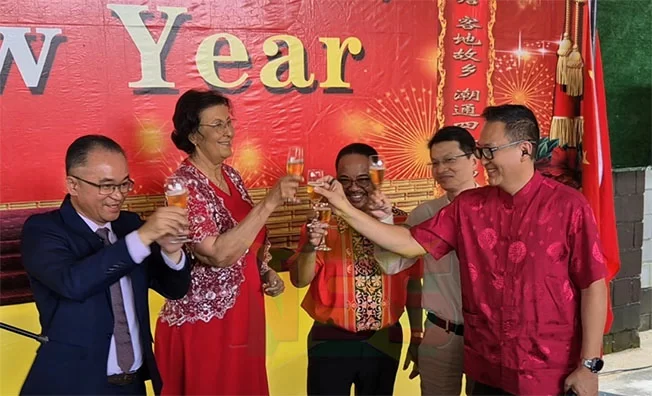
    Surinamese President Jennifer Simons delivered an inspirational address during the Chinese New Year celebrations, emphasizing how the symbolic attributes of the Fire Horse should guide national development efforts. Speaking at the Chung Fa Foei Kon socio-cultural center, where she was accompanied by Vice President Gregory Rusland, President Simons articulated how the Fire Horse’s characteristics of strength, courage, perseverance, and progressiveness could inspire Suriname’s continued nation-building.

    The presidential attendance marked a significant honor for the Chinese community, as noted by association chairman Liu Jianming, who interpreted their presence as demonstrating the high value placed on Chinese-Surinamese relations and underscoring the profound friendship between both peoples.

    Chinese Ambassador Lin Ji highlighted the historical contributions of Chinese Surinamese, noting their 170-year legacy of fundamental contributions to socioeconomic progress and nation-building. Ambassador Ji emphasized that Chinese Surinamese have become ‘integral and indispensable’ to society while looking forward to the 50th anniversary of diplomatic relations between Suriname and China on May 28th this year.

    Rudie Chin Jen Sem, vice-chairman of Chung Fa Foei Kon, expressed the community’s high expectations for the Fire Horse year and their commitment to realizing these aspirations. He simultaneously called for governmental vigor in addressing security and economic challenges.

    President Simons drew powerful parallels between the Fire Horse’s symbolism and Suriname’s national journey: ‘A horse doesn’t stand still—it moves, pulls, and carries. Even in difficult circumstances. So too is Suriname: a country that despite challenges continues striving for development, justice, and prosperity.’

    The president concluded with a rallying cry for collective effort: ‘Let the Year of the Fire Horse inspire us to face the future with courage, to work harder, share more fairly, and coexist with greater confidence. Let us harness the fire’s energy and the horse’s strength to fortify our economy, provide perspective for youth, and create a more just society.’

  • Disabled voters ‘dismayed’ by barriers at polls

    Disabled voters ‘dismayed’ by barriers at polls

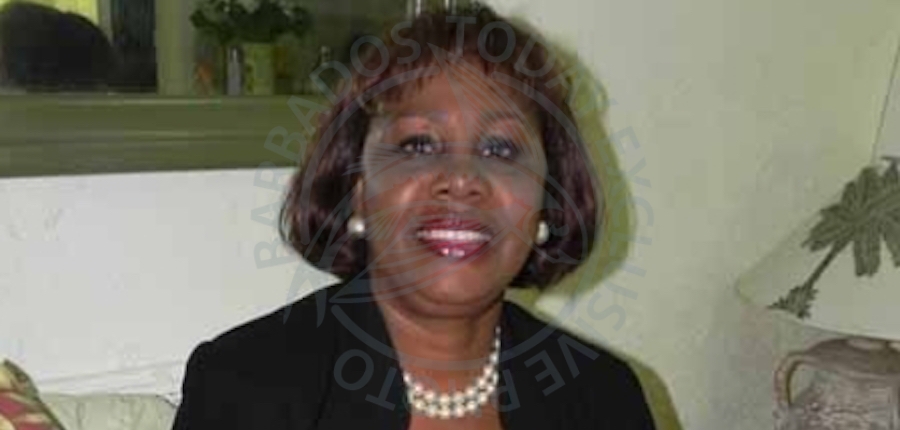
    The Barbados Council for the Disabled (BCD) has declared last week’s general election a missed opportunity for electoral accessibility, revealing that systemic voting barriers for disabled citizens remain fundamentally unaddressed despite repeated government assurances. According to BCD Operations Manager Roseanna Tudor, while no formal complaints were registered, the election perpetuated longstanding structural deficiencies that particularly disadvantage visually impaired voters and individuals with mobility challenges.

    The core issue, Tudor explained, revolves around the violation of ballot secrecy. Visually impaired voters must currently rely on companions to mark their ballots, fundamentally compromising their democratic right to a confidential vote. This arrangement creates a trust dilemma that may deter participation among those who cannot verify their vote was cast as intended.

    Tudor emphasized that accessibility solutions cannot be implemented reactively but must be integrated during initial election planning stages. The council has subsequently presented a comprehensive proposal to the Human Rights Commissioner containing four critical recommendations: establishing a formal post-election accessibility review involving disability stakeholders; creating clear accessibility guidelines with measurable standards for polling stations; implementing early consultation protocols with disability organizations before elections; and developing a national mechanism to systematically collect data on disabled voters’ experiences.

    Notably, the BCD questioned why early voting facilities currently available to essential services workers aren’t extended to disabled citizens, suggesting this would alleviate election day congestion and accessibility challenges. Tudor stressed the importance of centralized national data collection to properly assess participation barriers rather than relying on fragmented private surveys.

    The council expressed appreciation for former minister Kirk Humphrey’s collaborative approach to disability policy development while affirming their commitment to working with new minister Adrian Forde to translate policy advancements into tangible improvements. Additionally, the BCD urged parliamentarians to ensure year-round accessibility of constituency offices, having previously distributed guidance documents on interacting with persons with various disabilities.

  • Man shot dead in daylight attack at Chapman Lane

    Man shot dead in daylight attack at Chapman Lane

    A shocking daylight homicide unfolded near St Mary’s Primary School on Tuesday afternoon, marking a brazen act of violence that has rattled the inner-city community of St Michael, Barbados. According to official reports from the Barbados Police Service, law enforcement units were dispatched to Chapman Lane following emergency calls reporting gunfire at approximately 1:42 p.m.

    Acting Public Affairs and Communications Officer Inspector Ryan Brathwaite disclosed that police operators received initial alerts about the shooting, prompting an immediate multi-unit response. Subsequent communications directed officers to 3rd Avenue, Chapman Lane, where witnesses reported discovering a motionless body.

    Preliminary investigative findings indicate the victim was seated in a local gathering spot known as ‘the canal’ when two assailants approached him from both sides. The perpetrators opened fire with multiple rounds, causing the victim to flee before collapsing fatally on 3rd Avenue. Despite urgent medical response, a attending physician confirmed the victim’s death at the scene.

    Inspector Brathwaite has issued a public appeal for information regarding the shooting, emphasizing that ‘no information is too small’ for investigative purposes. Authorities have directed potential witnesses to contact Crime Stoppers Barbados at 1-800-8477, Police Emergency at 211, or the Criminal Investigations Department directly.

    The incident has provoked profound community distress, particularly given its proximity to school grounds during afternoon hours. A longtime resident who knew the victim described him as non-confrontational and expressed deep sorrow over the tragic nature of his death. ‘Any person that dies that way is very bad, especially for the family and friends,’ she stated, noting the widespread emotional impact on neighborhood residents and children.

  • ‘Blue insurance’: Community-crafted climate insurance plan unveiled

    ‘Blue insurance’: Community-crafted climate insurance plan unveiled

    A groundbreaking initiative to provide affordable, customized climate disaster insurance for Barbados’s most vulnerable populations has reached a critical development phase. The Barbados Association of Non-Governmental Organisations (BANGO) has unveiled an insurer-backed prototype following years of extensive consultations across the Caribbean region.

    Funded by the German Federal Ministry for Economic Cooperation and Development (BMZ), this regional program has engaged five nations—Antigua and Barbuda, Barbados, Grenada, Jamaica, and Dominica—with Barbados now leading the final development of a ‘fit for purpose’ insurance product ready for local pilot testing.

    Dr. Marcia Brandon, former BANGO Secretary-General and director at the Caribbean Centre of Excellence for Sustainable Livelihoods, emphasized the program’s focus on protecting those in the blue-green economy. ‘People living in vulnerable situations regarding climate disaster—those on coastlines, farmers, fisherfolk, and maritime workers—need instruments that help them recover quickly after disasters,’ she stated.

    The development process has been uniquely participatory, with target communities actively designing insurance concepts through iterative feedback cycles. ‘They have actually created these insurance products which would be fit for purpose to help them if a disaster came,’ Dr. Brandon explained, noting how different groups refined proposals based on their specific needs.

    The current prototype represents a significant milestone—an actual insurance company proposal that is both affordable and accessible. However, Dr. Brandon stressed this remains an evolving process: ‘When I say final product, I’m sure there will be further iterations because we want to meet people’s needs, not just make money for insurance companies.’

    Dr. Christopher Walton, current BANGO secretary-general, highlighted the importance of customizing coverage for Barbados-specific risks. ‘Insurance is needed by everyone, but this isn’t one-size-fits-all,’ he noted, explaining how risks vary dramatically even within small geographic areas—from flooding in St. James to wind damage in St. Joseph.

    The initiative faces significant cultural challenges, particularly overcoming complacency about climate threats. ‘It was years before Barbados saw a hurricane, so people got complacent,’ Dr. Walton observed. ‘Now that it’s really starting to pick up, we’re changing that mindset.’

    Accessibility remains another critical concern. Noting that Barbados ‘is paper-heavy,’ Dr. Walton emphasized the need for digital processes to accommodate busy workers like fisherfolk for whom ‘any time off their boat is less money they make.’

    The proposed solution features an innovative hybrid parametric insurance model explained by Olivia Chase, Senior Development Specialist at the Caribbean Policy Development Centre. This model would trigger payouts based on measurable parameters like wind speed or excess rainfall, verified by official bodies like the Barbados Met Services. Consultants have recommended a three-layer approach: parametric triggers for rapid payouts, an indemnity layer for operational expenses, and a savings component potentially managed through credit unions.

    The final consultation at the Oceana Innovation Hub underscored the connection between climate education and community resilience. Director Ché Greenidge noted the facility’s focus on climate education and ocean literacy, while emphasizing the importance of involving community organizations and fisherfolk in insurance discussions.

    This micro-level approach contrasts with macro tools like the Caribbean Catastrophe Risk Insurance Facility by focusing specifically on individual and community needs. The initiative aims to build resilience beyond physical infrastructure, providing liquidity to avoid debt or asset sales post-disaster while promoting awareness and equitable access.

    With the final engagement session complete, gathered feedback will now inform revisions before the pilot insurance product is officially launched, marking a significant step toward climate resilience for Barbados’s most vulnerable workers.


  • Churches pivot to win back youth as attendance lags post-Covid

    Churches pivot to win back youth as attendance lags post-Covid

    Religious institutions across Barbados are implementing innovative strategies to address a concerning trend of dwindling congregation attendance, particularly among younger demographics, as the Christian community observes the commencement of Lent. This decline, which church leaders characterize as a persistent ‘new normal’ following the pandemic, extends beyond mere statistical reductions to reflect deeper shifts in engagement patterns and spiritual practices.

    Reverend Dr. Cicely Athill-Horseford, Head of the Barbados Christian Council, confirmed that congregational numbers have failed to return to pre-pandemic levels. She observed that streaming services have inadvertently created a permanent alternative to physical attendance, affecting not only youth but older parishioners as well. ‘People choose to come when they want,’ noted Rev. Athill-Horseford, highlighting a broader apathy toward institutional church participation that has manifested even during significant liturgical periods like Ash Wednesday services.

    In response to these challenges, religious leaders are deploying targeted approaches. Rev. Athill-Horseford has implemented a personalized outreach program where church officers individually reconnect with absent members—a strategy already showing promising results, especially with younger congregants. Meanwhile, at Calvary Moravian Church, Pastor Adrian Smith reported maintaining consistent engagement through intergenerational programming that combines traditional ministries with culturally relevant activities like steelpan groups and youth fellowship initiatives.

    Reverend Lucille Baird of Mount Zion’s Missions Barbados Foursquare Church revealed proactive measures to address the engagement gap, including sending senior leaders overseas for specialized training in next-generation ministry approaches. ‘We have to adjust our programs to accommodate the next change because they are very much different in how they do business and what their expectations are,’ explained Rev. Baird, while emphasizing that such adaptations would not compromise core theological standards.

    As the Lenten season progresses, church leaders unanimously agree that revitalizing youth participation requires strategic innovation in engagement methodologies rather than doctrinal modifications. This collective recognition underscores a significant transformation in how religious institutions conceptualize community building and spiritual development in a post-pandemic reality characterized by digital alternatives and changing attendance patterns.

  • The Heartbeat of Independence High School

    The Heartbeat of Independence High School

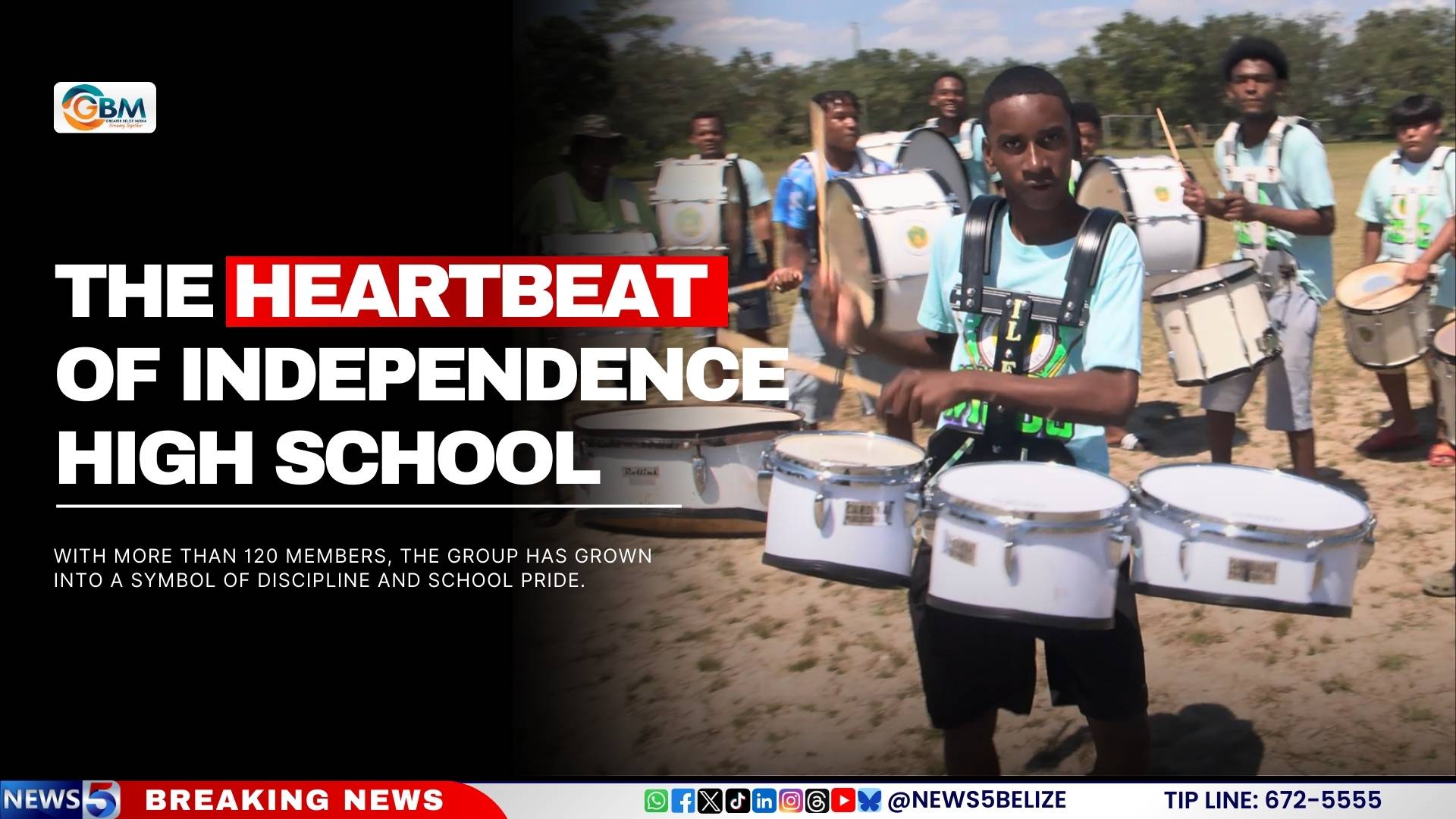
    At Independence High School, the resonant pulse of a 120-member drum corps has evolved from an extracurricular pursuit into the institution’s defining heartbeat. Under the expert guidance of Band Director Aretha Flores, this ensemble has cultivated a reputation for musical innovation, rigorous standards, and an unwavering commitment to academic excellence.

    The program represents far more than musical performance—it serves as a transformative educational platform where students develop crucial life skills. Participants consistently report enhanced classroom focus, strengthened self-confidence, and improved collaborative abilities through their immersion in synchronized music and movement.

    ‘This experience creates powerful connections across our diverse student body,’ shared one participating student. ‘We meet, we learn from each other, and we grow together in ways that extend beyond the practice field.’

    With the national Band Festival approaching within weeks, the ensemble intensifies preparations for their upcoming performance. They prepare to take the national stage carrying not just their instruments, but the collective pride of their school community and the values of discipline they’ve collectively cultivated.

    The full depth of this story will be featured on News 5 Live’s 6 o’clock broadcast, offering viewers comprehensive insight into this exceptional program’s impact.