
A catastrophic plane crash has claimed the lives of all 12 people on board a private skydiving aircraft that went down Sunday in rural central Missouri, United States, emergency response officials confirmed to AFP. The tragedy unfolded near Butler Memorial Airport, located just 60 miles south of Kansas City in Bates County, according to Dennis Jacobs, director of the county’s local Emergency Management Agency. Local media accounts detail that the plane was carrying 11 recreational skydivers and a single qualified pilot when it departed the airfield around 11:30 a.m. local time. Almost immediately after lifting off, for reasons that remain unclear at this early stage of investigation, the aircraft reversed course and came down in a field adjacent to a major state highway. In the immediate aftermath of the crash, state highway authorities closed the affected stretch of road to through traffic, both to support emergency response operations and to secure the crash site for official investigators. In the hours following the incident, multiple response teams arrived at the scene to conduct search and recovery operations and begin the preliminary probe into what caused the crash. These teams include local emergency medical and fire crews, officers from the Missouri State Highway Patrol, and technical investigators from two federal oversight bodies: the Federal Aviation Administration, which regulates civilian aviation, and the National Transportation Safety Board, which leads probes into major civil aviation accidents across the United States. As of Sunday evening, no further details on the identities of the victims or potential causes of the crash have been released to the public.
分类: society
-

Covid-Special ed link?
SAVANNA-LA-MAR, Westmoreland — Jamaica’s education system is facing an unprecedented crisis: a sharp, sustained surge in demand for special education services that has hit the country’s most urban regions particularly hard. Senior education officials say the spike tracks closely with major public health outbreaks over the past decade, with the sharpest rise coming among children born during the COVID-19 pandemic. To meet this growing need, the Ministry of Education has launched a targeted expansion initiative to convert underused school infrastructure into accessible special education hubs, while exploring cross-government collaboration to address gaps in long-term planning.
Dionne Gayle-Smart, Assistant Chief Education Officer in the ministry’s Special Education Unit, outlined the scope of the crisis during an exclusive interview with the Jamaica Observer, held on the sidelines of the official opening of a new primary school block at Savanna-la-Mar Inclusive Academy in Westmoreland last Thursday.
“Across the entire island, we are seeing consistent growth in the number of students requiring specialized support — from learners on the autistic spectrum to those living with attention deficit hyperactivity disorder, or ADHD,” Gayle-Smart explained. “Even here in Westmoreland, our unit has recorded a steady rise in placement applications for special education. Nationally, though, the situation in Kingston and St Andrew is particularly alarming.”
Drawing on years of data tracking enrollment trends, Gayle-Smart noted that demand spikes have consistently followed major epidemic and pandemic events that have impacted Jamaica over the last 10 years. The country recorded its first large-scale chikungunya outbreak in 2014, followed by a Zika epidemic in 2016, and the national COVID-19 pandemic in 2020.
“I am not a public health researcher, but the timeline lines up very clearly with these three major outbreaks,” she said. “In the years following each event, we have seen a measurable increase in the number of school-aged children presenting with neurodevelopmental conditions that require special education support.”
Official unit data puts the increase in demand following the chikungunya and Zika outbreaks at roughly 25 percent, Gayle-Smart said. But the rise after COVID-19 has been far steeper, with demand jumping between 50 and 60 percent. Today, the children born at the height of the pandemic between 2020 and 2021 — who officials have dubbed “Covid babies” — are now entering primary school, bringing the crisis to a head.
“When you map the timestamps, it lines up perfectly: the children born in 2020 are now five and six years old, and they are the cohort currently seeking special education services,” she added.
To address the sudden influx of students needing support, the Ministry of Education has rolled out its flagship Inclusive Spaces Programme, an initiative that repurposes unused school infrastructure to expand specialized capacity without the cost of building entirely new facilities from the ground up. The program targets former primary and junior high schools, which have surplus space after the national phase-out of the junior high school model.
“This is one of my core projects, and we are working to roll out these new accessible spaces across every region of the country,” Gayle-Smart said. “The vacant wings left after the junior high phase-out are being fully retrofitted and refurbished to serve as modern, inclusive learning environments for students with special needs.”
The first two new inclusive hubs, located at Constant Spring Primary and John Mills Primary in the high-demand region of St Andrew, are scheduled to open to students this September. Additional hubs in St Catherine’s Region Six are set to welcome their first cohorts as early as January, reflecting the higher concentration of demand in Jamaica’s urban centers. But expanding access to rural regions like Region Four — which covers Westmoreland, Hanover, and St James — presents unique, complex challenges that officials are still working to resolve.
“Working in the rural western parishes is a little bit ticklish,” Gayle-Smart acknowledged. “Many of the available vacant spaces are located in the mountainous interior, far from population centers, which creates major transportation barriers for students and their families.”
To overcome this barrier, the ministry is currently exploring a partnership between the Inclusive Spaces Programme and the National Rural School Bus Programme to provide dedicated transportation for students accessing rural special education hubs. As of yet, however, no suitable site has been confirmed for a permanent inclusive space in Region Four. In urban centers within the region, such as Savanna-la-Mar and Montego Bay, existing school buildings are already operating at full capacity, leaving no vacant space to repurpose.
“In the urban centers of western Jamaica, all existing school space is already in use, so repurposing is not an option,” Gayle-Smart explained. “That means we have to shift toward planning for new construction, which we are actively exploring at this time.”
Beyond expanding physical infrastructure, the ministry is pushing for long-term systemic change through inter-ministerial collaboration with the Ministry of Health and Wellness, with the goal of identifying developmental delays and planning for future demand years before children reach school age. Gayle-Smart said early data sharing between health and education authorities would allow the ministry to proactively plan capacity, rather than reacting to sudden demand surges after they emerge.
“A seamless, cross-ministerial partnership would make a world of difference for our students,” she explained. “If the Ministry of Health can share early data on children who show developmental markers or early signs of special needs at birth, we can forecast demand years in advance. If we had had that data after the 2020 COVID-19 peak, we would have known how many children would need support by 2025-2026, and we could have built capacity ahead of time. That kind of inter-sectoral planning is absolutely critical for addressing this crisis moving forward.”
Jamaica’s experience is far from unique: the island’s surge in special education demand mirrors a growing global trend, with school systems across the world struggling to keep up with rising need. Recent U.S. federal data shows more than 8.2 million American students currently qualify for special education services, while a June 2025 BBC report found that one in five students in England now receives special education support — a 44 percent increase since 2016.
-
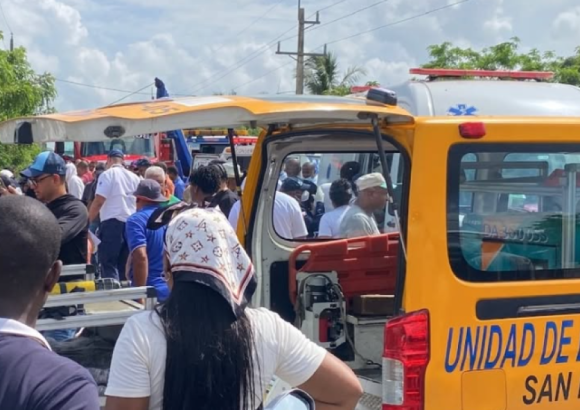
Delicate They were going to work and ended up in the hospital: accident on the Hato Mayor-San Pedro highway leaves 18 injured
A serious multi-vehicle incident left at least 18 people with injuries early Saturday on a key intercity highway linking the Dominican Republic towns of Hato Mayor and San Pedro de Macorís. The crash involved a public passenger bus operated by the San Pedro de Macorís municipal government.
All of the injured victims were municipal program staff and participants traveling together from San Pedro de Macorís to Hato Mayor. They had been en route to a scheduled community work day organized as part of the national Supérate social development initiative when the collision occurred.
Local emergency response teams from the Dominican Civil Defense quickly arrived at the crash site to manage rescue operations. Responders confirmed that two passengers had become trapped in the wreckage of the bus after the impact, forcing rescue crews to deploy specialized vehicle extrication tools to extract the pinned individuals. Both of these rescued passengers remain in critical condition as they receive care.
Following initial on-site triage, all 18 injured people were transferred immediately to nearby regional medical facilities, where they are currently under ongoing observation and treatment from local clinical teams.
-

WATCH: St Elizabeth police appeal for use of domestic violence centre amid deadly family dispute
ST ELIZABETH, Jamaica — A brutal early-morning attack that left one young man dead and two other family members critically injured has spurred top local law enforcement to urge parish residents to pursue peaceful solutions for personal and domestic conflicts, rather than letting tensions escalate into lethal violence. The incident unfolded Saturday in the quiet community of Stephenson Town, located near Southfield in the parish of St Elizabeth, when a 19-year-old local resident allegedly attacked his two brothers and their mother with a machete at their shared family home. According to official police accounts, the violence broke out shortly before 1 a.m. 31-year-old Travis Williams, a local laborer and Stephenson Town resident, suffered multiple severe slash wounds across his body and was pronounced dead at the scene. The 19-year-old suspect’s 14-year-old brother and 43-year-old mother were rushed to nearby medical facilities with life-threatening injuries, and remained in critical condition following the attack. Law enforcement officials took the 19-year-old suspect into custody shortly after the incident. On Sunday, Superintendent Coleridge Minto, head of the St Elizabeth Police Division, spoke publicly about the tragedy to highlight a gap that many residents are missing: a free, professional support resource already available to help de-escalate domestic and interpersonal conflicts before they turn deadly. Minto emphasized that this fatal attack is just the latest in a disturbing trend of violence driven by unresolved personal disputes sweeping the parish so far this year. To date, St Elizabeth has recorded 14 homicide cases in the current year, and nearly 60% of those deaths can be traced back to interpersonal conflict or domestic abuse, according to police data. “The most recent murder stems from a family dispute. I continue to speak to persons in the parish that the division has a domestic violence intervention centre, it is located in Santa Cruz right at the police station and so persons who have conflicts, disputes that they are unable to solve, we encourage them and appeal to them to seek the services of the police,” Minto stated during his Sunday address in Santa Cruz. The intervention center, Minto confirmed, staffs a team of fully trained professionals specifically prepared to support families and individuals navigating contentious domestic conflicts. “There are trained individuals at this location that are willing and ready to assist persons with domestic disputes, it is quite unfortunate this situation which unfolded,” he added. Minto’s public appeal comes as local law enforcement works to curb the rising tide of preventable violence linked to unresolved domestic tension in the parish, pushing residents to reach out for support rather than resorting to violence when disputes arise.
-

T&TEC crew hailed after rescuing baby from burning building
A team of frontline utility workers from Trinidad and Tobago has earned widespread public praise and the title of heroes after pulling a newborn infant and multiple other trapped people out of an engulfed residential or commercial structure in Port of Spain, the country’s capital. The quick-thinking, brave group belongs to the Distribution North Emergency Crew of the Trinidad and Tobago Electricity Commission (T&TEC), the state-owned power provider that has publicly celebrated its employees’ life-saving actions in an official announcement.
In the formal statement released to the public, the national power commission highlighted that it holds extreme pride in the emergency team, who dropped their routine tasks and reacted without hesitation to the unfolding emergency to assist with the rescue operation. When confronted with the extreme hazards of a working structure fire, the crew demonstrated decisive judgment and prioritized saving human life over their own personal safety, traits that the commission says it is honored to recognize. “We commend them for their quick thinking and selfless action in the face of danger,” the statement reads.
The full roster of the heroic crew has been released to the public: it includes lead engineer Crystal Moe, senior field supervisors Odell Wickham and Gary Cyrille, crew supervisor Vidyanand Kanhai, three line maintenance workers A Robert Nicholls, Akeem Demming and Xavier Lake, and aerial lift operator Eric Williams. T&TEC has also announced plans to share official photographs of the full team with the public once all members return to their regular assigned duties after the rescue operation.
As of the latest update, additional details about the root cause of the blaze, the extent of damage to the building, and the current medical condition of the people rescued by the crew have not yet been released to media outlets or the general public.
-

Veteran engineer calls for drainage network overhaul
With more than five decades of professional experience spanning major infrastructure projects across three Caribbean nations, a decorated veteran civil engineer has delivered a stark warning about the critical state of Barbados’ stormwater drainage networks, linking decades of faulty policy to accelerating road decay and growing flood vulnerability across the island.
Andrew Hutchinson, whose career covers civil, structural and environmental engineering with deep expertise in stormwater management, watershed modeling and rainwater harvesting, shared his decades of on-the-ground insights during a recent Friday webinar focused on how poor drainage systems undermine urban infrastructure. His assessment pulls back the curtain on longstanding systemic flaws that have left Barbados ill-prepared to handle intense seasonal rainfall.
Hutchinson argues that substandard drainage is not a minor infrastructure issue—it is the single leading driver of road deterioration across the entire island. Rating the country’s current road drainage infrastructure just 2.5 to 3 out of 10, he emphasized that policymakers and planners have repeatedly failed to recognize drainage’s outsized role in preserving road integrity.
The roots of the current crisis stretch back to road expansion projects carried out in the 1980s, Hutchinson explained. Instead of acquiring additional land to build out full, functional drainage networks, project leaders opted to remove existing drains and replace them with narrow kerbs and slipper drains. This cost-cutting shortcut effectively turned the roads themselves into makeshift drainage channels. When heavy rains hit, water cannot run off the road surface into designated storage ditches, leaving water pooled on pavement until it overtops kerbs and floods adjacent private and public land.
This short-sighted policy has created generational damage to Barbados’ road network, the engineer added. Compounding the problem, the Barbados Water Authority regularly excavates trenches to install utility connections, and often fails to properly restore the road surface after work is complete, creating additional weak points that break down faster when exposed to standing rainwater.
Hutchinson pointed to the ABC Highway as a proven model of what proper drainage design can achieve. Unlike nearly all other major roads on the island, the ABC Highway includes purpose-built stormwater ditches that capture runoff, store it temporarily, and allow it to gradually drain into underground wells, fitted with grates to block debris from clogging the system. Even after heavy downpours, the system works as intended, keeping road surfaces clear and preventing downstream flooding.
Beyond large-scale infrastructure design, Hutchinson stressed that every stormwater project requires rigorous hydrological analysis tailored to the size of the local watershed, and encouraged widespread adoption of specialized modeling software like HydroCAD to guide design decisions. For any watershed larger than 10 hectares, engineers must use modeling to calculate precipitation rates for 24-hour storm events and decide whether to design for 10-year or 25-year storm events to ensure long-term resilience. A core, often overlooked, factor in this modeling is the time of concentration— the period it takes a drop of water to travel from the farthest point of a watershed to the infrastructure point of interest, such as a culvert. Getting this calculation wrong leads to undersized, ineffective drainage systems that fail during heavy rain, he explained.
To address the current crisis, Hutchinson has put forward a range of actionable solutions, starting with expanded adoption of low-impact development drainage systems that boost water infiltration and slow runoff. Options like GeoWeb permeable surfaces and grassed parking lots, he noted, create durable, usable surfaces that can even handle heavy truck traffic while allowing rainwater to soak into the ground rather than running off. For areas with limited open space, Hutchinson recommended the installation of small check dams in natural gullies and underground stormwater chambers in dense urban areas, which provide critical extra storage and infiltration without requiring above-ground ditches or ponds that take up valuable space. He highlighted existing successful examples of this approach on the island: underground storm chambers are already in use near Kensington Oval and along Highway 5, where there was no room for above-ground storage infrastructure.
During the webinar’s question-and-answer session, Hutchinson doubled down on his call for widespread deployment of natural and built water storage solutions across Barbados, including expanded check dams, retention ponds, detention areas and rainwater harvesting systems. These interventions, he argued, could dramatically reduce the severe flooding that regularly hits urban centers including Holetown, Speightstown and Bridgetown, while also recharging the island’s depleted aquifers and boosting long-term water security for all Barbadians. When asked if the island needs to prioritize expanded water storage, he answered simply: “I would say yes to all of the above.”
-

Nickie Ambrose Wins Chromebook in Flow’s Riddim and Rewards Promotion
A lucky telecommunications customer is celebrating this week after taking home one of the top prizes in Flow’s highly anticipated Riddim and Rewards promotion. Nickie Ambrose, a local consumer who participated in the regional telecom provider’s seasonal campaign, was officially announced as the winner of a brand-new Chromebook laptop, a prize designed to support both personal productivity and digital connectivity for the recipient.
Flow, a leading Caribbean telecommunications firm that specializes in mobile, broadband and digital entertainment services, launched the Riddim and Rewards promotion to engage its existing customer base and reward loyal users for their ongoing support. The campaign, which blends the region’s rich musical culture (highlighted by the “Riddim” naming convention, a nod to Caribbean rhythm and musical heritage) with tangible consumer incentives, has generated widespread participation across all of the company’s operating markets since it launched earlier this year.
To enter the promotion, customers were required to meet simple eligibility requirements, typically including maintaining an active prepaid or postpaid service account with Flow and completing qualifying activities such as recharging a mobile account or purchasing a qualifying subscription add-on. Each qualifying action entered participants into a random drawing for a range of prizes, from top-tier electronics like the Chromebook to gift cards, mobile data bonuses, and other experiential rewards tied to local entertainment events.
In a statement released following the prize announcement, representatives from Flow congratulated Ambrose on her win, noting that promotions like Riddim and Rewards are a core part of the company’s commitment to giving back to the communities it serves. The company also confirmed that additional prize drawings are scheduled for the remaining duration of the campaign, encouraging all eligible customers who have not yet participated to complete their qualifying activities for a chance to claim their own rewards before the promotion concludes.
Ambrose has expressed her excitement about the win, sharing that the new Chromebook will be put to immediate use for both personal work and family digital needs. Local community members have also extended congratulations to the winner, with many noting that the promotion provides a fun, accessible way for customers to earn extra benefits from their regular telecommunications services.
-

Hadeed Family Pays Tribute to Sir Aziz Hadeed’s Legacy of Service and Leadership
The Caribbean nation of Antigua and Barbuda is mourning the loss of one of its most towering public and private figures, Sir Aziz Fares Hadeed KCMG, CBE, who passed away on 23 May 2026 at the age of 79. In an official statement released after his death, the Hadeed family has paid loving tribute to their patriarch, celebrating a life spent in relentless service to leadership, community progress and national growth that left an unerasable imprint on both Antigua and Barbuda and the broader Caribbean region.
Widely celebrated as one of the most influential businessmen and philanthropists in the country, Sir Aziz steered the Hadeed Group of Companies as Executive Chairman to grow into one of the largest corporate conglomerates in the Eastern Caribbean. Under his direction, the group drove substantial economic expansion across the region, created thousands of stable jobs for local workers, and laid foundational groundwork for decades of private sector development. His influence stretched far beyond the boardroom, however: he was equally respected as a diplomat, dedicated public servant and passionate advocate for community uplift, with major contributions to advancing public education, expanding philanthropic access for marginalized groups, and strengthening civic institutions across Antigua and Barbuda.
Over his decades of service, Sir Aziz earned some of the world’s most prestigious honors in recognition of his work. He was appointed a Commander of the Order of the British Empire (CBE) in 2016 for his contributions to commerce and public life, and just earlier this year, he was elevated to the rank of Knight Commander of the Order of St Michael and St George (KCMG) — one of the highest distinctions awarded for outstanding public and international service.
The family expressed deep gratitude to the general public for the outpouring of prayers, affection and support they have received in the wake of Sir Aziz’s passing, noting that his lifelong commitment to leaving communities better than he found them will endure as a core part of his legacy. “We honour and celebrate the extraordinary life and legacy of our beloved patriarch,” the statement reads.
As tributes continue to arrive from across Antigua and Barbuda and neighboring Caribbean nations, those who worked with Sir Aziz and benefited from his initiatives remember him as a transformative leader. His work reshaped the country’s business ecosystem, expanded access to educational opportunity, and lifted up countless communities through targeted philanthropy and public service. The family emphasized that his core values of integrity, radical compassion and selfless service will continue to inspire all who were touched by his work for generations to come.
-

Over 100,000 Pieces of Plastic Waste Given a Second Life in Antigua and Barbuda
A landmark environmental initiative in Antigua and Barbuda has turned more than 100,000 discarded plastic bottle caps into durable public seating, marking a major win for community-led ocean conservation and waste reduction efforts.
The West Indies Sail Heritage Foundation, the organization leading the project, announced the milestone as part of its ongoing Ocean Love No Plastic No Waste programme. Instead of allowing single-use plastic caps to end up in landfills or leak into surrounding oceans, the initiative has repurposed the collected waste into sturdy, long-lasting benches that now serve eight local schools and youth organizations across the twin-island nation. Beneficiaries of the donations include Sea View Farm Primary School, Newfield Primary School, Cobbs Cross Primary School, the Antigua & Barbuda Girl Guides Association, Cedar Grove Primary School, Potters Primary School, Jennings Secondary School and Buckleys Primary School.
Every finished bench incorporates a minimum of 12,000 recycled plastic caps, turning a common everyday waste item into a functional public asset that will serve communities for years. Beyond providing useful seating, the project is designed to blend tangible conservation action with hands-on environmental education for young people. Through the programme, participating students learn core lessons about plastic pollution, marine ecosystem protection, and the four key principles of sustainable waste management: Reduce, Reuse, Recycle and Refuse. The initiative encourages young participants to reframe their understanding of waste, teaching them that materials most people throw away can be transformed into valuable, useful resources.
For the foundation and local communities, these benches are far more than just a place to sit. They serve as constant, visible reminders of what collective community action can accomplish when groups unite to cut waste and protect shared natural spaces. Every bottle cap kept out of the waste stream is one less piece of plastic that risks contaminating local coastlines, harming marine life, or damaging the island nation’s sensitive ecosystems that rely on clean oceans for tourism and livelihoods.
The success of the milestone would not have been possible without external support, and the West Indies Sail Heritage Foundation has publicly thanked its core partners and sponsors: the Sandals Foundation, CCRIF SPC, and the French Embassy in Saint Lucia. Their funding and logistical backing have made both the collection drive and the distribution of the upcycled benches possible.
Looking ahead, the Ocean Love No Plastic No Waste programme is set to continue expanding through 2026 and 2027, bringing environmental education workshops, plastic collection drives, and upcycling projects to even more young people across Antigua and Barbuda. The foundation’s long-term goal is to inspire the next generation of environmental leaders to rethink their relationship with plastic, develop creative local solutions to waste challenges, and launch their own community initiatives to keep plastic out of oceans and natural areas.
By turning tiny, often overlooked discarded bottle caps into lasting public infrastructure, the programme offers a powerful example of how small, individual actions can add up to large, meaningful environmental change. The foundation invites community members and local groups to join the effort, emphasizing that collective action can turn waste into opportunity and build a cleaner, more environmentally resilient future for Antigua and Barbuda.
-

All Saints Shopkeeper Fights Off Chain-Snatching Attempt
A bold shopkeeper in the All Saints district has become a local hero after successfully fending off an attempted chain-snatching incident that unfolded on the shop floor earlier this week.
Local law enforcement sources confirm that the incident began when an unidentified suspect entered the small independent retail outlet under the pretense of browsing merchandise. Once inside, the individual suddenly lunged toward the owner, reaching for the gold chain the shopkeeper was wearing around their neck in a blatant attempt to steal the valuable piece of jewelry.
Witnesses who were inside the store at the time of the attack described the shopkeeper as acting quickly and decisively, refusing to surrender to the robber’s demands. Instead of complying, the owner pushed back against the suspect, shouting to draw attention from passersby and engaging in a brief physical struggle that threw the attacker off balance.
The unexpected resistance caught the would-be thief off guard. Within seconds, the suspect realized they would not be able to seize the chain and escape easily, and fled the premises on foot before any bystanders could block their exit. Emergency responders and police were called to the scene immediately after the incident, launching a search operation for the suspect that remains ongoing as of press time.
The shopkeeper, who has operated their small business in the All Saints area for more than 12 years, sustained only minor scrapes during the struggle and was able to reopen the store the following day. In a brief interview with local media, the owner emphasized that they wanted to send a message that small business owners will not stand idly by while criminals target them or their community.
Local residents have rallied around the shopkeeper, praising their courage in the face of danger. Neighborhood safety organizers have noted that the incident highlights ongoing concerns about street-level petty crime in the area, and are calling for increased police patrols to reassure local business owners and shoppers.