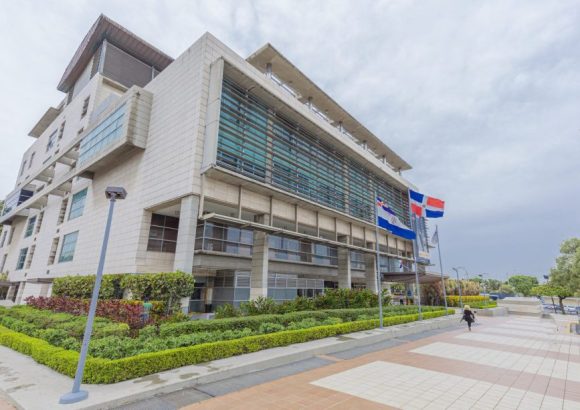
On April 24, the Canawaima Workers Organization issued an official statement addressing growing public controversy surrounding a reported $5,000 payment to its president, Dayanand Dwarka, pushing back against public scrutiny by clarifying the legitimacy and intended purpose of the transfer. The union emphasized that the sum is a fully authorized contribution to cover work-related expenses incurred by Dwarka during his tenure leading the organization.
分类: society
-

A century of gratitude
On a quiet Thursday in Kingston, Jamaica, 100-year-old Vera Green woke to mark a historic milestone few ever reach: her centennial birthday. Though a recent chronic obstructive pulmonary disease (COPD) diagnosis has left her movement limited and breathing labored, the soft-spoken centenarian says she feels nothing but gratitude for the century of life she has lived.
“I can hardly catch my breath, so I mostly have to stay in one place, but I thank the Lord and I am quite satisfied,” Green shared in an interview with the Jamaica Observer during a home visit Thursday.
Born as one half of a pair of twins in the rural community of Stanmore, St Elizabeth, Green and her brother Vivian were the youngest children of their working-class parents. From an early age, she showed a sharp curiosity and love for learning, enrolling at St Albans Primary and Infant School with a clear dream: to become a teacher. That ambition was cut short, however, when crippling family financial hardship forced her to leave schooling after sixth grade to help support her household.
“I wasn’t backward in school; my head was very good and everything. I wanted to be a teacher, but my parents never had the means to support my studies,” Green reflected. “I made sure all my own children got an education, went to school, church, every opportunity, and they turned out well. If my parents had been able to help me pursue my goals, I know I would have achieved something great too.”
After leaving primary school, Green took on casual day labor for local families, and later supplemented her income with small-scale farming, she said. Her granddaughter Lisa, who now helps care for her, shared that Green’s resourcefulness extended far beyond standard work — for decades, she served as an uncertified community midwife, helping dozens of local women deliver their babies at a time when the nearest hospital, Black River Hospital, was miles away and inaccessible for many rural families.
“In the rural countryside back then, there weren’t formal career opportunities for women like her, so she took on whatever work she could do, from housekeeping to farm work that local community members hired her for,” Lisa explained. “What always stuck out was how she stepped up when people needed her. Any time a woman went into labor, people would come running for Vera, and she would go help deliver the baby — no questions asked.”
Today, Green lives with COPD and hypertension, which has slowed her movement considerably, but she retains her sharpness and daily devotional routine. Remarkably, she still reads her Bible every day without needing prescription glasses, recites scripture daily, and maintains a steady practice of prayer, Lisa added.
Even as Green embraces gratitude for reaching 100, she acknowledges that advanced age brings unignorable challenges. “When you get old, everything fades. You can’t take care of yourself the way you used to. If people don’t help me, if they don’t put what I need in my hand, I can’t get it for myself,” she said. “But still, I thank God, and I bless the people who take care of me.”
Members of Green’s church community, the Kencot Seventh-day Adventist Church, gathered to celebrate her milestone this week. Christopher Johnson, leader of the congregation’s Seniors Ministry, who hails from the same St Elizabeth community as Green, said the centenarian is a beloved member of the church, and currently the only member of the congregation to reach the 100-year mark.
“We are delighted to share this 100th birthday with her. It’s an extraordinary milestone,” Johnson said. “We have several other nonagenarian members, three women aged 97, 98 and 99, but Vera is our first centenarian. She is quiet but always active, incredibly warm and friendly to everyone she meets.”
-

Dancing for their future
Jamaican-born educator Karen Francis has turned her decades-long commitment to youth development into action, completing a grueling 12-hour dance marathon at Trench Town’s iconic Culture Yard this Wednesday to raise $500,000 for a new youth entrepreneurship initiative tailored to the tight-knit community in St Andrew.
The effort, designed to unlock the latent creative talent of Trench Town’s young people and turn that skill into sustainable, globally connected livelihoods, will breathe new life into a shuttered local reading centre, which will serve as the headquarters for the upcoming Trench Town Community 4-H Youth Entrepreneurship Programme. Alongside fundraising for the programme, the dance marathon also marked the official launch of the Founding Supporter Circle, an international outreach campaign that invites 500 donors across the globe to contribute $1,000 over one to two years to hit the $500,000 target. Interested backers can choose to sponsor individual segments of the marathon or make direct donations to the youth-focused project.
In an interview with the Jamaica Observer on the day of her performance, Francis explained that the idea for the programme grew out of her observation that the unused reading centre – once supported by a sponsor that could no longer sustain funding – was leaving local children without access to a critical community learning space. Drawing on her years of experience organizing and leading 4-H clubs, she saw an opportunity to repurpose the space and leverage her own skills to uplift the neighborhood she holds close.
The programme will equip participating young people with three core pillars of training: entrepreneurship basics, cultural arts skill-building, and business English instruction, all designed to help participants access and engage with international markets. Unlike traditional community aid models, the initiative focuses on empowering youth to build their own independent trade relationships, including connections with young creators and businesses across other African nations. Leveraging 4-H’s existing global network, the programme will help integrate Trench Town creators into an established circular economic ecosystem, turning untapped local talent into stable, long-term income.
Francis, who now resides in the United States and has led youth-focused projects across the world, emphasized that Trench Town already boasts a vibrant informal local economy full of skilled creators – from seamstresses and garment makers to artisans – that just needs intentional structure to scale. “Anything that you need, they have here. This is what black economy looks like, and it just needs to be properly structured and organised,” she noted. Participants will learn to design, produce, and market a range of cultural goods for local and international sale, including handmade jewelry, crocheted goods, original paintings, pottery, and branded Trench Town merchandise.
To enrich the programme’s training offerings, Francis has arranged for alumni from the U.S. State Department’s English Language Fellow Programme and other international exchange initiatives to join as mentors, guest instructors, and supporters. She stressed that fluency in standard English is a critical tool for global commerce, noting that while Jamaican patois – the primary daily language of most Trench Town residents – is a culturally rich and valuable part of local identity, the ability to code-switch between patois and standard English is essential for international trade. “It is important for all of us to be able to switch from patois and back into English. We need it to engage in trade, which is what all countries are pretty much engaged in,” she explained.
Beyond economic empowerment, the initiative also seeks to reshape harmful public narratives about Trench Town. While the community is globally celebrated as the birthplace of reggae legends including Bob Marley, Peter Tosh, and Bunny Wailer, it has long been stigmatized due to past violent incidents, and many local young people lack access to structured entrepreneurial opportunities. Francis aims to rewrite that story by centering Trench Town’s youth and their creative work.
The programme will position products made by participants to sell directly to tourists visiting the Culture Yard, moving beyond a handout model to a mutually beneficial exchange that helps youth recognize the inherent value of their work. “Rather than handouts, they are able to come and spend their money; we want them to see the value in their products. They are not begging; they assign the value to it and they exchange it that way so they learn the value of what they’re producing,” Francis said. This model, she added, will help young people build lasting personal pride and a stronger sense of connection to their community, laying the groundwork for long-term, community-led growth.
-

Deep blues at schools
A wave of violent incidents involving high school students across Jamaica has sparked urgent alarm from senior law enforcement, who warn that physical and armed conflicts among young people are rising at an alarming rate despite ongoing proactive intervention efforts.
Acting Senior Superintendent Mark Harris, head of the St Andrew Central Police Division, outlined the growing crisis in an interview with Jamaica Observer on Friday, just one day after a 16-year-old student from elite all-boys school Jamaica College was formally charged with assaulting a peer. The teen faces charges of assault occasioning bodily harm and is scheduled to appear in juvenile court in the coming week.
Jamaica College has recently dominated local headlines for dual historic athletic and academic triumphs: in March 2026, the school claimed the Mortimer Geddes Trophy as boys’ national champion at the ISSA/GraceKennedy Boys’ and Girls’ Athletics Championships, and just days later ended a 39-year title drought to win the 2026 TVJ Schools’ Challenge Quiz championship. But the institution’s celebratory momentum has been overshadowed by a string of violent incidents on and off its campus. Just weeks after the championship wins, a March 24 assault left one student injured and a classmate under arrest. More recently, a viral video surfaced online showing two Jamaica College students repeatedly attacking a fellow student, sparking public outcry.
Jamaica College is not an isolated case. Just this month, the country was rocked by the fatal stabbing of 13-year-old Kland Doyle, a Seaforth High School student, who was killed by a classmate in Morant Bay, St Thomas. Harris also detailed a string of other recent violent incidents involving armed students across the St Andrew Central policing district. Four schoolboys were arrested and charged in Gordon Town after officers found them in possession of illegal offensive weapons. Three days before his interview, police intervened to break up a mass brawl between four students at Papine High School, where all four were found carrying knives, ice picks and machetes. While no assault charges were filed as none of the participants reported injuries, all four were charged for possession of prohibited weapons. Harris also recalled a near-fatal incident ahead of this year’s Boys’ and Girls’ Athletics Championships, where a 14-year-old Calabar High School student was stabbed and admitted to intensive care in critical condition; the suspect charged in that attack remains in police custody.
Harris acknowledged that the Jamaica Constabulary Force (JCF) has extensive experience responding to youth violence, but emphasized that the current frequency of incidents has reached unacceptable levels. “We are not strangers to treating with these things, but they are getting one too many, and that is what we want to reduce,” he said. A major unaddressed challenge, he added, is that many violent altercations between students are never reported to authorities, meaning the true scale of the crisis is likely higher than official data reflects.
To curb the trend, the JCF has partnered with the Ministry of Education and other local stakeholders to roll out targeted interventions, including pre-event tension mitigation that Harris said successfully reduced violence ahead of the 2026 athletics championships. The force’s Community, Safety and Security Branch maintains a permanent presence in schools across St Andrew Central, with dedicated school resource officers and territorial leads assigned to at-risk institutions, regular campus visits, and ongoing educational programming to teach students about the long-term consequences of violent behavior.
Harris warned that normalized violence in schools sets a dangerous foundation for adulthood, when criminal acts carry far more severe lifelong consequences. “These [students] will become adults in a few years and then the adult world is so different and demanding and even needs more discipline than in schools, because serious crime is not a joke, it has serious implications on persons if they commit these crimes,” he said. “We are working with other stakeholders and other agencies to assist these persons and to let them understand the implications of these senseless acts that end with them being arrested, charged, and taken before the court.”
-

‘Bredda Dawg’ sets Monday date with cops after claims he has issued death threats
A high-stakes situation unfolding in eastern Jamaica has taken an unexpected turn, as the attorney for an accused gang leader says his client will voluntarily turn himself in to Portland law enforcement next week, pushing back against widespread claims that he threatened to kill local police officers.
The chain of events began in the early hours of Wednesday, when members of the Portland Police Division fatally shot two men identified as 21-year-old Troy McKenzie and 21-year-old Marlon Lewis in the Sherwood Forest neighborhood. Law enforcement officials report the shooting occurred during an exchange of gunfire with the pair, who they say are linked to the Corporate Area-based Gully Gang. Following the confrontation, officers recovered two unregistered firearms from the scene.
Within hours of the shooting, reports began to spread that 39-year-old Marious Alanzo Davis — more widely known by his alias “Bredda Dog” and alleged to be a leading figure in the gang — had been spotted near the Port Antonio Police Station and had publicly vowed retaliation against officers for the killings. By Friday, Portland police had been placed on heightened security alert over fears of imminent attacks on members of the force. Unverified posts circulating widely on social media attached Davis’s image to the claims of threats against police.
But Davis’s newly retained legal counsel, attorney Rodain Richardson, has forcefully rejected these accusations, speaking publicly to the *Jamaica Observer* on Friday. Richardson says Davis, who is described as a working poultry farmer operating a legitimate business, had no connection to any threats against the Jamaica Constabulary Force, and is ready to cooperate with authorities to clear his name.
“We are strongly refuting the claims that Mr Davis has made threats against the Jamaica Constabulary Force and intends to allow his name to be cleared in the appropriate manner,” Richardson stated in the interview. “I find this development to be quite curious. We intend to get a full appreciation at the appropriate time as to what exactly is unfolding. Mr Davis has no involvement with respect to any threat being made.”
Richardson also pushed back against recent media coverage that labeled his client a wanted man and linked him to a string of serious criminal cases spanning Jamaica and the United States. He emphasized that Davis is a law-abiding, contributing member of Jamaican society, noting that his client currently runs a small poultry operation selling chickens to local buyers.
“Anything of note about his past is just that — his past,” Richardson added. After seeing the widespread negative reports about him, Davis reached out to his attorney directly to arrange a voluntary surrender. Richardson subsequently negotiated a time and location with a Portland division superintendent, and the pair will attend the Port Antonio Police Station on Monday to complete the process and address all allegations formally.
-

NHT hurricane relief moratorium ends on April 30
KINGSTON, Jamaica — In the wake of Hurricane Melissa’s destructive path across Jamaica last year, the National Housing Trust (NHT) rolled out a six-month emergency mortgage relief program to give storm-battered homeowners breathing room to rebuild. That temporary initiative is now scheduled to wrap up formally on April 30, with regular monthly payments set to resume starting May 1, the state housing agency has announced. But officials have stressed that support will remain accessible for borrowers whose properties are still grappling with major storm damage.\n\nSpeaking on behalf of the NHT, Dr. Suzanne Wynter, the organization’s General Manager for Loan Management, outlined that the relief program will not close the door on support for those still in crisis. Homeowners whose properties remain uninhabitable or have sustained catastrophic damage that has not yet been repaired may qualify for an extra three-month freeze on their required mortgage payments. For borrowers in the worst-hit planned communities — including Brompton in the parish of St. Elizabeth and Union Acres in St. James — the three-month extension will be added to customer accounts automatically, with no additional action required from eligible mortgagors.\n\nFor homeowners outside these designated hard-hit areas who believe they meet the eligibility criteria for an extended moratorium, the NHT requires a short application submitted through the agency’s official public website. Dr. Wynter emphasized that applicants should submit their requests as early as possible, ideally before the original moratorium expires on May 1, to avoid the risk of their accounts being marked as overdue after the deadline passes. The NHT has set a final application cutoff date of June 30, 2026, giving eligible borrowers ample time to complete and submit their materials.\n\nDr. Wynter also clarified key financial details of the relief program that borrowers should prepare for ahead of the May 1 resumption of payments. While all interest charges were fully waived during the original six-month moratorium period, principal balances and required insurance premiums continued to accumulate over the freeze period. These accrued unpaid amounts will be added to borrowers’ total outstanding loan balances, which will then be recalculated across the remaining term of the mortgage. As a result, many homeowners can expect to see a modest increase in their monthly payment amounts once the new repayment schedule takes effect.\n\nThe NHT will mail formal notifications to all mortgagors in May that outline the revised payment terms and updated monthly amounts, Wynter confirmed. Until those official notices are delivered and new figures are finalized, the agency encourages borrowers to continue making payments equal to their pre-moratorium monthly amount to avoid falling behind unexpectedly.\n\nFor borrowers who continue to face financial hardship following the storm but do not meet the eligibility requirements for the extended hurricane-specific moratorium, the NHT has urged them to explore support through the agency’s existing Special Assistance Programme. This long-standing initiative offers a flexible menu of relief options tailored to individual circumstances, including temporary payment freezes, reduced mortgage interest rates, extended overall loan terms to lower monthly costs, and structured partial payment plans. Dr. Wynter urged any homeowner who anticipates struggling to resume their regular mortgage payments to reach out to the NHT proactively at the earliest opportunity.\n\n“It is important that customers assess their ability to resume payments and, where necessary, engage the NHT as soon as possible so that we can provide the appropriate support,” she said.\n\nLaunched immediately in the aftermath of Hurricane Melissa, the original six-month relief moratorium provided payment relief to more than 30,000 NHT mortgagors across the island. The program was designed to let displaced and damaged homeowners focus their limited financial resources on urgent home repairs and recovery efforts, rather than prioritizing immediate mortgage obligations during a period of crisis.
-

A cleaner Clarendon for Earth Day 2026
CLARENDON, Jamaica — To mark this year’s global Earth Day observance, hundreds of participants gathered in the Clarendon parish town of May Pen on Wednesday for a coordinated large-scale clean-up drive and public education campaign targeting persistent improper waste disposal practices. The multi-stakeholder effort brought together staff from Jamaica’s National Solid Waste Management Authority (NSWMA), personnel from private waste management firm SPM Waste Management Limited, local residents, secondary and primary school students, and community group leaders, all aligned behind a shared goal of fostering greater environmental accountability across the region. Organizers split participants into targeted working teams, which fanned out across high-traffic and high-waste neighbourhoods to clear accumulated debris, haul away uncollected bulky household waste that had been left along roadways and empty lots, and hold one-on-one conversations with local homeowners about the long-term benefits of maintaining clean public and private spaces.
This Earth Day activity is embedded in a years-long, island-wide push by Jamaican environmental authorities to shift public behavior around waste management, a campaign that prioritizes communities disproportionately impacted by unregulated dumping and poor waste handling practices.
In an official statement released by the NSWMA this past Saturday, agency Executive Director Audley Gordon stressed that systemic improvement to local environmental conditions cannot be achieved without buy-in and active participation from the communities themselves. “Real change starts when community members take ownership of their shared spaces and hold one another accountable for harmful practices,” Gordon noted. “This work is also fundamentally about protecting public health. When we discard old electronics like broken phones and laptops in open areas, toxic chemicals leach into the soil and contaminate the crops we grow and eat. Changing how we care for our planet literally saves lives.”
Sheldon Smith, Regional Operations Manager at SPM Waste Management Limited, echoed Gordon’s remarks, framing environmental stewardship as a mutual responsibility that requires alignment between waste service providers and the communities they serve. “This is a symbiotic relationship: we do our part to collect and process waste properly, but community members must do their part too,” Smith explained. “Right now, far too many residents fail to bag or containerize their waste at the source, and leave it unorganized for collection, which slows down our crews and leaves areas vulnerable to uncollected rubbish.”
Local elected officials also backed the initiative, including May Pen Mayor and Councillor Joel Williams, and several sitting Members of Parliament, all of whom urged residents to step up their commitment to keeping their communities clean. Delroy Williams, Member of Parliament for Central Clarendon and State Minister in Jamaica’s Ministry of Local Government and Community Development, shared clear, actionable guidance for local residents looking to adopt better waste habits. “Bag your waste, containerize it properly, use designated waste collection bags and approved storage containers, avoid illegal dumpsites at all costs, and never throw waste into drains or gullies,” Williams instructed. “If you face barriers to proper waste collection, reach out directly to the NSWMA for support.”
For Jamaican authorities, Wednesday’s event is far more than a one-time Earth Day activity: it is a visible example of the ongoing, collaborative work needed to address the country’s long-standing waste management challenges, and a reminder that lasting environmental improvement depends on empowered, engaged local communities working alongside public and private sector partners.
-

Man who killed Rihanna’s cousin gets a 38-year prison sentence
BRIDGETOWN, Barbados – In a landmark sentencing that underscores judicial efforts to curb rising gun violence in the country, a Barbadian court has handed down a nearly 40-year prison term to a man convicted of murdering the cousin of global pop icon and Barbados national hero Rihanna.
Shawayne Deshawn Williams received a sentence of 38 years and 138 days from the High Court on Friday. The conviction stems from the December 2017 fatal shooting of 21-year-old Tavon Alleyne, who was gunned down near his home on Boxing Day that year. Williams has repeatedly asserted his innocence despite the jury’s guilty verdict delivered earlier in 2024.
In her sentencing remarks, Justice Laurie-Anne Smith-Bovell emphasized that national courts hold a critical responsibility to safeguard communities and deter the proliferation of illegal firearms across the island. Drawing guidance from the 2003 Director of Public Prosecutions Reference, the judge noted that widespread public anxiety over gun-related crime demands clear, harsh sentencing that signals zero tolerance for violence.
“Public concern about illegal firearms and violence and the need for general deterrence must be reflected in the sentences passed by the courts,” Smith-Bovell stated. “The public are entitled to expect the courts to play their part in fighting the proliferation of firearms and violence.”
Court testimony laid out the details of the 2017 killing: Alleyne had just exited a taxi near his residence at approximately 7:00 p.m. on Boxing Day when he was struck by multiple gunshots. One eyewitness positively identified Williams as the individual seen fleeing the shooting scene, while a second witness confirmed Williams was present in the immediate area both shortly before and after the attack occurred.
Smith-Bovell detailed a series of aggravating factors that shaped the harsh sentence, including clear evidence the killing was premeditated. Williams used an unregistered firearm that has never been recovered by law enforcement; the victim was unarmed when he was ambushed in a public residential area; and the killing was confirmed to be an act of retaliation tied to a previous shooting incident involving Williams.
The judge set an initial base sentence of 39 years, then added additional time to account for Williams’ prior criminal record and documented risk of reoffending. The sentence was reduced only to give credit for time Williams already served in remand detention, as well as to account for procedural delays during the legal process.
Alongside the prison term, Williams was ordered to complete a range of rehabilitation programs during his incarceration at Dodds Prison, including academic courses, vocational training, and ongoing psychological counseling to address harmful behavioral patterns.
The Director of Public Prosecutions, Alliston Seale SC, had previously argued for an even harsher sentence, recommending that Williams serve between 43 and 45 years behind bars given the severity of the aggravating factors in the case.
-

Caribbean diaspora in NY ‘heartbroken’ over passing of Jamaican-born community board chair
BROOKLYN, N.Y. — Tributes are pouring in from across New York City’s Caribbean diaspora following the death of Rodrick F. Daley, the Jamaican-born chair of Brooklyn’s Community Board 17, who passed away on April 13 at the age of 54.
First established through a 1975 New York City charter amendment, community boards are city-wide local advisory bodies that weigh in on critical neighborhood issues ranging from land use and zoning to municipal budget allocations, public service delivery, and overall community well-being. There are 59 such boards across the five boroughs, and CB17 serves a large swath of Central Brooklyn with a dense Caribbean immigrant population. Daley, who migrated to Brooklyn from Jamaica in 1982, led that board for years, becoming one of the most recognizable and respected advocates for the local community.
Local elected officials and community partners have highlighted Daley’s far-reaching impact across public education, youth development, civic leadership, and Caribbean cultural preservation. Brooklyn City Council Member Farah N. Louis, whose district covers parts of the area served by CB17, remembered Daley as a multi-faceted, tireless leader whose contributions would endure for generations. “I am heartbroken by the passing of Chairman Rodrick Daley — a devoted District 45 resident, dedicated educator, gifted athlete, celebrated domino champion, and unwavering community leader, whose impact on Central Brooklyn will be felt for generations,” Louis told Caribbean Media Corporation in a recent interview. Through his leadership of CB17, Louis noted, Daley championed equitable neighborhood development, centered the voices of marginalized residents, and served the community with equal parts strength and empathy. Even as he battled illness in his final months, he continued to show up for his neighbors with remarkable grace and resilience, she added.
Fellow City Council Member Mercedes Narcisse, who represents Brooklyn’s 46th District, echoed those sentiments, calling Daley a decades-long fixture of the local community whose loss is felt across every neighborhood he touched. Before his work in civic leadership, Daley spent more than 25 years serving New York City’s public schools, where he did far more than teach — he built transformative programs that helped young people build confidence and envision brighter futures. He developed youth mentorship initiatives, organized study abroad opportunities for middle school students, and launched student government programs, operating from the belief that learning extends far beyond the four walls of a classroom. As Narcisse shared, Daley was still planning new community projects just weeks before his passing: just recently, he met with her to discuss a collaborative youth baseball tournament for the district. “He wasn’t slowing down. He was still planning, still building, still showing up for the young people of this community,” Narcisse said. “Brooklyn has lost a giant.”
State Assemblywoman Jaime Williams, who represents Brooklyn’s 59th Assembly District, called Daley one of the rare extraordinary individuals who leave a permanent, positive mark on every community they touch. Williams recalled collaborating with Daley on international relief work in Jamaica following Hurricane Melissa, where she saw firsthand his unwavering dedication to helping others in need. “As chairman of Community Board 17, he demonstrated an unwavering commitment to serving his community with compassion and purpose,” Williams said. “He was the kind of person we all hope to be, and may he rest in peace.”
Beyond civic leadership and education, Daley was a passionate advocate for preserving and lifting up Caribbean cultural institutions across Brooklyn. Anne-Rhea Smith, a Brooklyn-based community engagement professional and board member of the West Indian-American Day Carnival Association (WIADCA), the organizer of the iconic annual West Indian-American Day Carnival Parade, described Daley as a pillar of service and advocacy for the Caribbean community. Over decades of work, he supported local cultural groups including mas bands and steel orchestras, and worked tirelessly to ensure these organizations had access to the critical resources they needed to thrive, including dedicated rehearsal and performance spaces. He also helped smaller community groups navigate complex city and state bureaucratic systems, offering guidance, hosting capacity-building trainings, and helping them build the operational infrastructure to sustain their work long-term.
A proud Jamaican, Daley wove his cultural heritage into every aspect of his work, using it as a unifying bridge to empower diverse immigrant communities across Brooklyn, Smith said. WIADCA released an official statement extending its deepest condolences to Daley’s family, friends and colleagues, noting that his unwavering commitment to equity, access and sustainability for Caribbean cultural traditions strengthened the foundation of New York’s annual Carnival celebration. “His legacy of service, advocacy and cultural pride will not be forgotten,” the association wrote.
A retired assistant principal with the New York City Department of Education, Daley began his teaching career in the mid-1990s at Brooklyn’s South Shore High School. In 2001, he joined the faculty of Meyer Levin Intermediate School 285 — the same middle school he attended as a young immigrant. He later moved to Prospect Heights High School, where he worked as a Spanish teacher and dean before advancing to school administration. Daley held a Bachelor’s degree in Spanish from Haverford College in Pennsylvania and a Master’s of Science in Education from the College of Mount Saint Vincent.
Daley is survived by his wife Garcia, his childhood sweetheart, and their five sons: Stephon, Carter, Christian, Grayson and Cooper. Public funeral services are scheduled for May 1 at Miracle Temple Ministries on Thomas Boyland Street in Brooklyn, with a second service to follow the next day at Liberty Hall Cathedral of Praise on East 96th Street. He will be interred at Brooklyn’s Canarsie Cemetery after the services.
-

Peterkin calls for reopening of Maryland-Woodford main road after landslide
KINGSTON, Jamaica — When intense downpours swept across eastern Jamaica late Tuesday, the rainfall triggered dangerous landslides that shut down the critical primary highway connecting the communities of Maryland and Woodford. Days after the blockage, People’s National Party (PNP) caretaker candidate for the St Andrew East Rural constituency Patrick Peterkin is sounding the alarm, demanding the National Works Agency (NWA) move immediately to clear debris and reopen the impassable route.
In an official public statement issued Saturday, Peterkin outlined the far-reaching fallout of the road closure, which has cut off access to multiple local communities including Happy Gate District, Cambridge, Woodford, and Free Town District. For thousands of residents in these areas, daily routines have been upended by the loss of the main thoroughfare. With the direct route blocked, locals are forced to detour through winding Norbrook Hill, a diversion that adds 30 to 45 minutes to every one-way commute. Beyond the lost time, transportation costs have jumped by at least 100 percent, piling new financial pressure on households already struggling with rising cost-of-living burdens across the island.
“This outcome is completely unacceptable,” Peterkin emphasized. “Residents are already feeling the strain of this disruption, and they deserve immediate relief to restore their access to work, school, and essential services.”
Beyond the urgent call for debris removal and road reopening, Peterkin stressed that national and local agencies need to adopt a more coordinated, rapid response framework for weather-related infrastructure failures. He argued that quick action is non-negotiable to restore normalcy and stability for the thousands of residents impacted by the closure.
Most notably, Peterkin is pushing for permanent, long-term solutions to address the recurring cycle of landslides and road damage that plagues the hilly St Andrew East Rural region. He linked the increasing frequency of these weather-related disruptions to growing climate volatility, noting that Jamaica has seen more unpredictable and extreme rainfall patterns in recent years.
“We cannot keep relying on a reactive, patchwork approach to this problem,” Peterkin said. “We need sustained, targeted investment in robust drainage networks, engineered slope stabilization, and climate-resilient infrastructure that can prevent these disruptive closures from becoming a repeated nightmare for local residents.”
Peterkin closed by reassuring constituents that he would continue amplifying their concerns to national infrastructure agencies. He committed to both pushing for immediate action to reopen the blocked road and advocating for long-term interventions that protect resident access and livelihoods across the St Andrew East Rural constituency for years to come.