分类: society

  • Colleagues honour her life beyond the badge

    Colleagues honour her life beyond the badge

    A solemn, dignified farewell was held yesterday for acting Corporal Anuska Eversley, the 41-year-old Trinidad and Tobago Municipal Police Service (TTMPS) officer brutally murdered while on duty at the San Fernando Municipal Police Station. Colleagues, senior law enforcement leaders, friends, and grieving family members gathered at San Fernando’s Faith Centre to honor her 17 years of public service and celebrate her life beyond the police badge.

    Dozens of uniformed officers from across the regional division filled the funeral venue, answering the call to stand in solidarity with Eversley’s bereaved loved ones. In accordance with the family’s explicit wishes, formal military-style ceremonial traditions were omitted from the service, but the collective presence of Eversley’s fellow officers served as a quiet, powerful tribute to her years of commitment and the lasting mark she left on the national law enforcement community.

    Eversley’s life was cut short more than a week prior, when she was beaten and strangled during an overnight shift at the station. Her body was discovered by a fellow officer on the morning of April 19, and investigators found the facility’s secure firearms strong room had been completely emptied. The brazen, on-duty killing and mass weapons heist sent immediate shockwaves through both Trinidad and Tobago’s law enforcement circles and the general public.

    To date, the investigation into the theft of the massive cache of weapons—more than 100 pistols and over 4,000 rounds of ammunition—remains active. Several senior officers and Eversley’s former colleagues have already been placed on administrative suspension pending the outcome of the probe. Coinciding with yesterday’s funeral, three suspects made their first court appearance on charges of Eversley’s murder and the weapons heist: Jivan “Bigs” Cooper, a serving TTMPS colleague; 20-year-old construction worker Kwame Arnold; and 24-year-old scrap iron dealer Nicholas “Nico” Ramdass, all residents of Claxton Bay.

    Addressing mourners, San Fernando Mayor Robert Parris reflected on the tragic circumstances of Eversley’s killing, voicing deep lament over what he called a dangerous erosion of trust—even between professional colleagues—that has reshaped Trinidad and Tobago’s social fabric. “Somehow, Trinidad and Tobago is no longer the one I grew up in the 80s and 90s. We have veered away from family values, we cannot leave our back door open anymore. You cannot trust your own co-worker,” Parris said. He pledged full support to the police division and the San Fernando station to help the community recover and rebuild unity after the tragedy, vowing to assist investigators to secure a just resolution to the case. Parris also called for responsible discourse from social media users and ethical, measured reporting from journalists, and made a public commitment to stand by Eversley’s three children, promising they would not grieve alone.

    Senior Superintendent Wayne Mohammed, head of the Municipal Police Division, delivered a heartfelt eulogy remembering Eversley as a skilled, capable officer who built deep, enduring bonds with her colleagues rooted in trust, camaraderie, and mutual respect. Mohammed emphasized that Eversley’s violent, untimely death in the line of duty has left an indelible mark on the TTMPS and the entire Trinidadian public. “We, the members of the Trinidad and Tobago Municipal Police Service, unequivocally condemn this evil act, which stands in stark contrast to the values of decency and respect for human life,” Mohammed said. “But even in our grief and outrage, we must not lose sight of who Anuska was and what she represented. She stood for duty. She stood for courage. Her sacrifice is a solemn reminder of the risks borne daily by those who wear the uniform in service to others.” Beyond her professional service, Mohammed highlighted Eversley’s role as a devoted wife and loving mother, who is survived by her husband, a 6-year-old daughter, an 18-year-old daughter, and a 13-year-old son. “To them, she was not only a protector of the public but the heart of their home — their source of love, guidance, and strength,” he added.

    Officiating Bishop Michael Brown acknowledged the raw, widespread pain of the loss, telling the gathered crowd Eversley was a woman who brought purpose, strength, and meaning to every space she entered. “Today is not an easy day. We are here because her life was taken suddenly. Her passing was not the quiet transition that we would have wished for. The hurt that we carry today is felt deeply in every heart gathered here,” Brown said. “Even in the midst of tragedy, we stand firm in this truth – no act of violence can silence the love she gave and the joy she shared, or the impact she made. Today, we do not focus only on the pain of her loss, but we stand here to recognise the power of her life. Take everything to God in prayer.”

    Eversley’s brother, Jonathan Eversley, shared a warm, lighthearted memory from their childhood that drew soft smiles from the congregation, offering a moment of reprieve from collective grief. He shared that even in mourning, his family remains grateful for the years of love they shared with Anuska, noting that her greatest joy and legacy was her role as a mother. “Beyond the laughter and stories, her greatest role was being a mother. She poured her love, strength and dedication into her children. Everything she did with them in mind. That love and commitment will continue to live on through them. Today, we feel the weight of her absence deeply,” he said.

    One of Eversley’s police academy batchmates, Figaro, reflected on her unwavering professionalism and commitment to camaraderie, remembering her as an officer who always carried out her duties with uncompromising integrity. Assistant Commissioner of Police Wayne Mystar—who currently leads the TTMPS after ACP Surendra Sagramsingh was placed on administrative leave following the incident—presented Eversley’s family with a framed portrait of the fallen officer and an official TTMPS flag.

    After the conclusion of the funeral service, a solemn procession traveled along San Fernando’s Coffee Street to the Guides Funeral Home and Crematorium, led by Eversley’s family, followed by Mystar, Mohammed, other senior police leaders, and Mayor Parris. Photographer Dexter Philip captured images of the procession, which saw relatives carry Eversley’s casket through the streets to the final resting place.

  • Car goes airborne as 2 friends die in crash

    Car goes airborne as 2 friends die in crash

    A devastating early-morning road accident on Tobago’s Claude Noel Highway has claimed the lives of two local construction workers, leaving their tight-knit community in mourning and prompting renewed calls for cautious driving across the island.

    The fatal incident unfolded just after 10 a.m. on Thursday, when the vehicle carrying the two men—identified as Shakka Rivers and Keyon “Sprang” Nimblett, both lifelong residents of Signal Hill, Tobago—careened out of control. According to Corporal Carva Vincent, public information officer for the Tobago Traffic Branch, Nimblett was behind the wheel traveling east when he attempted to swerve to avoid an oncoming approaching vehicle. The evasive maneuver sent the car spinning off the roadway, where it first struck a road traffic sign before colliding with a large tree along the highway’s southern shoulder. Witnesses and first responders reported the vehicle went fully airborne after losing control, and both men were pronounced dead at the crash site.

    By the time recovery teams arrived to extract the victims’ bodies, grieving family members had already reached the scene. The two workers were close friends outside of their jobs, and their loved ones were inconsolable, with loud screams of grief echoing across the crash site as the bodies were removed.

    For Rivers’ family, the accident comes on the heels of an already devastating period. Kyria Caton, Rivers’ brother, told local reporters he was at home when he received the urgent phone call about the crash. “To be honest, I start to cry and ask God how much more because just November we buried (our mother) and now my brother. It is overwhelming,” Caton said.

    Nigel Taitt, the local area representative for Signal Hill Patience Hill and a close cousin of Rivers, was visibly shaken when he arrived at the scene. “Shakka is my cousin, my very close cousin and Sprang my very close friend so right now I am emotional and hurt because I was not expecting this news,” Taitt told reporters. “I must say condolences to the rest of the family, friends of the men but I am emotional and shaken up.”

    In the wake of the crash, Corporal Vincent issued an urgent appeal to motorists across Tobago, emphasizing that excessive speed was a primary contributing factor in the double fatality. “There is no need for speed, speed is of paramount in most of these road traffic accidents which resulted in two persons dying because of speed. Take your time, you will reach where you have to go. If you have to reach a destination a certain time leave way before and take your time. Look we have persons now, families are mourning now for the death of these two individuals,” he said.

    This latest crash brings Tobago’s total road fatalities for the current calendar year to four, underscoring ongoing concerns about road safety across the Trinidad and Tobago islands.

  • SHOT DEAD AT HOME

    SHOT DEAD AT HOME

    A fatal police shooting in a residential neighborhood near San Fernando, Trinidad and Tobago has ignited public anger and calls for accountability after 45-year-old laborer Shivnath Jogie was killed by officers responding to a domestic altercation report early Sunday morning. The incident, which unfolded at Jogie’s home on Old Trainline Road in Corinth, has left family members, neighbors, and former law enforcement leaders questioning the necessity of the deadly force used, while police defend their officers’ actions as compliant with official protocols.

    According to official statements from the Trinidad and Tobago Police Service (TTPS), officers were dispatched to the area just after 1 a.m. at the request of emergency health services, who needed support responding to a reported wounding. First responders found 33-year-old Quesi Alfred, a local resident, suffering from a head wound inside a nearby home, and after providing initial care to Alfred, they received information that led them to Jogie’s residence a short distance away. The TTPS account claims that when officers arrived at Jogie’s home, he approached them menacingly while armed with a cutlass in one hand and a hammer in the other. Fearing for their immediate safety, officers followed use-of-force protocol and fired a single round that struck Jogie, who was quickly transported to San Fernando General Hospital and pronounced dead shortly after arrival.

    But Jogie’s family and local witnesses are telling a vastly different story, painting the incident as an unnecessary execution that violated Jogie’s right to defend his own property under Trinidadian law. Britney Francis, Jogie’s niece, told local reporters that the altercation that preceded the police response was not initiated by her uncle. She explained that Alfred had entered Jogie’s yard armed with a cutlass to confront him, and Jogie only acted in self-defense to disarm Alfred and chop him during the struggle. After the fight, Alfred returned to his own home and contacted authorities, not Jogie.

    Francis has raised sharp questions about why officers resorted to lethal force so quickly, pointing to Trinidad and Tobago’s 2025 Home Invasion (Self-Defence and Defence of Property) Act, which grants homeowners the legal right to stand their ground against intruders and use reasonable force—including deadly force when necessary—to protect themselves and their property. “This was an execution. It was a straight shot to his face,” Francis said. “If the police did their job properly, he might not have been dead today. They shot him in his face, a single gunshot wound.”

    Neighbors who gathered at the scene on Monday echoed the family’s demands for a full, transparent investigation, describing the shooting as heartless, unjust, and out of proportion to the threat Jogie allegedly posed. One witness, who said he saw the confrontation unfold, called the incident a failure of policing, saying “it was traumatising to see someone getting killed in their own home for defending themselves.” Another long-time neighbor who knew Jogie for decades described him as a non-violent man who only became talkative when drinking, holding no grudges and presenting no danger to the community. “This is the first time that we have experienced something like this in his district. We want a proper investigation,” the resident said.

    Francis also added her voice to growing calls for mandatory body cameras for all on-duty police officers, noting that camera footage would eliminate conflicting accounts of the incident and provide clear proof of exactly what transpired. “If there was footage to show exactly what had happened, it would save us from having questions and wasting time with ‘he said’ and ‘she said’, and to have proof of what took place,” she explained.

    That call was echoed by former Trinidad and Tobago Police Commissioner Gary Griffith, who issued a scathing rebuke of current TTPS leadership on Facebook, blaming “backward and vindictive leadership” for the fatal outcome. During his tenure as commissioner, Griffith secured funding to equip all patrol officers with non-lethal force options including batons, pepper spray, and tasers, as well as body cameras to document all interactions with the public, creating a tiered use-of-force framework that allowed officers to respond proportionally to different threat levels. But Griffith claims current leadership has stored all of this non-lethal and recording equipment in a warehouse, rejecting the technology and minimum force policy out of malice and ignorance. “In this situation, if they were mandated to be equipped with what I provided, it would not have resulted in a death,” Griffith wrote. “But those in authority, out of malice and ignorance in embracing technology and minimum use of force, have decided to put the thousands of pepper spray, tasers, and body cameras in a warehouse. Well done.”

    In its official statement, the TTPS reaffirmed that its officers acted within the bounds of existing use-of-force policy, and noted that all police-involved shootings are automatically subject to rigorous, thorough review per established legal and internal protocols. The service asked the public to remain calm while the active investigation moves forward, saying the case remains at a sensitive stage. As public pressure mounts for transparency, the investigation into Jogie’s death continues, with community leaders and the family waiting for answers about what really happened inside the Corinth home that early Sunday morning.

  • CUSEP reports traffic accident involving presidential advance team in Puerto Plata

    CUSEP reports traffic accident involving presidential advance team in Puerto Plata

    A Monday morning traffic collision on the Maimón-Puerto Plata highway in the Dominican Republic has left three people injured, including two members of the presidential advance security detail and one civilian, according to an official statement from the Presidential Security Corps (CUSEP). The incident was logged at 8:56 a.m. local time, involving a government-issued vehicle assigned to the presidential security unit and a privately owned civilian car that were both traveling along the same corridor at the time of the crash.

    At the time of the accident, the advance team was en route to the coastal city of Puerto Plata to finalize on-the-ground logistics preparations for an upcoming official tourism-focused event in nearby Sosúa. Dominican President Luis Abinader was scheduled to attend that event, but CUSEP officials have explicitly confirmed that the head of state was not part of the traveling convoy and was not present on the highway when the collision occurred.

    First responder and emergency medical teams mobilized rapidly to the crash site immediately after receiving the distress call. They administered on-site first aid to all injured parties before transporting them to local medical facilities for further care. As of the latest update, all three affected individuals remain under medical observation at these health centers.

    Preliminary reviews of nearby surveillance camera footage indicate that the official sport utility vehicle lost steering control, exited the paved roadway, and then struck the civilian passenger vehicle. Local law enforcement and transport authorities have opened a formal investigation to pinpoint the root cause of the crash, and have announced that additional updates on both the investigation progress and the health status of the injured will be released once more information is confirmed.

  • Project for 1,000 housing units in northern Haiti

    Project for 1,000 housing units in northern Haiti

    In a landmark step to address Haiti’s growing affordable housing crisis and expand social protection coverage, Haiti’s Minister of Social Affairs and Labor (MAST) Marc-Elie Nelson officially laid the foundation stone for the new regional office of the Public Enterprise for the Promotion of Social Housing (EPPLS) in the northern border city of Ouanaminthe on Saturday, April 26, 2026.

    During the well-attended groundbreaking ceremony, Minister Nelson used the occasion to directly address local families, workers, and laborers, reaffirming the Haitian government’s unwavering commitment to supporting vulnerable populations across the Far North region through targeted, people-centered subsidy programs. He confirmed that a total allocation of 7.405 billion gourdes has already been disbursed to boost social protection frameworks and support the country’s most economically disadvantaged groups. As part of this broader effort, Nelson highlighted that the Fund for Economic and Social Support (FAES) has rolled out direct cash assistance, providing 5,000 gourdes in one-time support to every employed worker in Haiti’s key textile export sector.

    EPPLS Director General Rony Charles praised the government’s strategic investments in social welfare and called for proactive collaboration from local communities to ensure sustainable, responsible management of the new social housing developments and planned residential villages. To institutionalize this local oversight, a nine-member Supervisory Commission made up of early-career young professional trainees has been established. The commission’s core mandate includes ongoing monitoring of infrastructure upkeep and enforcing public cleanliness standards across all social housing sites, with formal letters of appointment officially presented to the new commission members during Saturday’s ceremony.

    In a major policy announcement made at the event, Nelson confirmed plans to construct 1,000 new housing units across the broader northern region of Haiti, a project designed to alleviate the severe housing shortage that has disproportionately impacted low-income households in the area. The entire development will be funded through partnerships with international development organizations, with all units reserved exclusively for low-income families struggling to access safe, affordable housing.

    The Ouanaminthe groundbreaking is part of Minister Nelson’s official cross-country outreach tour, which launched in northern Haiti on April 24, 2026. Following the conclusion of his northern visit, Nelson is scheduled to travel to Haiti’s Great South region starting next week, where he will oversee the rollout of direct government assistance to vulnerable households in that part of the country.

  • Sarah Ann Gill remembered as champion of faith, freedom and equality

    Sarah Ann Gill remembered as champion of faith, freedom and equality

    As the Methodist Church in Barbados celebrates 236 years of continuous operation on the island, community leaders have gathered to honor the enduring legacy of Sarah Ann Gill, the country’s beloved National Hero and a groundbreaking champion of religious freedom who rose to prominence during an era of violent persecution against dissenting faith communities.

    The commemoration took the form of a quiet, respectful wreath-laying ceremony held Sunday at Bridgetown’s James Street Methodist Church, where senior Methodist preacher Natalie Phillips delivered a reflective address exploring Gill’s lifelong work and its ongoing relevance to the church’s core mission of advancing equal rights and unhindered freedom of worship.

    “Even when she faced brutal persecution and open death threats, Sarah Ann Gill never abandoned the Methodist cause,” Phillips told attendees. “She kept the spirit of our faith alive, provided critical education to enslaved people at great personal risk, and spent her life pushing for greater religious and racial tolerance across Barbadian society.”

    Phillips emphasized that Gill’s contributions stretched far beyond her own individual acts of courage, pointing to the broader, trailblazing role the early Methodist Church played in challenging systemic racial injustice during the height of chattel slavery in the Caribbean. “At a time when every legal and social institution on the island — including the government-established church — openly classified African people as property to be bought and sold, this denomination stepped straight into the heart of Bridgetown’s oppressive power structure to defend the full humanity of enslaved and free African people across the region,” she said.

    Against this backdrop of deadly systemic oppression, Gill remained unwavering in her deeply held convictions, Phillips noted. “Strengthened by her Christian faith and the church’s mission of justice, she never bowed to threats of violence or death, even when those threats were carried out against her. She refused to step back from the work that mattered most.”

    Gill did more than just provide spiritual support to marginalized communities; she actively challenged the legal and institutional systems that perpetuated chattel slavery, all while expanding access to education and religious instruction for enslaved Africans across the island. “She took on the most powerful, self-interested defenders of slavery that sat in the colonial parliament, and she won,” Phillips explained. “By expanding access to religion and education for the enslaved, she accelerated the movement toward full emancipation that would eventually end slavery in Barbados.”

    Phillips also reminded the audience of the severe legal risks Gill took to carry out this work. “We have to remember that in that period, colonial law explicitly criminalized educating enslaved people. Every lesson she gave was an act of open rebellion against an unjust system.”

    Beyond her immediate impact on the fight against slavery, Gill left a lasting physical and symbolic legacy across Barbados that endures to this day. Multiple houses of worship, including the Gill Memorial Church, bear her name, and she is buried in the James Street Methodist Churchyard — a plot of land that was Gill’s own private property, which she donated to build the church in the first place.

    Even though her final resting place is a modest, unassuming site, its meaning far outstrips its simple appearance, Phillips said. “Her grave is quiet and understated, a stark contrast to the monumental, transformative contribution she made to both religious life and the broader social fabric of Barbados.”

    In closing, Phillips noted that Gill’s legacy remains a critical guiding example for faith communities across the world grappling with modern social justice challenges. Her message of unyielding hope and resilience has stood the test of time, and her extraordinary courage and commitment to justice have secured her an immortal place in Barbadian history.

  • UNICEF Raises Red Flag Over High Child Abuse Cases in Belize

    UNICEF Raises Red Flag Over High Child Abuse Cases in Belize

    In a stark public warning released in late April 2026, UNICEF has declared grave concern over a sharp uptick in disturbing child-related violence and abuse incidents across Belize over the preceding 30 days. The documented cases uncovered in this period range from missing teenage minors and the deaths of abused children, to the spread of non-consensual abuse content across digital platforms, and repeated accounts of sexual exploitation committed by individuals the child victims know and trust.

    In an official statement, the United Nations children’s agency emphasized that these repeated, high-profile incidents expose a deeply alarming reality: far too many young people in Belize are suffering harm in the very environments that are supposed to guarantee their safety. Sajid Ali, UNICEF’s top representative for Belize, stressed that violence against children constitutes a severe violation of fundamental human rights, and that this abuse must never be normalized or dismissed under any circumstances. He reiterated a critical message that children hold no blame for the harm inflicted on them, and that the full responsibility to act promptly and prioritize children’s well-being rests entirely with adults.

    UNICEF has also drawn attention to an underreported hidden crisis: while a small number of high-profile cases have gained national traction after being circulated on social media, a vast majority of abuse incidents are never brought to public attention or formally reported to authorities. Findings from the most recent seventh round of the Multiple Indicator Survey (MICS7) back this assessment, confirming that violence against children most frequently occurs in familiar settings — within homes, schools and local communities — perpetrated by people the victims already know and rely on.

    Moving beyond awareness-raising, UNICEF has partnered with Belize’s National Commission for Families and Children to roll out the Blue Teddy Bear Campaign, a community-focused initiative designed to equip local residents with the knowledge to identify warning signs of abuse and report suspected cases to relevant authorities. The agency notes that child protection is not a responsibility that falls exclusively to government agencies or law enforcement; every adult in Belize has a role to play in keeping young people safe.

    Looking forward, UNICEF says it will maintain close collaboration with the Government of Belize to strengthen the country’s national child protection framework, advance urgently needed legislative reforms, and ensure that adults tasked with safeguarding children are held fully accountable for failures to act. Even as it works to upgrade formal systems, the agency stresses that institutional changes alone cannot end the crisis. Sustainable, meaningful change to protect Belize’s children must start with shifting norms and practices at the community level.

  • VIDEO: Effects of flooding from heavy rain in some areas of Dominica’s east coast

    VIDEO: Effects of flooding from heavy rain in some areas of Dominica’s east coast

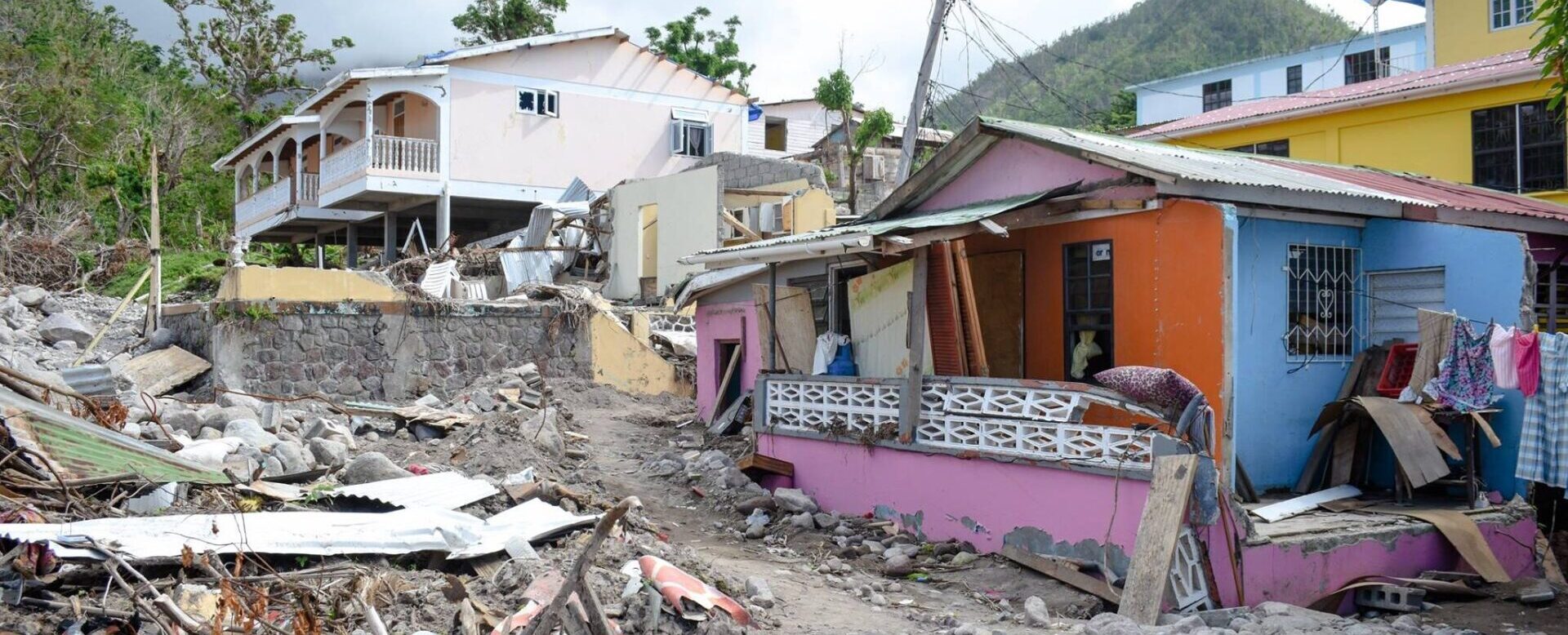
    A severe bout of heavy rainfall has swept across Dominica’s eastern coast, triggering destructive flooding that has left significant damage in multiple communities across the island region. Local news outlet Dominican News Online has published a collection of firsthand visual materials—including user-submitted and on-the-ground videos and photographs—that document the widespread impact of the extreme weather event across four affected districts.

    The hardest-hit locations confirmed so far include Concord, Deux Branches, and the Dam neighborhood of Marigot, each of which has seen floodwaters inundate residential and public spaces, per the visual evidence shared. Two additional videos captured in the Antrizzle area of Atkinson further illustrate the scope of the flooding, showing rising water levels and disrupted daily life for local residents. As of the publication of this initial report, no official updates on casualties or full estimations of total property damage have been released to the public. Emergency response teams are expected to begin conducting damage assessments across the affected coastal areas as soon as floodwaters begin to recede.

  • Shot dead at home: Family alleges “execution” by police

    Shot dead at home: Family alleges “execution” by police

    In the quiet neighborhood of Old Train Line in Corinth, a early-morning police response to a reported altercation has left a community in mourning and sparked urgent questions about the appropriate use of deadly force by law enforcement. Early Sunday morning, 45-year-old laborer Shivnath Jogie was fatally shot by officers inside his own residence, and pronounced dead shortly after arriving at San Fernando General Hospital.

    According to initial official accounts from police, the team was dispatched to Jogie’s property around 1:30 a.m. to probe a report that Jogie had attacked a neighbor with a cutlass, inflicting chop wounds, during a dispute on his own land. During what police describe as a confrontation with the suspect, officers opened fire, striking Jogie. He was immediately transported to the regional hospital for emergency care, but medical staff were unable to save him.

    However, Jogie’s family and neighbors have rejected the official narrative, pushing back hard on the circumstances that led to his death, and alleging that the encounter escalated unnecessarily and unjustly ended an innocent man’s life. Britney Francis, a relative of Jogie, has openly questioned why law enforcement resorted to lethal force when they arrived only to investigate a reported incident. Francis clarified that the incident prompting the visit was a dispute between Jogie and another resident on the street earlier that evening.

    Francis has also raised a critical legal question rooted in Trinidad and Tobago’s 2025 Home Invasion (Self-Defence and Defence of Property) Act, popularly referred to as the nation’s “Stand Your Ground” legislation. The law explicitly grants people on their own property the legal right to defend themselves without a duty to retreat, and permits the use of reasonable force — including lethal force — when a person reasonably believes it is necessary to protect their life or property from criminal harm. Francis questioned whether Jogie was within his legal rights to act in self-defense if he perceived a threat to his property.

    In blunt terms, Francis described the shooting as an extrajudicial killing: “This was an execution. It was a straight shot to his face. If the police did their job properly, he might not have been dead today. They shot him in his face, a single gunshot wound.”

    By Sunday morning, dozens of neighbors had gathered near Jogie’s home to express solidarity with his family and back their calls for a full, independent probe of the officers’ actions. One witness to the confrontation called the shooting a heartless, cruel injustice and a fundamental failure of policing. “It was traumatising to see someone getting killed in their own home for defending themselves,” the neighbor said.

    Another long-time resident who has known Jogie since childhood described the fatal shooting as “unjust,” pushing back against any implication that Jogie was a habitually violent person. “I grew up with him and when he drink alcohol, he would talk plenty. He was not a violent guy at all, he didn’t keep no grudges. He was a good fella,” the resident said. “This is the first time that we have experienced something like this in his district. We want a proper investigation.”

    In addition to calling for a full investigation, Francis also urged policy change, saying that mandatory body camera use for all police officers should be required to add transparency and accountability to law enforcement interactions. The community remains united in its demand that every detail of the shooting be brought to light to deliver justice for Jogie.

  • Shark Sighting at Ffryes Beach Prompts Swimmers to Exit Water

    Shark Sighting at Ffryes Beach Prompts Swimmers to Exit Water

    On a sunny Sunday at Ffryes Beach, a routine day of sunbathing and swimming was interrupted by an unexpected visitor: a shark spotted swimming just off the shoreline. The sighting triggered immediate alarm among the crowd of beachgoers, with many swimmers hurrying to scramble out of the shallow water while curious onlookers pulled back to safer distances to observe the rare marine visitor.

    Witnesses on the sand described the shark moving slowly through the water, lingering just beyond the breaking waves of the shallow near-shore zone. Several bystanders pulled out their phones to capture video and photos of the uncommon encounter, while also calling out warnings to swimmers who had ventured further from shore to alert them of the potential danger.

    In the end, the encounter ended without harm to any beachgoer or the shark itself. No injuries were reported among the crowd, and after several minutes of slowly cruising the offshore area, the animal turned and swam back out into deeper open water with no further interaction.

    Local marine officials note that while shark sightings in the waters near Ffryes Beach are an extremely rare occurrence, they are not impossible. Experts explain that such encounters are most likely to happen in areas where large schools of fish draw sharks closer to shore in search of prey. For beachgoers who spot a shark near the coast, standard safety guidance from authorities urges people to avoid panicking or making sudden movements, and to exit the water slowly and carefully to avoid escalating any risk.