
Newly released mid-year crime statistics from the Royal Bahamas Police Force paint a concerning picture of shifting crime trends in the country, revealing a dramatic 125% jump in domestic-related incidents over the first six months of 2026 compared to the same period the year prior. Total domestic cases have surged to 825 this year, up from just 366 in the first half of 2025 – a sharp acceleration from 2025’s already concerning 16% year-over-year increase, which saw cases rise from 317 in 2024. What makes this year’s jump particularly notable is that dozens of subcategories of domestic harm have recorded triple-digit percentage increases, signaling a widespread escalation of intimate partner and family-related violence. Breaking down the data, domestic-related assaults have climbed 118% from 94 incidents to 205, while assaults involving deadly weapons have skyrocketed 267%, jumping from only three cases to 11. Requests for emergency protection and assistance from police have spiked 254%, growing from 35 to 124, and public disturbances linked to domestic conflict have risen 200% from 17 to 51. General domestic incident reports have jumped 173% from 48 to 131, and cases of grievous bodily harm have increased 133% from three to seven. Non-lethal harm cases have more than doubled with a 106% increase from 50 to 103, death threats have risen 102% from 42 to 85, property damage linked to domestic conflict has grown 74% from 31 to 54, harassment has increased 54% from 13 to 20, and general threats of harm are up 38% from 16 to 22. On the fatal side, this mid-year period saw two domestic-related murders, double the one recorded in the first half of 2025, while attempted murders held steady at one case. Only a small handful of domestic incident categories saw declines: fighting fell 25% from eight to six cases, threats of arson dropped 50% from two to one, zero domestic-related woundings were recorded compared to one last year, and trespassing cases remained unchanged at two. Alongside the surge in domestic incidents, police data also confirms a 13% increase in overall sexual offenses, rising from 87 cases in the first half of 2025 to 98 in 2026. This increase reverses the encouraging downward trend recorded in 2025, when sexual offenses fell 30% from 125 cases in 2024’s first half to 87. Within sexual offense statistics, reported rapes increased 12% from 25 to 28, and unlawful sexual intercourse cases rose 19% from 57 to 68. The only decline in this category was seen in attempted rapes, which fell 60% from five to two. Demographic breakdowns of the 2026 rape data reveal stark disparities: all 28 reported rape victims were female, 86% (24 victims) were under the age of 36, 18% (five victims) were tourists, 11% (three cases) were linked to domestic relationships, and in 36% of cases (10 incidents), the victim already knew the person accused of the attack. All identified rape suspects were male, 46% (13 suspects) were under 36, and 11% (three suspects) were tourists. Police note that single rape cases can sometimes involve multiple suspects, so these numbers do not represent a one-to-one ratio of cases to suspects. For unlawful sexual intercourse cases, 93% of the 68 victims were female and 7% were male. A striking 96% of victims knew their alleged attacker, and more than half (57%) of all incidents took place inside a private residence. Looking back at 2025’s mid-year data, that period’s decline was broad: rapes fell 24% from 33 in 2024 to 25 in 2025, attempted rapes dropped from six to five, and unlawful sexual intercourse cases fell 34% from 86 to 57, making 2026’s reverse in that trend all the more notable for law enforcement and public safety advocates.
分类: society
-
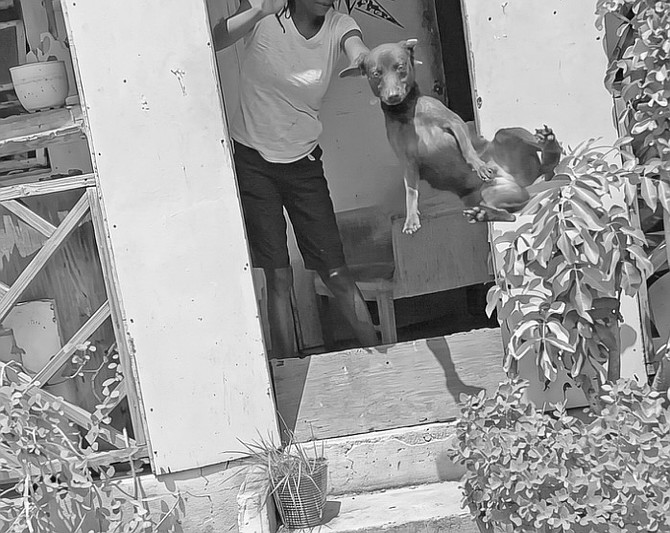
Advocate calls for chargesafter dog thrown to ground
A disturbing viral video has sparked widespread outrage among animal welfare advocates in The Bahamas, who are calling for felony animal cruelty charges against a woman caught on camera assaulting a dog following a heated confrontation with a local animal advocacy group. The incident, which took place on August 7, has thrown a spotlight on gaps in animal welfare enforcement and the link between animal abuse and broader patterns of violence in the country.
The sequence of events began three days earlier, on August 5, when members of the Bahamas Alliance for Animal Rights and Kindness (BAARK) were conducting a routine spay and neuter outreach across local communities. During the outreach, a local man flagged down the BAARK mobile clinic and asked the team to collect two unsterilized dogs from his property on St Charles Vincent Street. After granting the team permission to enter his land and collect the animals, BAARK workers spotted an additional stray dog without a collar, wandering loose under a parked car on a public roadway. Since the animal had no identifying tags and was not on private property, the team added it to their transport and brought all three canines to the clinic for sterilization procedures.
Once all the dogs recovered from their surgery, the BAARK team returned the animals to their neighborhood on August 7 to be released back to their original environment. It was during this return process that the conflict erupted, according to BAARK’s official account of the incident. After the stray dog stepped onto a private porch, a local woman approached the animal, grabbed it forcefully, and hurled it down to the hard ground. Video footage of the confrontation captures the woman screaming repeatedly at BAARK members who were recording the interaction, while the team members confronted her about her obligation to spay her companion animals and questioned her ability to care for the dog.
Kim Aranha, an advocate with the Bahamas Humane Society, told reporters that the footage left her physically ill, and that there is no justification for failing to file formal animal cruelty charges against the woman. “It’s on tape. There’s no reason why she shouldn’t be charged,” Aranha stated in an interview. She added that the unprovoked attack on a defenseless animal raises serious questions about potential harm to other vulnerable people in the woman’s home, noting that animal cruelty is widely documented as an early warning sign of other forms of violent behavior toward people. “If she does that with a dog, then my next question is, ‘Oh please God, tell me she doesn’t have children or an elderly person in the house,’” Aranha said, calling for the country’s Department of Social Services to launch a parallel investigation into the home environment if at-risk individuals live there.
BAARK has labeled the incident “horrific and deeply disturbing,” arguing that the attack serves as a painful reminder of why consistent enforcement of existing animal welfare laws is so critical across the archipelago. As of press time, the organization confirmed it has not received any response or update from Bahamian Ministry of Agriculture officials, which oversees animal welfare regulation in the country, regarding the documented incident.
Aranha noted that the dog appeared unharmed but visibly shaken after the assault, and remarkably returned to the woman moments later wagging its tail — a moment she said highlighted the innate loyalty and forgiveness of canines even in the face of abuse. She added that the incident reflects wider, systemic gaps in animal welfare protection in The Bahamas, saying, “because I know that she’s not the only person who behaves like that, and I know that there are hundreds of dogs out there being treated like that.” Aranha was careful to emphasize, however, that the violent behavior captured on video does not represent the majority of Bahamian animal owners, many of whom provide loving, responsible care for their companion animals. She noted that cases of good animal stewardship rarely receive the same viral attention as graphic footage of abuse.
BAARK’s ongoing spay and neuter program is designed to address the root of the country’s stray animal crisis by reducing the number of unwanted litters born on public streets and cutting down on the widespread suffering of homeless canines. The organization is also currently working alongside the Bahamian national government to update existing animal protection legislation and improve the enforcement of animal welfare standards across the country.
-
Census Office Warns of Possible Legal Action as Residents Resist National Count
The completion of Antigua and Barbuda’s long-awaited 2025 Population and Housing Census is facing growing headwinds, as persistent noncompliance from a segment of residents continues to throw up major barriers for frontline enumerators, national census officials confirmed this week.
Deputy Census Officer Tracelyn Joseph detailed the range of challenges field teams have encountered since enumeration work kicked off earlier this year. In multiple communities across the twin-island nation, workers have faced outright refusal to answer census questions, intentional efforts by residents to avoid contact, and even coordinated attempts to hide participation – with some people reportedly coaching family members to tell enumerators they are not home. Joseph added that even outreach outside residential properties has failed to win cooperation from a subset of holdouts, with these residents turning down participation when approached in public spaces.
Amid these widespread difficulties, however, there have been small signs of progress. Joseph noted that a number of residents who initially rejected involvement have softened their stance over time, choosing to cooperate after multiple return visits from enumerators.
Even as the field team works to win voluntary participation, officials are reminding the public that census participation is not optional. Under Section 17 of Antigua and Barbuda’s 2013 National Bureau of Statistics Act, all residents are legally required to complete the census. Those who fail to provide the requested information face severe legal penalties: fines of up to $10,000 Eastern Caribbean dollars, a prison sentence of up to two years, and an additional $1,000 fine for every day noncompliance continues after a conviction.
Joseph stressed that if widespread resistance does not abate, enforcement action will eventually be required to bring the census to a successful close. She also pushed back against common concerns that have driven nonparticipation, emphasizing that all individual data collected during the enumeration process is protected by strict confidentiality rules. No information will ever be released in a format that identifies individual respondents, she confirmed.
Census leadership has set a target of wrapping up the entire national enumeration exercise by the end of 2025. This is not the first setback the 2025 census has faced, however. Field operations have already experienced multiple delays since launching earlier this year, including a mandatory temporary pause during the country’s general election period earlier in 2025.
Officials reiterate that the final census data will serve as a foundational resource for the country, supporting evidence-based research, advancing educational initiatives, and shaping long-term development planning and government decision-making across every sector in Antigua and Barbuda.
-

OPINION: Why do we have a Day of Prayer?
Drawing parallels between the ancient biblical story of Nineveh and the modern social and political landscape of Antigua and Barbuda, opinion writer Yves R. Ephraim issues a stark call for nationwide reflection and repentance amid a growing tangle of social ills plaguing the Caribbean nation.
The story of Nineveh, as recounted in the Book of Jonah, sets the foundation for Ephraim’s argument. In that ancient narrative, God condemned the widespread, egregious wickedness that had taken root across the entire society, from the ruling throne to the most humble household, and sent the prophet Jonah to warn the people of coming destruction. The tale has two defining turning points: Jonah’s initial disobedience to God’s command, and the unexpected unified repentance of all Nineveh’s people, who humbled themselves immediately after hearing the warning and turned away from their harmful practices.
Ephraim argues that no fair observer can deny that Antigua and Barbuda is currently engulfed in its own crisis of pervasive wrongdoing, with a surging crime wave serving as the most visible recent symptom. He outlines a long list of interconnected social and institutional failures that he frames as moral evils eroding the nation’s foundation:
Rising rates of violent gun crime and child sexual assault have left the country reeling, while high-level government corruption has gone largely unchecked. The criminal justice system, he contends, acts as a revolving door that hands down minimal punishments to offenders and quickly returns them to communities to reoffend, undermining public trust in the rule of law. Public officials regularly engage in indecent speech and open disrespect for norms and citizens, while the state has seized private property from ordinary people. The electoral system, he argues, has been captured by special interests, turning a blind eye to open bribery and questionable distribution of state resources, with the hidden cost of these handouts ultimately passed to all citizens in the form of a higher cost of living.
Even cultural institutions are not spared criticism. Ephraim calls out lewd public displays during the annual carnival, which he says are not only endorsed by national leaders but actively participated in by them, alongside the rapid proliferation of adult entertainment venues. He connects these cultural shifts to a broader breakdown of personal respect among the nation’s youth. Compounding these issues is a staggering social statistic: more than 80% of children in the country are born to unmarried parents, a trend that deprives many young people of the stable, supportive environment they need to thrive, and has contributed to a growing mental health epidemic among youth that pushes many toward drug abuse, gang involvement, and antisocial behavior.
Ephraim pushes back against the common habit of ranking wrongdoing, framing some acts as major evils and others as minor, acceptable flaws. All wrongdoing, he argues, is equally corrosive, and all demands accountability. The nation has set aside a national Day of Prayer to appeal for divine intervention to rescue the country from the grip of crime and violence, but he stresses that prayer alone will be meaningless if the people of Antigua and Barbuda are not willing to change their behavior. Just as in Nineveh, repentance must be universal, sweeping from the highest government leaders down to every ordinary citizen, if there is any hope of turning the nation around.
He also challenges the Christian community in the country to step into its role, asking whether self-identified Christians are living as faithful examples, speaking out clearly against the evils plaguing society, or falling into the same disobedience that initially kept Jonah from delivering God’s warning. If Christians abandon their mandate to stand for righteousness and speak truth to power, Ephraim argues, the nation has little hope of change – just as Nineveh would have been doomed without Jonah’s message.
No segment of society is exempt from this call, he emphasizes. Every person, from top government officials to ordinary laypeople, must confess wrongdoing, seek mercy, and turn away from harmful practices. Echoing the biblical narrative, which emphasizes that God desires repentance rather than destruction, Ephraim notes that Jonah’s call was a legitimate act of criticism meant to give Nineveh a chance to change. The ancient city was corrupt from top to bottom, just as Ephraim argues Antigua and Barbuda is today. The only path from national brokenness to restoration, he concludes, is to hear that godly criticism, accept it with humility, and choose to turn away from wickedness. The piece closes with a prayer for a full national revival that can heal the nation’s divides and restore its moral foundation.
-

Alcohol Sales Banned as Antigua and Barbuda Observes National Day of Prayer
The twin-island nation of Antigua and Barbuda has implemented a complete prohibition on alcohol sales nationwide every first Thursday of its annual National Day of Prayer, a mandatory public observance that shapes commercial activity across the country. All licensed establishments permitted to sell alcohol—including neighborhood bars, casual and fine dining restaurants, large supermarket chains, independent retail shops, and other beverage outlets—are legally required to adhere to this restriction for the full duration of the public holiday, with local authorities confirming widespread compliance as the day unfolds.
This year’s national gathering is centered on a deliberate theme of spiritual reflection: “From Repentance to Restoration: Rebuilding Trust in the God of Our Nation,” which frames the day’s activities around three core practices: prayer, fasting, and personal and collective reflection. Houses of worship across both islands, national broadcast networks, and officially designated community prayer sites have organized a full slate of public events focused on the core themes of repentance, national renewal, justice, renewed hope, and gratitude for the nation’s blessings.
The day of observance will draw to a close with a large interdenominational national prayer rally hosted at the iconic Antigua Recreation Grounds, scheduled to run from 4:00 p.m. to 6:00 p.m. local time. The closing event is expected to bring together a diverse cross-section of the population, including senior religious leaders from multiple faith traditions, active worshippers from across the islands, and ordinary members of the public seeking to participate in the collective national moment.
Established as an official public holiday by the country’s government, the annual National Day of Prayer was created to carve out a dedicated space for all Antiguans and Barbudans, regardless of their personal background, to pause and collectively consider the spiritual and long-term direction of their nation through shared prayer. Unlike routine national holidays focused on celebration or historical commemoration, this observance prioritizes collective introspection and communal spiritual connection, a tradition that has become a cornerstone of the country’s national calendar.
-
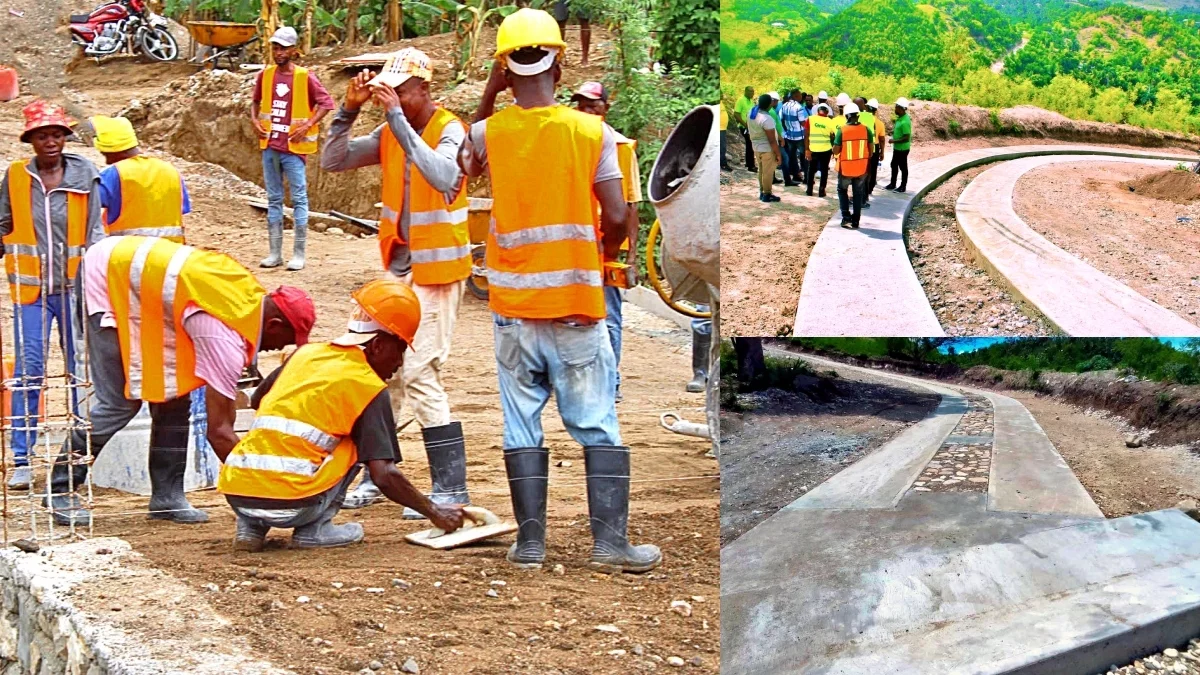
Agriculture : Rehabilitation of the Arnaud rural road (Nippes Department)
Against a backdrop of persistent challenges to Haitian agricultural productivity and rural mobility, a critical infrastructure upgrade is underway in the commune of Arnaud, Nippes Department. Led by Haiti’s Ministry of Agriculture through the Resilient Agriculture for Food Security Project (known locally as PARSA), the rehabilitation of the Arnaud rural road seeks to address longstanding barriers that have held back local farming communities and restricted access to essential commercial hubs.
The project focuses on a key 800-meter stretch of road that links Carrefour Azor to Chalumeau, passing through Morne Katina. A series of targeted infrastructure improvements are being carried out to transform this once unreliable route: 200 linear meters of reinforced concrete wheel tracks are being laid to strengthen the road surface, a 59.28-meter ford crossing is being constructed to simplify river passage, an 84-meter protective low wall is being built to prevent erosion, and full re-profiling of the existing 800-meter track is underway to smooth passage. Notably, drainage ditch work across the entire project site has already been finalized, addressing one of the route’s most persistent pre-rehabilitation flaws.
Before construction began, this road was a source of constant difficulty for local residents and producers, particularly during the annual rainy season. Decay of the original road surface, paired with the insufficient original drainage system, led to widespread mud buildup and long-lasting stagnant puddles. By the height of wet seasons, passage for motorcycles—the primary form of rural transport in much of Haiti—became extremely challenging, and in some segments, entirely impossible. Previously, the route also forced travelers and produce transporters to cross the Grande Rivière des Nippes, a dangerous and time-consuming obstacle that disrupted travel and put shipments at risk.
Once completed, the upgraded road will serve as a reliable vital link between local farming communities and the region’s key commercial outlets, most notably Gros-Bassin, the Nippes Department’s primary regional market. By eliminating the travel delays and damage to harvests caused by poor road conditions, the project directly targets one of the most costly issues facing local smallholder farmers: post-harvest loss. Producers will be able to move their crops to market faster and in better condition, while residents will gain more consistent access to essential goods and services supplied from urban centers.
Beyond immediate mobility gains, the rehabilitation project is a core investment in the long-term resilience of Haiti’s agricultural sector. The new infrastructure is designed to withstand heavy rainfall and extreme weather events, reducing the need for frequent repairs and ensuring consistent access even during wet seasons. By closing the infrastructure gap between isolated production zones and formal commercial distribution networks, the project creates new economic opportunities for farming households that previously struggled to get their products to buyers at competitive prices.
The Arnaud road project is just one component of PARSA’s broader ongoing work across Haiti. The initiative’s overarching goal is to expand and upgrade rural infrastructure across the country, strengthen the ability of farming communities to adapt to climate and economic shocks, and improve conditions for both agricultural production and post-harvest marketing. These targeted infrastructure investments are framed as long-term strategies to boost food security across rural Haiti by cutting waste, connecting producers to markets, and supporting sustainable local economic growth.
-

Two Suspects Caught on Camera Stealing Quad Bike
A brazen quad bike theft from a private residential property has been caught entirely on home surveillance camera, with two suspects seen making off with the vehicle in what appears to be a surprisingly smooth and unchallenged heist. The released security footage, which was shared to local community outlets by a concerned follower, shows the two individuals completing the entire process of removing the all-terrain vehicle without any apparent struggle or delay, even as neighborhood dogs can be observed reacting to the intrusion with persistent barking nearby.
What makes the incident particularly striking is the accounts from adjacent residents, who told community sources that they noticed nothing out of the ordinary during the time the theft was taking place. Despite the audible barking from dogs in the immediate area, none of the nearby neighbors reported seeing suspicious activity or hearing unusual noises that would have tipped them off to the crime unfolding right next door. Local community members are now calling on anyone who may recognize the two individuals from the surveillance footage to come forward with information to help law enforcement recover the stolen quad bike and hold the thieves accountable.
-
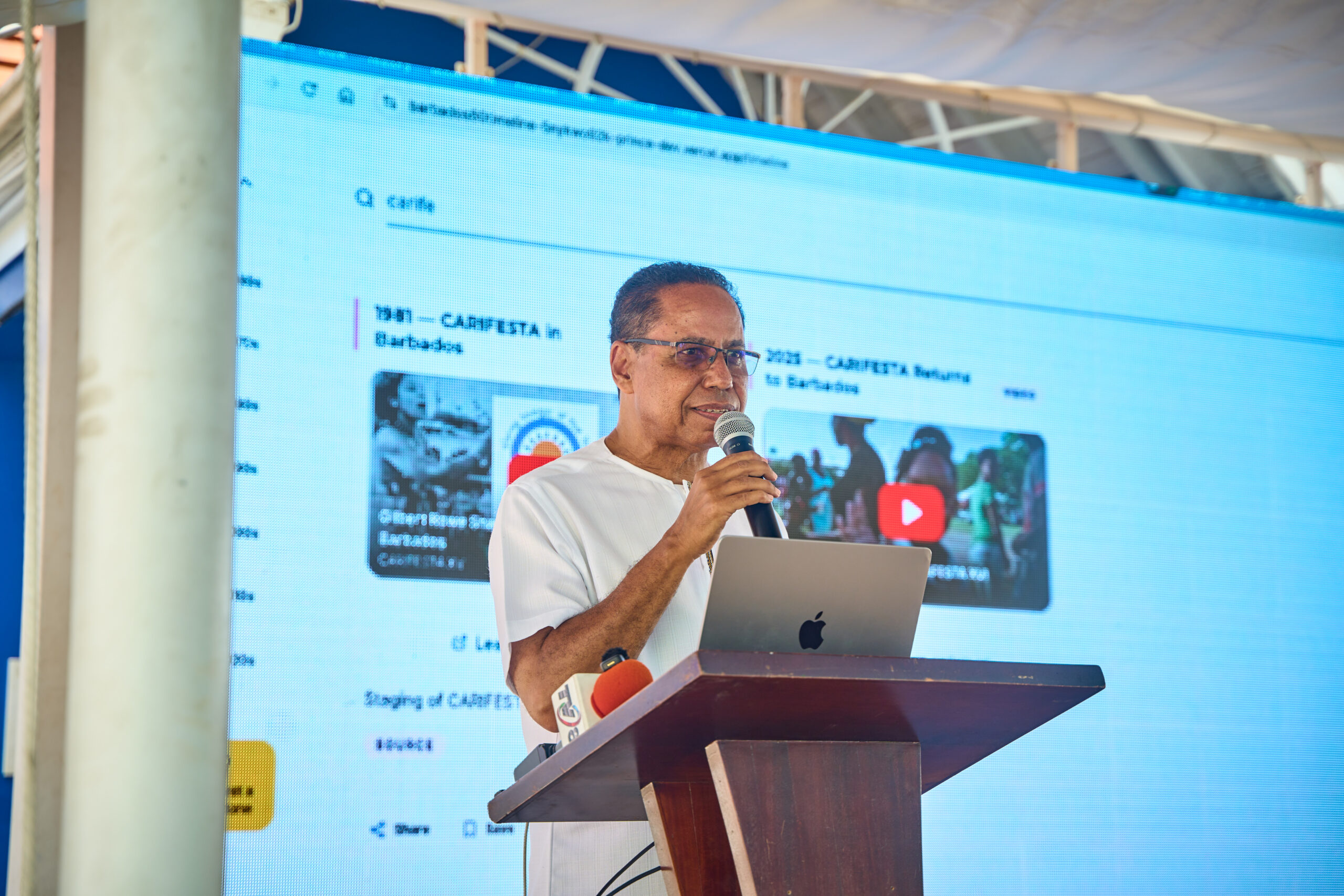
Barbados @ 60 timeline ‘seeks to preserve national story’
As Barbados gears up to celebrate two landmark national occasions – the 60th anniversary of its independence and five years as a sovereign republic – a pioneering interactive digital timeline has been unveiled to open up the island’s rich history to wider audiences and protect its national narrative from erasure or misrepresentation.
The launch of the Barbados @ 60 Timeline took place this Wednesday at Pelican Village, where project leads outlined the decade-long evolution of the initiative. Prince Bazawule, co-founder and head of design at local digital firm ESLOV Digital, explained that the current project grew out of a smaller community effort held 10 years ago, to mark the island’s 50th year of independence.
“A decade ago, we created the 50 in 50 project,” Bazawule shared during the launch event. “In the 50 days leading up to Barbados’ 50th independence anniversary, we collaborated with students from the Barbados Community College to publish one creative piece every day, each telling a distinct chapter of Barbados’ story.”
That early grassroots project left the team with a pressing question that inspired the new, expanded platform: What if people could explore the full breadth of Barbadian history through a simple, easily accessible tool?
The final product is a user-friendly digital platform that organizes the island’s history by decade, stretching from the 1960s, when the nation gained independence, through to the current 2020s. Unlike dense, academic historical archives, the timeline structures history around digestible, bite-sized key milestones. Every milestone entry is paired with a diverse range of multimedia resources, including original photographs, archival video footage, traditional and popular music, curated slideshows, and official historical documents.
Bazawule emphasized that the milestones themselves are the core of the platform, noting that each entry includes a short, accessible description designed to make the country’s history easy for any visitor to absorb. For readers who want to dive deeper into a particular event or development, every milestone includes a direct link to its original source, allowing full access to complete documents and archival materials.
The timeline spans all areas of national life, capturing major milestones across legislation, arts and music, sports, public health, and other key sectors of Barbadian development. In a future update, the platform will also open the door to user-generated content submissions, though all public contributions will go through a rigorous fact-checking and verification process before being added to the official timeline.
David Comissiong, Barbados’ Ambassador to CARICOM, who partnered with ESLOV Digital to bring the project to fruition, said the initiative carries far more meaning than simply documenting historical events. He warned that without a cohesive, widely accessible narrative of national identity, a dangerous vacuum forms.
That vacuum, Comissiong argued, can easily be filled by inaccurate, harmful narratives shaped by outside interests that distort the country’s true story. He noted that Barbados’ unique history gives the nation a distinct identity that must be preserved and shared.
“Barbados is a very special country,” Comissiong said, pointing to the island’s fraught history as the world’s first full-scale slave society, and the extraordinary resistance, resilience, courage, determination, and cultural creativity that its people have demonstrated through generations.
As the country prepares to mark its 60th independence anniversary, Comissiong said the milestone offers a critical moment to reflect on the landmark events that have defined the nation, and to use that history to guide the country’s future path. “When something as important as a 60th anniversary comes around, you have to embrace it,” he added.
-

Unsung Hero toasted for community service
On a ceremony held Tuesday at Barbados’ iconic Warrens Great House, regional banking group CIBC Caribbean has named community-focused Barbadian activist Desmond Bruce as the country’s 2026 Unsung Hero, shining a long-overdue spotlight on grassroots volunteers who lift vulnerable communities without fanfare or public acclaim.
During the awards event, CIBC’s Country Head for Barbados, Victor Boyce, honored both Bruce and fellow local honoree Shermena Kirton for their extraordinary, uncelebrated contributions to public good. Founded to lift up quiet changemakers who prioritize service over recognition, the Unsung Heroes program celebrates the unsung builders of Caribbean nations, a point Boyce emphasized by drawing from beloved calypsonian Red Plastic Bag’s 1996 classic *Issues of the Day*: “We must know who our heroes are and we must hail them from near and from far. This nation wasn’t built by our leaders alone, so many heroes out there are unknown.”
Boyce explained that the initiative was created specifically to center ordinary people who carry out consistent, transformative work in their communities without chasing public praise or material reward. “They are not looking for a pat on the back, or rewards. They are just looking to help somebody else,” he noted of all nominees and honorees.
For Bruce, his life of service is rooted in honoring the legacy of his late Combermere School teacher, Harold “Harry” Sealy. Rejecting the model of temporary charity, Bruce founded the volunteer group “Harry’s Dreamers” to deliver a “helping hand up” rather than a one-time hand out to people facing hardship. What began as a local effort across Barbados has grown into an international mission, with the group extending support to vulnerable communities as far as Ghana. The organization’s impact spans multiple critical needs: it has distributed medical supplies, art materials, agricultural tools, and staple groceries to families in need, and completed full renovations of a community playground to support local children.
Fellow 2026 Barbados honoree Shermena Kirton, a registered nurse and midwife, was recognized for her decades of volunteer work with the Breastfeeding and Child Nutrition Foundation. Beyond her formal professional duties, Kirton coordinates free breastfeeding education classes and one-on-one consultations, and makes herself available 24/7 to new mothers seeking guidance during the fragile early stages of their children’s lives.
Boyce extended special gratitude not only to the two honorees, who sacrifice countless hours away from their own families to serve their communities, but also to their loved ones, whose steady support makes their volunteer work possible. He also paid tribute to all other nominees for the 2026 award, noting that every act of kindness that improves another person’s life deserves celebration.
With his national win, Bruce will now advance to the regional finals of the CIBC Caribbean Unsung Hero program, where he will compete against national winners from nine other Caribbean territories where the bank operates for the title of 2026 Regional Unsung Hero. Closing out the ceremony, Boyce expressed the nation’s support for Bruce’s regional bid: “Desmond, we are keeping our fingers crossed for you!”
-

Antigua PM Backs Persad-Bissessar’s Tough Stance on Violent Students
A heated regional debate over how to address escalating school violence in the Caribbean has gained new traction after the prime minister of Antigua and Barbuda publicly threw his support behind a controversial proposal put forward by his counterpart from Trinidad and Tobago.
Gaston Browne, leader of Antigua and Barbuda, shared a local media report covering the ongoing controversy and echoed Kamla Persad-Bissessar’s call to remove chronically violent and disruptive students from mainstream school campuses. Beyond endorsing the plan, Browne shifted much of the accountability for youth misbehavior to family households, arguing that greater scrutiny and pressure should be placed on parents who fail to guide their children appropriately. “Endorsed. Send them to hot up those parents who are raising criminals [in their] homes instead,” Browne wrote in his public comment on the proposal.
Persad-Bissessar, who first tabled the plan, has stood her ground against mounting pushback from educators, parent groups and former education officials. She argues that the fundamental right of well-behaved students to learn in a safe environment cannot be sacrificed to accommodate students who continually threaten harm. Under her framework, school leaders would adopt a strict zero-tolerance policy for persistent violence and disruption: when parents repeatedly fail to address concerns about their child’s behavior, the offending student would be sent home to remain with their family until meaningful intervention can occur. This approach, she insists, protects both students and staff from daily risk of assault, robbery, and harassment.
Critics have pushed back hard against the proposal, however. The Trinidad and Tobago Unified Teachers’ Association, the National Parent Teacher Association, and former Education Minister Dr Nyan Gadsby-Dolly all argue that removing disruptive students without targeted, supportive intervention fails to address the root causes of aggressive behavior. They question whether simply excluding students from school will improve long-term outcomes, warning that it may exacerbate behavioral issues and push vulnerable youth further into destructive patterns.
Undeterred by the criticism, Persad-Bissessar has accused her opponents of failing to put forward viable alternative solutions that guarantee the safety of educators and the broader student body. The current debate has emerged against a troubling backdrop of rising school-related violence in the region. Official police data shows that reported fights involving school-aged children have jumped sharply year over year: authorities recorded at least 27 such incidents in 2025, and that number has already climbed to at least 36 in 2026 with months still remaining in the year. This sharp uptick has amplified pressure on political leaders and education stakeholders to find a consensus on how to reverse the trend and restore safety to school campuses.