分类: society

  • Where Are The Men And Women Of God? Antigua And Barbuda Needs Its Churches To Rise, Unite, And Pray

    Where Are The Men And Women Of God? Antigua And Barbuda Needs Its Churches To Rise, Unite, And Pray

    An open letter from a concerned Antiguan citizen has sparked a public conversation about shifting social norms, cultural preservation, and the role of faith-based institutions in Antigua and Barbuda, calling on religious leaders and believers across denominations to take unified, consistent action to reverse what the writer frames as a growing moral erosion of national life.

    The author opens with a pressing question: as secular and harmful worldviews permeate every layer of society, where are the nation’s faith leaders – from pastors and priests to evangelists and dedicated prayer advocates? They argue that mainstream popular culture has increasingly normalized harmful, immoral behaviors, from the open glorification of witchcraft, violent crime, and explicit sexual content in popular music to the mainstream acceptance of what the writer labels deviant alternative lifestyles, ranging from devil worship to non-traditional sexual identities.

    Looking back to decades past, the writer paints a picture of a tight-knit, morally grounded society where faith was woven into the fabric of daily public life. Schools across the country held daily morning worship in classrooms, and weekly general assemblies opened with collective prayer before turning to school business. Children were taught clear boundaries of right and wrong from early childhood, and communities were so safe that residents routinely left their front doors unlocked when they left home. Public airwaves once operated under clear unwritten standards: radio never played explicit content describing sexual acts, detailed instructions for committing violent crimes, or promoted occult practices such as the use of amulets, skulls, and duppies (Caribbean supernatural entities) to accumulate wealth. Graphic, explicit music videos featuring this content were unheard of, and profanity was never broadcast over public radio.

    The writer also addresses the issue of migration, noting that as a welcoming nation, Antigua and Barbuda has long accepted migrants without prejudice. However, they argue that in the process of adopting outside cultural norms, the nation has failed to protect its own distinct cultural identity and way of life – a shift that has opened the door to the importation of organized criminal activity. The author acknowledges that crime has always existed in the nation, but points to official data showing an alarming share of recent crime is committed by non-nationals. They stress that any person moving to Antigua and Barbuda is expected to abide by local laws, and those who fail to comply should face full legal consequences, including deportation where permitted by law. Echoing the longstanding maxim, “When in Rome, do as the Romans do,” the author emphasizes that all new residents must respect Antiguan social norms and rules.

    The writer also highlights the erosion of longstanding cultural traditions around Sundays, the traditional day of rest and worship. In past years, radio stations honored the sanctity of the weekend by playing gospel music or softer, more restrained programming out of reverence. Community bars and other establishments never played loud music that blared through residential neighborhoods until sunrise, disrupting peace and preventing residents from getting adequate rest. This change, the author argues, must be reversed through targeted action.

    The core of the letter is a urgent, unifying call to action for all Christian denominations across Antigua and Barbuda – from Baptists and Catholics to Seventh-day Adventists, Anglicans, Moravians, and other groups – to set aside divisions and launch a sustained collective effort. The writer urges churches to organize regular intercessory prayer sessions, going neighborhood by neighborhood to reach community members who have drifted from faith. Rather than holding one-off annual prayer events for show, the author calls on religious leaders to coordinate a large, public gathering at a major national venue such as the Antigua Recreation Ground or Sir Vivian Richards Stadium, after securing government approval, to bring thousands of believers together to pray for national renewal.

    This is not a call for empty ceremony, the writer stresses: it is a demand for consistent, visible action. Churches must reclaim their role as a leading force for righteousness, strong families, safe communities, and national peace. If believers truly hold to the power of collective prayer, the writer argues, now is the time to put that faith into practice – not as individual believers, not once a year, but as a unified, consistent movement across the nation.

    “Antigua and Barbuda needs its churches to stand up, speak up, and pray up,” the author concludes. “Let us return to God, reclaim our communities, and fight for the soul of our nation.”

  • 20-Year-Old Jaquan Shaw Remanded Over Deadly Bathlodge Triple Shooting

    20-Year-Old Jaquan Shaw Remanded Over Deadly Bathlodge Triple Shooting

    A violent late-night shooting in the quiet community of Bathlodge has left one young person dead and two others injured, bringing a 20-year-old Cashew Hill resident before the court this week to face serious criminal charges. Jaquan Shaw, the accused in the case, made his first court appearance on Thursday without legal representation to answer for one count of murder and two counts of attempted murder connected to the September 21 shooting incident.

    Shaw is accused of the fatal killing of 20-year-old Saquania Anthony, as well as the targeted attacks on 24-year-old Kelvin Samuel and 13-year-old Joshua Meade. When the case was called before Chief Magistrate Ngaio Emanuel, Shaw had no attorney present to argue on his behalf. Due to the severe nature of the charges filed against him, the Magistrates’ Court does not hold the authority to grant bail in this matter, leading the magistrate to order Shaw remanded into state custody pending his next scheduled hearing.

    The entire incident traces back to a report of gunfire at a private residential property in Bathlodge, which was called in to local law enforcement at approximately 11:30 p.m. on Monday, September 21. When responding police officers arrived at the scene, they found Saquania Anthony unresponsive on the property, with clear evidence of multiple gunshot wounds. Emergency services attempted emergency care, but Anthony was officially pronounced dead shortly after the incident.

    The two other victims, Kelvin Samuel and Joshua Meade, also sustained gunshot injuries during the attack. They were quickly transported to the Sir Lester Bird Medical Centre to receive urgent medical care for their wounds. Early findings from the ongoing police investigation have outlined a troubling account of the shooting: multiple people were gathered inside the residence at the time of the attack, when unidentified intruders allegedly forced entry into the home before immediately opening fire on those inside.

    Shaw is scheduled to return to court for his next hearing on November 25, as investigators continue to piece together full details of the attack and pursue further leads in the case.

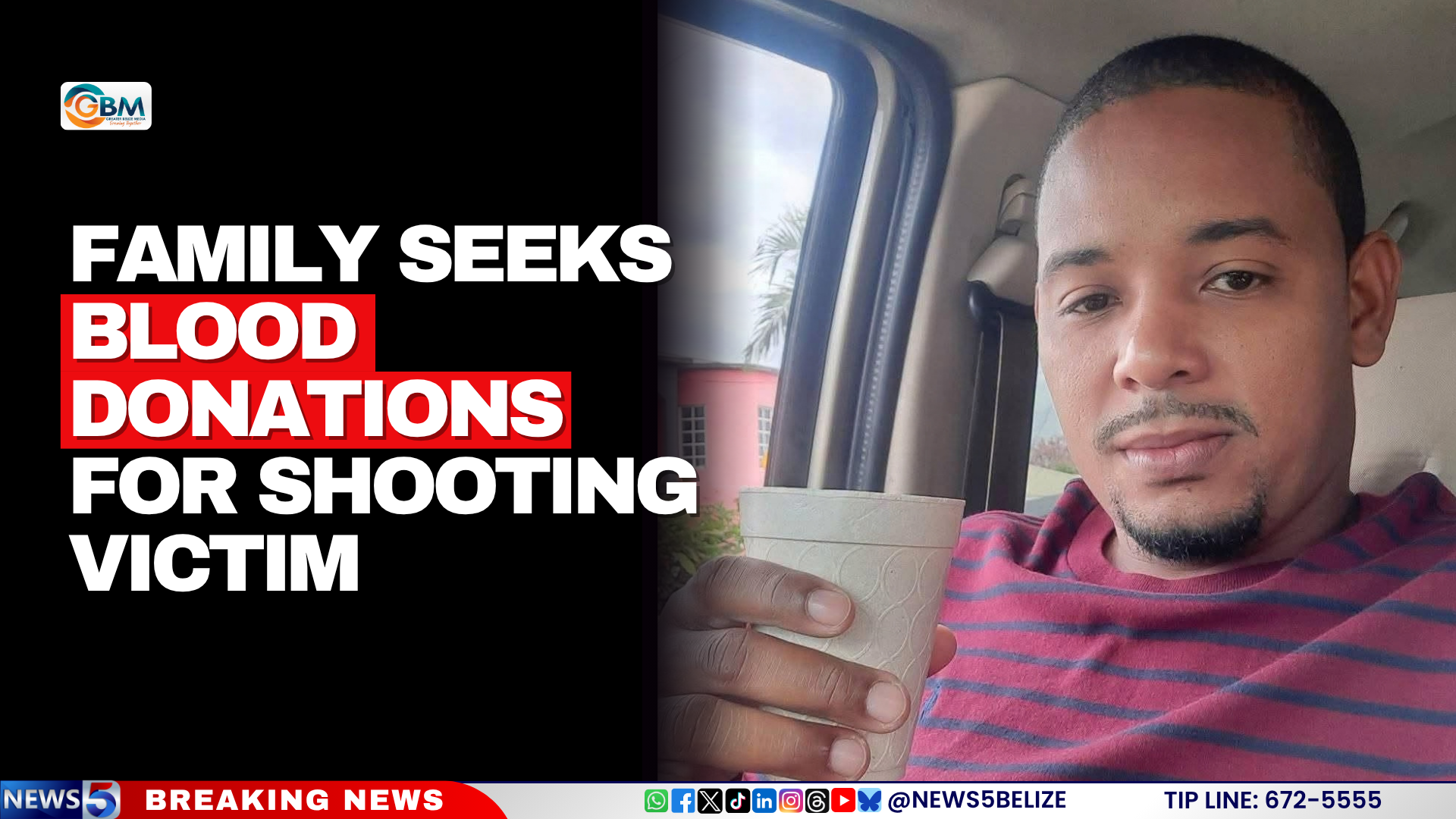
  • Family Seeks Blood Donations for Shooting Victim

    Family Seeks Blood Donations for Shooting Victim

    A land inspection in a rural area of Western Belize turned violent on Wednesday afternoon, leaving a man named Alfred Mahler hospitalized with critical injuries and sparking an urgent appeal for blood donations from his family.

    According to local law enforcement officials, the incident unfolded between 1 p.m. and 1:30 p.m. in the Maya Ranch region, where Mahler and a second man were carrying out a routine land assessment. As the pair worked, they were first approached by an unidentified grey pickup truck. Shortly after, a second red pickup truck followed the inspectors along nearby Pine Ridge Road, and gunfire erupted.

    After the shots were fired, the red pickup truck sped away from the scene. Police have confirmed that they have since taken one person into custody in connection with the shooting, and have seized a licensed .223 caliber semi-automatic rifle as evidence. Investigations into the motive for the attack are still ongoing.

    Mahler’s aunt, Sandra Mahler, shared details of her nephew’s condition with local media, explaining that the bullet caused severe damage to his abdomen, requiring emergency surgery Wednesday night. “The bullet did extensive damage to his stomach, and surgeons had to remove some of his damaged organs,” she explained in an interview.

    As of Thursday, Mahler remains at Belmopan Hospital, where he is listed in critical but stable condition. He suffered substantial blood loss during the attack and his medical team says he requires additional transfusions to support his recovery.

    “He lost an extraordinary amount of blood, so he needs a lot of donations,” Sandra Mahler said. While Alfred Mahler has O positive blood type, the family says donors with any blood type are welcome to give, due to the urgent and high volume of blood required for his ongoing treatment.

    The family is calling on community members across Belize to support the effort by donating blood at their local blood bank, and they are hoping to secure at least 22 donors to cover the transfusion needs through Mahler’s recovery process.

  • Overseas Surgeon Coming to Antigua to Treat 13-Year-Old Shot in Bathlodge

    Overseas Surgeon Coming to Antigua to Treat 13-Year-Old Shot in Bathlodge

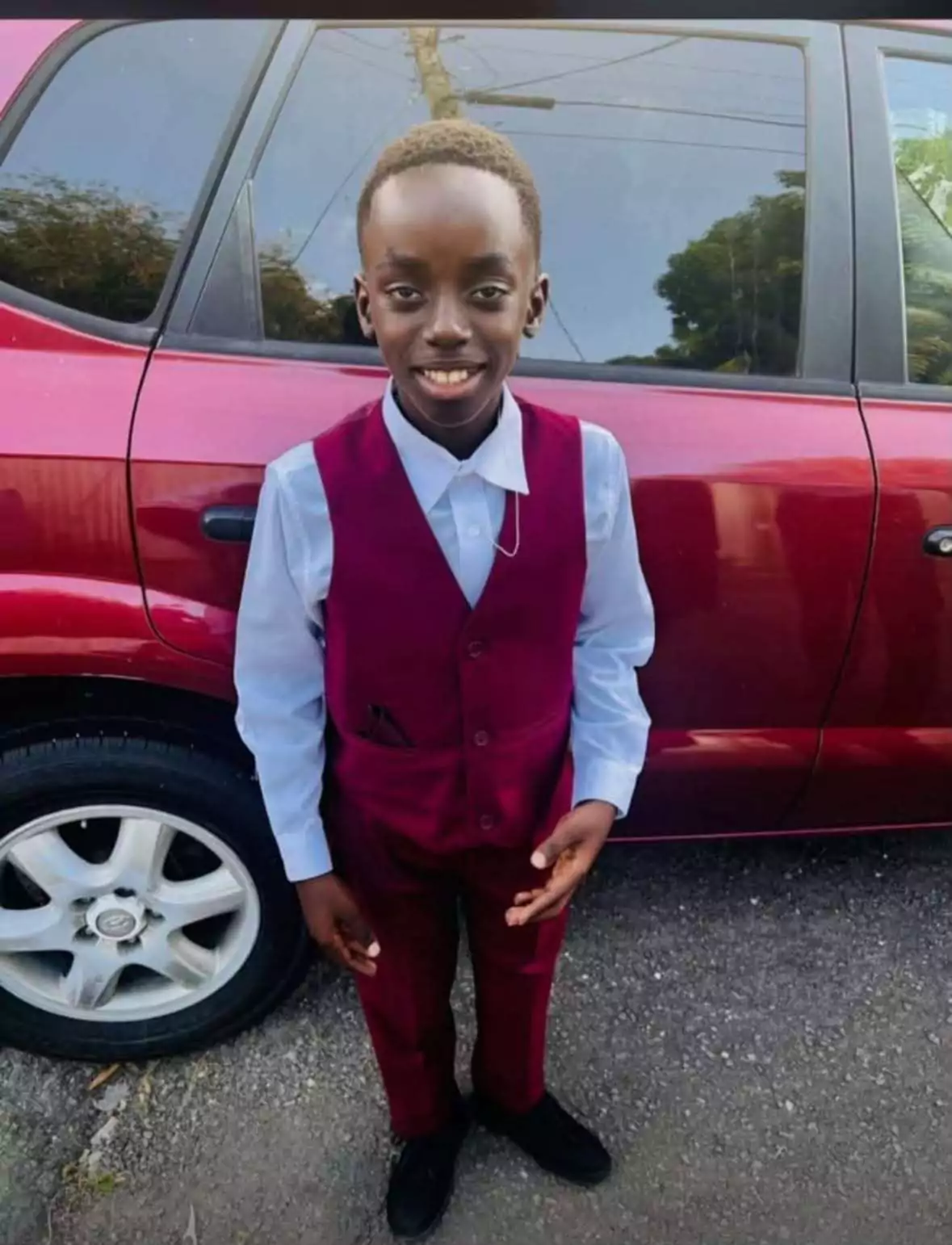
    A horrific shooting incident that left one young person dead and two others injured in Antigua’s Bathlodge community last week has prompted authorities to arrange specialized medical support for the youngest surviving victim. Thirteen-year-old Joshua Meade, who suffered a gunshot wound to the face during the fatal Monday night attack, is set to receive critical reconstructive care from an overseas surgeon expected to arrive in the country this week.

    Maurice Merchant, the director general of communications in Antigua’s Prime Minister’s Office, confirmed the arrangement during a public briefing following this week’s Cabinet meeting. He noted that local hospital leadership formally requested the specialized surgeon’s involvement to support Joshua’s treatment, and the visiting specialist is on track to join the care team in the coming days. As of the briefing, Meade remains in a local hospital continuing his recovery.

    The violence did not just harm Joshua: 20-year-old Saquania Anthony was killed in the shooting, and Joshua’s 24-year-old brother Kelvin was also wounded. Merchant shared that Kelvin has already completed initial treatment and been released from the hospital to return home.

    In the wake of the tragedy, Antigua’s official Cabinet has extended formal condolences to Anthony’s grieving family, while also issuing a public statement wishing Joshua a complete and speedy recovery. Merchant appealed to the Antiguan public to hold Joshua, his family, and Anthony’s loved ones in their thoughts and prayers. Beyond the immediate response to this attack, he also urged all local residents to join collective efforts to curb the spread of gun violence across the country, framing the issue as a shared public responsibility that requires community-wide action.

  • Woman Reportedly Robbed in Her Yard in Bendals

    Woman Reportedly Robbed in Her Yard in Bendals

    Local law enforcement and community sources have confirmed that a female resident was the victim of a robbery that took place on her own residential property in the Bendals area, with the incident occurring just a short time before the initial report was made public.

    As of the latest update, full information about the circumstances of the crime remains sparse. Authorities have not yet released key details including the exact time of the incident, a description of any suspected perpetrator, information on what items were stolen during the attack, or whether the victim suffered any physical injuries in the encounter.

    Local law enforcement agencies are currently working to piece together the full sequence of events, conducting initial on-site investigations and interviewing potential witnesses who may have seen activity in the area around the time of the robbery. Additional updates, including any new developments in the case, new confirmations of key facts, or announcements about arrests or investigative progress, will be released to the public as soon as they are verified and made available to reporting sources.

  • Emilio Hodge Ordered to Pay $30,000 After Cutlass Attack on Former Co-Worker

    Emilio Hodge Ordered to Pay $30,000 After Cutlass Attack on Former Co-Worker

    A 34-year-old man has been legally ordered to pay thousands of dollars in restitution after pleading guilty to a violent machete attack that left his former co-worker seriously injured at a Caribbean recycling facility.

    Emilio Hodge accepted full responsibility for the November 24, 2022, assault at the Powells Recycling Plant during a court hearing held this past March, entering a guilty plea on a charge of wounding with intent. Prosecutors outlined the sequence of events that led to the violence, explaining that a routine workplace disagreement quickly escalated into physical conflict before Hodge drew the cutlass and launched his attack. The victim sustained multiple deep lacerations in the assault and required urgent professional medical care to address their injuries.

    In Hodge’s defense, his legal representative, attorney Lawrence Daniels, told the High Court that his client had never been convicted of a criminal offense prior to this incident. Daniels also noted that Hodge is the primary caregiver for his two young children, and that he has expressed genuine remorse for his actions on the day of the attack.

    The High Court handed down its formal judgment this week, ordering Hodge to pay a total of $30,000 in compensation to his injured former co-worker. Under the terms of the court order, Hodge must pay an initial $2,000 deposit immediately, with the remaining outstanding balance to be paid off in steady monthly installments of $800. That structured payment schedule is set to launch on October 30. The court also outlined strict penalties for default: if Hodge fails to keep up with his required payments, he will be sentenced to six months of imprisonment.

  • LETTER: Crime Strategy Bound to Fail; Let’s Follow Guyana’s Example Instead

    LETTER: Crime Strategy Bound to Fail; Let’s Follow Guyana’s Example Instead

    For decades, Caribbean nations have leaned heavily on punitive, hardline tactics to curb violent crime – from mandatory prison sentences for gun offenses in Jamaica to repeated states of emergency expanding police powers in Trinidad and Tobago. But as commentator John Popeshead argues, these aggressive measures have failed to deliver sustained, meaningful reductions in violent crime across the region, leaving communities trapped in cycles of violence that even successive governments of different political stripes have been unable to fix.

    The critical, underdiscussed missing piece of the puzzle, Popeshead says, is comprehensive correctional system reform. Like their regional neighbors, both Jamaica and Trinidad and Tobago still rely on outdated, colonial-era prison infrastructure, crippled by chronic underfunding, severe understaffing, and almost non-existent rehabilitation programming. These systemic failures have created a crisis of recidivism, where released offenders repeatedly reoffend, perpetuating gang activity, gun crime and street violence rather than reintegrating into society.

    Against this backdrop of regional failure, Guyana stands out as a rare successful case study of what targeted investment in correctional reform can achieve. Unlike its neighbors, Guyana has deliberately abandoned the old punitive colonial framework in favor of a modern, human rights-centered correctional model, backed by an unprecedented five-year government investment of more than 28 billion Guyanese dollars (GYD).

    The results speak for themselves: Guyana now boasts the lowest recidivism rate in the Caribbean Community (CARICOM), at just 14% – a staggering achievement for a region grappling with repeat offending. Guyana’s reform strategy is multifaceted, targeting the root causes of reoffending at every stage. Structured, evidence-based rehabilitation programs, including multi-week anger management and cognitive behavioral readjustment courses, are systematically delivered to inmates at facilities like Timehri Prison to address the behavioral triggers that lead to crime. The country has also rolled out a national network of Restorative Justice Centres and implemented a proactive prison avoidance system that prioritizes alternative sentencing and cuts down on unnecessary pre-trial detention.

    To block the recruitment of young, low-risk inmates into violent criminal networks, new prison facilities at Lusignan and New Amsterdam have purpose-built designs that disrupt traditional gang command structures, strictly separating high-risk criminal groups from inmates working toward reform. Most notably, Guyana has overhauled the training of prison staff, shifting from an outdated model that treated officers as mere guards to a professionalized, globally competitive framework focused on “Corrections Leadership.” Officers are now trained to act as educators and mental health first responders, a cultural shift that has directly driven the country’s record-low recidivism rate.

    Popeshead argues that this model is replicable across smaller Caribbean nations, including his home of Antigua and Barbuda. Scaling Guyana’s 28 billion GYD investment to Antigua and Barbuda’s smaller population – which is roughly one-eighth the size of Guyana’s – works out to just 7.5 million Eastern Caribbean dollars (XCD) per year over a six-year period of phased reform, a sum Popeshead says is entirely achievable.

    He points to the irony that Antigua and Barbuda’s government has found public funds for low-priority pet projects – such as dredging work at Barnacle Point to develop a new beach the prime minister can name for his children – but claims it cannot allocate annual funding for proven crime-reduction measures. Delayed action has already cost the country years of progress: Popeshead notes that if reform had been launched as early as 2016, the country would already be seeing tangible results, including lower recidivism and safer streets.

    Worse still, Popeshead argues, meaningful, evidence-based policy discussion on comprehensive crime reform has been dismissed by national leaders, who reduce complex, research-backed conversations about public safety to superficial, rum shop-level rhetoric. Correctional reform is just one piece of the puzzle: the country’s police service, social services, and court system are all broken and in need of urgent overhaul. Social services, for example, are failing to intervene with at-risk young people before they turn to crime, police lack the tools and reform to fight crime effectively, and court delays mean cases can take years to go to trial, undermining the entire justice system. But leaders refuse to take on the hard work of systemic reform, instead opting for quick, politically popular, but ultimately ineffective tough-on-crime posturing that does nothing to address the root of the region’s violence crisis. For real change, Popeshead argues, reform must start today.

  • Abinader pledges government support for Dominican Historical and Cultural Museum in New York

    Abinader pledges government support for Dominican Historical and Cultural Museum in New York

    During an official visit to New York City on Friday, Dominican Republic President Luis Abinader announced his administration will explore all viable pathways to support the long-delayed completion of the Dominican Historical and Cultural Museum, a landmark project focused on preserving and celebrating the deep history and far-reaching cultural contributions of Dominican communities across the United States.

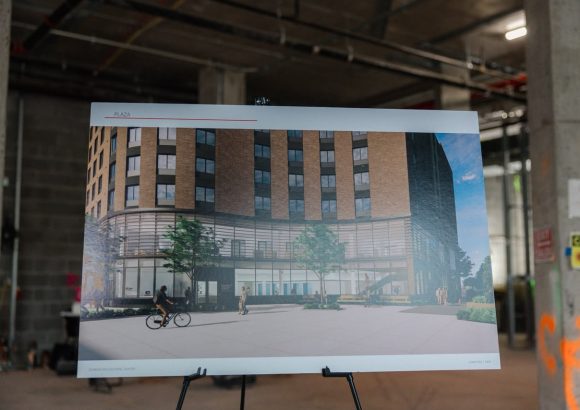
    While touring the project’s proposed site, President Abinader requested that U.S. Congressman Adriano Espaillat and the museum’s core management team share full project blueprints, design schematics, and a detailed financial breakdown of remaining resources required to wrap up construction and launch operations. He framed the initiative as a transformative undertaking with profound historical, educational, and economic value for both the Dominican diaspora and the broader New York community, confirming his government will conduct a thorough review of all possible support mechanisms.

    “Share with us your full requirements, and my administration will coordinate with you and Congressman Espaillat to identify how we can bring this project across the finish line,” Abinader told the leadership team overseeing the multi-decade effort.

    Congressman Espaillat, who first introduced the idea for the museum more than 20 years ago, emphasized the institution’s critical significance to the hundreds of thousands of Dominicans who call New York home. The museum will be sited in Upper Manhattan’s Inwood neighborhood, a neighborhood located within the area officially designated as the Dominican District on the Federal Register of Historic Districts. Espaillat noted that the region already hosts the densest concentration of Dominican residents in the U.S., with an estimated 500,000 people of Dominican origin residing across western Bronx and Upper Manhattan alone.

    After Espaillat first proposed the project, the Institute of Dominican Studies adopted the initiative, with the mission of building a permanent public institution dedicated to centering Dominican history and culture in the United States. The project has secured long-term institutional backing from the City University of New York (CUNY), and is being developed to operate as a university-affiliated public museum.

    To date, project organizers have raised approximately $38 million in funding from a mix of local, state, and federal government sources and elected representative initiatives in New York. The completed facility will house five distinct exhibition halls, each dedicated to exploring different chapters and themes of Dominican history and cultural expression.

    A core permanent feature of the museum will be an ongoing oral history project, which will collect and archive first-person testimonies from Dominican migrants who built families, community institutions, and cultural hubs across the United States. Additional planned amenities include a Spanish-language children’s library designed to preserve linguistic heritage for younger generations, dedicated exhibit spaces for Dominican baseball and sports, and galleries highlighting Dominican music and other traditional cultural practices.

    Ultimately, organizers say the museum will fill a long-standing gap in public cultural representation, giving younger generations of Dominicans born in New York and across the United States the opportunity to connect with their ancestral roots and learn about the foundational contributions earlier generations made to both diaspora communities and American society at large.

  • Animal Control closes investigation into disturbing dog incident amid resource challenges

    Animal Control closes investigation into disturbing dog incident amid resource challenges

    A viral video that captured apparent animal abuse in the Bahamas has hit a dead end in its investigation, with local Animal Control officials announcing the case is being closed after teams failed to pin down the location of the incident or identify the people involved. Dr. Jason Sands, director of Bahamas’ Department of Agriculture, confirmed that after initial investigative leads turned up no new information, the overstretched agency had no choice but to reallocate its limited capacity elsewhere amid a rising tide of public animal welfare complaints.

    Sands emphasized in a statement that the case would immediately be re-opened if any member of the public provides new information that helps identify either the individual in the video or the location where the confrontation took place. “If there was an identification or a way to identify that location or that person, that matter will be investigated,” Sands said. “It was sent to Animal Control, but the initial investigation went nowhere, so they had to move on from that case.”

    The troubling footage, which circulated widely on social media earlier this year, captured a heated confrontation between the unnamed woman and volunteers from the Bahamas Alliance for Animal Rights and Kindness (BAARK), a local animal welfare advocacy group. According to BAARK’s account of the incident, the confrontation unfolded on August 7, when the organization returned three stray dogs to the community after completing a free spay and neuter outreach program.

    The chain of events began two days prior, on August 5, when BAARK volunteers responded to a resident’s request on St Charles Vincent Street to collect two unsterilized dogs from his property. While working in the area, the team spotted a third stray dog with no identification collar wandering loose under a parked car on the public roadway. Since no owner came forward to claim the uncollared animal, volunteers brought it along to their partner clinic to be spayed or neutered alongside the two other dogs collected from the area.

    Once all three procedures were completed, BAARK teams returned the dogs to the neighborhood on August 7. That’s when the confrontation with the woman seen in the video began. Footage of the clash shows the woman shouting defiantly at volunteers, who were recording the interaction and questioning her about the dog’s care, with one volunteer asking whether she intended to take responsibility for the animal. The video then captures the woman walking onto a nearby porch, grabbing the dog, and throwing it forcefully to the ground.

    Animal welfare leaders across the Bahamas have roundly condemned the incident, with outgoing Bahamas Humane Society president Kim Aranha saying she felt physically ill after watching the footage, and calling for immediate criminal prosecution of the woman involved. BAARK also issued a public statement calling the act “horrific and deeply disturbing,” echoing calls for accountability.

    But Sands said the case is far from unique in stretching Animal Control’s limited capacity thin. The agency currently receives far more animal welfare complaints each month than its underfunded, understaffed teams can properly investigate, he explained, forcing leadership to prioritize leads that are most likely to result in actionable charges. He added that Animal Control officers work closely with local police when requested to assist on animal-related cases, and do everything in their power to address every report with the resources they have available. “We have so many of these calls coming in at the moment at Animal Control, and they are doing their best with very limited resources to investigate all of them and to work along with the police when the police call them in for calls that they receive,” Sands said.

  • Family mourns 10-year-old after sudden beach collapse

    Family mourns 10-year-old after sudden beach collapse

    A quiet 10-year-old child with complex preexisting health challenges has died unexpectedly in his father’s arms at Montague Beach, a spot the boy loved deeply, leaving his grieving family grappling with an unimaginable loss just days after he was discharged from a hospital visit for a sudden acute health episode.

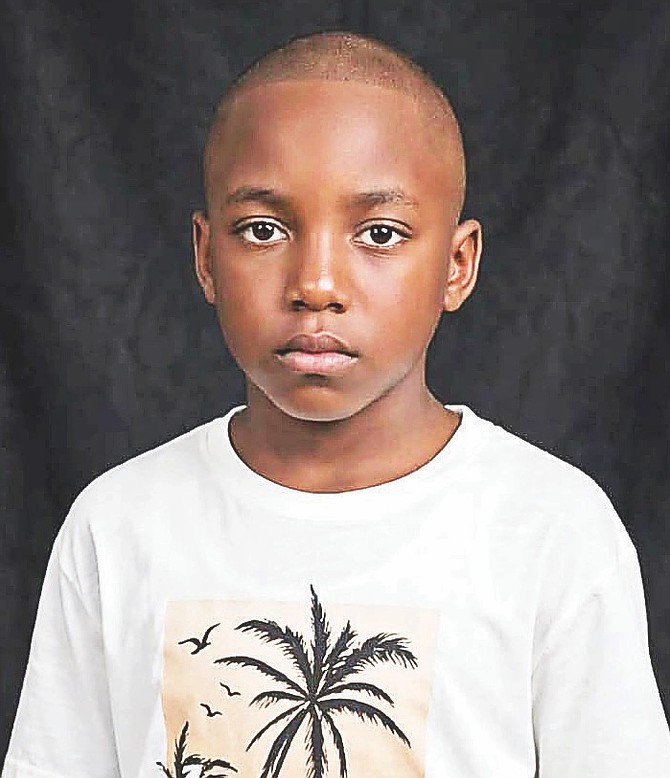
    Sidney Bain Jr., who lived with a congenital serious heart condition and autism, passed away on the beach’s shoreline on Wednesday, according to his paternal grandmother, Marguerite Taylor. The child had undergone his first open-heart surgery at just five years old, and his medical team had already flagged that he would require a second high-risk procedure to manage his chronic condition in the future. His ongoing health struggles often forced him to miss classes at Hampton Academy, where he was enrolled as a student.

    The chain of events that led to Sidney’s death began just four days earlier, when he suffered a sudden, frightening health crisis. On that Saturday, Sidney developed severe abdominal pain, a persistent harsh cough, violent vomiting, full-body shaking, and cyanosis—a condition that turned his hands blue, signaling oxygen deprivation. His father rushed him to the hospital, where clinicians administered emergency oxygen and prescription medication before discharging the boy to return home.

    In the two days between his hospital discharge and his death, Sidney made a special trip to visit his grandmother, a moment that Taylor now reflects on with bittersweet clarity. Taylor said she immediately noticed her grandson’s face was still swollen from his recent episode, and she quietly questioned why the hospital had cleared him for discharge despite the lingering symptoms. During the visit, Sidney stayed for an hour and a half, enjoyed his favorite ice cream with his grandmother, and before he left, Taylor felt an unaccountable sense of foreboding that pushed her to hold him tightly, kiss his forehead, and tell him explicitly: “Grammy loves you.”

    On Wednesday, Sidney’s father took his only child to Montague Beach, a routine outing the pair enjoyed regularly, and one of Sidney’s favorite places to spend time. Taylor emphasized in an interview that Sidney never entered the water that day, and drowning was not a factor in his death. The boy began complaining of familiar stomach pain while standing on the shoreline, prompting his 37-year-old father to lift him and carry him toward their car. It was then that the father realized his son was rapidly losing oxygen.

    The father immediately laid Sidney down and began cardiopulmonary resuscitation (CPR) to try to restart his breathing, and nearby bystanders rushed over to assist with the life-saving efforts. But Taylor said that the intervention came too late to save her grandson. “I think by then it was too late. I think he had gone from the stomach start, and his daddy noticed that he was losing oxygen. I think that was it for him right there,” Taylor shared.

    Reflecting on the timing of Sidney’s death at the beach, Taylor found a small measure of peace in knowing her grandson passed in the place he adored most. “God take him to the place where he loved to be so much, because he loved the beach. He always wanted to go to the beach,” she said.

    The loss has hit Sidney’s father particularly hard, as the boy was his only child and the center of his world. Taylor described Sidney as a quiet, reserved, wonderful child who brought a wholeness to his father’s life that cannot be replaced.