分类: society

  • Youth leaders urged to drive community change

    Youth leaders urged to drive community change

    On a recent Saturday, Barbados’ Division of Youth Affairs brought together emerging youth leaders from across the country at a capacity-building workshop held at the Radisson Aquatica, with a clear mission: to empower youth-led organizations to claim their central role in advancing national development.

    Addressing the gathered participants, Senator Roshanna Trim opened by pushing back against the common narrative that youth development is solely a government responsibility. While she acknowledged that the state and relevant ministries carry a formal duty to nurture young people’s growth, she stressed that independent youth organizations fill an irreplaceable niche in communities nationwide. “Every community deserves the vibrancy, the creativity, and the innovation of young people,” Trim told the audience, arguing that local youth groups bring energy and fresh perspective that no government agency can replicate on its own.

    Trim, 31, highlighted a unique strength that sets youth-led initiatives apart from established, older-led organizations: natural peer-to-peer relatability. Young people navigating the shared pressures of modern life naturally connect with one another, she explained, creating a level of trust that crosses generational gaps. She noted that even a decade and a half difference in age can create noticeable divides in communication styles and cultural context, making youth-led outreach far more effective for engaging younger demographics. The core message, she emphasized, was for young leaders to recognize this inherent power rather than fixating on formal titles, and to focus on the tangible impact of their work driving social transformation.

    Sharing decades of on-the-ground experience alongside Trim was Sophia Greaves-Broome, community development executive and CEO of the Pinelands Creative Workshop, who has spent 30 years leading civil society and multi-sectoral community programs. Greaves-Broome offered blunt, practical guidance for young leaders looking to build lasting, impactful organizations, focusing heavily on long-term sustainability in an increasingly challenging funding landscape.

    She stressed that organizational longevity starts with a clear, inclusive vision that can inspire others to commit their time and energy. “It must be an inclusive vision where people can say, ‘I can align to that, I can respect that, I can work with that, I can give up my time for that,’” she explained, adding that deep personal sacrifice and unwavering belief in one’s mission are non-negotiable for lasting success.

    Greaves-Broome also warned that the traditional donor model that once supported community nonprofits has shifted dramatically, evolving into a hyper-competitive space where funders demand measurable return on investment. To adapt, she urged young leaders to move beyond rigid, outdated organizational structures and embrace flexible social enterprise models that can generate sustainable revenue. She added that leaders must cultivate a habit of constant self-evaluation, regularly reexamining and restructuring their organizations to stay relevant in a rapidly changing social and economic environment.

    Closing her remarks, Greaves-Broome reminded the emerging leaders that meaningful community transformation takes consistent, long-term effort, encouraging them to prioritize ongoing personal learning and maintain political neutrality to keep their work focused on serving the public good.

  • Temporary road closure to facilitate We Pan Fest — The Carenage, St George’s

    Temporary road closure to facilitate We Pan Fest — The Carenage, St George’s

    Organizers and law enforcement in Grenada are putting advance traffic arrangements in place ahead of the upcoming We Pan Fest, with the Royal Grenada Police Force (RGPF) officially releasing a public advisory outlining a temporary vehicular road closure that will take effect in June 2026.

    Per the official announcement from the Office of Commissioner of Police, the section of The Carenage public road running from its intersection with Hughes Street toward Sendall Tunnel will be closed to all non-emergency motor vehicle traffic on Sunday, June 28, 2026, between the hours of 3:00 p.m. and 11:00 p.m. This temporary restriction is being implemented to clear space for the We Pan Fest event, allowing organizers to host activities safely and comfortably for attendees.

    Crucially, the closure order does not apply to emergency response vehicles of any kind. RGPF stressed that full, unimpeded access must be maintained for emergency vehicles across the affected stretch of road for the entire duration of the event, to preserve public safety and enable rapid response if any urgent incident occurs.

    For all other private and commercial motorists, the full traffic restriction will remain in place throughout the 8-hour closure window. The police force is urging all drivers who regularly travel along this route to plan their journeys in advance, and make use of marked alternative routes during the closure period to avoid unnecessary delays or congestion.

    In closing the advisory, RGPF expressed gratitude to the Grenadian public, local residents, and road users for their understanding, patience, and ongoing cooperation as law enforcement works to balance two key priorities: upholding public safety across the island, and enabling community events like We Pan Fest to run smoothly and successfully.

    Disclaimer: NOW Grenada does not take responsibility for the opinions, statements, or third-party contributed media content featured in this public advisory. Users may click the designated reporting link to submit any claims of content abuse.

  • Aanpak Van ’t Hogerhuysstraat begint; weg wekenlang deels afgesloten

    Aanpak Van ’t Hogerhuysstraat begint; weg wekenlang deels afgesloten

    After months of drawn-out legal battles and mounting public frustration over a crumbling key thoroughfare, infrastructure rehabilitation work on Paramaribo’s busy Van ’t Hogerhuysstraat is finally set to get underway Sunday, June 28, following the recent signing of a contract between the Surinamese government and selected contractor Kuldipsingh Infra.

    The project, one of the most high-priority infrastructure upgrades in the Surinamese capital, has been stalled for months due to a procurement dispute launched by losing bidder Baitali, which challenged its disqualification from the tender process through the courts. In a recent ruling, the canton judge rejected all of Baitali’s claims, further suspended the enforcement of an earlier partial ruling and concluded that the company had abused its right of legal execution to block the project.

    While Baitali has publicly stated it will accept the court’s ruling and drop immediate barriers to construction, the firm confirmed it will pursue separate legal proceedings to continue contesting what it frames as an unfair disqualification from the original bidding process. The resolution of the immediate impasse cleared the way for the government to sign off on the contract with Kuldipsingh Infra earlier this week, ending months of uncertainty over the critical upgrade.

    Kuldipsingh Infra will launch with preliminary preparatory work on Sunday, scheduled to run from 8 a.m. to 5 p.m. Following this initial phase, all construction will shift to overnight shifts through July 15, running nightly from 8 p.m. to 5 a.m. to minimize disruption to peak commuter traffic on this vital artery. The work zone covers the stretch between Leningenweg and Molenpad, including three major intersections at Molenpad, Nieuwe Haven (Willem Campagnestraat/Havenlaan), and Surmac (Slangenhoutstraat).

    During construction, portions of the route will be fully closed to destination traffic. Road users will be guided through detours marked by signage, barriers, and on-site direction from local police. The Ministry of Public Works and Spatial Planning (OWRO), which is overseeing the project, issued an urgent appeal to all drivers and other road users to plan alternate routes, adjust travel schedules, and strictly follow instructions from on-site construction staff and police to avoid unnecessary delays.

    Van ’t Hogerhuysstraat serves as a critical connection between southern neighborhoods of Paramaribo, the city’s port districts, and the central business district. For years, the poor condition of its road surface has caused persistent traffic congestion and costly damage to private and commercial vehicles, making the rehabilitation a long-awaited project for both commuters and local businesses. Once completed, the upgrade is expected to improve traffic flow, reduce vehicle damage, and support continued economic activity connected to Paramaribo’s busy port areas.

  • Day of discussions with Catholic leaders on the accreditation of Haiti’s educational institutions

    Day of discussions with Catholic leaders on the accreditation of Haiti’s educational institutions

    Following a June 10 stakeholder consultation with Protestant education leaders, Haiti’s Ministry of National Education and Professional Training (MENFP) gathered Catholic education representatives for a full day of focused dialogue on June 24 in Pétion-ville. The meeting centered on advancing the National Policy for the Accreditation of Private Schools, Technical Training Centers, and Private Universities, bringing together senior officials from the national education system and leadership from the Episcopal Commission for Catholic Education (CEEC).

    Opening the summit, Education Minister Dr. Vijonet Déméro framed the gathering as both a privilege and a core democratic responsibility, emphasizing the outsized role Catholic institutions play in Haiti’s education landscape. “The Catholic Church has built a vast, essential portion of our national education infrastructure, establishing centers of academic excellence even in the most isolated rural communities across our country,” Déméro stated, extending sincere gratitude to the church for its decades-long commitment to expanding knowledge access across Haiti. The minister went on to frame the Catholic education sector as a linchpin for national educational progress: successful modernization of Catholic schools would drive systemic transformation across all Haitian education, he argued, and full sector commitment to reform would propel the entire nation forward.

    Déméro also used the opportunity to outline his administration’s sweeping portfolio of planned education reforms, ranging from foundational curriculum overhauls and the rollout of a standardized single textbook to expanded digital learning initiatives, updated civic education curricula, and new programs focused on financial literacy and student mental health and well-being. Beyond curriculum changes, the administration is advancing infrastructure and access goals, including opening dozens of new public schools, constructing new campus facilities, and expanding the reach of the National School Canteen Program (PNCS), which provides critical meals to vulnerable students.

    CEEC President Bishop Pierre André Dumas echoed the minister’s emphasis on education as a catalyst for national change, noting that education remains one of the most powerful tools for social transformation and collective liberation in Haiti. “Education cultivates the critical awareness that communities need to make thoughtful choices and advance equitable social action,” Dumas explained, adding that formal accreditation of educational institutions is a foundational step to strengthening system-wide quality and accountability. “This process isn’t just regulatory—it directly lifts the standard of learning for every student across the country,” he said.

    After opening remarks, the meeting moved into technical working sessions, where senior agency leaders walked attendees through accreditation procedures and available support programs. Walex Pierre, Director of the Directorate for Support to Private Education and Partnerships (DAEPP), opened the technical portion with a detailed presentation of the core provisions of the National Policy for the Accreditation of Private Schools (PONAEP). Next, Franck Lauture, Director General of the National Institute for Vocational Training (INFP), outlined the formal recognition process for private vocational training centers, while Jean Judson Joseph of the National Agency for Higher Education and Scientific Research (ANESRS) covered equivalent protocols for private universities.

    Elysé Colagène, Director General of the National Education Fund (FNE), followed with a breakdown of the application process for institutional school subsidies, addressing a key financial concern for many private Haitian schools. Ulrick Edouard, Director of Programming and Monitoring at the National School Canteen Program, then walked attendees through the steps required for institutions to join the national meal program, which supports food security for thousands of students.

    To close the day-long consultation, MENFP Director General Osny Jean Marie presided over a ceremonial presentation, awarding formal operating and management permits to a cohort of school leaders from the West Departmental Directorate of Education, marking a tangible first outcome of the national accreditation policy rollout.

  • Traffic police, firefighters in fracas after mishap that damaged minister’s vehicle

    Traffic police, firefighters in fracas after mishap that damaged minister’s vehicle

    On a Saturday morning in late June 2026, a routine on-site support mission turned into a public confrontation between two key emergency services in Guyana, raising serious questions about inter-agency protocol and legal jurisdiction. The incident unfolded at the Guyana National Stadium compound in Providence, located on Demerara’s East Bank, when a Guyana Fire Service water tender, deployed to provide water for stadium restrooms and other operational needs, accidentally snagged a cable connected to a portable floodlight generator. The tension pulled the supporting pole off balance, sending it crashing onto a parked vehicle assigned to Junior Housing Minister Vanessa Benn. Benn was not inside the vehicle at the time of the mishap, and no bystanders were injured.

    According to multiple informed sources familiar with the details of the incident, after the collision, responding traffic police moved to immediately arrest the fire tender’s 50-year-old driver, a Leading Fireman with the service. Videos of the encounter shared widely on social media captured fellow firefighters stepping in to block officers from taking the driver into custody. Multiple sources with knowledge of Joint Services standard operating procedures highlighted that the police’s approach deviated sharply from established inter-agency protocol.

    Critics of the police response have raised two core legal and procedural concerns. First, the accident occurred within the stadium compound, a space that qualifies as private property rather than a public roadway, placing the incident outside the scope of routine traffic law enforcement. Second, protocol dictates that rather than moving forward with an on-scene arrest, senior police leadership should first contact the Fire Service’s senior command or the Fire Chief directly to arrange for statements to be collected from involved personnel at a mutually convenient time.

    Complicating the situation further, responding officers were informed when they arrived that the fire crew and the driver could not leave the stadium, as they were on official standby duty with a second fire tender. One firefighter involved in the confrontation later attempted to seek a medical evaluation for injuries he claimed were sustained when officers forced him toward a police vehicle, but he ultimately left the hospital before being seen by a doctor to respond to an active fire call elsewhere.

    After the confrontation drew attention from onlookers who recorded the entire incident, officers ultimately left the scene without making any arrests. In an official statement released following the event, the Guyana Police Force confirmed the collision took place at 11:41 a.m. that Saturday, noting that the fire tender had made contact with the light pole while exiting an eastern gate on the stadium tarmac, resulting in damage to the right driver’s side door and fender of the minister’s vehicle. The official statement confirmed that a commotion broke out during the on-scene investigation over attempts to take the driver into custody for investigative processing, but added that the situation was successfully de-escalated before any further violence occurred. The force’s statement did not mention that the damaged vehicle was assigned to the junior housing minister.

    The confrontation has sparked new discussion about the need for clearer inter-agency coordination guidelines between Guyana’s emergency and security services, with observers noting that the incident highlights gaps in existing protocols that can lead to unnecessary public conflict between two services critical to public safety.

  • Currie wil AI-bewustwording op scholen na deepfakezaak

    Currie wil AI-bewustwording op scholen na deepfakezaak

    A disturbing deepfake incident at Suriname’s Arthur A. Hoogendoorn Atheneum (AAHA), where underage students are suspected of creating and distributing AI-generated non-consensual pornographic deepfakes of their classmates, has spurred the country’s top education official to push for sweeping, long-term changes to digital literacy education in national schools.

    Suriname’s Minister of Education, Science and Culture Dirk Currie says the alarming case cannot be written off as an isolated mistake. Instead, it demands a systematic, nationwide approach to building digital awareness and responsible AI usage among young learners. In a statement shared via the Communication Service of Suriname, Currie outlined that he held in-depth talks about the incident Friday with AAHA’s school leadership, and also coordinated on next steps with his counterpart at the Ministry of Justice and Police.

    Currie emphasized that both victims and perpetrators of the deepfake scheme need targeted support, framing the incident as a critical wake-up call for the entire education system and broader society. He noted that artificial intelligence brings both opportunities and risks for young people, and this incident is a clear example of how the technology can be dangerously misused to inflict lasting harm.

    Rather than limiting support to only the directly involved students and their families, Currie advised the school to engage the entire school community in healing and educational outreach. All affected parties including victims, perpetrators, and their respective parents need tailored guidance and support to move forward from the incident, he added. To prevent similar cases from occurring across the country, Currie announced he will invite all school leaders in Suriname to a summit next week focused on digital safety and responsible technology integration in education.

    At the core of his proposed reforms is a renewed focus on digital awareness. Currie stressed: “We have to involve every child in this work, so that they understand every action they take can have consequences that last for the rest of their lives. As adults, we have a responsibility to guide them through this.” The minister is also considering adding permanent, structured lessons on responsible AI usage, social media ethics, and digital citizenship to the national school curriculum.

    On the legal side of the incident, Currie clarified there is no ambiguity: distributing non-consensual pornographic material, regardless of whether it was created with AI or traditional tools, is already a criminal offense under Suriname law. For that reason, he argued that policy focus should not fall solely on stricter new legislation. Instead, the priority should be prevention, public education, and targeted guidance — to equip young people to use technology to support their own growth, rather than engaging in behavior that causes permanent harm to others.

  • Harold Lovell Deeply Saddened by Loss of Centenarian Denzil O’Brien Cummins

    Harold Lovell Deeply Saddened by Loss of Centenarian Denzil O’Brien Cummins

    The small Caribbean nation of Antigua and Barbuda is mourning the loss of a beloved community figure, Denzil O’Brien Cummins — the country’s last surviving male centenarian. Harold Lovell, former leader of the United Progressive Party (UPP), has shared his heartfelt sorrow over Cummins’ passing, celebrating the extraordinary century-long life that left a lasting mark on the local community.

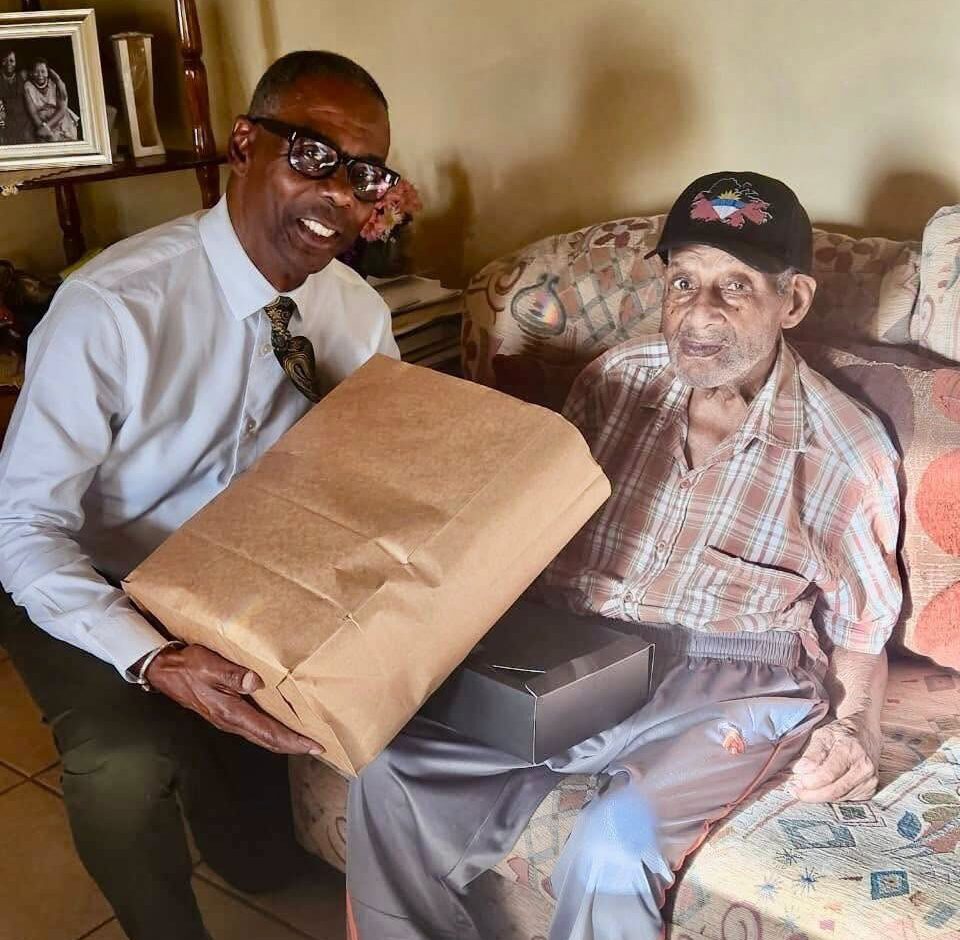
    Looking back on their last interaction, Lovell remembered joining Cummins to mark his 101st birthday last September. He described the opportunity to sit with the centenarian and celebrate his decades of experiences as a true honor, one that he will carry with him permanently. In a statement released following the news of Cummins’ death, Lovell highlighted that just days before he passed away, the centenarian had already been recognized as part of the country’s annual Centenarian Week celebrations. Lovell called this pre-death tribute a perfectly fitting honor for a man who dedicated his life to his home community of Sea View Farm and the entire nation.

    Beyond his impressive age, Lovell emphasized that Cummins’ legacy is defined by three core values that shaped every stage of his life: unwavering faith, quiet resilience through hardship, and consistent service to his neighbors. “I will always cherish the warmth of his smile and the opportunity to spend time with him,” Lovell shared in his reflection, painting a picture of a gentle, kind community leader beloved by all who met him.

    Extending formal condolences, Lovell reached out to Cummins’ immediate family, his close circle of friends, and the broader Sea View Farm community that he was such a core part of. He used the moment of mourning to call on the entire nation to honor Cummins’ memory by embracing the values he embodied throughout his life: quiet perseverance, humble leadership, and a commitment to lifting up one’s local community. Closing his tribute, Lovell offered a final blessing: “May the soul of Mr. Denzil O’Brien Cummins rest in eternal peace.”

  • Aid: Supérate delivers Emergency Bonus to 1,766 families

    Aid: Supérate delivers Emergency Bonus to 1,766 families

    In the wake of devastating April rains and floods that left thousands of households across Greater Santo Domingo displaced and financially strained, the Dominican Republic’s Supérate Social Development Directorate has kicked off the distribution of targeted emergency cash assistance, rolling out the Emergency Bonus as a core component of the country’s national Adaptive Social Protection (PSA) strategy.

    The program is designed to deliver much-needed relief to 1,766 hard-hit families across three municipalities: Los Alcarrizos, Santo Domingo Oeste, and Pedro Brand. Each qualifying household will receive a one-time payment of RD$7,000, bringing the total value of this round of aid to RD$12,362,000. The funds are earmarked to help families repair flood-damaged homes and cover urgent basic needs after the disaster.

    Speaking at the launch of the distribution held Friday, May 26 at Los Alcarrizos’ Multipurpose Center, Supérate Director General Mayra Jiménez emphasized that the initiative aligns with the current government’s commitment to centering vulnerable communities in public policy. “We have strengthened our national social protection framework to ensure that no family facing an emergency is left without support from their government, working hand-in-hand with all state institutions and local authorities,” Jiménez said. “This bonus fills critical gaps for those who lost everything, were out of work for weeks, went into debt to make ends meet, or need to purchase essential medication.”

    Local leaders echoed that commitment, highlighting the broader scope of the government’s post-flood response. Los Alcarrizos Mayor Junior Santos noted that alongside direct cash assistance, the national government has advanced critical infrastructure upgrades, including new drainage and sanitation projects designed to reduce future flood risk for at-risk communities. Santos added that new mitigation interventions will launch across other high-risk sectors of the municipality in the coming days, and recapped the wide-ranging aid already deployed after the April floods: more than 7,000 household appliances, thousands of essential home goods, over 20,000 food rations, and other critical supplies have already been delivered to affected families.

    Santos also confirmed that 69,000 additional families across the country were added to the national Bonoluz utility assistance program in May, 3,500 of which are Los Alcarrizos residents.

    The distribution schedule has been structured to ensure safe, efficient access for all recipients. After the first day of distribution in Los Alcarrizos, the program will move Saturday, May 27 to Professor Germán Martínez High School in the National District’s Los Ríos sector, where mobile units from Banco de Reservas have been deployed to process payments on-site. Distribution to eligible families in Santo Domingo Norte is scheduled to begin next week.

    To guarantee that aid reaches the most vulnerable households, all beneficiaries were selected through rigorous surveys and validation checks managed by the Single Beneficiary System (Siuben), which uses the Basic Emergency Form (FIBE) to assess damage severity and need. This vetting process ensures that support goes to households that suffered the worst flood impacts.

    The Emergency Bonus is a core pillar of the Dominican government’s Adaptive Social Protection policy, which was created to deliver fast, targeted support to vulnerable households during emergencies, natural disasters, and other unforeseen crises. Beyond the current emergency assistance, Supérate already maintains broad ongoing social protection coverage across the three affected municipalities. In total, more than 93,000 local families receive regular support through government programs including Aliméntate, Bonogás, and Bonoluz: 43,039 in Los Alcarrizos, 36,213 in Santo Domingo Oeste, and 13,813 in Pedro Brand.

  • They are asking for more resources for the treatment of people with addictions in the Dominican Republic.

    They are asking for more resources for the treatment of people with addictions in the Dominican Republic.

    On the International Day Against Drug Abuse and Illicit Trafficking, stakeholders across the Dominican Republic have advanced complementary but distinct calls to action around national drug policy, highlighting growing momentum to reframe addiction as a public health issue rather than a criminal justice problem.

    Leading the advocacy push is Hogar Crea Dominicano, a leading non-profit dedicated to supporting people struggling with substance use disorders. The organization marked the international observance with two public commemorative events: a community awareness walk through the capital of Santo Domingo, and a solemn floral tribute laid at the iconic Altar of the Fatherland. Beyond these observances, Hogar Crea’s leadership has issued an urgent appeal to the Dominican national government for increased public funding to expand treatment access. The organization says additional financial resources are critical to building new care facilities that can accommodate the growing number of people seeking support for addiction recovery.

    In a repeated, clear message to policymakers and the public, Hogar Crea’s director emphasized that people who use substances should not be marginalized or penalized as criminals, but treated with compassion as patients managing a chronic health condition. This framing aligns with global guidance from the International Drug Policy Consortium, an independent global policy network that has long pushed for reformed drug laws. The consortium echoed the non-profit’s call, stressing that policy should center support for people who use drugs rather than punitive measures that push addiction underground and block access to life-saving care.

    While reform advocates push for a public health-centered approach to addiction, Dominican law enforcement agencies are reaffirming their commitment to cracking down on the supply side of the drug trade. The National Drug Control Directorate (DNCD), the country’s lead anti-drug agency, reiterated that it will sustain and intensify targeted operations to dismantle transnational and domestic drug trafficking networks that bring illicit substances into the country. Alongside its enforcement work, the DNCD also issued a public appeal to Dominican families, urging households to maintain open, active supervision of young people and provide consistent guidance to prevent youth substance use before it develops into addiction.

  • ZHTF validates strategic plan 2026-2030

    ZHTF validates strategic plan 2026-2030

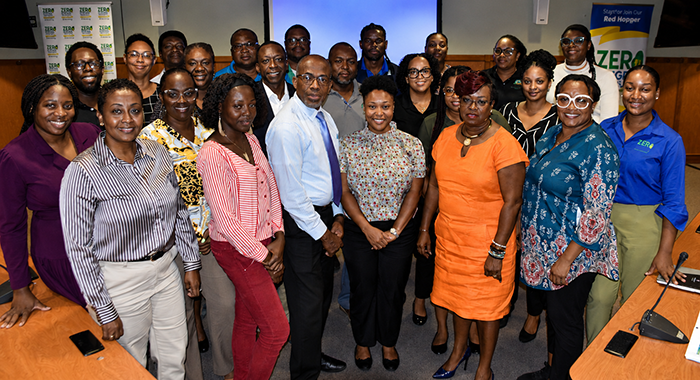
    On June 18, the Zero Hunger Trust Fund (ZHTF) hosted a critical stakeholder validation workshop in Kingstown, marking a key milestone in the finalization of its five-year strategic framework covering 2026 to 2030. This collaborative gathering brought together a diverse cross-section of actors, including senior representatives from national government ministries and departments, local non-governmental organizations, youth advocacy groups, civil society bodies, and other core implementing partners. The core objective of the session was to conduct a comprehensive review of the draft strategic plan and collect targeted feedback to refine the fund’s proposed direction for its next operational cycle.

    Facilitated by experienced strategic consultant Kevin Hope, the workshop formed a central component of a broader inclusive planning process. This process was intentionally designed to guarantee that the finalized strategy fully aligns with St. Vincent and the Grenadines’ national development priorities, reflects existing institutional capacities and constraints, and centers the on-the-ground lived experiences of vulnerable communities across the islands.

    The validation session built on preliminary stakeholder consultations held earlier in March, where community leaders and partner organizations shared on-the-ground insights into the rapidly shifting food and nutrition security landscape across St. Vincent and the Grenadines. Input from those initial consultations already helped shape the refocused draft framework, which prepares the fund for its second decade of operations, impact delivery, and systemic food system transformation.

    During the day-long working session, participating stakeholders assessed whether the draft plan accurately upholds ZHTF’s statutory mandate, matches national priorities, and responds to the evolving challenges that shape food and nutrition insecurity in the country. Attendees examined every core component of the draft, including its proposed vision, mission statement, overarching strategic theme, dual core mandate, holistic full food systems approach, six defined strategic pillars, and priority implementation actions. They also flag areas requiring additional clarification, identified opportunities to strengthen alignment across stakeholder roles, and submitted concrete recommendations to streamline the plan’s final approval, publication, and rollout.

    At the heart of all workshop discussions was a shared consensus that hunger and systemic food insecurity cannot be resolved through disconnected, standalone interventions. In response, the draft strategic plan adopts an integrated, cross-sectoral systems approach that connects diverse policy and programming areas, including social protection, public health nutrition, local food production, agriculture, fisheries, livelihood development, market access, climate resilience, data-driven governance, and community-led participation.

    This model is rooted in the recognition that long-term sustainable solutions require coordinated action across multiple sectors, and stronger linkages between two critical priorities: immediate food and livelihood support for vulnerable households, and long-term strategic investments in building climate-resilient local food systems.

    Addressing assembled participants, Safiya Horne-Bique, Director and CEO of ZHTF, emphasized that meaningful stakeholder engagement is non-negotiable to ensure the final strategic plan is practical, credible, and fully relevant to the national context. “The goal of this workshop is that we leave with a clearer, stronger and more validated strategic framework that can guide the work of the Zero Hunger Trust Fund from 2026 to 2030 and position the Fund for its second decade of impact,” Horne-Bique stated.

    Encouraging open, constructive feedback from all attendees, she added: “Help us ensure that this document is not only a good strategic plan on paper, but also a useful national instrument for action.”

    As ZHTF prepares to mark 10 years since its founding, Horne-Bique noted that the organization must not only celebrate its past achievements, but also adapt its operating model to respond to new and emerging challenges facing the country. “The environment in which the Fund now operates is very different from the one that existed in 2016. Saint Vincent and the Grenadines faces deeper climate and disaster risks, rising food prices, high food import dependency, shifting dietary patterns, youth unemployment, an ageing population, and continued vulnerability among households and communities. These realities require us to think beyond individual programmes and to look at the food system as a whole. That is the central purpose of this Strategic Plan.”

    Horne-Bique further explained that the fund’s future direction must strike a critical balance between delivering immediate assistance to vulnerable populations and advancing long-term work to reduce systemic vulnerability, strengthen community livelihoods, and build overall food system resilience. “This workshop is not intended to be a ceremonial exercise. It is a working session. We are here to validate the strategic direction of the Fund for the period 2026 to 2030 and to ensure that the final plan is ambitious, but realistic; nationally relevant, but institutionally deliverable; visionary, but measurable.”

    The draft strategic plan also clarifies and sharpens ZHTF’s unique value proposition as a national institution. The fund does not aim to replace existing government ministries or community-based organizations; instead, it positions itself as a catalytic, flexible, and partnership-driven intermediary that connects policy development, financing, on-the-ground programming, community leadership, and evidence-based learning. Through this niche role, ZHTF is positioned to mobilize much-needed resources, pilot innovative intervention models, directly support vulnerable groups, strengthen local food systems, and turn national food and nutrition security priorities into actionable, results-driven work.

    For his part, consultant Kevin Hope highlighted the immense value of the input collected across the full consultation and validation process. He noted that workshop discussions reinforced both the critical importance of ZHTF’s mandate and the need to build broader public understanding of the fund’s role in advancing food and nutrition security across the islands. “It is now for us to work together on how we align our initiatives, how we use the activities ZHTF is doing to catalyse other investment, and how we deliver on the mandate. The mandate is ending hunger, food security and sustainable livelihoods,” Hope said.

    He added that meaningful food security and food sovereignty must become embedded in national culture and daily community practice, rather than remaining abstract policy concepts reserved for government documents. “How do we target interventions and work together collaboratively to reduce poverty and vulnerability in communities using agriculture and fisheries as mediums? How do we strengthen and support livelihoods in these communities, and how do we ensure that food sovereignty and food security are not just buzzwords, but part of our lived culture? I am hopeful that at the end of this strategic planning exercise, there will be greater public awareness and stronger buy-in as to the ‘why’.”

    Moving forward, all feedback and recommendations collected during the June 18 validation workshop will be integrated into the draft to produce the final version of the 2026–2030 Strategic Plan, which will then be submitted for official government approval. Once finalized, the plan will serve as the official roadmap guiding ZHTF’s work to end hunger, strengthen food and nutrition security, support sustainable livelihoods, deepen cross-sector partnerships, and contribute to the development of resilient, inclusive, and sustainable food systems across St. Vincent and the Grenadines.