分类: society

  • 47 Nurses depart for St Kitts and Nevis

    47 Nurses depart for St Kitts and Nevis

    On a Saturday morning in late June, 47 carefully selected Ghanaian nursing professionals departed Accra International Airport to begin a two-year work placement at a major medical facility in the Caribbean nation of St Kitts and Nevis. This deployment marks the latest milestone under the Ghana Labour Exchange Programme (GLEP), a structured bilateral initiative designed to deliver mutual benefits for both Ghana and its international partner countries.

    Of the 47 departing nurses, 32 are general practice nurses, while the remaining 15 specialize in community and public health. The bilateral agreement governing this placement guarantees all participating nurses comprehensive working terms and welfare support, including furnished accommodation, competitive remuneration, local transportation, meal allowances, and other pre-negotiated working conditions.

    Senior Ghanaian government officials were on hand to send the nursing cohort off, including Deputy Minister of Health Dr. Grace Ayensu-Danquah and Deputy Chief of Staff for Administration Nana Oye Bampoe Addo. Also in attendance were senior representatives from Ghana’s Ministry of Health, Ministry of Foreign Affairs, and the GLEP administrative secretariat.

    In her remarks to the departing nurses ahead of their journey, Dr. Ayensu-Danquah emphasized the dual purpose of the international placement: delivering much-needed workforce support to St Kitts and Nevis’ public health system, while allowing the Ghanaian nurses to build advanced clinical skills and gain hands-on international professional experience. At the conclusion of their two-year assignment, all nurses will return to Ghana to contribute their enhanced expertise to the country’s domestic healthcare ecosystem.

    Dr. Ayensu-Danquah encouraged the cohort to approach the opportunity with intentionality, noting, “Don’t go and come back the same way you left. It is an opportunity for you to learn something, come back and support our health system.” She also confirmed that the Ghanaian government has established formal support mechanisms to assist nurses with any challenges they may face while working abroad, urging early communication to ensure issues are resolved quickly.

    Speaking to reporters following the send-off ceremony, the Deputy Minister explained that the participating nurses were selected through a rigorous competitive recruitment process, conducted jointly by Ghanaian health authorities and recruitment representatives from St Kitts and Nevis. Successful candidates were chosen based on their demonstration of clinical competence, professional conduct, and the resilience required for international deployment.

    She framed the GLEP as a core component of the government’s broader strategy to address the long-standing backlog of qualified, trained but unemployed health professionals across Ghana, even as the administration expands domestic recruitment of healthcare workers. This year alone, the government has launched recruitment for the 2021 cohort of nurses and allied health workers, with a target of hiring more than 25,000 health professionals for domestic roles, while simultaneously developing structured managed migration opportunities with partner nations.

    Additional cohorts of Ghanaian health professionals are already in the recruitment pipeline, with future departures planned for other Caribbean countries including Jamaica, the Bahamas and Grenada, following the same rigorous joint selection process, Dr. Ayensu-Danquah confirmed. To date, Ghana has finalized formal bilateral labour mobility agreements with 14 countries that are actively seeking qualified Ghanaian health professionals, with each agreement tailored to the partner nation’s specific workforce needs and including binding negotiated provisions for worker welfare, pay and working conditions.

    For her part, Deputy Chief of Staff Nana Oye Bampoe Addo described the departure of the St Kitts and Nevis cohort as a key milestone for the GLEP initiative. She noted that the programme creates a formal, ethical, and coordinated framework for labour mobility that unlocks valuable international opportunities for Ghanaian health workers while preserving their ties to their home country.

    By creating legal, mutually beneficial placements abroad, the GLEP directly addresses the challenge of high unemployment among thousands of trained Ghanaian health professionals, Nana Oye Bampoe Addo explained. She urged the departing nurses to act as cultural and professional ambassadors for Ghana during their time abroad, upholding the nation’s positive reputation through discipline and consistent professionalism. “You are now ambassadors of Ghana, and the world will judge us by how you conduct yourselves,” she told the cohort.

  • After 8 years, no sign of Sharday

    After 8 years, no sign of Sharday

    Eight years has passed since 20-year-old nursing student Sharday Emmanuel stepped out of her family’s home in Mamoral, Central Trinidad, hailed a taxi for Chaguanas, and vanished without a trace. For her father, Junior Emmanuel, every day since has carried the same hollow pain: he is certain unidentified burnt human remains found a year after his daughter’s disappearance belong to Sharday, but years of bureaucratic delays and flawed forensic testing have left his family without closure, and the person he believes responsible still free.

    The case of Sharday’s disappearance echoes a grim pattern in the southern Trinidad community, coming just seven years after the murder of 12-year-old Mercedez Layne, whose battered body was found not far from where Sharday’s suspected remains were discovered in an abandoned Santa Flora oilfield. In 2019, local authorities recovered a woman’s skeletal remains and pieces of burnt clothing from the oilfield site, but the body was never officially identified. Within days of the discovery, Junior Emmanuel connected the site and evidence to his missing daughter, and reached out to the Southern Homicide Division of the Trinidad and Tobago Police Service (TTPS) to review the case.

    Emmanuel was granted access to crime scene photographs of the remains, and two details immediately confirmed his worst fears: the burnt clothing recovered included a pleated skirt matching one Sharday owned, and the abandoned oilfield was an area Sharday was known to visit with a male acquaintance. For seven years, Emmanuel has waited for forensic DNA testing to confirm what he says he already knows, but the process has been mired in repeated setbacks. Senior TTPS homicide officials confirmed the first DNA test, run on a sample provided by Junior Emmanuel, returned an inconclusive result—though no official written documentation of the finding has ever been shared with the family. A second sample collected from Sharday’s mother, Marilyn Emmanuel, was sent for testing years ago, but the family has still not received a formal result.

    “After two DNA tests, one inconclusive and one we never got the official results of I’m hopeful that the Homeland Security Minister can get involved and see for himself how the burnt remains fabric and the picture we have of Sharday wearing the same material and pattern matches…and send those remains to get tested again,” Emmanuel said in a recent interview. He believes police previously questioned the man he suspects of harming Sharday, but released him due to the lack of confirmed DNA evidence, letting the alleged perpetrator remain at large. “The authorities know exactly who is responsible for her disappearance but because of the inconclusive DNA result she is still considered a missing person and the demon responsible walks among us,” he added.

    The past eight years have irrevocably broken the Emmanuel family, their patriarch says. “Life for my wife and myself has never been the same…not a day goes by without us calling Sharday’s name and remembering the 20 years we had her for,” he shared. Sharday’s brother Cassiel has coped with his grief by never speaking of his sister, a silence the family understands even as it deepens their pain. In the years since Sharday vanished, Cassiel has welcomed three children and is preparing to marry—milestones Sharday will never get to experience, though her young nieces and nephews already know her from family photographs. “We try our best to smile through the pain we feel every single day but inside is an emptiness that never goes away,” Emmanuel said.

    The story of Sharday’s disappearance only became public when Emmanuel shared it at a United National Congress (UNC) anti-crime symposium in January 2024, where he publicly called out what he calls “inexcusable police incompetence” in the stalled investigation. When the UNC won the 2025 general election, Emmanuel hoped the new government would prioritize his case, but he has yet to hear from any party officials. He has now turned directly to newly appointed Minister of Homeland Security Rodger Alexander, requesting an in-person meeting to push for a new round of independent DNA testing.

    Reconstructing Sharday’s final days has uncovered devastating new layers of pain for the family. On the morning of June 27, 2018, Sharday was captured on surveillance camera at a Chaguanas shopping mall after leaving her home—then all trace of her disappeared. Her boyfriend was supposed to meet her that morning, but when he arrived late she did not answer his calls, prompting him to alert the Emmanuels, who knew immediately something was wrong. “Sharday would not stay away from her mother. They were extremely close and Sharday loved her family,” Emmanuel said, confirming his daughter never would have chosen to leave voluntarily.

    As the family searched for clues among Sharday’s friends, they opened what Emmanuel describes as a Pandora’s Box that upended their entire world: they learned Sharday had been trapped in an abusive relationship, and was planning to leave her abuser shortly before she disappeared. Voice notes shared by Sharday’s best friend, sent in the weeks before her disappearance, revealed the young nursing student had planned to tell her father about her “secret life” and feared for her safety. “This broke my heart and I now more than ever wanted to find the person who took my little girl away,” Emmanuel said.

    Local media outlet Express reached out to Minister Alexander via WhatsApp Tuesday to share Emmanuel’s request for a meeting and ask if he would intervene in the case. As of publication, no response has been received.

  • TEEN’S FATAL RIDE

    TEEN’S FATAL RIDE

    A life brimming with extraordinary potential was cut short in a fatal roadway collision on Saturday, when 15-year-old Idris Hosein—widely remembered as a gifted scholar, emerging community leader, and dedicated Scout—died in a crash on Trinidad’s Churchill-Roosevelt Highway. What unfolded on that stretch of westbound highway has left family, teachers, and fellow Scouts grappling with unfathomable loss, as investigators work to piece together the full details of the incident.

    Official police reports confirm that the Barataria Police Station, under the leadership of W/A/Sgt Solomon-Rajkumar, received the alert about the fatal crash at 11:26 a.m. on June 27. Preliminary investigations outline that roughly an hour before first responders arrived, a 23-year-old driver from Arima was traveling westbound in a rented Nissan Tiida with two female passengers. When the driver attempted to merge from the middle lane into the left lane, Hosein’s motorcycle struck the rear left corner of the car. The impact threw the 15-year-old several meters across the roadway, despite him wearing a protective helmet at the time of the collision. He was pronounced dead at the scene, while the driver and his two passengers walked away from the incident without injury. Hosein’s father formally identified his son’s body following the crash.

    The 23-year-old driver has since been warned of pending prosecution under Section 73(1) of the country’s Motor Vehicles and Road Traffic Act. Crime Scene Investigator WPC Williams documented the collision site with forensic photography, and both the car and the damaged motorcycle were impounded at the Barataria Police Station as the investigation remains ongoing. W/A/Sgt Solomon-Rajkumar is leading continuing inquiries into the exact sequence of events.

    In an interview with local outlet *Express* at the family’s Cunupia home, Idris’s father Arif Hosein painted a picture of a young man who excelled in every area of his life, pushing back against unsubstantiated social media claims that framed his son as a delinquent. “He wasn’t just bright—he was a brilliant young man,” Arif said. “Every single term, he brought home awards for both academics and sports. He just picked his advanced science subjects to start Form Four, and we fully expected he would earn a university scholarship.”

    Beyond academics, Idris was deeply committed to the scouting movement, where he had risen to become one of the group’s youngest youth leaders. “When the older Scouts couldn’t master knot-tying, they came to Idris. He loved teaching the younger kids the basics—friends would even come to our house just to practice with him,” his father explained.

    Arif also addressed the circumstances of his son’s ride, clarifying that Idris had only ever been allowed to ride a small training motorcycle under direct adult supervision, and did not have permission to operate the larger, higher-powered bike involved in the crash. “I would never let him take that bike out on his own,” he said. “He knew how strict I am about safety. That bike costs around $80,000, but if I’d known he’d taken it without permission, I’d have smashed it to pieces with my sledgehammers to make sure he never made that kind of mistake again. That’s how seriously I take safety.”

    The grieving father says he is still searching for answers, struggling to understand why Idris left home with the motorcycle that day, and whether anyone encouraged the unsupervised ride. “My last conversation with him was Friday night—I told him I loved him, and he said everything was fine at home. The next morning I got the call about the crash,” Arif said. “This isn’t who he was. He never did anything like this. I need to know who encouraged him, where he was going, and why this happened.” He also noted unconfirmed witness accounts of a second motorcyclist in the area shortly before the collision, but acknowledged that no concrete evidence has yet emerged to confirm that detail.

    Andrew Buckmire, Group Scout Leader at Idris’s school, St Mary’s College, says the 15-year-old stood out from his peers for his uncommon maturity, relentless work ethic, and natural ability to lead. “He was far more than a typical Scout,” Buckmire said. “He threw himself into every program we ran, and he was always there when we needed him.” Buckmire explained that Idris consistently demonstrated practical skills and knowledge well beyond his 15 years, often teaching even older Scouts new skills: “He was ahead of everyone when it came to hands-on experience and physical skills. He taught most of the boys how to fish, how to operate our program engines—even when they were years older than him.”

    Buckmire added that Idris never shied away from responsibility, and could always be counted on to see any task through to completion. “He always went the extra mile. When everyone else was tired and ready to quit, Idris stayed to finish what needed to be done,” he said. “I never had any worries about giving him important tasks—I knew he’d get them done right. If he ever had a question, he’d always come double-check with me, no exceptions.”

    Buckmire described Idris as respectful, humble, and firmly rooted in his values, noting that even as a Muslim student at a Catholic school, he always felt comfortable asking for time to pray, and was fully respected by the entire school community. “He never sought attention or bragged about his skills,” Buckmire said. “He was quiet, but his presence was felt through how well he got things done. To my knowledge, he never had a single disciplinary issue at school. This whole tragedy is completely out of character for who he was. It’s just so devastatingly unfortunate.”

    The scouting community, Buckmire says, will feel the loss of Idris deeply. “He was an impressive Scout and a genuinely good person. So many of his peers are going to miss him terribly,” he added.

  • Prime Minister Confirms All Safe After Apple Syder Maritime Emergency

    Prime Minister Confirms All Safe After Apple Syder Maritime Emergency

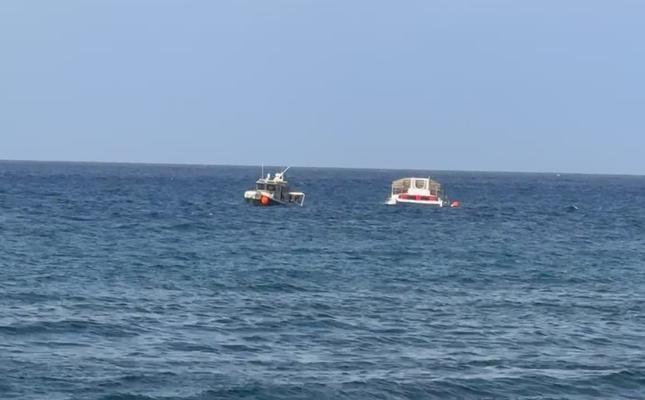
    On a Monday morning in late June 2026, a routine ferry crossing between the two Caribbean islands of St. Kitts and Nevis quickly turned into a crisis when the Apple Syder passenger ferry began taking on water mid-voyage, triggering a coordinated emergency response that ultimately ended with every person on board brought to safety. Local media outlet SKNVibes.com confirmed that official updates from top government leaders have verified there are no fatalities connected to the incident.

    Prime Minister Dr. Terrance Drew, who traveled to the Joseph N. France General Hospital shortly after the rescue operation concluded to check on the condition of transported passengers, shared the good news via his social media channels. “I just left the hospital where I was updated that everyone from the ferry, Apple Syder, is safe,” the prime minister wrote. “Thanks to God, the emergency response teams, hospital staff, and civilians for their tremendous rescue efforts.”

    Footage shared widely across social media platforms captured the gravity of the situation: the listing vessel being towed back to shore as it neared capsizing, and passengers pulled from the channel’s waters by smaller response craft. The first vessel to answer the Apple Syder’s distress call was another local ferry, the Makana, whose crew immediately diverted to assist alongside the official St. Kitts and Nevis Coast Guard.

    In a public statement, the Makana Ferry Company moved quickly to correct early online misinformation that incorrectly identified the Makana as the vessel in distress. “We would like to clarify that Makana was not the vessel in distress. Our crew answered the call to assist alongside the St. Kitts and Nevis Coast Guard and others responding to the emergency,” the company said. Echoing the prime minister’s relief at the outcome, the company added, “We are thankful that all passengers and crew were brought safely ashore with no loss of life. Our thoughts are with the Apple Syder Ferry Company during this difficult time, and we wish them strength as they recover from this unfortunate incident.”

    The company extended public gratitude to its own passengers, who remained calm during the unexpected diversion to support the rescue, and praised its leadership and crew for their quick, selfless action. “A heartfelt thank you to our passengers for remaining calm, understanding the situation, and allowing our crew to safely assist those in distress. Your patience and cooperation made it possible for us to help when it was needed most,” the statement read. “We would also like to extend our deepest gratitude to our captain and the entire Makana crew for their professionalism, bravery, experience, and selfless actions. Their calm leadership and commitment to the safety of others reflect the very best of our maritime community.”

    Minister of Marine Resources Samal Duggins also released a statement acknowledging both the fear sparked by the incident and the relief at the positive outcome. “While we await official updates from the relevant authorities, I am encouraged by reports indicating that passengers and crew were safely rescued. Our thoughts remain with everyone who experienced this frightening ordeal, as well as their families and loved ones who anxiously awaited news,” Duggins said.

    He noted that maritime emergencies carry unique emotional weight for residents of the island federation, due to past sea tragedies that have impacted local communities. “For many in our Federation, any incident at sea stirs memories of tragedies that have touched our shores in the past. Today, however, we are grateful that this story appears to be one of survival, rescue, and the collective efforts of those who sprang into action when it mattered most,” he added.

    As of Monday afternoon, authorities have not released a full public account of what caused the ferry to take on water. Preliminary related reports suggest a damaged pontoon may be linked to the incident, and a formal investigation is already underway to determine the root cause of the emergency and review the response effort.

  • Guyana, International Society for Krishna Consciousness to forge healthcare partnership

    Guyana, International Society for Krishna Consciousness to forge healthcare partnership

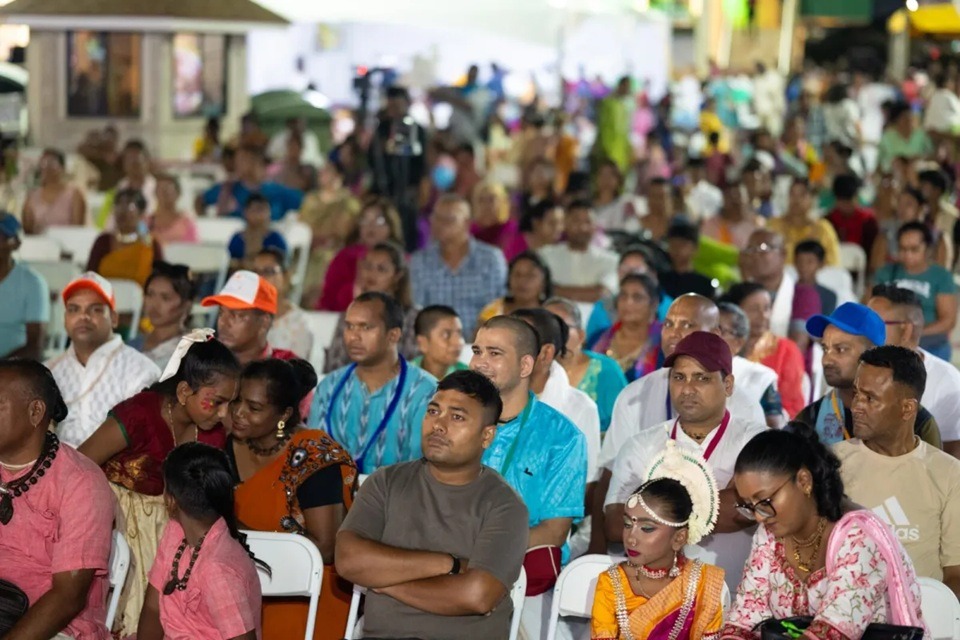
    On Saturday, during the 2026 observance of Jagannath Ratha Yatra held at Leonora’s West Central Mall, Guyanese President Irfaan Ali unveiled a new collaborative initiative between his administration and the International Society for Krishna Consciousness (ISKCON) designed to expand primary healthcare access and boost preventative health education across the country.

    Hundreds of devotees and community members gathered for the annual religious celebration, widely known as the Festival of Chariots, one of Hinduism’s most sacred annual events. Rooted in ancient traditions from the Indian city of Puri, the festival honors the ceremonial journey of Lord Jagannath alongside his siblings Balabhadra and Subhadra, carrying core messages of unity, devotion, selfless service, and spiritual connection that resonate across communities.

    Under the terms of the new public health partnership, permanent health screening services will be established at ISKCON facilities across Guyana. The program aims to encourage both devotees and local residents to prioritize routine preventive care, adopt healthier daily habits, and make physical and mental wellness a central part of their lives. President Ali emphasized that the project aligns with the government’s broader national strategy to weave together healthcare access, public education, and grassroots community engagement to lift overall national well-being.

    Addressing the gathered crowd, President Ali highlighted that the timeless values embodied by the Ratha Yatra hold urgent relevance for contemporary Guyanese society, particularly amid rising rates of mental health strain and growing social pressure. He noted that the festival’s emphasis on self-reflection encourages individuals to cultivate deeper self-awareness and a clearer sense of purpose in daily life. “The consciousness of oneself is the ability to understand that we are nothing but insignificant mortal souls under the command of a superior being,” President Ali told attendees.

    The Guyanese leader also praised ISKCON’s long-standing contributions to civic and social life across the country, framing the organization as a major force for public good through its community education programs, outreach initiatives, and consistent promotion of values including peace, personal discipline, and service to others. He stressed that spiritual values should not be limited to houses of worship, but should guide everyday action. “The sacred is not only where we pray; it is how we live,” he added.

    President Ali used the public occasion to also call for greater commitment to environmental stewardship among Guyanese citizens, framing the nation’s vast forests, pristine waterways, and unique biodiversity as a sacred trust that all residents have a responsibility to protect. He reaffirmed the government’s commitment to balancing inclusive economic development with proactive conservation, urging locals to take individual responsibility for keeping homes and public community spaces clean and sustainable.

    Drawing on the symbolic meaning of the Ratha Yatra’s iconic chariot procession, President Ali noted that collective progress for the nation only comes through coordinated shared effort. “The chariot does not move by itself. It moves because people come together, pull together and participate together,” he explained. He closed by urging all Guyanese to carry the festival’s core values of compassion, service, and collective responsibility beyond the celebration and into their daily lives.

  • National child protection awareness and prevention campaign launched

    National child protection awareness and prevention campaign launched

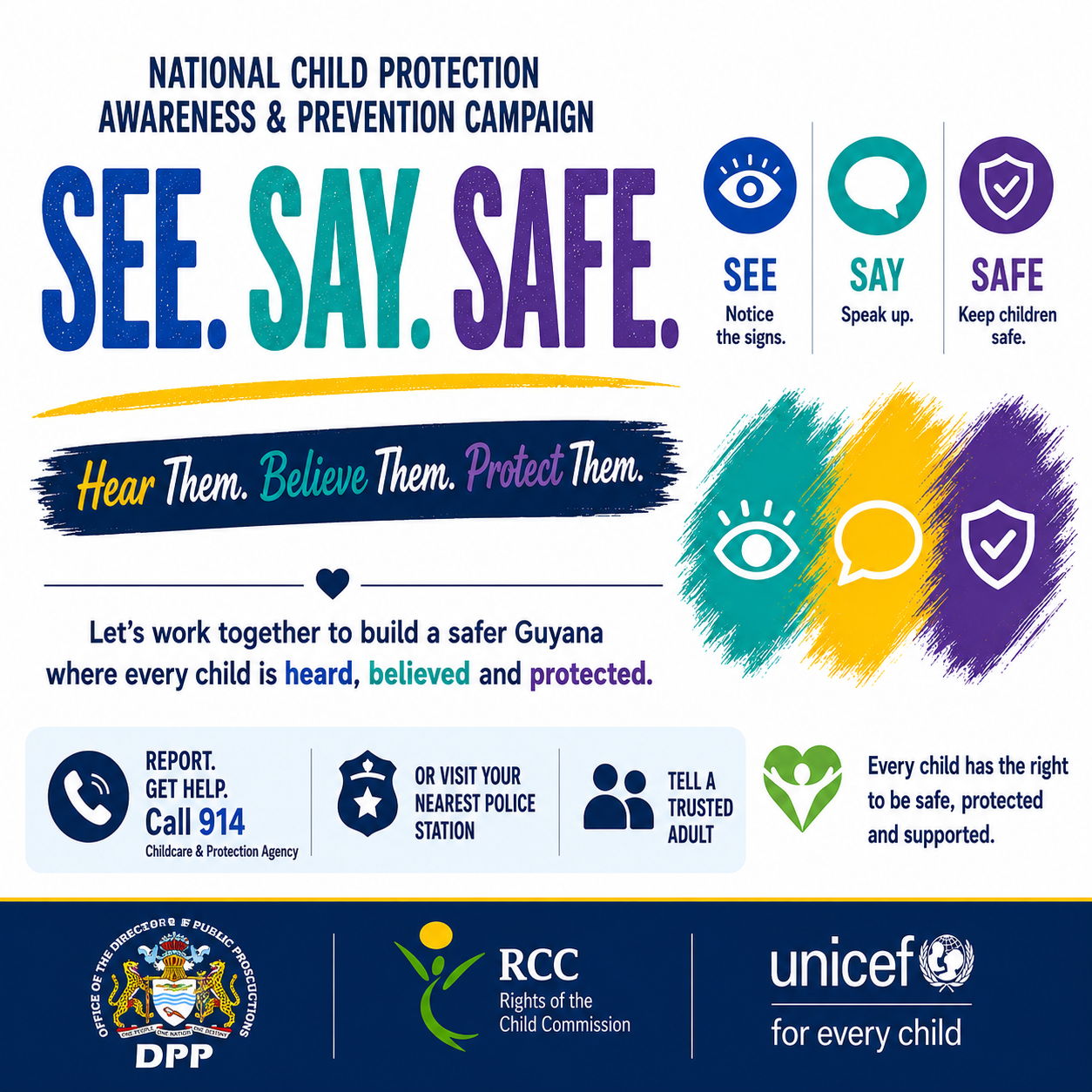
    On June 28, 2026, UNICEF Guyana announced the launch of a groundbreaking public awareness initiative designed to combat child sexual abuse and boost early reporting of harm, in partnership with two leading Guyanese child protection bodies: the Rights of the Child Commission (RCC) and the Office of the Director of Public Prosecutions (DPP). Dubbed the ‘SEE. SAY. SAFE.’ campaign, the cross-sector effort aims to fill critical gaps in public knowledge that leave vulnerable children exposed to ongoing abuse.

    Across its multi-month run, the campaign will deploy a multi-channel outreach strategy to reach every corner of Guyana, integrating messaging on national radio and television, across major social media platforms, in primary and secondary school programs, and through in-person community workshops. Unlike many targeted child protection efforts that focus solely on either adult action or child education, this initiative is designed to equip both groups with the tools they need to prevent harm.

    Campaign organizers highlight a persistent barrier to child protection: far too many children who experience abuse never come forward to report their victimization. Most often, silence stems from deep-seated fear of retaliation, stigma, or uncertainty that their claims will be believed. RCC Chairperson Aleema Nasir emphasized that the campaign’s core mission is to dismantle these barriers by creating a culture where children feel secure disclosing harm, and adults are trained to respond with empathy and decisive action.

    Over the coming months, the initiative will roll out targeted training modules for adults, teaching them to identify red flags that signal a child may be experiencing abuse, and guiding them to adopt consistent safeguarding practices in homes, schools, and community spaces. For children, the campaign will deliver age-appropriate education to help them distinguish between safe and unsafe interactions. It will also work to challenge social stigma that discourages survivors from coming forward, and clearly map accessible, official reporting pathways for anyone with concerns about a child’s safety.

    A key, often overlooked message woven into the campaign is that child abuse can occur in trusted, familiar settings — including homes, schools, and community organizations — and that all children, regardless of gender, deserve protection, support, and to have their claims taken seriously. This explicit focus on including boys in protection conversations addresses a common gap in many global child safety efforts, where male survivors are often overlooked.

    Dr. Loria-Mae Heywood, UNICEF’s Child Protection Specialist based in Guyana, explained that the initiative fills a critical need by connecting public awareness to tangible action. ‘When families and communities are informed and respond appropriately, children are safer,’ Dr. Heywood noted. ‘This campaign strengthens the link between awareness and action.’

    Assistant Director of Public Prosecutions Teshana Lake stressed that early reporting is not just critical for a child’s immediate safety, but also for upholding justice for survivors. She urged anyone with concerns to report allegations promptly to the Guyana Police Force, noting that ‘Timely reporting in Sexual Offences helps to preserve evidence and it allows survivors to receive timely support.’

    As an added component to improve future child protection work, the campaign is inviting all Guyanese residents to participate in a short, anonymous online survey. The data collected will help stakeholders measure current public awareness levels and refine child protection services to better meet community needs.

    Organizers are calling on every member of the public to join the effort by learning to recognize warning signs of abuse, prioritizing open communication with children, and reporting any concerns to official authorities. Concerns can be directed to the Childcare and Protection Agency (CPA) via its dedicated 914 hotline, or to the nearest local police station.

    Closing the campaign’s launch announcement, RCC Chairperson Nasir emphasized that child protection is a collective responsibility. ‘Protecting children is a shared responsibility. When we see, when we speak up, we help to keep children safe,’ she said.

  • Cooperatives promote peace through unity

    Cooperatives promote peace through unity

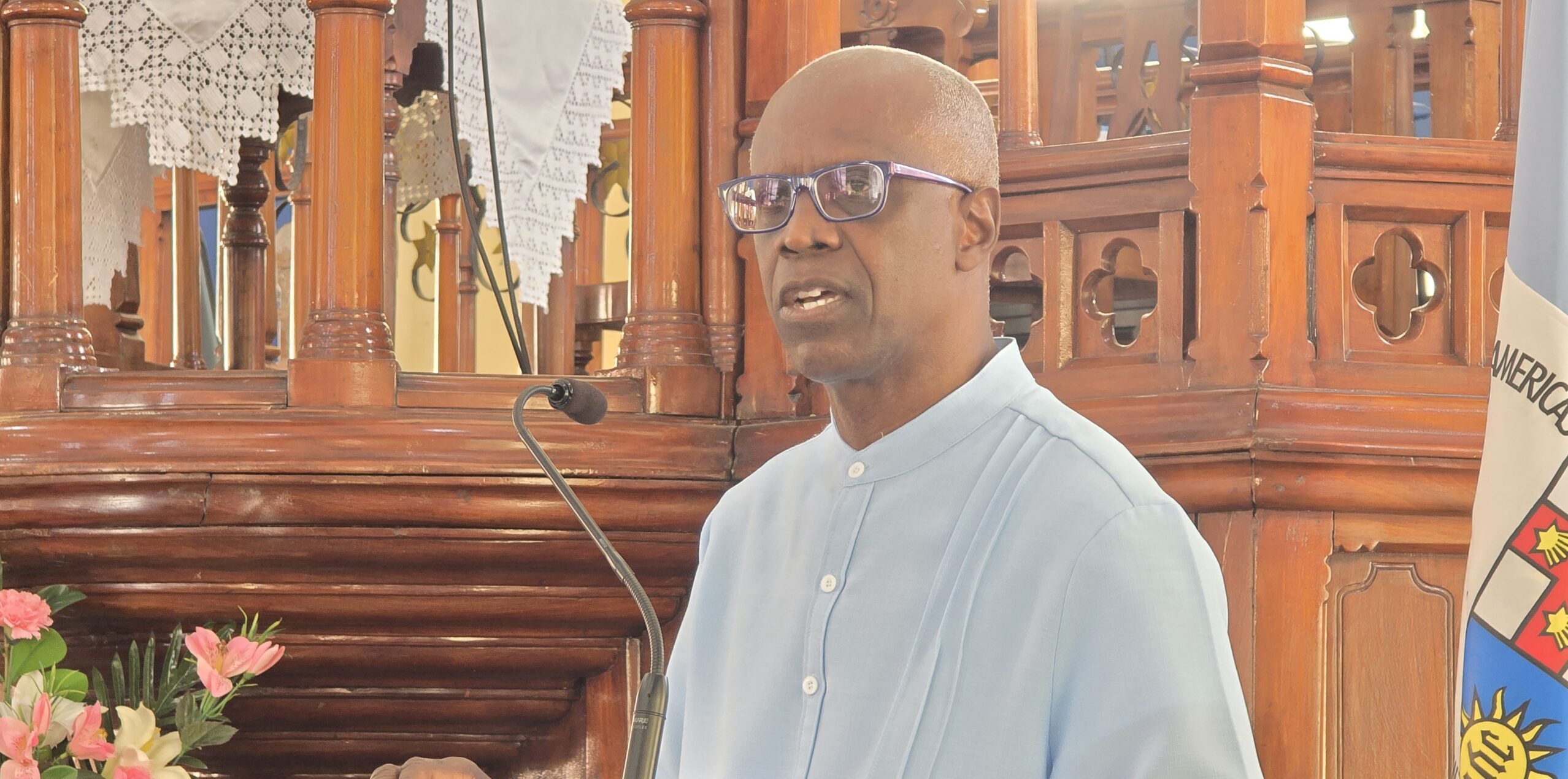
    On the occasion of International Cooperatives Day 2024, top Barbadian cooperative official Brent Gittens has delivered a stirring call for cross-societal unity and peace, grounded in the core principles of the global cooperative movement. Speaking Sunday at a commemorative service hosted by James Street Methodist Church, Gittens opened his address by pushing back against the common narrow definition of peace, noting that true peace is far more than just the absence of open conflict. Instead, he emphasized, lasting peace is constructed on a foundation of justice, inclusive participation, mutual respect, and active care for the well-being of all community members.

    The cooperative model, Gittens argued, is inherently aligned with these building blocks of peace. Rooted in foundational values including self-help, collective accountability, democratic governance, equal standing, equity, and shared solidarity, cooperatives are designed to bring people together to advance shared needs and common aspirations, with an explicit commitment to leaving no member behind. At a moment when deep divisions shape many communities across the globe, Gittens said the cooperative movement offers a tangible, working blueprint for what communities can accomplish when people unite around common goals and shared responsibility for collective outcomes.

    Unlike competitive economic models that often prioritize individual gain over community good, Gittens explained that cooperatives nurture peace by embedding a culture of collaboration into their daily operations. They prioritize broad participation over intentional exclusion, and open dialogue over rigid division—two key shifts that help reduce societal friction and build mutual understanding. Beyond their ideological contribution to peace, Gittens highlighted the tangible, on-the-ground impact cooperatives have already made in improving quality of life for people across Barbados.

    From financial cooperatives like community credit unions to non-financial enterprises spanning agriculture, transportation, and small business entrepreneurship, these organizations create sustained pathways for economic advancement and social progress, while simultaneously strengthening the social fabric of local communities. “When individuals are given a voice, when communities work together, and when opportunities are shared fairly, the conditions for peace are strengthened,” Gittens told attendees.

    In closing his address, Gittens urged all Barbadians to embrace the core values of the cooperative movement, with a specific call out to young people to recognize how collective action can help build a more stable, peaceful future for the entire island. He also extended a public invitation to the upcoming Cooperatives Exhibition and Celebration, scheduled to take place July 18 at the Church Village Green on the grounds of the Central Bank of Barbados. The event will bring together cooperative organizations from every region of the island to showcase their services, products, and community impact to the general public.

  • Human Rights Commissioner calls for genuine inclusion at Scouts training exercise

    Human Rights Commissioner calls for genuine inclusion at Scouts training exercise

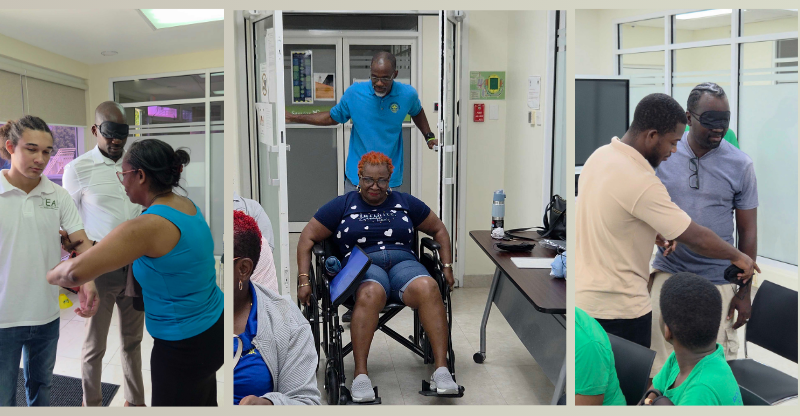
    At a specialized inclusive leadership training held Saturday at Barbados’ Usain Bolt Sports Complex, Human Rights Commissioner Kerry Ann Ifill delivered a compelling call to action for the island nation’s Boy Scout leaders, challenging them to move beyond outdated frameworks of managing physical limitations and build a culture of intentional, daily social inclusion for people living with disabilities.

    Opening her address to participating scout leaders, Ifill emphasized a core truth that is often overlooked in mainstream conversations about accessibility: people with disabilities hold the same core dreams, skills, and ambitions as every other member of society. To help attendees understand the lived experience of disability, the training included an immersive simulation exercise: some participants navigated the space blindfolded to mimic visual impairment, others used wheelchairs to experience mobility restriction, and a third group wore earplugs to limit auditory input. Reflecting on the activity afterward, Ifill was clear that these temporary, controlled scenarios can never fully capture the nuance, complexity, and daily barriers that come with living with a disability long-term.

    Ifill pushed back against the common harmful habit of defining people solely by their physical challenges, arguing that disabled people deserve to be recognized first for their full identity and citizenship. Speaking from personal experience, she shared: “I’m not just a blind person. I’m not just a woman with a disability. I’m a woman too, with the same needs, wants, desires, abilities, capacities, and capabilities as the rest of the women in this room. I’m a citizen of Barbados, just like all of the rest of you.”

    To ground her argument in a tangible example, Ifill told attendees that she would be sworn in that same evening as the new president of her Rotary Club at a formal installation dinner held at Savannah Beach Hotel. She recounted a light-hearted but revealing anecdote from that morning: she had turned to an artificial intelligence assistant to learn what the traditional presidential regalia collar looks like, because no one in the club had thought to describe it to her in accessible terms. The moment, she noted, demonstrates that even well-meaning, supportive communities can unintentionally overlook the unique accessibility needs of disabled members.

    Against the backdrop of Barbados’ shifting demographic landscape – marked by a rapidly aging population and high rates of chronic non-communicable diseases, many of which lead to long-term physical impairment – Ifill warned that disability will eventually touch nearly every household and individual across the country. She urged scout leaders to embed inclusive values into youth programming, teaching young scouts to welcome, adapt to, and celebrate difference rather than framing disability as an unbeatable barrier to participation.

    Before closing, Ifill praised the assembled scout leaders for their commitment to this work, noting that the inclusive training program itself is a critical step toward broader societal change. “The work that you do through this project is change-making,” she said.

  • Tropical Wave Expected to Bring Showers, Possible Thunderstorms to Antigua and Barbuda

    Tropical Wave Expected to Bring Showers, Possible Thunderstorms to Antigua and Barbuda

    Local communities are on alert Thursday as a moving tropical wave is projected to sweep across the region, bringing unstable and potentially disruptive weather conditions through the afternoon and overnight hours. Local meteorological officials have issued official guidance urging all residents to make simple preparations ahead of the system’s arrival to avoid unnecessary disruptions or safety risks.

    Forecasting data compiled by local weather services shows high confidence in rain developing across the area, with an 80% probability of scattered showers breaking out once the tropical wave moves onshore. Total accumulated rainfall is expected to stay between 1 and 5 millimeters, equal to 0.04 to 0.20 inches, a relatively modest total that still poses localized hazards in low-lying or flood-prone zones. In addition to widespread showers, the system carries a measurable risk of severe convective activity: forecasters project a 30% chance of thunderstorms during the afternoon hours, with that probability climbing to 40% as the system deepens through the evening.

    Meteorologists emphasize that while total rainfall is not extreme, the intermittent periods of heavy downpour can create sudden hazardous conditions for both residents and travelers. The tropical wave is expected to bring intermittent bursts of disruptive weather that can quickly alter travel conditions. Specific warnings have been issued for drivers and people traveling on foot, calling for extra vigilance in areas that have a history of flash flooding or that are likely to experience drastically reduced visibility during heavy shower activity.

    Officials note that residents should monitor updated weather forecasts through the day for any shifts in the system’s track or intensity, and adjust plans accordingly to stay safe through the unsettled conditions.

  • Meer dan nieuw asfalt: complete reconstructie Van ‘t Hogerhuysstraat gestart

    Meer dan nieuw asfalt: complete reconstructie Van ‘t Hogerhuysstraat gestart

    On the morning of June 28, the large-scale reconstruction project of Van ‘t Hogerhuysstraat in Suriname officially launched, marking the start of a transformative 20-month infrastructure upgrade that will reshape connectivity and drainage for the Beekhuizen district and surrounding residential areas.

    According to Suriname’s Ministry of Public Works and Spatial Planning, the project will not only widen the existing road into a dual three-lane highway, but also fully replace the aging sewerage and drainage system that currently serves the area. Minister Stephen Tsang, head of the ministry, explained that the upgrade will deliver long-term structural improvements to both traffic flow and flood mitigation, addressing growing pressure on the corridor as the capital region develops.

    The project is contracted to local infrastructure firm Kuldipsingh Infra. Preparatory works are scheduled to run through mid-July, including clearing existing culverts, removing blockages from the old drainage network, and implementing temporary traffic measures to keep the route accessible to residents and road users throughout construction.

    In a surprise discovery during the initial site inspections, construction crews uncovered massive volumes of illegal waste dumped inside the existing sewer system, ranging from plastic bottles and construction rubble to a large sheet of zinc. Minister Tsang emphasized that this illegal dumping poses a serious threat to the function of any new drainage system, undermining long-term infrastructure performance and increasing the risk of flooding during heavy rain.

    In response to this discovery, the ministry is pairing the infrastructure upgrade with a public awareness push to curb improper waste disposal across the country. The Suriname Communication Service confirmed that officials are considering a national “Krin Kondre” (Clean Country) campaign specifically designed to combat littering and illegal dumping of waste in public infrastructure. Minister Tsang added that he prefers community service sentences over solely financial fines for littering offenders, arguing that punitive work assignments create a stronger deterrent and help restore public spaces affected by improper waste disposal.

    Kuldipsingh Infra project manager Rodney Wongsosoeparto outlined the project timeline moving forward: after preparatory works wrap up, crews will begin installing new sewer lines, rebuilding the road foundation, and finally completing the road widening works to deliver the dual three-lane corridor. To minimize disruption to daily commutes and local residents, the majority of construction activity will be scheduled during evening and overnight hours, with round-the-clock shift work being used to speed up project delivery and reduce the overall construction period.

    Officials have issued a public notice urging road users and nearby residents to plan ahead for temporary road closures, detours and minor traffic disruptions over the 20-month construction period, asking for public patience as the transformative project is completed.

    Minister Tsang stressed that the reconstruction project extends far beyond basic traffic infrastructure upgrades. The Van ‘t Hogerhuysstraat corridor holds strategic importance for Suriname’s ongoing economic development, particularly for the country’s growing oil and gas sector, and the upgrade will improve overall connectivity across the capital region to support future growth. “This is not just a road project — it’s an investment in Suriname’s long-term economic and livability goals,” the minister noted.