分类: society

  • Ambulance crashes into utility pole

    Ambulance crashes into utility pole

    A medical emergency response turned hazardous on Saturday evening when an ambulance collided with a utility pole in the Tourama area, situated along the route between Overland and Orange Hill. The incident prompted immediate emergency protocols as authorities rushed to assess the situation.

    While official reports have not yet confirmed the extent of injuries stemming directly from the collision, emergency services deployed a secondary ambulance from Georgetown to the location. This backup unit provided medical assistance and transported at least one individual to a nearby hospital for further evaluation and treatment.

    The precise circumstances leading to the accident remain under investigation by local authorities. Initial inaccuracies in early reporting, which mistakenly identified the collision as involving another vehicle, have been corrected to confirm the ambulance struck infrastructure rather than another automobile.

    This remains an active situation with ongoing developments. Emergency services and local law enforcement are maintaining presence at the scene to ensure public safety and complete their preliminary assessment. Additional information regarding the condition of both the emergency personnel and any patients onboard during the incident is anticipated as the investigation progresses.

  • NIS head urges discussion about national health insurance

    NIS head urges discussion about national health insurance

    Stewart Haynes, Executive Director of St. Vincent and the Grenadines’ National Insurance Services (NIS), has called for a comprehensive national dialogue regarding the potential implementation of National Health Insurance (NHI), urging policymakers not to dismiss the initiative without thorough examination.

    The newly elected New Democratic Party (NDP) administration, which assumed power on November 27, has committed to establishing NHI as a key policy priority. This represents a significant policy reversal from the previous Unity Labour Party government, which had deemed the healthcare initiative financially unfeasible.

    Speaking during a Boom FM interview commemorating NIS’s 39th anniversary, Haynes drew historical parallels between current NHI skepticism and similar reservations expressed about the national insurance system when it was first introduced in the mid-1980s. The seasoned actuary revealed he has already engaged in preliminary discussions with Prime Minister and Finance Minister Godwin Friday regarding NHI implementation frameworks.

    “The Prime Minister presented a compelling policy narrative during our meeting,” Haynes noted. “I subsequently raised several critical considerations including benefit structures, demographic factors, and economic implications that must inform any NHI framework.”

    Emphasizing that he was expressing personal views rather than official NIS positions, Haynes recommended establishing a specialized steering committee to reassess two-decade-old feasibility studies that require updating given contemporary demographic and economic realities. He referenced regional precedents, noting Grenada’s previous assessment without implementation and St. Kitts and Nevis’s ongoing NHI deliberations.

    The insurance executive outlined a methodical approach beginning with defining clear policy objectives: “We must first determine whether we prioritize quality enhancement, accessibility expansion, or affordability improvement. Subsequent strategies must then align with these established goals while accounting for demographic and economic constraints.”

    Haynes stressed the necessity of maintaining strict financial separation between NIS and potential NHI funds while strengthening governance mechanisms. He proposed a phased implementation approach, suggesting initial focus on administrative structure development before addressing financing mechanisms.

    Regarding previous cost concerns raised by former Prime Minister Ralph Gonsalves, Haynes noted that expense projections are directly tied to benefit packages: “Cost evaluations must correspond to specific coverage parameters. Blanket dismissals based on outdated assessments preclude informed decision-making regarding potentially viable scaled implementations.”

    Haynes concluded that technocrats should provide evidence-based guidance regarding implementation feasibility once clear policy objectives are established, emphasizing that customized solutions rather than one-size-fits-all approaches characterize successful NHI systems worldwide.

  • Relatives of Justin De Los Santos are asking for help to find him after his disappearance in Verón.

    Relatives of Justin De Los Santos are asking for help to find him after his disappearance in Verón.

    Authorities and community members in the Dominican Republic have launched an extensive search operation for Justin De Los Santos Chalas, a 23-year-old construction painter who vanished under mysterious circumstances from the tourist district of Verón in Punta Cana. The young worker was last documented on December 11, 2025, at approximately 5:00 a.m. near his temporary residential area where he had been employed on local building projects.

    De Los Santos Chalas possesses distinctive physical characteristics that may aid in his identification: standing at an imposing 1.87 meters (approximately 6’1″) with a slender build, dark complexion, and notable dreadlock hairstyle. His disappearance has generated significant concern among both local residents and the expatriate community in the popular Caribbean tourist destination.

    Family representatives have expressed profound anxiety regarding his unexplained absence, noting that such behavior contradicts his established patterns of communication and work ethic. The National Police and missing persons organizations have been coordinating ground searches and reviewing surveillance footage from the vicinity where he was last observed.

    Investigators are appealing to both residents and visitors who might have been in the Verón area during the time of his disappearance to come forward with any potentially relevant information, however insignificant it might seem. Special hotlines have been established for tips regarding his whereabouts: 809-299-6352 and 809-474-4365.

    The case highlights the vulnerabilities faced by migrant workers in tourist economies and has sparked broader conversations about safety protocols for temporary workers in the Caribbean’s hospitality and construction industries.

  • Man Fatally Shot in Belize City

    Man Fatally Shot in Belize City

    BELIZE CITY – A deadly shooting incident on Johnson Street in Belize City’s historic district has resulted in the tragic death of Kyron Armstrong, according to local law enforcement authorities. The violent episode occurred earlier today in what police describe as an active criminal investigation.

    Law enforcement officials responded to reports of gunfire in the area, where they discovered Armstrong fatally wounded. Emergency medical personnel pronounced the victim deceased at the scene despite attempted life-saving measures.

    Police Commissioner Chester Williams confirmed that detectives from the Criminal Investigation Branch have launched a comprehensive inquiry into the circumstances surrounding the shooting. Forensic specialists have been deployed to collect evidence from the crime scene while investigators conduct door-to-door interviews with potential witnesses.

    “We are pursuing several investigative leads at this time,” stated Commissioner Williams during a press briefing. “No suspects have been formally identified or taken into custody as our evidence collection process remains ongoing.”

    The Johnson Street area, known for its historical significance within the Old Capital district, has been cordoned off as police continue their examination of the vicinity. Authorities have urged anyone with relevant information to come forward and assist with the investigation.

    This incident marks the first homicide recorded in Belize City for 2026, raising concerns among community leaders about urban violence prevention strategies. Local organizations have begun mobilizing to address the underlying causes of such violence while offering support to affected community members.

  • Government to train 20 air traffic controllers in preparation for completion of international airport

    Government to train 20 air traffic controllers in preparation for completion of international airport

    The Government of Dominica is proactively developing specialized workforce capabilities in preparation for its forthcoming international airport, with Tourism Minister Denise Charles-Pemberton announcing comprehensive training initiatives for 20 air traffic controllers this year. This strategic move forms part of the island nation’s broader employment generation strategy tied to the airport infrastructure project.

    During an inspection tour of the International Airport Development Project site, Minister Charles-Pemberton emphasized the substantial employment potential the facility represents. “Projections indicate approximately 200 new positions will be created upon the airport’s operationalization,” she stated. “This aligns perfectly with the employment opportunities Prime Minister Roosevelt Skerrit consistently highlights. Our current focus involves meticulous assessment of existing skill inventories and identifying specific competencies required for seamless airport operations.”

    The training pipeline has already commenced with three air traffic controllers undergoing instruction, while selection processes for the remaining 17 candidates are underway. The Minister explicitly encouraged citizen participation: “We require diverse expertise including maintenance specialists, air traffic controllers, and technical staff. Interested individuals possessing relevant qualifications may submit applications through the Dominica Air and Sea Ports Authority (DASPA).”

    Complementing these aviation-specific roles, Charles-Pemberton noted parallel demand for electrical engineers, maintenance technicians, and immigration personnel, asserting that employment prospects will encompass virtually every skilled Dominican seeking airport-related careers.

    Prime Minister Skerrit, concurrently evaluating project progress, expressed considerable satisfaction with developmental milestones. Technical preparations are advancing systematically with runway foundation stabilization preceding concrete and asphalt surfacing scheduled post-2026 rainy season. Critical infrastructure including an arterial tunnel connecting Wesley to Woodford Hill and Portsmouth is progressing toward August-October 2026 completion.

    All essential facilities—terminal buildings, VIP services for private aviation, fire and rescue services, and customs infrastructure—are currently under construction. Based on contractor timelines, structural completion is anticipated by November 2026, followed immediately by interior works. Barring unforeseen circumstances, the Prime Minister projected full operational readiness by late 2027.

    Skerrit characterized the enterprise as a transformative national achievement, emphasizing its potential to catalyze socioeconomic advancement through enhanced connectivity and tourism infrastructure. The government maintains confidence that this strategic investment will substantially elevate Dominica’s global accessibility and economic prospects.

  • A Growing Crisis in Caribbean Media

    A Growing Crisis in Caribbean Media

    The Caribbean media landscape faces an existential threat as Trinidad and Tobago’s Newsday announces its closure after 32 years of operation. The Media Institute of the Caribbean (MIC) has characterized this development as a profoundly sobering moment that transcends the collapse of a single publication, revealing instead a deep structural crisis engulfing traditional media throughout the region.

    According to MIC’s analysis, the shuttering of Newsday exemplifies a dangerous regional pattern where historically robust print news organizations are struggling to maintain viability. This crisis stems from a perfect storm of challenges: constricted advertising markets, escalating operational expenses, and fundamental shifts in audience consumption patterns that have left numerous newsrooms in financial peril.

    The implications extend far beyond mere job losses within news organizations. MIC emphasizes that this trend directly jeopardizes media pluralism and undermines the public’s fundamental right to access independently verified information. The organization references UNESCO-supported research that has consistently documented the precarious state of media sustainability across Caribbean nations.

    Compounding these challenges is the growing dominance of global technology platforms and the accelerated implementation of artificial intelligence systems. MIC notes that these technological forces frequently utilize local news content without providing appropriate compensation to content creators.

    Kiran Maharaj, President of MIC, asserts that the survival of Caribbean media now hinges on critical decisions by newsroom leadership, media proprietors, and policy makers as the industry undergoes continuous transformation. The closure of Newsday serves as a stark warning about the fragility of democratic institutions when independent journalism faces existential threats.

  • BPS expanded medical services must guarantee prisoners’ health – attorney

    BPS expanded medical services must guarantee prisoners’ health – attorney

    The Barbados Prison Service (BPS) is implementing significant changes to its healthcare delivery system for inmates following security breaches that prompted tightened protocols. This strategic shift toward expanded in-house medical services comes as a direct response to last year’s incident involving an inmate escape from Queen Elizabeth Hospital during external treatment.

    Prison Superintendent DeCarlo Payne confirmed that numerous medical assessments and procedures previously conducted at external hospitals are now being performed within the prison facility. This adjustment particularly affects treatments requiring the removal of restraints, which previously created security vulnerabilities during transport and off-site medical visits.

    Despite these security-driven changes, prominent human rights attorney King’s Counsel Andrew Pilgrim emphasizes the government’s non-negotiable obligation to maintain proper healthcare standards for incarcerated individuals. Pilgrim asserts that while the location of service delivery is administratively flexible, the quality of care must align with civilized societal standards.

    “The Government of Barbados, through the prison service, bears ultimate responsibility for ensuring prisoner safety and adequate healthcare provision,” Pilgrim told Barbados TODAY. “Whether treatment occurs at the prison or hospital remains an operational decision—what matters is that care meets proper medical standards, even for complex procedures like open heart surgery.”

    Regarding potential legal implications, Pilgrim acknowledged that the prison administration could face liability for medical complications arising within the facility, though establishing fault might present evidentiary challenges. The legal expert clarified that while the government maintains discretion in determining treatment venues, its fundamental duty to provide appropriate healthcare remains unequivocal under Barbadian law.

  • Landowners warned of fines over derelict properties under health law

    Landowners warned of fines over derelict properties under health law

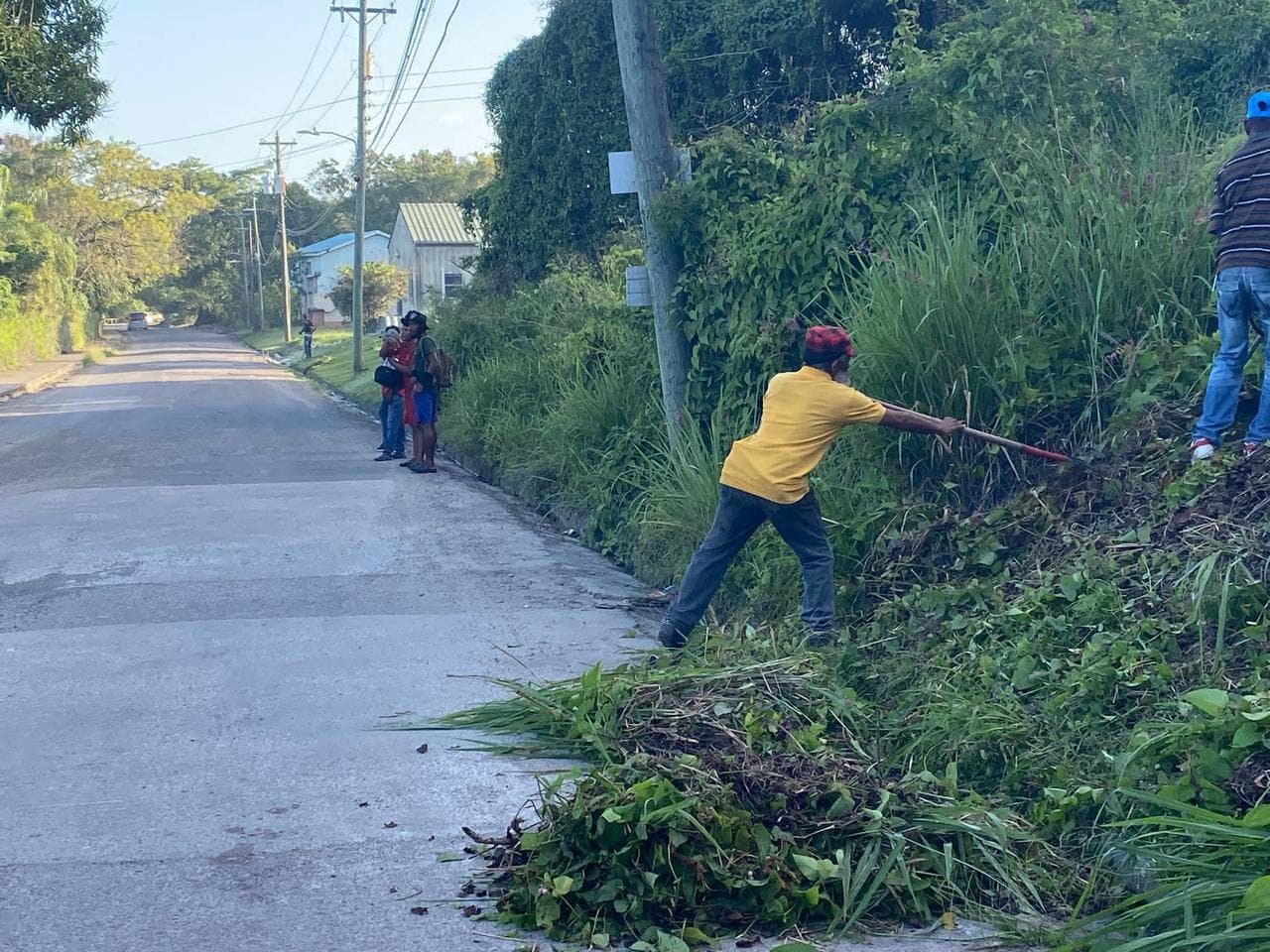
    Barbados has initiated formal enforcement proceedings against landowners violating the amended Health Services Act, with Minister of Environment and National Beautification Adrian Forde announcing the issuance of official compliance notices. The minister revealed this enforcement action during a ceremony at the National Botanical Gardens honoring winners of national gardening competitions.

    Forde drew a stark contrast between the award recipients’ environmental stewardship and what he termed the “opposite behavior” of negligent property owners. He expressed personal frustration with the widespread land neglect, describing it as “maladaptive” and contrary to Barbadian values, while invoking the principle that “cleanliness is next to godliness.”

    The ministry, with legal support from the Solicitor General’s office, has begun formally notifying property owners whose lands contain excessive vegetation or exist in derelict conditions. Forde characterized these notices as both an “early warning” and a “New Year’s warning,” urging immediate remedial action to create “beautiful, clean and safe” community environments.

    Beyond aesthetic concerns, the minister emphasized significant public health implications. Neglected properties with overgrown vegetation and stagnant water create breeding grounds for diseases including dengue fever and leptospirosis. The enforcement effort aims to eliminate these health hazards from Barbadian communities.

    Separately, Forde addressed the ongoing challenge of illegal dumping, which he described as “an albatross” around the ministry’s neck. Authorities have responded with covert surveillance measures, installing hidden cameras at known dumping sites, gullies, and problem areas. The minister warned offenders that detection is inevitable, expressing hope that subsequent prosecutions would serve as public deterrents.

  • Mohit condemns elderly abuse, says all grants paid on time

    Mohit condemns elderly abuse, says all grants paid on time

    In the wake of the tragic discovery of 74-year-old Doodhani ‘Mary’ Sooknanan’s decomposing body at her Edinburgh 500 residence, Chaguanas East MP and Minister of People, Family Development and Social Services Vandana Mohit has issued a forceful condemnation against violence targeting senior citizens. Speaking at a UNC press conference on January 11, Minister Mohit emphasized that while specific details of the ongoing investigation remain undisclosed, her government maintains a zero-tolerance policy toward elder abuse and called for collective action to protect vulnerable elderly populations.

    Simultaneously, Minister Mohit presented a comprehensive overview of her ministry’s substantial social welfare initiatives, vehemently denying allegations of reduced grant funding. She confirmed that all January 2026 social services grants were processed and disbursed by January 1, acknowledging only a minor delay attributable to technical issues at the National Insurance Board.

    The minister revealed that approximately $3 billion in pension payments has been distributed to 100,000 senior citizens through these programs. Between May and December 2025, the government allocated millions in social assistance, including $60 million through the food support program (benefiting 275+ new recipients), over $1 million in home repair grants, and $4 million in disaster relief assistance.

    Notable innovations include the inaugural implementation of temporary food card support, with Members of Parliament across all 41 constituencies receiving 60 food cards valued at $550 each for distribution during the Divali season. This initiative expanded during Christmas with 250 food cards per constituency, representing a $5 million investment.

    Minister Mohit announced forthcoming reforms to the standard means test assessment, promising modernization that would enhance fairness and better reflect contemporary socio-economic conditions. Additional initiatives include examining child poverty studies, developing a $5 million women’s health fund to address period poverty, and creating structural support systems for disabled citizens.

    The ministry is also addressing administrative backlogs through collaboration between NIB and the Immigration Division, with formal mechanisms currently in development. In sports infrastructure, Cabinet has approved designs for an inclusive sporting arena to complement the National Therapeutic and Resource Centre for Persons with Disabilities, which began preliminary operations in December 2025 and is scheduled to open fully after staffing and equipment finalization.

  • Saathi founder’s generous giving – Rosemarie Dipnarine’s lifelong service

    Saathi founder’s generous giving – Rosemarie Dipnarine’s lifelong service

    For decades, 76-year-old Rosemarie Dipnarine has dedicated her existence to alleviating suffering and creating opportunities for Trinidad and Tobago’s most vulnerable populations. As the visionary founder and president of the Saathi Foundation, her humanitarian work transcends religious, cultural, and generational boundaries, establishing a legacy of compassion that began in her childhood home in Longdenville.

    Born into a modest Hindu household where happiness outweighed material wealth, Dipnarine learned the principles of service from her parents—a factory worker and homemaker who frequently labored in canefields to secure secondary education for their eight children. Her earliest philanthropic memory dates to age eight, when her mother instructed her to sell breadfruit from their tree to assist a struggling village family. “I remember asking people to buy a breadfruit, please, only eight cents for one,” Dipnarine recalled. “That is where my social work started.”

    Following a 40-year career in public service—including statistical roles at the Ministry of Planning and Development and Ministry of Health—and contributions to major cultural events like Carifesta VII and VIII, Dipnarine formalized her charitable efforts. In June 2010, she established Saathi Foundation (Serving and Aspiring Towards Helping Individuals) to address poverty systematically rather than through informal begging. The organization’s logo—designed by her son-in-law—features hands transferring food grains, symbolizing the act of giving oneself to prevent hunger.

    Saathi’s multifaceted approach encompasses food security, housing assistance, medical support, and educational sponsorship. The foundation operates on the fundamental belief that “without proper education, you are nothing,” committing to support promising students from primary school through university when necessary. Their success stories include a chemical engineering graduate who lost both parents, whose entire education and living expenses were covered by the foundation.

    Beyond education, Saathi has rebuilt homes after fires, relocated families from makeshift shelters, and constructed dignified housing for terminally ill individuals. Dipnarine emphasizes that all assistance must be provided unconditionally and respectfully: “When we give, we do not advertise or show the faces of children in need. They also have their pride.”

    The foundation sustains its operations primarily through annual fundraising events, including an upcoming lunch at Passage to Asia restaurant in Chaguanas on April 26. Dipnarine, awarded the Hummingbird Medal (Silver) in 2000 for cultural and community service, defines success as “bringing someone out of the dark part of their life and showing them the light.” Despite her advanced age, she continues leading with an instinct-driven, urgency-based approach, relying on what she describes as “angels on earth” who enable Saathi’s transformative work.