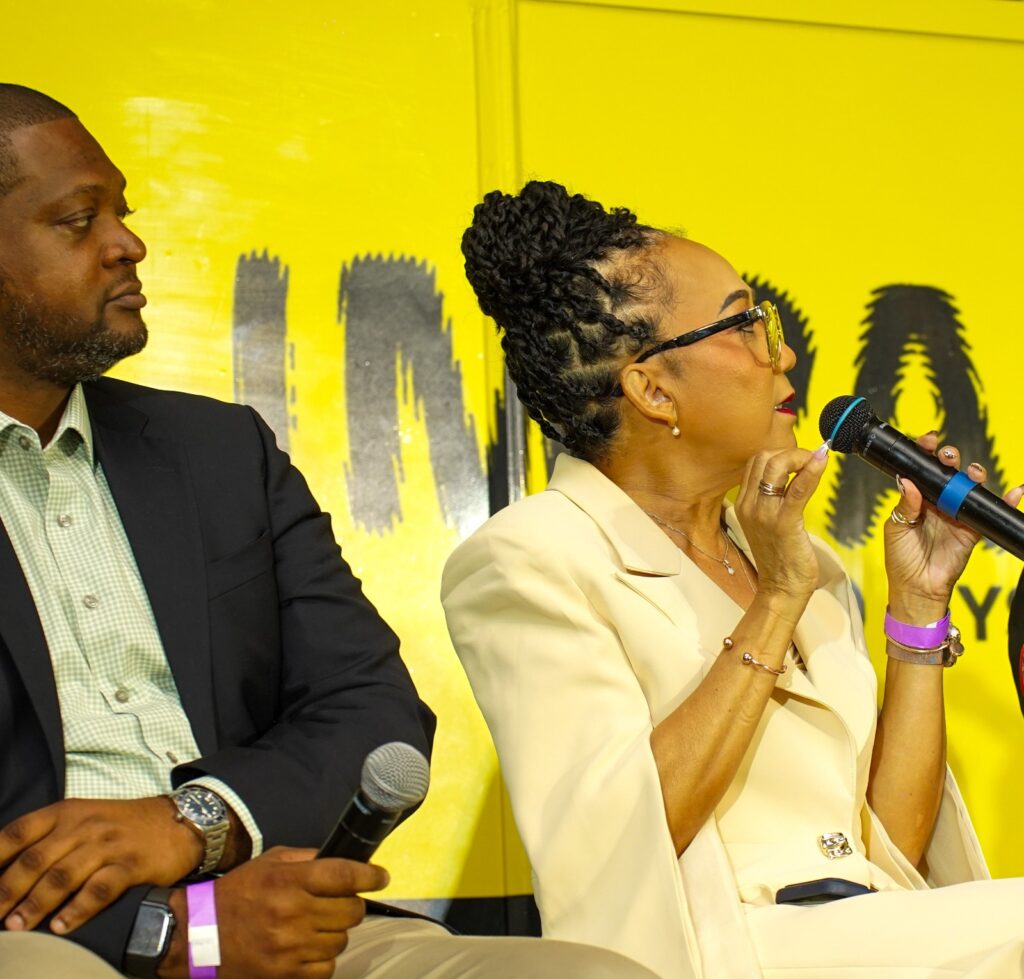
Nearly two months after Hurricane Melissa tore through Jamaica, leaving a trail of destroyed infrastructure, upended communities and an estimated $12.2 billion in total economic damage, the Caribbean nation is still navigating the long, uneven process of recovery. Against this backdrop of ongoing reconstruction, leaders from Jamaica’s private sector, national disaster management agencies and leading media outlets came together last week at Kingston’s AC Marriott Hotel for the IMPACT Marketing Conference, where they pulled back the curtain on their post-storm response efforts and unpacked key lessons for building national and organizational resilience.
The high-profile panel discussion brought together four experienced stakeholders: Dianne Ashton-Smith, head of corporate affairs at leading Jamaican brewer Red Stripe; Chloleen Daley-Muschett, assistant vice president for public relations and corporate affairs at gaming and entertainment group Supreme Ventures; Arthur Hall, editor-at-large for the Jamaica Observer; and Commander Alvin Gayle, director general of Jamaica’s Office of Disaster Preparedness and Emergency Management (ODPEM). Over the course of the conversation, the group explored what makes for effective disaster response, how private sector action can deliver tangible, meaningful support to affected communities, and why cross-sector collaboration is non-negotiable for long-term resilience.
Ashton-Smith outlined Red Stripe’s people-first response framework, explaining that the company’s immediate priority in the chaotic 72 hours after the storm passed was confirming the safety of all its employees and its key distribution partner, Celebration Brands. With critical communication infrastructure damaged and cellular networks down across large swathes of the country, the full safety check took multiple days to complete. She emphasized that while every organization should have pre-built crisis frameworks, no plan can ever be a step-by-step script for an unprecedented disaster. When systems fail and situations shift by the hour, decision-making has to be rooted in core organizational values and real-time on-the-ground judgment.
Only once every team member was accounted for and safe did Red Stripe shift its focus to external relief efforts, working in lockstep with ODPEM and local community partners to identify the hardest-hit regions and deliver the support that was actually needed, rather than deploying pre-planned assistance that might not match on-the-ground needs. For Ashton-Smith, corporate crisis responsibility is measured solely by the impact of action, not media visibility or brand recognition. “Responsibility and visibility are not mutually exclusive; people expect us to step up. But the real focus has to be on impact, what reaches people and makes a difference,” she said. She added that the company’s response was guided by its long-held values: a commitment to caring for all people, the courage to act quickly amid uncertainty, and a focus on addressing the real needs of local communities, rather than centering the company’s brand in relief messaging. She also stressed that meaningful crisis response is not a one-time effort: consistent, long-term support for recovery matters far more than a single high-profile donation immediately after the storm.
Daley-Muschett echoed the focus on internal prioritization and intentional action, sharing that Supreme Ventures’ first step after Hurricane Melissa was also checking in with its own staff and its network of more than 1,300 retail partners across the country. To avoid stretching resources too thin and ensure support reached vulnerable communities quickly, the company focused its relief efforts on distributing high-priority essentials – clean drinking water and non-perishable food – through its already existing retail network, cutting down on logistics delays that often slow disaster aid. She echoed the panel’s focus on authentic action over performative giving, noting that every donation and relief initiative was aligned with the company foundation’s core mission to serve Jamaican communities. “It’s important to be authentic, not performative. When you highlight the good you do, good follows,” she said.
Commander Gayle, the head of Jamaica’s national disaster preparedness agency, praised the widespread private sector support delivered after Hurricane Melissa but pushed for more intentional, long-term collaboration between the private sector and government disaster management bodies. He emphasized that building national resilience requires moving beyond immediate life-saving relief to strategic long-term recovery planning, a process that is greatly strengthened by private sector participation. He urged all Jamaican companies to coordinate their response efforts through the national Emergency Operations Centre (EOC), where centralized information sharing allows for faster, more coordinated policy-level decisions that can speed up recovery across the country. “Private sector participation can greatly enhance national recovery efforts,” he noted.
By the end of the discussion, all panelists reached a clear consensus: effective crisis response requires authentic action, long-term commitment to recovery, proactive pre-disaster planning, and sustained cross-sector partnership. As Jamaica continues to rebuild from Hurricane Melissa’s devastation and prepares for the more intense, frequent storms that climate change is projected to bring to the Caribbean, the core message from the IMPACT Conference resonated: crisis management is not a one-off activity, it is an ongoing process of preparation, collaboration and adaptation. Only through coordinated action across the public, private and media sectors can Jamaica build a more resilient future for all its citizens.