
Falmouth Harbour, a popular public space used by both local residents and out-of-town visitors, is set to receive a comprehensive set of security and safety upgrades as the National Parks Authority (NPA) ramps up efforts to elevate the overall visitor experience and boost on-site safety. The initiative, which targets long-standing gaps in visible security and low-light visibility across the harbour area, is scheduled to kick off construction in October 2026. Under the approved upgrade plan, a brand-new permanent security booth will be constructed at the Falmouth Harbour car park. This new facility will enable on-duty security personnel to maintain a constant, visible presence across the high-traffic parking area, addressing past concerns about inconsistent security coverage in the location. Complementing the new security outpost, the NPA will also roll out an expansion of the site’s closed-circuit television (CCTV) network, adding new cameras across multiple high-foot-traffic zones to extend monitoring coverage across the entire harbour area. Additionally, the authority will carry out systematic upgrades to the existing outdoor lighting system, a change designed to cut down on dimly lit spots and improve overall visibility, especially after sundown when evening activities are common in the area. These planned improvements are not a one-off project, but rather the latest step in the NPA’s long-standing institutional commitment to upkeeping safe, inviting, and professionally managed public spaces across all land and facilities under its jurisdiction. As the construction and installation work gets underway next year, the NPA has publicly expressed gratitude in advance for the patience and cooperation of all groups that use the harbour, including local residents, visiting tourists, on-site business operators, and other relevant stakeholders. The authority noted that temporary disruptions during construction are unavoidable, but the long-term benefits of the upgrades will deliver lasting improvements to everyone who frequents Falmouth Harbour for years to come.
分类: society
-

PM Browne Targets January 2027 Occupancy for Booby Alley’s Pelican Court
Antigua and Barbuda Prime Minister Gaston Browne has officially announced a January 2027 occupancy target for Pelican Court, a transformative 150-unit housing development built to replace the former informal Booby Alley community. Speaking during the latest episode of the *Browne and Browne Show* on Saturday, Browne confirmed that construction and pre-handover preparations are proceeding on schedule, with the official handover of the completed site slated for January 2026, one year ahead of the planned move-in date for eligible residents.
-

Twintig personen geëerd met Maroon Legacy-Wi Rutu Award
Suriname’s Department of Regional Development has celebrated the contributions of Maroon communities to national society by honoring 20 outstanding individuals of Maroon descent with the inaugural Maroon Legacy-Wi Rutu Award. The recognition ceremony marked the conclusion of a series of events held for Maroon Legacy Month, a new national commemorative initiative launched earlier in October.
The award program spotlights individuals who have demonstrated long-term commitment to advancing Maroon communities and broader Surinamese society across a diverse range of sectors. Honorees work in fields spanning music, visual arts, cultural preservation, mining, fashion and beauty, education, governance, and law. Among the distinguished recipients is former Surinamese vice president and prominent public figure Ronnie Brunswijk, who was unable to attend the award ceremony held on the final day of the accompanying Maroon Trade Fair. Assembly member Ronny Asabina, who received an award for his own contributions to the community, accepted Brunswijk’s honor on his behalf, confirming he will deliver the award personally during a scheduled meeting with Brunswijk the same day.
Leo Atomang, chair of the Stichting 10 oktober 1760 foundation, was the first honoree to receive his award during the public ceremony. Not all 20 recipients were able to attend the event in person. Leading Surinamese visual artist Marcel Pinas, popular musician Prince Koloni, and academic Ine Apapoe were among those absent. Apapoe made history in September 2026 as the first Surinamese scholar appointed to the prestigious Prince Claus Chair in Equality and Development at Utrecht University in the Netherlands, where her research focuses on inclusive governance and tribal community rights.
The commemorative Maroon Legacy Month was officially launched by the Department of Regional Development on a Friday earlier in October at the Congress Hall in Paramaribo. Following the launch, a two-day Maroon Trade Fair was organized at Roelie’s Event Venue in Wanica District, giving Maroon entrepreneurs and artisans a platform to showcase, promote, and sell their handcrafted goods, local products, and professional services to attendees. Event organizers reported strong sales throughout the fair, marking the event as a commercial and cultural success for participating community members.
The Maroon people of Suriname are descendants of enslaved West Africans who escaped colonial plantations starting in the 17th century, establishing independent communities in the country’s interior. The creation of Maroon Legacy Month and the Maroon Legacy-Wi Rutu Award marks a growing formal recognition of the Maroon community’s unique cultural heritage and decades of contributions to national social, economic, and political development in Suriname.
-

DAMAGE IN CEDROS
On Saturday morning, a rare convergence of intense downpours, strong gusty winds, and an unusually high tide triggered catastrophic flash flooding across multiple coastal communities in Cedros, southwestern Trinidad, leaving dozens of residents displaced, destroying personal property, and reigniting long-simmering calls for urgent infrastructure upgrades.
Stacy Hajarie, a new resident who had only relocated from Chaguanas to her uncle’s Bonasse home two weeks prior while searching for permanent housing, described the terrifying speed with which floodwaters engulfed the property. Trapped as rushing water surged in from both the front and rear of the property, she was unable to retrieve a single personal belonging before the waters rose. Her entire wardrobe, bed, kitchen furniture, and work computer were all destroyed, along with a custom chest of drawers valued at TT$5,000; Hajarie says she cannot yet calculate the full cost of her losses, and now only owns the clothes she was wearing when she evacuated to her uncle’s home. The flood also nearly claimed her uncle’s pet dog Whiskey, who was tied in an outdoor kennel; the animal was only saved when her uncle returned home mid-flood to pull him from the rising water. A visibly distraught Hajarie told reporters she will never forget the chaos of the disaster.
Just a few properties away, Standard Five teacher and father of four Imam Kahleel Emamdeen was busy pressure-washing his waterlogged furniture just days after the flood. Emamdeen and his entire family were in nearby San Fernando when they received an urgent call that their neighbourhood was flooding. By the time they returned home, ankle-deep water had already seeped into their home, soaking couches and mattresses, forcing the family to bail out water by hand with mops, sponges and buckets for hours. Emamdeen explained that chronic drainage failure has plagued the Cedros area for years: the single existing drainage artery cannot handle heavy runoff during high tides, leaving nowhere for excess water to drain except into residential yards and homes. He warned that the situation will only grow worse if new housing developments are built in the area without expanding drainage infrastructure, and has called on Trinidad’s Ministry of Works and Infrastructure and Ministry of Rural Development and Local Government to intervene immediately. “We need an additional drainage outlet, or even a pump house near the bridge, to handle future heavy rain,” Emamdeen said. “If it rains again, we are certain flooding will return. We need action now.”
Other local residents echoed Emamdeen’s concerns. Camira Harrylal, whose entire ground floor flooded, said Saturday’s flood was the worst the area has seen in two years. “I was home at the time so I was able to move most of my appliances to higher ground, but we still had water damage, and clearing all the dirty floodwater out of the house has been overwhelming,” Harrylal said. She added that clogged drains, blocked by accumulated garbage, worsened the flood’s impact, with high tide pushing backed-up water further inland. Eighty-three-year-old cancer survivor Eileen Toolsie, whose yard and ground floor were also submerged, said she had learned from past floods. “This is not new – we dealt with this terrible flooding four to five years ago,” Toolsie said. “This time around I got all my belongings up on bricks, so I didn’t lose any appliances, but it was still awful. All the mud, sewage, and contaminated water just poured into my home. It’s unbearable.”
Local officials confirmed the scale of the disaster. Shankar Teelucksingh, Siparia’s deputy mayor and Cedros’ district councillor, said between 60 and 70 residents across Bonasse, Fullerton, and Granville were affected by flooding that peaked around 9 to 10 a.m. on Saturday. Four private cesspools were compromised by the high water, and widespread power outages shut down the area’s water treatment plant, cutting off running water for residents. Quick response teams from the Trinidad and Tobago Electricity Commission and the Water and Sewerage Authority worked through the day to restore service by mid-afternoon.
Teelucksingh said that disaster response agencies including the national Disaster Management Unit, local lawmakers, multiple government ministries, and private corporate sponsors quickly mobilized to deliver relief. Falling tide levels allowed most excess floodwater to recede within two hours of the peak, and response teams pumped standing water out of residential properties, distributed cleaning supplies and emergency groceries to displaced residents, and launched public health investigations into the compromised cesspools. He added that engineering teams are now assessing long-term solutions to create controlled drainage for seawater and rain runoff, to reduce future flood risk for local residents.
Teelucksingh emphasized that full damage assessments and infrastructure planning are still ongoing, noting that the area faces heightened flood risk through the Christmas season and into January, when king tides and unstable tropical weather are common. He thanked multiple government agencies and the local member of parliament for their quick support. In an official statement released Saturday, the Ministry of Rural Development Local Government confirmed that its Disaster Management Unit was actively monitoring the situation across Cedros, and Minister Khadijah Ameen had issued a direct order to deliver immediate emergency assistance to all affected residents.
-

$1.9m for 6 remand prisoners
In a landmark ruling that underscores constitutional protections for pre-trial detainees, the High Court has ordered the state to pay nearly $1.9 million in damages to six former remand prisoners held in illegally harsh conditions at the Maximum Security Prison (MSP). Justice Devindra Rampersad, who delivered the judgment last Wednesday, ruled that the appalling conditions the men endured between July 2021 and their eventual transfers violated their fundamental constitutional rights.
The legal dispute traces back to July 24, 2021, when the Prison Commissioner ordered the six claimants transferred to the facility’s Building 13 alongside around 90 other inmates. Justice Rampersad concluded that this transfer decision was unlawful from its inception, noting that no evidence had been presented to show the Commissioner reviewed critical, relevant factors before acting. These unassessed factors included required evaluations from the High Risk Management Unit, documented conflicts between the transferred prisoners and existing Building 13 inmates, the targeting of Muslim prisoners by gangs already housed in the unit, and pre-existing medical vulnerabilities among several of the claimants.
During the court proceedings, state representatives defended the transfer by citing national security concerns, but the judge rejected this argument outright, describing it as “an unparticularised invocation of national security, unsupported by evidence of any kind.”
Worse than the unlawful transfer were the inhumane living conditions uncovered during the trial. Building 13 was severely overcrowded, with 95 inmates sharing a space that lacked enough beds, forcing dozens to sleep directly on dirty floors. Complaints from the prisoners cataloged a litany of unacceptable hazards and deprivations: leaking sewage pipes, a leaking slop pail holding human waste that seeped across cell floors, inadequate ventilation that created persistent extreme heat and stifling humidity, widespread infestations of vermin, and no consistent supply of running potable water. Additional grievances included toilet water only being made available twice per day, overhead lights left on 24 hours a day that disrupted sleep, and the use of cells that had already been officially condemned as unfit for occupation. The claimants also reported limited access to necessary medication and clinical care, failure to provide required prescribed diets, and repeated interference with the religious practices of the Muslim prisoners in the group.
Justice Rampersad emphasized that these conditions could not be written off as routine, minor shortcomings in prison infrastructure, noting that such failures were unacceptable even in 2021. “That the slop pail, the sewage on the floor and the overcrowding should be found in that building in 2021 is not a matter of mitigation. It is a matter of aggravation,” he stated. He also pushed back against the state’s attempt to frame the case as a routine dispute over substandard prison conditions, clarifying that the egregious nature of the abuses set this case apart.
Crucially, the judge highlighted that all six claimants were remand detainees: individuals who had not been convicted of any crime, and were only being held in custody to ensure they appeared for their upcoming trials. After reviewing all the evidence, he ruled that the conditions crossed the constitutional threshold, qualifying as cruel and unusual treatment in violation of section 5(2)(b) of the national Constitution.
In addition to compensatory damages, Justice Rampersad awarded vindicatory damages, arguing that the state’s disregard for the rights of unconvicted detainees demanded a stronger legal response than mere financial compensation for harm. “Taken together, that discloses an institutional posture in which the State does not regard itself as obliged to account to this court for the manner in which it holds men whom it has convicted of nothing. It is precisely that posture which an award of vindicatory damages exists to address,” he explained. The judge further noted that constitutional protections are most critical when citizens are most vulnerable and unable to advocate for themselves, explaining that an award limited only to compensatory damages would leave the constitutional guarantee effectively meaningless, subject to the convenience of the executive branch.
Under the final ruling, each claimant received $150,000 in vindicatory damages, plus $250 in compensatory damages for every day they were held in the unconstitutional conditions. Individual awards break down as follows: Ayokie Charles received $374,500, Kerry Valentino took home $304,500, Brent Johnson was awarded $248,000, the estate of the late Stefon Austin received $319,750, Joshua Janet was granted $304,500, and Darrel Diaz was awarded $336,750. The total sum of damages before interest adds up to $1,888,000. Additional separate damages were also awarded to Charles, Johnson, and Diaz for assaults they endured while incarcerated in MSP.
Compensatory portions of all awards will accrue annual interest of 2.5% starting from April 19, 2023, through the date of the final judgment. The claimants were represented by attorneys Vincent Patterson and Joshua Hamlet under instruction from Nicole de Verteuil-Milne, while the state defendants were represented by Monica Moore under instruction from Savi Ramhit. The court also ordered the state to cover the claimants’ legal costs, which will be formally assessed by the court if the two sides cannot reach an agreed sum.
-
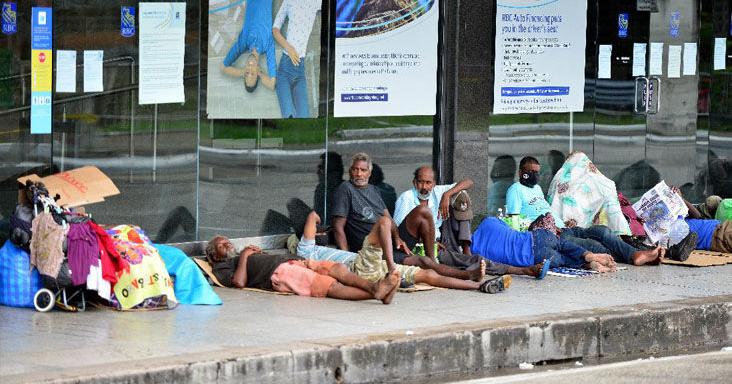
Homeless and helpless
Across two of Trinidad and Tobago’s major urban centers, the growing concentration of unhoused people occupying public sidewalks, plazas and green spaces has pushed the long-running crisis of social displacement back into national focus. Local business leaders and municipal officials are now calling for a collaborative, evidence-based response that moves beyond temporary enforcement and surface-level fixes.
In the capital city of Port of Spain, large groups of socially displaced people are now concentrated across multiple high-traffic districts, most noticeably along Upper Henry Street, Prince Street, Upper Charlotte Street and Chacon Street. During a recent on-the-ground assessment by the *Express*, unhoused individuals were found camping on sidewalks and public areas outside major bank branches along Independence Square and South Quay. The crisis is not isolated to the capital: officials with the San Fernando City Corporation confirm that the visibility of unhoused people occupying public spaces has also risen sharply in their jurisdiction, most prominently at the central downtown landmark Harris Promenade.
While no updated national survey has been completed to confirm an overall increase in the country’s homeless population, the greater public visibility of street homelessness in both cities has reignited debate over the effectiveness of current government policy. The most recent official data, collected in 2023 and published by the Ministry of the People and Family Services in 2025, counted 624 homeless people nationwide, with 235 of those individuals residing in Port of Spain, St James, Woodbrook and Diego Martin. In the same 2025 announcement, the government confirmed it was building a five-story assessment and temporary housing facility at South Quay, with completion slated for the fourth quarter of 2026.
Gregory Aboud, president of the Downtown Owners and Merchants Association (DOMA), is pushing the government to restart a long-stalled initiative to build a Homeless Assistance Centre modeled after Miami’s successful, person-centered approach to homelessness. The plan was first championed for years by former DOMA president Anthony Salloum, who advocated for adopting core elements of Miami’s strategy to Trinidad and Tobago.
Unlike punitive detention models, the proposed center would be a voluntary hub that provides unhoused people with access to basic support services to help them rebuild stability. Under the Miami framework, participants receive access to a shower, haircut, warm meal and temporary accommodation in exchange for following basic behavioral guidelines. The model is designed to help participants rebuild self-respect and gradually reintegrate into normal society, with the freedom to leave the program at any time. Though the proposal was reviewed by Cabinet and plans for the center were finalized, construction never moved forward.
Aboud emphasized that the majority of people living on the streets do not fit the common harmful stereotype of being addicted to drugs or mentally unstable. Instead, he explained, most are unhoused because they have been abandoned by their families and lack any personal support network to turn to for help. “They have no uncle, no aunt, no sister, no brother, no cousin, no one to call their own, no one to lend them a helping hand,” Aboud said. “The great majority of them are simply homeless and helpless.”
He added that enforcement alone cannot resolve the crisis, calling for targeted assessments to separate unhoused people by their core needs: people struggling with addiction require specialized treatment, while those without social or family support need entirely different forms of assistance. Aboud also noted that DOMA has already seen program participants leave street homelessness behind to build productive, working lives in trades like carpentry. He called for a unified response from social services, non-governmental organizations, the private sector and government to develop a long-term, humane solution that gives unhoused people multiple chances to reintegrate into society meaningfully.
San Fernando Mayor Robert Parris echoed the call for addressing root causes rather than just moving unhoused people out of public view. He noted that many people who access temporary shelter and assistance end up returning to street life, proving that displacement cannot be fixed by simply clearing public spaces. “That demonstrates why simply removing someone from a public space does not solve the underlying problem. There has to be continued case management, rehabilitation, treatment where necessary, housing and follow-up,” Parris said.
In November 2025, Parris estimated roughly 200 unhoused people were residing at Harris Promenade. The city is now conducting a formal census to avoid relying on rough estimates, and has received growing complaints from local businesses and residents about issues including public sleeping, human waste, litter, food waste accumulation and occasional aggressive panhandling. Parris stressed that these concerns must be balanced with compassion: “We have to deal with these concerns while also remembering that we are dealing with human beings who need assistance. This must be approached with dignity and compassion.”
Parris identified a range of structural drivers of the current crisis: high unemployment, widespread family breakdown, addiction, unaddressed mental health challenges, loss of affordable housing, and a lack of sustained support after people leave temporary accommodation. He noted that a continuous care pipeline is only useful if it successfully supports people to maintain stability after they exit temporary housing. The San Fernando City Corporation has repeatedly called on the national Ministry of the People, Social Development and Family Services for more sustained, robust intervention that includes outreach, needs assessment, expanded shelter capacity, rehabilitation, counseling and long-term follow-up. Parris said no single municipality can be expected to solve the crisis of social displacement on its own, though he welcomed a recent $42,270 government grant to the San Fernando Centre for Displaced Persons, which will fund counseling, psychotherapy, case management and upgrades to sleeping facilities. “But we need sustained intervention, not isolated interventions,” he emphasized.
Kiran Singh, president of the Greater San Fernando Area Chamber of Commerce, added his voice to calls for a coordinated long-term response, outlining a framework that includes regular outreach, accessible mental health and addiction services, emergency shelter, targeted support for elderly and vulnerable unhoused people, and clear pathways to rehabilitation and employment. Singh argued that persistent street homelessness with unmet needs is a clear sign of systemic public policy failure. “It is not simply about people occupying public spaces; it is about whether our systems are adequately addressing the circumstances that leave people without shelter, care and support,” Singh said.
-

Column: Twee woorden, meer niet 2.0
On an ordinary October evening, a personal reflection took an unexpected turn that would reshape how I understand human connection. I had just finished drafting a short column about the power of care, and sent copies to two friends: one living in Sri Lanka, who once shared photos of Badulla’s temples with me years ago, and another who I met during a media project in Beijing, now based in Afghanistan. For years, we have stayed in touch, and I have often tried to encourage him to keep going amid the constant uncertainty and instability that defines life in his home country. I only expected a quick note of approval, maybe a simple “well written” or a thumbs-up in reply. What I received instead was a reflection that has stayed with me every day since.
In his message, he told me he had been reading my column while watching a documentary exploring the relationship between humans and the natural world. One segment of the film stuck with him: a new rehabilitation program that gives prisoners the responsibility of caring for vulnerable living creatures, from small animals to reptiles like turtles. The rules of the program are simple: inmates spend time with the animals, tend to their needs, and build a quiet, low-stakes bond with another living being. The results of the program were staggering: the documentary reported that incidents of violent clashes between inmates had dropped dramatically since the initiative launched. My friend was not surprised by this outcome. He connected the story of the prison program to one of the longest-running scientific studies in modern history, the Harvard Study of Adult Development, which launched back in 1938.
After nearly 90 years of ongoing research tracking participants across generations, the study reached a clear, profound conclusion: happiness is the foundational key to long-term health, and caring for other people is the foundational key to lasting happiness. Study participants who prioritized looking after the people they loved consistently scored the highest on measures of happiness and life satisfaction, far outperforming peers who prioritized wealth, fame or career success. He closed his note by writing, “Your big heart is a clear example of that. and thanks for sharing this.”
I read his message over and over again. What touched me most deeply was not the kind compliment, but the quiet image of the prisoner stroking a turtle. There was nothing dramatic about the act: just a human being taking a few minutes to care for a small, vulnerable creature that asks for nothing in return. Violence in the prison did not drop because harsher punishments were introduced, or because new restrictive rules were put in place. It dropped because inmates had something outside of themselves to care for.
This image brought me back to the core idea I had written about in my original column: care begins with truly seeing another person, and the next step is sharing that care, whether through a text message, a handwritten note, an unspoken prayer, or a small gesture that takes only a minute of effort. My friend demonstrated this truth perfectly in practice. Living in Afghanistan, where showing care for people outside your immediate circle is not a given, and where sharing personal thoughts can even put you at risk, he still took the time to watch a documentary, see the connection to my work, and share that insight with me. He did it not because he had to, but because he understands that love only becomes real when it is shared.
Out of curiosity, I looked up the Harvard Study of Adult Development for myself, not because I doubted my friend’s words, but because I wanted to understand the full scope of the research. In 1938, researchers in Boston launched the study by recruiting a cohort of young men, then tracked their lives decade after decade, eventually following their spouses and children as well. For generations of researchers, the core questions remained the same: Who do you share your life with? Who do you care for? What makes you feel whole? Time and time again, the answer that rose to the top was not fame, not wealth, not professional success. It was connection. People who consistently cared for others lived longer, had better physical and mental health, and reported far higher levels of happiness than their peers. This is not because caring for others is a “good deed” that gets rewarded; it is because the act of caring itself sustains you.
This reflection made me think of all the people I keep in touch with, even those who live thousands of miles away, even those who often go weeks without replying to my messages. I do not focus on the things I leave undone; I focus on the small things I keep doing: sending that text even when it feels inconvenient, saying that silent prayer even when I do not know if it will reach the person it is for. Caring feels like spreading a warm blanket out for someone, even if they do not pick it up right away. Sharing is something I keep doing, even if an answer never comes. When my friend writes that my big heart is an example of this principle, I do not know if I can claim that. But I know he means it, and that those words carry far more weight coming from a place where simple gestures of connection are not a given.
I cannot stop thinking about that turtle in the prison. It is just an animal that exists, asks for nothing, demands nothing. But giving an inmate the chance to care for it changes everything. For a person who may have spent years only thinking of their own survival, only focused on getting through the day without falling apart, suddenly having something outside of themselves to care for shifts everything. And as a result, violence goes down. If this simple approach can work inside the walls of a prison, why can it not work in a neighborhood? In a family? Across an entire divided country?
I think of my friend in Sri Lanka sending me photos of a Badulla temple. I think of my friend in Afghanistan sharing the story of the turtle. I think of all the people I miss, who I keep texting even when replies never come. All of them show me that another way of living is possible. One sends a photo of a temple. The other sends a story about a turtle. Both are saying the same thing: I thought of you. I wanted to share this with you. I did it not because I had to, but because I could. And that is enough. Two small thoughts, that is all it takes.
I will never know if the prisoner who strokes that turtle will ever find out that his small gesture traveled through a documentary, through a message from Afghanistan, through a column in Suriname, to land with me. He almost certainly never will. But that does not matter. Some things do not need to be known. You only need to keep doing the small good that is in front of you: spread the blanket, send the text, stroke the turtle.
-

PM Calls on Businesses to Give Struggling Students Part-Time Jobs
Against a backdrop of rising concern over youth engagement in criminal activity across Antigua and Barbuda, Prime Minister Gaston Browne has launched a public appeal to domestic businesses of all sizes to prioritize offering part-time and summer work opportunities to young people from low-income, struggling households. Browne argues that gainful employment and coordinated community support act as a critical buffer, steering vulnerable youth away from the path of crime and violence before they become entrenched in harmful behavior.
In personal remarks that ground his appeal in lived experience, the prime minister shared that casual, small-scale work was foundational to his own ability to stay in school and meet basic needs while growing up in financially constrained circumstances. “A little job for just a few dollars a day helped me get by,” Browne explained. “When I moved up to earning $20 a day, that’s what really allowed me to survive, buy the supplies I needed for school, and cover small daily costs.”
Browne emphasized that enterprise size does not determine a business’s ability to create meaningful change for young people facing hardship. Even small local operations can carve out flexible roles to accommodate students, he noted, singling out gas stations as an example of businesses that could shift hiring priorities. Instead of relying exclusively on immigrant workers to fill all entry-level and evening shifts, Browne argued, these businesses could reserve part-time evening slots for school-aged youth needing extra income. Summer breaks, he added, present an ideal window to offer structured temporary work that not only puts much-needed cash in young people’s pockets but also builds valuable early work experience that serves them long-term.
The prime minister also highlighted a recent personal example of community support making a difference, recounting his involvement with an academically gifted student taking 13 subjects who fell into financial crisis after the death of his father and his mother’s subsequent job loss. After a community member stepped up to buy the student new clothing, Browne contributed $1,000 through the same volunteer to keep the student in school. He stressed that support does not require large financial contributions, pointing to the small acts of kindness that carried him through his own childhood: when he was growing up poor, neighbors sharing meals made an enormous difference during his family’s hardest periods. “You don’t have to know the young person struggling to help them,” Browne said. “If you have a neighbor facing hardship, even just a plate of food matters a lot.”
Reflecting on shifting community dynamics, Browne noted that many of the informal neighborhood support networks that sustained vulnerable youth when he was a child have eroded in recent years. While he stressed that challenging life circumstances never justify turning to crime, he acknowledged that many at-risk young people today feel deeply isolated and abandoned by their communities. “Sometimes, they just feel as though there’s absolutely no support, that no one cares about them,” he said, while also encouraging young people to build greater resilience in the face of hardship.
Browne’s call to action formed a core part of a broader public conversation addressing youth crime, parental responsibility, and the overlapping roles that families, private businesses, and local communities must play in proactive intervention. His framework centers on upstream support: by meeting young people’s basic needs and giving them productive, meaningful ways to earn income before they turn to harmful activity, the nation can reduce youth crime rates and lift up entire generations.
-

Police Hunt Gunman Who Killed Jahrule Gibson
A widespread manhunt is ongoing in Belize’s Belize District after a late-night shooting left 28-year-old Jahrule Gibson dead while he cycled through the quiet community of Sand Hill Village Friday evening. Local law enforcement officials have released detailed accounts of the attack, which unfolded along the village’s Salt Creek Road at approximately 10:33 pm on October 2, 2026.
According to official police briefing, Gibson had departed his family home roughly 30 minutes before the shooting, traveling toward a local neighborhood shop alongside an acquaintance who was moving through the area on horseback. As he made his way along the rural roadway, an unidentified suspect ambushed him, opening fire multiple times at close range before fleeing the scene.
First responding officers received an emergency call about the shooting just 20 minutes after the incident occurred, arriving at the location at 10:53 pm to find Gibson’s lifeless body lying beside the road, with a single clear gunshot wound confirmed by first responders. Forensic investigators processing the crime scene recovered 13 spent 9mm shell casings from the area surrounding the shooting, evidence that is now being processed to build a case against the perpetrator.
Witnesses who saw the attack have given police a clear description of the suspect: he is described as a man of slim build, who was wearing a black hooded sweatshirt and dark long pants at the time of the shooting. Immediately after firing on Gibson, witnesses confirm the gunman fled to a waiting silver sport utility vehicle, which he used to escape the area before law enforcement arrived.
Gibson’s family, friends and community members have been reeling from the violent loss, sharing tributes and messages of grief across local social media platforms. One close family member posted a public message honoring Gibson’s memory, writing, “Rest easy knowing that we will be ok we love you!… you are fine and we will too i know your angry!” As of Monday, no suspects have been taken into custody, and police are asking any members of the public with information about the shooting or the gunman’s identity to contact the Belize District police department immediately to assist with the investigation.
-

King: Help girls become their best selves
As Guide Month officially gets underway, the top leader of the Girl Guides association has laid out a clear, people-centered vision for empowering young girls: meet every girl where she stands, and meet her unique needs to help her grow into the best version of herself.
Chief Commissioner Jenifer King shared this message during an opening church service Sunday at James Street Methodist Church, marking the official start of the annual celebration. In her remarks, King emphasized that no two girls enter the Girl Guides movement from the same starting line, and a one-size-fits-all approach to development has no place in the organization.
“Some girls walk through our doors already brimming with confidence, hungry to step into leadership roles, while others arrive quiet, still searching for their voice, or navigating unseen personal challenges,” King explained. “Our responsibility is not to expect every girl to start from the same place. Our responsibility is to meet her where she is, walk alongside her, and help her take the next step.”
King framed personal growth not as changing who a girl is to fit a predefined mold, but as helping each individual unlock her own unique potential. Growth can take many different forms, she noted: for some, it means finding the courage to speak up in a group setting; for others, it means mastering a new skill, stepping outside their comfort zone to try something they have never attempted before, or even learning from a mistake and having the resilience to try again. For many girls, King said, growth ultimately means discovering leadership strengths within themselves that they never knew they had. And at its core, growth is often about having someone outside yourself believe in your capabilities until you are able to believe in yourself, she added.
The Chief Commissioner also challenged adult guiders across the organization to reframe their approach, prioritizing individualized support that responds to each girl’s specific needs rather than pushing all members toward a single standard of progress. Going forward, King said, the Girl Guides association must remain committed to upholding its core guiding values while continuing to cultivate safe, inclusive spaces where every girl feels seen, valued, and empowered to grow on her own terms.
“Our goal is not simply to prepare girls for the future; it is to empower them to help shape that future,” King stressed. She also encouraged girls across the movement to actively reflect on their own growth journeys, identifying specific areas where they want to build themselves up – whether that is greater confidence, more courage, stronger relationships, deeper faith, or more effective leadership skills.
As Guide Month gets underway, King expressed her hope that the celebration will serve as a catalyst for positive change across the entire community: for participating girls, for volunteer guiders, and for the association as a whole. She said she expects the month to be a period of new discovery, renewed courage, growing confidence, and expanded opportunity for everyone involved in the Girl Guides movement.