分类: society

  • Centenarian Irenie Mussington Celebrates 103rd Birthday

    Centenarian Irenie Mussington Celebrates 103rd Birthday

    A remarkable Antiguan centenarian has marked her 103rd trip around the sun, surrounded by loving messages from senior government leaders, beloved family, and local community leaders in a heartfelt celebration of her long and storied life.

    Irenie Mussington, who has lived through more than a century of global and local change, welcomed a series of high-profile guests to her birthday festivities, including Sir Rodney Williams, Governor General of Antigua and Barbuda, Rawdon Turner, the nation’s Minister of Social and Urban Transformation, and a delegation of senior officials from the country’s Community Development and Citizens’ Engagement Division.

    In a formal gesture of recognition for Mussington’s extraordinary milestone, the government of Antigua and Barbuda presented the centenarian with a monetary grant valued at 10,000 Eastern Caribbean dollars, alongside two hand-prepared fruit baskets. The gifts were given to honor Mussington’s longevity and stand as a reflection of the nation’s respect for residents who have reached this exceptional age. The celebration wrapped up with an outpouring of warm personal wishes from all in attendance, highlighting the community’s deep appreciation for its oldest members.

  • St. Kitts and Nevis publishes step-by-step guide to biometric enrolment

    St. Kitts and Nevis publishes step-by-step guide to biometric enrolment

    In a move to address widespread public confusion and streamline the rollout of its national identity upgrade, the Citizenship Unit of St. Kitts and Nevis has published a detailed, step-by-step guide outlining every stage of the mandatory biometric enrolment process for citizens. The resource was formally released on July 4, 2026, directly responding to the most common questions citizens have submitted since global appointment bookings opened earlier that year.

    The new guide is a core component of the National Biometric Enrolment and Passport Modernisation Programme, a sweeping government initiative that requires all citizens of the federation to complete biometric data capture by the July 31, 2027 deadline to keep their passports active for international and domestic use. Global appointment access launched on May 1, 2026, with the current phase of bookings managed exclusively through pre-vetted Authorised Agents, regardless of a citizen’s country of residence.

    The guide breaks the enrolment process into four clear, accessible steps that apply uniformly to all enrolees worldwide. First, citizens must reach out to an Authorised Agent to secure an appointment slot. Next, they will receive official confirmation from a government-appointed service provider. Third, applicants must attend the appointment in person to have their biometric data collected. Finally, enrolees receive formal written confirmation that their enrolment has been completed successfully. Citizenship Unit officials emphasized that the in-person attendance requirement only applies once, and the entire on-site appointment is designed to be quick and low-friction for participants.

    To address specific concerns raised by households, the guidance also includes dedicated sections covering family enrolment arrangements. It outlines special scheduling protocols for dependent family members and clarifies requirements for minor applicants under the age of 16, who are required to be accompanied by a parent or court-appointed legal guardian during their appointment. Officials have encouraged families to coordinate and book their appointments as a group where feasible, noting that this approach simplifies scheduling logistics and helps ensure every member of a household meets the 2027 deadline well in advance.

    Beyond outlining the core procedural steps, the guide also answers common pre-booking questions about required documentation, on-site arrival protocols, and how completion confirmation is issued. This full pre-process overview is designed to reduce uncertainty for citizens before they commit to an appointment date, a top request from the public since bookings opened.

    To expand access for citizens residing abroad, the guide has already been distributed to all Authorised Agents and shared via participating embassy networks in 10 priority jurisdictions. To serve non-English speaking citizens, translated versions of the guidance are available in Arabic, Simplified Chinese, and Traditional Chinese, allowing users to follow the process in their preferred language.

  • Three remanded in $1.76M cannabis case

    Three remanded in $1.76M cannabis case

    A major drug bust in Barbados has led to three individuals being placed in official custody ahead of their upcoming trial, after authorities seized more than 110 kilograms of suspected cannabis worth nearly $1.8 million. The three accused — Arshad Patel, 33, a resident of Welches Main Road in St. Michael; Mariah Chante Shernell Parris, 28, from Harlington in St. Philip; and Julian Omar Jemmott, 43, of Edgecliff Gardens in St. John — made their first court appearance on Saturday before Magistrate Manila Renee at District ‘A’ Criminal Court #2. The charges against the trio stem from two serious indictable offenses: cannabis trafficking and cannabis importation, which law enforcement alleges both took place on June 25. Under Caribbean judicial procedure for severe drug offenses, the defendants were not allowed to enter formal pleas at this initial preliminary hearing. Following the brief appearance, the judge ordered all three defendants to be remanded to the custody of the Barbados Prison Service at Dodds. The case has been transferred to District ‘A’ Criminal Court #1 for the next stage of proceedings, scheduled to begin on July 6, 2026. The large seizure, one of the more substantial cannabis busts reported in the region in recent months, highlights ongoing enforcement efforts by Barbadian authorities to crack down on cross-border drug trafficking operating within the country’s borders.

  • HAPI Renovates Yorks Home Through Community Partnership

    HAPI Renovates Yorks Home Through Community Partnership

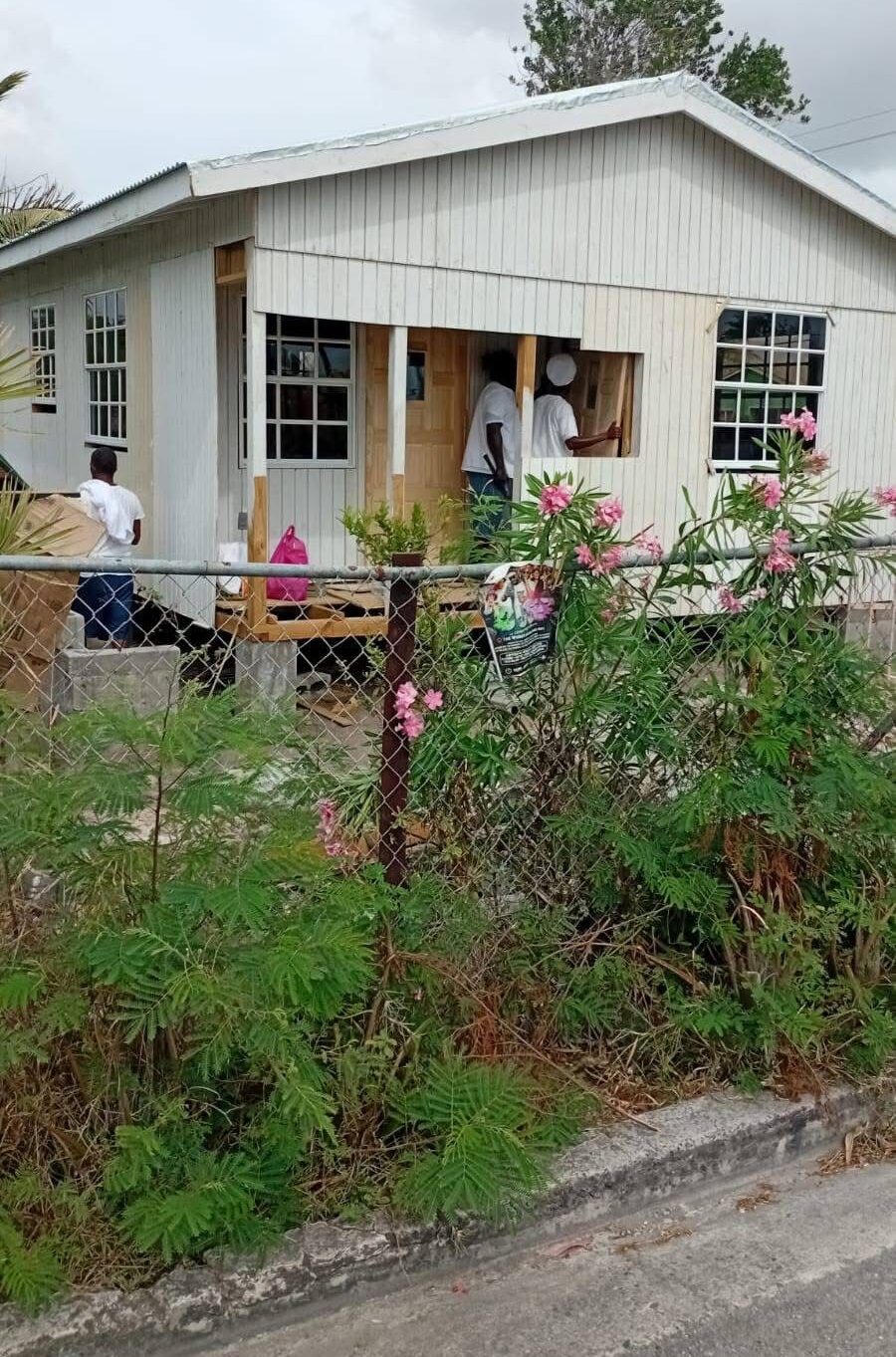
    A vulnerable family living in Yorkshire has been given a fresh start, moving into a fully updated home after a months-long collective renovation effort led by the non-profit group HAPI. The transformative project would not have been possible without coordinated support from a wide cross-section of partners, ranging from senior government leaders to local volunteers and even incarcerated contributors.

    In a public statement acknowledging the widespread collaboration, HAPI officially recognized the critical backing provided by Prime Minister Gaston Browne and his entire administration. Three cabinet members – Ministers Rawdon Turner, Charles Fernandez, and Mary Baltimore – were singled out for their hands-on involvement in moving the project forward. Additional institutional support came from the national Social Protection Board, while inmates from His Majesty’s Prison contributed hours of labor and organizational help to complete the renovation work.

    One local private donor also received special commendation for his contribution to the project: Tony Greener, who generously donated all new windows and doors that form a key part of the home’s updated structure. Visual documentation shared alongside the HAPI announcement offers a striking before-and-after look at the property, showing its dramatic transition from a dilapidated, weathered building unsafe for long-term occupancy to a warm, code-compliant residence ready for the family to move into.

    Inspector Raguette, a representative of HAPI, reaffirmed the organization’s long-standing core mission in the wake of the project’s completion. He noted that HAPI’s model focuses on incremental, person-centered community impact, aiming to change lives one safe home at a time by targeting assistance to low-income and vulnerable families struggling with inadequate housing. This latest completed renovation marks another milestone in that ongoing mission, Raguette added, and serves as a demonstration of what collective cross-sector collaboration can achieve for communities in need.

  • Veteran Police Officer and Calypsoian Completes Legal Studies

    Veteran Police Officer and Calypsoian Completes Legal Studies

    For nearly a quarter of a century, Corporal Jermaine Samuel has served as a dedicated law enforcement officer with the Royal Police Force of Antigua and Barbuda. When he is not on duty protecting communities, he is known across the country as a beloved Calypso performer who goes by the stage name “King Singing Sudden.” Now, this multi-talented public servant has reached a groundbreaking professional milestone: he has successfully earned his Legal Education Certificate from the Eugene Dupuch Law School under the Council of Legal Education in the Commonwealth of The Bahamas, marking the completion of his formal legal studies.

    Samuel’s journey to the legal profession has been defined by consistent discipline and relentless commitment to excellence, traits that have long defined his 24-year career in policing. Throughout his decades of service, he has built deep specialized expertise in prosecution work, and currently holds a posting with the Royal Police Force’s Criminal Investigation Department, where his insights and contributions remain highly valued by colleagues and leadership alike.

    This latest achievement builds on a long record of academic distinction that Samuel has accumulated alongside his full-time law enforcement duties. Before earning his Legal Education Certificate, he already graduated with an honors Bachelor of Laws degree from the University of Wales, followed by a Postgraduate Diploma in Law from the University of Wolverhampton. He has also been admitted as a member of the prestigious Middle Temple, one of the four Inns of Court in the United Kingdom that train barristers. This extended academic journey speaks not just to his intellectual rigor, but to his deeply held dedication to advancing equal justice and upholding the rule of law across Antigua and Barbuda.

    Today, Samuel holds the status of Attorney in Waiting, and is preparing to receive his official call to the Bar of Antigua and Barbuda. Local legal and law enforcement communities widely anticipate that he will bring his decades of on-the-ground public service experience to his new legal career, making meaningful, lasting contributions to the nation’s courts and broader justice system for years to come.

  • “Extremely Severe” When will the heat wave in the Dominican Republic end, and what dangers does it pose? Forecasts

    “Extremely Severe” When will the heat wave in the Dominican Republic end, and what dangers does it pose? Forecasts

    The Dominican Republic is currently grappling with a sustained spell of record-breaking extreme heat, and official forecasts confirm that the sweltering conditions will not abate in the near term. According to updated projections from the United States National Oceanic and Atmospheric Administration (NOAA), the entire country will remain under an official extreme heat warning until at least July 14.

    This warning was confirmed to local outlet HOY by Saddan Font-Frías, an engineer and Master of Science who leads the Meteorological Research Department at the Dominican Institute of Meteorology (INDOMET). Font-Frías emphasized that this is no temporary warm spell, but a long-duration extreme heat event that poses tangible risks to public health and critical infrastructure.

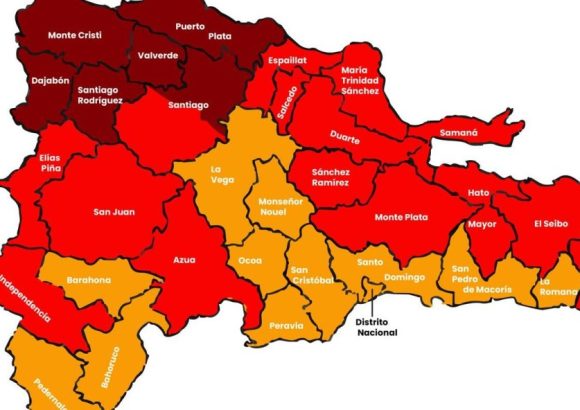
    Data from INDOMET shows that between July 1 and July 7, there is a very high likelihood that the combined maximum temperature and heat index will remain above 33 degrees Celsius for three or more straight days. The hardest-hit regions are expected to be the country’s northern, northwestern, and large swathes of its central interior, where conditions will be most severe.

    Climate model projections analyzed by INDOMET indicate this abnormal heat pattern will persist through the second week of July, from July 8 to July 14, solidifying what experts are calling one of the longest prolonged heat events the country has faced in recent years.

    Font-Frías warned that consecutive days of extreme heat create unique public health dangers that are not present in short warm spells. When the body cannot cool down overnight between hot days, it builds up cumulative heat stress, with little time to recover. This drastically raises the risk of serious heat-related illnesses including heat exhaustion and life-threatening heat stroke, he explained.

    Meteorologists have identified a combination of overlapping atmospheric conditions driving this prolonged heat event. Trade winds have been consistently pushing warm, moisture-heavy air from the Atlantic Ocean and Caribbean Sea over Dominican territory. On top of that, a persistent high-pressure system is sitting in the mid-levels of the atmosphere, paired with a process called atmospheric subsidence, where air sinks from upper atmospheric layers down to the surface.

    “When descending air compresses, it warms up significantly. This process acts like an atmospheric lid that traps heat near the ground, blocks the formation of tall, rain-bearing clouds, and allows unfiltered solar radiation to continue heating the surface,” Font-Frías explained. The combination of elevated baseline temperatures, high humidity, and minimal rainfall pushes the heat index to dangerous levels that far outpace what standard temperature readings would suggest.

    Forecasts from NOAA also show there is a more than 50% chance that total precipitation over the coming weeks will stay well below the long-term average for this time of year, creating a cascading set of challenges for the country. The dual pressure of high heat and low rain creates a two-pronged crisis, according to Font-Frías: soaring temperatures drive increased demand for water and electricity as people rely on cooling, while reduced rainfall shrinks available water supplies and puts additional stress on agricultural crops across the country.

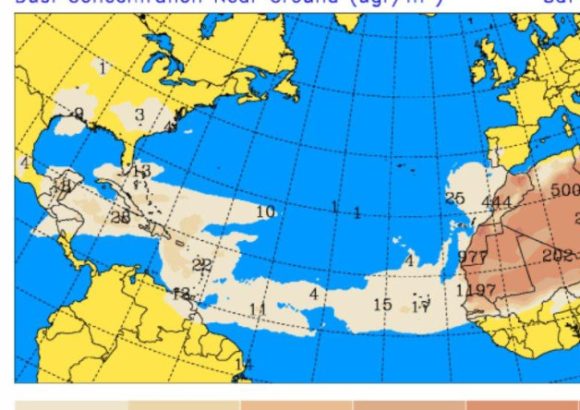
    “This scenario demands that all residents practice intentional, responsible water use, and that public agencies maintain constant, close monitoring of evolving weather and infrastructure conditions,” he said. The expert added that the current heat event has been exacerbated by another recurring seasonal factor: near-constant presence of Sahara dust air masses over the country. These dust-laden air masses further dry out the local environment, reduce cloud formation, and allow even more solar radiation to reach the surface, amplifying the already extreme heat.

    Public health officials are urging residents to stay hydrated, avoid prolonged outdoor activity during peak heat hours, and check on vulnerable community members including the elderly and those without access to consistent cooling as the event continues through mid-July.

  • Only 68% of rural households in the Dominican Republic have safe access to drinking water

    Only 68% of rural households in the Dominican Republic have safe access to drinking water

    Across rural communities in the Dominican Republic, consistent access to safe, drinkable water continues to stand as one of the most pressing unmet public needs, according to new national survey data that lays bare deep gaps in basic infrastructure between urban and rural regions of the country.

    The recently published ENHOGAR-MICS 2025 survey documents a stark divide: while 92% of urban households have reliable access to treated, safe water, that figure falls to just 68% for their rural counterparts. In the most marginalized regions — the country’s deep south and remote border zones — the share of communities with access to safe drinking water drops even lower, falling below 60%. This gap does not just represent an inconvenience for the roughly 1.1 million rural Dominicans left unserved; it creates a direct, daily threat to public health that disproportionately harms the nation’s most vulnerable groups.

    Public health researchers and policymakers warn that the absence of functional, reliable water distribution systems in underserved rural areas has directly driven a higher incidence of preventable gastrointestinal diseases, with children under five bearing the brunt of this impact. This public health crisis mirrors a broader global challenge: United Nations data estimates that more than 2 billion people across the globe lack consistent access to safely managed drinking water, making this a leading preventable cause of childhood illness and mortality in low- and middle-income nations.

    Beyond public health harms, the water access gap entrenches deep social and economic inequalities, the survey finds. In communities without consistent piped water service, the unpaid work of collecting and transporting water falls overwhelmingly to women and girls. This constant burden consumes hours of time each week that could otherwise be spent pursuing formal education, engaging in paid employment, or caring for family members, creating a persistent cycle of economic disadvantage that is passed between generations.

    Officials from the Dominican Republic’s Ministry of Economy, Planning, and Development have acknowledged the slow pace of progress in expanding rural water coverage, even with ongoing community-led aqueduct construction projects active across many regions. International development partners including the World Bank and UNICEF have called for urgent, targeted action, urging the Dominican government to accelerate infrastructure investment, expand budget allocations for rural water projects, and strengthen national water quality monitoring systems to ensure that all water delivered to households meets global safety standards. Policy experts note that closing the rural-urban water access gap will not only improve public health outcomes but also advance gender equity and economic growth across the country’s most underserved regions.

  • Sunday with less rain and a higher concentration of Saharan dust; sweltering heat

    Sunday with less rain and a higher concentration of Saharan dust; sweltering heat

    This coming Sunday, the Dominican Republic will see a significant shift in its weather patterns, as a dry air mass carrying moderate levels of Saharan dust moves into the region, bringing a sharp drop in the likelihood of widespread rain across most of the country.

    While the preceding tropical wave continues to drift away from the nation, an upper-level trough will remain anchored over the area. Combined with localized geographic effects, this system will drive increased cloud buildup over the Central Mountain Range and the country’s northeast, covering provinces including Espaillat, Hermanas Mirabal, La Vega, Monseñor Nouel, southern Santiago, and Santiago Rodríguez. Meteorologists predict scattered local afternoon downpours in these zones, with a chance of accompanying thunderstorms and sudden wind gusts.

    In a key update, the National Forecast Center under the Dominican Institute of Meteorology (Indomet) has ended the incremental weather alert system that was previously in place for multiple provinces, even as low-level risks of urban flooding persist in those areas.

    The arrival of Saharan dust, paired with the typical warm conditions of this time of year, will leave most of the country experiencing unseasonably hot temperatures. In response, Indomet has issued ongoing public guidance to help residents beat the heat: stay consistently hydrated, opt for light-colored, loose-fitting clothing, seek out cool, well-ventilated spaces, and avoid prolonged exposure to direct sunlight between the peak heating hours of 11 a.m. and 4 p.m.

    Officials are urging additional care for children, older adults, and pregnant people, as these groups are the most susceptible to heat-related illness and adverse health effects.

    Breaking down forecasts for specific regions, the Greater Santo Domingo area can expect a mix of occasional cloud breaks and periods of overcast skies. Temperatures will range from a low of 23°C (73°F) to 25°C (77°F) overnight and in the early morning, climbing to a high between 32°C (90°F) and 34°C (93°F) during the daytime.

    Looking ahead to Monday, isolated showers are projected for coastal regions adjacent to the Caribbean and along the northeast coast in the early hours of the day. Most other parts of the country will stay partly cloudy through the morning. While afternoon conditions will remain fair across many regions, the combination of the lingering trough, regional wind patterns, and local effects will increase cloud cover over towns in the southeastern, northeastern, Central Mountain Range, and border regions. Local downpours, possible thunderstorms, and gusty winds are forecast for these zones, with all unstable weather expected to die down by nightfall.

  • COMMENTARY: Sexual Abuse and Artificial Intelligence

    COMMENTARY: Sexual Abuse and Artificial Intelligence

    Sexual harassment is a pervasive societal and workplace issue that defies outdated gendered assumptions. Contrary to long-held popular narratives that frame women as the only victims and men as the sole perpetrators, people of any gender can experience harassment or perpetrate harm, and abuse can occur between people of the same gender.

    In workplaces across Jamaica and much of the globe, unbalanced hierarchical power dynamics that prioritize employer perspectives over employee well-being create a toxic environment where many victims choose to suffer in silence. The very real threat of job loss, paired with the widespread absence of labor unions to advocate for workers, leaves victims doubly vulnerable. For male survivors in particular, the burden is uniquely heavy: coming forward often leads to intrusive questioning of their sexual identity, and deep-seated homophobic cultural norms across Jamaican society push many to endure abuse in isolation. Breaking this culture of silence requires action not just within individual workplaces, but across every layer of society, as the right to a safe working environment that protects both physical and mental health is a non-negotiable standard that must be enforced for all.

    The rise of artificial intelligence has amplified the global crisis of sexual abuse, opening new avenues for harm that disproportionately impact women and girls. Data from one global survey shows that 38% of women have personally experienced online violence, while 85% of women who use the internet have witnessed digital violence against other women. AI-facilitated violence against women encompasses all AI-generated and AI-spread digital abuse that causes harm across physical, sexual, psychological, social, political, or economic domains, and infringes on women’s fundamental rights and freedoms.

    AI-powered tools have enabled the spread of harmful practices like catfishing, where bots simulate human conversation to interact with unsuspecting women and girls, luring them into sharing private personal information or agreeing to in-person meetings. Deepfake technology, which uses AI to create digitally altered images, audio, and video that appear to show people saying or doing things they never did, is also increasingly misused as a tool of abuse. While deepfakes can have legitimate creative and entertainment uses, they are regularly weaponized to create non-consensual sexual content, spread disinformation, and destroy survivors’ reputations.

    Across the Caribbean Community (CARICOM), progress on formal sexual harassment legislation began decades ago, with the framers of the 1973 Treaty of Chaguaramas explicitly identifying “The Position of Women in Caribbean Society” as a core area of regional cooperation. By 1997, several English-speaking CARICOM nations had already enacted targeted anti-harassment laws: Belize passed its landmark Sexual Harassment Act in 1996, followed by Guyana, which added protections against sexual harassment under its 1997 Prevention of Discrimination Act. In subsequent years, Barbados implemented the Employment Sexual Harassment (Prevention) Act in 2017, and Trinidad and Tobago updated its framework via the Equal Opportunity Act alongside a national workplace policy adopted in 2019.

    In Jamaica, the modern legal framework for addressing sexual harassment took shape with the passage of the Sexual Harassment (Protection and Prevention) Act in 2021, which officially entered into force on July 3, 2023. The legislation extends legal protection against unwelcome sexual conduct across multiple settings, including workplaces, educational institutions, and landlord-tenant relationships, and grants survivors multiple pathways to seek redress: through internal workplace complaint processes or via a dedicated, independent Sexual Harassment Tribunal (SHT). The law formally defines sexual harassment as any unwelcome sexual advances, requests for sexual favors, or sexually offensive conduct that causes humiliation or creates a hostile environment. It mandates all employers to develop, publish, and enforce a written anti-harassment policy and establish formal internal complaint mechanisms. Offenders convicted by the SHT face penalties including fines up to 1 million Jamaican dollars, imprisonment, or both, depending on the severity of the violation.

    Despite this legislative progress, compliance monitoring remains a major unaddressed challenge in Jamaica. While larger corporations with dedicated human resources and legal departments are far more likely to meet the policy requirement, small businesses with only two to five employees often lack the resources and guidance to implement the required protections, leaving workers in these settings vulnerable. For survivors seeking recourse, the law outlines clear pathways: if harassment occurs in the workplace, victims can first raise the issue with their human resources manager, and if the issue is not resolved internally, they can file a report with local police or a field officer from the Bureau of Gender Affairs, or bring a claim directly to the SHT once it is convened. For harassment occurring outside the workplace, victims can report to police for guidance on next steps, including filing a claim with the tribunal. Free mental health support is also available through the Victim Services Unit at the Ministry of Justice, which offers both in-person and online counseling for all crime victims, including survivors of sexual harassment.

    To better understand and identify abuse, it is critical to acknowledge that sexual harassment takes many forms beyond physical violence. Verbal harassment includes unwelcome comments about a person’s appearance, body, or personal life, sexually explicit jokes, and gender-based insults — harm that perpetrators often dismiss as “compliments” that do not justify concern. Intimidation or bullying, even when non-sexual on its face, also qualifies as sexual harassment when used to coerce silence about abuse or punish survivors who come forward. Voyeurism, or the secret watching, recording, or photographing of a person in a space where they have a reasonable expectation of privacy (including homes, public restrooms, and changing rooms), is another common form of harm. Non-verbal harassment also includes sexually suggestive gestures, from winking and sexually explicit body language to suggestive hand or facial movements.

    Jamaica’s 2021 Sexual Harassment Act is rooted in three core guiding principles aligned with international human rights standards. The first is a Human Rights-Based Approach (HRBA), a framework rooted in international human rights norms that centers on addressing systemic inequality, discriminatory practices, and unequal power distributions that leave marginalized groups behind. This approach aligns with Jamaica’s obligations under two key international instruments: the Convention on the Elimination of All Forms of Discrimination against Women (CEDAW) and the Convention on the Rights of the Child (CRC).

    The second foundational principle is gender equality, which is enshrined in the Universal Declaration of Human Rights, which affirms that all people are born free and equal in dignity and rights, and that all people are entitled to equal protection of their rights without distinction based on gender or other status. Gender equality is not a standalone goal; it is a core requirement for achieving all 17 United Nations Sustainable Development Goals.

    The third core principle is the right to decent work, as defined by the International Labour Organization (ILO). The ILO frames decent work as productive employment that pays a fair wage, provides workplace safety and social protection for families, and guarantees workers the freedom to organize and voice their concerns. Workplace safety inherently includes freedom from sexual harassment.

    While the 2021 Act marks a major step forward, it is not without open questions and gaps that need to be addressed. Critics have noted the two-year gap between the law’s parliamentary passage in 2021 and its 2023 implementation, a delay that is particularly concerning given the pervasiveness of rape culture in Jamaican society that demands urgent action. There are also ongoing concerns about the potential for overly lengthy investigation and hearing processes, and the need for clearer guidance on high-stakes procedural questions, such as whether an accused employee should remain in their role during an active investigation.

    Under current requirements, companies must appoint an Authorized Officer to receive and process internal workplace complaints, as well as an internal Anti-Sexual Harassment Dispute Settlement Committee. The Authorized Officer is required to assess each claim per internal procedures: if a matter is resolved via agreement, the outcome is recorded in company records; if not resolved, or if the officer deems it necessary, the claim is referred to the SHT. Jamaica’s international obligations under global protocols and conventions already recognize sexual harassment as a form of violence, a violation of human rights, and a barrier to equitable development. The ILO has formally categorized workplace sexual harassment as a violation of fundamental worker rights, a workplace health and safety hazard, a form of gender discrimination, an unacceptable working condition, and a form of violence that disproportionately harms female workers. ILO Convention No. 111 on Discrimination in Employment and Occupation explicitly links the elimination of sexual harassment to both worker well-being and overall workplace productivity.

    Looking ahead, the growing intersection of artificial intelligence and sexual abuse represents not just a technical policy challenge, but a broader moral crisis that demands coordinated, cross-sector action. Addressing this harm requires collaboration between national governments, technology platforms, law enforcement agencies, and the international community, including binding cross-border treaties and coordinated enforcement to hold perpetrators accountable across jurisdictions. What is clear above all is that there is an urgent need for widespread, robust public education campaigns to shift cultural norms around sexual abuse and sexual harassment, and to empower survivors to come forward and seek justice.

    This analysis was written by Wayne Campbell, an educator and social commentator focused on the intersection of development policy, culture, and gender issues.


  • Man warned after paying $26 000 in firearm fines

    Man warned after paying $26 000 in firearm fines

    A resident of Haynesville, St James, has avoided a custodial sentence after completing full payment of more than $26,000 in combined fines for illegal firearm and ammunition possession, but has received a clear final warning from a senior High Court justice about the consequences of any future weapons-related conviction.

    Ramon Michael Thomas, a first-time offender, was originally handed the financial penalties last year for a 2022 weapons violation. According to court documents, on August 13, 2022, law enforcement officers executed a search warrant at Thomas’s home. During a sweep of the property’s kitchen, investigators uncovered a .22-calibre revolver hidden inside an empty protein powder can placed on top of the refrigerator. The weapon was already loaded with seven rounds of ammunition, and an additional five unused bullets were discovered wrapped in paper a short distance from the can.

    As a first-time offender, Thomas was not immediately sentenced to prison. The court ordered him to pay a $20,000 fine for unlicensed possession of the revolver, with a default sentence of 527 days behind bars if the fine went unpaid. For the separate charge of illegal ammunition possession, he received an additional $6,000 fine, with a six-month prison term as the alternative for non-payment, bringing the total of his court-imposed financial penalties to $26,000.

    When the No. 5 Supreme Court recently confirmed that Thomas had paid the full amount of his fines, High Court Justice Pamela Beckles issued a stark public warning to the offender ahead of his release. “Don’t come back. I am letting you know that if you do on a firearm charge and are convicted, it is mandatory you are going to prison,” Beckles stated directly to Thomas.

    Acting Senior State Counsel Maya Kellman represented the prosecution in the case, which was first reported by local Caribbean court correspondent Jovan Beaubrun.