
Eighteen months ago, 39-year-old Ronetta Billy hesitated to take on the deeply personal project of writing her life story. Unpacking her past meant confronting decades of suppressed pain, forcing her to relive traumatic experiences as if they were unfolding on a screen in front of her. But one urgent truth pushed her past her fear: every day she waited, more children in the Caribbean communities she once called home would face the same unspoken harm she survived as a child. After a year and a half of painful excavation, the first volume of her memoir series, *A Plucked White Orchid*, hit shelves in June 2026.
分类: society
-

National Solid Waste Management Authority Launches Pre-Carnival Clean-Up of St. John’s City
As Antigua and Barbuda gears up for the highly anticipated 2026 Antigua Carnival under the official theme #Feeltherhythm, two leading local government agencies have partnered to launch a comprehensive city-wide clean-up campaign designed to transform St. John’s into a sparkling, healthy welcoming space for attendees and locals alike. The National Solid Waste Management Authority (NSWMA) has teamed up with the Central Board of Health (CBH) to roll out this intensive pre-event sanitation drive, with careful scheduling crafted to minimize disruption to daily life across the capital city.
To avoid interfering with regular business operations, daily commutes, and residents’ routines, cleaning crews have adopted an overnight working schedule. Teams are on the ground carrying out work every night from 11:00 p.m. to 4:00 a.m., and the operation will continue in sequential phases across different districts of the city until all targeted areas are completed. As of mid-July, the initiative has already logged substantial progress across multiple key commercial and residential corridors in the heart of St. John’s. Between July 12 and 13, crews completed deep cleaning work on Newgate Street and Church Street, before moving to Long Street, High Street, and St. Mary’s Street for the following 24-hour work cycle. From July 14 to 15, teams were scheduled to shift their focus to Tanner Street and Redcliffe Street, continuing the phased rollout across the city.
The multi-faceted clean-up operation covers a wide range of sanitation and aesthetic improvement tasks designed to address long-standing environmental and public health concerns. Core activities include power-washing and clearing clogged storm drains, hauling away accumulated debris and illegal waste dumps, trimming overgrown grass and managing unkempt vegetation, and deep cleaning all public streets and shared outdoor spaces. Once NSWMA crews finish their work in each neighborhood, the Central Board of Health steps in to conduct complementary public health interventions: teams carry out targeted fogging and full disinfection of drains and surrounding areas, as part of the board’s ongoing regional campaign to control mosquito populations and reduce the spread of vector-borne diseases.
Officials from both agencies note that this cross-departmental collaboration underscores a shared, firm commitment to delivering a safe, clean, and enjoyable carnival experience for everyone. Beyond visiting tourists, the initiative prioritizes the health and comfort of local residents who call St. John’s home, ensuring that long-term infrastructure benefits remain after the carnival festivities conclude. To make the campaign a lasting success, the NSWMA is calling on full public participation in the effort. The agency is urging all residents, business owners, and visitors to dispose of waste properly, avoid littering in streets and drains, and actively contribute to keeping public spaces clean. Officials emphasize that even small individual actions add up to protect the improvements made through the clean-up and sustain a healthy urban environment for all.
As the initiative continues to expand across St. John’s, the NSWMA plans to release regular public updates. These updates will include notifications of completed work areas, upcoming scheduled cleaning locations, and overall progress reports on the entire campaign, to keep the local community informed and engaged in the lead-up to the 2026 carnival. Together, agencies and residents aim to build a cleaner, healthier, and more beautiful capital city ahead of the popular annual festivities.
-
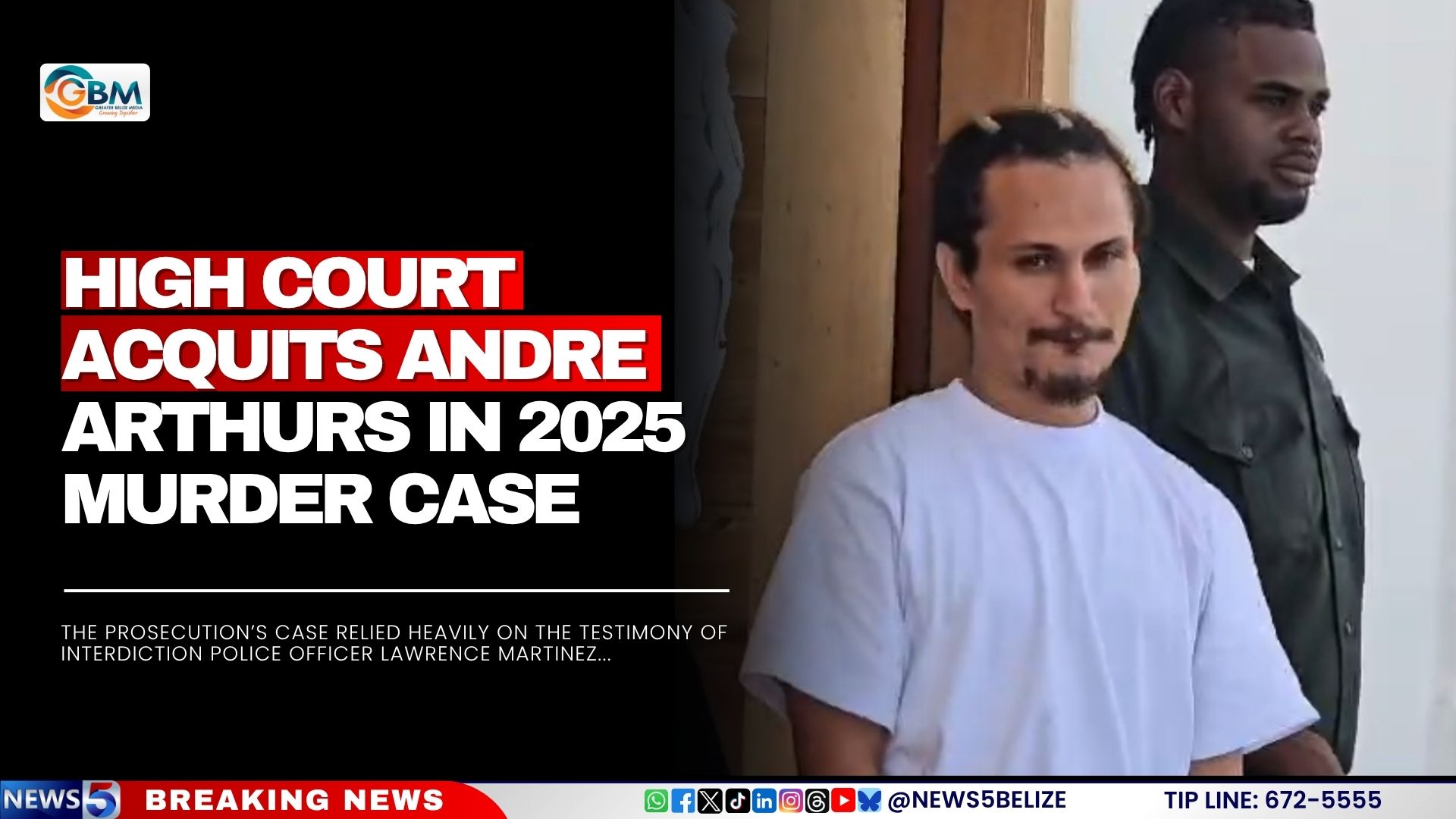
High Court Acquits Andre Arthurs in 2025 Murder Case
On a Tuesday session in July 2026, a dramatic conclusion unfolded at the Belize High Court: 28-year-old construction worker Andre Arthurs walked free after being acquitted of the 2025 murder of 33-year-old Mark Usher Jr. in Belize City.
Usher was killed in a public shooting at the intersection of Jabiru Street and Fabers Road in March 2025, a case that has dragged on for more than a year. Arthurs, a resident of the Fabers Road area, had been held in pre-trial detention after being formally charged with the fatal shooting. But the prosecution’s case quickly unraveled in court over a series of critical evidential gaps that the Crown could not resolve.
Presiding over the case, Justice Nigel Pilgrim delivered the not-guilty verdict after ruling that the prosecution failed to meet the required legal standard of proving guilt beyond a reasonable doubt. The entire prosecution’s argument rested almost entirely on the identification testimony of Interdiction Police Officer Lawrence Martinez. Martinez told the court that moments after the shooting, he observed a man in a blue shirt riding a bicycle away from the crime scene. He later picked Arthurs out during a group identification procedure.
While Justice Pilgrim acknowledged that Martinez appeared to be a sincere and credible witness on the stand, major procedural flaws in the identification process created unavoidable doubt. The court learned that the prosecution never provided evidence confirming that other participants in the identification lineup matched Arthurs’ core physical characteristics, including height, skin tone, age, and general build. Without that critical alignment, the court could not confirm that the identification was not a result of improper suggestion or chance.
The evidential deficiencies extended far beyond the flawed identification process. Investigators never tested Arthurs’ hands for gunshot residue, a standard step in most shooting investigations that could have tied him to the weapon. The prosecution also failed to produce any DNA evidence linking Arthurs to the crime, never recovered the alleged firearm used in the shooting, and never obtained a search warrant to connect the reported blue shirt to Arthurs. Even the suspect’s abandoned bicycle, a key piece of physical evidence described by the officer, was never properly accounted for in the investigation, leaving a host of unanswered questions about its connection to the case.
Justice Pilgrim emphasized in his ruling that the Crown bears the legal burden of proving every element of a criminal charge beyond a reasonable doubt. In this case, that meant confirming beyond question that the identification evidence was reliable enough to conclude Arthurs was the shooter. Without that certainty, any guilty conviction would be legally unsound.
Throughout the entire trial, Arthurs repeatedly maintained his innocence. He told the court that at the time of the shooting, he was at his home hosting a barbecue with friends, placing him far from the crime scene. After the verdict was read, Arthurs left the courthouse surrounded by supporting relatives, a free man after more than a year of legal uncertainty. Mark Usher Jr.’s mother, who attended the ruling to hear the outcome, left the courthouse shortly after the verdict was announced. Andre Arthurs was represented throughout the proceedings by defense attorney Simeon Sampson.
-

Faustin hopes Newtown Youth Development initiative will inspire similar programmes across Dominica
On July 10, a landmark new initiative focused on uplifting young Dominicans officially entered its public phase: the Newtown Youth Development Program (NYDP), an ambitious non-profit movement built on decades of grassroots community work. At the official launch event, NYDP Chairman Joffre Faustin laid out the organization’s bold vision, noting that with consistent backing from community members and financial supporters, the program could set a benchmark for youth empowerment across the entire island nation.
Faustin opened his address by emphasizing that the struggles facing Newtown’s young population are not isolated to this single community. Issues ranging from limited economic opportunity to harmful social behaviors impact neighborhoods across Dominica, he said, creating a widespread need for targeted, community-led intervention. It is this gap that NYDP aims to fill, with the long-term goal of inspiring replicated programs in every corner of the country. “It is therefore our hope that the Newtown Youth Development Program will serve as a model and an inspiration for similar initiatives across the country,” Faustin told attendees.
To turn this vision into reality, Faustin stressed that the initiative will rely heavily on sustained partnership. Beyond one-time donations, the program needs ongoing generosity from private donors, corporate entities, and ordinary members of the public to fund its core operations and expand its reach. “We will depend greatly on the continued generosity of donors, corporate partners, and members of the public, whose financial contributions and other forms of support will be essential to our success,” he added.
Far from being just another community organization, Faustin framed NYDP as a transformative social movement rooted in Newtown’s cultural and community identity. Its core missions include reviving the community’s historic connection to sports, shielding young people from harmful negative influences, and equipping the next generation with the tools they need to build stable, productive futures. While the official launch marked a key milestone, Faustin clarified that the bulk of the organization’s on-the-ground work is only just beginning.
Looking ahead to the coming months, the first major initiative rolling out under the NYDP banner will be the distribution of donated supplies to young residents ahead of the new school year. Overseas partners have already contributed thousands of dollars worth of sports equipment, educational materials, and health supplies, all of which will be distributed directly to young people in the community. Parallel to this distribution effort, the NYDP team will continue fundraising to cover ongoing operational costs, roll out targeted development programming, and build broad buy-in across local communities.
Faustin stressed that the scope of work ahead is substantial, and success cannot be achieved without widespread community commitment. Parents, local families, Newtown residents, and community members from surrounding areas all have a role to play in lifting the program and the young people it serves, he noted.
The NYDP as it exists today was formally incorporated on August 30, 2025, but its origins stretch back more than 30 years to the 1993 founding of the Newtown Juvenile Football Academy. That early grassroots sports program expanded into the Newtown After-School Football Programme in 2017, and steady growth and community demand led organizers to expand the initiative into a full-spectrum youth development organization. A formal organizational constitution was adopted in December 2025, enshrining the group’s core mission: “the transformation of young lives through holistic development.”
Faustin outlined the key social challenges the NYDP was created to address: drug and alcohol abuse, persistently high youth unemployment, rising rates of teenage pregnancy, growing school dropout numbers, increases in community crime and violence, and the steady decline of organized youth sports participation in Newtown. All these issues intersect to limit opportunity for young residents, and the NYDP aims to tackle them through a coordinated, holistic approach.
Despite its formal launch only happening this month, the organization has already made significant progress on building its infrastructure. It has seated a fully functional executive committee and multiple specialized subcommittees, completed official non-profit registration, finalized governing bylaws, implemented strict financial accountability protocols, and arranged first aid certification training for active members. Most notably, it has already processed and taken delivery of more than $16,000 worth of donated sports, education, and health supplies from international partner organizations.
Looking to the coming years, the NYDP has laid out an ambitious roadmap of projects. Key priorities include converting the former Roseau Boys’ School campus into a dedicated multi-purpose community center, upgrading underfunded local sporting facilities, securing scholarship funds and overseas training opportunities for high-potential young people, expanding structured mentorship and spiritual guidance programs, and partnering with faith-based and civic groups to deliver character development initiatives for youth of all ages.
In his address, Faustin also took time to recognize the many individuals and organizations that made the launch possible. Longtime supporter Vivian Rene was singled out for praise, with more than 30 years of continuous support dating back to the original Newtown Juvenile Football Academy. The Roy Mason family was also recognized for their instrumental support that helped turn the small after-school football program into the full-scale NYDP initiative. Additional thanks went to the Dominica Lotteries Commission, AC Shillingford & Co. Ltd., and the dozens of other sponsors and donors whose financial backing made the official launch event possible.
Speaking directly to the young people in attendance at the launch, Faustin issued a heartfelt call to action, urging youth to embrace the opportunities the program provides. “There are people—both here at home and abroad—who care deeply about you and are making sacrifices to ensure you can become better individuals,” he said. “Be appreciative of what is being done for you, take full advantage of the opportunities provided, and remain strong in the face of obstacles.”
Faustin closed his address by calling for full community unity around the NYDP mission. “Let us commit ourselves to this cause. Let us work hand in hand. And let us ensure that when history looks back on this moment, it will say: This was the day Newtown began to rise again,” he said.
-
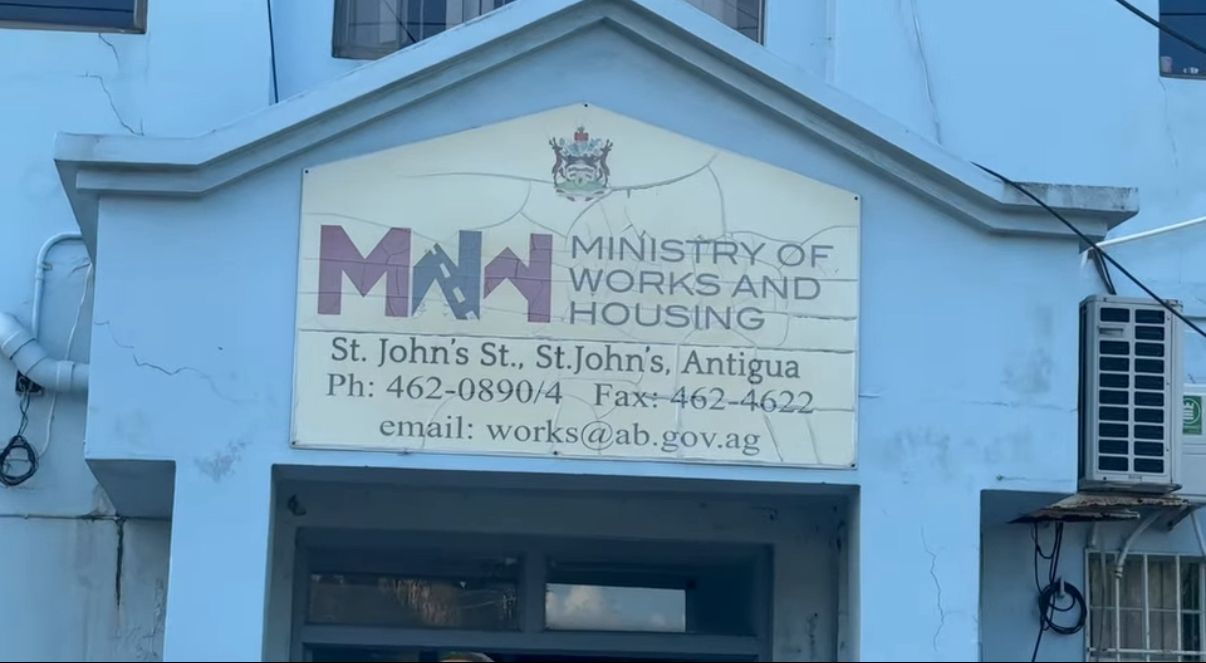
Ministry of Works Employees Resume Duties After Talks Over Pay Dispute
A short-lived industrial protest staged by heavy-duty truck drivers of Antigua and Barbuda’s Ministry of Works drew to a close on Tuesday, with all participating workers resuming their duties just hours after they blocked entry to the ministry’s headquarters to demand resolution for unpaid outstanding payments.
The demonstration, which unfolded early Tuesday morning, saw government-owned heavy trucks block the main entrance to the ministry’s Denry Lane compound, temporarily cutting off access for other staff and visitors. The action, organized by drivers over unresolved delayed payment issues, did not last long: workers agreed to enter talks with senior ministry leadership shortly after establishing the blockade, and reached a mutually acceptable resolution within the same morning.
Following the closed-door meeting, ministry management confirmed that all concerns raised by the protesting drivers had been formally noted, and gave formal assurances that the outstanding payment issues are already being actively processed and resolved. The industrial action wrapped up quickly, with drivers vacating the entrance and returning to their work assignments. Normal daily operations at the Denry Lane compound have since been fully restored.
In an official public statement released after the protest ended, the Ministry of Works expressed gratitude to its driving staff for their ongoing commitment to advancing the country’s national infrastructure development agenda. The statement also reaffirmed the institution’s commitment to supporting all its employees as it carries out large-scale infrastructure projects across both Antigua and Barbuda.
-

Seniors must be protected from financial exploitation and abuse, DCOA official says
As populations across the globe grapple with shifting demographic landscapes, the question of how to honor and protect aging populations has moved to the forefront of public discourse in Dominica. In a recent panel discussion hosted by the Dominica Council on Ageing (DCOA) at the Dominica Public Service Union (DPSU) headquarters, stakeholders gathered to unpack the legal frameworks and social responsibilities that surround the welfare of the island nation’s older adults.
Following the dialogue, Cecil Shillingford, Chairman of DCOA’s Education and Health Committee, outlined a clear, urgent call to action: the country’s seniors must be shielded from systemic neglect, interpersonal abuse, and predatory financial scams, so that they may spend their final years with the dignity they have earned.
Shillingford emphasized that generations of older Dominicans laid the foundation for the modern, thriving society the nation enjoys today. Decades of hard work, community building, and sacrifice from today’s seniors transformed Dominica into the better place it is for current and future generations, he argued. Now, as advancing age limits their ability to fend for themselves, every segment of society — from immediate family members to the broader public — has a moral obligation to step up and ensure their twilight years are marked by comfort, joy, and good health.
At the core of Shillingford’s message is the need for proactive protection against exploitation. He warned that bad actors regularly target vulnerable older adults, seeking to steal their life savings and precious personal possessions through deceptive schemes. Beyond financial fraud, he highlighted the urgent need to shield seniors from all forms of harm, including physical violence, emotional manipulation, and psychological abuse, as well as harmful neglect by caregivers and family.
Beyond protection from harm, Shillingford stressed that robust legal safeguards are non-negotiable to uphold the fundamental rights and independence of older adults. These legal protections must do more than just penalize abuse; they need to guarantee unfettered access to quality healthcare, ensure access to critical social services, and preserve two core rights that all people deserve regardless of age: the right to personal privacy, and the right to self-determination when making choices about their own lives and care.
The panel discussion comes as part of broader efforts by DCOA to raise public awareness about elder rights, and push for stronger policy and social support systems that meet the growing needs of Dominica’s aging population.
-

Sexual Assault Case Against Fomer Police Officer Dismissed
In a recent ruling delivered on July 14, 2026, a San Ignacio magistrate has dismissed the sexual assault charge brought against former Belize Police Department officer Durmen Dawson, determining that Dawson has no case to answer on that count.
Both Dawson and the complainant, Luanna Gillett — herself a former police officer — appeared before the San Ignacio Magistrate’s Court for the latest proceedings. While the sexual assault allegation will not move forward, Dawson remains required to respond to a separate charge of harm stemming from the same 2024 incident. Notably, Dawson appeared in court without legal representation during the ruling.
The case traces back to an incident that unfolded on February 14, 2024, inside the San Ignacio Police Station. Gillett alleged that Dawson sexually assaulted her while both were serving as members of the Belize Police force. Security camera footage of the encounter was leaked and spread widely across public channels shortly after the incident made headlines.
Following the initial allegation, the Belize Police Department launched an internal disciplinary tribunal to investigate the claims. The tribunal found Dawson guilty of misconduct, and recommended his termination from the force due to the severity of the sexual assault allegation. Then-Commissioner of Police Chester Williams confirmed to media outlets that he upheld the tribunal’s recommendation, and Dawson was formally dismissed from the department after the internal process concluded. Alongside disciplinary action, criminal charges for both sexual assault and harm were brought against Dawson ahead of the court proceedings.
-

Fatal Autovía del Este crash involving truck claims at least one life
A devastating highway incident unfolded on Tuesday along Spain’s Autovía del Este, when a collision between multiple vehicles claimed at least one life and left several other people wounded, early preliminary law enforcement reports confirm.
Among the vehicles involved in the crash was a large heavy-duty truck carrying a load of construction materials. As of the latest updates, traffic safety officials have not yet released a definitive count of how many vehicles were impacted by the collision, nor have they shared identifying details of the deceased or injured victims to allow time for next-of-kin notification.
Immediately after the collision was reported, emergency response teams including fire crews, paramedics and law enforcement officers rushed to the crash site located along the major eastern highway. First responders prioritized extracting trapped passengers and providing urgent on-site medical care before transporting injured parties to adjacent area hospitals for further treatment. Concurrent with rescue efforts, highway maintenance teams worked methodically to clear wreckage from the roadway to restore normal traffic flow as quickly as possible.
Regional law enforcement officials have formally opened a full investigation to determine the root cause of the crash, with preliminary work focusing on factors including road conditions at the time of the incident, driver error, and potential mechanical failures of any of the involved vehicles. No further updates on the investigation’s progress or the condition of injured victims have been released as of Wednesday morning.
-

Experts urge stronger building safety to reduce earthquake risk in the Dominican Republic
In a collaborative gathering focused on addressing critical natural hazard risks, leading professionals across structural engineering, disaster risk management, and the insurance sector have laid out a clear call for upgraded building safety regulations and expanded earthquake readiness across the Dominican Republic. The call to action came during the public forum titled “Seismic Vulnerability and Structural Safety in the Dominican Republic,” hosted by the Technological Institute of Santo Domingo (INTEC) with logistical and financial backing from global risk advisory firm MARSH and leading insurance provider MAPFRE.
The multi-stakeholder event created a shared space for academic researchers, insurance industry leaders, and infrastructure planning specialists to collectively assess the Dominican Republic’s exposure to seismic activity and outline actionable steps to boost the ability of buildings and critical public infrastructure to withstand major earthquakes. Unlike many niche academic events, this forum brought together cross-sector expertise that bridges research, practice, and risk financing, ensuring that proposed solutions address every stage of disaster preparedness from planning to recovery.
Two leading experts from INTEC, researcher Luis Abbott and geotechnical specialist Dr. Claudia Germoso, used their presentations to underline the urgent need for three core interventions: widespread mandatory assessments of existing structures to map current vulnerability, the mandatory adoption of earthquake-resistant design principles for all new construction, and consistent enforcement of current building code requirements to cut down on preventable damage and protect civilian lives when seismic events occur. They noted that many existing structures across the country were built without modern seismic safety considerations, leaving large populations exposed to unnecessary risk.
By the close of the forum, all participating stakeholders reached a unified consensus that proactive prevention measures, continuous investment in scientific research, expanded technical training for construction professionals, and investment in purpose-built resilient infrastructure are non-negotiable components of any strategy to improve the country’s ability to respond to and recover from future earthquakes. The event itself is part of a years-long initiative from INTEC to advance evidence-based disaster risk reduction and sustainable development across the Caribbean nation, through a combination of academic research, public education, and cross-institutional partnerships between academia, private industry, and public sector bodies.
-

LGBTQ+ Activist calls for hate crime laws
A growing rift has emerged over LGBTQ+ safety and justice in The Bahamas, as prominent gay rights advocate Alexis DeMarco is pushing urgently for dedicated hate crime legislation, linking a series of recent and decades-old unsolved killings of presumed LGBTQ+ community members to systemic bias and gaps in the country’s legal framework. The push has been met with outright rejection from Attorney General Wayne Munroe, who maintains existing laws are sufficient and says no evidence has been presented to prove any murders in the nation have been driven by anti-LGBTQ+ prejudice.
DeMarco’s call for reform centers on two high-profile fatalities recorded so far this year. The most recent came in mid-July, when the body of a 63-year-old man was discovered inside a burning duplex in Nassau Village’s Lee Street. First responders entered the structure shortly after 2 a.m. responding to reports of the fire and found the man unresponsive near the front entrance; subsequent investigation revealed he had suffered multiple stab wounds, prompting a homicide inquiry and an ordered autopsy to confirm the official cause of death. The second case dates back to January 14, when a 38-year-old man was found stabbed to death in his Daffodil Avenue residence after a concerned colleague requested a welfare check when they could not reach him. Authorities confirmed the victim sustained stab wounds to his upper body, noting the killing came almost three years after he survived a non-fatal shooting that led to an attempted murder and firearms charge against another suspect. To date, police have not announced any confirmed motive for either killing, nor ruled that either death qualifies as a hate crime – a reality DeMarco argues is part of the problem.
Without formal legislation that explicitly recognizes bias-motivated offenses, DeMarco argues, law enforcement and justice system officials lack the structure to properly identify, track, and prosecute hate-fueled violence targeting marginalized groups. For years, she says, LGBTQ+ Bahamians have harbored deep-seated fears that violence against their community members is not investigated or prosecuted with the same urgency or gravity as violence against cisgender, heterosexual people.
“When perpetrators of violence against LGBTQ+ people walk away with convictions for far lesser offenses instead of facing murder charges, our community is left wondering whether embedded prejudice and harmful stereotypes continue to shape how justice is pursued,” DeMarco explained.
She pointed to a decades-old landmark case to back up her concerns: the 2010 prosecution of Latherio Jones, who initially faced a murder charge for fatally shooting Trevor Wilson, but ultimately was convicted of the lesser offense of manslaughter on grounds of provocation. The court heard during the trial that Wilson had made repeated same-sex advances toward Jones. Prosecutors with the Crown appealed the verdict, arguing the sentence was unduly lenient, noting that Jones had armed himself, traveled to Wilson’s room, and shot him in the head following what prosecutors described as a second advance. The Court of Appeal ultimately dismissed the appeal and upheld the manslaughter conviction. Delivering the court’s oral ruling, then-president Dame Joan Sawyer stated that “One is entitled to use whatever force is necessary to prevent oneself being the victim of a homosexual act.”
DeMarco stressed that this ruling, paired with the legal defense widely known internationally as the “gay panic” defense, has amplified community fears that violence against LGBTQ+ people can be minimized or even justified through bias and harmful stereotypes.
Beyond the two 2024 cases, DeMarco also highlighted a long list of unsolved killings dating back more than two decades that targeted people believed to be part of the Bahamas’ LGBTQ+ community. The list includes: police officer Kevin Williams, killed in 2001; lecturer Thaddeus McDonald and celebrated fashion designer Harl Taylor, both killed in 2007; HIV/AIDS activist Wellington Solomon Adderley, Jamaican waiter Marvin Wilson and dancer Paul Whylly, killed in 2008; photographer Sharvado Simmons in 2011; and waiter Elkin Moss in 2013. None of these cases have resulted in convictions, leaving families and community members without closure.
In response to DeMarco’s demands, Attorney General Munroe pushed back firmly during a public statement this week, arguing that a separate, standalone hate crime legal framework is unnecessary to protect LGBTQ+ Bahamians. He emphasized that existing homicide laws apply equally to all victims, regardless of their identity or sexual orientation. “From all of the briefings I got, I didn’t get anything that appeared hate crime related,” Munroe said.
He further explained that murder charges are only reduced to manslaughter in cases where established legal principles impact an accused person’s criminal liability, most commonly in instances involving diminished mental responsibility. To illustrate his point, he cited a past case he handled where a woman who set her abuser on fire, an intentional killing that was reduced to manslaughter due to long-term mental abuse in an intimate partner violence context. “Murders that get reduced to manslaughter are generally if you have anything that has a mental element,” he said.
Munroe added that throughout his entire career working at the Bar, he has never encountered a murder he believed was motivated by hatred of a person’s sexual orientation or race. “I have not heard in all of my time at the bar of any hate crime-related murder where somebody is murdered because they are gay or because they are black,” he said. “I’ve not. I’ve seen a lot of personal, intimate partner violence. But the intimate partner violence has nothing to do with your sexual orientation or your sexual preference. It has everything to do with the nature of the interpersonal relationship.”
For DeMarco and other LGBTQ+ advocates, however, the string of unsolved deaths and the history of lenient rulings in anti-LGBTQ+ violence cases makes clear that change is long overdue. The disagreement highlights a broader ongoing debate over equal justice for marginalized communities in the Caribbean nation, with advocates warning that without formal legal recognition of hate crimes, bias-motivated violence will continue to go unaddressed.