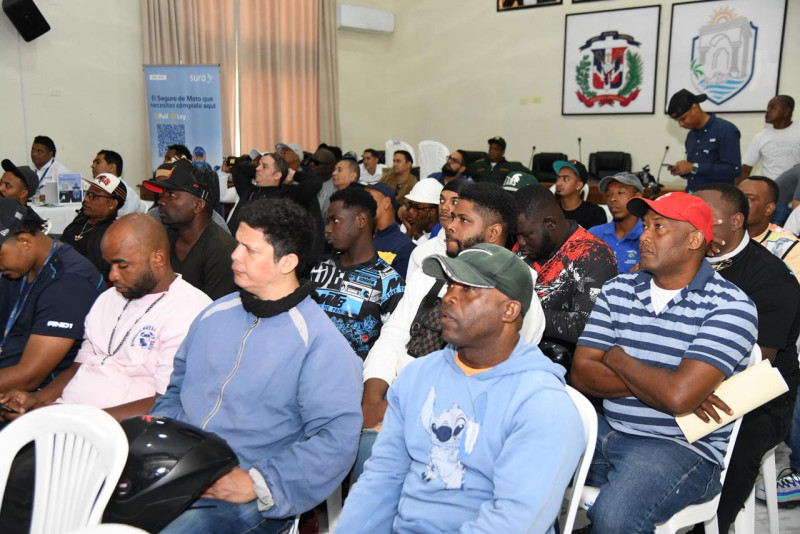
SANTO DOMINGO – In a targeted effort to cut down on preventable traffic collisions and build a culture of responsible two-wheeled travel, the National Action Table with Motorcyclists (Manamoto) has launched its first-ever specialized road safety training program for motorcyclists, gathering riders and local stakeholders at the Boca Chica mayor’s chapter room earlier this month.
Against a backdrop of persistently high traffic accident rates across the Dominican Republic, where motorcyclists rank as one of the most at-risk groups on public roads, the training session centered on core public safety priorities: improving rider education, embedding respect for traffic regulations, and curbing high-risk riding behaviors. The initiative is backed by the Dominican Road Mobility Foundation (Movido), an organization leading the push for collaborative, community-centered road safety reform across the nation.
Miguel Jiménez, president of Movido, opened the event by emphasizing shared accountability for improving road outcomes, pushing back against the idea that road safety is solely the responsibility of government regulators. “Rather than placing the blame on the authorities, who in some ways have their share of responsibility, there is a large share of responsibility that we as citizens have, and that is why, by working together, we will find solutions,” Jiménez said. He added that the work is rooted in social impact, not political gain: “I don’t have a political discourse, I have a social discourse, through which we will all say: I am committed.”
Three specialist speakers led targeted educational sessions covering distinct critical safety topics for attendees. Dr. Frank Reyes led a discussion on the underrecognized dangers of driving under the influence of medication, highlighting the heightened risks of unregulated self-medication and the lethal combination of prescription or over-the-counter drugs with alcohol. Popular motorcycle safety advocate Claudio en Moto focused on foundational practical riding habits, stressing the non-negotiable need for correctly fitted protective gear, proper riding posture, and consistent defensive driving techniques that help riders anticipate and avoid hazards. Juan José Mella Mota, Mobility Coordinator at Seguros SURA, rounded out the sessions by walking attendees through step-by-step protocols for responding safely and appropriately immediately after a traffic collision, a skill that can reduce secondary injuries and speed up emergency response.
Throughout the program, Manamoto’s core mission has remained consistent: to drive widespread awareness of three non-negotiable road safety rules – correct use of all required protective gear, full adherence to traffic signage and regulations, and consistently prudent, attentive riding. Multiple local and national government officials joined the event to signal institutional support for the initiative, including Boca Chica mayor Ramón Candelaria, Joel Gneco Gross, director of Transit and Road Safety at the National Institute of Traffic (Intrant), Santo Enriquez García, regional East director for the General Directorate of Road Safety and Traffic (Digesett), and Franklin Glass, president of the Dominican Chamber of Insurers and Reinsurers (Cadoar).
In an interview with Miguel Franjul, director of local media outlet Listín Diario, event organizers outlined their long-term expansion plans: the program will roll out to additional provinces across the Dominican Republic in coming months, with the ultimate goal of reaching thousands of motorcyclists and embedding a sustained culture of road safety nationwide. Local officials including Boca Chica mayor Víctor Ramírez have also publicly voiced their support for the community-focused initiative, framing it as a critical intervention to reduce preventable deaths and injuries on Dominican roads.