分类: politics

  • Your vote matters

    Your vote matters

    The 2020 elections in St. Vincent and the Grenadines (SVG) witnessed a significant voter abstention rate, with 32,432 registered voters—33.1% of the total electorate—choosing not to participate. This alarming trend raises critical questions about the underlying causes of voter disengagement. Potential factors include an outdated voter register, socioeconomic disparities, political disillusionment, a divisive political climate, and a lack of youth participation, particularly among those from disadvantaged backgrounds. These issues, either individually or collectively, have contributed to the growing apathy toward the electoral process. For future elections, the electoral office must prioritize updating the voter register and addressing systemic barriers to participation. Additionally, fostering a more inclusive and engaging political environment is essential to encourage all Vincentians, especially the youth, to exercise their democratic rights. The article emphasizes the historical significance of voting, citing the struggles of figures like George Hamilton Charles, who championed universal suffrage in SVG. It calls on Vincentians to honor the sacrifices of past generations by actively participating in the democratic process. Voting is not just a constitutional right but a moral and civic responsibility that shapes the nation’s future. The piece concludes with a powerful reminder that every vote counts, as demonstrated by the narrow victory in North Leeward during the last election. Vincentians are urged to educate themselves on political issues, register to vote, and make their voices heard in the upcoming elections.

  • Grace urges North Windward to look to the future

    Grace urges North Windward to look to the future

    Grace Walters, the Unity Labour Party (ULP) candidate for North Windward, has passionately urged constituents to embrace the future her party promises if re-elected for a sixth consecutive term. Speaking at the ULP’s “Labour Strong” rally in Kingstown, Walters emphasized the importance of staying focused on progress and avoiding negativity. Prime Minister Ralph Gonsalves also announced November 27 as the date for the upcoming general election during the event. Walters, a first-time candidate, painted a vivid picture of a prosperous future, highlighting advancements in airports, ports, and healthcare services. She called on supporters to trust a leadership that delivers, cares, and protects, urging them not to gamble with their families’ futures. Walters criticized the New Democratic Party (NDP), stating that North Windward would reject them as they had in the past. She warned against experimenting with new leadership during global turmoil, emphasizing the need for experienced governance. Walters praised Gonsalves as a divinely guided leader who prioritizes national safety and development, citing the construction of a modern hospital as an example. She acknowledged delays in repairing houses damaged by natural hazards but pledged to continue the work post-election. Walters highlighted the ULP’s achievements, including the Rabacca Bridge, safer roads, and the revival of the arrowroot industry. She promised to deliver youth mentorship programs, job creation through tourism, improved housing, and an indigenous heritage center to preserve culture. Walters also vowed to expand healthcare and education access in the constituency. She faces competition from the NDP’s Shevern John, a former educator and senator, who narrowly lost the seat in 2020.

  • Guyana’s presumptive Opposition Leader and father arrested pending U.S. Extradition

    Guyana’s presumptive Opposition Leader and father arrested pending U.S. Extradition

    In a significant development, Guyana’s presumptive Opposition Leader, Azruddin Mohamed, and his father, Nazar Mohamed, were arrested on October 31, 2025, following an extradition request from the United States. The arrests occurred in Georgetown, with Azruddin detained outside the Guyana Revenue Authority (GRA) and his father taken into custody shortly after. The duo faces 11 criminal charges in the U.S., including money laundering, wire fraud, and mail fraud, stemming from indictments unsealed in a Florida court earlier this month. U.S. authorities have reportedly been investigating the Mohameds since the early 2010s. Additionally, they are accused of tax evasion and the alleged misuse of official GRA seals to evade duties and taxes. Azruddin Mohamed, who recently entered politics and led the We Invest Nationhood party, secured the majority of opposition seats in the September General Elections. He is set to be sworn in as Leader of the Opposition next week. The extradition proceedings began today, with both men appearing in court. The Office of the Attorney General confirmed that the formal extradition request was received from the U.S. on Thursday.

  • FOIA Law Places Burden of Proof on Government

    FOIA Law Places Burden of Proof on Government

    The Freedom of Information Act (FOIA) mandates that government ministries must provide a valid justification for denying access to public records, as emphasized by Section 38 of the Act. Under FOIA, individuals have the right to request government-held information unless the document falls under exemptions outlined in Part IV. In cases of refusal, the ministry is required to issue a written notice under Section 21, detailing the reasons for the decision and informing the applicant of their right to appeal to the Ombudsman.

    Section 38 of the FOIA, which governs the Review of Decisions process, explicitly states that the ministry or prescribed authority bears the burden of proof. They must demonstrate that their decision to withhold information was justified under exemptions such as national security, Cabinet confidentiality, or legal privilege, or that the Ombudsman should rule against the applicant. This ensures that access to information remains the default, with the ministry required to validate its refusal rather than the applicant proving the legitimacy of their request.

    Failure to meet this burden can result in the Ombudsman ordering disclosure under Section 39. Recently, the Government of Belize has escalated this process by appealing to the High Court to overturn the Ombudsman’s directive to release information regarding payments to private law firms. While FOIA permits appeals to the Supreme Court under Section 43, such appeals usually follow a completed review. The Attorney General’s decision to directly challenge the Ombudsman’s directive now brings the interpretation of these procedural safeguards before the judiciary, marking a significant development in the application of FOIA.

  • Attorney General Appeals Ombudsman’s FOIA Decision

    Attorney General Appeals Ombudsman’s FOIA Decision

    The Attorney General of Belize has initiated a legal challenge against an Ombudsman’s decision mandating the disclosure of government payments to private law firms under the Freedom of Information Act (FOIA). On October 28, 2025, a Notice of Appeal was filed in the High Court, naming the Attorney General as the appellant and the Ombudsman as the respondent. The appeal seeks to overturn the Ombudsman’s October 10th ruling, arguing it contains legal errors. The filing references Part V of the FOIA, the Inferior Appeals Rules 2021, and Sections 31 and Sub-Part 8 of the Senior Courts Act. It also bears a General Registry stamp dated October 28, 2025. Part V of the FOIA specifically addresses the ‘Review of Decisions.’

    The Ombudsman’s decision stemmed from a review initiated by civic activist Jeremy Enriquez after the Attorney General’s Chambers denied a FOIA request for details on payments to private law firms retained by the Belizean government for redistricting-related litigation. The Ombudsman ordered partial disclosure, requiring the release of the names of attorneys or law firms involved and the total amounts paid to each, with redactions limited to legitimately exempt material.

    As of October 23, Enriquez reported no updates from the Ombudsman’s Office since the directive was issued on October 15, though the two-week compliance period had not yet expired. The October 28th appeal effectively bypasses the next procedural step outlined in Section 38 of the FOIA, bringing the matter directly before the High Court for resolution.

  • Column: Realiteit en waarheid zijn niet populair bij de VHP

    Column: Realiteit en waarheid zijn niet populair bij de VHP

    The VHP, once a beacon of honest governance, reform, and innovation, appears to have lost its moral compass entirely. Over the five years it held power, the party failed to prioritize the public interest, instead functioning as a network of influential figures, friends, families, and confidants who shielded one another from accountability. Since its electoral defeat on May 25, this image has only grown clearer. The VHP is no longer a national people’s party but a collection of individuals hiding under the same orange umbrella. Principles have been overshadowed by personalities, particularly those who thrive on applause and affirmation. While the party projects an image of internal harmony, a closer look reveals division, bruised egos, and a fear of challenging leadership. The cracks are now impossible to ignore. What stands out most is the party’s opportunistic opposition tactics since its defeat. Issues it could have resolved with its previous majority are now loudly condemned, while problems it once oversaw are disingenuously blamed on others. As society yearns for mature political self-reflection, the VHP prefers to plant political bombs—not to build, but to destroy. Chairman Chan Santokhi seems trapped in his own reality, dismissing the defeat with comforting falsehoods, as if the electorate misunderstood his achievements rather than the party itself. Outside the party’s walls, this belief has long evaporated. The lack of honesty was evident this week when spokesperson Dew Sharman questioned the integrity of Starnieuws, denying a report about the departure of senior board member Sidik Moertabat, who had confirmed his exit in an interview. Instead of acknowledging the facts, Sharman chose denial and discredited the media—a telling sign of the party’s character. This is not an isolated incident. Whenever internal issues arise, the VHP avoids political reality, addressing it opportunistically, as seen in its political appointments and dismissals of loyalists. This behavior reflects arrogance—a mix of power, self-deception, and fear of the truth. A party that claims to uphold values should know better. Democracy demands not compliance but courage—the courage to face the truth, even when it’s painful.

  • Briceño Administration Takes Ombudsman to Court Over FOIA Battle

    Briceño Administration Takes Ombudsman to Court Over FOIA Battle

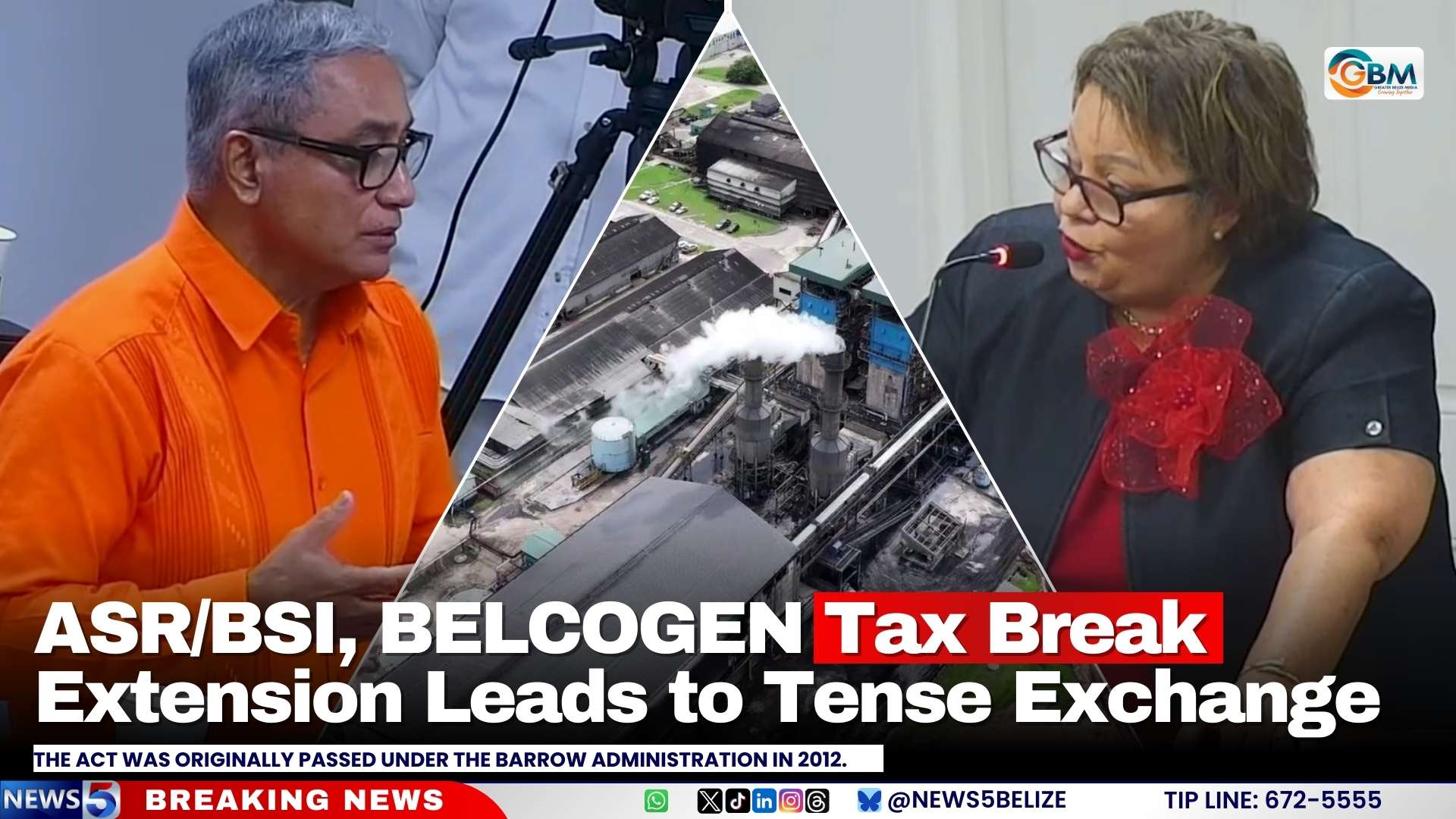
    The Briceño Administration of Belize has escalated a transparency dispute by taking the Ombudsman to court. The conflict began when social activist Jeremy Enriquez filed a Freedom of Information Act (FOIA) request seeking details on legal fees related to the redistricting case. The Attorney General initially denied the request, prompting Enriquez to appeal to the Ombudsman, Gilbert Swaso, who ruled in favor of partial disclosure. However, the Attorney General is now challenging this decision in court, arguing for its dismissal. This legal battle highlights a broader struggle over government transparency and accountability. Enriquez expressed concern over the Prime Minister’s efforts to suppress information about government spending on legal fees, emphasizing the need for public accountability. He described the administration’s actions as a corrupt attempt to intimidate the Ombudsman and conceal financial dealings. This case sets a significant precedent in Belize’s ongoing fight for governmental transparency and the public’s right to information.

  • Enriquez’s Second FOIA Targets Constituency Fund Spending

    Enriquez’s Second FOIA Targets Constituency Fund Spending

    Jeremy Enriquez, a prominent social activist, has filed a second Freedom of Information Act (FOIA) request targeting the allocation of the Constituency Development Fund. Despite facing legal challenges with his initial request, Enriquez remains steadfast in his mission to promote transparency and accountability within the government. His latest submission, directed to the Office of the Prime Minister, seeks detailed information on how funds are distributed across electoral divisions, how they are utilized, and the mechanisms in place to ensure accountability. Enriquez emphasized that these requests are not frivolous but are aimed at holding the government to its promise of good governance, as outlined in their political manifesto. He stressed that secrecy breeds corruption and called for a shift away from this culture. This move comes amidst growing public scrutiny over government spending and the need for greater fiscal transparency.

  • Dominican Republic reaffirms support for Guatemala’s democracy and urges OAS action

    Dominican Republic reaffirms support for Guatemala’s democracy and urges OAS action

    The Dominican Republic has reiterated its unwavering support for Guatemala’s democratic process and President-elect Bernardo Arévalo, following the August 2023 elections, which were widely acknowledged as free and fair by international observers. In a virtual address to the Permanent Council of the Organization of American States (OAS), Dominican Foreign Minister Roberto Álvarez condemned recent efforts to undermine the presidential and vice-presidential mandates in Guatemala through dubious legal tactics. Álvarez underscored that such maneuvers not only infringe upon the sovereignty of the Guatemalan people but also contravene the democratic principles outlined in the Inter-American Democratic Charter. He echoed President Luis Abinader’s stance that no governmental authority has the right to override the electorate’s will, emphasizing that the Dominican Republic would refuse to recognize any de facto government arising from a violation of constitutional order. Álvarez called on the OAS and the global community to take decisive action to safeguard democratic institutions in Guatemala and across the Americas, leveraging all available mechanisms within the OAS framework and the Inter-American Democratic Charter.

  • Historical context behind Trinidad and Tobago’s engagement with US, Venezuela

    Historical context behind Trinidad and Tobago’s engagement with US, Venezuela

    Prime Minister Kamla Persad-Bissessar’s position on Trinidad and Tobago’s (TT) involvement in regional security, particularly concerning the escalating tensions with Venezuela, has sparked considerable debate. Critics have labeled her approach as overly aligned with the United States or even “far-fetched.” However, a closer examination reveals that her stance is neither unprecedented nor unreasonable. It is deeply rooted in an 80-year history of strategic cooperation with the US, shared security interests, and a pragmatic assessment of contemporary challenges.

    TT’s relationship with the US dates back to the Second World War, when the 1940 Destroyers for Bases Agreement led to the establishment of a US naval base in Chaguaramas and the construction of critical infrastructure, including the Churchill-Roosevelt Highway. These developments not only bolstered the Allied war effort but also laid the groundwork for TT’s modern road network. Although the US presence in Chaguaramas ended in 1963, the two nations have maintained a cooperative partnership through various agreements, such as the Customs Mutual Administrative Agreement and the Caribbean Basin Security Initiative. These frameworks have facilitated information-sharing, law enforcement collaboration, and maritime security, which are vital in combating transnational crime, narcotics, and arms trafficking.

    Against this backdrop, Prime Minister Persad-Bissessar’s concerns about Venezuela’s security developments are well-founded. Recent US legal actions against Venezuelan officials, including former intelligence chief Hugo “El Pollo” Carvajal and President Nicolás Maduro, highlight the gravity of the situation. TT is not insulated from the repercussions of Venezuelan instability, as evidenced by the infiltration of the Tren de Aragua gang, now designated a terrorist organization under TT’s Anti-Terrorism Act. This poses a direct threat to national security, border management, and social stability.

    When the Prime Minister asserts that any incursion into TT’s territorial waters will be met with force, she is not echoing US rhetoric but reaffirming TT’s sovereignty and right to self-defense. Her engagement with the US on surveillance, intelligence, and counter-narcotics cooperation aligns with the long-standing strategic partnership between the two nations. This pragmatic approach is aimed at safeguarding TT’s people and borders.

    However, this cooperation must be balanced with transparency. TT must ensure that its territory is never used as a staging ground for foreign military operations without full sovereign consent. Diplomatic efforts should continue to prioritize peace, dialogue, and regional stability through organizations like Caricom, while simultaneously strengthening TT’s readiness to defend its frontiers.

    In essence, TT’s current engagement with the US is neither subservience nor a novelty. It is a continuation of a historical partnership shaped by shared interests, geography, and the need for security in a volatile region. Prime Minister Persad-Bissessar’s approach is not “far-fetched” but a rational extension of TT’s historical trajectory and its responsibility to protect the republic.