Prime Minister Kamla Persad-Bissessar of Trinidad and Tobago has unveiled a significant transformation in the nation’s foreign policy, citing a breakdown in trust with the Caribbean Community (Caricom). This announcement, widely covered by national outlets such as the Trinidad and Tobago Guardian, Daily Express, and Newsday, comes amid escalating tensions over regional security, divergent stances on Venezuela, and U.S. military activities in the Southern Caribbean. Persad-Bissessar emphasized that these changes are essential for bolstering the country’s economic and physical security, stating that Caricom is no longer seen as a dependable partner. While withdrawal from Caricom is not on the table, the administration plans to forge new international alliances focused on trade, investment, and security. The Prime Minister’s remarks follow Trinidad and Tobago’s decision to withhold support for an October 18 Caricom communiqué declaring the Caribbean a ‘Zone of Peace,’ a stance that highlighted the nation’s unique challenges with drug trafficking, gang violence, and gunrunning. Persad-Bissessar’s endorsement of U.S. military deployments, including the USS Gerald Ford, has further strained relations with Caricom and Venezuela. The Venezuelan government responded by suspending energy agreements and declaring her ‘persona non grata,’ a move she dismissed as inconsequential. Despite these tensions, Persad-Bissessar reaffirmed her commitment to regional humanitarian efforts, expressing solidarity with Jamaica following Hurricane Melissa. As a founding member of the Caricom Single Market and Economy, Trinidad and Tobago’s shift signals a potential reorientation of its long-standing regional engagement in response to evolving geopolitical dynamics.
分类: politics
-

Stichting 8 December: Gerechtigheid blijft de enige weg naar berusting
The Foundation December 8, 1982, has issued a statement emphasizing the pivotal role of the verdict on the December Murders in shaping the future of Suriname as a constitutional state. The organization has welcomed President Jennifer Simons’ recent acknowledgment of the finality of the December 8 verdict and expressed openness to her call to focus on the future. The foundation underscores that impunity in any form contradicts both the Surinamese Constitution and international treaties. Given the president’s stance in favor of ‘human rights for all’ and against ‘summary executions,’ the foundation assumes her vision aligns with a future as a democratic constitutional state. The December 8 verdict marked the end of a prolonged era of impunity for grave state crimes, including the brutal torture and summary execution of innocent civilians. Official lies and slander were debunked, and the victims’ roles as champions of freedom and democracy in Suriname were affirmed. Impunity for such crimes against humanity, regardless of form or pretext, is fundamentally at odds with constitutional principles and international human rights treaties. Respecting the December 8 verdict means honoring the victims and their struggle for justice and democracy, rather than the perpetrators. Political considerations should not justify public honors for torturers and murderers, as such unethical behavior disrespects the victims and compounds the moral suffering of their families. Upholding human rights for all, as recently announced by the president, requires at a minimum: rehabilitation for the victims, recognition of the injustices and suffering endured by them and their families, and a genuine commitment to redress these wrongs. ‘Justice remains the only path to peace,’ the foundation concluded.
-

Trump en Xi sluiten handelsakkoord en verminderen spanningen in felle VS-China rivaliteit
In a significant diplomatic breakthrough, US President Donald Trump and Chinese President Xi Jinping have agreed to a one-year truce in their protracted trade war. The agreement was reached during a bilateral meeting at the Asia-Pacific Economic Cooperation (APEC) summit held in Busan, South Korea. This marks the first face-to-face discussion between the two leaders since 2019 and provides a much-needed reprieve for businesses affected by months of escalating trade tensions.
The truce includes several key provisions: China has agreed to delay its planned export restrictions on rare earth metals, while the US will refrain from imposing a threatened 100% tariff on Chinese goods. Additionally, President Trump announced a reduction in tariffs on fentanyl-related products from 20% to 10%, following President Xi’s commitment to curb the supply of the synthetic opioid. Trump hailed the agreement as ‘great’ during his Asia tour, emphasizing that ‘there is no obstacle for rare earth metals anymore.’ China also pledged to purchase ‘massive amounts’ of American soybeans.
Despite these developments, many trade barriers remain in place, and underlying disputes between the two nations remain unresolved. Analysts describe the agreement as a ‘pause and a small rollback’ rather than a resolution, with both sides temporarily halting their trade hostilities while adhering to the terms of the truce. Dennis Wilder, a former CIA and White House China expert, noted that the deal represents a temporary ceasefire rather than a long-term solution.
Market reactions were cautious, with major Asian stock indices in Hong Kong, Shanghai, and Sydney closing lower, while Japan’s Nikkei 225 remained unchanged. Investors expressed uncertainty about the durability and comprehensiveness of the agreement. However, the suspension of rare earth metal export restrictions was viewed positively by market experts, as these materials are critical for producing smartphones, electric vehicles, and military aircraft.
Trade experts have characterized the agreement as a ‘partial freeze’ or ‘small rollback’ in the trade war. The deal includes an annual review mechanism, allowing both countries to reassess their trade relationship and purchasing power each year. Cameron Johnson of Tidalwave Solutions in Shanghai described the agreement as ‘likely the best outcome both parties could achieve under the current circumstances,’ but warned that uncertainties surrounding implementation and annual evaluations could continue to influence the trade conflict in the future.
-

Two Cuban victories for life
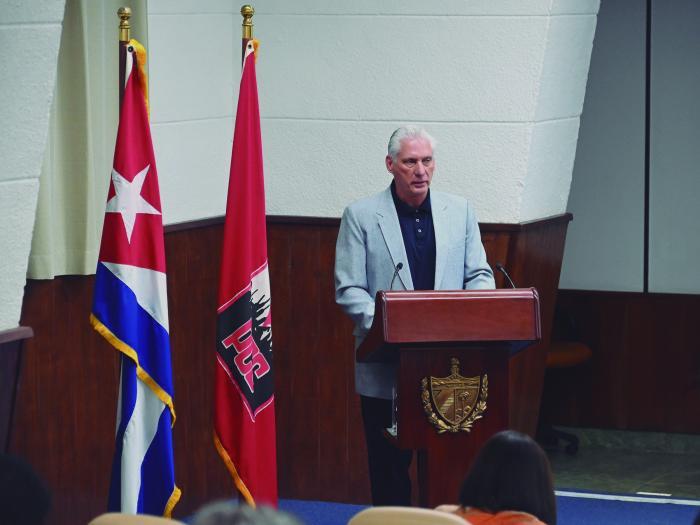
In a televised address during the National Defense Council meeting, President Miguel Díaz-Canel Bermúdez highlighted Cuba’s triumph in protecting its eastern provinces from the devastating impact of Hurricane Melissa. He emphasized the nation’s unity and resilience in the face of adversity, calling it a defense of life against a ‘deceitful and cynical empire.’ The President acknowledged the ongoing challenges posed by the hurricane’s aftermath, including strong winds, heavy rains, and potential health risks, urging continued vigilance and coordinated efforts to restore essential services and infrastructure. He praised the efforts of the Cuban people and the Party, stating, ‘Today we are all Fidel and Raúl. Today we are all the Party of unity defending life.’ Meanwhile, Cuba received overwhelming international support at the United Nations, with 165 countries voting to end the U.S. economic, commercial, and financial blockade. Despite aggressive diplomatic maneuvers by the U.S. to sway votes, the resolution passed with a significant majority, marking a symbolic victory for Cuba and a blow to imperialist policies. The vote underscored global solidarity with Cuba and exposed the futility of the U.S. blockade, which has been widely condemned as a form of economic warfare.
-

VN roept opnieuw op tot beëindiging van Amerikaanse embargo op Cuba
The United Nations General Assembly has once again overwhelmingly called for an end to the US economic embargo against Cuba, marking the 33rd consecutive year of such a resolution. The vote, held on October 29, 2025, saw 165 countries in favor, seven against, and 12 abstentions. Despite lobbying efforts by the United States, the resolution passed with significant international support, highlighting the global consensus against the embargo.
-

Rob Jetten (D66) grootste winnaar verkiezingen Nederland
In a landmark outcome for Dutch politics, the Democrats 66 (D66) party, led by 38-year-old Rob Jetten, has emerged as the largest party in the Netherlands following Wednesday’s parliamentary elections. According to initial exit polls, D66 is projected to secure 27 seats, surpassing Geert Wilders’ Party for Freedom (PVV) with 25 seats and the People’s Party for Freedom and Democracy (VVD) with 23 seats. This result signals a decisive shift toward political stability and collaboration, marking a departure from years of fragmentation and populist influence. Jetten, who could become the youngest and first openly gay prime minister in Dutch history, addressed supporters in The Hague, stating, ‘Millions of Dutch citizens have turned a page today. We are saying goodbye to the politics of negativity and hatred and embracing hope, reason, and respect.’ The election outcome reflects a broader trend toward the political center, with radical-right parties like the PVV losing ground. Meanwhile, the VVD and the socially conservative New Social Contract (NSC) are positioned around the center, while the GreenLeft-Labour alliance underperformed with approximately 20 seats. Shortly after the exit polls were announced, Frans Timmermans, leader of the GreenLeft-Labour alliance, resigned, acknowledging the need for ‘new energy and leadership.’ With no party nearing the 76-seat majority required to govern, coalition negotiations are expected to be lengthy and complex. Analysts predict Jetten will aim to form a broad center coalition, potentially involving the VVD, NSC, and one or two smaller parties, while ruling out collaboration with the PVV. Key campaign issues included purchasing power, migration, housing, climate, and trust in government. D66’s victory is widely interpreted as a call for stability, professionalism, and cooperation. Updated exit polls and preliminary vote counts are anticipated later today.
-

Moertabat blijft bij zijn standpunt: Ik ben klaar met de VHP
Sidik Moertabat, a prominent member of the VHP (Progressive Reform Party) leadership, has reaffirmed his decision to resign from the party’s executive board. In a recent interview with Starnieuws, Moertabat emphasized that his departure is final and that he will formally communicate his resignation to the party’s leadership. He has already drafted a letter to VHP Chairman Chan Santokhi, signaling his complete break from the party. This move comes despite claims by VHP spokesperson Dew Sharman, who denied Moertabat’s resignation in a radio interview, stating that he remains a member of the executive board. Moertabat, however, clarified that he did not authorize Sharman to speak on his behalf and stands by his decision. His resignation was initially announced in a group chat among VHP executives, which was later leaked, prompting media inquiries. Moertabat cited deep dissatisfaction with the party’s leadership, particularly the lack of communication and inclusivity in decision-making processes. He expressed frustration over being sidelined during key events, such as the preparation for the May parliamentary elections and the candidate selection process. Moertabat, who joined the VHP in 2012 after leaving the KTPI, served as a member of the National Assembly from 2020 to 2025. His departure underscores growing internal tensions within the VHP following its recent electoral defeat.
-

Eerste officiële universitair bezoek aan Surinaamse ambassade in China
The Embassy of the Republic of Suriname in China recently welcomed a delegation of faculty members and students from the School of Government and Public Affairs and Communication at a prominent Chinese university. This marked a historic occasion, as it was the first time the university had visited a diplomatic mission in China. Ambassador Pick Fung Ho-Chong hosted the group in Beijing, facilitating an enriching exchange on culture, history, and diplomacy. During her presentation, the Ambassador provided an insightful overview of Suriname, highlighting its geographical location, multi-religious and multicultural society, and the historical presence of the Chinese community in Suriname since 1853. She also emphasized the diplomatic relations between Suriname and China, which have flourished since 1976 and will celebrate their 50th anniversary in 2026. The Ambassador underscored the importance of mutual understanding and cultural exchange, encouraging students to deepen their knowledge of Suriname and share it within their academic circles. Symbols such as the national flag and coat of arms were explained as representations of Surinamese identity and values, according to the Ministry of Foreign Affairs, International Trade, and Cooperation. Jin Yong, Secretary of the Party Committee of the School, expressed gratitude for the warm hospitality and reiterated the university’s commitment to nurturing globally-minded talents. He praised Suriname for facilitating this unique encounter. A poignant moment was the recitation of the poem ‘Long Live Youth’ by students, symbolizing the enduring friendship between the two nations. The event concluded with an exchange of commemorative gifts and a call from the Ambassador for students to continue building bridges between Suriname and China.