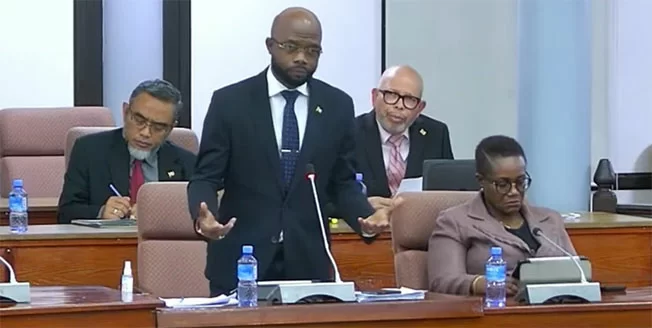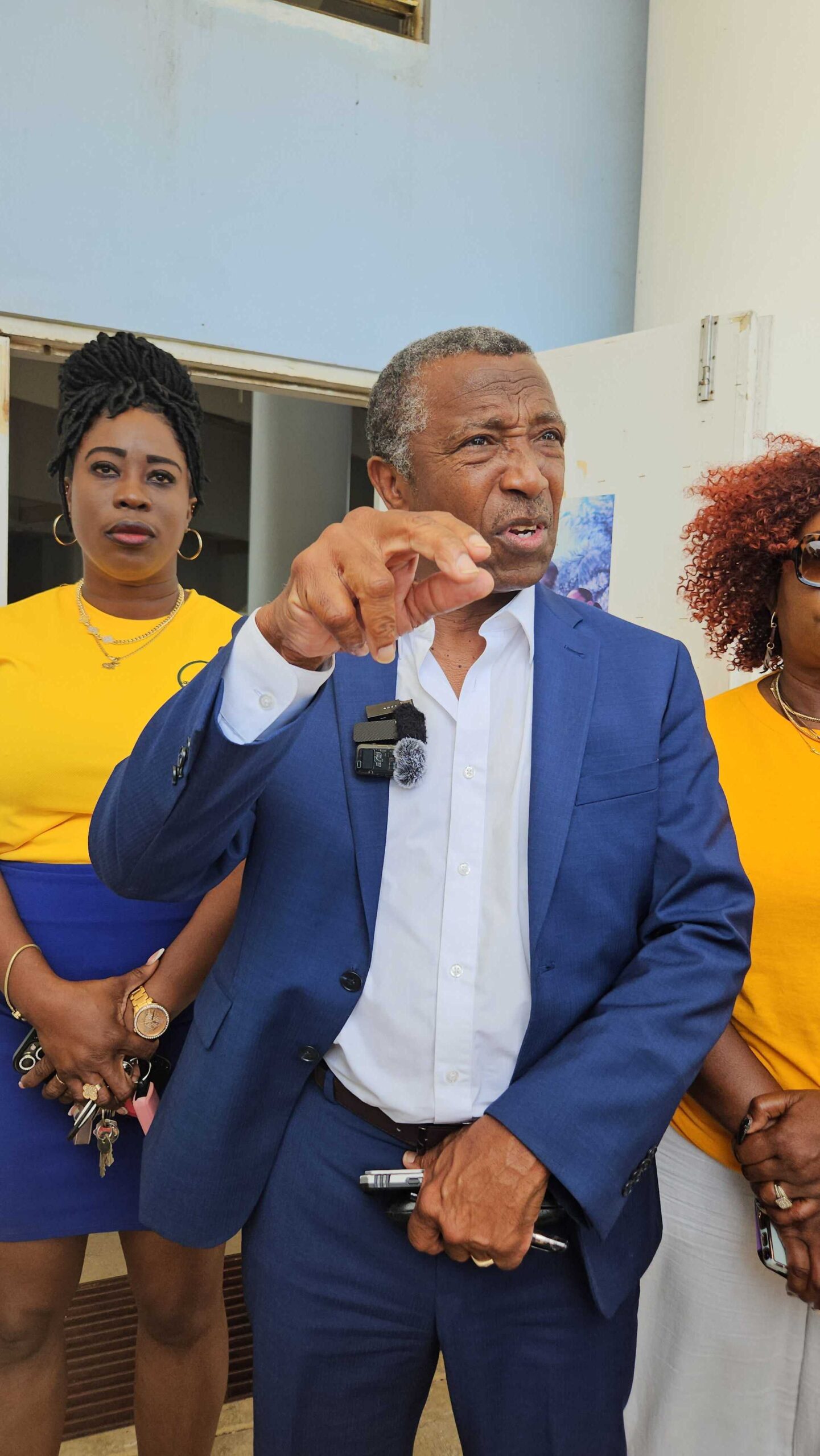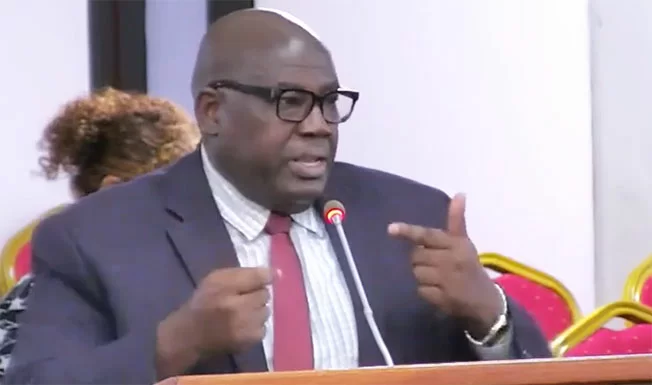
Barbados’ Minister of Foreign Affairs and Foreign Trade, Kerrie Symmonds, has vehemently refuted baseless rumors alleging his detainment in the United States and the involvement of Attorney General Dale Marshall in resolving the purported issue. Addressing the unfounded claims circulating online, Symmonds clarified that he is actively performing his duties in Barbados and remains in his constituency of St James Central. In a formal statement, Symmonds labeled the rumors as ‘vicious, nasty, and unfortunate,’ emphasizing their malicious intent. He criticized the spread of such falsehoods, stating, ‘In this day and age, it is clear that some individuals have nothing better to do than create scandal, and that scandal does not lack for a carrier.’ Symmonds further asserted his presence in Barbados, declaring, ‘Unfortunately for those who published the scandal, I am not overseas at this point, and I’m here for all to see.’ The unverified reports, which began circulating on social media late last week, falsely claimed that Symmonds had been ‘locked up in the USA’ and that Marshall had traveled abroad to address the situation. These claims have been dismissed as entirely fabricated.
分类: politics
-

Opposition MPs query budget figures, revenue streams
During a press conference held by the People’s National Movement (PNM) at Balisier House in Port of Spain on October 18, opposition MPs criticized the government’s 2025/2026 budget for alleged inconsistencies, inflated revenue projections, and biased allocations. Diego Martin North/East MP Colm Imbert highlighted discrepancies in the budget, including an overestimated oil price of $73.25 per barrel for 2026, compared to international agencies’ projections of $50-60. This, he argued, inflated revenue by at least $1 billion. Imbert also pointed out that the government understated debt service payments, allocating $7 billion instead of the actual $11-$13 billion required, which could lead to increased borrowing or cuts in planned expenditures. He further criticized the 45% increase in National Insurance contributions, arguing it was based on outdated actuarial reports from 2020 that failed to account for economic recovery. Arouca/Lopinot MP Marvin Gonzales accused the government of neglecting the North West Water Improvement Programme, diverting funds to other regions, and raising electricity rates despite campaign promises to the contrary. Diego Martin Central MP Symon de Nobriga highlighted biased allocations, with PNM-controlled constituencies seeing reduced funding while UNC areas received increased support. The opposition warned that these decisions would harm public services and impact upcoming local government elections.
-

Tobago trauma after French occupation
The French occupation of Tobago left a profound impact on the island, marked by humiliation and anxiety over potential recurrence. In the aftermath of its end in 1793, Tobago’s administration faced the urgent task of fortifying governance to prevent the infiltration of revolutionary ideas from France and its colonies. Lieutenant Governor George Poyntz Ricketts spearheaded efforts in 1794 to establish a constitution, proposing regulations for the Tobago House of Assembly and seeking royal approval for their implementation. The reforms aimed to create a free and independent legislative body while safeguarding against corruption and factional influence. The assembly’s structure included representatives from Scarborough, Plymouth, and seven parishes, with stringent eligibility criteria based on property ownership, race, gender, and age. Only white Protestant males over 21, possessing significant land or property, could participate. The electoral process emphasized loyalty to Britain, requiring oaths of allegiance and renunciation of foreign ideologies. These measures reflected broader concerns, including France’s lingering ambitions, anti-slave-trade sentiments, and the challenges posed by the island’s demographic and economic realities. The reforms sought to stabilize Tobago’s governance and secure its future amidst ongoing threats and internal resistance.
-

Birchwood: No apprenticeship programmes targeting at-risk youth in budget
In a passionate address during the House of Representatives’ budget debate on October 17, Laventille East/Morvant MP Christian Birchwood voiced his concerns over the 2026 national budget’s failure to include apprenticeship initiatives aimed at engaging youth from at-risk communities in state-funded projects. Birchwood, an engineer by profession, highlighted the Finance Minister Davendranath Tancoo’s acknowledgment of a significant contraction in the labor market, with nearly 70,000 jobs lost over the past decade and labor force participation dropping from 62% to below 55%. Birchwood argued that these statistics should serve as a benchmark to evaluate the government’s employment initiatives and hold them accountable. He questioned the absence of targeted apprenticeship programs and community job centers in the new budget, which he believes are crucial for connecting young people from high-need districts to state-funded projects. Birchwood urged Tancoo to ensure that residents from Laventille and surrounding communities are employed in infrastructure and development programs across the northwest corridor. He emphasized the importance of linking public spending to local participation to prevent the Employment Fund from becoming a mere line item rather than a tool for empowerment. Birchwood also called for measures to guard against bureaucracy and ensure fair access for single-parent households, micro-entrepreneurs, and youth start-ups as the country transitions from the Cepep and URP models to the Employment Fund. He concluded by stressing that infrastructure projects should bring dignity to the people on the ground, not remain abstract statistics.
-

T&T opts not to endorse Caricom position amid US military strikes
In a notable divergence from its Caribbean Community (Caricom) counterparts, Trinidad and Tobago has opted not to endorse a unified regional stance on critical security and stability matters, particularly concerning the increasing presence of U.S. military forces in the Caribbean. This decision emerged during a recent Caricom meeting where regional leaders convened to address pressing issues, including the security buildup in parts of the Caribbean and its implications for member states. While other Caricom nations reaffirmed their commitment to maintaining the Caribbean as a Zone of Peace and emphasized dialogue and peaceful conflict resolution, Trinidad and Tobago reserved its position, offering no immediate explanation for its dissent. The meeting followed a series of U.S. military strikes targeting suspected drug-trafficking vessels off the Venezuelan coast, which reportedly resulted in the deaths of two Trinidad and Tobago nationals. Caricom leaders also reiterated their dedication to combating narcotics trafficking and the illegal arms trade, underscoring the need for international cooperation and adherence to international law. Trinidadian Prime Minister Kamla Persad-Bissessar has remained silent on both the regional security discussions and the fatalities, drawing criticism from opposition figures who have accused her of evading her responsibilities. Persad-Bissessar has previously expressed support for the U.S. military campaign, praising its efforts to curb drug trafficking and protect regional stability.