分类: politics

  • Regering werkt aan schuldenverlichting, meer inkomsten en klimaatfinanciering

    Regering werkt aan schuldenverlichting, meer inkomsten en klimaatfinanciering

    President Jennifer Simons delivered a comprehensive update on the government’s agenda and priorities during a press conference on Friday. Emphasizing the administration’s focus on reducing the national debt, increasing state revenues, and bolstering key sectors such as agriculture, tourism, and climate policy, Simons outlined a roadmap for the coming months. She highlighted efforts to narrow the budget deficit relative to GDP, stating, ‘We are collaborating with various sectors to explore ways to enhance state revenues. While challenging, improvements in tax collection and customs efficiency are beginning to yield results.’ Simons assured that these measures would not impose additional burdens on citizens but rather optimize the collection of existing taxes like VAT and customs duties.

    To enhance transparency and efficiency, audits are being conducted across state-owned enterprises. Additionally, task forces for tourism and agriculture will be formally established in the coming weeks, with the goal of elevating both sectors to higher productivity levels within two years. ‘These task forces will engage with the president, ministers, and the private sector to achieve their objectives,’ Simons explained. She also announced initiatives to stabilize the prices of essential goods, ensuring affordability through a transparent pricing system.

    A significant portion of the president’s address focused on climate financing and forest conservation. Simons cautioned that international climate funds often consist of commercial loans that offer limited benefits to developing nations. ‘We aim to preserve our forests, but this requires adequate compensation,’ she stated. She referenced discussions with carbon-negative countries like Bhutan and Panama, as well as climate-neutral Madagascar, to explore opportunities such as debt-for-nature swaps and carbon credits. However, Simons stressed the need for caution, advising, ‘Countries must carefully evaluate agreements labeled as climate financing. Not all proposals are advantageous for forest-rich nations.’ The government is committed to ensuring that international resources directly benefit inland communities, demonstrating the tangible advantages of forest conservation.

  • Belize Nears “Safe Country” Agreement with the U.S.

    Belize Nears “Safe Country” Agreement with the U.S.

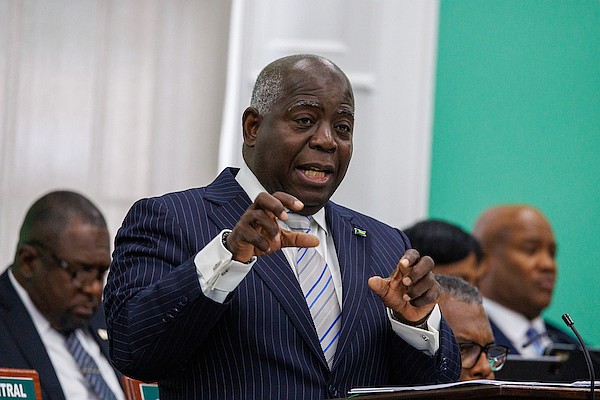
    Belize is on the brink of finalizing a significant migration agreement with the United States, known as the ‘Safe Third Country Agreement.’ Foreign Minister Francis Fonseca announced that the negotiations are nearing completion, emphasizing that the deal aims to balance Belize’s sovereignty with its humanitarian commitments. Speaking in the House of Representatives, Fonseca addressed concerns and misinformation surrounding the agreement, clarifying its purpose and legal framework. He highlighted Belize’s long-standing adherence to the 1951 UN Refugee Convention and its reputation as a leader in migration and refugee management. The agreement, which includes strict safeguards, would allow the U.S. to transfer asylum seekers to Belize for claim determination under controlled conditions. These safeguards include veto power over transfers, nationality restrictions, annual caps, and considerations of criminal records and professional skills. The deal, initially set for two years, can be suspended or terminated by either party with written notice. Fonseca also noted that the U.S. will provide financial and technical support to strengthen Belize’s asylum system. However, the agreement requires ratification by the Belizean Senate before it can take effect, ensuring compliance with domestic legal procedures. Fonseca stressed that the agreement’s activation will follow detailed implementation planning and will only be used if necessary. He concluded by affirming Belize’s commitment to international law, cooperation with the U.S., and the protection of persecuted individuals, reflecting both compassion and pragmatism.

  • Hof beslist: Vervolging Hoefdraad rechtmatig

    Hof beslist: Vervolging Hoefdraad rechtmatig

    The Court of Justice in Suriname has ruled that the 2020 decision by the National Assembly (DNA) to place former Minister Gillmore Hoefdraad under formal accusation was lawful. This decision, made after nearly five years of legal battles, renders Hoefdraad’s civil lawsuit against the State, the National Assembly, and the Public Prosecution Service (OM) inadmissible. Hoefdraad, who remains a fugitive, had contested his prosecution, which stemmed from his alleged involvement in the high-profile case concerning the Central Bank of Suriname (CBvS).

    Hoefdraad and his legal team argued that the National Assembly’s decision was unlawful, as the parliament, then led by Jennifer Simons, had previously decided not to prosecute him during the second term of the NDP government. However, following the May 2020 elections, then Attorney General Roy Baidjnath Panday resubmitted a request to prosecute Hoefdraad. The new parliament, led by Marinus Bee and comprising a coalition of VHP, ABOP, NPS, and Pertjajah Luhur, approved the prosecution. Hoefdraad claimed this decision was politically influenced, asserting that the parliament could not revisit a prior decision unless new evidence emerged—a condition not met in this case.

    In 2023, Hoefdraad was convicted in absentia, alongside other key figures, including former CBvS Governor Robert van Trikt and legal director Faranaaz Hausil. All defendants appealed their convictions, while Hoefdraad continued his civil case to challenge the legitimacy of his prosecution. The court handling the criminal appeal has completed its investigation but awaits the outcome of this civil case, which has been delayed multiple times.

    Hoefdraad’s lawyer, Murwin Dubois, argued that a favorable ruling in the civil case could have impacted the criminal proceedings. Notably, Interpol refused to extradite Hoefdraad to Suriname, removing him from its wanted list and barring Suriname from using its channels, citing the prosecution as politically motivated. With the Court’s ruling affirming the legitimacy of the prosecution, the path is now clear for a final verdict in the criminal appeal.

  • Israel’s Netanyahu says will run for PM in next year’s election

    Israel’s Netanyahu says will run for PM in next year’s election

    In a televised appearance on the right-wing Channel 14, Israeli Prime Minister Benjamin Netanyahu confirmed his intention to run in the November 2026 elections. When questioned about his candidacy and prospects for victory, Netanyahu confidently responded, ‘Yes’ to both inquiries. The announcement comes as Netanyahu, leader of the Likud party, continues to navigate a politically charged landscape. Netanyahu, who has served as Israel’s prime minister for over 18 years since 1996, holds the record for the longest tenure in the role. His leadership has been marked by significant achievements and controversies alike. In the most recent elections, Likud secured 32 seats in the Knesset, with its ultra-Orthodox allies and the Religious Zionism alliance adding 18 and 14 seats respectively, marking a strong showing for the far-right bloc. However, Netanyahu’s current term has been overshadowed by a contentious judicial overhaul plan that ignited widespread protests across Israel. Additionally, his handling of the ongoing conflict triggered by Hamas’s October 7, 2023 attack from Gaza has drawn sharp criticism, particularly from families of hostages. Despite these challenges, Netanyahu remains a formidable figure in Israeli politics as he prepares for another electoral bid.

  • Tancoo claims PNM collapsed as debate ends prematurely

    Tancoo claims PNM collapsed as debate ends prematurely

    In a dramatic turn of events during the marathon budget debate in the House of Representatives, Finance Minister Davendranath Tancoo declared that the People’s National Movement (PNM) had ‘fallen’ after no opposition MP rose to respond to a government speaker. The debate, which began at 10 am on October 17 and concluded at 2:22 am on October 18, is set to resume on October 21 with a detailed examination of revenue and expenditure by the Standing Finance Committee. The session featured 14 speakers, alternating between opposition and government MPs, until it reached Claxton Bay MP Hansen Narinesingh, who delivered his maiden speech. Speaker Jagdeo Singh congratulated Narinesingh and then turned to the opposition benches, only to find no one willing to speak. Tancoo seized the moment, criticizing the PNM for abdicating its responsibility, particularly noting the absence of opposition leader Pennelope Beckles. He accused the opposition of having ‘nothing to say’ and praised the budget as ‘excellent.’ House Leader Barry Padarath later issued a statement titled ‘PNM Collapses in 2026 Budget Debate,’ highlighting the opposition’s failure to continue the debate despite having five members yet to speak. Padarath described the PNM’s inaction as a clear sign of their inability to analyze and respond to the national budget, suggesting that the party had ‘collapsed’ under the pressure.

  • France’s ex-president Sarkozy goes to jail

    France’s ex-president Sarkozy goes to jail

    PARIS, France — Nicolas Sarkozy, the former French president, is set to begin his prison sentence on Tuesday, marking a historic moment as he becomes the first former head of state from an EU country to be incarcerated. Sarkozy, who led France from 2007 to 2012, was convicted in late September for his involvement in a criminal conspiracy to secure illegal campaign funding from the late Libyan dictator Moamer Kadhafi during his 2007 presidential bid. Despite appealing the verdict and decrying it as an “injustice,” Sarkozy will be held at La Sante prison in Paris. In a defiant statement following his conviction, Sarkozy declared, “If they absolutely want me to sleep in prison, I will sleep in prison — but with my head held high.” This makes him the first French leader to face imprisonment since Philippe Petain, the Nazi-collaborating head of the Vichy regime, who was jailed after World War II. Sarkozy is expected to be placed in solitary confinement, occupying a nine-square-meter cell to minimize interaction with other inmates and prevent unauthorized photography. The presiding judge, Nathalie Gavarino, emphasized the “exceptional gravity” of the offenses, ordering his incarceration even as he appeals. Sarkozy’s legal team is likely to seek his release immediately, but the court retains the authority to deny it if there are concerns about evidence tampering or witness intimidation. If released, he could be placed under judicial supervision or house arrest with an ankle tag. Sarkozy’s legal troubles have mounted since his 2012 re-election loss, including a prior graft conviction. In the Libyan case, prosecutors alleged that his aides struck a deal with Kadhafi in 2005 to fund his campaign, with promises to restore Kadhafi’s international image. However, the court acquitted Sarkozy of charges related to embezzlement, corruption, and illicit campaign financing. Despite losing his Legion of Honour distinction, Sarkozy retains some support on the French right, with his son Louis Sarkozy urging supporters to rally outside their family home. The case has also sparked controversy, with the presiding judge receiving death threats, prompting President Emmanuel Macron to condemn such actions as “unacceptable.” La Sante prison has housed notable figures, including Venezuelan militant Carlos the Jackal and French model agent Jean-Luc Brunel, who was found dead in his cell in 2022.

  • Ag CoP: No officials in ‘safe houses’ after US Embassy alert

    Ag CoP: No officials in ‘safe houses’ after US Embassy alert

    Acting Commissioner of Police Junior Benjamin has confirmed that tactical police units in Trinidad and Tobago are on heightened alert following a security advisory issued by the US Embassy. However, Benjamin firmly denied rumors circulating online that senior public officials, including the Prime Minister and Attorney General, have been relocated to safe houses. He emphasized that such claims are baseless and urged the public to rely only on credible sources for information. The US Embassy’s alert coincides with increased US military presence in the South Caribbean, reportedly targeting anti-narcotics operations. Recent incidents include the destruction of five small boats and a narco-submarine off Venezuela’s coast, resulting in 29 fatalities. President Trump’s designation of Venezuelan leader Nicolas Maduro as a narco-terrorist, accompanied by a $50 million bounty, has fueled speculation about potential US intervention in Venezuela. Benjamin reassured the public that the heightened alert is a precautionary measure and that there is no cause for panic. Defence Minister Wayne Sturge echoed this sentiment, stating that Trinidadians need not worry. The US Embassy has advised US nationals to avoid government facilities and remain vigilant, while also recommending enrollment in the Smart Traveler Enrollment Program for updates. Opposition MP Stuart Young has called on the Prime Minister to address the nation and provide clarity amid growing concerns.

  • Beckles: UNC setting up Trinidad and Tobago for total disaster

    Beckles: UNC setting up Trinidad and Tobago for total disaster

    In a scathing critique of the 2025/2026 budget, Opposition Leader Pennelope Beckles has accused the UNC-led government of steering Trinidad and Tobago toward economic collapse. Speaking at the Red House in Port of Spain on October 17, Beckles, the first female PNM leader to deliver such a response, outlined a series of alarming strategies she claims the government is employing. These include imposing punitive taxes on citizens and businesses, depleting foreign exchange reserves, and misleading the public with unrealistic economic projections. Beckles described the budget as ‘fake and fraudulent,’ citing discrepancies in fiscal deficit calculations and a lack of credible revenue sources. She also criticized the government’s reliance on borrowing, particularly foreign debt, which she warned could exacerbate the country’s fiscal crisis. Beckles highlighted the draconian tax increases on locally manufactured rum and beer, which she argued unfairly target ordinary citizens. She further accused the government of political interference in state enterprises and financial institutions, warning that such actions could jeopardize public savings. Beckles concluded by promising that the PNM would work to rebuild the nation, emphasizing the need for stability and competence in governance.

  • Budget debate comes to an abrupt end

    Budget debate comes to an abrupt end

    In a scathing critique, Barry Padarath, the Leader of Government Business, has lambasted the opposition People’s National Movement (PNM) for what he describes as a dereliction of their parliamentary responsibilities. The accusation came in a Facebook post following an unexpected halt to the budget debate on October 17, triggered by the absence of contributions from five PNM MPs. Padarath, who also serves as the Minister of Public Utilities and MP for Couva South, highlighted that after the seventh government speaker, Hansen Narinesingh, concluded his remarks, no PNM member stepped forward to continue the debate, despite having five members yet to speak. He pointed out that confusion reigned on the PNM bench, exacerbated by the absence of the Leader of the Opposition during this critical juncture. Padarath further criticized senior PNM members, including Colm Imbert, Marvin Gonzales, Simon De Nobriga, and Stuart Young, for their inaction when called upon to participate. He asserted that this incident underscores the PNM’s inability to effectively analyze and respond to the national budget, signaling a collapse under pressure. The government now anticipates the commencement of the Standing Finance Committee on October 21. Meanwhile, the PNM is scheduled to hold a news conference at Balisier House in Port of Spain on October 18 to address the controversy.

  • Manning: Taxes will be passed on to consumers

    Manning: Taxes will be passed on to consumers

    San Fernando East MP Brian Manning has voiced strong opposition to the new taxes and tax increases proposed in the recent budget, arguing that they will negatively impact businesses and ultimately burden ordinary consumers. Speaking in the House of Representatives on October 17, Manning highlighted several measures, including the bank/insurance levy, container-processing fee increase, landlord surcharge, LPG price hike, and single-use plastic tax, as particularly harmful. He criticized Finance Minister Davendranath Tancoo, whom he mockingly referred to as ‘Taxcoo,’ and labeled the budget as ‘fake and fraudulent.’ Manning also accused trade union leaders of prioritizing their own interests over their members’ welfare, aligning with the UNC in what he termed a ‘coalition of chaos and confusion.’ Manning further criticized the 0.25% levy on banks and insurance companies, which aims to raise $575 million annually, arguing that it would increase banking fees and overall costs for the public. He also condemned the landlord surcharge, equating it to a property tax, and questioned the $2,500 registration fee. Additionally, Manning criticized the electricity surcharge for commercial and industrial clients, the 100% hike in container processing fees, and the rise in excise duties on alcoholic drinks, which he said would drive up consumer prices. He also slammed the proposed $15,000 penalty for dangerous driving, calling it ‘blood money,’ and criticized the taxes on single-use plastics and electric vehicles. Manning concluded by questioning the government’s commitment to the Pointe-a-Pierre refinery and sarcastically endorsing the proposed Real Estate Investment Trust (REIT).