In a significant move towards regional integration, four CARICOM nations—Barbados, Belize, Dominica, and St. Vincent and the Grenadines—recently implemented full freedom of movement for their citizens. This decision, made during Saint Lucia’s political campaigning period, fulfills a commitment made at CARICOM’s 50th anniversary. However, Saint Lucia’s silence on the matter raises critical questions about its position in this evolving regional landscape. Historically, Saint Lucia has been a champion of regionalism, from the efforts of Nobel laureate William Arthur Lewis to the aspirations of the failed federation. Yet, the current lack of action calls for practical, forward-thinking discussions to prepare for potential future steps towards freedom of movement. This phase presents an opportunity for public education and engagement on the implications of regional obligations. The four pioneering countries have rejected the outdated requirement under Article 45 of the Revised Treaty of Chaguaramas (RTC), which limited CARICOM nationals to a six-month stay as tourists. Instead, they invoked the Protocol on Enhanced Cooperation, allowing nationals to enter, reside, work, and remain indefinitely without permits, while also granting access to healthcare and education. For Saint Lucia, joining this movement requires careful planning. Policymakers must address key questions: What benefits will CARICOM nationals receive? How will healthcare and education access be defined? What systems will integrate migrants? Will social security benefits be transferable? These issues demand national dialogue to ensure transparency and fairness. The legacy of regional integration, championed by figures like Elma Gene Isaac, must inspire deliberate and thoughtful action. As Saint Lucia contemplates its next steps, clarity and inclusivity must guide the process, ensuring that regional integration moves from rhetoric to reality.
分类: politics
-

DNA-leden getraind in genderanalyse van Staatsbegroting 2026
In a significant step toward fostering inclusive governance, 23 members of various factions in De Nationale Assemblée participated in an interactive training session on analyzing the National Budget through a gender lens. The session, titled ‘A Fair Budget: The National Budget Through a Gender Lens,’ was organized by Stichting Projekta in collaboration with the Ministry of Home Affairs. Held on Friday, the training underscored the importance of recognizing that budgetary policies are not neutral and can disproportionately impact different societal groups. Sharda Ganga, Director of Projekta, led the session, which was funded by the Equality Fund. Participants were equipped with practical tools to assess the 2026 budget’s effects on women, men, boys, and girls, with applications extending to indigenous communities, people with disabilities, and vulnerable youth. During the opening remarks, Director Nasier Eskak, representing Minister Bee, emphasized the necessity of collaboration in crafting policies that reflect societal diversity. The training highlighted the potential of budgetary measures to either reinforce inequality or promote equal opportunities and social justice. One experienced parliamentarian noted, ‘The gender lens reveals who benefits and who is left out, making it clear that the National Budget is not neutral.’ Practical examples and a checklist provided insights into unintended consequences of policies. Participants stressed that the gender lens encompasses all societal groups, not just women. Shiefania Jahangier, Head of the Bureau for Gender Affairs, urged attendees to integrate gender equality into economic, political, and institutional policies. This training is part of a broader initiative by Projekta to strengthen gender-responsive policymaking within the government and De Nationale Assemblée, aligning with its mission to build a human rights-based, inclusive society.
-

Trinidad and Tobago stands firm with US on regional security
The government of Trinidad and Tobago (TT) has publicly diverged from Caricom’s collective stance on maintaining the Caribbean as a zone of peace, opting instead to support the United States’ military intervention in the region. This decision, announced on October 19, follows Caricom’s October 18 statement reaffirming the principle of regional peace, which noted TT’s reservation on the matter. The Caricom statement emphasized dialogue and international cooperation to combat narco-trafficking and illegal arms trade, while TT’s government expressed unwavering support for US-led operations aimed at curbing transnational crime. Prime Minister Kamla Persad-Bissessar has consistently endorsed US military presence in the southern Caribbean, citing the threat posed by criminal organizations. International relations experts have criticized TT’s stance, with some describing it as a setback for Caricom’s integration efforts. Meanwhile, the US has intensified its anti-narcotics operations, recently targeting a vessel allegedly linked to Colombia’s National Liberation Army (ELN), a group classified as a terrorist organization. The incident has raised concerns about regional stability and the potential for collateral damage in the ongoing US-Venezuela tensions.
-

Cayman Islands releases sweeping immigration reform bill
The Cayman Islands Government has unveiled a comprehensive set of proposed amendments to its immigration laws, marking a pivotal moment in the nation’s policy framework. The reforms, now open for public consultation until mid-November, aim to realign the immigration system with the priorities of Caymanians while maintaining the islands’ competitiveness and social cohesion. Among the key changes is the extension of the residency requirement for spouses or civil partners of Caymanians or permanent residents from 15 to 20 years before they can apply for naturalization or permanent residency. Additionally, the amendments introduce stricter measures for work-permit holders, including a two-year restriction on changing employers and a mandatory one-year departure from the islands before reapplying for a permit. The bill also imposes annual declaration requirements for individuals granted Caymanian status, with non-compliance potentially leading to revocation. Other notable changes include age limits for specialist caregiver certificates and financial standing requirements for surviving spouses or civil partners with dependents. Minister for Caymanian Employment and Immigration Michael Myles emphasized the importance of public consultation in crafting a fair and transparent immigration system that reflects the needs and aspirations of the Caymanian people.
-

Darville: Cuban health workers’ direct hiring awaits US approval
The Davis administration in The Bahamas is currently awaiting approval from the United States regarding its proposal to directly hire Cuban healthcare professionals. Health and Wellness Minister Dr. Michael Darville reassured the public that these foreign workers are not in a state of uncertainty but continue to contribute to the country’s healthcare system. Last month, the government submitted a draft contract to US officials as part of ongoing negotiations. While a response is still pending, Dr. Darville expressed optimism that clarity would emerge within the next two weeks, emphasizing the urgency to resolve the matter swiftly. The proposed contract, described as standard, includes a significant change: Cuban professionals will now have the autonomy to arrange their own accommodations, offering them greater freedom in their living arrangements. This shift comes after US officials warned The Bahamas against participating in Cuba’s labor export program, which they argued constituted forced labor. A leaked 2022 contract revealed that while The Bahamas paid up to $12,000 monthly per Cuban doctor, the doctors themselves received only $990 to $1,200, with the remainder going to Cuba’s state-run agency. In June, Dr. Darville announced plans to hire Cuban healthcare workers directly, bypassing intermediaries, and indicated that existing contracts could be terminated if new terms were not accepted. The US has commended The Bahamas’ efforts to reform the system, viewing it as a positive development.
-

Ex-FNM MP Wells plans to run as independent
Renward Wells, former Member of Parliament for Bamboo Town and a once-prominent figure in the Free National Movement (FNM), has announced his intention to run as an independent candidate in the next general election. This decision follows his exclusion from the FNM’s nomination process, which had previously sparked significant discontent within the constituency association. Wells’ independent candidacy raises questions about its potential impact on the FNM’s voter base and the possibility of vote-splitting in the upcoming election. Meanwhile, FNM Chairman Dr. Duane Sands is reportedly considering a nomination for Bamboo Town, a constituency he has contested unsuccessfully on multiple occasions. Wells, who served as Minister of Transport and later Minister of Health under the Minnis administration, has remained active in the constituency since his defeat in the 2021 election. In a May interview with The Tribune, Wells emphasized his extensive political experience and contributions as a Cabinet minister and leader of government business. The political landscape continues to evolve as former Prime Minister Dr. Hubert Minnis also prepares to contest the Killarney constituency, though his affiliation remains unspecified.
-

Colombia recalls ambassador to US as Trump-Petro feud intensifies
Colombia has recalled its ambassador to the United States, Daniel Garcia Pena, for consultations as tensions between the two nations escalate over drug policy and aid disputes. The move follows a series of heated exchanges between Colombian President Gustavo Petro and US President Donald Trump, who recently threatened punitive tariffs and an end to US aid to Colombia. Trump accused Petro of being an ‘illegal drug leader’ and vowed to ‘close up’ drug cultivation in Colombia if Petro fails to act. Colombia’s Interior Minister Armando Benedetti interpreted Trump’s remarks as a ‘threat of invasion or military action.’ The rift deepened after the US deployed warships off the South American coast in August, targeting drug trafficking operations. At least 27 people have been killed in these operations, with recent strikes allegedly targeting Colombian armed groups. Petro has accused Trump of violating Colombia’s sovereignty and committing murder. The US has historically been Colombia’s largest aid provider, with $740 million allocated in 2023, half of which was earmarked for anti-drug efforts. However, relations have soured, with the US decertifying Colombia as an ally in the drug war and revoking Petro’s US visa. Petro’s administration has shifted focus from forced eradication to addressing the social issues driving drug trafficking, leading to a 70% increase in coca cultivation, according to UN estimates.
-

US Supreme Court to rule on gun ownership by drug abusers
The United States Supreme Court has agreed to examine a federal law that prohibits individuals who abuse illegal drugs from owning firearms. This case, which will test the boundaries of the Second Amendment, involves Ali Danial Hemani, a dual US-Pakistani national and alleged habitual marijuana user, who was indicted for unlawfully possessing a Glock pistol. An appeals court previously ruled that denying Hemani the right to own a firearm violated his constitutional rights. The case has drawn attention due to its implications for gun control and individual liberties. The conservative-majority court, known for its pro-gun rulings, will determine whether the law imposes an unjustifiable burden on Second Amendment protections. The Justice Department, under former President Donald Trump, has argued that habitual drug users with firearms pose a unique societal danger, but the restriction is temporary and can be lifted if the individual ceases illegal drug use. This case is one of two gun rights disputes the court will address this term, the other involving a Hawaii law on concealed carry permits.
-

Prime Minister absent from Divali Nagar finale
Amid escalating security concerns following a United States advisory to its citizens in Trinidad and Tobago, Prime Minister Kamla Persad-Bissessar was conspicuously absent from the final night of Divali Nagar on October 19, where she was slated to deliver the keynote address. Despite multiple attempts by Newsday to reach her for comment, the Prime Minister remained unresponsive. Surujdeo Mangaroo, president of the National Council of Indian Culture (NCIC), which organized the nine-night event, indicated around 1 pm on Sunday that no security sweep had been conducted at the Chaguanas venue, suggesting Persad-Bissessar’s attendance was unlikely. Nevertheless, the NCIC implemented additional security measures as a precaution. Later that evening, ushers and NCIC members confirmed to the media that the Prime Minister would not be attending. In her Divali message, Mangaroo emphasized the importance of unity and harmony, urging citizens to strengthen the bonds that unite them. In a special message in the Divali Nagar 2025 commemorative magazine, Persad-Bissessar reflected on the event’s theme, ‘Loka Sangraha – the Welfare of the World,’ highlighting the need for compassion, justice, and peace in a world plagued by conflict and division. She underscored the nation’s commitment to building a society where every individual can live with dignity, opportunity, and hope. Meanwhile, tensions have been rising nationwide since the US deployed military assets off the Venezuelan coast to combat the drug trade. Persad-Bissessar has faced criticism for her support of US operations and her controversial statement advocating violent measures against drug runners. On October 18, the US Embassy in Port of Spain issued a social media alert warning of a heightened state of alert and advised its nationals to avoid US government facilities in Trinidad and Tobago. Rumors circulated that Persad-Bissessar and Attorney General John Jeremie had been relocated to safe houses, a claim denied by acting Commissioner of Police Junior Benjamin. Both Benjamin and Minister of National Security Roger Alexander acknowledged a credible threat but urged the public not to panic. Calls have grown for the Prime Minister to address the nation regarding the nature of the threat, particularly its connection to the US military presence in the southern Caribbean and potential risks to Trinidad and Tobago nationals. While Persad-Bissessar has remained publicly silent, she shared photographs on October 18 of herself and Foreign Affairs Minister Sean Sobers hosting US Embassy staff at a private Divali celebration at her home in Phillipine, South Trinidad—coinciding with the embassy’s alert.
-

Bahamians urged to avoid fast speed boats leaving Venezuela
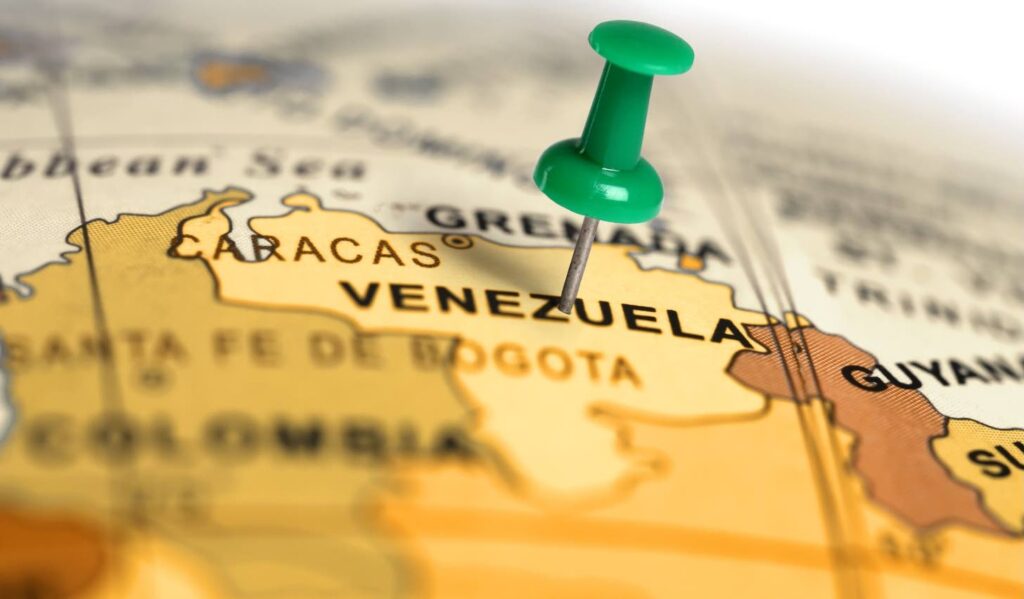
NASSAU, Bahamas (CMC) – In light of the United States’ escalating military presence in the Caribbean as part of its campaign against alleged drug traffickers from Venezuela, Bahamian National Security Minister Wayne Munroe has issued a stern warning to citizens. Munroe advised Bahamians to steer clear of ‘go fast boats’ departing from Venezuela, emphasizing the potential dangers posed by the US operations. While the Bahamas does not intend to mirror the US military actions, Munroe stressed the importance of avoiding any involvement that could lead to unintended consequences.