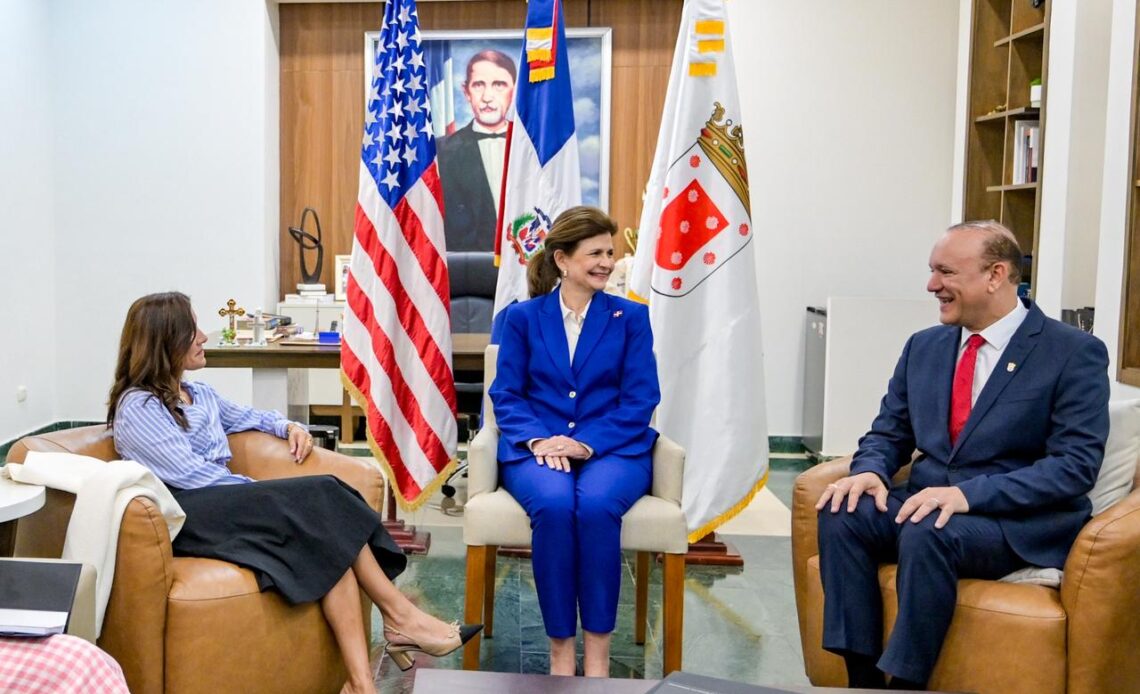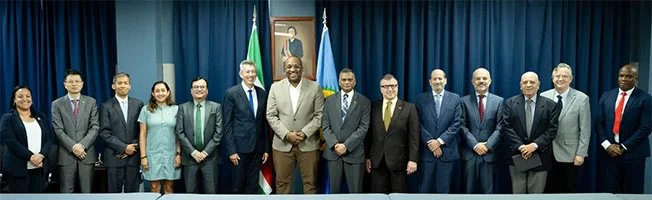
Prime Minister Kamla Persad-Bissessar of Trinidad and Tobago has come under scrutiny for her contradictory policies and statements regarding justice, security, and international relations. Domestically, she emphasizes fairness, swift criminal trials, and constitutional integrity, while internationally, she has openly supported aggressive U.S. military actions, including summary executions at sea. Her dual approach has raised concerns about her commitment to human rights and due process. The U.S. military strike on a boat off Venezuela on October 14, which allegedly involved Trinidadian nationals, has further exposed the inconsistencies in her leadership. Despite her oath to uphold the Constitution, which guarantees the right to life and due process, her administration has been slow to address the fallout from the incident. Critics argue that her actions have isolated Trinidad and Tobago regionally and undermined its commitment to peace. Her recent meeting with U.S. diplomats and her alignment with Donald Trump’s policies have only deepened the controversy, leaving many questioning her priorities and the implications for national sovereignty.
分类: politics
-

Bishop: Wrong for money to control election outcomes
In a powerful address at the opening of the 122nd Synod of the Diocese of The Bahamas and The Turks and Caicos Islands, Anglican Bishop Laish Boyd emphasized the urgent need for transparent campaign finance reform as the general election season intensifies. ‘It is wrong for money to control the outcome of an election or the future of a country,’ he declared, urging politicians and voters alike to ensure fair and ethical elections free from corruption and vote-buying. Bishop Boyd’s remarks come amid longstanding allegations of vote-buying, with some party insiders privately acknowledging its prevalence. He stressed the necessity of moving away from such practices to advance the nation. Prime Minister Philip ‘Brave’ Davis, who attended the service alongside Foreign Affairs Minister Fred Mitchell, has stated that campaign finance reform will not be implemented before the next general election, despite his party’s pre-election manifesto promise. Bishop Boyd also addressed critical issues such as immigration, healthcare, and mental health. He called for the humane treatment of immigrants and the regularization of individuals born to non-Bahamian parents. On healthcare, he described conditions at the Princess Margaret Hospital and clinics as ‘deplorable,’ urging the government to expand the National Health Insurance scheme to provide more comprehensive care. Additionally, he highlighted the rising rates of suicide and attempted suicide, advocating for enhanced mental health support and increased investment in social development. Bishop Boyd’s address underscored the importance of integrity, empathy, and accountability in leadership, urging officials to prioritize national development over personal ambition.
-

WATCH: Golding slams Speaker Holness for ‘undemocratic’ management of House affairs
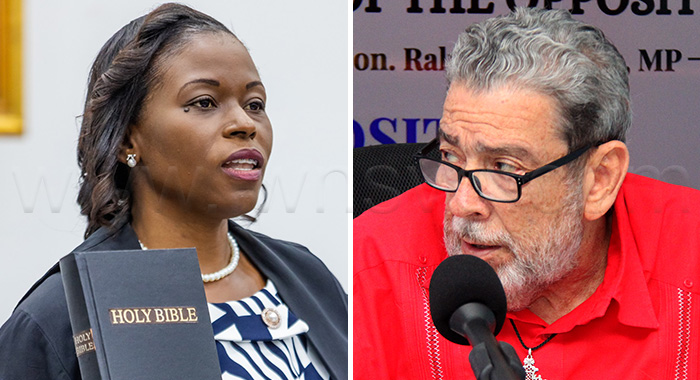
KINGSTON, Jamaica – Opposition Leader Mark Golding has launched a scathing critique of House Speaker Juliet Holness, accusing her of undemocratic management of parliamentary proceedings. The criticism followed a dramatic walkout by Opposition members from the House of Representatives on Tuesday afternoon, which Golding led in protest. The Opposition alleges that Holness obstructed their attempts to question Environment Minister Matthew Samuda regarding his statement on an impending tropical storm expected to impact Jamaica within 48 hours.
-

Ag CoP: Nothing suspicious around US offices last weekend
Acting Commissioner of Police Junior Benjamin has reassured the public that no suspicious activities have been detected around the US Embassy in Trinidad and Tobago (TT), despite a recent advisory urging US citizens to avoid visiting US facilities during the Divali long weekend. Speaking to Newsday on October 20, Benjamin emphasized that the police intelligence has not identified any threats that warrant panic. He attributed the advisory solely to the US government’s precautionary measures for its citizens.
At 5 pm on October 20, the US Embassy confirmed via its website and social media that it would remain open on October 21, with visa appointments and citizen services proceeding as scheduled. The embassy also encouraged US citizens to enroll in the Smart Traveler Enrollment Program (STEP) to receive timely alerts and updates.
Benjamin noted that while the situation remains calm, the police force has maintained a heightened state of alert in response to the embassy’s warning. He highlighted that increased police presence across the country has contributed to a notable reduction in the homicide rate over the weekend. As of October 16, the number of homicides for the month stood at 28, compared to 29 in the same period last year. By October 20, the figure had risen to 31, still significantly lower than the 37 recorded in 2024. Year-to-date, the total number of murders is 302, a substantial decrease from last year’s 511.
Benjamin expressed optimism about the ongoing efforts to reduce crime, stating, ‘If we keep pushing forward, we are heading in the right direction to achieve one of the highest reductions so far.’ He emphasized the importance of maintaining police visibility, targeting priority offenders, and fostering a collaborative relationship with the community.
The US Embassy had earlier issued a Facebook post on October 18, advising US nationals to avoid all US government facilities in TT, remain vigilant, and monitor reputable news sources. It also reminded travelers to ensure they possess a valid US passport and report any suspicious activities.
In a brief statement to Newsday, Defence Minister Wayne Sturge sought to allay public concerns, stating, ‘The Trinidadian public needn’t worry.’ Additionally, Benjamin dismissed unverified social media rumors claiming that the Prime Minister, Attorney General, and US officials were hiding in safe houses, asserting that investigations found no truth to these claims.
-

UN security seat at risk – reports say Trinidad and Tobago may have lost Caricom support
Trinidad and Tobago’s (TT) bid for a non-permanent seat on the United Nations Security Council (UNSC) for the 2027-2028 term faces significant challenges following its controversial alignment with the United States in recent military actions. Former Minister of Foreign Affairs Dr. Amery Browne has criticized the government, led by Prime Minister Kamla Persad-Bissessar, for isolating the nation from its Caribbean counterparts. Regional reports suggest that TT’s endorsement by the Caribbean Community (Caricom) may be revoked due to its support for US military strikes, which resulted in 32 fatalities. Browne expressed concern that Persad-Bissessar’s “isolationist and exceptionalist posture” has tarnished TT’s reputation as a regional leader in diplomacy and consensus-building. He emphasized that TT’s foreign policy, traditionally rooted in neutrality and respect for international law, has been compromised. The Caribbean Media Corporation (CMC) reported that Caricom leaders are reconsidering TT’s candidacy, citing its departure from regional solidarity. Browne lamented the potential loss of TT’s hard-earned diplomatic legacy, urging the government to restore its standing. Meanwhile, Caricom reiterated its commitment to maintaining the Caribbean as a zone of peace and resolving disputes through dialogue. Efforts to contact current Foreign Affairs Minister Sean Sobers for comment were unsuccessful.
-

House Speaker says Opposition walkout a ‘breach of parliamentary decorum’
In a dramatic turn of events during Tuesday’s parliamentary session in Jamaica, Speaker of the House of Representatives Juliet Holness condemned the walkout by Opposition members as a “breach of parliamentary decorum” and an act that “undermines the interests of the people of Jamaica.” The incident unfolded after Opposition Leader Mark Golding led the walkout, protesting Holness’ decision to cut him off mid-statement. The tension escalated when Opposition MPs sought to question Environment Minister Matthew Samuda about an impending tropical storm but were repeatedly denied the floor. Christopher Brown, MP for St Mary South Eastern, was notably silenced by Holness when he attempted to raise concerns about unpaid contractors, a matter she deemed “out of order” under parliamentary rules. Holness defended her actions, citing Standing Orders that restrict questions to matters within a minister’s official cognisance and prohibit hypothetical or opinion-based inquiries. She expressed regret over the Opposition’s refusal to engage in private discussions to resolve the dispute, accusing them of publicly challenging her authority. The incident has sparked debate over parliamentary procedures and the balance of power within Jamaica’s legislative body.
-

Jones: Media executives should resign before entering politics
Wendall Jones, the Bahamas Ambassador to the United States, has emphasized the necessity for media executives to resign from their positions before entering politics to avoid conflicts of interest. Speaking on the growing trend of media professionals transitioning into public service, Jones highlighted the importance of maintaining ethical standards and credibility. He praised journalists who make the leap into politics but stressed that such moves must be executed with integrity and proper preparation. Jones, a seasoned broadcaster and former head of Jones Communications, pointed to successful examples of media figures turned politicians, including former ministers Obie Wilchcombe and Fred Mitchell, as well as U.S. President John F. Kennedy. He also noted the legacy of Sir Arthur Foulkes, a former Governor General who edited both The Tribune and The Bahamian Times before entering public life. However, Jones cautioned that aspiring politicians from the media must be better prepared than many current entrants, emphasizing the need for journalists to uphold ethics and independence. He lamented the ‘dumbing down’ of media in the Bahamas, criticizing the lack of preparedness among some reporters and their insufficient grasp of local and international issues. Jones urged media professionals to read widely and produce informed journalism to serve the public effectively.
-

Supreme Court to hear Buchanan’s application for judicial review
KINGSTON, Jamaica — The Supreme Court has set Tuesday, November 18, as the date to hear an application for Judicial Review concerning a contentious decision made by the Constituted Authority in the St Andrew West Central election dispute. The application was initiated by Paul Buchanan, the People’s National Party’s candidate, who contested the September 3 general election and later sought to nullify the results. His request was previously denied by the Constituted Authority, leading to this legal challenge. During a recent case management hearing, the court characterized the matter as both serious and unprecedented, particularly due to its direct implications for the actions of the Constituted Authority. The presiding judge has mandated that legal documents be served to Prime Minister Dr. Andrew Holness, the Jamaica Labour Party’s candidate for the constituency, as well as the Attorney General, who will represent the Constituted Authority in the proceedings.
-

Golding leads Opposition walkout from House after speaker repeatedly shuts down questions
In a dramatic turn of events during the third sitting of Jamaica’s new parliamentary term, Opposition Leader Mark Golding orchestrated a walkout of Opposition members from the House of Representatives. The incident unfolded on Tuesday afternoon after House Speaker Juliet Holness interrupted Golding mid-statement. Golding had risen to challenge the Speaker’s decision to restrict Opposition members from posing questions related to a statement by Environment Minister Matthew Samuda regarding an impending tropical storm expected to impact the island within 48 hours. Holness maintained that, according to Standing Orders, only the Opposition spokesperson is allotted five minutes to respond to ministerial statements, while other members must limit their inquiries to questions. The tension escalated as St Mary South Eastern MP Christopher Brown was repeatedly instructed to take his seat when attempting to raise concerns about outstanding contractor payments. Government MP Everald Warmington twice intervened on points of order, arguing that Opposition questions were irrelevant to Samuda’s statement. This was countered by St Catherine North Western MP Damion Crawford, who was also cut off by Holness. After silencing Brown and St Andrew South Eastern MP Julian Robinson, Holness asserted that the questions were unrelated to the minister’s statement. Golding expressed his frustration, stating, ‘Madam Speaker, I’m very concerned by the way the proceedings are being conducted. We’re attempting to ask questions arising from the statement. The statement was a wide-ranging statement…’ However, his microphone was abruptly cut off, prompting the walkout. The Opposition later convened a press conference at Gordon House to address the incident.
-

Interpreting the budget
Finance Minister Davendranath Tancoo’s 2025-2026 budget presentation, delivered at the TTMA post-budget conference in Port of Spain, has sparked intense scrutiny. The budget, laden with strategic language and ambitious promises, has been dissected for its underlying messages and potential implications. Here’s a closer look at the key themes and tactics employed in the document. The budget opens with hyperbolic claims, asserting that the previous PNM administration left the nation in ‘economic ruin’ and ‘absolute decay.’ Critics question whether this rhetoric is a political maneuver to position the current government as saviors or a prelude to unpopular fiscal measures. Promises dominate the budget, with the word ‘will’ appearing 296 times and ‘intends’ four times. While these pledges are framed as achievements, many echo long-standing, unfulfilled commitments from both PNM and UNC administrations. Strategic word choices, such as ‘halted’ instead of ‘scrapped’ for the property tax, raise concerns about the permanence of these measures. Buzzwords like ‘best international practices’ and ‘seamless digital tax ecosystem’ aim to project modernity, but their practical implementation remains uncertain. The budget also repackages ongoing projects as new successes, such as the PoS General Hospital and flood mitigation initiatives, which were initiated under previous governments. International collaborations, including gifts and grants from India, the US, and China, are celebrated, though critics argue these come with geopolitical strings attached. Euphemisms soften the blow of unpopular measures, such as increased utility bills and a higher retirement age for NIS pensions. The budget’s grand claims and deferred decisions on contentious issues like public servant pay hikes suggest limited fiscal flexibility. While the minister avoids drastic measures like devaluation or IMF intervention, the lack of a clear economic vision leaves many questioning the government’s long-term strategy.