分类: politics

  • Dr Friday Puts An End to Gonsalves’ 24-Year Rule

    Dr Friday Puts An End to Gonsalves’ 24-Year Rule

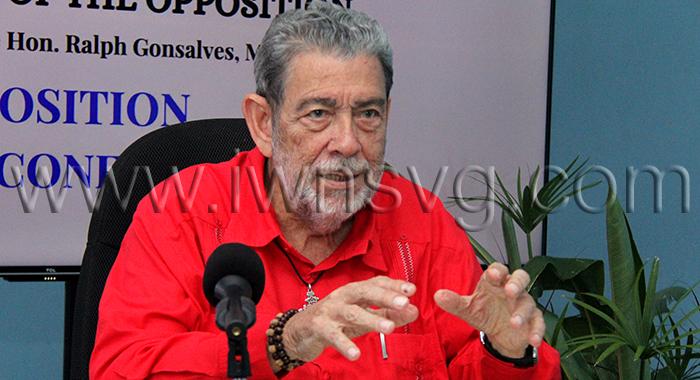
    In a historic political shift, St. Vincent and the Grenadines has elected its first new government in nearly a quarter-century. The New Democratic Party (NDP), led by Dr. Godwin Friday, secured a decisive victory in the 2025 general elections, capturing 11 of the 15 parliamentary seats and unseating the long-ruling Unity Labour Party (ULP).

    This electoral outcome concludes the remarkable 24-year tenure of Dr. Ralph Gonsalves, who ranks among the Caribbean Community’s (CARICOM) most enduring leaders. First assuming office in 2001, the 79-year-old incumbent had been pursuing an unprecedented sixth consecutive term in power.

    The victory positions Dr. Friday to become the nation’s seventh prime minister since gaining independence from Britain in 1979. His incoming administration has outlined an ambitious reform agenda prioritizing economic revitalization through job creation, wage increases, and measures to reduce the high cost of living. Additional key priorities include addressing public security concerns through enhanced crime prevention strategies and upgrading critical national infrastructure.

    The NDP’s return to governance marks their first electoral triumph in 25 years, signaling a significant realignment in the nation’s political landscape and reflecting voters’ appetite for change after nearly a generation under ULP leadership.

  • Regional leaders congratulate Dr. Godwin Friday on historic election victory

    Regional leaders congratulate Dr. Godwin Friday on historic election victory

    The Caribbean political landscape has witnessed a seismic shift as Dr. Godwin Friday’s New Democratic Party (NDP) secured a landmark victory in St. Vincent and the Grenadines’ 2025 general elections, ending a quarter-century of opposition status. The NDP captured 14 of the 15 parliamentary seats, marking one of the most decisive electoral triumphs in the nation’s history since gaining independence in 1979.

    Regional leaders have unanimously extended congratulations to Dr. Friday, who is poised to become the country’s seventh prime minister. Dominican Prime Minister Roosevelt Skerrit, speaking through official state channels, commended the democratic process and expressed eagerness to strengthen bilateral ties. “Dominica looks forward to working with Dr. Friday to reinforce the bonds of friendship and regional solidarity between our nations,” Skerrit stated.

    The sentiment was echoed by Dr. Thomson Fontaine, leader of Dominica’s United Workers Party, who characterized the outcome as “a new beginning” for Vincentians. Jamaican Prime Minister Andrew Holness similarly praised the peaceful democratic exercise, emphasizing Jamaica’s commitment to collaborative regional development. “May this new chapter bring hope, unity, and progress for all Vincentians,” Holness remarked, underscoring the collective aspiration for enhanced Caribbean resilience and prosperity.

    This electoral upset concludes the lengthy tenure of former Prime Minister Ralph Gonsalves and introduces a transformative era of governance under Dr. Friday’s leadership. The overwhelming mandate reflects public appetite for change and sets the stage for potential policy reorientation in both domestic affairs and regional diplomacy.

  • Moonilal: Gonsalves paid ultimate price

    Moonilal: Gonsalves paid ultimate price

    In a striking political analysis, Trinidad and Tobago’s Energy Minister Dr. Roodal Moonilal has directly linked the dramatic electoral collapse of St. Vincent and the Grenadines Prime Minister Ralph Gonsalves to his criticism of regional security cooperation with the United States. The commentary emerged during parliamentary debates on November 28, just one day after Gonsalves’ United Labour Party suffered a devastating 14-1 defeat against the New Democratic Party in general elections.

    Moonilal asserted that Gonsalves ‘paid the ultimate political price’ for his vocal opposition to Trinidadian Prime Minister Kamla Persad-Bissessar’s support for US military deployment in the southern Caribbean. The minister characterized the electoral outcome as a punishment from voters who have grown weary of drug trafficking and transnational crime plaguing the region.

    ‘Unless I am mistaken, I think he got one seat… his own,’ Moonilal remarked about Gonsalves’ narrow retention of his constituency. ‘By the skin of his teeth… he remained.’

    The Trinidadian official defended Persad-Bissessar’s security stance as demonstrating ‘courage, boldness and the strength to take action against narco-traffickers,’ adding that Trinidad and Tobago was ‘proud within the Caribbean to have taken that leadership.’ Moonilal specifically referenced tensions between the US and Venezuela, noting that negative comments about Trinidad’s foreign policy had ’emanated from the former prime minister of St. Vincent and the Grenadines.’

    Moonilal, who also serves as deputy political leader of the ruling United National Congress, advised other Caribbean Community (Caricom) leaders to heed the political consequences witnessed in St. Vincent and the Grenadines. He claimed regional populations are ‘fed up of drugs, murder and crime’ and want strong action with international allies.

    The minister concluded by praising Persad-Bissessar’s diplomatic efforts since assuming office six months earlier, stating she has ‘carried the torch of diplomacy and good will in the region’ with ‘a measure of dignity, and integrity uncommon for the last ten years.’

  • ‘It’s going to be war’

    ‘It’s going to be war’

    LITTLE LONDON, Westmoreland — Prime Minister Andrew Holness has issued a forceful declaration of intent to combat widespread misinformation campaigns targeting his administration’s hurricane recovery operations. Speaking at Friday’s inauguration of the newly constructed Little London Police Station, the Jamaican leader condemned what he characterized as a “growing culture of deliberate mischief” in public discourse.

    The Prime Minister’s remarks came amid mounting criticism from opposition parties and citizens regarding the Government’s handling of Hurricane Melissa recovery efforts in western Jamaica. Holness delivered an impassioned pledge to confront purveyors of false information directly, stating: “I will not hesitate to engage anyone spreading falsehoods. For every piece of nonsense circulated, there will be an official response.”

    Holness revealed significant operational changes to the aid distribution system, announcing a transition from physical package delivery to a voucher-based system. This strategic shift aims to eliminate allegations of partisan handling of relief supplies that have plagued the recovery process. “It is profoundly disturbing that some would seek political advantage during humanitarian operations,” the Prime Minister stated.

    Addressing potential criticism about police station inauguration during disaster recovery, Holness clarified the project originated from a 2017 partnership between the National Housing Trust and the Jamaican Government. The facility serves two major housing developments in the Little London area, representing long-term security infrastructure rather than emergency response diversion.

    The Prime Minister concluded with an appeal for national unity, urging critics to consider Jamaica’s broader interests rather than engaging in divisive tactics that undermine recovery morale and effectiveness.

  • Trinidad PM defends decision not to inform country about US radar installation

    Trinidad PM defends decision not to inform country about US radar installation

    PORT OF SPAIN, Trinidad – Prime Minister Kamla Persad-Bissessar has publicly justified her administration’s covert installation of United States radar systems in Tobago, framing the decision as a necessary measure for national security. The Prime Minister criticized the previous government for leaving the nation’s borders dangerously exposed while simultaneously defending her choice to withhold information from both the public and Tobago’s local assembly.

    Persad-Bissessar clarified that the US presence is strictly non-military, associated instead with surveillance infrastructure near the Arthur NR Robinson International Airport. She emphasized that the operation was never intended as a provocative measure against neighboring Venezuela. The Prime Minister explained her secrecy by stating that public disclosure would have compromised the strategic advantage against narco-traffickers and other transnational criminals, potentially endangering citizens.

    According to her account, the previous radar system was sporadically functional, inefficient, and provided incomplete territorial coverage. Coast Guard authorities could not access real-time data, and the system’s integrity was compromised. Persad-Bissessar formally requested temporary radar assistance from the US Embassy until a permanent replacement is secured.

    Meanwhile, Tobago House of Assembly Chief Secretary Farley Augustine expressed surprise upon learning of the installation, confirming that US personnel had indeed been conducting work at the airport to enhance surveillance capabilities. Augustine reaffirmed Tobago’s neutral stance and emphasized that while foreign policy is managed by the central government, the THA prioritizes the island’s stability and security. He has since engaged the Prime Minister to request comprehensive project details.

    The radar installation was initially planned for Grenada’s Maurice Bishop International Airport, but authorities there missed Washington’s deadline amid public protests and pending technical reviews. Persad-Bissessar has consistently supported US-led counter-narcotics operations in the Caribbean, controversially advocating for violent measures against drug traffickers despite international criticism of US tactics.

    Political analysts suggest the US war on drugs may serve as a pretext for undermining the Venezuelan government, an accusation Venezuela has leveled against Trinidad and Tobago. These developments coincide with recent statements from US President Donald Trump hinting at potential military action against Venezuela.

  • OECS commission congratulates newly-elected PM of St Vincent and the Grenadines

    OECS commission congratulates newly-elected PM of St Vincent and the Grenadines

    CASTRIES, St. Lucia – The Organisation of Eastern Caribbean States (OECS) Commission has formally extended congratulations to Dr. Godwin Friday on his election as Prime Minister of St. Vincent and the Grenadines, following a conclusive victory in the nation’s recent general election. In an official statement released Saturday, the regional body applauded the citizens of St. Vincent and the Grenadines for their democratic participation in a peaceful and orderly electoral process. Dr. Friday assumes leadership from Dr. Ralph Gonsalves, whose tenure as Prime Minister began in 2001 and who established himself as a influential and respected figure across the Caribbean region and internationally. The OECS Commission articulated its anticipation for a revitalized partnership with the new administration, emphasizing a foundation built on mutual regional principles of solidarity, sustainable development, and transparent governance. The commission reaffirmed its commitment to close cooperation with Prime Minister Friday’s government to advance policies and initiatives aimed at fortifying both St. Vincent and the Grenadines and the broader Eastern Caribbean community. Furthermore, the statement conveyed profound gratitude to the outgoing Prime Minister, Dr. Gonsalves, acknowledging his decades of dedicated service and substantial contributions to regional integration efforts. The OECS warmly welcomed Prime Minister Friday and his newly appointed Cabinet into its fold, offering full support and best wishes for their success in guiding the nation forward.

  • Opposition Leader silent on own – Beckles: ‘I beg to move’

    Opposition Leader silent on own – Beckles: ‘I beg to move’

    In an unprecedented parliamentary development, Opposition Leader Pennelope Beckles sparked procedural confusion in Trinidad and Tobago’s House of Representatives on November 30 by declining to deliver an opening contribution for her own motion condemning Prime Minister Kamla Persad-Bissessar’s administration regarding the US-Venezuela tensions.

    The incident occurred during the first private members’ day following the April 28 general election, a session traditionally dedicated to opposition-led debates. Beckles read the text of her motion while complaining about government MPs’ heckling, prompting Speaker Jagdeo Singh to demand order. Despite parliamentary staff providing a glass lectern and document stand suggesting an elaborate presentation, Beckles concluded simply with “I beg to move” and took her seat without further commentary.

    Speaker Singh expressed procedural concerns, suspending the session for ten minutes to consult parliamentary rules. Upon resumption, he ruled that Beckles’ phrase had formally ended her presentation opportunity under standing orders, requiring immediate progression to a seconder. Opposition Chief Whip Marvin Gonzales subsequently seconded the motion while reserving his right to speak later.

    Energy Minister Dr. Roodal Moonilal expressed astonishment at Beckles’ unusual parliamentary maneuver, noting her decades of experience made the omission particularly remarkable. He then proposed extensive amendments supporting government actions, asserting that US-Venezuela tensions hadn’t harmed Trinidad and Tobago’s economy or security, and that the government’s position reflected commitment to combating transnational crime through international cooperation.

    The amendments faced objections from Diego Martin North/East MP Colm Imbert, though Speaker Singh permitted them as not materially altering the motion’s substance. The session concluded without voting on the amendments after parliamentary advice indicated no immediate vote was required, with the House adjourning to an unspecified future date.

  • Defence Minister: Trinidad and Tobago flights not affected by Venezuela’s no-fly zone

    Defence Minister: Trinidad and Tobago flights not affected by Venezuela’s no-fly zone

    Trinidad and Tobago’s Defence Ministry has moved swiftly to dispel public concerns regarding potential airspace disruptions following former US President Donald Trump’s declaration of a no-fly zone over Venezuela. Defence Minister Wayne Sturge issued an official statement on November 29 characterizing social media speculation about flight interruptions as “misinformation” and “fearmongering” orchestrated by politically motivated influencers seeking to create instability.

    The ministerial response came hours after Trump’s social media proclamation that declared “THE AIRSPACE ABOVE AND SURROUNDING VENEZUELA TO BE CLOSED IN ITS ENTIRETY” while addressing “Airlines, Pilots, Drug Dealers, and Human Traffickers” in his characteristic blunt style. This escalation occurs against a backdrop of heightened US-Venezuela tensions, marked by significant US military deployment to the region and 21 missile strikes on vessels since September 21 that resulted in 83 fatalities among alleged drug traffickers.

    Minister Sturge emphasized that commercial aviation operations continue unaffected throughout Trinidadian airspace, with local, regional, and international flights operating without hindrance. The Defence Ministry, which maintains authority over the nation’s airspace and territorial waters, committed to providing official timely communications should any operational changes become necessary, urging citizens to disregard unverified social media speculation.

  • PM: Farley didn’t have to be told beforehand’

    PM: Farley didn’t have to be told beforehand’

    A diplomatic clarification has emerged regarding the installation of a temporary US military radar system in Tobago, revealing tensions between national security protocols and regional governance transparency. Prime Minister Kamla Persad-Bissessar confirmed that Tobago’s Chief Secretary Farley Augustine was deliberately excluded from prior notifications regarding the defense installation, citing his non-membership in the National Security Council.

    The radar system, currently being established with approximately 100 fluctuating US personnel, represents a temporary solution to address critical gaps in Trinidad and Tobago’s surveillance capabilities. According to the Prime Minister’s statements to Newsday via WhatsApp on November 28, the existing radar infrastructure inherited by the current government operated sporadically and failed to provide comprehensive coverage of the nation’s territory. The Coast Guard reportedly lacked real-time data access, with the system additionally compromised by unspecified vulnerabilities.

    This development follows Chief Secretary Augustine’s November 28 declaration of Tobago’s neutrality in ongoing US-Venezuela geopolitical tensions. The Office of the Chief Secretary disclosed that Augustine had demanded comprehensive details about the installation during a Wednesday night telephone conversation with the Prime Minister and intends to convene formal meetings with involved Cabinet ministers regarding the radar’s purpose and operational scope.

    Prime Minister Persad-Bissessar defended the secrecy surrounding the deployment, explaining that public disclosure would have alertedly notified narcotraffickers and human smugglers about enhanced surveillance capabilities. The premature exposure by Guardian Media, she contended, eliminated the strategic advantage of covert implementation. The temporary system will remain operational until Trinidad and Tobago can procure and install a permanent, upgraded radar system independently. US personnel currently in Tobago include members of the Marine Expedition Unit conducting joint training exercises with the Trinidad and Tobago Defence Force alongside technical specialists establishing access roads and installation infrastructure.

  • Military expert on Tobago installation: ‘War on US radar’

    Military expert on Tobago installation: ‘War on US radar’

    Tobago has become the site of a significant military installation as the United States positions a battlefield operational radar system at Crown Point’s ANR Robinson International Airport. This development occurs against a backdrop of intensifying geopolitical friction between the US and Venezuela, signaling potential preparation for aerial combat operations according to military analysts.

    The advanced intelligence surveillance and reconnaissance system, with an operational range of 50-100 miles, represents the first-ever deployment of American military hardware on Tobagonian soil. Equipment components arrived via multiple C-17 aircraft transports, with installation proceedings commencing immediately.

    This strategic move follows the recent diplomatic engagement between US Joint Chiefs of Staff Chairman General Dan Caine and Trinidad and Tobago Prime Minister Kamla Persad-Bissessar. During their meeting at St. Ann’s Diplomatic Centre, discussions presumably addressed regional security concerns and military cooperation frameworks.

    Prime Minister Persad-Bissessar initially treated the radar deployment as a matter of heightened national security confidentiality. However, following media disclosure of the Tobago installation, she confirmed plans for an additional radar system in Trinidad while acknowledging the compromised secrecy surrounding the operations.

    Military sources suggest Tobago may represent a secondary option after Grenada’s refusal to host similar US equipment last month. The island’s proximity to Venezuela makes it strategically valuable for monitoring potential air operations in the escalating conflict scenario.

    Local political leadership has expressed strong opposition to the deployment. Tobago Chief Secretary Farley Augustine emphatically declared the island’s neutrality stance, stating: “Tobago not going to be a part of no war! We have adopted a position of neutrality, which means we ent pro or anti anybody.” He emphasized that conflicts between US and Venezuelan leadership should remain their exclusive concern.

    Opposition leader Ancil Dennis of the Tobago Island Council has challenged Augustine’s professed ignorance of the developments, suggesting prior awareness and demanding unified resistance from political, religious, and civil society leaders against the federal government’s military cooperation decisions.