分类: politics

  • Watson: I will step down as GM of ZNS if nominated

    Watson: I will step down as GM of ZNS if nominated

    In a significant political development, Clint Watson, the General Manager of ZNS and prospective candidate for the Southern Shores constituency, has publicly committed to stepping down from his current executive role should he successfully obtain the Progressive Liberal Party’s (PLP) nomination. Watson made this declaration to journalists immediately following his interview session with the PLP Candidates Committee at the party’s headquarters on Tuesday evening.

    Emphasizing his determination and preparedness for the electoral battle, Watson stated, ‘My fundamental objective is to venture out and achieve victory. I possess the requisite capabilities and strategic approach to secure a win.’ He characterized the committee interview as a constructive dialogue focused primarily on articulating his visionary roadmap for Southern Shores and addressing the critical needs of its residents.

    Reflecting on his presentation, Watson expressed strong confidence, noting, ‘I feel exceedingly positive about the proceedings. My discussion centered on a pragmatic and continuously evolving development plan for the constituency. I articulated our commitment to sustaining a legacy of renewing hope and expanding opportunities for the people of Southern Shores. Conveying this message was effortless because it reflects the tangible work we are already engaged in—it isn’t fabricated; it’s reality.’

    Watson received robust endorsement from former Tall Pines MP Leslie Miller, who was present during the media interaction. Miller lauded Watson as ‘among the most exceptional candidates within our ranks’ and emphatically declared, ‘He is the ideal representative for Southern Shores. No alternative candidate could surpass his qualifications and dedication. I will exclusively campaign for Clint Watson and no other individual.’

    This political activity occurs against a backdrop of ongoing friction within the Southern Shores PLP branch. Tensions escalated during a contentious meeting on January 5th that culminated in heated exchanges between supporters of Watson and those of his rival, Obie Roberts—the PLP’s deputy chairman and son of former party chairman Bradley Roberts. Roberts, who was also interviewed by the committee on the same evening, opted not to engage with the press.

    Amidst these internal dynamics, Watson reaffirmed his belief in unity through shared purpose. ‘When you operate with a clear sense of mission, unity naturally follows because you present a coherent plan for the people,’ he asserted, underscoring his campaign’s philosophy of collective progress over division.

  • Opposition: ‘Hot spot’ bill risks permanent emergency powers

    Opposition: ‘Hot spot’ bill risks permanent emergency powers

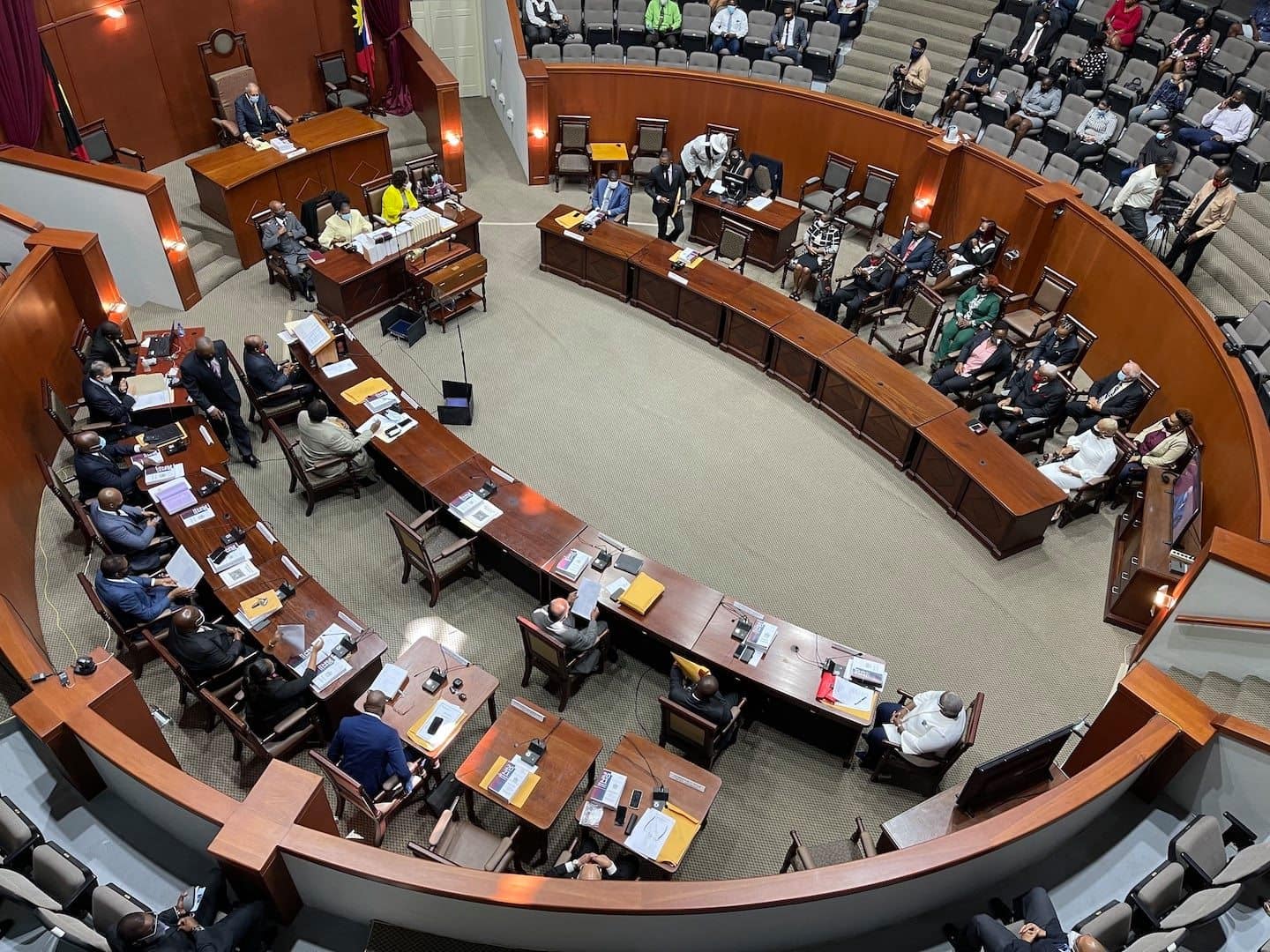
    Trinidad and Tobago’s opposition lawmakers have launched a coordinated constitutional challenge against the government’s proposed ‘hot spot’ crime legislation, warning the bill establishes dangerously draconian powers that could persist long after the current State of Emergency expires.

    Speaking ahead of Parliament’s first 2026 session on January 16, Opposition Chief Whip Marvin Gonzales characterized the proposed law as constitutionally problematic and poorly consulted. He revealed the opposition first became aware of the legislation during the Christmas period and has since identified numerous concerning provisions, including fines up to $20,000 for obstructing security operations or providing false identification.

    ‘The government should have engaged in appropriate consultations with national community groups for a bill of such constitutional gravity,’ Gonzales told reporters outside the Red House. ‘We intend to canvass these issues thoroughly during parliamentary debate.’

    Gonzales questioned the timing of the legislation, noting it emerges just days before the State of Emergency’s expiration. He recalled government officials initially justifying the SoE based on specific security threats rather than general crime, yet now cite crime as the primary justification for the new powers.

    Former National Security Minister Stuart Young delivered even sharper criticism, labeling the proposal ‘unconstitutional and draconian.’ He expressed particular alarm over the concentration of power in the prime minister’s hands, enabling the designation of neighborhoods for military and police lockdowns.

    ‘All power now resides in one person: a prime minister being able to say your neighborhood is one that security forces can literally lock down,’ Young stated. He noted the bill would authorize warrantless searches, curfews, and area cordoning without judicial oversight.

    Young revealed the legislation appears borrowed from Jamaican statutes rather than establishing legal precedent, noting Jamaica’s Supreme Court has already ruled on similar provisions’ constitutionality.

    Laventille West MP Kareem Marcelle warned the bill could effectively create a permanent State of Emergency while stigmatizing entire communities. He questioned the vague criteria for designating ‘hot spots’ and cautioned against demonizing neighborhoods based on incomplete crime data.

    Marcelle highlighted particularly concerning provisions allowing 72-hour curfews and warrantless home entries by Defense Force members for offenses ranging from loud music to serious crimes. ‘Soldiers aren’t trained to enforce summary offenses,’ he noted, warning the ambiguity creates risks for both citizens and law enforcement.

    All three opposition MPs predicted legal challenges would emerge against the legislation, with Young noting lawyers are already preparing constitutional cases. Gonzales added that even with government control of the House, Senate support would be necessary given the bill’s constitutional implications.

  • Walker: Bahamas is a valued partner, not just another pretty island

    Walker: Bahamas is a valued partner, not just another pretty island

    Amid recent shifts in US immigration policy, American Ambassador Herschel Walker has emphatically reinforced the United States’ commitment to its strategic alliance with The Bahamas. Speaking at the 35th annual Bahamas Business Outlook held at Baha Mar, Ambassador Walker characterized the relationship as extending far beyond conventional diplomatic ties, describing The Bahamas as a “valued friend and partner” rather than merely another picturesque Caribbean destination.

    The ambassador articulated a vision of sustained bilateral cooperation focused on addressing shared challenges including narcotics trafficking, unauthorized migration, cybersecurity vulnerabilities, and supply chain disruptions. He emphasized that American engagement transcends temporary assistance, instead prioritizing long-term investments designed to foster sustainable development and economic empowerment for Bahamian citizens.

    Walker highlighted concrete examples of US-backed economic initiatives, including his recent inspection of Royal Caribbean’s $200 million Beach Club development. He additionally referenced the resumed SpaceX booster landings in Exuma Sound, suggesting this collaboration could potentially elevate The Bahamas into a significant participant within the burgeoning space economy.

    These reaffirmations follow the United States’ implementation of a temporary suspension on immigrant visa processing for approximately 75 nations, including The Bahamas. Importantly, this policy adjustment does not affect non-immigrant, student, or business visas for Bahamian applicants, preserving travel access under existing bilateral agreements.

    In related developments, Bahamian Foreign Affairs Minister Fred Mitchell addressed migration concerns, explicitly advising citizens residing unlawfully in the United States to regularize their status or return home. Minister Mitchell acknowledged the sovereign right of nations to establish entry requirements, provided they are implemented fairly without racial or discriminatory bias, while simultaneously emphasizing that lawful migration pathways to the US remain accessible through proper procedures.

  • China, Canada reach ‘landmark’ deal on tariffs, visas

    China, Canada reach ‘landmark’ deal on tariffs, visas

    BEIJING — In a historic diplomatic breakthrough, Canadian Prime Minister Mark Carney and Chinese President Xi Jinping announced a comprehensive bilateral agreement on Friday, marking the first top-level meeting between the nations in eight years. The accord signals a definitive thaw in relations following years of retaliatory measures and trade disputes.

    The leaders unveiled what Prime Minister Carney characterized as a ‘landmark deal’ establishing a ‘new strategic partnership’ between Canada and China. This framework encompasses significant trade concessions and tourism facilitation measures designed to rebuild economic bridges between the two countries.

    Central to the agreement is China’s commitment to dramatically reduce tariffs on Canadian canola products, slashing rates from the current 84% to approximately 15% by March 1. This reversal is particularly significant as China was previously Canada’s largest market for canola seed before recent trade frictions.

    In a major tourism development, China will implement visa-free entry for Canadian visitors, while Canada will import 49,000 Chinese electric vehicles under preferential tariff rates of 6.1%. Prime Minister Carney noted this brings EV tariffs ‘back to levels that existed prior to recent trade frictions.’

    President Xi, welcoming his counterpart in the Great Hall of the People, emphasized that bilateral relations had reached a critical turning point during their October meeting on the sidelines of the APEC summit. ‘Our meeting last year opened a new chapter in turning China-Canada relations toward improvement,’ Xi stated, adding that stable bilateral development ‘serves the common interests of our two countries.’

    The diplomatic reconciliation follows a particularly strained period beginning in 2018, when Canada arrested Huawei executive Meng Wanzhou on a U.S. warrant, prompting China’s retaliatory detention of two Canadian citizens on espionage charges. Subsequent years saw both nations impose reciprocal tariffs on exports, with additional allegations of Chinese election interference in Canada.

    Prime Minister Carney’s outreach forms part of a broader strategy to diversify Canada’s economic partnerships amid turbulent relations with the United States. Former President Donald Trump’s aggressive tariff policies on Canadian steel, aluminum, vehicles, and lumber have compelled Ottawa to seek alternative markets. While the U.S. remains Canada’s dominant trading partner—purchasing approximately 75% of Canadian exports in 2024—China currently accounts for less than 4% of Canadian exports, though Ottawa emphasizes it remains Canada’s second-largest market.

    During his Beijing visit, which included meetings with Premier Li Qiang and scheduled discussions with business leaders, Carney continues to advance his stated goal of doubling Canada’s non-U.S. exports by 2035.

  • Moonilal: NGC pulled sponsorship of steelpan, and tassa

    Moonilal: NGC pulled sponsorship of steelpan, and tassa

    A parliamentary session in Trinidad and Tobago turned contentious on January 16th as Energy Minister Dr. Roodal Moonilal and opposition MP Stuart Young clashed over energy sector management and cultural funding controversies. The debate revealed significant tensions regarding the National Gas Company’s (NGC) financial performance and its subsequent decision to terminate longstanding cultural sponsorships.

    Minister Moonilal disclosed that NGC reported substantial financial losses totaling $1.3 billion in 2023, following another deficit in the previous five-year period. This financial strain compelled the state-owned energy corporation to critically evaluate all non-essential expenditures, resulting in the discontinuation of cultural sponsorships that had consumed over $10.2 million in steelpan funding and $258,397 in tassa support over the past five years.

    ‘The company must prioritize its financial sustainability,’ Moonilal stated, emphasizing that ‘NGC will continue to review all future sponsorship commitments based on current revenue projections.’

    Opposition MP Stuart Young challenged the minister’s assertions, countering that NGC had actually achieved a $1.6 billion profit after tax in the most recent fiscal year. Young questioned whether the sponsorship cancellations—which affected Couva Joylanders, La Brea Nightingales, Steel X Plosion of Tobago, Pan Trinbago, and Trinidad & Tobago Sweet Tassa Group—represented a broader governmental attack on cultural preservation efforts.

    The debate expanded to include energy sector developments, with Moonilal confirming that Woodside Energy had not notified the ministry of any operational closures in Trinidad and Tobago. The minister revealed that Perenco had completed acquisition of Woodside’s Greater Angostura assets on July 8, 2025—a transaction involving fields that contribute approximately 12% of the nation’s total gas production through daily output of 300 million standard cubic feet of natural gas and 50,000 barrels of oil equivalent.

    Young distinguished between corporate divestment and operational shutdowns, noting that Woodside maintained minimal presence in the country with just one employee unrelated to the asset transfer.

    The confrontation further touched on arbitration proceedings concerning the Beetham Wastewater Plant, with Moonilal citing confidentiality restrictions that prevented disclosure of outcomes regarding the $1 billion facility that has never become operational.

  • US air authority warns of ‘military activities’ over Mexico, Central America

    US air authority warns of ‘military activities’ over Mexico, Central America

    NEW YORK, United States — The Federal Aviation Administration (FAA) has issued a significant advisory urging airlines to exercise heightened caution when traversing airspace over Mexico, Central America, and specific oceanic regions. The notices, published on Friday, cite ongoing ‘military activities’ as the primary cause for concern, highlighting a ‘potentially hazardous situation’ that could lead to disruptions in Global Navigation Satellite System (GNSS) signals, which are critical for modern flight navigation.

    The advisory encompasses vast areas, including the airspace over Mexico, Central American nations, Panama, and the Bogota and Guayaquil flight information regions, as well as the Mazatlan Oceanic Flight Region and parts of the eastern Pacific Ocean. An FAA spokesperson confirmed that these notices to airmen (NOTAMs) are set to remain active for a period of 60 days, indicating a sustained period of potential risk.

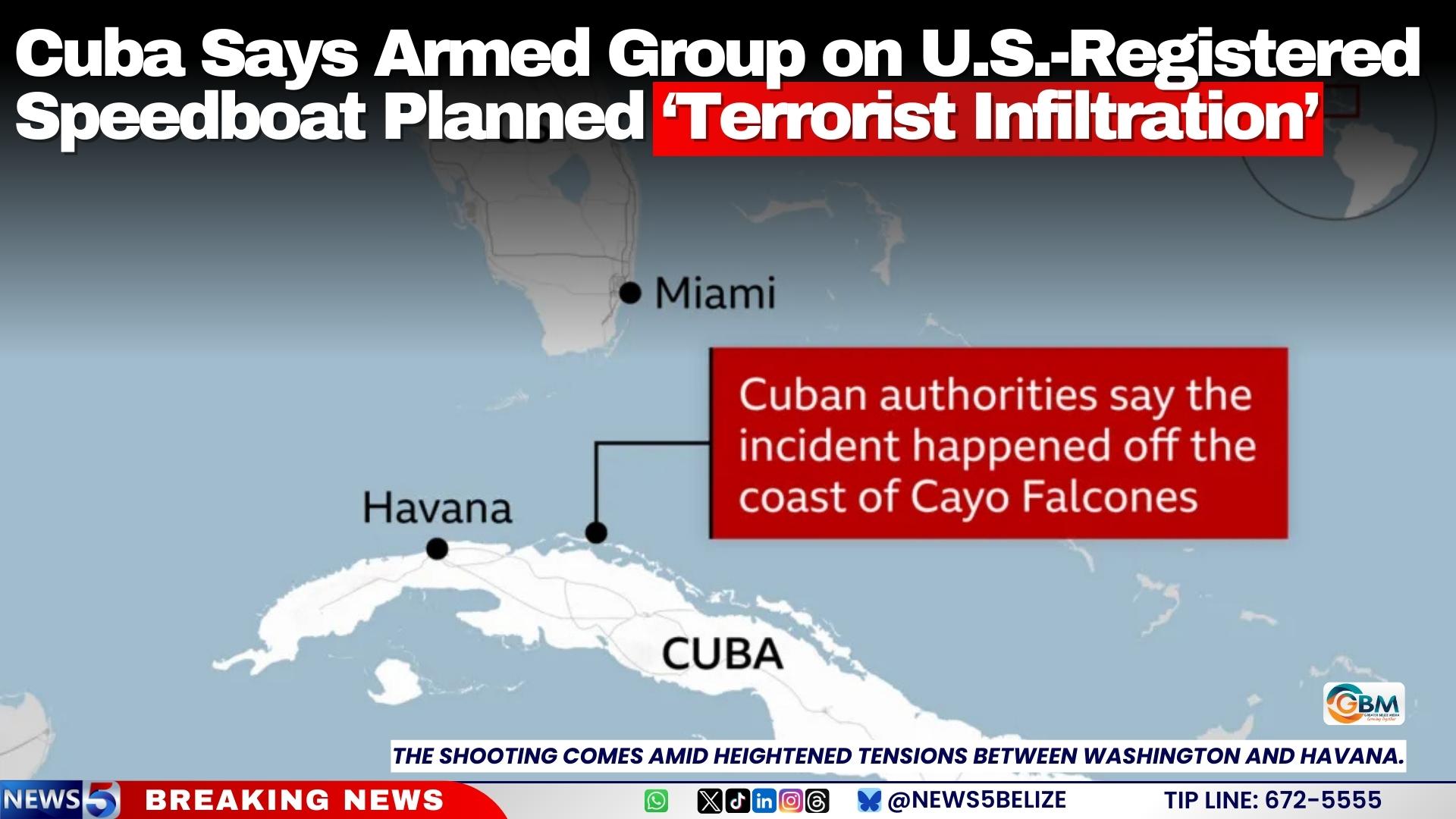
    This development occurs against a backdrop of escalating regional military tensions. The context includes the recent January 3rd operation by U.S. special forces, which resulted in the capture of Venezuelan President Nicolas Maduro and his wife, Cilia Flores. They are now facing trial on serious charges, including drug trafficking. Furthermore, statements from President Donald Trump have intensified concerns. In a recent Fox News interview, President Trump explicitly suggested plans to initiate ‘land strikes’ against powerful drug cartels operating within Mexico, a move that would constitute an unprecedented military intervention on the territory of a neighboring nation and a key U.S. trading partner. These factors collectively contribute to a volatile security environment, prompting the FAA’s precautionary measures to ensure aviation safety.

  • Robinson-Regis returns to Parliament after health-related leave

    Robinson-Regis returns to Parliament after health-related leave

    After a six-month health-related absence, Trincity/Maloney Member of Parliament Camille Robinson-Regis made her official return to Trinidad and Tobago’s House of Representatives on January 16. The former housing minister and attorney general had been on medical leave since July 2025 following surgical procedures, during which time she focused on recovery and convalescence.

    Upon her arrival at the Red House, Robinson-Regis engaged briefly with press representatives, noting this marked her first public appearance since her medical treatment. While confirming her physical presence in Parliament, she clarified she would not actively participate in the day’s legislative debates, citing ongoing concerns within her party, the People’s National Movement (PNM), regarding the proposed bills.

    The parliamentary agenda featured three significant pieces of legislation: the Motor Vehicles and Road Traffic (Amendment) Bill 2026, which establishes stricter timelines for vehicle defect corrections; the Law Reform (Zones of Special Operations) Bill 2026, designed to implement special security measures in high-crime areas; and the Tobago House of Assembly (Amendment) Bill 2026, introduced by Prime Minister Kamla Persad-Bissessar to expand secretarial positions within the assembly.

    This legislative session occurred against the backdrop of recent political developments in Tobago, where the Tobago People’s Party achieved a sweeping electoral victory on January 12, capturing all 15 seats in the assembly. Prime Minister Persad-Bissessar had previously expressed the central government’s commitment to collaborative governance with Tobago’s administration for regional development.

  • President cautions THA: With great power comes responsibility

    President cautions THA: With great power comes responsibility

    In an unprecedented electoral outcome, the Tobago People’s Party (TPP) has achieved a complete sweep of all 15 seats in the Tobago House of Assembly (THA), marking a historic moment in the island’s political landscape. The inauguration ceremony held on January 15 in Scarborough solidified this political dominance with Farley Chavez Augustine officially sworn in as Chief Secretary.

    This electoral victory represents only the second instance in Tobago’s history of a single-party clean sweep, but notably the first occurrence since the expansion to 15 electoral districts. The swearing-in ceremony witnessed Dr. Faith Brebnor maintaining her position as Deputy Chief Secretary, while Niall George and Niketa George assumed roles as presiding officer and deputy presiding officer respectively.

    President Christine Kangaloo presided over the ceremonial proceedings, characterizing the electoral outcome as “resounding and unambiguous.” In her address, she emphasized the extraordinary nature of a government operating without parliamentary opposition, noting the potential challenges of such an arrangement. “A mandate that results in no opposing voice in the assembly is a mandate that has to be exercised with great care, and with great maturity,” President Kangaloo cautioned.

    The President expressed concern about the erosion of traditional political guardrails in contemporary governance, warning against the disappearance of “enduring principles and shared standards that guide and inspire higher standards of human conduct.” She specifically referenced reported breaches of ethical political conduct during the campaign period, including inappropriate language, race-baiting, and vandalism of political materials.

    Despite these concerns, President Kangaloo expressed confidence in Tobagonian civil society organizations to maintain accountability mechanisms in the absence of formal opposition. She highlighted the distinctive character of Tobagonian society, renowned for “temperance and decorum; their moderation and self-discipline; their circumspection and propriety.”

    Newly appointed Presiding Officer Niall George acknowledged the assembly’s responsibility to function as “servant leaders” for the Tobagonian populace. He emphasized the assembly’s commitment to autonomy for Tobago while promising collaborative governance with Trinidad’s central government. “This assembly pledges to provide all members with essential parliamentary advice, support and assistance, despite party affiliations,” George stated, underscoring the commitment to impartial administration.

    The Minority Leader position remains officially vacant following the election, creating a unique parliamentary dynamic that will test the assembly’s governance frameworks in the coming term.

  • Congrats toAugustineand TPP

    Congrats toAugustineand TPP

    In a formal communication addressed to the editorial board, the Trinidad and Tobago Coalition of Services Industries (TTCSI) has officially extended its congratulations to Political Leader Farley Augustine and the Tobago People’s Party (TPP) for their decisive victory in the recent Tobago House of Assembly (THA) elections.

    The TTCSI, representing the nation’s services sector, commended the TPP’s dedication and persistent efforts over its previous four-year term. The coalition attributed the electoral success to the party’s unwavering commitment to serving the people of Tobago and engaging with all relevant stakeholders, characterizing the win as a ‘well-deserved’ outcome that reflects public confidence.

    With this renewed electoral mandate, the TTCSI expressed optimism about the opportunity to build upon existing achievements and accelerate progress toward realizing Tobago’s full economic potential. As the primary umbrella organization for service industries, the coalition announced its intention to strengthen collaborative efforts with the THA throughout 2026 and subsequent years.

    The organization envisions a partnership focused on enhancing the competitiveness of service sectors across Trinidad and Tobago. This collaboration aims to empower citizens by facilitating the export of their talents and professional expertise to international markets, ultimately contributing to sustainable national economic growth and prosperity.

    The communication was formally submitted via electronic mail and signed by the TTCSI organization.

  • PM: Autonomy on front burner for Tobago

    PM: Autonomy on front burner for Tobago

    In a landmark political development, Tobago has ushered in a new era of governance following the Tobago People’s Party’s (TPP) unprecedented electoral sweep. On January 12, 2026, the TPP achieved a historic 15-0 victory in the Tobago House of Assembly (THA) elections, marking only the second time in 45 years that a single party has captured all legislative seats.

    The political transformation culminated on January 15th with the inauguration ceremony in Scarborough, where newly appointed Chief Secretary Farley Augustine took his oath of office alongside President Christine Kangaloo. The event drew massive crowds of TPP supporters who gathered at James Park to witness the proceedings broadcast on large screens.

    Prime Minister Kamla Persad-Bissessar attended the ceremony and committed to collaborative governance, pledging immediate action on Tobago’s long-awaited autonomy legislation. “Once the Parliament reopens tomorrow,” stated Persad-Bissessar, “we begin on Friday to give you greater autonomy based on Farley’s direction and guidance.”

    The autonomy movement gained momentum after the previous Tobago Self Government Bill, introduced by the former PNM administration, failed to secure opposition support in December 2024. Augustine criticized the previous legislation as not reflecting Tobago’s genuine aspirations.

    Significant structural reforms are now underway, including amendments to the THA Act that will expand governmental capabilities. The changes will increase the number of secretarial positions and elevate the quorum requirements for conducting official assembly business. The quorum will rise from 9 to 12 members, ensuring more representative decision-making in the expanded 19-member house.

    Augustine explained that the reforms would establish a Division of Legal Affairs and Inter-governmental Affairs, creating an equivalent to the Attorney General’s office. This granular approach to governance will allow for more efficient administration of Tobago’s unique developmental needs, particularly in managing the 33 items from the Fifth Schedule that previously had to be distributed among limited divisions.

    The political alignment between the national government and Tobago’s leadership signals a renewed commitment to addressing the island’s distinctive requirements through enhanced legislative framework and administrative efficiency.