分类: politics

  • UDP Pressures Regulators Amid Oversight Concerns

    UDP Pressures Regulators Amid Oversight Concerns

    The United Democratic Party (UDP) has escalated its campaign against Belize’s regulatory authorities, alleging systemic failures in consumer protection and market oversight. UDP Leader Tracy Panton has publicly challenged both telecommunications provider BTL and the Public Utilities Commission (PUC) regarding a significant proposed acquisition that she claims threatens market competition.

    In a recent statement, Panton articulated four fundamental responsibilities that she asserts the PUC has neglected: protecting consumers, preserving fair competition, preventing monopolistic practices, and curbing abuse of market power. The opposition leader characterized government-appointed regulators as ‘silent referees’ in what she describes as a critical test of Belize’s regulatory framework.

    The political confrontation emerges against the backdrop of a potentially transformative acquisition within Belize’s telecommunications sector. While specific details of the proposed transaction remain undisclosed, Panton’s remarks suggest it involves substantial market consolidation that could disadvantage consumers and undermine competitive balance.

    Panton has mobilized public sentiment by directly appealing to Belizean citizens to join the UDP in demanding regulatory accountability. This call to action represents a strategic shift from parliamentary criticism to public engagement, indicating the opposition’s assessment of the acquisition’s significance to national economic interests.

    The developing situation highlights growing tensions between political oversight and regulatory independence in Belize’s governance structure, with potential implications for future foreign investment and market regulation in the Caribbean nation.
  • Justice : The CSPJ reminds magistrates of the prohibition to participate to political activities

    Justice : The CSPJ reminds magistrates of the prohibition to participate to political activities

    In a significant move to uphold judicial integrity, Haiti’s Superior Council of the Judiciary (CSPJ) has issued a formal resolution reinforcing the prohibition of political activities for all magistrates nationwide. Dated February 10, 2026 (CSPJ-SP/02-2026/88), the directive emphasizes that judicial officers must maintain absolute political neutrality to preserve the credibility of Haiti’s legal institutions.

    The resolution explicitly cites constitutional provisions, judicial statutes, and ethical codes that form the legal foundation for this reinforcement. It articulates that any political involvement by judges inherently compromises their impartiality and undermines public confidence in the judicial system. The document further reminds magistrates of their ‘strict obligation of discretion and political neutrality’ as cornerstones of their professional conduct.

    Specific articles within the resolution mandate that all judges, regardless of rank or jurisdiction, must refrain from participating in political activities and remain outside the political arena. Additionally, magistrates are instructed to avoid any behavior, statements, or actions that could diminish their impartiality or tarnish the dignity of the judicial institution.

    The resolution establishes concrete consequences for violations, stating that any failure to comply with these obligations will subject offenders to disciplinary sanctions under applicable laws. The document was formally ratified in Pétion-Ville and bears the signatures of eight CSPJ members, including President Mag. Jean-Joseph Lebrun and Vice-President Mag. Barthélemy Alténor.

    This development occurs amid ongoing efforts to strengthen Haiti’s judicial independence and comes at a critical juncture in the nation’s political landscape, where separation of powers remains paramount to democratic stability.

  • Foreign Ministry confirms diplomatic efforts in case of detained Dominican pilot

    Foreign Ministry confirms diplomatic efforts in case of detained Dominican pilot

    SANTO DOMINGO – The Dominican Republic’s Ministry of Foreign Affairs has initiated a sustained diplomatic campaign to address the detention of a Dominican-American pilot in the Republic of Guinea. Official communications, confirmed to have been ongoing since the beginning of January, are being channeled through the nation’s bilateral and multilateral missions.

    The primary objectives of this diplomatic engagement are threefold: to compile comprehensive details regarding the pilot’s situation, to ensure the provision of all necessary consular support, and to formally advocate for the strict adherence to due process and the inviolability of his fundamental human rights.

    Coordination is being managed through the Dominican Embassy in Morocco, which serves as the operational hub for communications. This diplomatic post has established a direct line of contact with the detained pilot and his legal counsel in Guinea. Concurrently, the Ministry’s Directorate for the Protection of Nationals Abroad is maintaining regular contact with the pilot’s family residing in the Dominican Republic, providing them with ongoing updates and support.

  • Defending popular participation and control based on the country’s priorities

    Defending popular participation and control based on the country’s priorities

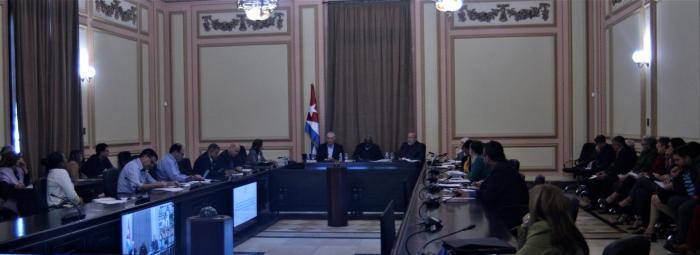
    In a significant governmental session held on February 11, Cuban President Miguel Díaz-Canel Bermúdez participated in a Council of State meeting focused on evaluating the nation’s economic reform agenda. The session, presided over by Council President Esteban Lazo Hernández and attended by Prime Minister Manuel Marrero Cruz, centered on thorough assessments of the Government Program designed to address economic distortions and stimulate growth.

    The gathering revealed substantial public engagement with the reform process, with officials reporting that approximately 76,172 community meetings had been conducted nationwide, generating an impressive 140,348 citizen proposals. This extensive consultation process demonstrates the government’s commitment to incorporating grassroots input into policy formulation.

    Prime Minister Marrero Cruz provided detailed insights into the implementation of parliamentary agreements concerning the Economic Plan and State Budget. Notably, he disclosed the development of Government Directives to combat severe fuel shortages that have challenged the Caribbean nation. The administration’s strategy emphasizes maintaining national vitality without compromising development objectives, while simultaneously minimizing population impact through endogenous resource utilization and foreign exchange diversification.

    President Díaz-Canel emphasized the critical importance of strengthening community engagement mechanisms and enhancing popular oversight at neighborhood levels. He advocated for intensified social program implementation and collaborative problem-solving approaches that leverage collective contributions from all societal sectors.

    Additionally, the Council evaluated the operational effectiveness of the National Assembly’s permanent working commissions and reviewed performance metrics from the Population Attention services at Auxiliary Offices, indicating a comprehensive governance review extending beyond economic matters.

  • CARICOM Chairman PM Terrance Drew speaks on visit to PM Skerrit, ahead of 50th CARICOM H.O.G gathering (with audio)

    CARICOM Chairman PM Terrance Drew speaks on visit to PM Skerrit, ahead of 50th CARICOM H.O.G gathering (with audio)

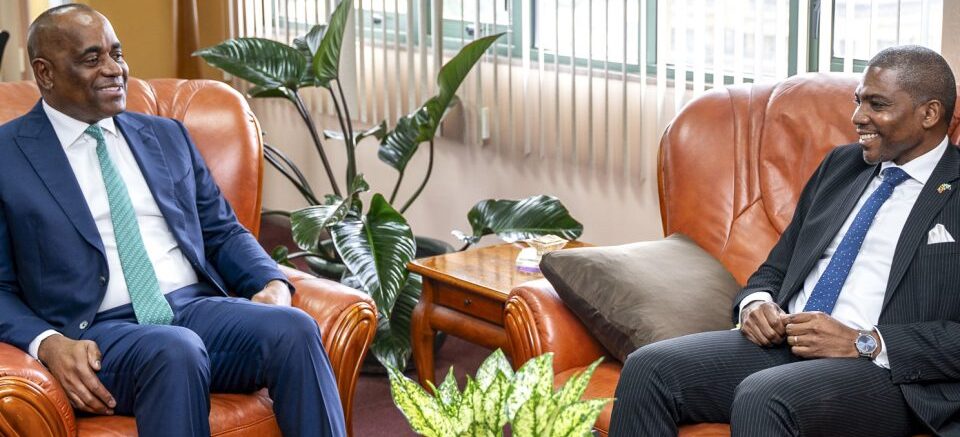
    In a significant diplomatic engagement, Prime Minister Roosevelt Skerrit of the Commonwealth of Dominica hosted Prime Minister Dr. Terrance Drew of St. Kitts and Nevis for high-level talks focused on strengthening Caribbean integration. The meeting, characterized by mutual respect and shared vision, primarily addressed strategic preparations for the upcoming 50th CARICOM Heads of Government Conference scheduled for February 24-27 in St. Kitts and Nevis.

    The leaders issued a joint statement emphasizing that regional solidarity within the Caribbean Community (CARICOM) remains imperative for developing coordinated responses to shared challenges. They specifically highlighted the need for collaborative approaches to trade relations, economic integration, and contemporary geopolitical pressures affecting member states.

    Prime Minister Drew, who will host the landmark conference, provided substantive insights into the agenda during a subsequent media briefing. He confirmed that discussions would center on ‘advancing regional integration, enhancing trade mechanisms, and strengthening institutional relations within CARICOM as a unified entity.’

    When questioned about sensitive regional issues including U.S.-Venezuela tensions and visa policy developments, Drew advocated for a consensus-based approach among Caribbean leaders. He notably clarified that ‘no chairman serves as president or prime minister of CARICOM,’ underscoring the community’s commitment to collective decision-making.

    The leaders also addressed Citizenship by Investment (CBI) programs, which have recently faced international scrutiny. Prime Minister Drew defended these initiatives as beneficial when implemented with transparency and equitable access, arguing that unified management would ensure their continued viability.

    Both leaders exchanged commendations, with Drew praising Skerrit’s assertion that CARICOM’s founding principles remain critically relevant today. Skerrit reciprocated by applauding Drew’s unprecedented diplomatic outreach to fellow CARICOM heads of state prior to assuming conference leadership, describing it as a ‘noble decision’ that demonstrates exceptional commitment to regional cooperation.

    In lighter moments, Prime Minister Drew expressed particular admiration for Dominica’s natural beauty, noting that ‘the naturalness of Dominica is beautiful and irreplaceable.’

    Concluding the meeting, Prime Minister Skerrit confirmed that Dominica’s first parliamentary session of 2026 will convene on February 23, immediately preceding the CARICOM conference.

  • Wet Arbeidsadviescollege aangenomen; zittingsduur verlengd naar vijf jaar

    Wet Arbeidsadviescollege aangenomen; zittingsduur verlengd naar vijf jaar

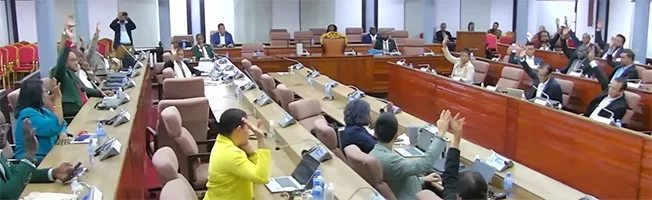
    Suriname’s National Assembly has unanimously approved significant amendments to the Labor Advisory Council Act, fundamentally restructuring the tenure framework for council members. With all 30 votes in favor, the legislation extends membership terms from two to five years, marking a substantial shift in the country’s labor governance approach.

    Parliamentary officials emphasized that the extended tenure period aims to foster greater continuity, institutional stability, and expertise development within the tripartite advisory body. Silvana Afonsoewa, Chair of the Committee of Rapporteurs, articulated during deliberations that prolonged terms would enhance the stability of social dialogue between government, employers, and employee representatives.

    The legislative process featured vigorous debate regarding leadership term limits. In response to concerns about unlimited reappointments for leadership positions, legislators eliminated Article 4, Section 8 through an oral amendment. This establishes that the Council’s chair and deputy chair may now serve only two consecutive terms.

    Notably, regular members remain eligible for unlimited reappointments, preserving flexibility for labor unions and business associations to select their preferred representatives. Government officials serving ex officio on the Council are also exempt from the new term limitations.

    Minister of Health, Welfare and Labor André Misiekaba characterized the reforms as a significant boost to Suriname’s tripartite consultation model. The Labor Advisory Council, which advises the government on labor matters and socioeconomic policy, now operates under strengthened governance provisions that prevent ministers from dismissing its recommendations without formal justification.

  • Police search Mohameds former business headquarters; seize cash, boxes of documents

    Police search Mohameds former business headquarters; seize cash, boxes of documents

    In a significant development within Guyana’s political landscape, agents from the Special Organised Crime Unit (SOCU) of the Guyana Police Force executed a search warrant on Wednesday at a Lombard Street, Georgetown property formerly housing the Mohamed family’s gold dealership and foreign exchange operations. The operation has sparked allegations of political retaliation from opposition leader Azruddin Mohamed, who connects the raid to his recent parliamentary disclosure about financially supporting the ruling People’s Progressive Party (PPP).

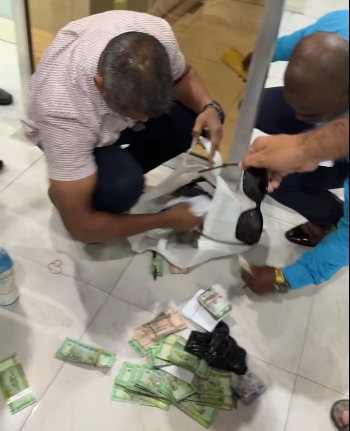
    Law enforcement authorities confiscated approximately GY$2 million in local currency and multiple boxes containing gold trading documentation during the 30-minute operation. Additionally, agents seized a personal firearm belonging to one of Mohamed’s uncles and detained another uncle along with an employee for questioning at a nearby police station.

    Mohamed, who leads the primary opposition We Invest in Nationhood (WIN) party, characterized the operation as ‘sheer political persecution’ motivated by his criticism of the current administration. He maintained that the seized funds were designated for charitable distributions to less fortunate citizens, stating: ‘All they found was a couple hundred dollars that we would help beggars on a daily basis.’

    The businessman documented the entire search procedure through video recording as a protective measure against potential evidence tampering. He repeatedly urged SOCU agents to accompany him during the inspection to prevent any alleged planting of illicit materials on the premises.

    This marks the first law enforcement search of Mohamed properties since the United States Treasury Department’s Office of Foreign Assets Control (OFAC) imposed sanctions in June 2024 for alleged gold smuggling and tax evasion activities. Mohamed revealed that commercial banks had previously closed all family accounts following the OFAC designation, forcing withdrawal of existing funds.

    The Mohamed family currently faces extradition proceedings to the United States, where they are wanted in a Florida federal court on charges including mail fraud, wire fraud, and money laundering. Despite these international legal challenges, Mohamed maintains his innocence and asserts that his political standing has made him a target of government persecution.

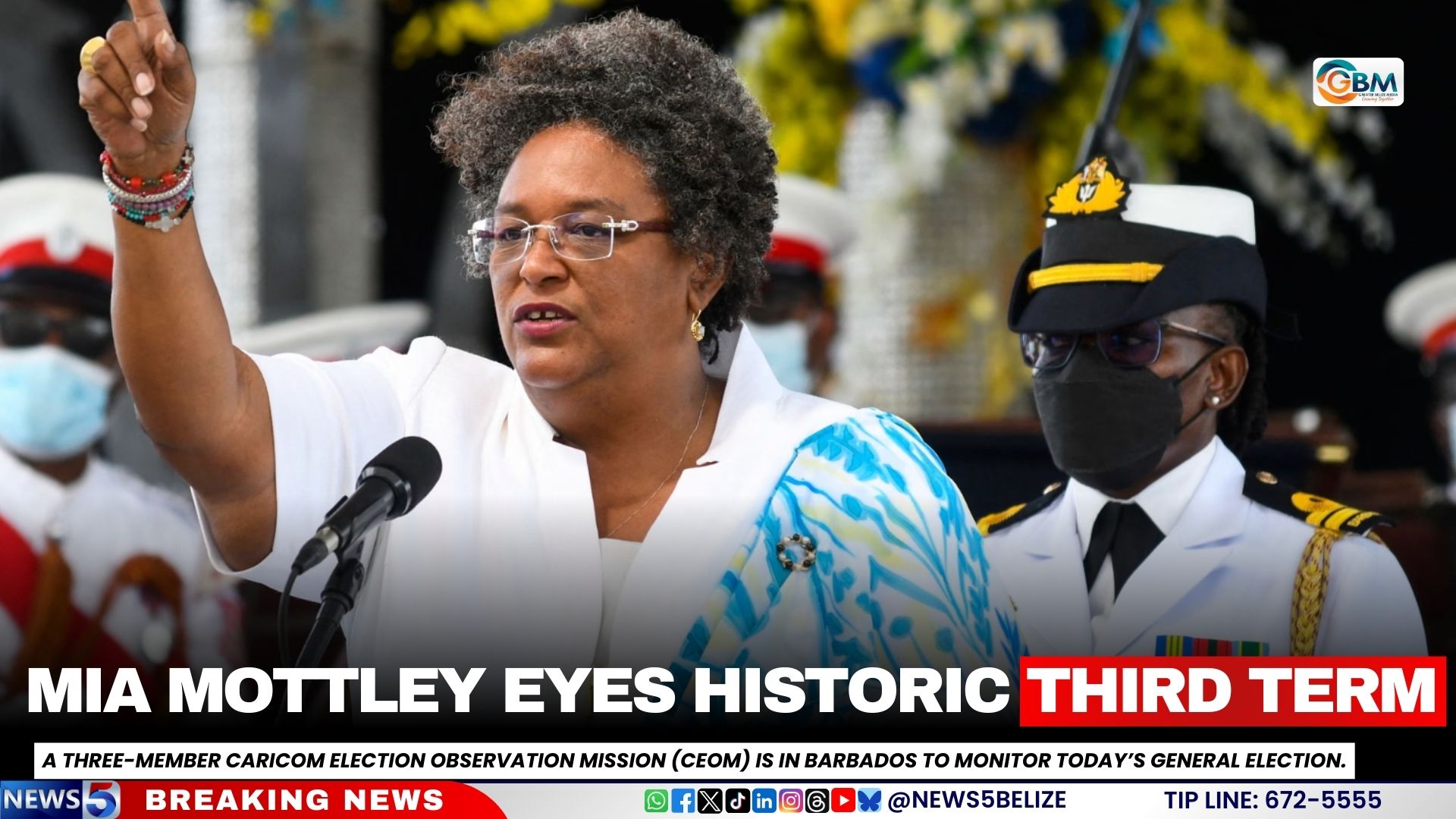
  • Mia Mottley Eyes Historic Third Term

    Mia Mottley Eyes Historic Third Term

    Barbados is witnessing a pivotal moment in its democratic history as citizens cast their votes in a general election that could grant Prime Minister Mia Amor Mottley an unprecedented third consecutive term in office. The nation’s first female leader since gaining independence in 1966, Mottley has achieved international acclaim for her vigorous climate advocacy and steadfast support for small island nations.

    Recent nationwide polling data reveals overwhelming support for Mottley’s Barbados Labour Party (BLP), with approximately 80% of decided voters expressing their backing. The survey indicates Mottley personally commands 61.2% support, significantly outpacing her main opponent, Democratic Labour Party (DLP) leader Ralph Thorne, who trails at 18%. Merely 10% of respondents indicated they might consider voting outside the two dominant political parties.

    The nation’s economic resilience has emerged as a central campaign theme, with World Bank data confirming Barbados achieved 4.0% real GDP growth in 2024. This robust economic performance has been primarily driven by vigorous activity across three key sectors: tourism, construction, and business services, with positive momentum continuing into 2025.

    Ensuring electoral integrity, a three-member CARICOM Election Observation Mission (CEOM) has been deployed to monitor voting procedures and overall election conduct. The mission’s primary objective is to verify transparency, fairness, and strict adherence to democratic standards throughout the electoral process. The CEOM is scheduled to present its comprehensive findings during a closing media briefing on Thursday.

  • ABOP viert 36 jaar: van binnenlandse verzetsbeweging tot nationale machtsfactor

    ABOP viert 36 jaar: van binnenlandse verzetsbeweging tot nationale machtsfactor

    PARAMARIBO – Suriname’s General Liberation and Development Party (ABOP) commemorated its 36th anniversary on February 11, 2026, celebrating its evolution from a marginalized political movement into one of the nation’s most influential political entities. Founded in the early 1990s to advocate for recognition of inland territories and fundamental rights for underserved communities, ABOP has transformed into a mainstream national party with expanding influence across Suriname.

    The party’s trajectory demonstrates remarkable political resilience. During its formative decade (1991-2000), ABOP fought for parliamentary representation and political breakthrough, achieving a critical milestone in 2015 when it emerged as the country’s third-largest party. This position has since been consolidated through strategic expansion beyond traditional support bases.

    Party leadership now emphatically declares ABOP has transcended its regional origins. ‘We are no longer a single-district party but represent all Surinamese people,’ stated official communications. The 2025 implementation of a national electoral system further accelerated this transformation, generating growing support in key regions including Wanica, Para, and the capital Paramaribo.

    Through participation in successive coalition governments, ABOP has leveraged ministerial positions to drive tangible national development. The party highlights infrastructure achievements including new energy systems and drinking water projects that have delivered reliable electricity and clean water to tens of thousands of citizens. Additional milestones include expanding telecommunications connectivity to previously isolated interior regions through internet and mobile phone services.

    Beyond policy accomplishments, ABOP has cultivated a distinct identity as a socially conscious organization. Under the leadership of Chairman Ronnie Brunswijk, the party has established robust philanthropic initiatives providing direct assistance to citizens in need. These include funding overseas medical treatments, distributing social support packages to vulnerable families, and awarding educational scholarships to students.

    This practical approach to social justice forms the cornerstone of the party’s relationship with its constituents. ‘Politics must be tangible in people’s daily lives’ remains a recurring message within party communications.

    Looking forward, ABOP identifies affordable housing, comprehensive land rights recognition, economic diversification, and enhanced education and healthcare systems as priority policy areas. The core philosophy remains that every Surinamese citizen, regardless of origin or residence, deserves equal opportunities.

    The party’s motto ‘Fu kmopo na a katibo’ (To emerge from captivity) continues to symbolize its ongoing commitment to emancipation and development.

  • STATEMENT: Conference of CARICOM Heads of Government on end of transitional presidential council in Haiti

    STATEMENT: Conference of CARICOM Heads of Government on end of transitional presidential council in Haiti

    The Caribbean Community (CARICOM) has formally acknowledged Haiti’s political transition following the completion of the Transitional Presidential Council’s two-year mandate. Prime Minister Didier Fils Aimé and the Council of Ministers have now assumed governance responsibilities during what is anticipated to be a brief interim period focused on critical national priorities.

    CARICOM leadership emphasized that this transitional phase will concentrate on three fundamental objectives: enhancing national security conditions, accelerating preparations for democratic elections, and initiating social and economic recovery programs. The regional body stressed that while political stability is urgently needed, any sustainable solution must be fundamentally Haitian-led and reflect the aspirations of all Haitian citizens through inclusive consultation mechanisms.

    The community expressed particular concern about the deteriorating security situation and humanitarian crisis affecting millions of Haitians. CARICOM endorsed Prime Minister Fils Aimé’s immediate priorities, which emphasize the inseparable connection between security and human dignity. His proposed emergency plan focuses on providing essential food supplies, healthcare access, and shelter provisions to the most vulnerable populations.

    CARICOM has committed to ongoing support through its Eminent Persons Group, which will maintain engagement with all Haitian stakeholders. The regional community reaffirmed its commitment to embracing Haiti as a full member state despite current challenges.

    The CARICOM Heads of Government anticipate early discussions with Prime Minister Fils Aimé during the upcoming 50th Regular Meeting of the Conference of Heads of Government, scheduled for February 24-27, 2026, in St. Kitts and Nevis. This meeting will provide the first formal platform for regional coordination since the new interim administration assumed power.