分类: politics

  • Palestinian president meets Israeli peace activists as Gaza deal announced

    Palestinian president meets Israeli peace activists as Gaza deal announced

    In a significant development following the recent Gaza ceasefire agreement, Palestinian President Mahmud Abbas convened with Israeli peace activists in Ramallah on Thursday. The meeting, held at the presidential palace in the occupied West Bank, focused on fostering long-term peace between the two sides. Abbas expressed his approval of the ceasefire and the subsequent release of hostages, stating, “I welcome the agreement signed today, the end of the war, and the release of the hostages.” He also reiterated the Palestinian commitment to establishing a state encompassing Gaza, the West Bank, and East Jerusalem, despite past challenges, including former U.S. President Donald Trump’s controversial proposals. The gathering included prominent figures such as Arab-Israeli Knesset member Ayman Odeh and Palestinian Authority Vice-President Hussein al-Sheikh. Abbas engaged warmly with the audience, sharing light-hearted moments and jokes. However, the event was briefly interrupted by two power outages, as reported by an AFP journalist. Among the attendees was Iddo Ilam, an activist who declined to serve in the Israeli army, receiving a thumbs-up from Abbas. Rula Daoud, co-director of the Israeli grassroots movement Standing Together, emphasized the need for a peaceful future between Jews and Palestinians. Notably, the specifics of the ceasefire deal between Israel and Hamas, which is expected to facilitate the release of remaining hostages and nearly 2,000 Palestinian prisoners, were not discussed. Israeli Prime Minister Benjamin Netanyahu has dismissed the possibility of the Palestinian Authority governing post-war Gaza, despite al-Sheikh’s assertion on X that the PA is fully prepared to oversee Gaza’s reconstruction.

  • Pintard met with North Abaco generals due to unrest over Terrece Bootle’s selection

    Pintard met with North Abaco generals due to unrest over Terrece Bootle’s selection

    In a bid to quell rising tensions within the Free National Movement (FNM), party leader Michael Pintard visited North Abaco on Tuesday to address discontent among key party figures. The unrest stems from the recent ratification of Terrece Bootle as the FNM’s candidate for the constituency, a decision that has sparked accusations of sidelining local voices and undue influence from former Prime Minister Hubert Ingraham.

  • Pintard deflects on whether FNM will contest by-election

    Pintard deflects on whether FNM will contest by-election

    Michael Pintard, Leader of the Free National Movement (FNM), has sidestepped questions regarding the party’s potential participation in the upcoming Golden Isles by-election. Instead, he has intensified his appeal for Prime Minister Philip “Brave” Davis to announce an early general election. Sources reveal that the FNM has yet to officially decide on fielding a candidate, with internal divisions emerging over the strategic value of such a move. Some party members caution against depleting campaign funds ahead of the general election, while others argue that a victory in Golden Isles could galvanize the base and attract new financial support. The debate mirrors the prelude to the 2023 West Grand Bahama and Bimini by-election, where the FNM ignored advice from former Prime Minister Hubert Ingraham and suffered a defeat. Historically, the Progressive Liberal Party (PLP) has dominated by-elections this century, securing victories in 2010 and 2012. Golden Isles residents have expressed dissatisfaction with their late representative, Vaughn Miller, who passed away on September 28, creating a potential opening for the FNM. Pintard criticized the Davis administration’s financial struggles, labeling a by-election as a wasteful expenditure of scarce resources. He emphasized that Brian Brown, the FNM’s local leader in Golden Isles, is prepared for a general election. Meanwhile, within the PLP, several candidates, including Senator Darren Pickstock, Joe Johnson, and D’Asante Smalls, are vying to succeed Miller, awaiting Davis’s decision on whether to proceed with a by-election or a general election.

  • World’s oldest leader tipped for 8th term in Cameroon vote

    World’s oldest leader tipped for 8th term in Cameroon vote

    Cameroon’s President Paul Biya, the world’s oldest head of state at 92, is widely expected to secure an eighth term in Sunday’s presidential election. Despite facing a fragmented opposition of 11 candidates, Biya’s long-standing grip on power since 1982 remains unchallenged. The election’s credibility has been questioned by human rights groups, with concerns over fairness and transparency. Biya’s health, a topic of increasing speculation as he enters his tenth decade, adds another layer of uncertainty to the race. Should he win, he would be nearly 100 by the end of his term. The opposition, led by figures like Maurice Kamto, who was barred from running, has struggled to unite voters under promises of change and economic relief. Kamto’s exclusion has fueled accusations of electoral manipulation, with some citizens labeling the vote a “scam.” Despite this, Biya retains support among those who value his decades of experience in a country where half the population is under 20. His rare campaign appearance in Maroua, where he emphasized his commitment to serving the nation, drew mixed reactions. Critics argue that Biya’s rule has been marked by repression and regional alliances to maintain power, while supporters praise his leadership and stability. The election unfolds against a backdrop of economic challenges, including high living costs and limited access to basic services, as well as ongoing separatist conflicts in English-speaking regions. Observers have been deployed to monitor polling stations, though the government has dismissed these efforts as attempts to skew results. With low turnout expected in conflict-affected areas, the election is unlikely to bring significant change to Cameroon’s political landscape.

  • Adhin: Wet Staatsschuld basis voor striktere begrotingsdiscipline

    Adhin: Wet Staatsschuld basis voor striktere begrotingsdiscipline

    The National Assembly has taken a significant step toward enhancing the financial governance of the state by approving amendments to the State Debt Law, according to Assembly Chairman Ashwin Adhin. The amendments, passed unanimously with 36 votes, aim to consolidate and professionalize the legal framework governing state debt. Adhin expressed gratitude to all members for their contributions, emphasizing their collaborative efforts in achieving a balanced approach. The revised law establishes strict conditions for exceeding the debt ceiling, requiring a debt strategy aligned with Article 15a. Additionally, the Minister of Finance & Planning must now submit an annual state debt plan alongside the state budget presentation. This provision links the budgetary cycle with debt management, reinforcing the Assembly’s oversight of the state’s macro-financial stability. Adhin highlighted the inclusion of a limited transition period in Article 28, which he described as a clear signal of budgetary discipline and timely debt normalization. The introduction of a Deputy Administrator-General at the State Debt Bureau was also noted as a crucial measure to ensure operational continuity and strengthen institutional capacity. Adhin stated that the law transforms debt management into a sustainable financial policy tool, guided by principles of transparency, parliamentary approval, and systematic debt reduction. However, he cautioned that the law addresses only the symptoms, not the root causes, of financial challenges. ‘The real solution lies in boosting production, exports, and revenue streams,’ Adhin asserted. ‘Only through the real economy can we achieve lasting financial sovereignty.’

  • UPP Caretaker Peters Reconnects with Lower Ottos Residents

    UPP Caretaker Peters Reconnects with Lower Ottos Residents

    Emanuel Peters, the United Progressive Party (UPP) caretaker for St. John’s Rural South, dedicated his weekend to engaging with residents of Lower Ottos, a community he regards as the cornerstone of his public service career. Peters, who has been actively meeting constituents across the district, used this visit to highlight his dedication to community development, environmental sustainability, and collective advancement. He acknowledged the challenges faced by the residents and reiterated his commitment to addressing their concerns. Expressing gratitude for their unwavering support, Peters vowed to expand his grassroots outreach efforts throughout St. John’s Rural South. This initiative aims to strengthen community ties and reaffirm the UPP’s pledge to people-centered representation. Peters’ visit underscores his ongoing efforts to foster a collaborative and inclusive approach to governance.

  • CARICOM Secretariat Hosts Advisory Group Meeting to Advance Regional Migration Policy Framework

    CARICOM Secretariat Hosts Advisory Group Meeting to Advance Regional Migration Policy Framework

    The Caribbean Community (CARICOM) Secretariat, in collaboration with the International Organization for Migration (IOM), recently convened a two-day advisory group meeting in Bridgetown to refine the CARICOM Regional Migration Policy Framework (CRMPF). Held on October 8, 2025, the meeting brought together representatives from CARICOM Member States, development partners, civil society, and the United Nations to establish clear priorities and streamline actions for effective migration management. Sherwin Toyne-Stephenson, Programme Manager for Crime and Security at CARICOM, emphasized the historical significance of migration in the Caribbean, stating that ‘migration has always been a part of our story.’ He highlighted the importance of Member States’ involvement in shaping the policy to achieve strategic development outcomes. The CARICOM Secretariat reaffirmed its commitment to ensuring safe, orderly, and regular migration, particularly for vulnerable populations. Patrice Quesada, IOM’s Coordinator for the Caribbean, stressed the urgency of a regional approach, noting that sustainable development in CARICOM is inseparable from migration. Simon Springett, UN Resident Coordinator for Barbados and the Eastern Caribbean, underscored the Framework’s role in aligning migration with sustainable development goals. The workshop was funded by Immigration, Refugees and Citizenship Canada (IRCC) and supported by the European Union and the United Nations Network on Migration. The next steps include reviewing the draft policy framework with CARICOM Member States, marking a pivotal milestone in regional migration policy development.

  • CTUSAB warns of ‘dangerous precedent’ as joint police-military training begins

    CTUSAB warns of ‘dangerous precedent’ as joint police-military training begins

    The Congress of Trade Unions and Staff Associations of Barbados (CTUSAB) has reiterated its opposition to granting arrest powers to soldiers, labeling the move as a ‘dangerous precedent.’ This comes as joint training sessions commence for members of the Barbados Defence Force (BDF) and the Police Service, part of the government’s implementation of the controversial Police (Amendment) Act 2025. The Act permits BDF personnel to assist police in maintaining law and order, a measure CTUSAB General Secretary Dennis de Peiza strongly criticizes. Speaking to Barbados TODAY, de Peiza emphasized that the union’s stance remains unchanged since it first raised concerns earlier this year. He argued that empowering the military with policing responsibilities fundamentally alters the nature of law enforcement. ‘Any time you empower the Defence [Force] in policing, you change the whole idea of what policing is about,’ he stated. ‘You are giving soldiers now the powers to arrest people. That, to my mind, is creating a dangerous precedent in any state.’ De Peiza warned that blurring the lines between military and police duties could have severe consequences, citing global examples where such practices led to negative outcomes. He stressed that the existing law clearly delineates the separate roles of the BDF and the Police Service, with the latter solely responsible for maintaining law and order. ‘Police are trained to police, with the powers to arrest and investigate. Soldiers are trained to kill; they’re trained to secure the country and in that, they have a power to shoot for a purpose,’ he explained. ‘Therefore, let them do what they’re supposed to do and let the police do what they’re supposed to do. There’s no compromising on that.’ De Peiza also challenged the government’s rationale for involving soldiers in law enforcement, particularly amid rising concerns about violent crime. ‘If you are short on policemen, go and get policemen,’ he urged. ‘We are talking about opening doors to Caribbean nationals, freedom of movement: seek policemen. But don’t ever try to compromise the whole process by trying to justify a means to an end… and that’s what we’re doing.’ Over the past year, Barbados has experienced a surge in serious crimes, including armed robberies, murders, and gang-related incidents involving young men. Public anxiety over national security has led to calls for stronger measures, with government officials defending the involvement of soldiers as necessary. However, de Peiza cautioned that short-term security gains should not come at the expense of democratic norms.

  • Lawmakers unite to confirm Jeffrey Bostic as second republican president

    Lawmakers unite to confirm Jeffrey Bostic as second republican president

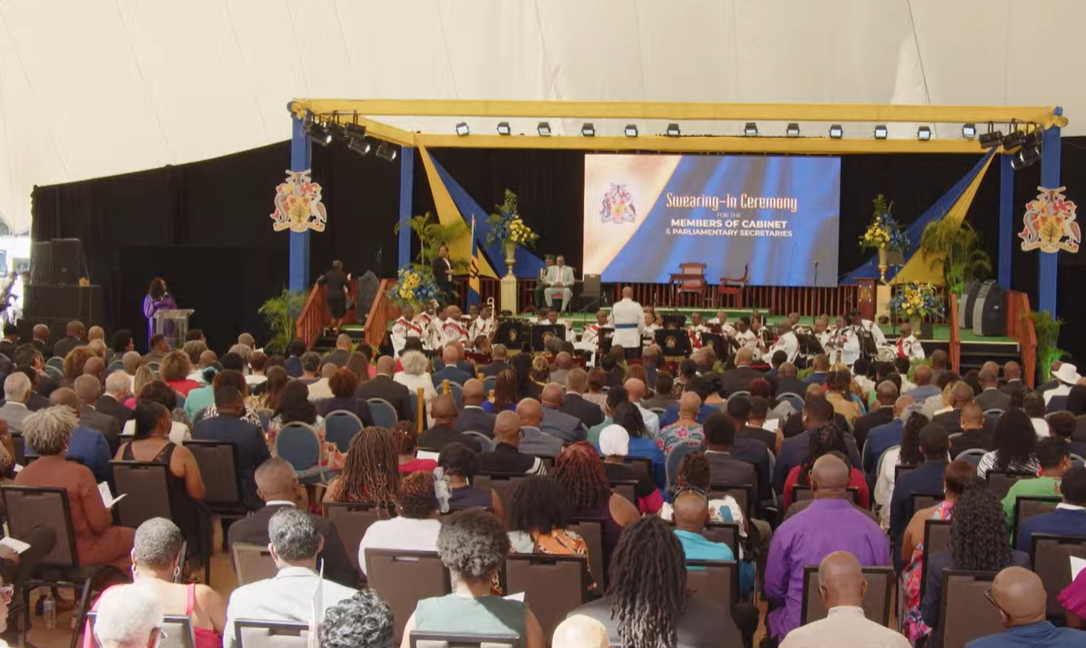
    In a historic display of bipartisan unity, retired Lieutenant Colonel Jeffrey Davidson Bostic was confirmed as Barbados’ second president on Tuesday. The joint sitting of the House of Assembly and Senate witnessed no objections to his appointment, a rare occurrence that highlighted his widespread national appeal and reputation for dependable leadership. The announcement was met with enthusiastic desk-thumping from members across the political spectrum, symbolizing collective endorsement.

  • PM says President-elect Bostic is the man for the moment

    PM says President-elect Bostic is the man for the moment

    Prime Minister Mia Mottley has lauded President-elect Jeffrey Bostic as a leader of exceptional caliber, capable of uniting Barbados during challenging times. Speaking at a joint session of Parliament on Tuesday, Mottley emphasized Bostic’s proven leadership, moral authority, and ability to command respect across all societal sectors. His nomination, jointly proposed by Mottley and Opposition Leader Ralph Thorne, was unanimously approved by MPs and senators, marking the transition from outgoing President Sandra Mason, whose term concludes on November 30. Mottley highlighted Bostic’s extensive experience in policy development, strategic planning, and multi-disciplinary coordination, underscoring his integrity and deep commitment to Barbados. She described him as a figure who embodies both tradition and progress, bridging divides between military and civilian leadership, national and regional security, and generations of Barbadians. Bostic’s academic and military achievements, including studies at the Inter-American Defence College and the National War College, further attest to his qualifications. Mottley also paid tribute to outgoing President Sandra Mason, praising her grace and dignity in office and her role as a model for Barbadian girls. Bostic’s leadership during the COVID-19 pandemic was cited as evidence of his unifying capabilities, making him an ideal choice for the presidency.