The Citizenship-by-Investment (CBI) programme that transformed St. Kitts and Nevis into one of the Caribbean’s most prosperous microstates now faces intense international scrutiny, not merely for its economic implications but for the geopolitical questions it raises in an increasingly polarized global landscape.
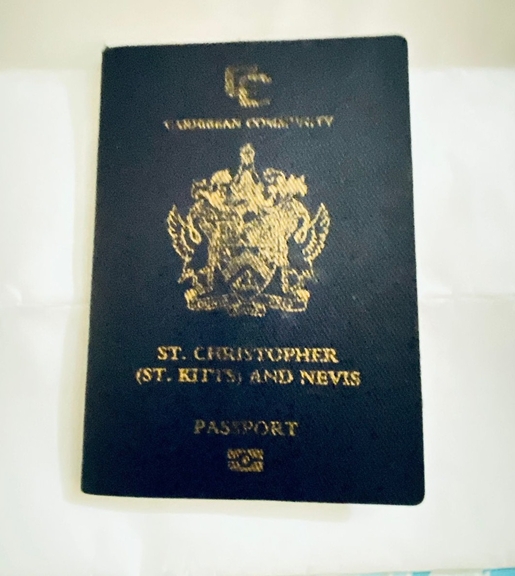
As the pioneer of modern investment migration, the twin-island federation has long promoted its passport as a gateway to global mobility, opportunity, and financial security. Investors are attracted by visa-free access to over 150 countries, flexible residency rules, and a reputation built over four decades. However, the program’s explosive growth over the past decade has alarmed international partners concerned about who obtains Kittitian and Nevisian citizenship—and whether investment migration could become a conduit for foreign influence.
These concerns emerge against the backdrop of China’s aggressive expansion across Latin America and the Caribbean, coupled with its persistent campaign to diplomatically isolate Taiwan. Although St. Kitts and Nevis maintains no formal relations with Beijing, the substantial participation of Chinese nationals in the federation’s CBI programme adds complex layers to an already delicate geopolitical balancing act.
A Programme Overshadowing Its Nation
Over the past ten years, St. Kitts and Nevis has witnessed a dramatic surge in economic citizens alongside increased migration from within CARICOM and the OECS. This influx has strained infrastructure and public services in a nation with a resident population of just over 53,000.
According to the European Commission’s Eighth Report, the federation received 17,668 CBI applications between 2015 and 2023, resulting in 48,844 passports issued. Subsequent data shows over 3,000 additional applications and 6,437 passports issued in 2024, with 734 more by April last year—bringing the total beyond 55,000. Effectively, passports issued through the programme now exceed the number of citizens living and working in the federation.
The Commission noted that many successful applicants come from countries whose citizens typically require visas to enter the European Union, including China, Iran, Syria, Iraq, Nigeria, and Lebanon. While the Citizenship by Investment Unit releases limited demographic data, international reports indicate Chinese nationals constitute one of the largest applicant groups across Caribbean CBI programmes.
Critics argue that the absence of routinely published nationality and residency data undermines public oversight and fuels speculation about the strategic implications of mass citizenship grants, particularly when applicants originate from geopolitically sensitive states.
Unlike St. Kitts and Nevis, Grenada provides quarterly reports detailing programme operations, including applicant nationalities, application numbers, approvals, passports issued, and total revenue—fulfilling its international obligations.
China, Mobility, and Strategic Ambiguity
Although China does not officially recognize dual nationality, wealthy Chinese nationals remain among the most active users of investment migration programmes worldwide. For many, a Caribbean passport offers mobility, asset diversification, and insulation against domestic political or economic uncertainty.
However, analysts caution that scale matters. While individual applicants may be motivated by personal considerations, a sustained concentration of citizenship acquisition from any single country—particularly a major geopolitical power—raises long-term governance and security concerns for small states.
The concern is not that Chinese CBI citizens act as state agents, but that the programme could inadvertently create strategic leverage. Visa-free access to Europe, minimal residency requirements, and inadequate post-citizenship monitoring have been identified by European and North American authorities as vulnerabilities when due diligence systems are inconsistently applied.
Several high-profile legal cases involving Chinese holders of Caribbean passports have intensified scrutiny, reinforcing fears that investment citizenship could be exploited for illicit financial flows or geopolitical positioning—even if such cases remain exceptions rather than the rule.
Public Good Projects and the Belt and Road Dynamic
Complicating matters further is the Public Benefit and Public Good investment option, which channels large-scale capital into national development projects. While these investments can finance crucial infrastructure, critics warn that the model may blur the line between economic development and influence-building when transparency is lacking.
This concern resonates across the region as China’s Belt and Road Initiative (BRI) continues to reshape Caribbean infrastructure landscapes. In several jurisdictions, Chinese-financed ports, roads, and public facilities have preceded deeper political and diplomatic engagement with Beijing.
Though St. Kitts and Nevis is not a BRI partner state, the growing presence of Chinese capital—including through citizenship acquisition—has prompted questions about whether economic pathways could eventually translate into political pressure, especially as Beijing intensifies its global campaign to reduce Taiwan’s remaining diplomatic allies.
The BRI, launched under Chinese President Xi Jinping, focuses on financing major infrastructure projects including roads and ports. Since its inception, over 150 countries have signed various memoranda of understanding with the Chinese government, representing an estimated US$1 trillion in commitments.
Reports indicate that more than 20 Latin American and Caribbean territories have joined the programme, with Guyana recently completing its 2,900-meter Demerara Harbour Bridge at US$260 million under the initiative. Other beneficiaries include Antigua and Barbuda, Barbados, Dominica, Grenada, Trinidad and Tobago, and Jamaica.
While welcomed by many, BRI projects have left several participating territories with significant debt burdens. Jamaica, for instance, reportedly owes China over US$700 million following supported projects, including the North-South Highway completed in 2016 and the ongoing Southern Coast Highway development.
Despite criticism, many acknowledge that BRI projects serve as essential lifelines for territories that could otherwise not afford such infrastructure, as traditional development partners often provide funding at higher interest rates or lack sufficient capital for completion.
Reform Efforts and External Pressure
In response to mounting international criticism, St. Kitts and Nevis and other OECS CBI jurisdictions signed a Memorandum of Agreement aimed at harmonizing standards and strengthening oversight. The agreement commits governments to information-sharing, enhanced transparency, independent audits, stricter regulation of authorized agents, and establishing a regional regulatory authority.
Despite these efforts, the United States recently tightened scrutiny on passport holders from Antigua and Barbuda and Dominica, suspending certain visa categories partly due to concerns about insufficient residency requirements. This move has sent ripples through the entire Caribbean investment citizenship industry.
Last year, the Governments of St. Kitts and Nevis and other OECS territories implemented key reform measures to strengthen programme safeguards, including introducing mandatory residency requirements and biometric data collection.
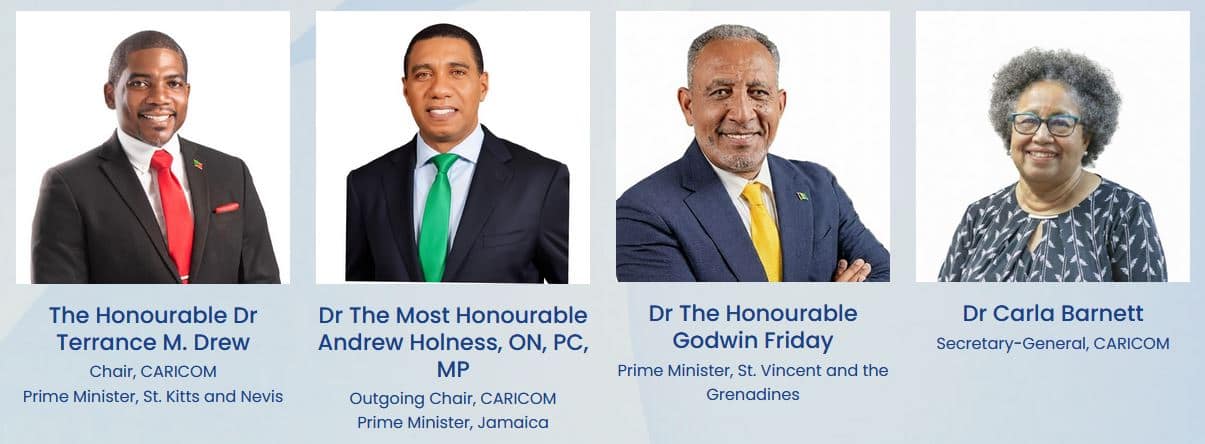
“We are serious when we say that we will do what is necessary to put this CBI programme in good standing,” St. Kitts and Nevis Prime Minister Dr. Terrance Drew stated during one of his Roundtable sessions.
Economic Lifeline or Strategic Liability?
There is little dispute that the CBI programme remains central to the federation’s economy, contributing an estimated 30-90% of GDP. Revenues reached approximately EC$218-670 million over the last decade, funding social programmes and public infrastructure that would otherwise be unattainable.
In 2019, the country recorded EC$443 million, followed by EC$270 million in 2020. A significant increase to EC$543 million occurred in 2021, and 2022 proved exceptionally successful with EC$669 million. However, after reforms were imposed, the government saw a slight decline to EC$621 million in 2023, followed by a sharp drop to EC$218 million in 2024.
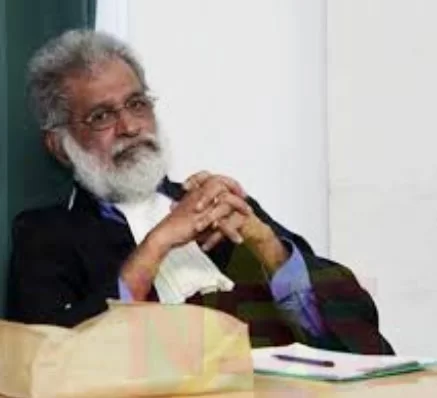
Attorney-at-law and former National Security Minister Dwyer Astaphan warned that weak oversight risks eroding national credibility, while acknowledging the programme’s economic necessity for a resource-poor state.
He expressed particular concern about the lack of information sharing and the number of passports issued under the Public Good Option, specifically referencing three projects: the airport development, the Basseterre High School project, and the National Performing Arts Centre project.
“I do not like the way these options are structured,” he added.
Nevis Premier and Opposition Leader Mark Brantley cautioned against conflating isolated criminal cases with systemic failures, while acknowledging that the sheer number of economic citizens inevitably raises long-term governance questions.
“I am not concerned about that. I think that those—the practical matter—those things happen…it doesn’t suggest any weakness in the programme,” Brantley said, comparing the situation to citizens without criminal records who later engage in criminal activity.
In an invited comment on geopolitical shifts and the CBI programme, Prime Minister Dr. Terrance Drew confirmed that the government is establishing a regulatory body to safeguard the federation’s programme, ensuring it is “more resilient, built on transparency, and integrity.”
“Of course, there are geopolitical aspects to it that we deal with all the time, but we continue to engage our international partners, from the EU to the United States,” Drew noted.
Taiwan Ties in a Changing Region
St. Kitts and Nevis has maintained formal diplomatic relations with Taiwan since independence in 1983, making it one of only a handful of Caribbean states still aligned with Taipei. Over four decades, Taiwan has funded projects across healthcare, agriculture, education, sports, water security, and community development.
Notable contributions include approximately US$7 million toward the redevelopment of the Warner Park Cricket Stadium for the 2007 ICC Cricket World Cup, over 100 scholarships for local students pursuing tertiary education, desalination initiatives, and the 2023 refurbishment of the New Road Playpark at a cost exceeding US$350,000.
Taiwan’s Resident Ambassador Edward Ling-wen Tao recently reaffirmed the partnership, describing it as “positive and fruitful” and pledging continued support for nation-building. He acknowledged China’s growing influence in the Caribbean but emphasized that Taiwan’s assistance remains focused on long-term development rather than strategic leverage.
“I met with the Prime Minister and the Honourable Ministers and also grassroots friends, and they are all very positive about their relationship with Taiwan. And I can assure you that Taiwan will remain a loyal friend of St. Kitts and Nevis for many years to come.”
Yet regional history offers cautionary examples. In several Caribbean and Central American states, expanding economic ties with China have eventually preceded diplomatic shifts away from Taiwan—often justified on development grounds.
China continues to view the LAC region as a priority amid the changing global landscape. The European Parliament recently underscored this by noting the frequency of high-level visits by Chinese Communist Party officials—including President Xi Jinping, who visited the region six times between 2013 and 2024, reportedly more often than the last three US Presidents combined.
A Delicate Balancing Act
Currently, most analysts agree that St. Kitts and Nevis’s CBI programme does not directly serve as a geopolitical backdoor for China. Yet they also caution that in an era of great-power competition, economic instruments rarely remain purely economic.
As one of Taiwan’s remaining Caribbean allies, the federation occupies a position of outsized strategic significance. The challenge ahead lies in preserving economic opportunity without allowing scale, opacity, or external pressure—real or perceived—to undermine sovereignty, credibility, or long-standing diplomatic relationships.
In this context, the debate surrounding CBI has evolved beyond passports and revenue. It has increasingly become about how small states navigate global power shifts without losing control of their own strategic destiny.