分类: politics

  • Augustine: TPP sweep no threat to democracy

    Augustine: TPP sweep no threat to democracy

    In a landmark political shift, Tobago has witnessed an unprecedented electoral outcome as the Tobago People’s Party (TPP) secured all 15 seats in the Tobago House of Assembly elections held on January 12. This decisive victory marks the second consecutive electoral domination by Chief Secretary Farley Augustine’s political movement, following their 14-1 triumph in the 2021 elections under the Progressive Democratic Patriots banner.

    The TPP’s formation emerged from significant internal political restructuring after 13 assembly members resigned from the PDP following a public dispute between Augustine and former leader Watson Duke. This strategic reorganization has proven remarkably successful, with the party previously capturing both Tobago parliamentary seats in the April 2025 general election before achieving this complete assembly sweep.

    Addressing euphoric supporters at Scarborough Esplanade, Augustine delivered a conciliatory victory speech emphasizing inclusive governance and institutional accountability. “While we celebrate winning all 15 seats, I want us to be clear that we must be gracious in victory,” Augustine declared. “Our campaign said that Tobago is we. That means that the Tobago we represent includes those that did not vote for us.”

    The Chief Secretary outlined concrete measures for governmental transparency, promising to establish robust oversight mechanisms once formally sworn into office. He highlighted the party’s tolerance for internal dissent as evidence of their democratic commitment, noting how critics during nomination processes remained engaged participants in the movement.

    Augustine extended particular reconciliation to PNM candidate Sterlan ‘Big Dawg’ Timothy after heated campaign exchanges, asserting: “This THA will help to build your capacity and will help you to grow and develop into your truest potential because this assembly is for all of Tobago and not some of Tobago.”

    The leader framed this victory as historic validation, noting this represents the first 15-seat capture in 45 years and a firm rejection of PNM leadership under Pennelope Beckles. “Today the young people have said, ‘Penny, your pennies are powerless in Tobago,’” Augustine stated, interpreting the result as Tobago’s endorsement of indigenous political leadership.

    Grounding his political philosophy in spiritual foundations, Augustine opened his address quoting Psalm 91, emphasizing the party’s commitment to faith-based governance. He characterized the victory as divine validation of their perseverance through “many trials, a lot of our own doing,” concluding that “when you sow in tears, you reap in joy.”

  • Darkness vs data

    Darkness vs data

    Jamaica’s Energy Minister Daryl Vaz presented a robust justification for the Government’s contentious US$150-million loan to the Jamaica Public Service Company (JPS) during a parliamentary session on Tuesday. Vaz asserted that post-Hurricane Melissa restoration statistics demonstrate the wisdom of this financial decision, revealing that 491,000 of the original 542,000 affected customers have regained electricity—representing approximately 92-93% national restoration.

    Minister Vaz elaborated that the remaining 51,000 disconnected customers include approximately 21,000 households unable to safely receive power due to severe infrastructure damage. He outlined a comprehensive multi-agency strategy involving the Jamaica Social Investment Fund and the Ministry of Labour and Social Security to address these cases through electrical rewiring, housing support, and social assistance programs.

    The Minister projected that 96% restoration would be achieved by January’s end, with February dedicated to addressing the most severely impacted communities. Vaz emphasized that Jamaica’s recovery pace outperforms regional counterparts and approaches ‘best in class’ status.

    Opposition representatives delivered scathing critiques of both the restoration progress and loan transparency. MP Dayton Campbell of Westmoreland Eastern contradicted official statistics, stating unequivocally that ‘not one single, solitary’ JPS customer in his constituency currently has electricity. He described devastating impacts on families and businesses, with over 10,000 of his constituents among the disconnected.

    Opposition energy spokesman Phillip Paulwell challenged the loan’s adequacy, noting previous grid restoration estimates of US$350 million and demanding full parliamentary access to the loan agreement terms. Despite heated exchanges, Minister Vaz maintained his commitment to factual accuracy, pledging to correct any verified misinformation while emphasizing results over political point-scoring.

  • JLP pays tribute to Chris Bovell

    JLP pays tribute to Chris Bovell

    KINGSTON, Jamaica — The Jamaican political landscape is in mourning following the passing of Christopher David Rhys Bovell, CD, a revered legal luminary and former Jamaica Labour Party (JLP) treasurer, who died Wednesday after falling ill during international travels.

    Robert Montague, Chairman of the Jamaica Labour Party, issued an official statement celebrating Bovell’s extraordinary legacy of public service. Montague highlighted Bovell’s multifaceted contributions to Jamaican society, noting his dynamic tenure as a senator from 1983 to 1989 and his steadfast leadership as party treasurer during the same period.

    “Christopher Bovell made profound contributions to our national development through both political and legal channels,” stated Montague. “He was a resolute defender of Jamaica’s best interests, particularly during the politically turbulent 1970s, serving our party with unwavering commitment on the Standing Committee.”

    The JLP chairman extended heartfelt condolences to Bovell’s family, acknowledging their sacrifice in sharing him with the nation. Montague referenced the appropriateness of Bovell receiving Jamaica’s Order of Distinction at the rank of Commander during his lifetime, recognizing his exceptional service to the nation.

    Beyond politics, Bovell established an illustrious legal career beginning in 1964 when he was admitted to practice before Jamaica’s Supreme Court. The Munro College and Cambridge University alumnus became partner at the prestigious law firm Dunn Cox, Orett and Ashenheim in 1965, later serving as consultant and notary public.

    His professional excellence extended to the corporate sector with three decades of directorship at GraceKennedy Limited beginning in 1979. Born October 7, 1938, Bovell married Michelle Nanco in 1965, fathering six children who survive him alongside his enduring legacy in Jamaican public life.

  • Election results unchanged after 2 recounts

    Election results unchanged after 2 recounts

    TOBAGO – The Tobago House of Assembly elections have concluded with definitive results after two electoral recounts failed to alter the outcome of the January 12 vote. The Progressive Democratic Patriots (TPP) achieved a sweeping victory, securing all 15 electoral districts in a historic political shift.

    The People’s National Movement (PNM), the previously dominant political force, formally requested recounts in two critical electoral districts: Darrel Spring/Whim and Scarborough/Mt Grace. These recounts were conducted on January 13 under the supervision of the Elections and Boundaries Commission (EBC).

    In an official statement released on January 14, the EBC confirmed that the recount process had been completed and the original results remained unchanged. The final tallies revealed:

    In Darrel Spring/Whim, TPP candidate Ayanna Webster-Roy secured 838 votes against PNM’s 826 votes, with 14 votes going to the Innovative Democratic Alliance (IDA) and 3 rejected ballots.

    In Scarborough/Mt Grace, TPP representative successfully obtained 854 votes compared to PNM’s 702 votes, with 14 votes for IDA and 6 ballots rejected.

    The election outcome represents a significant political transformation in Tobago’s governance, marking the first time the TPP has achieved such a comprehensive victory. Political analysts suggest this result indicates shifting voter preferences and potentially signals a new era in Tobago’s political landscape.

    The confirmation of results through the recount process demonstrates the integrity of Tobago’s electoral system and the acceptance of democratic outcomes by all participating parties.

  • AG: US boat strikes consistent with international law

    AG: US boat strikes consistent with international law

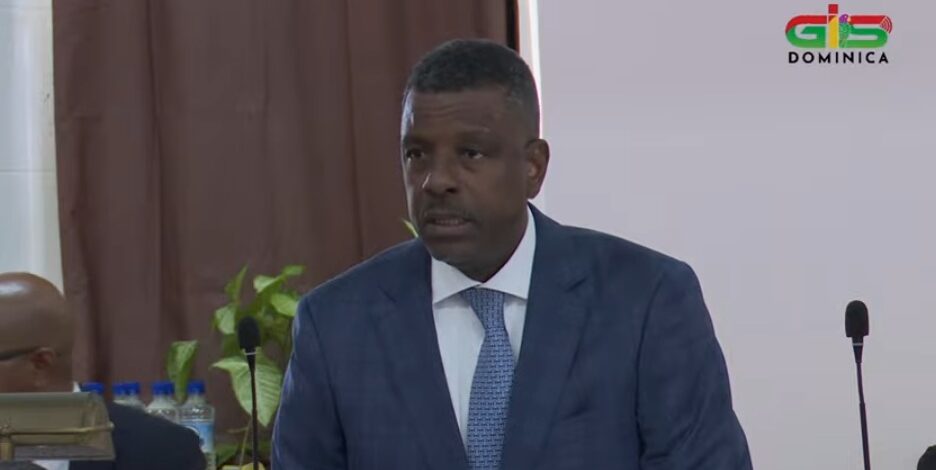
    Trinidad and Tobago’s Attorney General John Jeremie has publicly affirmed that recent US Navy operations targeting suspected drug trafficking vessels from Venezuela align with international legal standards. This conclusion was reached following consultation with an independent international legal expert outside his office.

    During a January 14 press briefing at the United National Congress headquarters in Chaguanas, Jeremie revealed he had sought external legal counsel before forming his official position. “My initial assessment, supported by expert advice, indicates these military actions were consistent with international law,” Jeremie stated. “This determination was based on guidance from a qualified international legal authority.”

    The Attorney General maintained confidentiality regarding the identity of the legal expert and declined to discuss specific details of the advice received, explaining that such disclosure would require revealing privileged information.

    When questioned about potential Trinidadian casualties resulting from the operations, Jeremie responded that he possessed no substantiated information confirming any citizens of Trinidad and Tobago were killed in the strikes. “As of now, I have no evidence suggesting any TT national perished in these military actions,” he emphasized.

    Regarding whether the operations adhered to international due process standards, Jeremie refrained from detailed commentary, citing the confidential nature of the legal guidance he received. “My responsibility has been fulfilled by ensuring the republic operates in accordance with established legal frameworks,” he noted.

    Jeremie confirmed he had communicated his assessment to Prime Minister Kamla Persad-Bissessar but offered no additional details regarding these communications.

    The press conference also addressed questions concerning potential US military operations originating from Trinidadian territory, including possible involvement in the reported January 3 capture attempt of former Venezuelan president Nicolas Maduro. Jeremie provided no commentary on these matters.

    While acknowledging the presence of US military personnel in Trinidad, Jeremie clarified their activities were unrelated to the naval operations. “We hosted marine personnel engaged in school visits and joint training exercises with our Defence Force,” he explained, characterizing these as “intense training exercises” that were publicly acknowledged.

    Jeremie referenced official statements from both the Ministry of Homeland Security and Ministry of Defence issued on the day of the strikes, which explicitly denied Trinidad and Tobago’s involvement in the US military operations.

  • ‘It was a private meeting’: State minister clarifies absence of St Thomas MP from hospital visit

    ‘It was a private meeting’: State minister clarifies absence of St Thomas MP from hospital visit

    KINGSTON, Jamaica — Health and Wellness State Minister Krystal Lee has provided clarification regarding her recent visit to Princess Margaret Hospital in St Thomas, characterizing it as an introductory team meeting rather than an official ministerial engagement. The minister explained that the purpose of her visit was primarily to acquaint herself with hospital staff and assess ongoing operations, which consequently did not warrant extending an invitation to local parliamentary representatives.

    Lee’s statements come in response to mounting concerns from opposition figures alleging that the Jamaican government is subverting democratic protocols by involving electoral losers in activities traditionally reserved for elected officials. These allegations emerged following sightings of former MP Michelle Charles accompanying the state minister during the hospital tour.

    Emphasizing the informal nature of her visit, Lee distinguished between protocol-required official functions and preliminary operational assessments. ‘The visit focused on evaluating proposed sites for a National Blood Collection Centre and maternity ward development,’ Lee noted, adding that ribbon-cutting ceremonies or formal events would naturally involve proper parliamentary inclusion.

    Meanwhile, St Thomas Eastern MP Rose Shaw expressed satisfaction with the minister’s explanation, suggesting the unauthorized participation of third parties resulted from opportunistic attempts to capitalize on the minister’s presence rather than official sanction. Shaw characterized the incident as unintended ‘shenanigans’ beyond the minister’s awareness or control.

  • Senior PLPs urge PM ‘wait until our time is right’ and avoid early election

    Senior PLPs urge PM ‘wait until our time is right’ and avoid early election

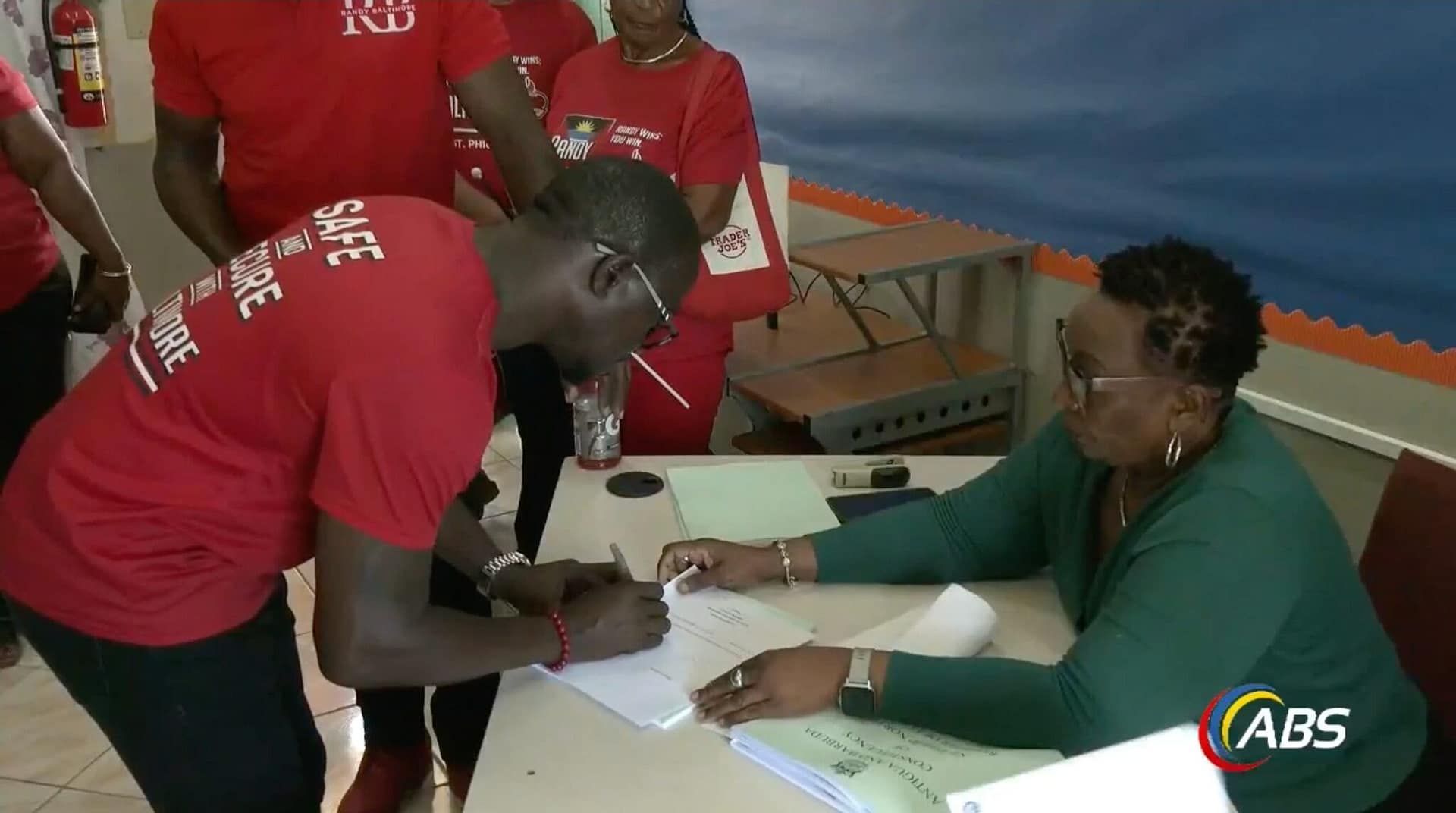
    Amid escalating speculation about potential election timing, senior Progressive Liberal Party (PLP) supporters are publicly advising Prime Minister Philip “Brave” Davis to resist calling an early vote. The internal debate emerges as the government tables a new Boundaries Commission report and both major parties proceed with candidate ratification processes.

    At Monday’s Majority Rule ceremony at PLP headquarters, party stalwarts expressed cautious views about election timing. Laverne Henfield, a PLP councillor from Centreville, advocated for allowing the term to reach its natural conclusion: “I think he should wait until our time is right. September will make us five years. We still have some more work to do.”

    The sentiment was echoed by Shantel Brown, a longtime supporter, who warned that political momentum can be deceptive: “Go straight through. Looks could be deceiving.” This caution reflects lingering memories of the previous administration’s failed early election call, which resulted in decisive rejection by voters.

    A Marathon constituency councillor identified as Ms. Smith suggested that while waiting until September might not be necessary, any election before May would be premature: “Why an early election? We need to let it run. We need to continue to complete things that have started.”

    Sirnardo Hart, the PLP’s protocol chairman, emphasized that an early election could deprive voters of fully understanding government achievements: “Don’t call it early. Wait until September because that’s his time and so people could know what’s really going on.”

    Not all party voices expressed concern. Sherry Bowe from Freetown stated readiness for whenever elections are called, while Bimini branch chairperson Kitty Saunders expressed full confidence in the Prime Minister’s decision-making: “The prime minister has information we don’t, so whatever his decision, I believe it’s the best decision.”

    The opposition Free National Movement has consistently predicted an early election, with leader Michael Pintard recently anticipating a first-quarter 2026 vote and urging supporters to complete voter registration promptly.

  • Ramsamooj: Farley gets ‘strongest hand’ to push autonomy

    Ramsamooj: Farley gets ‘strongest hand’ to push autonomy

    Political analyst Derek Ramsamooj asserts that the Tobago People’s Party’s (TPP) unprecedented 15-0 sweep in the January 12 Tobago House of Assembly (THA) election has positioned party leader Farley Augustine with unprecedented leverage to pursue enhanced autonomy for the island. The landslide victory, which marks a historic political shift, grants Chief Secretary Augustine a compelling mandate to advance Tobago’s agenda in negotiations with Trinidad’s central government.

    Ramsamooj highlights the emerging political dynamics between Prime Minister Kamla Persad-Bissessar and Augustine, noting the results have significantly weakened the People’s National Movement’s (PNM) national standing. The TPP now commands complete control of the assembly along with both Tobago West and Tobago East parliamentary seats.

    The analyst projects substantial opportunities for political cooperation between Persad-Bissessar’s United National Congress-led administration and Augustine’s THA government. This collaboration may potentially involve negotiations for increased budgetary allocations to Tobago, possibly seeking an additional percentage point or two from the national budget over the coming four-year term.

    Ramsamooj characterizes the PNM’s defeat as indicative of a party in decline, having lost its sole Darrel Spring/Whim seat that it secured in the December 2021 election. He emphasizes that the PNM has deteriorated into a minority political entity, suffering from diminished national appeal and leadership effectiveness under current leader Pennelope Beckles. The analyst urges urgent strategic reassessment and leadership style reevaluation for the party to reclaim political relevance.

  • Mottley a sane,consistent voice

    Mottley a sane,consistent voice

    Barbados Prime Minister Mia Mottley has established herself as a principled voice for democratic values and social justice throughout the Caribbean region, drawing stark contrasts with previous generations of regional leaders. Her recent condemnation of both the kidnapping of Venezuelan President Nicholas Maduro by US forces and the delayed election results in Guyana’s March 2020 general election demonstrates her consistent commitment to institutional integrity.

    Unlike her Caribbean Community (CARICOM) predecessors who remained silent during decades of democratic erosion in Guyana from the 1950s through the 1990s, Mottley recognizes the essential relationship between strong democratic institutions and social justice. Historical Caribbean leaders often acquiesced to US gunboat diplomacy and interventionist policies that toppled elected governments without evidence of communist threats.

    The Guyanese people suffered particularly under this foreign policy approach, enduring a reign of terror that specifically targeted Indo-Guyanese communities. The subsequent dictatorship of Forbes Burnham created widespread suffering, reducing Guyana to the Western Hemisphere’s poorest nation—a tragedy that might have been prevented had regional leaders demonstrated Mottley’s courage earlier.

    This analysis connects current US foreign policy under President Trump to centuries of Western expansionism dating back to Alexander the Great and the Roman Empire, arguing that modern US imperialism continues this tradition by forcibly removing uncooperative regimes.

    The commentary calls for more citizens and leaders with Mottley’s moral fortitude to challenge injustice, noting that some Caribbean citizens ironically celebrate US military power. Mottley demonstrates that neither military nor economic supremacy is prerequisite for ethical leadership on the global stage.

    Had Mottley’s principles prevailed historically, the Caribbean might have avoided authoritarian figures like Dési Bouterse, Papa Doc Duvalier, Eric Gairy, Forbes Burnham, and Rafael Trujillo. The region could have developed into an enviable society rather than suffering the corruption and emigration that continues to affect many nations.

  • Danish foreign minister heads to White House for high-stakes Greenland talks

    Danish foreign minister heads to White House for high-stakes Greenland talks

    WASHINGTON—Diplomatic tensions reached a critical point as top Danish and Greenlandic officials convened at the White House for emergency talks regarding President Donald Trump’s persistent campaign to acquire Greenland. The high-stakes meeting occurred amid escalating rhetoric from the American president, who has repeatedly declared his intention to seize the autonomous Danish territory “whether they like it or not.”

    Danish Defence Minister Troels Lund Poulsen attempted to preempt the discussions by announcing enhanced military commitments to Greenland, telling AFP that Denmark was both boosting its Arctic military presence and negotiating “an increased NATO presence in the Arctic” to address US security concerns.

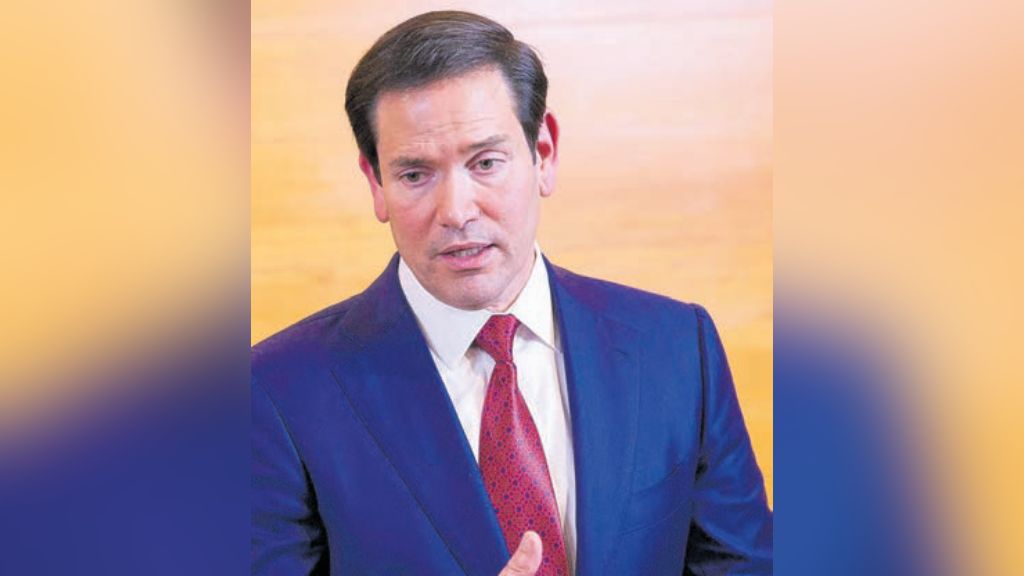
    The meeting brought together Danish Foreign Minister Lars Lokke Rasmussen, Greenlandic representatives, US Secretary of State Marco Rubio, and Vice President JD Vance, whose unexpected request to participate elevated the diplomatic significance. Lokke Rasmussen stated his intention to “clear up certain misunderstandings” regarding Greenland’s status, though observers questioned whether the Trump administration viewed the situation as a misunderstanding at all.

    Trump’s acquisition rhetoric has intensified since the January 3rd operation in Venezuela, with the president employing characteristically transactional language. He told The New York Times that ownership “is psychologically needed for success” and provides “elements that you can’t get from just signing a document,” reflecting his real estate background. The administration justifies the proposed acquisition as necessary to counter Russian and Chinese Arctic ambitions, though neither nation has made claims on Greenland.

    Greenlandic Prime Minister Jens-Frederik Nielsen delivered a definitive pre-meeting statement: “One thing must be clear to everyone: Greenland does not want to be owned by the United States. Greenland does not want to be governed by the United States. Greenland does not want to be part of the United States.” Danish Prime Minister Mette Frederiksen acknowledged the difficulty of resisting “completely unacceptable pressure from our closest ally.”

    The diplomatic standoff has prompted international responses, with France announcing plans to open a consulate in Greenland and a bipartisan Congressional delegation preparing to visit Copenhagen in solidarity with Denmark. Senate Democratic Whip Dick Durbin criticized Trump’s approach, stating that threats toward Greenland “are unnecessary and would only weaken our NATO alliance.”

    Analysts from the German Marshall Fund suggested the meeting’s outcome hinged on whether the US would moderate its position or maintain its uncompromising stance, with senior vice president Penny Naas noting: “If the US continues with, ‘We have to have Greenland at all cost,’ it could be a very short meeting.”