分类: politics

  • Public sector workers, pensioners to get bonus next week

    Public sector workers, pensioners to get bonus next week

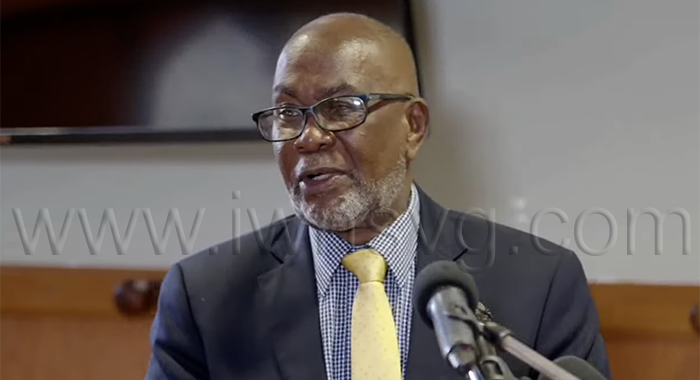
    In a significant move fulfilling its key election commitment, the newly elected New Democratic Party (NDP) administration in St. Vincent and the Grenadines has announced the distribution of substantial tax-free bonus payments to public sector workers. Prime Minister Godwin Friday confirmed at a Friday press conference in Kingstown that the Treasury has been instructed to process these payments by January 30.

    The comprehensive economic relief package, totaling approximately EC$22 million, will benefit an estimated 12,000 individuals across various employment categories. Contrary to initial expectations, the government has expanded eligibility to include daily-paid workers, part-time employees, and pensioners – groups that were not originally contemplated in the campaign promise.

    Payment structure demonstrates a progressive approach with lower-income workers receiving proportionally greater benefits. Permanent and non-established public servants will each receive EC$2,000, while pensioners are allocated EC$1,500. Daily-paid workers earning between EC$500 and EC$1,000 monthly will receive EC$1,000 bonuses – effectively representing 100-200% of their regular monthly income.

    Prime Minister Friday emphasized that this initiative directly addresses the “crushing cost-of-living pressures” exacerbated by the COVID-19 crisis. The administration characterizes the payout not as a government expense but as an economic stimulus measure that will put “money back in people’s pockets in a big way” to stimulate additional spending.

    The Prime Minister acknowledged that while some critics, including Opposition Leader Ralph Gonsalves, have accused the NDP of voter deception regarding the bonus promise, his administration remains focused on delivering tangible support to the most vulnerable populations. Further measures addressing employment, training, and assistance for indigent persons are expected to be announced in the upcoming budget.

  • Police Commissioner Named in Budna Abduction Lawsuit

    Police Commissioner Named in Budna Abduction Lawsuit

    In a significant legal development, Belize’s Police Commissioner Dr. Richard Rosado has been formally named as a defendant in a constitutional lawsuit filed against the Government of Belize. The substantial 74-page claim, initially submitted in September by attorneys Arthur Saldivar, Michelle Trapp, and Emmertice Anderson, represents social media commentator Joseph Budna, who remains detained in Guatemala following what he describes as an unlawful abduction from Belizean territory.

    The litigation presents serious allegations against high-ranking police officials, including Commissioner Rosado, with attorneys asserting potential obstruction of justice during the investigation’s critical early phases. Central to the legal challenge are discrepancies regarding surveillance footage that Commissioner Rosado reportedly referenced, yet allegedly cannot produce for verification.

    Attorney Saldivar maintains that including the commissioner was necessary, citing fundamental questions about evidence handling and investigative transparency. The case highlights concerning delays in transferring investigation files to the Director of Public Prosecutions (DPP), who reportedly received inadequate documentation months after the incident occurred.

    Critical evidence includes four separate surveillance cameras under government control—Banquita’s House of Culture, court security footage, social security cameras, and police station recordings—all of which allegedly contain relevant footage that has not been properly accounted for in official investigations.

    With the constitutional challenge now formally encompassing the nation’s top law enforcement official, unresolved questions regarding missing evidence, delayed judicial reviews, and potential political interference continue to mount. Saldivar characterizes the situation as ‘suspect’ and suggestive of systematic concealment, noting that the matter should have been referred to the DPP immediately following the August 23rd incident.

    The case represents growing scrutiny of Belize’s judicial processes and could have profound implications for police accountability and governmental transparency in the Central American nation.

  • Independent Senators Say Bill Undermines Accountability

    Independent Senators Say Bill Undermines Accountability

    A contentious legislative proposal from the government is facing unanimous opposition from Belize’s four independent senators, creating a significant parliamentary standoff. The National Assembly Powers, Privileges and Immunities Bill has drawn particular criticism for its Section 16(2), which would mandate public officers to obtain consent before disclosing documents or providing testimony to the Senate regarding state affairs.

    NGO Senator Janelle Chanona has declared the provision fundamentally unconstitutional, stating she consulted with multiple parliamentary speakers internationally who found no rational basis for such measures within democratic frameworks. The senators’ primary concern centers on the Governor General’s role, noting that since this position acts on executive advice, the very officials potentially under investigation could effectively control what information becomes available to oversight bodies.

    Business Senator Kevin Herrera illustrated the practical implications, warning that investigations into executive corruption could be obstructed by a single refusal justified under the overly broad term ‘affairs of state.’ Church Senator Louis Wade raised additional concerns about the Governor General’s lack of independent professional resources to make informed disclosure decisions, while Union Senator Glenfield Dennison stated his firm and unambiguous opposition to the legislation.

    The collective rejection by all four independent senators represents a significant challenge to the government’s legislative agenda and places substantial pressure on policymakers to reconsider the controversial provisions. The outcome will potentially redefine the balance of power between governmental branches and determine the Senate’s future effectiveness as an accountability mechanism.

  • Senate Debates $200 Million Supplementary Bills

    Senate Debates $200 Million Supplementary Bills

    The Belizean Senate engaged in heated deliberations today concerning two supplementary appropriation bills amounting to $200 million, previously approved by the House of Representatives in November. Government officials, led by Senator Eamon Courtenay, defended the necessity of these allocations, characterizing them as essential for both retrospective expenditures and forward-looking national priorities.

    Senator Courtenay detailed the comprehensive allocation plan, emphasizing critical investments across multiple sectors. “These appropriations combine funding for public and security officer salaries, healthcare infrastructure, the University of Belize, sports ministries, and passport services,” he stated. Notably, the bills designate substantial resources for police department enhancements and the Ministry of Rural Transformation and Community Development. An additional $1.5 million is allocated to Blue Economy and Disaster Risk Management initiatives, alongside significant nationwide roadwork projects.

    The opposition, spearheaded by Senator Patrick Faber, launched stringent criticism against the Briceño administration’s fiscal management. While acknowledging the importance of addressing national priorities, Faber condemned the government’s procedural approach. “The manner of presenting these bills indicates deficient planning and budgetary incompetence,” he asserted. Faber suggested the government may be intentionally presenting optimistic initial budgets only to later introduce substantial supplementary allocations to address overlooked deficiencies.

    The fundamental dispute centers not on the allocations themselves but on budgetary planning integrity. The government maintains these supplements are necessary for comprehensive national development, while the opposition contends they reveal systemic planning failures that undermine budgetary credibility. The outcome of these deliberations will significantly impact Belize’s fiscal trajectory for the coming year.

  • Jerry Enriquez Slams One‑Page Reply on Constituency Funds

    Jerry Enriquez Slams One‑Page Reply on Constituency Funds

    Social activist Jerry Enriquez has publicly denounced the Office of the Prime Minister for what he characterizes as a dismissive response to his Freedom of Information request regarding constituency development funds. After a three-month waiting period that included multiple extensions, Enriquez received merely a single-page document detailing only monthly allocations per constituency, rather than the comprehensive breakdown he had formally requested.

    In an exclusive statement delivered on January 23, 2026, Enriquez expressed profound disappointment with the inadequate response, describing it as “condescending and disrespectful” toward legitimate public inquiry processes. The activist emphasized that the document failed to address critical aspects of fund distribution, including usage specifics, accountability mechanisms, and the underlying principles guiding allocation decisions.

    The limited data provided has already revealed concerning disparities in fund distribution across electoral divisions, suggesting what Enriquez termed a “haphazard” allocation approach. This development raises serious questions about governmental transparency and fiscal responsibility, particularly during a period of economic constraint.

    Enriquez maintains that citizens possess an unequivocal right to understand how public funds are allocated and utilized, especially given the significant economic imbalances between different constituencies. The activist has called for the Prime Minister’s office to treat FOIA requests with appropriate seriousness and provide the detailed accounting mechanisms that public accountability demands.

  • Economy : Business Associations and Chambers of Commerce gravely concerned

    Economy : Business Associations and Chambers of Commerce gravely concerned

    PORT-AU-PRINCE, Haiti – Major business associations and chambers of commerce have issued a stark warning about Haiti’s escalating political instability, expressing profound concern that current tensions could derail the nation’s fragile transition process.

    In a collectively signed statement released this week, six prominent private sector organizations emphasized that Haiti stands at a critical juncture as it approaches significant institutional deadlines. The business coalition urgently called for restraint and responsible leadership, arguing that the country cannot afford further confrontation or hasty decision-making during this delicate phase.

    The organizations threw their unequivocal support behind Laurent Saint-Cyr, Coordinator of the Presidential Transitional Council, endorsing his January 20th appeal for structured dialogue across all sectors of national life. They stressed that institutional accountability and maintained stability constitute essential prerequisites for safeguarding Haiti’s national interests.

    Acknowledging recent security improvements achieved under Prime Minister Alix Didier Fils-Aimé’s administration, the business leaders noted tangible progress in combating insecurity through coordinated efforts of the Haitian National Police, Armed Forces, and international partners. However, they cautioned that these hard-won gains remain fragile and could be rapidly undone by political instability.

    The statement outlined multiple concerning repercussions of continued political turmoil: compromised coordination of security operations, jeopardized international support, demoralization of security forces engaged in high-risk operations, potential reversal of advances against armed groups, and intensified suffering among the civilian population.

    Emphasizing that the current transitional framework establishes clear deadlines and responsibilities, the signatories called upon all institutional actors to immediately cease any unilateral or destabilizing actions. They urged prioritization of dialogue and consensus-building among Haiti’s vital societal forces, appealing for historically responsible leadership toward the Haitian people.

    The organized private sector reaffirmed its commitment to contributing to lasting stability, preserving institutional continuity, defending the rule of law, and supporting an effective transition leading to credible elections—identified as the only viable path to democratic renewal.

    Signatory organizations included the Association of Industries of Haiti (ADIH), American Chamber of Commerce in Haiti (AmCham), Chamber of Commerce and Industry of the West (CCIO), Haitian-Canadian Chamber of Commerce and Industry (CCIHC), Haitian Tourism Association (ATH), and the Macaya Institute.

  • Musa Points to Murder Drop in Push to Protect LIU

    Musa Points to Murder Drop in Push to Protect LIU

    Amid ongoing speculation about potential shifts in Belize’s national security approach, former Home Affairs Minister Kareem Musa has emerged as a vocal defender of the current crime prevention framework. Musa has publicly championed the Leadership Intervention Unit (LIU), asserting that no discussions about downsizing the program have occurred at the Cabinet level despite recent ministerial changes.

    The former minister presented compelling statistical evidence to support his position, highlighting a remarkable reduction in homicide rates over the past three years. According to Musa, Belize has recorded fewer than 90 annual murders during this period—a significant improvement from previous years that regularly saw approximately 140 homicides. This achievement marks the first time in over twenty-five years that the nation has maintained such reduced murder numbers for consecutive years.

    Musa credited the late William Dawson as the original architect of the LIU concept, describing the initiative as “an incredible concept” that requires further development rather than dismantlement. While acknowledging that full implementation of Dawson’s vision remains ongoing, the former minister emphasized that the statistical evidence demonstrates clear impact.

    “When you look at it from a clear black and white statistical purpose, you can see where it has had an impact,” Musa stated during his defense of the program. He expressed hope that the government would not only continue the LIU program but strengthen it as Belize seeks sustainable solutions to address violent crime long-term.

    The public endorsement comes during a period of transition within Belize’s security leadership, raising questions about potential policy directions under the new ministerial appointment.

  • FLASH : Presidential advisors confirm their decision to dismiss the PM

    FLASH : Presidential advisors confirm their decision to dismiss the PM

    In a bold move that challenges international influence, Haiti’s Presidential Transitional Council (CPT) has confirmed the dismissal of Prime Minister Alix Didier Fils-Aimé despite mounting global pressure. The decisive action unfolded during a Friday press conference at Villa d’Acceuil, where presidential advisors Leslie Voltaire and Edgard Leblanc Fils announced the majority-backed resolution to remove the sitting PM.

    The council members—comprising Fritz Alphonse Jean, Leslie Voltaire, Louis Gérald Gilles, Edgard Leblanc Fils, and Smith Augustin—cited failed public expectations and inadequate governmental performance as primary reasons for their decision. Voltaire emphasized that despite the CPT’s extensive efforts to support government operations, the population’s needs remained unaddressed.

    Edgard Leblanc Fils declared the international community must respect Haiti’s autonomous decisions, stating they should ‘acknowledge our decisions and support us according to the guidelines we define for the country.’ The council plans to appoint an interim Prime Minister for a 30-day term to ensure political continuity as the CPT approaches its February 7 mandate expiration.

    However, significant institutional obstacles emerge as Laurent Saint-Cyr, the Council’s President pro tempore and official Gazette publisher, vehemently opposes the dismissal. No physical evidence of the signed resolution or publication in Le Moniteur has been provided to media outlets, nor has the identity of the proposed successor been revealed.

    Adding complexity to the political landscape, Haiti’s security forces have reportedly aligned with Prime Minister Fils-Aimé and President Saint-Cyr, marking their most substantial political involvement since 1994. This development creates unprecedented tension between civil governance and military institutions during Haiti’s critical transition period.

  • Ali, ministers leave British High Commissioner’s farewell after WIN Leader arrives

    Ali, ministers leave British High Commissioner’s farewell after WIN Leader arrives

    A diplomatic reception hosted by British High Commissioner Jane Miller at her Bel Air Springs residence was abruptly disrupted on Friday evening when Guyanese President Irfaan Ali and multiple government ministers made a swift departure. The exodus occurred moments after Azruddin Mohamed, presumptive Opposition Leader and head of the We Invest in Nationhood (WIN) party, arrived at the gathering with General Secretary Odessa Primus.

    The unexpected departure highlights the deepening political tensions in Guyana regarding Mohamed’s potential appointment as Opposition Leader—a position that Western diplomats, including Miller, have advocated for as essential to functional democracy. The governing People’s Progressive Party (PPP) maintains strong opposition to Mohamed’s candidacy, citing his indictment by the United States for financial crimes linked to his family’s billion-dollar gold trading business. Extradition proceedings against Mohamed and his father are currently underway in Guyanese courts.

    Despite the controversy, Mohamed expressed confidence in securing the opposition leadership during Monday’s parliamentary vote, stating his readiness to contribute to the upcoming 2026 National Budget debate. ‘We have a lot of persons on board with us so that they can contribute meaningfully,’ he told reporters, indicating his team had assembled sectoral advisors.

    The WIN leader outlined his priorities as holding the government accountable and improving health and education systems, remarking, ‘We have so many problems in this country, it’s unbelievable.’

    The incident occurs against the backdrop of recent diplomatic tensions, with President Ali having previously excluded opposition figures from a major policy address where he presented his five-year plan to government officials and diplomats—a break from conventional practice where such addresses are delivered to Parliament including opposition members.

  • Security : Graduation ceremony for 877 new police officers

    Security : Graduation ceremony for 877 new police officers

    In a significant stride toward reclaiming national stability, Haiti celebrated the graduation of 877 new police officers on January 23, 2026. The ceremony at the National Police Academy (ENP) marked the completion of training for the 35th promotion of the Haitian National Police (PNH) and the inaugural class of the ambitious P4000 program.

    The event drew high-level attendance from Haiti’s political and security leadership, including Prime Minister Alix Didier Fils-Aimé and Laurent Saint Cyr, President pro tempore and Coordinator of the Transitional Council (CPT). The ‘Aurore’ class graduation symbolized rigor and steadfast commitment to national service, witnessed by presidential advisors, the Justice Minister, military commanders, and international diplomats.

    Prime Minister Fils-Aimé, who also chairs the Superior Council of the National Police, emphasized the strategic importance of Project P4000, which aims to train 4,000 new officers between 2026 and early 2027. He characterized this initiative as a decisive response to the national security emergency, reaffirming the government’s determination to restore state authority and reclaim territories currently controlled by criminal organizations.

    ‘The State is no longer backing down. It is fully assuming its mission,’ declared Fils-Aimé, describing the program as a comprehensive strategy for ‘regaining, stabilizing, and consolidating State authority.’

    The Prime Minister extended gratitude to international partners including the United States, Canada, and the European Union for their sustained support in security restoration, economic revitalization, and election organization.

    Laurent Saint Cyr addressed the security forces, urging unwavering focus on restoring security despite destabilization attempts. ‘I pledge that decisions made at the highest levels of government will always be aligned with the fundamental aspiration of the people: the restoration of security,’ he stated, emphasizing that security remains prerequisite for national stability, credible elections, and normalcy.

    Justice Minister Patrick Pélissier charged the new officers with serving their country honorably, protecting the population diligently, and operating within legal boundaries and respect for fundamental rights.

    U.S. Chargé d’Affaires Henry Wooster affirmed that Haiti’s security remains America’s top priority, noting that ‘Haitians have suffered enough from gang violence.’ He characterized the 40% personnel increase over 16 months as not merely a numerical target but a strategic response to the country’s security realities.