分类: politics

  • Strengthening Tobago democracy strengthens nation

    Strengthening Tobago democracy strengthens nation

    Recent parliamentary deliberations on amendments to the Tobago House of Assembly (THA) Act have sparked significant public discourse regarding governance quality and democratic legitimacy in Tobago. Prime Minister’s compelling arguments during the bill’s second reading emphasized the urgent necessity of these institutional reforms, positioning them as critical enhancements rather than mere political adjustments.

    The legislative revisions address fundamental structural mismatches created by Tobago’s evolving administrative landscape. Since the 2021 expansion increased Assembly membership from 17 to 20 representatives, governance responsibilities have substantially grown while executive frameworks remained stagnant. This discrepancy has generated operational strain across service delivery systems and democratic accountability mechanisms.

    Core amendments propose eliminating arbitrary limitations on Executive Council secretaries, enabling the Chief Secretary to allocate portfolios according to Tobago’s actual administrative requirements. With over thirty distinct responsibility areas enumerated in the act’s fifth schedule, specialized portfolio distribution emerges as essential for effective oversight and expertise development rather than bureaucratic expansion.

    Equally significant is the quorum elevation from nine to twelve members for official Assembly proceedings. This adjustment transcends technicalities by establishing stronger democratic foundations—preventing minority decision-making that binds Tobago’s entire population while reinforcing institutional credibility through broader consensus requirements.

    The reforms reflect Tobago’s evolving partnership within national development frameworks, evidenced through record budgetary allocations, economic initiatives supporting local industries, housing projects, and social infrastructure investments. Institutional modernization thus represents a logical progression toward meaningful self-governance, replacing outdated statutory constraints with capable, flexible structures.

    Despite potential criticisms regarding administrative expansion, these amendments respond to demonstrated increases in representation scope and governance complexity. Leadership responsibility necessitates aligning institutional capabilities with operational mandates to prevent systemic inefficiencies and oversight deterioration.

    These measured but impactful revisions signal profound respect for Tobago’s democratic mandate while fostering interregional unity through strengthened partnerships and enhanced governance efficacy.

  • Controversy looms over Diaspora elections

    Controversy looms over Diaspora elections

    NEW YORK, United States — Significant controversy has emerged surrounding the upcoming 2026 elections for the Global Jamaica Diaspora Council (GJDC) and its youth counterpart (GJDYC), scheduled to commence on January 28, 2026. Prominent diaspora leader Patrick Beckford, former head of the Jamaica Diaspora Advisory Board for the North-East United States and founding member of the original advisory body, has called for a complete boycott of the electoral process.

    Beckford advocates for establishing an entirely independent diaspora-controlled organization that operates autonomously without government ministerial connections or oversight. He contends that the current GJDC structure has deviated from its original purpose, transforming into what he describes as a ‘ministerial extension’ rather than remaining accountable to the diaspora community itself.

    The election process, running through February 20 with results announced four days later, faces additional scrutiny due to historically low participation rates. The 2023 elections saw merely 3,000 voters casting ballots across the global Jamaican diaspora community.

    Beckford has found support from other influential diaspora figures, including Dr. Rupert Francis, who echoed concerns about Jamaican government involvement in diaspora affairs. Both critics have particularly questioned candidate eligibility requirements that prohibit those with criminal convictions or bankruptcy declarations from seeking representation.

    According to Jamaica’s Ministry of Foreign Affairs and Foreign Trade, forty-four candidates across the United States and Canada will contest the elections. Notable changes include outgoing southern region representative Peter Gracey not seeking re-election, while Michelle Tulloch-Neil aims for a second term representing the North-East region.

    Following the elections, successful representatives will begin planning for the 11th GJDC Biennial Conference scheduled for June 14-18, 2026, at the Montego Bay Convention Centre. The 2023 conference attracted over 1,000 participants, with organizers anticipating increased attendance this year for discussions on trade, investment, and diaspora engagement matters involving both government and private sector participants.

  • Ghanaian foreign minister visits Bob Marley Museum as he wraps up working visit to Jamaica

    Ghanaian foreign minister visits Bob Marley Museum as he wraps up working visit to Jamaica

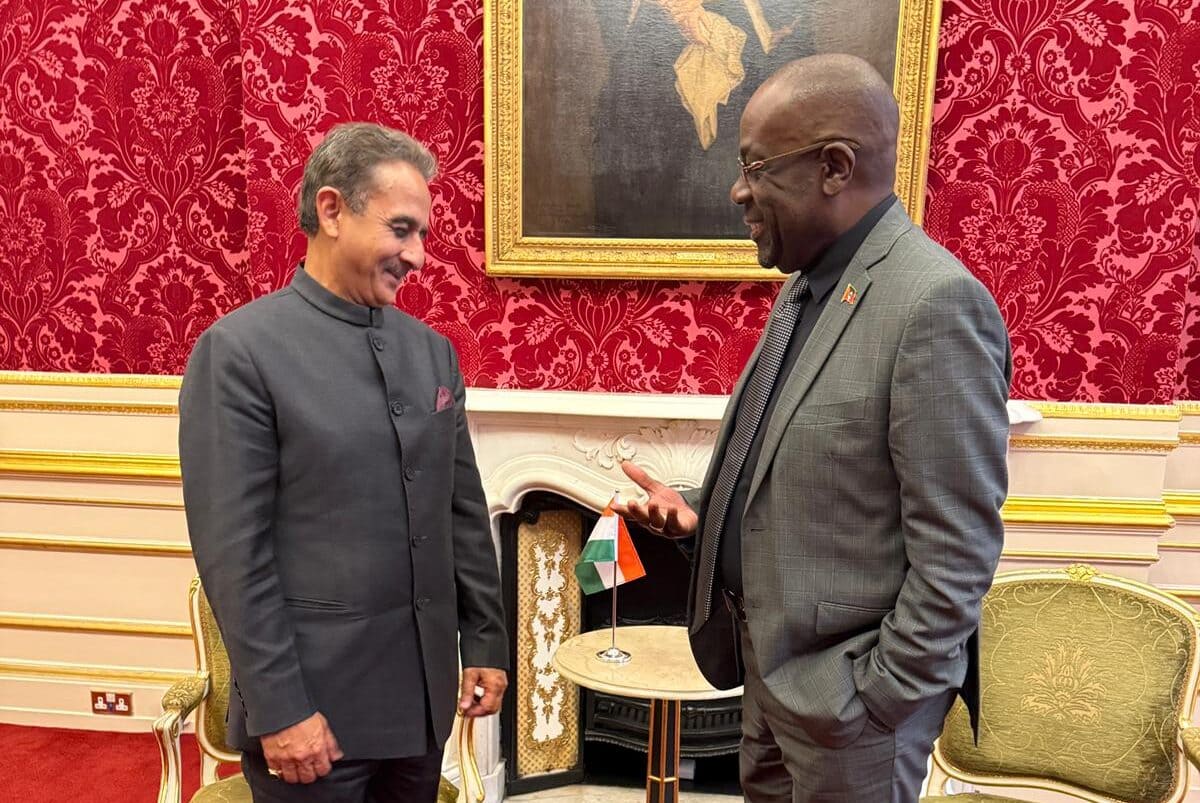
    KINGSTON, Jamaica — Ghana’s top diplomat Samuel Okudzeto Ablakwa concluded his three-day official visit to Jamaica with a symbolic tour of the iconic Bob Marley Museum in St. Andrew on Monday, highlighting the cultural dimension of bilateral relations between the two nations.

    The Ghanaian Foreign Minister was accompanied during the cultural excursion by Jamaican State Minister in the Office of the Prime Minister, Senator Abka Fitz-Henley, alongside members of the Ghanaian delegation. The museum visit represented a deliberate emphasis on the cultural connections that underpin the diplomatic relationship between the African nation and the Caribbean island.

    Senator Fitz-Henley characterized the diplomatic interactions with Minister Ablakwa as profoundly insightful. In his social media commentary, Fitz-Henley noted the Ghanaian minister’s specific interest in experiencing Jamaica’s musical heritage, particularly through the Bob Marley Museum, recognizing Jamaica’s significant global cultural influence.

    The Jamaican minister elaborated on the historical foundations of the bilateral relationship, pointing to deep-rooted historical and cultural connections that have transformed into a contemporary partnership marked by substantial diplomatic cooperation and mutual international support. Fitz-Henley emphasized that Minister Ablakwa’s visit to Kingston has undoubtedly reinforced these existing bonds.

    Prior to the cultural engagement, Minister Ablakwa participated in high-level bilateral discussions led by Jamaican Prime Minister Andrew Holness and Foreign Minister Senator Kamina Johnson-Smith. These talks focused on strengthening diplomatic and economic cooperation between the two nations.

    The Ghanaian delegation departed Jamaica from Norman Manley International Airport on Monday afternoon, concluding a visit that balanced formal diplomatic meetings with cultural appreciation, signaling a comprehensive approach to international relations.

  • PM and Minister of Energy and Transport tour progress at Blue Hills Solar Project

    PM and Minister of Energy and Transport tour progress at Blue Hills Solar Project

    Prime Minister Philip ‘Brave’ Davis and Energy Minister JoBeth Coleby-Davis conducted an inspection tour of the Blue Hills Solar Project, a significant renewable energy initiative developed by Madeleine Solar Power Limited. The high-profile visit underscored the government’s commitment to transitioning from theoretical energy planning to tangible implementation of sustainable power solutions.

    During the site visit, Minister Coleby-Davis emphasized the project’s transformative potential, stating: ‘The Blue Hills Solar plant demonstrates how renewable energy concepts are materializing into physical infrastructure—effectively converting abundant sunlight into sustainable electricity generation while creating enduring economic opportunities for Bahamian communities.’

    The Energy and Transport Ministry reaffirmed its strategic approach to advancing The Bahamas’ energy transformation through collaborative partnerships and measured policy implementation. This operational framework prioritizes the development of a more environmentally conscious and structurally robust energy grid capable of meeting the nation’s future power requirements while reducing dependency on traditional fossil fuels.

  • MTS to undergo forensic audit

    MTS to undergo forensic audit

    A comprehensive forensic audit will be conducted at National Maintenance Training & Security Company Ltd (MTS) following concerning revelations during a parliamentary inquiry that exposed significant operational challenges and substantial financial arrears owed by government entities.

    The inquiry before Parliament’s State Enterprises Joint Select Committee on January 26th was temporarily interrupted by a building alarm during discussions about firearm certification delays for MTS security personnel. When proceedings resumed, Independent Senator Anthony Vieira, SC, committee chairman, acknowledged police responsiveness to the incident without elaborating on its nature.

    MTS executives disclosed that government agencies owe the state-owned security company approximately $850 million in outstanding payments. CEO Brian Bachan detailed that the Education Ministry accounts for $450 million of this debt, followed by the Judiciary ($180 million), Sport Company ($30 million), Board of Inland Revenue ($25 million), and police services ($25 million).

    Public Utilities Ministry Permanent Secretary Neela Ram-Atwaroo confirmed inter-ministerial discussions are underway regarding debt collection, noting invoice discrepancies between ministries have complicated repayment processes. The Finance Ministry has committed additional allocations to address these arrears.

    The session revealed multiple operational challenges, including MTS Marketing Manager Sherwin Gosine’s disclosure of spending $250,000 on grass-cutting services—a figure that surprised committee members—and ongoing difficulties obtaining firearm certifications through the Trinidad and Tobago Police Service.

    MTS Chairman Adrian Barran stated the newly appointed board encountered an organization ‘under considerable strain’ requiring strategic redirection. The forensic audit, expected to commence by early February, will examine advance payments to contractors and work quality concerns over a six-to-eight month period. Barran emphasized any evidence of wrongdoing would be forwarded to appropriate authorities.

    Political tensions surfaced during proceedings when Minister Anil Roberts accused the former PNM administration of waging ‘war on licensed firearm holders,’ while Arouca/Lopinot MP Marvin Gonzales emphasized the committee’s duty to address state matters transparently without political theater. Committee Chairman Vieira ultimately stressed that regardless of political dimensions, the serious operational issues at MTS demand immediate attention.

  • Chief Sec: Traditions won’t stop progress

    Chief Sec: Traditions won’t stop progress

    In a decisive move signaling a new era of governance, Tobago House of Assembly (THA) Chief Secretary Farley Augustine has undertaken a comprehensive reshuffle of his executive council, reassigning numerous secretaries to different divisions. The swearing-in ceremony, held on January 26 at the Magdalena Grand Beach and Golf Resort in Lowlands, marked the official commencement of this restructured administration.

    Augustine delivered a powerful address challenging long-standing conventions, declaring that traditions—while valuable for cultural celebrations like the Tobago Heritage Festival—have no place in impeding effective governance. “I don’t intend to keep for any doctrine, the traditions or commandments of any man or woman or public officer,” he stated emphatically. “I don’t care what the traditions have been, I only care what the law says.”

    The Chief Secretary emphasized that his administration would prioritize legal frameworks over customary practices, asserting that any tradition not codified in law is subject to change in pursuit of efficiency. This approach, he explained, is essential to achieving Tobago’s development objectives without unnecessary bureaucratic obstacles.

    Augustine outlined an ambitious vision for the island’s transformation, predicting that by 2030, Tobago will be fundamentally different from its current state. Looking further ahead to 2045, he envisioned Tobago standing “head, shoulders, knees and toes above all of our regional counterparts” in terms of development and prosperity.

    The newly appointed secretaries received clear directives to execute their duties with urgency, discipline, and professionalism, removing any potential stumbling blocks to progress. Augustine reminded them that their work ultimately serves the people of Tobago, whose daily lives are directly impacted by governmental efficiency—or the lack thereof.

    The restructured cabinet includes Megan Morrison as Secretary in the Office of the Chief Secretary, Dr. Faith Brebnor (who also serves as Deputy Chief Secretary) overseeing Health and Wellness, and Adanna Joseph-Wallace leading Legal Affairs. Other key appointments include Trevor James (Strategic Planning and Development), Wane Clarke (Food Security), and Petal Ann Roberts (Finance, Trade and the Economy).

    Complete list of appointments:
    – Secretary in the Office of the Chief Secretary: Megan Morrison
    – Assistant Secretary in the Office of the Chief Secretary: Nigel Taitt
    – Secretary of Health and Wellness: Dr Faith Brebnor
    – Secretary of Legal Affairs: Adanna Joseph-Wallace
    – Secretary of Strategic Planning and Development: Trevor James
    – Secretary of Food Security: Wane Clarke
    – Secretary of Finance, Trade and the Economy: Petal Ann Roberts
    – Assistant Secretary of Finance, Trade and the Economy: Kern Alexis
    – Secretary of Environment, Climate Resilience and Energy: Darren Henry
    – Secretary of Public Infrastructure and Transportation: Nathisha Charles-Pantin
    – Secretary of Youth Empowerment and Sport: Keigon Denoon
    – Secretary of Community Development and Social Protection: Ian Pollard
    – Assistant Secretary of Community Development and Social Protection: Ackel Franklyn
    – Secretary of Housing, Settlements and Public Utilities: Ricky Joefield
    – Secretary of Tourism, Antiquities and Creative Industries: Zorisha Hackett
    – Assistant Secretary of Tourism, Antiquities and Creative Industries: Niketa Percy
    – Secretary of Education, Skills and Innovation: Orlando Kerr

  • Cubans residing in Nicaragua reiterate support for Venezuela

    Cubans residing in Nicaragua reiterate support for Venezuela

    The Cuban community residing in Nicaragua has issued a powerful declaration of solidarity with Venezuela, condemning what it describes as systematic aggression and destabilization campaigns targeting the Bolivarian nation’s sovereignty. The statement, disseminated through official social media channels, emerges amid heightened geopolitical tensions in Latin America.

    This proclamation strategically coincides with the 173rd anniversary of Cuban national hero José Martí’s birth, observed annually on January 28th. The timing underscores the deliberate invocation of Martí’s philosophical legacy, particularly his advocacy for Latin American unity and resistance against external intervention.

    The comprehensive statement articulates three primary concerns: the employment of unilateral coercive measures against Venezuela, coordinated disinformation campaigns designed to undermine democratic processes, and systematic attacks on the nation’s right to self-determination. These elements, according to the declaration, represent a concerted effort to disrupt regional stability.

    Drawing direct parallels between historical anti-colonial struggles and contemporary political challenges, the Cuban community in Nicaragua emphasized the enduring relevance of Martí’s vision. The statement characterized current events as a continuation of historical patterns of foreign intervention in Latin American affairs, necessitating renewed commitment to regional integration and mutual defense of sovereignty.

    Furthermore, the declaration reaffirmed Nicaragua’s alignment with Venezuela through the framework of regional cooperation alliances, highlighting existing bilateral agreements and diplomatic coordination mechanisms between left-leaning governments in the region.

    The statement concludes with an impassioned call for strengthened brotherhood between Cuban and Venezuelan peoples, framing this solidarity as both a moral imperative and strategic necessity in confronting perceived external pressures. This diplomatic communication represents the latest development in ongoing ideological alignment among certain Latin American nations advocating for reduced U.S. influence in the region.

  • As deadline nears, gov’t says frustrating reinstatement efforts unacceptable

    As deadline nears, gov’t says frustrating reinstatement efforts unacceptable

    Prime Minister Godwin Friday has condemned as “unacceptable” the bureaucratic obstacles facing public servants seeking reinstatement after being dismissed under the previous administration’s COVID-19 vaccine mandate. The criticism comes as the January 31, 2026 deadline for reinstatement approaches under the New Democratic Party (NDP) government’s policy.

    Attorney General Louise Mitchell revealed that 116 workers terminated under the Unity Labour Party’s 2021 vaccine requirement had not returned to work by December 2025. Of these, 100 have now resumed duties, with the government successfully placing 92 individuals in positions. However, union reports indicate some returning employees faced rejection at their previous workplaces, with officials claiming unavailable positions.

    The NDP administration maintains it is implementing the March 2023 High Court decision by Justice Esco Henry, which declared the vaccine mandate unconstitutional and ordered reinstatement with full benefits. This stance persists despite the Court of Appeal’s subsequent 2-1 majority decision overturning the ruling. The legal battle has now advanced to London’s Privy Council for final adjudication.

    Mitchell emphasized the government’s commitment to ensuring respectful treatment of affected workers, stating: “The policy is for persons to return to work fully with their benefits intact. Everyone in a position that affects implementation must adhere to that.” She detailed comprehensive reinstatement protocols covering vacation leave accrual, pension eligibility, and special considerations for those employed elsewhere.

    Prime Minister Friday affirmed his government’s principled position, noting: “It wasn’t just a matter for the leadership of the party and now the leadership of the government. We felt this was a right and just thing to do.” While acknowledging implementation challenges, he expressed overall satisfaction with the reinstatement process’s progress.

    The government has established mechanisms for workers seeking exceptions to standard reinstatement procedures, including no-pay leave options for those with current employment obligations and streamlined processes for retirement-age employees.

  • Trump dreigt Canada met 100% tarief vanwege handelsakkoord met China

    Trump dreigt Canada met 100% tarief vanwege handelsakkoord met China

    U.S. President Donald Trump has issued a stark warning to Canada, threatening to impose 100% tariffs on all Canadian goods entering the United States if Prime Minister Mark Carney proceeds with a trade agreement with China. In a post on Truth Social, Trump asserted that such a deal would enable China to “completely swallow Canada,” devastating its businesses, social fabric, and way of life.

    The warning comes amid heightened tensions between the two North American neighbors, exacerbated by Carney’s recent criticism of Trump’s Greenland policy and his calls for “middle powers” to collaborate against U.S. hegemony. While Carney avoided directly addressing Trump’s tariff threat in a recent video statement, he emphasized Canada’s focus on domestic economic resilience, noting, “We cannot control what other countries do, but we can be our own best customer.”

    Carney’s visit to China this month resulted in a trade agreement aimed at improving strained bilateral relations. China is Canada’s second-largest trading partner after the U.S. Initially, Trump appeared supportive of the outreach, stating on January 16 that securing a deal with China was advisable. However, his stance has since hardened significantly.

    Canadian Trade Minister Dominic LeBlanc clarified that the agreement with China does not constitute a free trade deal but addresses key tariff issues. The Chinese Embassy in Canada expressed readiness to implement the consensus reached between the two countries.

    Trump also suggested that China might use Canada to circumvent U.S. tariffs, warning that Canada must not become a “dumping ground” for Chinese goods. The potential imposition of 100% tariffs would severely impact Canadian industries such as metal production, automotive manufacturing, and machinery.

    The relationship between Trump and Carney, initially cordial, has deteriorated notably. At the World Economic Forum in Davos, Carney received a standing ovation for his remarks on middle-power cooperation, while Trump retorted that Canada “exists because of the United States”—a claim Carney dismissed by asserting that Canada thrives because of its people.

    In retaliation, Trump rescinded Canada’s invitation to his Peace Board, an initiative focused on international conflict resolution and the future of Gaza. Additionally, Trump has dismissed the USMCA trade agreement—scheduled for review in July—as “irrelevant.”

    Historically, Trump has frequently deployed tariff threats during his presidency, though he has occasionally withdrawn or moderated them following negotiations. Most recently, he eased threats of stricter tariffs on European allies after NATO leaders committed to enhancing Arctic security.

    The Canadian Chamber of Commerce has urged both governments to seek mutual understanding to alleviate the uncertainty plaguing businesses amid ongoing trade conflicts.

  • Juan Pablo Duarte: the political thought behind the father of the nation

    Juan Pablo Duarte: the political thought behind the father of the nation

    Juan Pablo Duarte, founding father of the Dominican Republic, established a profound political philosophy that continues to serve as a moral compass for national leadership centuries after the nation’s independence. His vision positioned politics not as speculative endeavor but as the “purest and most worthy science after philosophy”—a noble pursuit demanding complete dedication to national interests above personal gain.

    According to Wilson Gómez Ramírez, president of the Duartian Institute, the patriot conceptualized politics as an exclusive channel for public service rather than personal enrichment. This approach inherently required sacrifice and commitment to national advancement through transparent, honest governance. Duarte’s famous exhortation—”Let us work for and for the homeland, which is to work for our children and for ourselves”—encapsulates this selfless ideology.

    Duarte personally exemplified this integrity through remarkable accountability practices. As general and deputy commander of the Southern Expeditionary Army, when unexpectedly summoned to account for expenditures, he provided meticulous documentation showing he had spent only 17.3% of allocated funds, returning 82.7% to the national treasury—an unprecedented act of fiscal responsibility that earned him official discharge.

    The revolutionary leader’s fundamental bill extensively outlined his institutional vision, emphasizing unwavering commitment to rule of law, respect for basic rights, legal certainty, and national sovereignty. His constitutional principles continue to shape Dominican governance, with the State maintaining the name he designated, the flag waving with pride, and the national motto “God, Fatherland and Liberty” enshrined in the Constitution.

    When asked how Duarte would view contemporary Dominican Republic, Gómez Ramírez suggested the founder would feel “ashamed at the lack of honesty, commitment and selflessness” among those leading national life, where private interests frequently supersede national priorities. Yet he would simultaneously feel pride seeing aspects of his dream realized through enduring national symbols and institutions.

    Born January 26, 1813 in Santo Domingo to Spanish merchant Juan José Duarte Rodríguez and Manuela Díez Jiménez, Duarte’s political consciousness developed during European studies after the University of Santo Domingo closed during Haitian occupation. Exposure to liberal and nationalist movements in England, France and Spain profoundly shaped his vision for Dominican independence, which he pursued upon returning in 1831.

    The seminal moment arrived July 16, 1838 with Duarte’s establishment of La Trinitaria—a secret society dedicated to independence organizing. Initial members Juan Isidro Pérez, Félix María Ruiz and José María Serra were later joined by crucial figures Francisco del Rosario Sánchez and Matías Ramón Mella, collectively achieving independence proclamation on February 27, 1844. This organization instilled core values of patriotic love, sacrifice and civic commitment that defined the liberation movement and continue to resonate in Dominican political culture.