分类: politics

  • PM Rejects Claim He Misrepresented Letter

    PM Rejects Claim He Misrepresented Letter

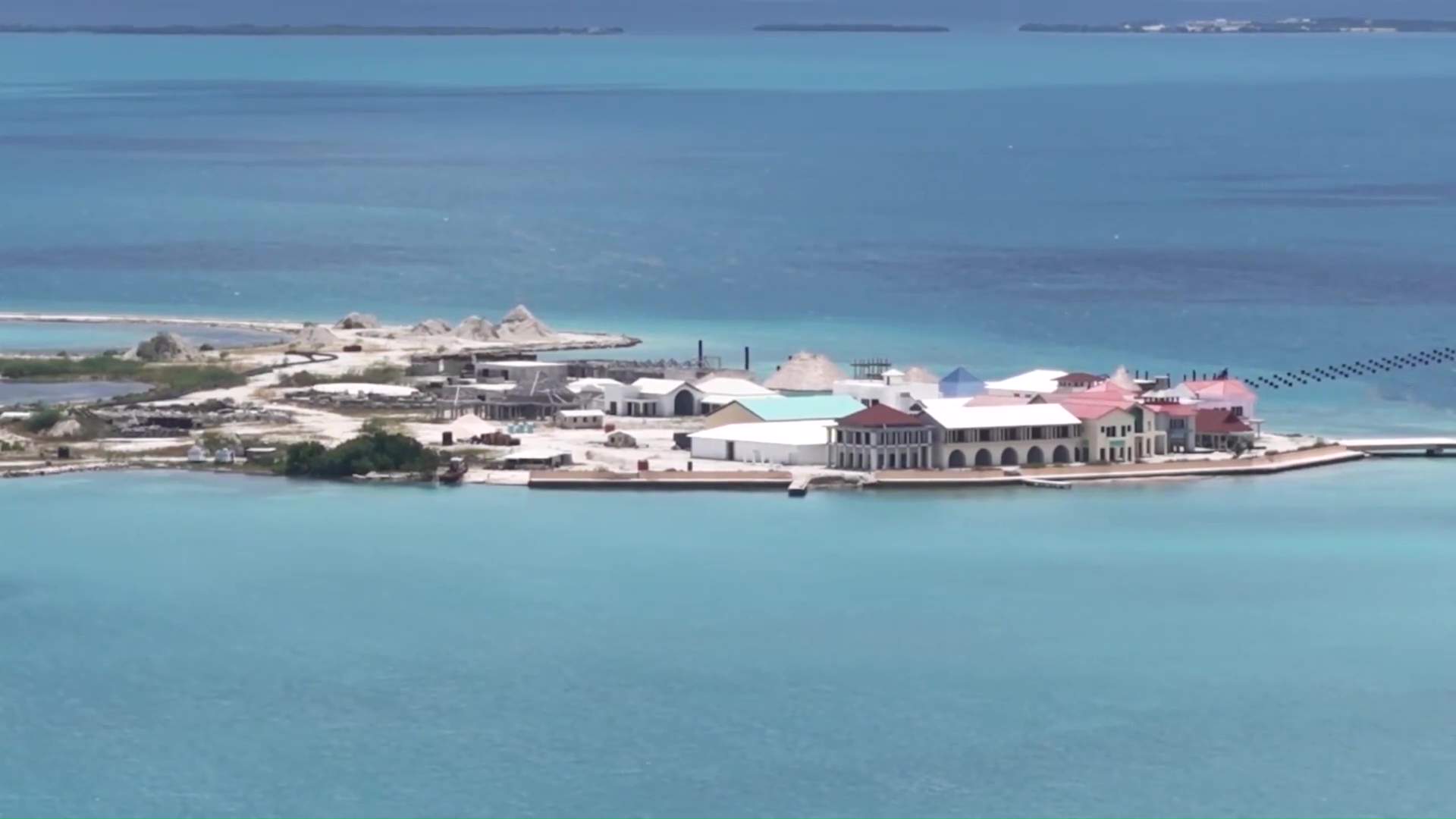
    Belize’s Prime Minister John Briceño has vigorously refuted accusations that he mischaracterized correspondence from U.S. Congressman Carlos Gimenez during a recent media appearance. The political controversy emerges amidst ongoing tensions surrounding the stalled Stake Bank project and its implications for Belize’s investment climate.

    The diplomatic friction intensified when Congressman Brian Mast elevated concerns about Belize’s investment environment to Secretary of State Marco Rubio, prompted by correspondence from the Feinstein Group regarding the Stake Bank development. Prime Minister Briceño maintains his administration remains unconcerned about these developments, emphasizing the robustness of Belize’s judicial system.

    During a morning show interview, Briceño addressed agricultural collaboration successes highlighted by Congressman Gimenez, explicitly denying any connection to the Stake Bank controversy. “I did not link that to Stake Bank in the least,” the Prime Minister stated, characterizing the allegations as fundamentally untrue.

    The Prime Minister attributed the criticism to orchestrated efforts by interested parties, noting that the Stake Bank matter has progressed through Belize’s legal system with the upper court ruling in favor of the government’s acquisition rights. Briceño affirmed that while appealing remains the Feinstein Group’s legal prerogative, his government maintains confidence in the nation’s judicial integrity and fair processes.

    The administration’s position underscores Belize’s commitment to transparent governance and judicial independence amid international scrutiny of its investment landscape.

  • Security crisis : High-level strategic meeting

    Security crisis : High-level strategic meeting

    Port-au-Prince, Haiti – In a decisive high-level meeting convened on Wednesday, March 18, 2026, Haitian Prime Minister Alix Didier Fils-Aimé articulated a comprehensive national strategy to confront the nation’s escalating security crisis. The strategic session, held at the Prime Minister’s Office, brought together the National Commission for Disarmament, Dismantling and Reintegration (CNDDR) and key international partners to coordinate a unified response.

    Prime Minister Fils-Aimé delivered a resolute declaration of the government’s commitment to fully restore state authority across Haiti’s national territory. This initiative emerges as Haitian security forces intensify operations to reclaim control of regions dominated by armed factions. The government’s approach is dual-faceted, merging robust law enforcement actions with structured social reintegration programs.

    Addressing the core of the crisis, the Prime Minister condemned the systematic recruitment of youth by criminal networks as a grave assault on public order and the nation’s future. He emphasized the state’s dual responsibility: to uncompromisingly suppress criminal activities while providing viable alternatives for those ensnared by armed groups, particularly children, adolescent girls, and women.

    The reintegration policy was explicitly framed not as a concession but as an integral component of a broader security strategy. Justice Minister Patrick Pélissier received directives to strengthen judicial actions against crime, including the deployment of judicial centers nationwide to ensure rigorous law enforcement.

    To ensure implementation coherence, Prime Minister Fils-Aimé announced the creation of a strategic coordination mechanism between the state and international partners. CNDDR President Guerda Prévilon was tasked with leading this effort, developing integrated operational plans that include secure reception infrastructure, training programs, and socioeconomic support systems.

    The meeting garnered significant international support, with Carlos R. Massieu of the United Nations Integrated Office in Haiti (BINUH) and representatives from IOM, UNICEF, European Union, UNDP, UNESCO, and UNOPS affirming their commitment to assist the Haitian government while respecting national priorities and sovereignty.

    The government’s unified message underscores Haiti’s determination to reestablish republican order, protect vulnerable populations, and ensure universal accountability under the law through this balanced approach of authority and social responsibility.

  • Grenada included in expanded US visa bond programme

    Grenada included in expanded US visa bond programme

    The Grenadian Ministry of Foreign Affairs has issued an official advisory confirming the United States government’s expansion of its visa bond program, which now includes Grenada among the affected nations. This policy development specifically targets business and tourism visitor visas (B1/B2 categories), introducing potential financial obligations for applicants ranging from $5,000 to $15,000 based on individual assessments during visa interviews.

    According to the Ministry’s statement, U.S. authorities have emphasized that the bond requirement will be implemented on a case-by-case basis rather than as an automatic mandate for all Grenadian applicants. The discretionary nature of the program means immigration officials will evaluate each application individually to determine bond necessity.

    In response to this diplomatic development, the Grenadian government has initiated formal engagements with U.S. counterparts to advocate for national interests and ensure proper consideration for Grenadian citizens throughout the policy’s implementation phase. The Ministry emphasized its commitment to protecting the rights and concerns of Grenadian nationals within the framework of this new visa requirement.

    The advisory concludes with recommendations for the public to rely exclusively on official information channels and maintain strict compliance with all visa conditions. This cautionary guidance aims to prevent misinformation and ensure successful visa applications amidst the changing immigration landscape.

  • Leacock advocates SVG moving beyond friendship to become family with Taiwan

    Leacock advocates SVG moving beyond friendship to become family with Taiwan

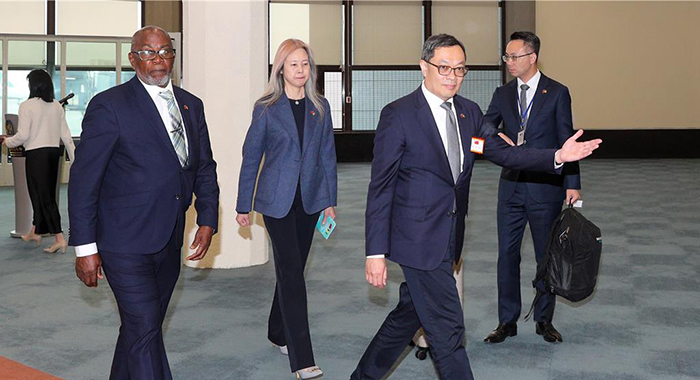
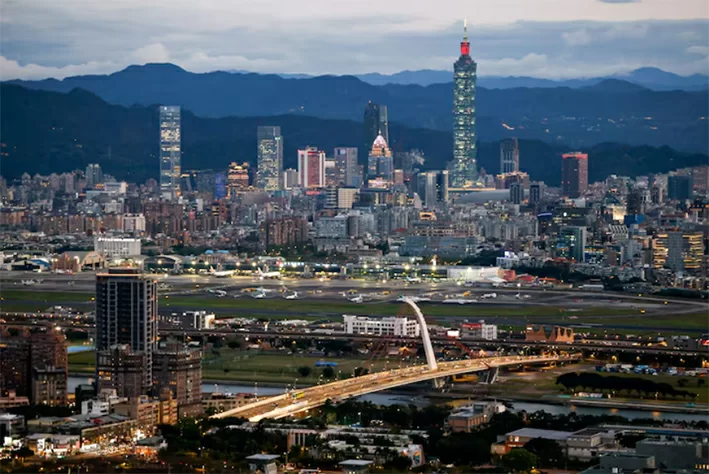
    In a significant diplomatic overture, St. Vincent and the Grenadines’ Deputy Prime Minister and National Security Minister St Claire Leacock has called for strengthening bilateral relations with Taiwan beyond conventional diplomacy, characterizing the partnership as evolving into a familial bond. The high-ranking official articulated this vision upon arriving at Taoyuan International Airport with his delegation on Tuesday, where they were formally received by Taiwan’s Deputy Foreign Minister Chen Ming-chi.

    Representing the newly elected New Democratic Party administration under Prime Minister Godwin Friday, Minister Leacock emphasized the profound appreciation for Taiwan’s extensive support across multiple sectors including education, agriculture, infrastructure, and fisheries over their 45-year relationship. “We come with open minds and hearts to build on the strong bridges of friendship that have existed over years,” Leacock stated, delivering a message on behalf of the Governor-General, Prime Minister, and citizens of St. Vincent and the Grenadines.

    The Security Minister revealed that Prime Minister Friday had entrusted him with a “great task” during this inaugural visit following their November 2023 electoral victory. He particularly noted Taiwan’s immediate recognition of the new administration’s continuity as “a very profound signal” demonstrating readiness to engage with the incoming government.

    Leacock expressed particular interest in reactivating the robust relationship dynamics established during Sir James Mitchell’s tenure, aiming to advance Vincentian society toward first-world status through comprehensive cooperation. The five-day itinerary includes substantive ministry-to-ministry discussions with Taiwan’s foreign, police, and defense ministries, culminating in an anticipated meeting with President Lai Ching-te.

    The delegation comprises Heritage and Social Development Minister Shevern John, Junior Education Minister Laverne King, and Leacock’s wife Margaret, a retired educator. Minister Leacock concluded with optimistic expectations for accelerated cooperation, emphasizing the unique characterization of Taiwan-St. Vincent relations: “We are friends, but more so, we are family” – a testament to 45 years of sustained diplomatic partnership.

  • Springer backs green industry push for St Andrew but urges caution

    Springer backs green industry push for St Andrew but urges caution

    In a nuanced parliamentary address during the Appropriations Bill debate, St Andrew MP Dr. Romel Springer presented a dual-position stance on Barbados’s ambitious green industrialization agenda. While formally endorsing the government’s proposed Green Industrialisation Gateway Advantage (GIGA) initiative, the parliamentarian issued a critical caveat: economic advancement must not jeopardize the parish’s delicate ecological systems.

    Dr. Springer characterized St Andrew as among the island’s most environmentally sensitive regions, emphasizing its exceptional ecological diversity. He articulated a vision where development coexists with preservation, stating his unwavering support for maintaining the area’s natural flora and fauna. “St Andrew being one of the more ecologically diverse parts of Barbados, obviously I would not want to see any type of development that would jeopardize its pristine beauty,” he told the House of Assembly.

    However, the MP simultaneously advocated for his constituents’ economic aspirations, highlighting the rural parish’s pressing needs for investment, infrastructure development, and employment opportunities. He noted the current reality where residents endure extensive commutes for employment, suggesting the GIGA initiative could alleviate this burden by bringing sustainable industry closer to their communities.

    The GIGA project, announced by Finance Minister Ryan Straughn during Monday’s Budget speech, aims to establish Barbados as a hub for environmentally sustainable industries. The initiative specifically promises job creation, climate-resilient industrial development, and positioning the island as a green innovation center.

    Dr. Springer highlighted both immediate construction-phase employment and long-term career opportunities, asserting that St Andrew possesses the intellectual capital and talent necessary to support innovative industries. He acknowledged potential resident concerns about introducing industrial infrastructure to a rural parish but maintained that the long-term benefits for northern Barbados communities would be substantial and transformative.

  • TSA staffing shortages are causing long wait times at airports across U.S Airports

    TSA staffing shortages are causing long wait times at airports across U.S Airports

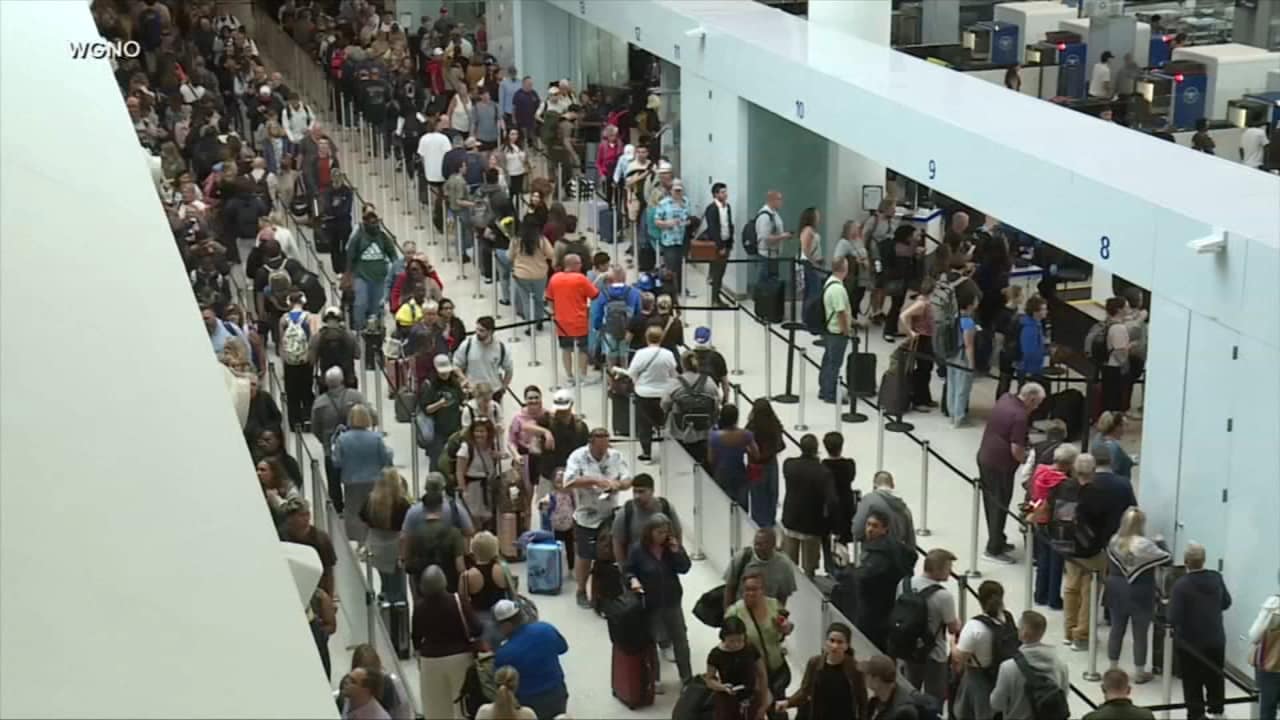
    A deepening crisis is unfolding at airports across the United States as critical staffing shortages within the Transportation Security Administration (TSA) trigger extensive security delays and operational disruptions. The situation stems from the ongoing partial government shutdown that has left approximately 50,000 security officers working without pay since February 14th.

    According to CBS News, approximately 10% of TSA personnel nationwide called out of work on Monday, with some major airports experiencing absentee rates exceeding one-third of their workforce over the weekend. The Department of Homeland Security confirms that more than 360 security officers have resigned since the shutdown began.

    The staffing crisis has created cascading effects throughout the aviation security system. Understaffed checkpoints are struggling to process passenger volumes, resulting in significantly extended wait times. These disruptions were further exacerbated by severe winter weather conditions affecting parts of the country earlier this week.

    Financial Hardship and Essential Service Mandate

    TSA employees occupy a unique position within federal workforce regulations. Unlike many government workers who are furloughed during shutdowns, security personnel are deemed essential to national security and are legally required to report to work despite the payroll suspension. The agency’s pay schedule structure meant employees received their last partial paycheck in early March, with Friday marking their first scheduled payday without compensation.

    Aaron Barker, a representative for the TSA workers’ union in Atlanta, revealed the severe personal toll on employees: ‘Many are coping with eviction notices, vehicle repossessions, empty refrigerators and overdrawn bank accounts. Every available financial option has been exhausted, yet these officers still report to work protecting the traveling public.’

    Political Impasse and Historical Precedents

    The funding stalemate centers on immigration policy reforms within the Trump administration, though TSA operations are unrelated to the political disagreement. Both political parties share responsibility for the impasse—Democrats have blocked comprehensive Department of Homeland Security funding without immigration reforms, while Republicans have rejected proposals to reopen non-immigration agencies including TSA.

    Historical patterns suggest that airport disruptions may eventually pressure lawmakers toward resolution. The record-setting 43-day shutdown in 2018 ended just five days after transportation officials forced 40 major airports to reduce air traffic due to staffing shortages. Similarly, a 2019 shutdown concluded hours after air traffic controller sick calls threw East Coast travel into disarray.

    Travel Advisory and Operational Outlook

    TSA’s acting deputy administrator Adam Stahl warned Fox News that continued deterioration could force actual airport closures: ‘If this continues, it’s not hyperbole to suggest we may have to quite literally shut down airports.’

    Travelers are advised to build significant extra time into their airport itineraries and monitor airport advisories. Unlike previous shutdowns, this partial closure affects only TSA operations while leaving air traffic control and most other government functions unaffected, potentially limiting the ultimate scale of travel disruptions compared to historical precedents.
  • Regering stelt crisisteam in om gevolgen oliecrisis op te vangen

    Regering stelt crisisteam in om gevolgen oliecrisis op te vangen

    The Surinamese government has activated a specialized crisis response team to mitigate the economic repercussions of soaring global oil prices triggered by ongoing Middle Eastern hostilities. President Jennifer Simons announced the formation of this ministerial-level task force through an official statement on March 18th.

    President Simons emphasized that international geopolitical developments are exerting substantial pressure on the nation’s economy, particularly through rapidly escalating fuel costs. The newly assembled team—comprising key ministers and senior advisors—will maintain continuous monitoring of the situation while developing strategic policy options to address the crisis.

    The administration has prioritized minimizing adverse effects on both national stability and citizen welfare throughout all phases of the global energy crisis. In immediate response measures, the government will accelerate disbursement of previously planned subsidies while the Ministry of Finance designs additional community support mechanisms.

    Simons noted that the velocity of recent price fluctuations necessitates flexible yet calculated governmental action. The crisis team will serve as the central coordination body for preparing and implementing subsequent interventions based on evolving market conditions.

    Official communications underscore that the duration of Middle Eastern conflict will be the primary determinant of Suriname’s economic exposure. The government is maintaining collaborative surveillance with relevant international institutions to track developments and calibrate responses accordingly.

  • Costa Rica Rejects Cuban Government, Orders Embassy Closure

    Costa Rica Rejects Cuban Government, Orders Embassy Closure

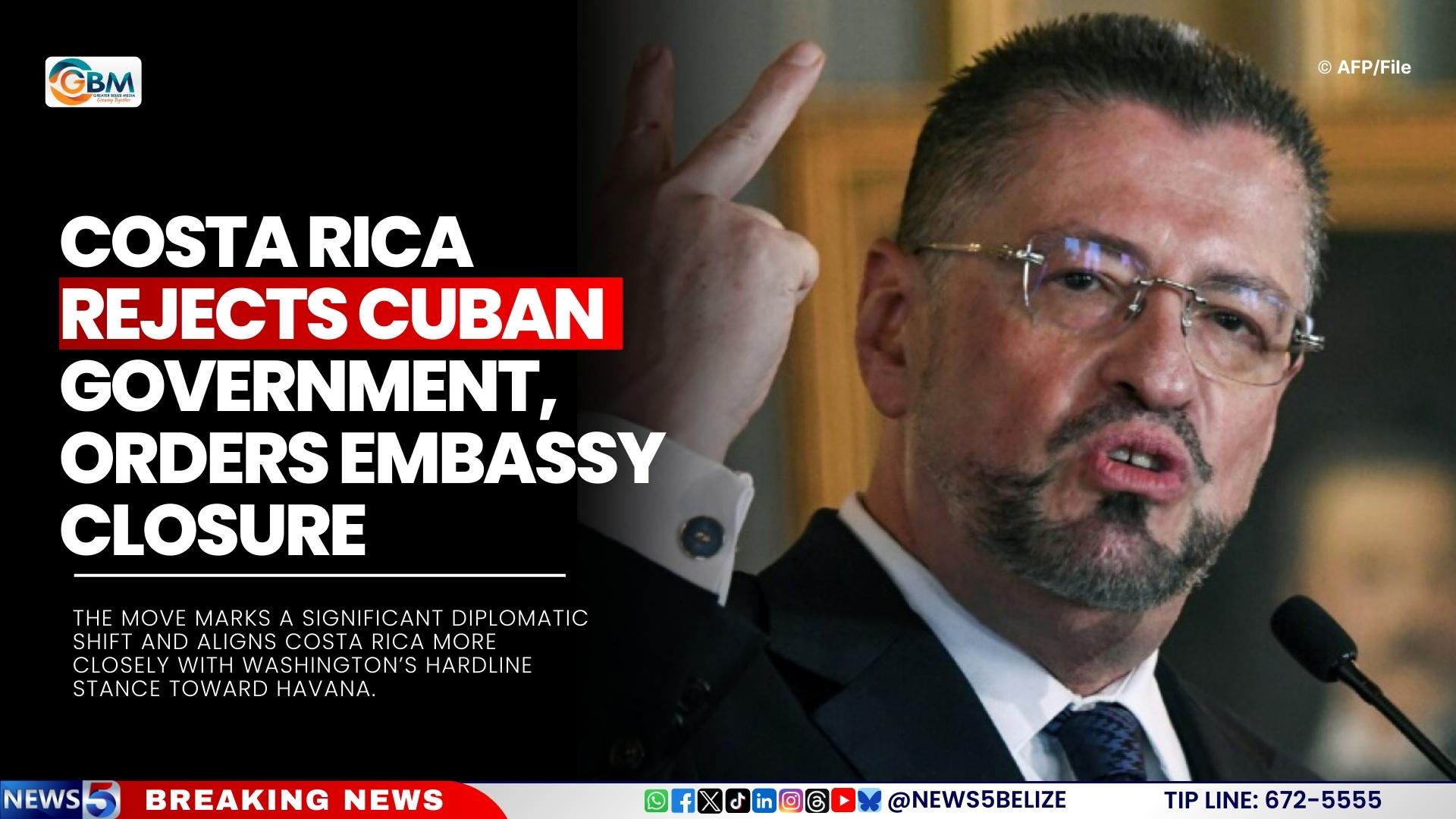
    In a dramatic foreign policy reversal, Costa Rican President Rodrigo Chaves declared on March 18, 2026 that his government would cease recognizing Cuba’s communist regime and immediately close the Cuban embassy in San José. The announcement came during a public event attended by the U.S. ambassador, signaling a clear alignment with Washington’s hardline approach toward Havana.

    President Chaves justified the decision by citing what he described as systemic ‘mistreatment, repression, and undignified conditions’ endured by the Cuban people. This diplomatic rupture follows similar actions taken by Ecuador earlier this month, which expelled Cuban Ambassador Basilio Gutierrez and declared diplomatic staff persona non grata.

    The move occurs against the backdrop of intensified U.S. pressure on Cuba under the Trump administration. Recent weeks have seen widespread blackouts and fuel shortages across the island nation, affecting critical services from healthcare to municipal waste collection. Some Cuban residents have resorted to alternative energy sources, including solar panels, to cope with the deteriorating infrastructure.

    The diplomatic shift has sparked regional discussions about foreign policy alignment. While Belize’s Prime Minister John Briceño described ongoing negotiations as ‘delicate,’ Opposition Leader Tracy Panton emphasized Cuba’s historical support for Belize’s independence and healthcare system, warning that rural clinics depend heavily on Cuban medical personnel.

  • China biedt Taiwanezen energiezekerheid aan in ruil voor ‘vreedzame hereniging’

    China biedt Taiwanezen energiezekerheid aan in ruil voor ‘vreedzame hereniging’

    Amid global energy shortages exacerbated by Middle East conflicts and strategic maritime chokepoints, China has presented Taiwan with a new proposition: guaranteed energy security in exchange for accepting Chinese sovereignty. The offer, made Wednesday by Chen Binhua, spokesperson for China’s Taiwan Affairs Office, represents Beijing’s latest attempt to promote reunification benefits during a period of worldwide energy instability.

    Speaking at a Beijing press conference, Chen articulated that “peaceful reunification” would enable Taiwan to benefit from the resource security of a “strong motherland,” ensuring stable and reliable energy supplies for improved living standards. This proposition emerges as Taiwan faces potential energy challenges due to its dependence on Qatari liquefied natural gas (LNG), which constitutes approximately one-third of its imports.

    Taiwanese President Lai Ching-te responded indirectly during a Democratic Progressive Party meeting, asserting that energy supplies for coming months remain secured through diversified sourcing strategies. The administration emphasized upcoming increased LNG imports from the United States, Taiwan’s primary international ally, beginning in June.

    The Chinese proposal reiterates Beijing’s longstanding “one country, two systems” framework, which would maintain Taiwan’s autonomy while bringing it under Chinese control—a model rejected by all major Taiwanese political parties. The offer follows October revelations by China’s Xinhua News Agency outlining purported reunification benefits, including economic support contingent on governance by “patriots.”

    Notably, China continues to prioritize its own energy security during the global crisis. As the world’s largest oil importer, Beijing recently banned fuel exports until at least late March to prevent domestic shortages—a measure highlighting the seriousness with which China approaches energy stability after recording $22 billion in fuel exports last year.

  • State Department Says Visa Bonds On Antigua and Barbuda and Other Nations Aim to Combat Illegal Overstay Rates, saves Americans money

    State Department Says Visa Bonds On Antigua and Barbuda and Other Nations Aim to Combat Illegal Overstay Rates, saves Americans money

    The U.S. State Department is significantly expanding its visa bond initiative, extending the policy to encompass 50 countries effective April 2. Nationals from these designated nations seeking B-1/B-2 business or tourism visas will be required to post a $15,000 financial guarantee prior to visa issuance. This bond serves as a financial incentive for compliance, with full reimbursement granted to travelers who depart the United States in accordance with their visa terms.

    The program expansion targets the reduction of illegal visa overstays, a persistent challenge in immigration enforcement. Current data demonstrates remarkable effectiveness: approximately 1,000 visas have been issued under the bond requirement, with 97% of bonded visitors returning to their home countries before visa expiration. This compliance rate presents a stark contrast to the previous administration’s final year, which recorded over 44,000 overstays from these same 50 nations.

    Twelve additional countries will now fall under the bond mandate: Cambodia, Ethiopia, Georgia, Grenada, Lesotho, Mauritius, Mongolia, Mozambique, Nicaragua, Papua New Guinea, Seychelles, and Tunisia. These join 38 nations already subject to the requirement, primarily across Africa, Asia, and the Caribbean. The State Department maintains that future designations will be determined through ongoing assessment of immigration risk factors.

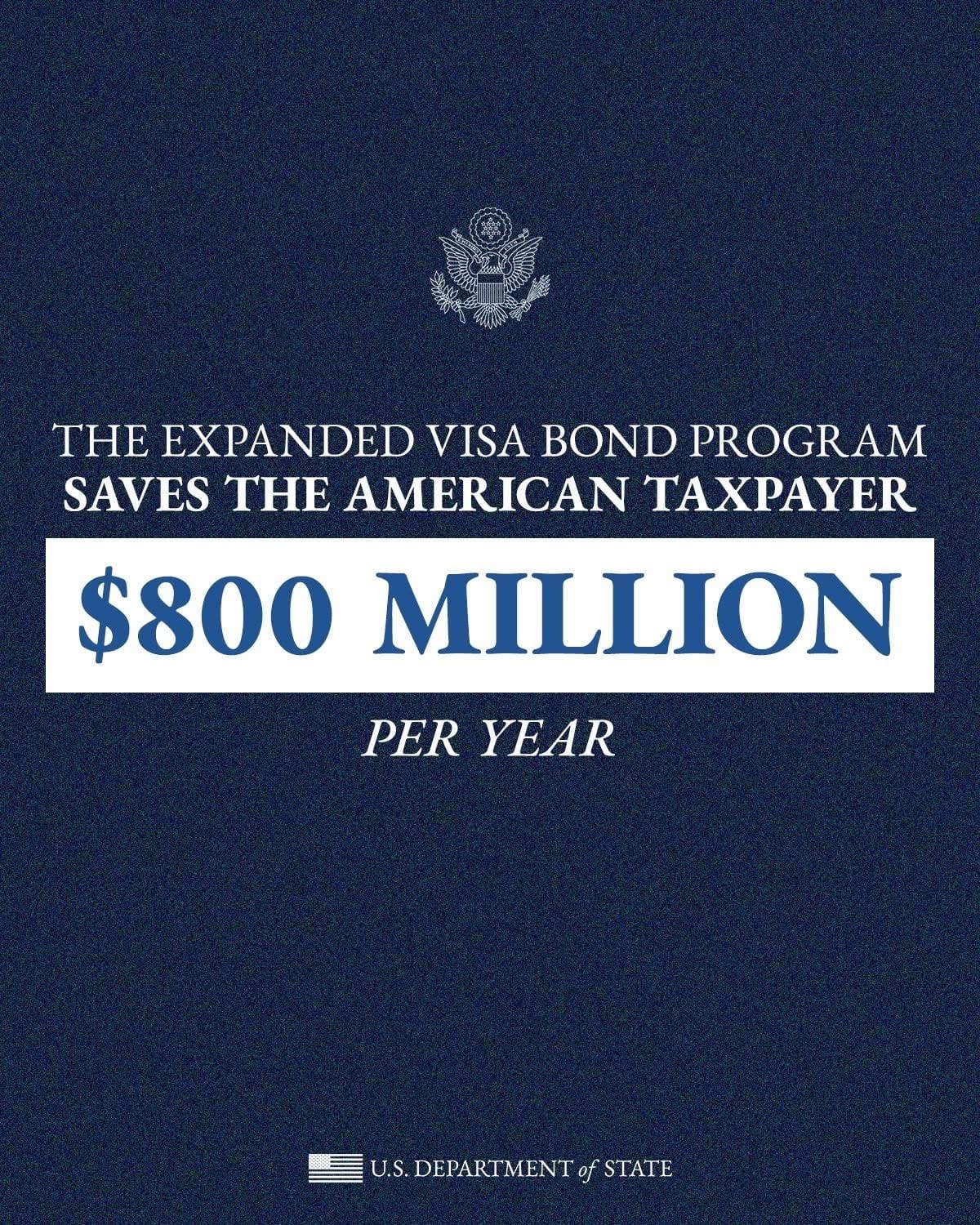
    Beyond enforcement benefits, the program generates substantial taxpayer savings. With the average cost of removing an illegally present individual exceeding $18,000, the bonded visa system prevents significant expenditure. State Department estimates indicate approximately $800 million in annual savings—funds that would otherwise be allocated to deportation procedures for those who overstay their authorized period.