分类: politics

  • PM Browne calls for a realignment of African and Caribbean economies

    PM Browne calls for a realignment of African and Caribbean economies

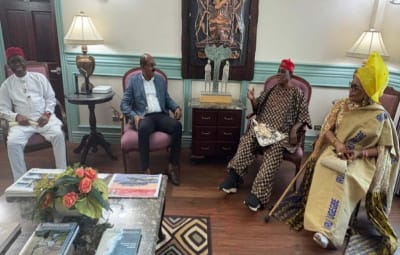
    In a significant address to a Nigerian royal delegation, Antigua and Barbuda Prime Minister Gaston Browne issued a powerful appeal for economic transformation across African and Caribbean nations. The Prime Minister received Dr. Nwachukwu Anakwenze, soon to be installed as King of Abagana Kingdom from Nigeria’s Anambra State, at his official residence.

    Browne delivered a critical analysis of what he termed ‘extractive economies’ that continue to plague both regions. He articulated how historical plundering created generational wealth in Europe while simultaneously establishing persistent poverty in Africa and the Caribbean. The Prime Minister emphasized that these nations have yet to achieve their full economic potential due to these deeply entrenched systems.

    The Antiguan leader presented a concrete example from his own administration’s experience with international banking operations. When two major Canadian banks attempted to withdraw from the region and sell their local branches externally, Browne’s government intervened decisively. Despite facing personal criticism and being labeled a ‘dictator,’ he refused to sign the necessary Vesting Orders unless the banks agreed to local ownership.

    This steadfast approach resulted in the successful sale of bank branches to local financial institutions, which have since grown substantially and now retain profits within the domestic economy. Browne framed this as emblematic of the ‘bold leadership’ required to counter special interests that resist economic sovereignty.

    The Prime Minister connected current economic challenges directly to historical injustices, noting how European powers deliberately destabilized African and Caribbean economies through slavery and colonialism. He asserted that it remains possible to redesign economic systems to transition from extractive to productive models that benefit regional populations.

    Browne expressed particular satisfaction with the Nigerian delegation’s visit and indicated his intention to reciprocate with a future visit to the Abagana Kingdom, signaling strengthened diplomatic ties between the regions.
  • SHE’S OUT OF PLACE

    SHE’S OUT OF PLACE

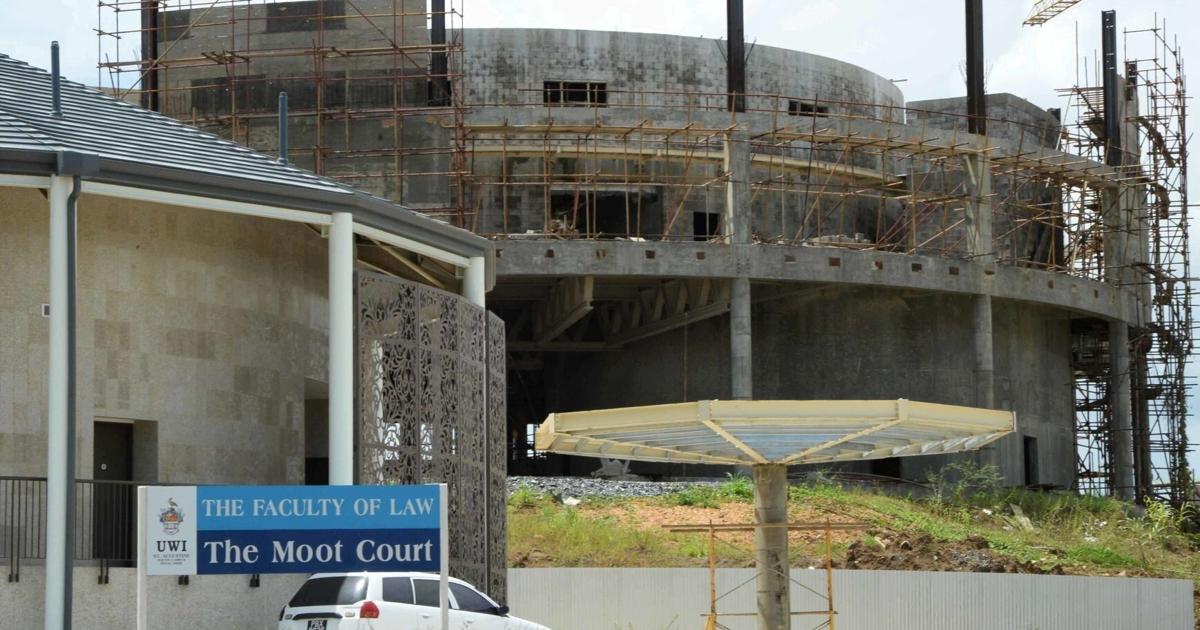
    A significant institutional conflict has emerged between Trinidad and Tobago’s Tertiary Education Ministry and the leadership of the University of the West Indies (UWI) regarding the planned relocation of the Faculty of Law to the Debe South Campus. Minister Dr. Prakash Persad has expressed profound shock and disapproval after UWI officials informed students of a government-mandated relocation without proper authorization.

    The controversy stems from an official email dispatched on March 18, 2026, by Law Dean Dr. Alicia Elias-Roberts, which asserted that the government had ordered the law school’s transfer to the Debe facility by August 2026. The communication detailed a recent site inspection conducted by university administrators and media representatives, and scheduled town hall meetings to address student concerns.

    Minister Persad vehemently disputed the university’s claims during an interview, emphasizing that no definitive government policy exists regarding the campus’s future. He revealed that during a January 19 meeting with all stakeholders—including UWI Principal Prof. Rose-Marie Belle Antoine and representatives from Palo Seco Agricultural Enterprises Ltd—it was explicitly communicated that final decisions would require Cabinet approval led by Prime Minister Kamla Persad-Bissessar.

    The minister characterized the university’s actions as particularly discourteous, noting that neither his ministry nor the construction contractors received prior notification about the media visit to the ongoing construction site. He reiterated that the Debe campus remains under government supervision until renovation works are completed and officially handed over to UWI.

    Historical context reveals the campus represents a $600 million project initially conceived during Persad-Bissessar’s first administration (2010-2015). Despite its original purpose to host management studies, psychology, economics, education, and law programs, the facility has remained largely inactive for nearly a decade, seeing only temporary use as a COVID-19 step-down facility.

    The current administration has committed to revitalizing the abandoned campus, with Minister Persad assuring that necessary corrections are underway to prepare the facility for potential September occupancy. However, he maintains that ultimate determinations regarding the campus’s academic purpose will be made at the cabinet level, not by university administration.

    University officials have not provided immediate commentary regarding the minister’s statements, leaving unresolved the tension between institutional autonomy and governmental oversight in Trinidad’s higher education landscape.

  • Prime Minister Drew Confirms Humanitarian Aid to Cuba Within Weeks

    Prime Minister Drew Confirms Humanitarian Aid to Cuba Within Weeks

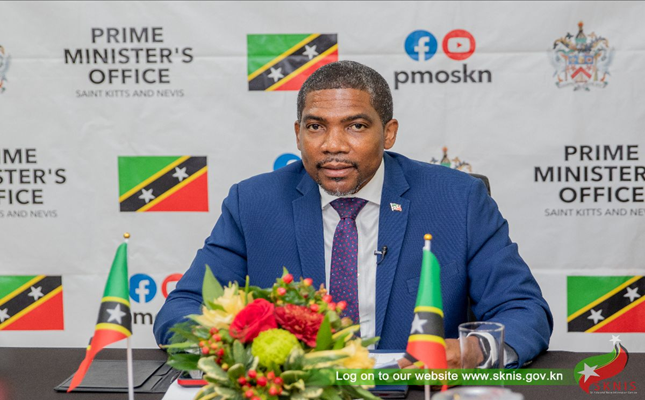
    In a significant demonstration of regional solidarity, Prime Minister Hon. Dr. Terrance Drew of St. Kitts and Nevis has confirmed the Federation’s plans to deliver substantial humanitarian assistance to Cuba within the coming fortnight. The announcement, made during the Prime Minister’s March 17th appearance on Freedom FM’s Issues programme, underscores a coordinated Caribbean Community (CARICOM) effort to address humanitarian needs in Cuba.

    Dr. Drew emphasized the collective decision-making process within CARICOM that led to this commitment, stating, “CARICOM was here, and we took the decision to support Cuba from a humanitarian standpoint.” The Prime Minister revealed that his administration has already established the necessary operational framework through collaboration with regional and international partners, particularly highlighting cooperation with Mexican authorities.

    The forthcoming aid shipment represents the Federation’s first major contribution to Cuba under this initiative and reflects St. Kitts and Nevis’ enduring dedication to humanitarian principles and regional cooperation. Prime Minister Drew further articulated that this effort exemplifies the Caribbean tradition of mutual support among neighboring nations during challenging times.

    Additionally, the Prime Minister addressed the ongoing professional relationships between the Federation and Cuban professionals working within St. Kitts and Nevis, assuring that robust systems are maintained to ensure transparency and adherence to international standards in these partnerships. The announcement reinforces the Federation’s commitment to ethical international cooperation while providing concrete support to a regional neighbor in need.

  • Abinader leads parade marking the Battle of March 19 Anniversary

    Abinader leads parade marking the Battle of March 19 Anniversary

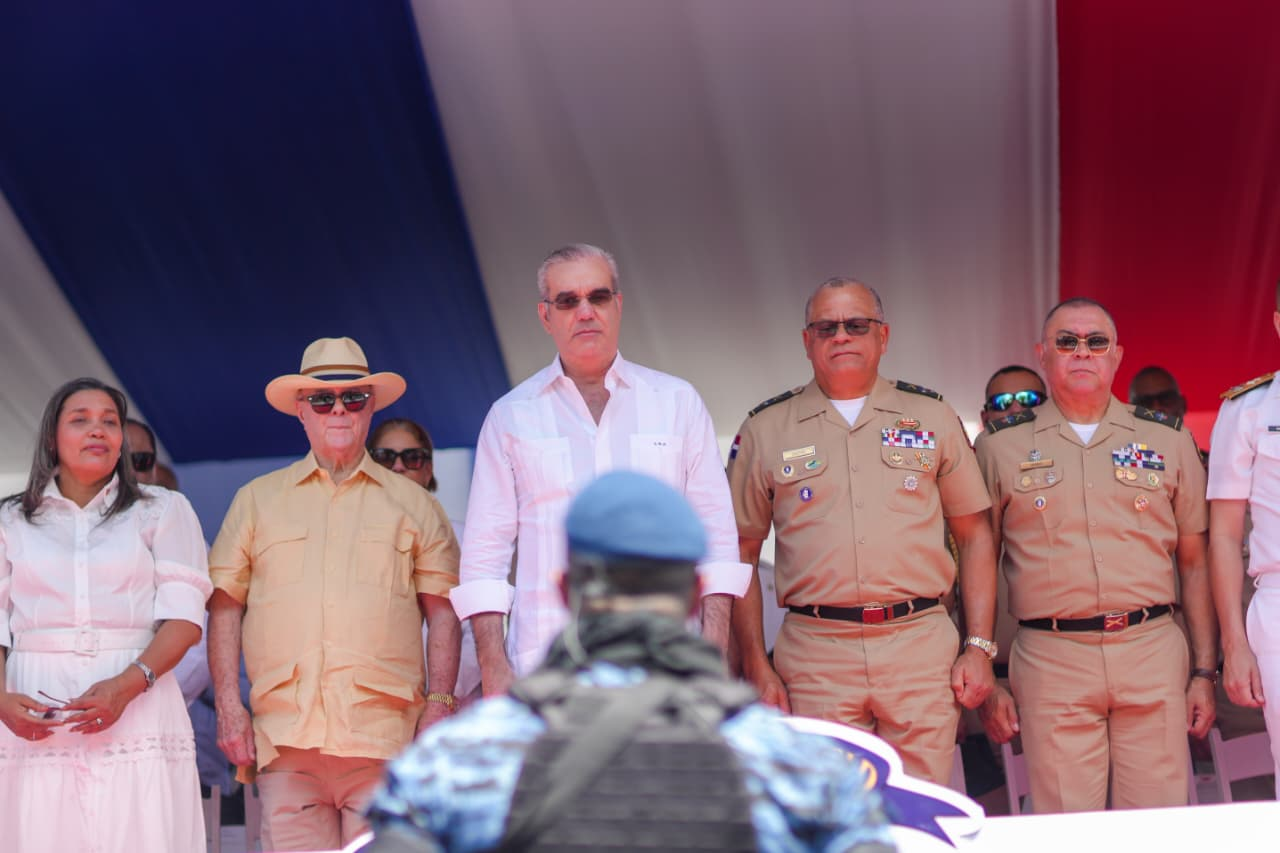
    AZUA, DOMINICAN REPUBLIC – President Luis Abinader presided over a significant civic-military parade in Azua province, marking the 182nd anniversary of the pivotal Battle of March 19. This historic confrontation, recognized as one of the initial major defenses of Dominican national sovereignty, was commemorated with extensive military honors and ceremonial proceedings.

    The presidential arrival featured full military honors, with Abinader joining high-ranking government officials, military leadership, and provincial authorities. The parade showcased coordinated displays from all branches of the Dominican armed forces, including the Army, Navy, Air Force, and National Police, alongside participating student contingents. The unified procession served as a tribute to the historical figures who secured the nation’s independence.

    Official addresses during the ceremony emphasized the critical importance of preserving historical memory and strengthening national identity. Government representatives further highlighted ongoing developmental initiatives within Azua province, demonstrating administrative commitment to regional progress.

    The historical context of the 1844 battle received particular emphasis during proceedings. Military historians noted how Dominican forces, under Commander Pedro Santana’s leadership, successfully repelled Haitian troops attempting to reclaim territory. This victory proved instrumental in establishing the Dominican Republic’s sovereign status. Contemporary speakers reinforced the nation’s enduring dedication to sovereignty principles, patriotic values, and honoring the legacy of independence architects.

    The ceremony concluded with reaffirmations of national commitment to defense readiness and historical preservation, positioning the anniversary as both a memorialization of past sacrifices and a reinforcement of contemporary national values.

  • Who Doesn’t Want Peace?

    Who Doesn’t Want Peace?

    A coordinated campaign of destabilization emerges from Miami whenever diplomatic progress appears between the United States and Cuba, according to recent investigative findings. Hardline elements with financial and political investments in maintaining hostilities have repeatedly demonstrated willingness to sabotage peace initiatives through calculated acts of provocation.

    The pattern became particularly evident during recent bilateral talks held in St. Kitts and Nevis, where representatives from Washington and Havana engaged in unprecedented dialogue. Simultaneously, a group of ten individuals allegedly trained and armed in Florida executed an attack on a Cuban Border Guard vessel attempting to infiltrate Villa Clara’s northern coast. This synchronization suggests deliberate timing to undermine diplomatic efforts.

    Further evidence of coordination emerged through graffiti campaigns across Havana’s municipalities, where more than a dozen individuals recruited in Panama executed counterrevolutionary messaging using rented vehicles. These actions appeared designed to manufacture the illusion of widespread popular discontent rather than organic demonstrations.

    The strategy employs multiple fronts: congressional lobbying for intensified blockade measures, media campaigns promoting misinformation, and financial support for destabilization activities. Investigations indicate that recent acts of vandalism in Morón, including arson attacks on media outlets and destruction of property, follow patterns consistent with external direction rather than genuine civil protest.

    South Florida-based operatives have openly advocated for aggressive measures against Cuba, with one congressman reportedly using language suggesting annihilation rather than diplomatic engagement. The consistent pattern reveals a well-funded machinery dedicated to perpetuating conflict through economic strangulation and manufactured unrest, directly contradicting ongoing governmental efforts toward normalized relations.

  • Under pressure from the United States, Costa Rica announces the closure of its embassy in Havana and limits relations with Cuba to consular matters

    Under pressure from the United States, Costa Rica announces the closure of its embassy in Havana and limits relations with Cuba to consular matters

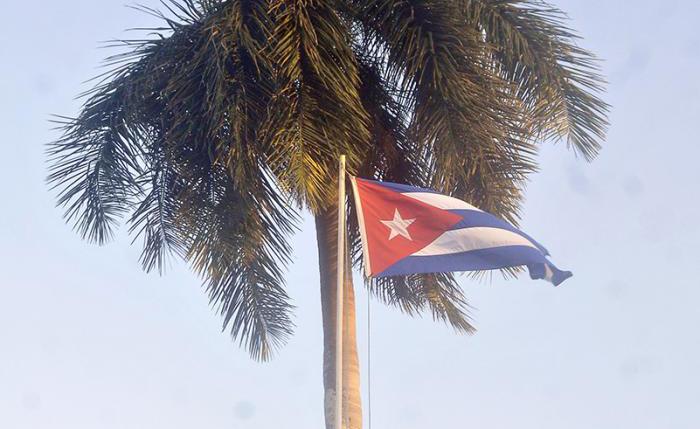
    The Cuban government has issued a strong condemnation of Costa Rica’s unexpected decision to shutter its embassy in Havana and downgrade diplomatic relations. The move, communicated via diplomatic note on March 17th without prior consultation or justification, represents a significant deterioration in bilateral ties between the two nations.

    According to Cuba’s Ministry of Foreign Affairs, Costa Rican officials invoked an ‘alleged and unfounded principle of reciprocity’ when demanding that Cuba withdraw its diplomatic staff from San José while maintaining only consular and administrative personnel. The Central American nation further notified that effective April 1st, it would maintain relations with Cuba strictly at the consular level.

    The Cuban statement particularly criticized Costa Rican President Rodrigo Chaves Robles for what it characterized as ‘disrespectful statements’ made during a March 18th press conference. Cuban authorities accused Chaves of ‘crudely manipulating the history and reality of Cuba’ while ignoring the documented impact of the U.S. economic blockade on Cuba’s economic situation and living conditions—a fact previously acknowledged by Costa Rican governments.

    Havana described the decision as ‘arbitrary’ and ‘evidently adopted under pressure,’ suggesting it disregarded both national interests and regional solidarity. The Cuban government framed this development as Costa Rica’s latest alignment with U.S. policy objectives against Cuba, noting the country’s ‘history of subordination to U.S. policy against Cuba.’

    The statement positioned the embassy closure as part of a broader U.S. offensive to isolate Cuba within the Americas, making Costa Rica ‘a participant in its aggressive escalation against the Cuban Revolution.’ Despite these diplomatic tensions, Cuba expressed confidence that the move would ultimately fail, emphasizing the ‘unbreakable bonds’ between the Cuban and Costa Rican peoples, historically connected through figures like independence heroes José Martí and Antonio Maceo.

    The diplomatic note was formally released from Havana on March 18th, 2026, marking a new chapter in the complex relationship between the two American nations.

  • PM make case for energy security as resilience to global shocks

    PM make case for energy security as resilience to global shocks

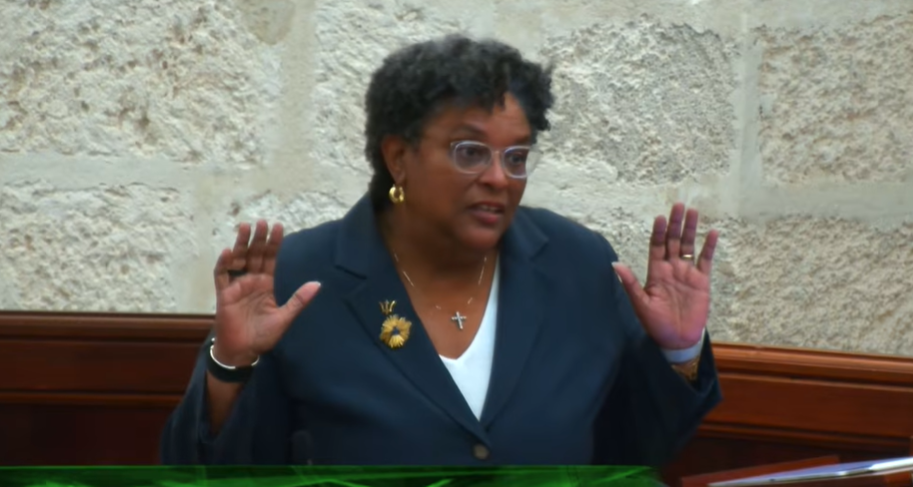
    Prime Minister Mia Mottley has declared an aggressive national initiative to drastically reduce Barbados’s reliance on imported fossil fuels, framing the transition to renewable energy as both an economic necessity and a tool for social empowerment. During a comprehensive 90-minute parliamentary address defending her administration’s budget, Mottley warned that global instability continues to expose the Caribbean nation to severe financial risk, citing the 2022 energy crisis triggered by Russia’s invasion of Ukraine as a cautionary example.

    The Prime Minister revealed that Barbados’s fuel import bill skyrocketed from $728 million in 2019 to approximately $1.122 billion in 2022 when oil prices surged to $120 per barrel. ‘What folly is this?’ Mottley questioned, emphasizing the paradox of a sun-rich nation spending over a billion dollars on imported energy. With fresh conflicts in the Middle East contributing to renewed market volatility, she cautioned that oil prices reaching $200 per barrel would present ‘no mathematical solution’ for the island’s economy.

    Mottley announced concrete measures to accelerate the energy transition, including significantly enhanced battery storage capacity and an urgent national colloquium on energy security scheduled for next month. The government will pursue ‘absolute speed and efficiency’ in acquiring necessary infrastructure to reduce fossil fuel dependence to ‘negligible amounts.’ The Prime Minister emphasized that this transition requires fundamental behavioral changes across all sectors—government, households, and businesses alike.

    Beyond energy security, Mottley framed renewable initiatives as instruments for ‘economic enfranchisement,’ ensuring that new energy generation opportunities serve as ‘a democratizing and an enfranchising tool for the creation of wealth.’ She simultaneously defended the budget’s social protection measures, highlighting expanded reverse tax credits for low-income earners, increased relief for pensioners, and the establishment of the Barbados Republic Child Wealth Fund.

    The Prime Minister acknowledged persistent pressures on middle-income earners while highlighting significant economic progress under her administration: eighteen consecutive quarters of growth, debt reduction from over 170% to just above 90% of GDP, and foreign reserves exceeding $3 billion. Mottley concluded that poverty eradication remains her government’s central mission, asserting that economic achievements ‘could never be enough as long as there are poor people’ and injustice persists.

  • Energy conservation drive ‘would cut’ fuel costs

    Energy conservation drive ‘would cut’ fuel costs

    During a parliamentary debate on the Appropriations Bill, Christ Church West MP Dr. William Duguid unveiled a comprehensive proposal for a nationwide energy and water conservation initiative. The legislator emphasized the urgent need for a coordinated national strategy to address escalating fuel expenses through systematic demand reduction and efficiency enhancements.

    Dr. Duguid articulated a multi-faceted approach encompassing mandatory energy audits for residential properties, government departments, and educational institutions. His proposal advocates for practical behavioral modifications including switching to energy-efficient lighting, optimizing climate control systems, and improving architectural designs for better natural ventilation.

    The parliamentary address highlighted innovative utility pricing mechanisms as a core component of the strategy. Dr. Duguid recommended implementing differential metering systems for electricity, natural gas, and water services, creating financial incentives for off-peak consumption through variable tariff structures. This ‘peak shaving’ methodology aims to distribute demand more evenly while enhancing grid stability.

    A significant portion of the proposal addressed the interconnection between water management and energy consumption. Noting that the Barbados Water Authority represents the nation’s largest electricity consumer due to pumping requirements, Dr. Duguid advocated for parallel water conservation measures. These include comprehensive leak remediation, reduced residential water waste, and continued efforts to minimize non-revenue water loss throughout distribution networks.

    The MP referenced existing renewable energy infrastructure, particularly photovoltaic systems implemented during his tenure as Senior Minister for Infrastructure, as evidence of Barbados’ capacity for energy resilience. These solar installations enable water pumping operations without dependence on imported fossil fuels, providing crucial insulation against global oil market volatility.

    Concluding his address, Dr. Duguid presented economic indicators demonstrating improved national conditions, citing a twenty-year low in the Barbados Growth Adjusted Misery Index, which combines unemployment and inflation metrics. This data was presented as evidence of effective governance while underscoring the continued necessity for energy conservation measures amid global economic uncertainties.

  • PM Briceño Talks Leadership and Development as UB’s Guest Lecturer

    PM Briceño Talks Leadership and Development as UB’s Guest Lecturer

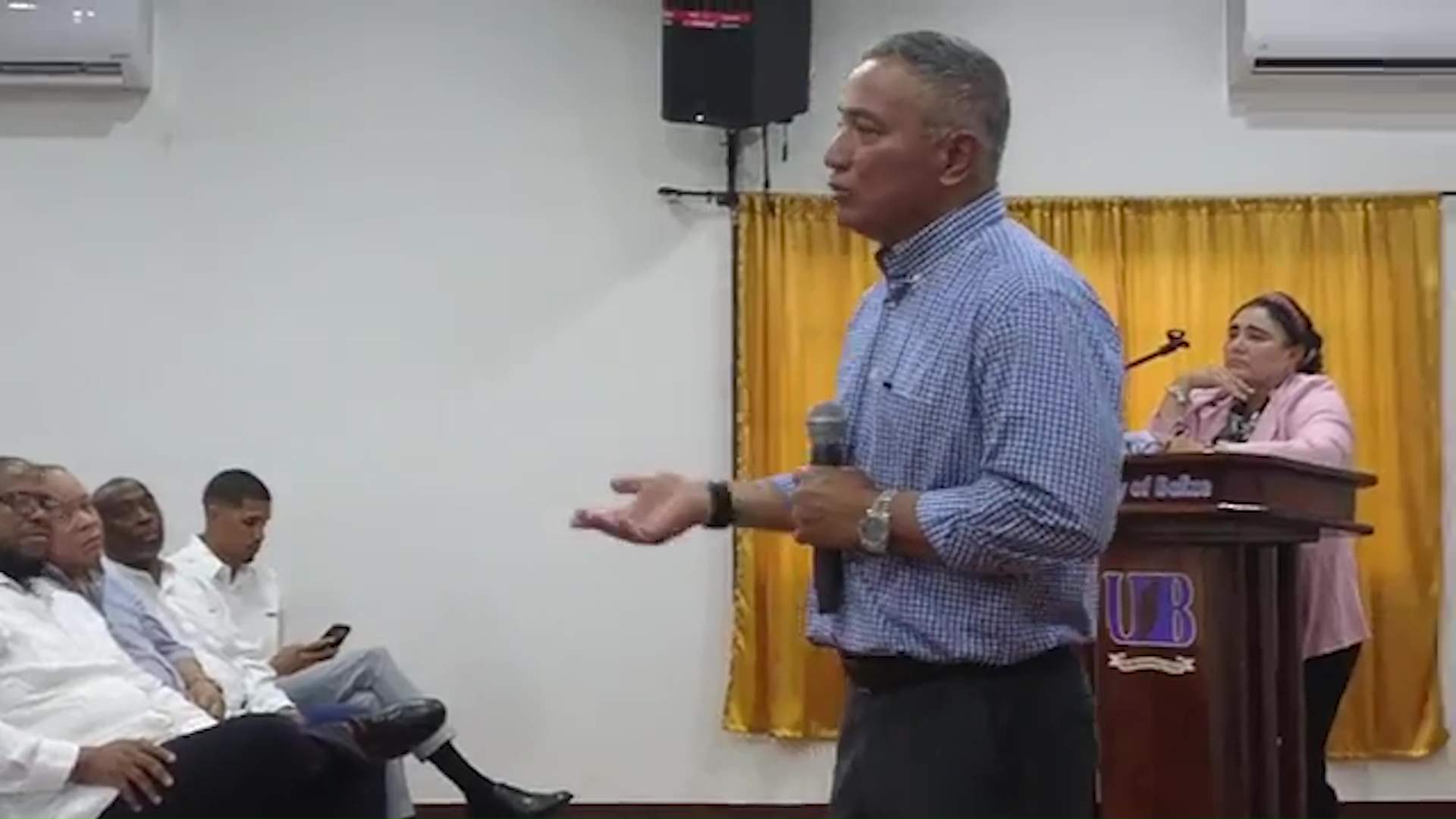
    Prime Minister John Briceño assumed the role of guest lecturer at the University of Belize on March 18, 2026, delivering a comprehensive address on governance, economic strategy, and national development. The two-term leader, who received an honorary doctorate from Taiwan in 2022, engaged with students and faculty in Belmopan, offering insights into contemporary challenges facing the nation.

    During the interactive session, Briceño addressed pressing concerns regarding escalating fuel prices, attributing the surge to geopolitical tensions involving Iran. He acknowledged the global nature of inflationary pressures while emphasizing Belize’s limited control over international market fluctuations.

    The Prime Minister provided particularly revealing commentary on Belize-Cuba relations, specifically addressing the delicate status of the Cuban Medical Brigade. Briceño expressed profound gratitude for Cuba’s decades-long medical support, particularly in specialized care and rural healthcare delivery where Belize faces significant capacity gaps.

    His remarks revealed complex trilateral negotiations involving Belize, Cuba, and the United States. Briceño articulated the diplomatic tightrope his administration must walk, noting substantial pressure from Washington regarding continued cooperation with Havana. He illustrated the potential consequences of defiance, including visa restrictions for Belizean citizens seeking to travel to the United States.

    The Prime Minister emphasized efforts to develop a hybrid solution that would preserve medical collaboration while addressing international diplomatic concerns. Simultaneously, he acknowledged the necessity of strengthening Belize’s domestic healthcare workforce amid Cuba’s ongoing humanitarian challenges and shifting regional political dynamics.

    Briceño’s lecture highlighted the multifaceted challenges of leadership in a small nation navigating complex international relationships while addressing domestic development needs.

  • PM Urges Prudence as Fuel Prices Climb

    PM Urges Prudence as Fuel Prices Climb

    BELIZE CITY – Prime Minister John Briceño has firmly rejected opposition calls for immediate fuel tax reductions, advocating instead for fiscal prudence amid volatile global oil markets. The response comes after Opposition Leader Moses Barrow publicly demanded relief for consumers facing escalating pump prices.

    In a measured rebuttal, PM Briceño highlighted the contrasting fiscal realities between administrations, noting his predecessor benefited from substantial PetroCaribe revenues and oil income exceeding one billion dollars, separate from taxation. “They could have probably done some of that,” Briceño stated, referencing previous governments’ resource advantages.

    The Prime Minister emphasized his administration’s commitment to balancing public relief with economic stability. “We are going to do what is necessary to help our people,” he affirmed during a press briefing. “We have to find that balancing act as to how best to manage these high prices coming to Belize.”

    When pressed about potential government intervention, Briceño maintained a cautious stance, explaining that the 2026/2027 budget already projected specific fuel revenue streams. Any reduction would necessitate compensatory measures—either alternative revenue generation or program cuts. “It is too early to say,” he commented. “We have to act prudently and not hastily as if we are in a panic.”

    The Prime Minister concurrently urged citizens to adopt more fuel-efficient practices, recommending wiser vehicle usage during this period of economic uncertainty. This dual approach of fiscal caution and public behavioral adaptation characterizes the government’s strategy toward managing the fuel price crisis.