分类: politics

  • Shyne Barrow Criticises UDP Over Venezuela Stance

    Shyne Barrow Criticises UDP Over Venezuela Stance

    A significant political rift has emerged within Belize’s United Democratic Party (UDP) following controversial remarks about Venezuela, exposing internal divisions on foreign policy. Former UDP leader Moses “Shyne” Barrow has publicly denounced current party leadership for expressing sympathy toward Venezuelan President Nicolás Maduro without consulting membership.

    Barrow specifically criticized Senator Patrick Faber and other UDP representatives for what he characterized as “crying tears for the dictator, narco-trafficker Mr. Nicolás Maduro” during a recent press conference. The former leader emphasized the UDP’s identity as a “conservative, center-right party” with established international affiliations to Republican and conservative parties, suggesting the pro-Maduro position contradicts these alliances.

    The controversy stems from a UDP press conference held last Tuesday where Faber criticized the Briceño administration’s January 5 statement on Venezuela. Faber had argued the government’s position lacked clarity and appeared designed to avoid offending Washington, claiming the ruling People’s United Party was “hiding behind CARICOM” rather than asserting an independent foreign policy.

    Barrow countered this perspective by endorsing the government’s approach, describing the official statement as “mild and temperate and consistent with what CARICOM put out on the matter.” He further cautioned against antagonizing the United States, Belize’s largest trading partner, while invoking former Prime Minister George Price’s foreign policy mantra of being “friend to all, enemy to none” – while explicitly excluding “despotic dictators” from this philosophy.

    Barrow highlighted Maduro’s record of jailing political opponents, creating millions of displaced Venezuelans, and threatening CARICOM’s zone of peace as reasons to distance Belize from the Venezuelan leader. Senator Faber declined to comment when contacted by news outlets regarding the growing internal dispute.

  • Shyne Barrow Says “A Monopoly Benefits the Belizean People”

    Shyne Barrow Says “A Monopoly Benefits the Belizean People”

    In a significant political development, former United Democratic Party (UDP) leader Moses “Shyne” Barrow has voiced conditional support for Belize Telemedia Limited’s proposed acquisition of Speednet, arguing that state-controlled monopolies can deliver public benefit. The controversial stance emerged during a January 19th press engagement where Barrow challenged prevailing skepticism toward market consolidation.

    Barrow presented a comparative analysis of Belize’s infrastructure landscape, noting: “Our nation already operates sanctioned monopolies in critical sectors including Belize Electricity Limited and Belize Water Services. The ideological resistance to telecommunications consolidation appears inconsistent when examining existing market structures.” The former opposition leader specifically addressed shareholder concerns, emphasizing that since BTL operates as a public-private partnership with majority Belizean ownership, any resulting monopoly would ultimately benefit citizens through consolidated returns.

    Despite his theoretical support, Barrow delivered scathing criticism of BTL’s leadership for their disastrous public rollout of the proposal. He characterized the board’s communications strategy as profoundly mishandled, creating unnecessary public distrust. Barrow particularly contested the board chairman’s characterization of BTL as a private entity, asserting: “This represents a fundamental misrepresentation of corporate structure. As a PPP model with majority public ownership, the enterprise ultimately serves the Belizean people.”

    The former UDP leader simultaneously addressed internal party tensions, criticizing current UDP Leader Tracy Panton for her undisclosed meeting with Lord Ashcroft aboard his yacht. Barrow questioned the timing and opacity of the engagement, suggesting it undermined Panton’s credibility to demand transparency in the BTL-Speednet negotiations.

    Prime Minister John Briceño has maintained that BTL’s board should pursue corporate interests independently, while opposition figures demand greater transparency before approving any merger. The developing situation reveals deep philosophical divisions regarding market regulation and public ownership in Belize’s political landscape.

  • Shyne Responds to Being Left Off UDP Former Leaders List

    Shyne Responds to Being Left Off UDP Former Leaders List

    Belizean politician Moses “Shyne” Barrow has publicly contested his exclusion from the United Democratic Party’s roster of former leaders “in good standing,” labeling the move as both divisive and constitutionally improper. The controversy emerged during a recent UDP press conference where Barrow’s name was conspicuously absent from the honored list.

    Expressing profound disappointment to News Five, Barrow emphasized his extensive service record as opposition leader, UDP party leader, and longstanding Mesopotamia constituency representative. “I’ve served my country with all that I’ve had,” Barrow stated, reaffirming his ongoing commitment to his constituents despite the party’s apparent snub.

    The political veteran highlighted constitutional requirements, noting that formal due process must precede any declaration of bad standing status. “If they want to say I am in bad standing, thus I don’t qualify, they would have to have a meeting, which they have not done,” Barrow asserted, questioning the procedural validity of his exclusion.

    Barrow further accused current UDP leadership of double standards, recalling previous instances where he disciplined members for public criticism only to be told such actions violated freedom of speech principles. “I would like to see what their position is now,” he challenged.

    The tension appears rooted in Barrow’s historical disagreements with Opposition Leader Tracy Panton, including his 2025 legal challenge against the Elections and Boundaries Commission regarding use of UDP’s signature red color by Panton’s Alliance for Democracy candidates. The Supreme Court ultimately dismissed the case as moot.

    Recent tensions reignited when Barrow included his name on promotional materials as “Shyne Barrow, Mesopotamia, UDP,” prompting Panton to publicly affirm Lee Mark Chang as the area’s sole duly elected representative. Barrow countered that while Chang holds the elected position, he never officially secured standard-bearer or caretaker status through proper party procedures.

    Barrow lamented the public nature of the dispute, emphasizing that internal resolution mechanisms should have been pursued. UDP Leader Tracy Panton responded to inquiries by noting the National Party Council had not yet convened to determine standing status, with the first meeting scheduled for January 31, 2026.

  • Most public servants trying to frustrate gov’t will fall in line – Leacock

    Most public servants trying to frustrate gov’t will fall in line – Leacock

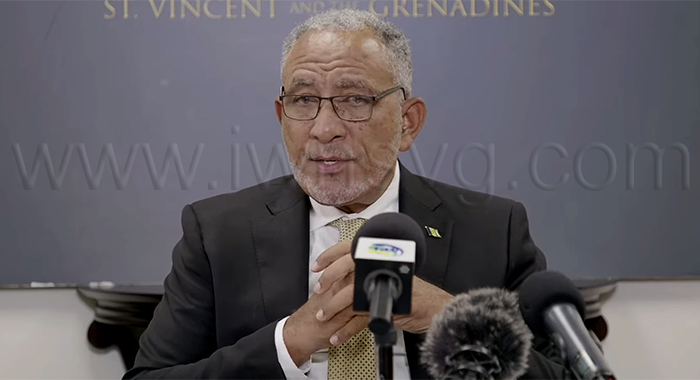
    St. Clair Leacock, Deputy Prime Minister and Minister of the Public Service of St. Vincent and the Grenadines, has voiced measured optimism regarding the cooperation of public servants following the recent political transition. In a Monday interview on Boom FM, Leacock acknowledged that some officials remain loyal to the former Unity Labour Party (ULP) administration but predicted they would ultimately align with the new government.

    The Central Kingstown representative, whose New Democratic Party (NDP) ended the ULP’s 25-year governance in November’s general election, addressed concerns about bureaucratic resistance. He characterized the situation as a natural consequence of prolonged single-party rule, noting that institutional culture cannot transform overnight.

    Leacock revealed he would personally accompany several public workers dismissed under the previous administration’s COVID-19 vaccine mandate who were experiencing difficulties reinstating their positions. This intervention demonstrates the government’s commitment to implementing its policy of reinstating affected employees.

    The Deputy Prime Minister articulated a pragmatic perspective on political allegiance within the civil service, recognizing public servants’ right to personal political beliefs while distinguishing between legitimate dissent and active obstruction. He expressed confidence that most officials would rationally recognize the new political reality and cooperate accordingly.

    With a January 31 deadline established for the reinstatement process, Leacock warned that persistent non-compliance would trigger administrative consequences. He commended certain sectors, particularly the police force, for their efficient implementation of the reinstatement policy while noting varying levels of cooperation across government entities.

    The government has developed a detailed implementation process through the Attorney General’s office, emphasizing the complex financial and administrative considerations involved in reintegrating dismissed workers into the public service payroll.

  • ABLP Opens St. Philip’s North Branch Centre in Willikies

    ABLP Opens St. Philip’s North Branch Centre in Willikies

    The Antigua and Barbuda Labour Party (ABLP) has officially launched its new Constituency Branch Centre in St. Philip’s North, establishing a strategic operational base designed to enhance political outreach and community development. The inauguration ceremony, held on Sunday, signifies a substantial investment in local infrastructure to facilitate deeper political connectivity.

    Randy Baltimore, the elected representative for St. Philip’s North, articulated the center’s multifaceted mission. He emphasized its primary role as a centralized hub for fostering grassroots participation, hosting constituent assemblies, and spearheading initiatives aimed at local socioeconomic advancement. The facility is poised to become the nucleus for civic engagement and collaborative planning between residents and party officials.

    The opening event attracted a diverse gathering of dedicated party members, enthusiastic supporters, and community residents. Organizers characterized the inauguration as a pivotal move towards consolidating relationships between the electorate and the party’s leadership structure. This initiative is viewed as a critical component of the ABLP’s broader strategy to fortify its presence and reinforce its commitment to decentralized, community-focused governance within the constituency.

  • PM Browne Says Government Focused on Sharing Economic Gains With All Citizens

    PM Browne Says Government Focused on Sharing Economic Gains With All Citizens

    Prime Minister Gaston Browne has articulated a clear vision for equitable economic distribution as Antigua and Barbuda experiences robust economic growth. During a recent appearance on the Morning Point Show, the nation’s leader emphasized that macroeconomic success must directly benefit all citizens, especially those in vulnerable socioeconomic positions.

    Browne presented a compelling critique of economic metrics, asserting that impressive growth statistics become meaningless when disconnected from tangible improvements in citizens’ daily lives. “Our fundamental objective transcends mere economic expansion,” Browne stated. “We are implementing policies to socialize economic gains across all societal strata, ensuring prosperity reaches every citizen.”

    The Prime Minister’s commentary arrives amid ongoing public discourse regarding cost-of-living challenges, despite the nation’s strong performance in tourism and adjacent sectors. Browne positioned inclusive growth as both a moral imperative and strategic necessity for long-term national stability, framing economic success and social responsibility as complementary objectives.

    His administration’s policy framework deliberately targets wealth concentration, instead prioritizing measurable improvements in living standards throughout society. “Shared growth creates a reinforced social fabric that benefits everyone,” Browne concluded, positioning this approach as essential for sustainable development.

  • Trump Says World “Not Secure” Without US Control of Greenland

    Trump Says World “Not Secure” Without US Control of Greenland

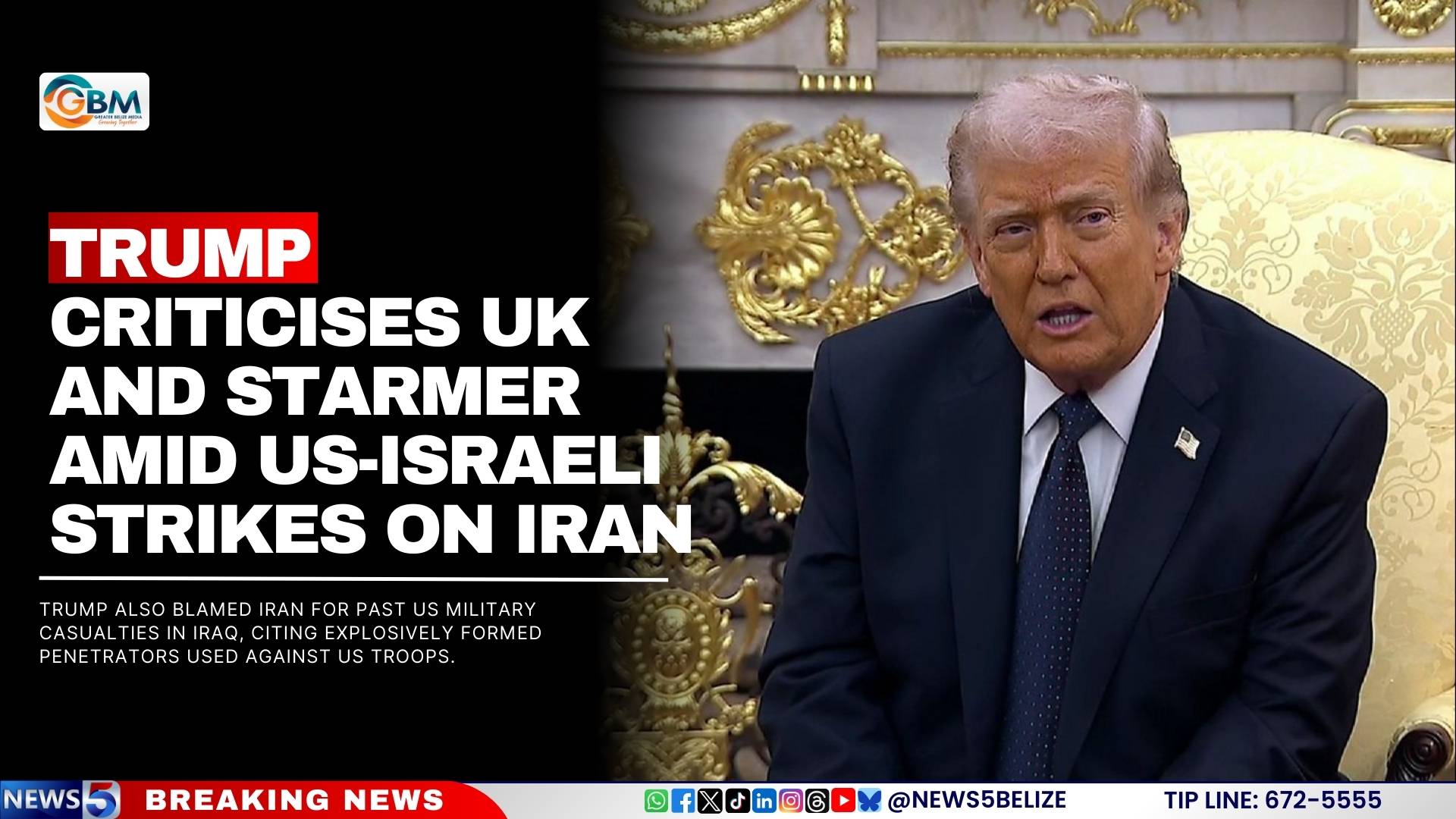
    In a remarkable diplomatic escalation, former U.S. President Donald Trump has explicitly linked his failed Nobel Peace Prize aspirations to his persistent demand for American control of Greenland. The controversy erupted when Trump sent a text message to Norwegian Prime Minister Jonas Gahr Støre accusing Norway of denying him the prestigious award.

    Trump’s message, authenticated by CBS News, stated: “Considering your country decided not to give me the Nobel Peace Prize for having stopped 8 wars PLUS, I no longer feel an obligation to think purely of peace, although it will always be predominant… The world is not secure unless we have complete and total control of Greenland.”

    Prime Minister Støre promptly clarified that the Norwegian government plays no role in Nobel Prize selections, which are determined by an independent committee. The 2025 prize was awarded to Venezuelan opposition leader María Corina Machado, who subsequently presented her medal to Trump—a gesture the Nobel Foundation emphasized does not constitute an official transfer of the award.

    The Greenland dispute has triggered broader international tensions. Trump has threatened to impose escalating tariffs—starting at 10% in February and potentially rising to 25% by June—on eight NATO allies unless they support his Greenland proposal. He argues that Denmark cannot adequately protect the strategic Arctic territory from Russian or Chinese influence.

    European leaders have pushed back strongly. UK Prime Minister Sir Keir Starmer asserted that “Greenland’s future belongs to the people of Greenland and the Kingdom of Denmark alone,” condemning the proposed tariffs against allies as “wrong.” Støre and Finnish President Alexander Stubb attempted to de-escalate tensions by proposing a three-way call, but Trump reiterated his demand for U.S. control instead.

  • Jesma Paul-Victor reappointed Leader of the Opposition in Dominica

    Jesma Paul-Victor reappointed Leader of the Opposition in Dominica

    In a significant political development, Jesma Paul-Victor has been formally reinstated as Leader of the Opposition in Dominica’s House of Assembly. The President’s Office confirmed the appointment on January 20, 2026, following an official nomination process.

    Paul-Victor, who represents the Salisbury constituency, initially assumed the opposition leadership on December 20, 2022, under a unique power-sharing arrangement with Marigot MP Anthony Charles. This agreement emerged from the unusual parliamentary situation created by the December 2022 snap general election, which resulted in only two opposition members being elected as independents.

    The original understanding between the legislators stipulated an 18-month rotational leadership, with Paul-Victor’s term scheduled to conclude on June 19, 2024. However, the transition encountered constitutional complications when Paul-Victor submitted her resignation on June 20, 2024. The President’s office invoked Section 66 of the Commonwealth of Dominica Constitution, requiring both opposition members to jointly designate their preferred leader through formal communication.

    Despite Charles’ public statements in June 2024 expressing readiness to assume the leadership role and his affiliation with the newly established United Progressive Party (UPP), the necessary joint documentation wasn’t submitted to facilitate the transition. Charles had previously emphasized the importance of their rotational agreement and outlined plans to consolidate opposition voices while engaging youth in national development initiatives.

    The recent reappointment process was initiated through an official letter from Charles to the President, nominating Paul-Victor for the position. This development resolves the prolonged leadership uncertainty, though questions remain regarding the future of the original alternating leadership agreement between the two independent parliamentarians.

  • Venezuela says US $300-million oil sale used to prop up currency

    Venezuela says US $300-million oil sale used to prop up currency

    CARACAS, Venezuela—In a significant financial development, Venezuela’s interim leader Delcy Rodriguez confirmed on Tuesday the receipt of $300 million from a United States-managed sale of Venezuelan crude oil. The funds, originating from a larger $500 million transaction authorized by Washington, have been earmarked for a critical intervention in the nation’s foreign exchange market to bolster the severely weakened bolivar.

    Rodriguez announced the capital injection is specifically designated to ‘stabilize the exchange market and safeguard the income and purchasing power of Venezuelan workers.’ This move directly addresses the profound currency crisis that has gripped the nation since 2018, when hyperinflation rendered the bolivar virtually obsolete and the U.S. dollar emerged as the de facto currency for transactions.

    The release of funds follows what the U.S. government termed a ‘historic energy deal’ brokered by President Donald Trump over the weekend. President Trump stated that the oil would be sold at market price and explicitly noted that the proceeds would be ‘controlled by me, as President of the United States of America,’ underscoring Washington’s ongoing oversight of Venezuelan assets.

    Economic analysts from the firm Ecoanalitica suggest the government’s objective is to methodically narrow the substantial disparity between the official exchange rate and the prevalent black market rate for the U.S. dollar. A severe scarcity of greenbacks, a direct consequence of a six-year American embargo on Venezuelan oil, has caused the dollar’s value to skyrocket within the country.

    This development marks a shift in the complex economic standoff. Prior to the U.S. capture of former leader Nicolas Maduro in a January raid on Caracas, Venezuela was compelled to offer its crude at significant discounts, primarily to China, to circumvent the stringent embargo. Washington intensified its enforcement of these sanctions in December by seizing tankers carrying the sanctioned oil, further constricting Caracas’s revenue streams.

  • Time to stop ‘flattering’ Trump — ex-NATO chief on Greenland crisis

    Time to stop ‘flattering’ Trump — ex-NATO chief on Greenland crisis

    BRUSSELS, Belgium — The North Atlantic Treaty Organization is confronting its most severe existential challenge in history due to President Donald Trump’s territorial aspirations toward Greenland, according to former NATO Secretary General Anders Fogh Rasmussen. In an exclusive interview with AFP at the World Economic Forum in Davos, the former alliance leader declared that diplomatic appeasement of the American president must immediately cease.

    Rasmussen, who served as NATO’s chief from 2009 to 2014 following his tenure as Danish Prime Minister, characterized the situation as not merely an institutional crisis but a fundamental threat to the entire transatlantic partnership and the post-World War II international order. “The future of NATO and the global governance framework hang in the balance,” Rasmussen asserted during the Tuesday briefing.

    The seasoned statesman urged current NATO leadership, including Secretary General Mark Rutte, and European counterparts to adopt a more assertive stance toward the White House following Trump’s tariff threats and unconventional territorial proposals. “Strategic recalibration is imperative—Trump exclusively respects demonstrated strength and consolidated unity,” Rasmussen emphasized. “European nations must collectively exhibit these qualities. The era of diplomatic flattery has conclusively ended.”

    Rasmussen’s stark assessment emerged as European diplomats, including Rutte, prepared for high-stakes negotiations with Trump during the Davos summit, aiming to de-escalate tensions surrounding the Arctic territory. While acknowledging that the current crisis remains potentially resolvable, Rasmussen warned that Trump’s actions have already precipitated a psychological schism between Washington and its traditional European allies—a development that strategically advantages Russia and China.

    “This geopolitical confrontation fundamentally differs from all previous disputes within NATO’s history,” Rasmussen observed. He issued a grave warning that any U.S. military action against Greenland would effectively terminate the alliance’s existence.

    The former Danish leader criticized Trump’s Greenland fascination as a “tactical diversion weapon” distracting from Russia’s ongoing aggression in Ukraine. “While media focus remains fixed on Greenland—which presents no genuine threat to North Atlantic security—Moscow’s continued attacks against Ukraine constitute the actual danger requiring sustained international attention,” he noted.

    Rasmussen proposed potential diplomatic compromises, including modernizing the 1951 U.S.-Denmark defense agreement governing military deployments, facilitating American commercial access to Greenland’s mineral resources, and establishing joint exclusion of Russian and Chinese interests from the territory. However, he unequivocally rejected any territorial concession: “Greenland remains categorically unavailable for purchase. As an experienced real estate professional, the president should recognize that unavailable properties cannot be acquired.”