分类: politics

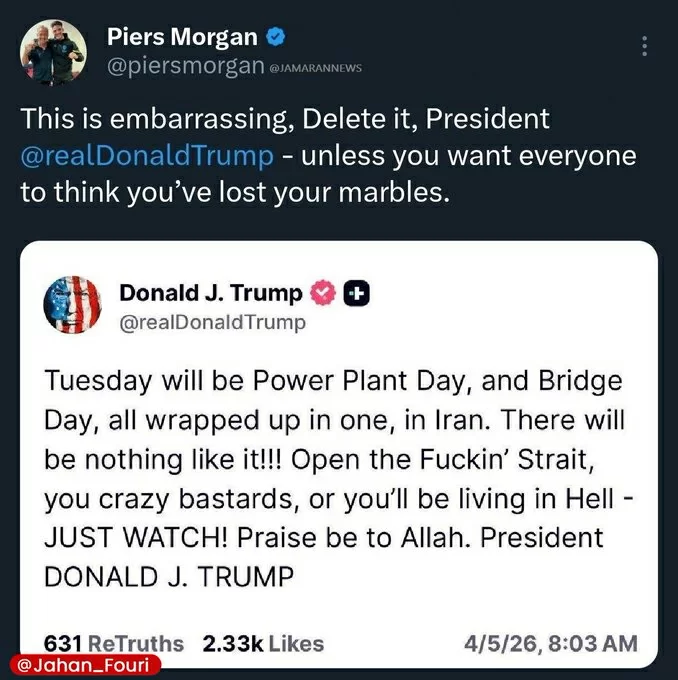
  • Donald Trump needs to free the Cuban people

    Donald Trump needs to free the Cuban people

    In a forceful rebuttal to Jomo Thomas’s commentary “Ungratefulness is worse than witchcraft,” political commentator C. ben. David presents a starkly contrasting perspective on Cuba’s political reality since the 1959 revolution. The author characterizes Fidel Castro’s rise to power as an “illegal rebellion” that replaced a democratic government with a “fascist Marxist regime,” establishing what he describes as a “communist reign of terror” that continues to oppress the Cuban people.

    The analysis highlights the estimated exodus of one million Cubans—approximately ten percent of the island’s population—who have fled their homeland due to economic devastation and political repression. Those remaining face severe hardships including chronic food shortages, rationing systems, poverty-level incomes, arbitrary property confiscation, banned political opposition, inadequate healthcare, and pervasive state surveillance.

    Contrary to common narratives, the author argues these conditions cannot be attributed to the American trade embargo, noting Cuba maintains trade and diplomatic relations with numerous nations including Russia and China, both of which have provided substantial aid during economic crises. The piece asserts that Cuba’s economic struggles are largely self-imposed through systemic mismanagement.

    The commentary sharply criticizes Cuban leadership for enjoying “sumptuous but idle luxury” while the population suffers, describing Cuba among Caribbean “shit hole countries” due to leadership that prioritizes “rapacious and power-hungry goals” over public welfare. The author endorses Donald Trump’s approach to Cuba, interpreting it as a genuine effort to “restore the freedom and dignity of the mass of the Cuban people”—a sentiment reportedly shared by many exiles and their descendants.

    Additionally, the piece questions the ethics of Cuba’s international medical missions, noting physicians are paid “rock bottom wages” with most earnings repatriated to the Cuban government, creating what the author characterizes as a system that “further exploit[s] their very own people.”

  • Amid corruption allegations, Housing Minister wonders if  SVG is world’s ‘pit-latrine capital’

    Amid corruption allegations, Housing Minister wonders if  SVG is world’s ‘pit-latrine capital’

    A major political controversy has erupted in St. Vincent and the Grenadines as the newly installed New Democratic Party (NDP) administration launches an investigation into alleged financial misconduct within the previous government’s housing initiative. The scrutiny centers on the ‘Lives to Live’ program, established under former Prime Minister Ralph Gonsalves’ Unity Labour Party (ULP) administration.

    Housing Minister Andrew John ignited the debate during parliamentary discussions on the 2026 national budget, questioning the allocation of millions toward a program that demonstrated insufficient results relative to its substantial funding. The minister specifically highlighted the Diamond Estate community within his South Windward constituency as a case study of systematic failures.

    The Lives to Live program, designed to assist marginalized populations including indigent citizens, persons with disabilities, and those displaced by development projects, operated under the Ministry of Housing with significant expenditures on construction materials and essential household fixtures.

    Minister John presented compelling evidence of irregularities, noting that despite the previous administration’s reported expenditure of US$9 million (EC$24.3 million) from the Saudi Fund for Development specifically allocated to this program, numerous communities still lack basic sanitation infrastructure. ‘One might wonder if St. Vincent and the Grenadines has become the pit-latrine capital of the world,’ John remarked during his parliamentary address.

    The government has designated Diamond Estate as a pilot project for informal settlement upgrades, allocating EC$150,000 initially for essential services including electricity, potable water, and proper bathroom facilities. ‘This transcends mere infrastructure—it concerns human dignity,’ Minister John emphasized, outlining plans for comprehensive community rehabilitation including proper road systems.

    The investigation has revealed substantial financial transactions with Jamaica-based Tankweld Ltd., totaling tens of millions of dollars over multiple administrations for construction materials, particularly following natural disasters including Hurricane Beryl’s devastation in July 2024.

  • ULP’s criticism of $105m deficit proves their fiscal irresponsibility — PM

    ULP’s criticism of $105m deficit proves their fiscal irresponsibility — PM

    In a fiery conclusion to the parliamentary debate on St. Vincent and the Grenadines’ 2026 national budget, Prime Minister Godwin Friday launched a robust defense of his administration’s fiscal strategy while delivering a scathing critique of opposition claims. The government passed its EC$1.9 billion fiscal package without support from the three-member parliamentary opposition, simultaneously approving EC$200 million in domestic borrowing.

    The opposition Unity Labour Party (ULP), led by former Prime Minister Ralph Gonsalves, had characterized the budget’s EC$105 million current account deficit as fiscally irresponsible, warning of potential regional fundraising difficulties and predicting overdraft dependence amid a looming cash crunch. The ULP suffered a decisive electoral defeat in November, retaining only one parliamentary seat.

    Prime Minister Friday framed the opposition’s criticism as politically motivated fearmongering, questioning why any political faction would seemingly wish for International Monetary Fund intervention. ‘Now, no matter your politics, why would you wish that on your country? Why would you wish that on your people?’ Friday challenged lawmakers.

    The Prime Minister noted a ‘rare moment of agreement’ with Opposition Leader Gonsalves regarding the deficit figures while completely rejecting the ULP’s interpretation. Friday presented historical context revealing that during the ULP’s final term, cumulative current account deficits exceeded EC$200 million, including a EC$70 million deficit in 2025 alone.

    ‘They cannot, on the one hand, claim that 90% of the budget is a carryover of their plans and programmes… and then, on the other hand, they deny responsibility for the fiscal position those same plans produced,’ Friday argued, characterizing the opposition’s stance as contradictory.

    The Prime Minister positioned the current deficit not as governmental failure but as transparent accounting of what he termed a ‘rescue mission’ inherited from the previous administration. He emphasized that allocated funds would address longstanding social injustices while charting a sustainable economic path informed by the principles of the 1984-1989 New Democratic Party administration, which achieved the unprecedented feat of winning all parliamentary seats.

    Friday concluded by reaffirming his government’s commitment to responsible economic management, stating: ‘We are charting a sustainable, forward-looking path for our country. We are not doing it on a wing and a prayer.’

  • Gov’t conducting comprehensive assessment of VAT

    Gov’t conducting comprehensive assessment of VAT

    The government of St. Vincent and the Grenadines has announced sweeping fiscal reforms that could eliminate Value-Added Tax on residential electricity consumption, offering substantial relief to thousands of households served by national utility provider VINLEC. Prime Minister Godwin Friday unveiled these measures during his 2026 Budget Address to Parliament, signaling a major shift in economic policy aimed at alleviating financial strain on vulnerable populations.

    In a comprehensive budgetary presentation, Prime Minister Friday revealed that the Ministry of Finance, the Inland Revenue Department, and key stakeholders are conducting an extensive evaluation of VAT reduction strategies. This assessment specifically targets essential commodities and domestic power consumption, with the dual objective of providing tangible consumer relief while maintaining fiscal responsibility.

    The current VAT framework exempts most residential consumers who stay below the 250 kWh monthly threshold. Those exceeding this consumption level face a 16% VAT charge on their electricity bills—a tax structure originally implemented at 15% in May 2007 by the previous Ralph Gonsalves administration, later increased by one percentage point to contribute to natural disaster recovery funds.

    Prime Minister Friday emphasized his administration’s acute awareness of mounting cost-of-living pressures, noting that elevated prices for food, electricity, and essential goods are eroding wages, straining household budgets, and threatening social stability. He characterized addressing these economic pressures as a fundamental governance obligation rather than a policy option.

    These developments fulfill campaign promises made by the New Democratic Party during the November 2025 general election, which included reducing VAT rates from 16% to 13% across the economy and eliminating VAT on essential items like fresh produce and pharmaceuticals. The government is additionally evaluating the implementation of VAT-free shopping initiatives during financially demanding periods such as back-to-school seasons and Christmas holidays.

    The Prime Minister stressed that all tax relief measures must be precisely targeted, administratively practical, and aligned with broader fiscal consolidation goals, including public debt reduction and sustainable Primary Balance achievement. The government intends to present its comprehensive assessment findings to the public and Parliament ahead of an October 2026 implementation deadline, ensuring evidence-based policy-making rather than impulsive fiscal decisions.

    Friday concluded that responsible governance delivers cost-of-living solutions through meticulous reform rather than rhetoric, promising practical, costed measures that return disposable income to households while preserving fiscal stability.

  • Veiligheidsconferentie: toenemende geopolitieke spanningen eisen internationale samenwerking

    Veiligheidsconferentie: toenemende geopolitieke spanningen eisen internationale samenwerking

    The annual Munich Security Conference concluded with a resounding appeal for strengthened international cooperation amidst escalating geopolitical tensions. The three-day gathering, which focused extensively on the Ukraine conflict, evolving US-Europe relations, and shifting global power dynamics, highlighted the critical need for collaborative action and dialogue.

    European Commission President Ursula von der Leyen captured the profound transformation occurring among European leaders when she stated: ‘Boundaries have been crossed that cannot be reversed.’ This sentiment emerged against the backdrop of strained transatlantic relations following Donald Trump’s return to the White House. The American president’s attempt to annex Greenland has dramatically intensified European doubts about Washington’s commitment to continental protection through NATO.

    US Secretary of State Marco Rubio offered limited reassurance to European attendees in his conference address. While expressing desire for cooperation and employing a warmer tone than Vice President JD Vance previously, Rubio criticized Europe’s recent political direction and notably avoided any mention of NATO, Russia, or Moscow’s war in Ukraine—issues that have created significant rifts within the alliance.

    With the conflict approaching its fifth year and Moscow increasingly perceived as a growing threat by its European neighbors, continental leaders declared they would accelerate efforts to strengthen their own defense capabilities and reduce dependence on the United States.

    This position theoretically aligns with the Trump administration’s expectation that Europe will assume primary responsibility for conventional defense of the continent. In exchange, Washington would maintain its nuclear umbrella over Europe and honor NATO’s mutual defense pact.

    German Chancellor Friedrich Merz, French President Emmanuel Macron, and British Prime Minister Keir Starmer pledged their commitment to building a stronger ‘European pillar’ within NATO. However, enhanced independent defense capabilities also serve as insurance should Trump or future American leaders decide against defending Europe.

    ‘This new beginning is correct under all circumstances. It is correct if the United States continues to distance itself. It is correct as long as we cannot independently guarantee our own security,’ Merz stated during Friday’s sessions.

    In another indication of unease regarding American security commitments, Merz revealed he had initiated discussions with Macron about European nuclear deterrence. France possesses Europe’s only truly independent nuclear deterrent, as Britain’s Trident missiles are manufactured and maintained by the United States.

    The central challenge for European leaders remains translating rhetoric into reality—acquiring and developing new weapons systems, addressing arsenal gaps in areas like long-range missiles, and coordinating efforts effectively.

    Current signals are mixed. Driven by fear of Russia and Trump’s prodding, European nations have increased defense spending. NATO members agreed last year to raise core defense expenditures from 2% to 3.5% of GDP, with an additional 1.5% allocated for other security-related investments. Von der Leyen noted that European defense spending has surged by nearly 80% since before Ukraine’s invasion.

    European countries are forming consortia to develop complex weapons systems. Defense ministers from France, Germany, Italy, Poland, and Sweden signed a letter of intent to advance the European Long-range Strike Approach (ELSA), a project focused on developing ‘deep strike’ missiles. During a parallel NATO defense ministers meeting, European coalitions agreed to collaborate on four projects including ballistic missile defense and air-launched munitions.

    However, several high-profile pan-European initiatives face significant challenges. The future of the French-German-Spanish FCAS fighter jet project hangs by a thread after months of disputes over work distribution among involved companies. Debates surrounding EU defense projects continue regarding whether they should remain exclusive to EU companies or open to external participants.

    France remains the strongest proponent of ‘buy European’ clauses, while Germany and the Netherlands advocate for a more open approach.

    Amid these discussions at the luxurious Bayerischer Hof hotel, Ukrainian President Volodymyr Zelensky presented the stark reality of modern warfare, surrounded by massive screens displaying imagery and statistics of Russian attacks. Ukraine alone faced over 6,000 drones and 150 missiles last month.

    ‘During this war, weapons are evolving faster than political decisions designed to stop them,’ he told delegates.

    As the Munich Security Conference concludes, the world continues to confront urgent security challenges while maintaining hope that collective efforts may yield sustainable solutions within an increasingly complex geopolitical landscape.

  • Politic : Clarification and Threat by Ministry of Defense

    Politic : Clarification and Threat by Ministry of Defense

    PORT-AU-PRINCE, HAITI – The Haitian Ministry of Defense has issued a forceful declaration establishing its unequivocal position regarding internal organization and threatening severe consequences for those attempting to disrupt national security institutions.

    In an official communiqué released February 16, 2026, the defense establishment categorically denied the existence of any union organizations within its structure, asserting that “no union exists within the Ministry of Defense” and emphasizing that “there never has been and there never will be” such organizations either within the Ministry or the Haitian Armed Forces (FAd’H).

    The Ministry provided a comprehensive rationale for this position, explaining that defense and security institutions worldwide operate under strict principles of “discipline, hierarchy, obedience, and absolute neutrality” that are fundamentally incompatible with union activities. These institutions, responsible for national security, territorial defense, and state sovereignty, require unwavering adherence to chain of command without external pressure influences.

    The statement characterized any attempts to falsely claim union affiliation, mislead public opinion, or disrupt defense operations as “criminal acts.” Individuals or groups responsible for such actions will face immediate “severe disciplinary sanctions and legal prosecution” without prior warning, in accordance with applicable laws and regulations.

    The Ministry concluded by reserving the right to “take all necessary measures to preserve order, discipline, and national security,” signaling a zero-tolerance approach to internal challenges to its authority and operational integrity.

  • Islam prohibits passing on wrongdoing to others- Irfaan Ali

    Islam prohibits passing on wrongdoing to others- Irfaan Ali

    President Irfaan Ali of Guyana invoked core Islamic principles during his address at the opening ceremony of the National Ramadan Village 2026 on Sunday. Speaking at the event hosted by the Muslim Youth Organisation (MYO) on Woolford Avenue, Georgetown, the Guyanese leader emphasized that Islamic theology strictly prohibits transferring one’s wrongdoing onto others or blaming others for personal misconduct.

    “Blaming others is considered a trait of the devil,” President Ali stated, characterizing such behavior as “an injustice that combines a minor sin into a major sin” according to Islamic teachings. The President’s remarks carried significant political undertones as they coincided with ongoing allegations from Azruddin Mohamed, leader of the We Invest in Nationhood (WIN) party and Guyana’s Opposition Leader.

    Mohamed has repeatedly claimed that he financially supported President Ali’s People’s Progressive Party Civic (PPPC) during its opposition period from 2015 to 2020. These allegations emerge amidst serious legal challenges facing Mohamed and his father, Nazar Mohamed, who face sanctions from the US Treasury Department’s Office of Foreign Assets Control (OFAC).

    The US authorities allege that between 2019 and 2023, Mohamed’s Enterprise omitted over 10,000 kilograms of gold from import and export declarations, evading approximately $50 million in duty taxes payable to the Guyanese government. The Mohameds are currently engaged in legal proceedings to avoid extradition to the United States, where they would face charges including wire fraud, mail fraud, and money laundering.

    Guyana’s Anti-Money Laundering and Countering of Financing Terrorism (AMLCFT) Act establishes severe penalties for money laundering offenses, including fines up to GY$1 million and seven years imprisonment for individuals, and fines ranging from GY$200 million to GY$500 million for corporate entities. The High Court of Guyana has previously ruled in unrelated cases that unincorporated political parties lack legal personality, adding complexity to potential proceedings involving political financing allegations.

  • Mottley calls on residents to ‘fall in love’ with country again at victory rally

    Mottley calls on residents to ‘fall in love’ with country again at victory rally

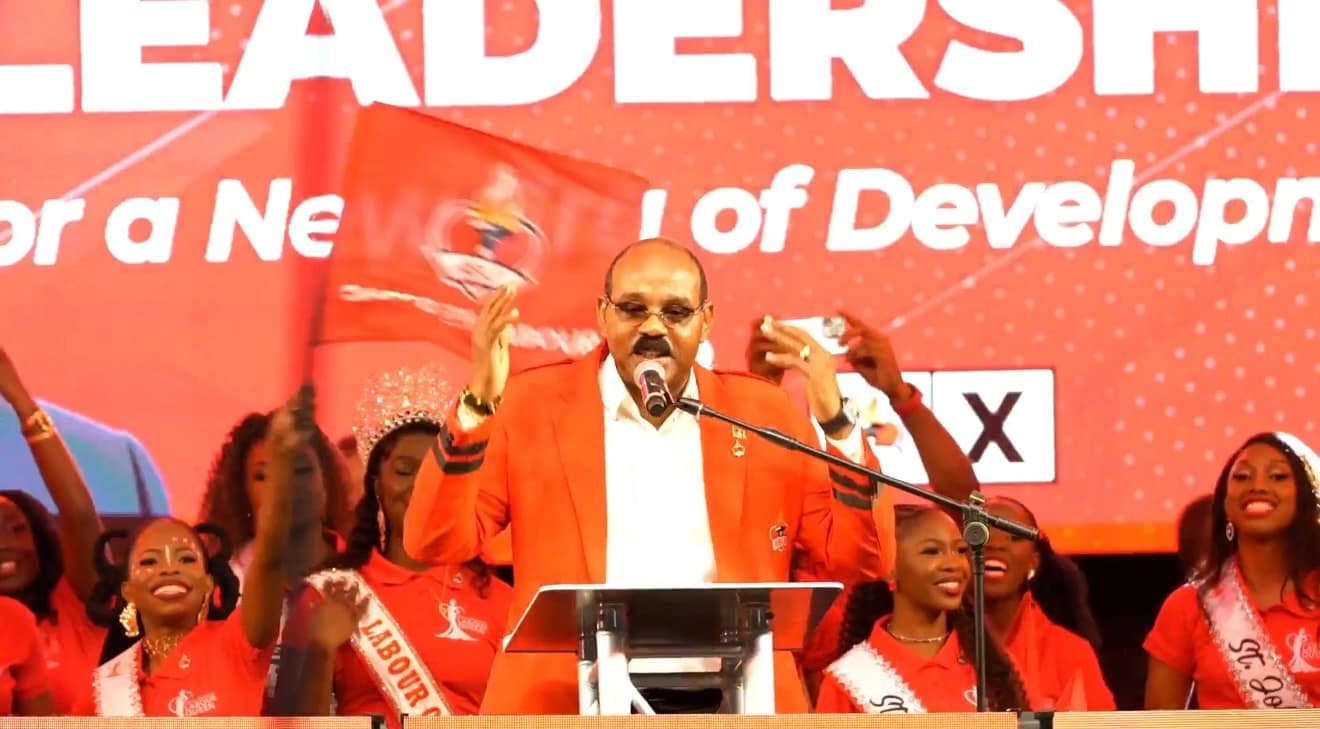
    Following an unprecedented third consecutive electoral sweep securing all 30 parliamentary seats, Barbados Prime Minister Mia Mottley delivered a stirring victory address that transcended partisan politics to issue a clarion call for national unity. Speaking before thousands of supporters adorned in the party’s signature red at the National Botanical Gardens on Valentine’s Day, Mottley framed her triumph as an opportunity for collective national renewal.

    The Prime Minister, addressing constituents in her St Michael North East constituency where she hosted her first local victory celebration after being unable to do so in previous elections, struck a profoundly personal tone. “When we won on Wednesday night, I didn’t have to think twice about where you would come,” she told the exuberant crowd before expanding her message to all Barbadians regardless of political affiliation.

    Mottley’s address artfully blended celebration with solemn responsibility, emphasizing that democratic mandates must be matched by citizen engagement. “No one owes us a living,” she asserted, urging citizens to excel in their professions while fostering community solidarity. The Prime Minister specifically directed her message to younger generations, stating: “To the young people… it is your country that we are building. Treat it with tender care and attention.”

    The administration recommitted to an ambitious policy agenda including poverty reduction, justice reform, and creating opportunities to stem youth migration. Mottley highlighted previous democratic reforms that reduced prime ministerial powers and promised further enhancements to Barbados’ governance structures.

    Acknowledging persistent challenges including traffic congestion and gun crime, the Prime Minister maintained that transformation remains her government’s central mission: “Our mission is to transform Barbados and to make ourselves capable of delivering world-class service and capable of being one of the strongest and most resilient small states on the planet earth.”

    Concluding with a Valentine’s Day metaphor, Mottley urged citizens toward national self-love: “The most important love on Valentine’s Day is self-love. Look in the mirror… and love who you see.” The rally culminated with newly elected parliamentarians joining the stage, symbolizing both political dominance and collective purpose.

  • Nicholls eyes roads, gullies revival for St Thomas

    Nicholls eyes roads, gullies revival for St Thomas

    Fresh from electoral victory, St Thomas’s newly inaugurated Parliamentarian Gregory Nicholls has articulated a comprehensive development agenda balancing immediate infrastructure needs with long-term environmental revitalization. While acknowledging road improvements as an urgent constituency priority, Nicholls revealed ambitious plans to convert the parish’s neglected gully networks into sustainable eco-tourism destinations.

    In an exclusive interview with Barbados TODAY during the Barbados Labour Party’s post-election gathering, Nicholls resisted ranking development priorities, emphasizing multifaceted challenges require parallel solutions. “Identifying a single priority proves difficult when multiple issues demand attention,” the MP explained. “Road infrastructure undoubtedly remains critical for St Thomas residents, but simultaneous progress on other fronts is essential.”

    Nicholls highlighted ongoing infrastructure investments exceeding $140 million across two major road projects but stressed the necessity of transparent communication regarding timelines and obstacles. “Substantial funding requires equally substantial accountability,” he noted. “Constituents deserve clear timelines regarding project completion delays and anticipated benefits for parish mobility.”

    Beyond transportation infrastructure, Nicholls outlined an ecological vision focused on preserving St Thomas’s natural heritage. He identified the rehabilitation of deteriorated gullies—currently overgrown and misused as dumping sites—as a cornerstone initiative. “These natural formations represent untapped potential,” the parliamentarian asserted. “Through systematic restoration, we can transform them into hubs for recreation, exercise, and community engagement.”

    This environmental strategy extends beyond beautification to economic diversification. Nicholls envisions gullies as catalysts for sustained economic activity through eco-tourism ventures, localized events, and small business development. The plan additionally encompasses revitalizing community centers and expanding sports programs across Content, Welchman Hall, and neighboring districts.

    Despite speculation regarding potential ministerial appointments following his party’s third consecutive electoral sweep, Nicholls reaffirmed his dedication to constituency service. “My mandate originates from St Thomas voters,” he concluded. “Accordingly, my energies will focus exclusively on addressing their needs and advancing parish development.”

  • Budget 2026 approved; ULP critique no match for NDP’s super-majority

    Budget 2026 approved; ULP critique no match for NDP’s super-majority

    In a landmark parliamentary session, Prime Minister Godwin Friday’s New Democratic Party (NDP) administration has successfully passed its inaugural EC$1.9 billion national budget for 2026, marking the party’s first fiscal package since returning to power after a 25-year hiatus. The budget approval came through the government’s decisive super majority of 14 out of 15 parliamentary seats, despite unified opposition from the Ralph Gonsalves-led Unity Labour Party (ULP).

    Prime Minister Friday, who also serves as Finance Minister, characterized the fiscal plan as a definitive break from what he termed ‘the fiscal recklessness of previous administrations.’ During his concluding debate remarks, Friday delivered a scathing assessment of opposition criticism, describing their arguments as ‘weak, confused, and delivered without conviction or self-belief.’

    The political context underscores the significance of this budgetary process. The NDP’s return to power in November’s general elections ended the ULP’s two-decade dominance, a period the Prime Minister referenced as marked by ‘politics of division and spite.’ Friday asserted that the electoral outcome represented more than mere political rotation—it embodied a national yearning for transformative governance and substantive change.

    Addressing specific opposition allegations, including claims that portions of the budget were drafted using artificial intelligence tools like ChatGPT, Friday dismissed these assertions while acknowledging his unfamiliarity with such technology. He emphasized the document’s distinctive character, noting its fundamental departure from previous budgets in ‘tone, construction, and vision.’

    The budget’s philosophical foundation rests on what the Prime Minister termed ‘prudent conservatism,’ shifting the government’s role from primary economic operator to facilitator of private enterprise. This approach explicitly rejects deficit spending and prioritizes fiscal responsibility, with Friday stating ‘the state can no longer be the engine of growth in this economy.’

    Central to the budgetary framework is the ‘rescue to resilience’ strategy, designed to transition the nation from immediate recovery to sustainable development. The Prime Minister emphasized creating predictable conditions for both domestic and international investors, noting that ‘certainty is what business likes.’ The administration positions this budget as establishing St. Vincent and the Grenadines as open for business and partnership, with poverty alleviation constituting a core priority.