分类: politics

  • Column: Verantwoordelijkheid begint bij erkenning

    Column: Verantwoordelijkheid begint bij erkenning

    Suriname’s National Assembly faces mounting pressure to address significant salary disparities within the country’s judicial branch, following revelations of excessive compensation packages for magistrates while educators struggle with minimal wages. Assembly members Poetini Atompai and Jerrel Pawiroredjo (both NPS) have introduced four legislative initiatives aimed at rectifying what they describe as “financially derailed” provisions for parliamentary members and sitting/standing magistrates.

    The controversy centers around judicial salaries that reportedly reach up to SRD 1 million net monthly (approximately $30,000 USD), while many teachers with 35 years of service receive only SRD 13,000 net. The situation gained public attention primarily through the investigative work of journalist Eugène van der San, whose reporting brought the extensive financial irregularities to light.

    VHP faction leader Asis Gajadien has become the central figure in the political debate, maintaining that the underlying legislation remains sound despite implementation failures. However, examination reveals that the laws themselves contain problematic provisions, including annual 5% increments without explicit caps and allowances calculated tax-free without clear linkage to limited base salaries.

    The financial autonomy granted to the judiciary allowed for the establishment of salary scales based on laws approved by the National Assembly and promulgated by the government. Critics argue that the legislation contains open-ended formulations and insufficient financial limitations that enabled exponential growth without ceiling.

    Fundamental questions now emerge regarding institutional oversight: Did the Court President and Attorney General misinterpret the law when establishing salary scales? Why did controlling institutions that receive copies of financial dispositions fail to sound alarms? Notably, none of the 51 Assembly members visibly demanded comprehensive financial impact assessments during legislative consideration.

    The new initiative laws propose corrective measures, but procedural requirements mean immediate changes remain unlikely. Each month of delay continues straining state finances while raising moral questions about proportionality and careful governance. The society has already rendered its judgment; now Parliament must demonstrate that correction can proceed faster than self-justification, with responsibility outweighing political pride.

  • Mayor Addresses Growing Controversy Over Online Allegations

    Mayor Addresses Growing Controversy Over Online Allegations

    SAN PEDRO TOWN – Mayor Wally Nunez has publicly confronted a wave of social media allegations that he characterizes as a politically motivated sabotage campaign aimed at undermining his administration’s work. The controversy, which has been brewing on digital platforms, prompted the mayor to address what he calls “false allegations” head-on during a recent press engagement.

    Nunez identified the source of these allegations as coming from the United Democratic Party’s (UDP) social media channels, asserting they represent a personal attack rather than legitimate concerns about municipal governance. “They are trying to attack me personally, rather than trying to figure out what is happening in the town council,” Nunez stated, emphasizing that his administration has maintained consistent progress through two terms of service.

    The allegations center on two primary concerns: the mayor’s business connections to an establishment called Nupalm and questions about town council employees holding secondary employment. Regarding Nupalm, which the mayor described as a members’ club lounge rather than a nightclub, Nunez clarified he serves merely as a shareholder in the enterprise that predates his mayoral tenure. He detailed the establishment’s compliance with regulatory requirements including soundproofing measures and multiple exit points.

    Addressing employment concerns, Nunez acknowledged that numerous council workers maintain secondary jobs elsewhere, asserting this practice violates no regulations provided employees fulfill their municipal duties. “As long as they come in and they clock in at the council, they get paid for what they work at the council,” he explained, framing the practice as commonplace and non-problematic.

    The mayor’s response comes amid growing tensions in the community as these online allegations gain traction, potentially impacting public perception of the council’s operations and integrity.

  • Perez Counters Accusation in Heated Ambergris Caye Land Dispute

    Perez Counters Accusation in Heated Ambergris Caye Land Dispute

    A significant land rights dispute has emerged as a public confrontation on Ambergris Caye, Belize, pitting a local resident against his area representative. The conflict centers on allegations of improperly handled land allocation processes in the San Pedro community.

    Jose Hernandez, a long-term resident of San Pedro, publicly accused Area Representative Andre Perez of effectively dispossessing him of property he had occupied for eleven years. Hernandez presented documentary evidence during an opposition press conference last Wednesday, demonstrating his initiation of official payment procedures for the land. He detailed a sequence of payments totaling $550, followed by application for purchase price determination, ultimately receiving notification of approval before discovering another individual had secured title to the property in December.

    Representative Perez issued a vigorous rebuttal, characterizing Hernandez’s claims as disingenuous. Perez revealed that Hernandez’s wife already holds title to adjacent property, suggesting the resident was effectively squatting on neighboring land. The elected official outlined his proposed resolution: facilitating the wife’s acquisition of the disputed parcel followed by relocation of structures. Perez emphasized his ongoing positive relationship with Hernandez, noting the resident serves as a town council-employed driver for a government-provided school bus serving North Ambergris students.

    The contrasting narratives have ignited broader concerns regarding transparency and equity in land distribution processes within the region. This confrontation underscores the complex interplay between informal settlement practices, bureaucratic procedures, and political accountability in developing coastal communities facing increasing land valuation pressures.

  • Zetina Flags Risks as Perez Defends Dredging

    Zetina Flags Risks as Perez Defends Dredging

    A significant environmental and political dispute has emerged in Belize’s coastal regions, pitting government officials against local communities over dredging operations and resource management. The controversy centers on Ambergris Caye, where UDP caretaker Gabriel Zetina has raised serious concerns about active dredging sites reshaping marine ecosystems and threatening wildlife. Zetina questions whether Area Representative Andre Perez is adequately monitoring these operations to protect the island’s vital industries.

    Perez, who also serves as Minister of Blue Economy, defended the dredging projects, stating they operate with proper licenses and collaboration with town councils. He emphasized that the work occurs on privately owned lands and addresses navigation challenges in shallow waters that previously hampered vessel movement, particularly water taxis. According to Perez, these operations are legitimate and nearing completion, ultimately benefiting marine transportation.

    The debate intensifies as Belize faces simultaneous environmental challenges, including the early arrival of sargassum seaweed along its coastline. The Ministry of Blue Economy is deploying barriers, equipment, and developing long-term strategies to manage the invasive biomass, including exploring conversion of sargassum and trash into energy sources.

    Meanwhile, on Caye Caulker, local authorities have firmly rejected Perez’s proposal to exchange white marl from Ambergris Caye for their sand reserves. The Caye Caulker Village Council declared the island’s sand a protected natural asset, citing concerns about environmental damage to traditional fishing grounds and questioning the practicality of marl-based road solutions given weather-related deterioration issues. Council leaders emphasize that no agreement was reached despite discussions with Perez and demand respect for their decision to prioritize community resources and environmental protection.

  • Independents Rebel, Senate Meeting Scrapped

    Independents Rebel, Senate Meeting Scrapped

    A scheduled virtual session of the Senate on Tuesday unexpectedly transformed into a significant political confrontation, highlighting deepening tensions over legislative procedures and transparency. Independent senators, expressing firm opposition to continued remote meetings, declared their intention to participate from within the National Assembly Chamber in Belmopan—the recently renovated, multi-million-dollar facility designed specifically for parliamentary proceedings.

    The independents, led by Church Senator Louis Wade, argued that virtual sessions should be reserved exclusively for genuine emergencies such as national crises or severe weather events. They maintained that routine government business warrants physical presence in the purpose-built chamber, which offers optimal acoustics, lighting, and spatial arrangements for democratic discourse.

    Their planned demonstration was abruptly preempted by the sudden cancellation of the session. Senator Wade revealed that the independents had received prior authorization through proper channels to utilize the chamber for their virtual login. The unexpected termination of the meeting has raised serious questions about whether the decision was motivated by logistical considerations or strategic political maneuvering.

    This confrontation has intensified the ongoing debate surrounding governmental accountability, operational transparency, and the appropriate balance between technological convenience and traditional parliamentary norms. The incident occurs amid growing calls from civil society, including organizations like the NTUCB, for increased scrutiny of governmental operations and decisions.

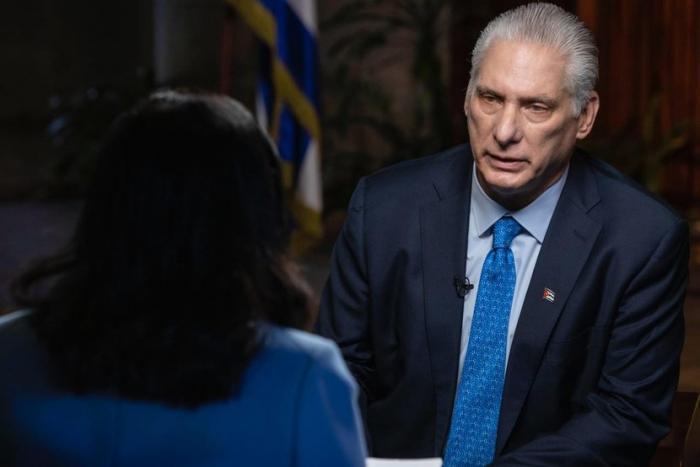
  • Shoman: The US Has Issued a Death Threat to Cuba

    Shoman: The US Has Issued a Death Threat to Cuba

    In a stark condemnation of United States foreign policy, former Belize Foreign Minister Assad Shoman has characterized recent US actions against Cuba as constituting a “death threat” against the Cuban people. This accusation comes amid escalating tensions following President Donald Trump’s declaration of a national emergency, labeling Cuba an “unusual and extraordinary threat” to US national security.

    The Trump administration’s intensified sanctions regime has effectively blockaded oil shipments to the island nation, creating severe energy shortages that Belize Prime Minister John Briceño warns could trigger a “manufactured humanitarian disaster.” Shoman, speaking as a private citizen, articulated that the explicit objective of these measures is to induce sufficient suffering among the Cuban populace to incite rebellion against their government—a tactic he unequivocally denounced as “terrorism.”

    This policy has drawn widespread international criticism, with the United Nations having condemned the US embargo over thirty times. Shoman noted that even US European allies have expressed disapproval. The former minister challenged the credibility of US claims that Cuba hosts Russian spies or terrorist organizations like Hamas and Hezbollah, citing a recent statement from UN human rights experts who found the characterization of Cuba as a security threat “lacks credibility” and appears designed to justify coercive measures.

    With Mexico halting oil shipments to Cuba under US pressure and instead providing humanitarian aid, and Canada considering similar aid, Shoman called on Belize and CARICOM nations to follow suit. He expressed disappointment that Caribbean leaders remain largely silent on the issue, likely due to fear of US reprisal, but praised Belize’s Prime Minister Briceño as one of the few regional leaders to openly criticize US actions.

    The geopolitical standoff places particular pressure on Mexican President Claudia Sheinbaum, who must balance support for Cuba against responding to US pressure. The situation continues to develop as US Secretary of State Marco Rubio engages with Caribbean leaders during CARICOM’s fiftieth Heads of Government meeting.

  • Joachim defends his appointment as NIS chair

    Joachim defends his appointment as NIS chair

    Stephen Joachim, the newly appointed Chairman of the National Insurance Services (NIS) board of directors, has publicly addressed the controversy surrounding his selection, asserting that his professional qualifications and experience render him ideally suited for the role. The Financial Controller of Mustique Company Ltd. defended his appointment during a Hot97 FM interview on Monday, acknowledging his past criticisms of the ruling New Democratic Party (NDP) administration while emphasizing the NIS’s critical national importance.

    Prime Minister Godwin Friday announced Joachim’s appointment last Friday, succeeding Lennox Bowman. The decision has sparked significant public debate, particularly on social media platforms where users have highlighted Joachim’s previous critical remarks about current government officials.

    Joachim responded to critics with philosophical acceptance, stating, ‘I am cool with that as far as politics goes, people criticise. I don’t care who want to cuss me and criticise me. I am not a party hack. Everybody is entitled to their opinion.’

    The incoming chairman revealed that following the 2025 general election, he engaged in discussions with NDP leadership about potentially chairing several boards, including the Bank of St. Vincent and the Grenadines, the National Lotteries Authority, and the Ottley Hall Marina. Joachim specifically advocated for the NIS chairmanship, describing it as ‘the most important entity going forward for the next foreseeable future’ because ‘the NIS deals with people’s lives.’

    Joachim expressed concerns about current pension payouts, questioning whether they are sufficient and if the system can afford increased benefits. He highlighted several policy disagreements, including the EC$500 payments to students successful in Caribbean Secondary Education Certificate examinations and the repayment of debts to NIS through real estate transfers instead of cash.

    The chairman-designate clarified that his role involves policy guidance rather than operational management: ‘The chairman is not someone who manages the affairs of the entity; the chairman is somebody who leads a board of directors who sets policy for the organisation.’ He noted the position carries minimal financial compensation—EC$1,000 monthly—dismissing suggestions that he accepted the role for monetary gain.

    Joachim acknowledged he hasn’t yet received formal appointment documentation but plans to meet with Prime Minister Friday next week to discuss his vision for the NIS’s future as a government institution, while maintaining his willingness to voice disagreements when necessary.

  • Politic : Presentation of the «National Pact for Stability and the Organization of Elections» (video)

    Politic : Presentation of the «National Pact for Stability and the Organization of Elections» (video)

    In a landmark ceremony at the Villa d’Accueil on February 23, 2026, Haitian Prime Minister Alix Didier Fils-Aimé presided over the formal unveiling of the “National Pact for Stability and the Organization of Elections.” The event marked a significant convergence of national stakeholders, including government officials, diplomatic representatives, political party leaders, economic sector delegates, and civil society advocates, all demonstrating unified commitment to institutional stabilization and constitutional restoration.

    The Pact represents a strategic milestone in Haiti’s transitional journey, embodying collective political determination to establish conditions for credible, inclusive, and transparent elections while reinforcing institutional stability and national security. Prime Minister Fils-Aimé praised signatories for choosing dialogue and historical responsibility over partisan interests, emphasizing that “the destiny of an entire nation rests on the decisions and commitments made by its children to serve it.”

    The agreement culminates from intensive consultations and consensus-building efforts, with the Prime Minister highlighting that the true victory lies in “the victory for democracy and the entire nation.” He noted that signatories had demonstrated to the world Haiti’s capacity to “pour the concrete of stability” for the nation.

    This collective commitment establishes a framework for a coordinated and planned transition, granting the government authority to strengthen public security, consolidate institutions, ensure electoral transparency, engage youth actively, and stimulate economic recovery. The Pact provides the Prime Minister and his administration with comprehensive powers without fixed term limits, including constitutional modification authority and power-sharing mechanisms.

    The document (available in French as a 4-page PDF) outlines provisions for implementing these transitional measures, representing Haiti’s most substantial effort to address prolonged political instability through nationally endorsed mechanisms.

  • PM to attend Caricom Heads of Government meeting

    PM to attend Caricom Heads of Government meeting

    Grenadian Prime Minister Hon. Dickon Mitchell is set to participate in the historic 50th Regular Meeting of the Conference of Heads of Government of the Caribbean Community (CARICOM), taking place from February 24-27, 2026, in St. Kitts and Nevis. The significant regional gathering will feature Prime Minister Mitchell leading Grenada’s high-level delegation during the first three days of the summit.

    The conference inauguration will include keynote addresses from prominent regional figures: Chairman and Prime Minister of St. Kitts and Nevis Dr. Terrance M. Drew; Jamaica’s Prime Minister Dr. the Most Honourable Andrew Holness; St. Vincent and the Grenadines Prime Minister Dr. the Hon. Godwin Friday; and CARICOM Secretary-General Dr. Carla Barnett.

    The event will welcome distinguished international participants including His Excellency Adel al-Jubeir, Saudi Arabia’s Minister of State for Foreign Affairs; Afreximbank President and Chairman of the Board of Directors Dr. George Elombi; and United States Secretary of State Marco Rubio, all scheduled to engage directly with Caribbean leaders throughout the proceedings.

    Prime Minister Mitchell’s participation will focus on critical multilateral discussions addressing regional integration frameworks, climate resilience strategies, security cooperation mechanisms, and trade enhancement initiatives. The Grenadian delegation will include Foreign Affairs and Export Development Minister Joseph Andall, alongside diplomatic representatives H.E. Tarlie Francis (Ambassador and Permanent Representative to the United States) and H.E. Aaron Moses (CARICOM Ambassador).

    This milestone summit marks five decades of CARICOM’s mission to promote economic integration and foreign policy coordination among Caribbean nations, with Grenada playing an active role in shaping the community’s future trajectory.

  • Cotino en Afonsoewa willen openheid financiële positie en contracten SZF en RZW

    Cotino en Afonsoewa willen openheid financiële positie en contracten SZF en RZW

    In a significant parliamentary move, National Assembly members Rosselli Cotino and Silvana Afonsoewa (both NDP) have formally submitted an interpellation proposal addressing alleged irregularities within Suriname’s State Health Fund (SZF) and Wanica Regional Hospital (RZW). The legislators are demanding immediate government clarification regarding financial management practices, contractual obligations, and governance structures at both critical healthcare institutions.

    The proposal emphasizes the fundamental right to healthcare and the state’s constitutional responsibility to ensure transparent, efficient, and accountable management of public health resources. The initiators highlighted SZF’s pivotal role in financing and delivering medical services to a substantial portion of Suriname’s population.

    Recent signals and public reports have raised serious concerns about financial governance, contractual commitments, and internal decision-making processes within SZF. Growing societal apprehensions center on transparency deficits, governance quality, financial accountability, and potential conflicts of interest within the healthcare system.

    The document further identifies ambiguities surrounding undertaken obligations, personnel expenditures, external contracts, and supervisory frameworks. This perceived lack of clarity potentially undermines public confidence in the national healthcare infrastructure. Comprehensive transparency regarding SZF’s current financial position is deemed essential to safeguard uninterrupted healthcare service delivery.

    Parallel concerns extend to Wanica Regional Hospital, which operates primarily through public funding as an essential component of national hospital care. Questions have emerged regarding the contractual outsourcing of essential hospital services to external entities and whether due diligence was exercised in these arrangements.

    The submitting parliamentarians argue that long-term or financially significant obligations without proper public accountability could jeopardize both healthcare affordability and continuity. Exercising its supervisory mandate, the National Assembly considers it imperative to obtain clarity regarding the administration and financial management of these vital healthcare institutions.

    The interpellation proposal formally requests the government to provide comprehensive and transparent information regarding: current financial status, ongoing obligations, and governance structure of SZF; nature, scope, duration, and establishment processes of recent contractual commitments within SZF; internal control mechanisms and supervision frameworks; contractual agreements with external service providers at Wanica Regional Hospital, including their financial implications; procedures and approval pathways followed in establishing these agreements; and structural measures the government will implement to enhance transparency, responsible governance, and protection of public healthcare resources.

    This parliamentary initiative aims to deliver complete clarity to both the National Assembly and Surinamese society while reinforcing confidence in the nation’s healthcare system.